
- LOGIN
- MemberShip
- 2026-09-08 06:22:51
- Company
- New era of targeted therapy begins for TED...'Tepezza' launches in KOR
- by Son, Hyung Min Aug 24, 2026 09:14am
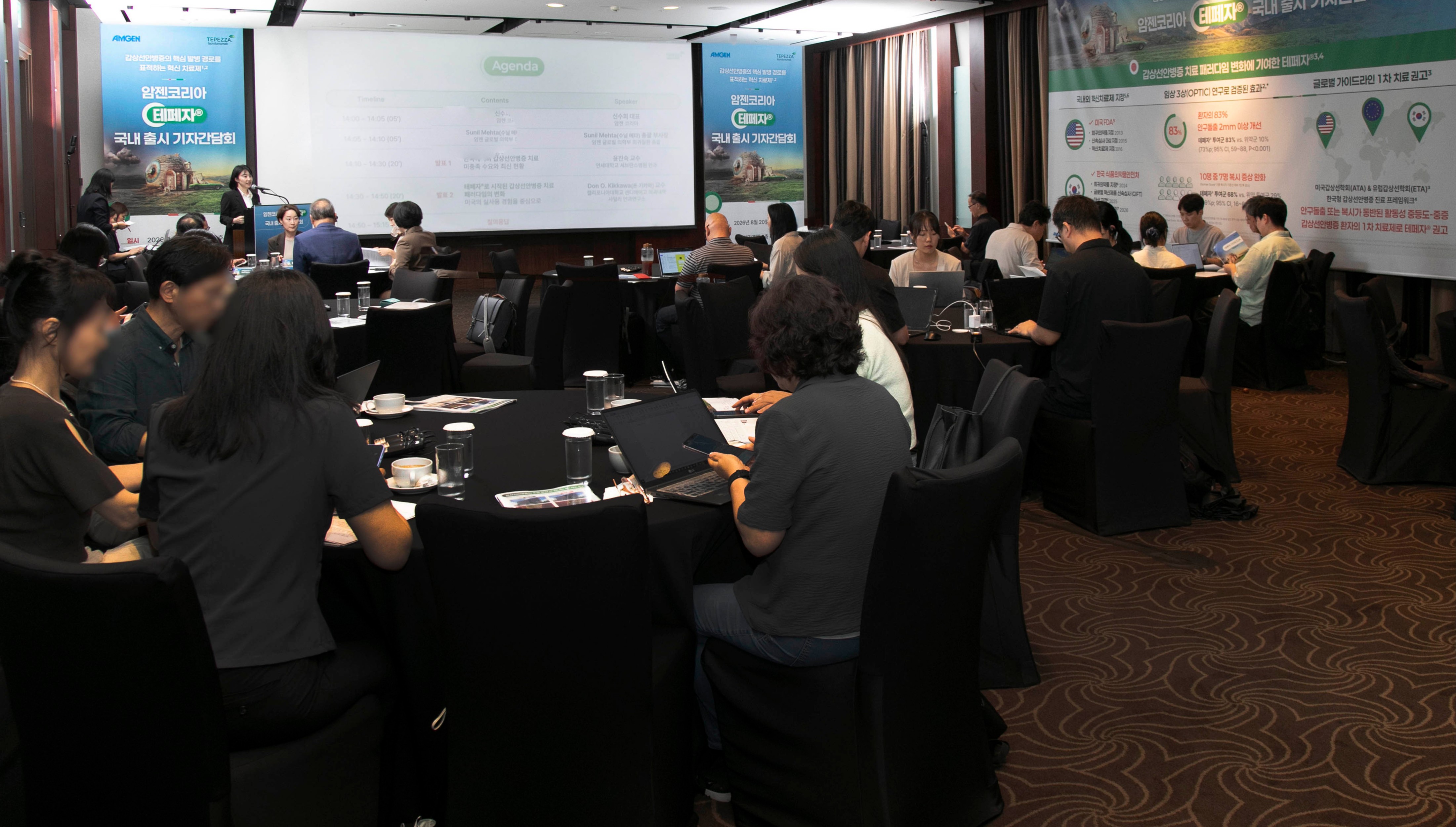
- Press conference was held to discuss 'Tepezza,' a treatment for thyroid eye disease (TED).A targeted therapy that improves structural symptoms such as proptosis and diplopia in patients with thyroid eye disease (TED) has officially launched in South Korea.Until now, clinical practice has primarily utilized steroids to suppress inflammation, while considering surgical intervention if proptosis or diplopia persisted. With the addition of a drug that directly reduces proptosis by targeting the specific pathway involved in disease pathogenesis, treatment options for patients with moderate-to-severe disease are expected to broaden.On the 20th, Amgen Korea held a press conference at The Shilla Seoul to mark the domestic launch of the thyroid eye disease treatment 'Tepezza (teprotumumab),' presenting current domestic and international clinical landscapes and the drug's clinical value.Tepezza was approved by the Ministry of Food and Drug Safety (MFDS) on April 30 as a treatment for adult patients with moderate-to-severe thyroid eye disease. It is the first insulin-like growth factor-1 receptor (IGF-1R)- targeted therapy approved in South Korea for thyroid eye disease.Thyroid eye disease is an autoimmune condition causing inflammation and structural remodeling in orbital tissues, such as extraocular muscles and retrobulbar fat. Symptoms may include proptosis, diplopia, ocular pain, erythema, and edema, and severe cases can also impair visual acuity.Expanding beyond inflammation inhibition to proptosis reduction… "A 2 mm reduction is clinically significant"Professor Jin Sook Yoon, Department of Ophthalmology, Severance HospitalConventional pharmacotherapy for thyroid eye disease has largely focused on suppressing inflammation and immune responses.Although steroid-based therapies have been used for active moderate-to-severe patients, structural symptoms such as proptosis and diplopia can persist even after inflammation subsides. In such cases, surgical options such as orbital decompression or strabismus surgery are considered depending on the patient's condition.Tepezza is a monoclonal antibody targeting IGF-1R, which is involved in the pathophysiology of thyroid eye disease. This drug is differentiated from conventional immunosuppressive therapies by blocking IGF-1R signaling to inhibit orbital tissue inflammation and expansion.Professor Jin Sook Yoon of the Department of Ophthalmology at Severance Hospital highlighted the clinical significance of the proptosis reduction demonstrated with Tepezza therapy.Professor Yoon said, "Reducing proptosis by 2 mm previously required surgical interventions like orbital decompression," adding, "Broader surgical extents accompany risks of complications and may even induce de novo diplopia."Professor Yoon explained that "Achieving a 2 mm reduction in proptosis with injectable pharmacotherapy alone is a significant metric."In the global Phase 3 OPTIC trial, Tepezza's therapeutic efficacy was evaluated over 24 weeks in patients with active, moderate-to-severe thyroid eye disease.The primary endpoint of proptosis response was defined as a reduction in proptosis of at least 2 mm from baseline without a corresponding worsening of 2 mm or more in the fellow eye.At week 24, the proptosis response rate was 83% in the Tepezza group compared to 10% in the placebo group. The mean reduction in proptosis differed significantly, measuring 2.82 mm in the Tepezza group versus 0.54 mm in the placebo group.Improvements were also observed in diplopia. Among patients presenting with diplopia at baseline, 68% in the Tepezza group improved by at least one grade, compared to 29% in the placebo group. The Tepezza group also demonstrated greater improvements in quality-of-life scores assessing the impact of visual function and aesthetic changes in TED patients.Tepezza is administered via intravenous infusion once every three weeks for a total of eight doses. In clinical trials, proptosis improved as early as six weeks after the initial dose, with therapeutic effects increasing throughout the treatment period.Application in moderate-to-severe patients… "Adverse reactions are manageable"Professor Don Kikkawa, Shiley Eye Institute, UC San Diego School of MedicineWith Tepezza's domestic introduction, determining which patient populations should receive priority treatment is expected to become a primary focus in real-world clinical practice.This is because individual TED patients present with differing degrees of proptosis, diplopia, and inflammation, as well as variations in disease activity and duration.Tepezza has been utilized in real-world clinical practice in the United States since its FDA approval in 2020. While initial adoption centered on patients with active moderate-to-severe thyroid eye disease, clinical experience and therapeutic use have progressively expanded to encompass chronic cases.Professor Don Kikkawa of the Shiley Eye Institute at the UC San Diego School of Medicine evaluated Tepezza as a key therapeutic option for moderate-to-severe patients requiring functional and structural improvement due to proptosis or diplopia.Professor Kikkawa said, "Tepezza is administered to patients seeking improvements in diplopia or proptosis," adding, "It is an exceptionally useful therapeutic option for moderate-to-severe thyroid eye disease patients."Professor Kikkawa added, "Adverse reactions during treatment are clinically manageable in practice. The vast majority of adverse events can be adequately addressed."Adverse events in the OPTIC study were predominantly mild to moderate, and key safety management parameters for Tepezza include hyperglycemia, muscle spasms, diarrhea, and hearing-related adverse events.Amgen is also continuing the development of a subcutaneous formulation to enhance administration convenience.In a recent global Phase 3 study evaluating the subcutaneous formulation delivered via an on-body injector, the 24-week proptosis response rate was 76.7% in the Tepezza group versus 19.6% in the placebo group. The mean proptosis reductions were 3.17 mm and 0.80 mm, respectively.Currently, only the intravenous formulation is approved in South Korea. Securing National Health Insurance reimbursement remains a key challenge for improving practical clinical access.Attention is focused on whether Tepezza can become a new treatment option for patients who previously had to consider surgical intervention due to residual proptosis and diplopia after controlling inflammation with conventional therapies.Suhee Shin, General Manager of Amgen Korea, stated that "While moderate-to-severe thyroid eye disease is a severe, rare autoimmune disease that profoundly impacts patients' daily and social lives through physical disfigurement and visual deterioration, therapeutic options had remained severely limited," and concluded by adding, "We hope that Tepezza's launch in South Korea would serve as a turning point for patients to reclaim their daily lives, affirming. Amgen will continue its efforts to establish a clinical setting where Korean patients can receive timely and appropriate care."
- Policy
- "Polypharmacy Management Project" drags on for 8 years
- by Lee, Jeong-Hwan Aug 24, 2026 09:14am
- Rep. Paik Sun-hee (left) and Minister of Health and Welfare Jung Eun Kyeong (right)Attention is on whether the Ministry of Health and Welfare (MOHW) will establish institutional frameworks to transition the "Polypharmacy Management Project," which has remained in pilot for eight years, into a permanent nationwide program.In response to the National Assembly's push to transition the polypharmacy management pilot into a formal program, Minister of Health and Welfare Jung Eun Kyeong acknowledged several operational challenges and said the government is actively seeking measures to formalize it.During the National Assembly Health and Welfare Committee briefing on the 19th, Rep. Paik Sun-hee of the Rebuilding Korea Party questioned Minister Jung regarding the polypharmacy management initiative integrated into Phase 2 of the Integrated Community Care Project and urged its transition to a full-scale program.Rep. Paik pointed out, "The Polypharmacy Management Project has been conducted as a National Health Insurance Service (NHIS) pilot program since 2018," and questioned, "Is there any precedent for a national pilot project dragging on for eight years?"Rep. Paik continued, "In my opinion, the transition has stalled due to reimbursement tariffs or budgetary constraints. However, we must drop the eight-year 'pilot' tag and make it a formal program because of community-based integrated care," and emphasized, "Polypharmacy management must be incorporated into this framework. Unless we prepare now, we cannot achieve it. When local governments and regional pharmacy associations implemented this initiative, outcomes showed over 20% efficacy in reducing emergency department visits and hospital readmission risks. This is profoundly meaningful."Minister Jung Eun Kyeong cited the lack of a designated central entity to coordinate comprehensive prescriptions and the limits of inter-institutional medication data sharing as the main reasons for the delayed program transition. Minister Jung explained that the core challenge remains establishing an operational model that can integrate medication intake data across multiple healthcare providers and link it to actual prescription reconciliation.Minister Jung responded that effective polypharmacy management requires institutional mechanisms beyond pharmacists' medication reviews to involve prescribing physicians, which presents structural difficulties. Nevertheless, she affirmed that the ministry will review past pilot models to pursue formal institutionalization.Minister Jung stated, "To effectively manage polypharmacy, there must be an attending primary care physician who comprehensively evaluates all medications a patient is taking, but South Korea currently lacks such a primary care framework," and added, "There is no designated practitioner to adjust overall prescriptions."Minister Jung added, "With an aging population and a growing number of patients taking multiple medications, I fully agree on the critical need for rational medication management," and concluded, "However, structural constraints limit an immediate nationwide transition. The MOHW is closely examining past pilot models to determine how to institutionalize this into a permanent program, including methods to facilitate prescription adjustments."
- Policy
- MSD to discontinue Prodiax 23 supply as NIP shifts to PCVs
- by Lee, Tak-Sun Aug 23, 2026 12:44pm
- Beginning in 2027, Korea’s National Immunization Program (NIP) for adults aged 65 and older will fully transition from the current 23-valent pneumococcal polysaccharide vaccine (PPSV23) to pneumococcal conjugate vaccines (PCVs), which offer greater immunogenicity.Accordingly, MSD Korea's polysaccharide vaccine ‘Prodiax 23 Prefilled Syringe,’ which has been used for free vaccinations for over 10 years since the introduction of the NIP (National Immunization Program) in 2013, will halt its domestic supply following the termination of its 2026 supply contract.During a National Assembly Health and Welfare Committee briefing that was held on the 19th, in response to an inquiry by Democratic Party lawmaker So Byung-hoon, Korea Disease Control and Prevention Agency (KDCA) Commissioner Seung-kwan Im said, 'We have secured additional budget to implement the NIP with conjugate vaccines beginning next year (2027). We are additionally securing KRW 28 billion for next year's budget this year, so we expect the transition (to free vaccination) to proceed without a hitch.'"Until now, Korea’s NIP for older adults has provided free vaccination only with polysaccharide vaccines, while recipients have had to pay the full cost of conjugate vaccines, which offer relatively stronger and longer-lasting immune protection. This is why calls for changes to the program have therefore continued.In line with the government’s planned vaccine transition, MSD Korea has begun the process of discontinuing Prodiax 23 supply. MSD Korea reported to the MFDS on the 19th that it was notified by the KDCA of no plans to enter into a new procurement contract for the PPSV vaccine for 2027 based on domestic inventory status and the PCV transition schedule, and that it will suspend supply after delivering the previously contracted volume for 2026. This discontinuation aligns with the government's program transition plan, and it is expected that there will be no shortage of vaccine supplies on site.A company official said, “MSD Korea has contributed to adult pneumococcal disease prevention by reliably supplying Prodiax 23 in Korea for more than 25 years. Going forward, we will continue working with healthcare professionals and the government to lead adult pneumococcal prevention and help Korean adults benefit from our new vaccine, Capvaxive.”
- Policy
- Keytruda biosimilar race heats up with increasing competition
- by Lee, Tak-Sun Aug 23, 2026 12:44pm
- AI-generated imageCompetition among domestic pharmaceutical and biotech companies is intensifying to secure an early foothold in the biosimilar market for the blockbuster immuno-oncology drug 'Keytruda (pembrolizumab),’ the top-selling drug in Korea.With Samsung Bioepis accelerating its commercialization efforts by becoming the first Korean company to apply for regulatory approval of a Keytruda biosimilar, later entrants including Alvogen Korea and Celltrion are also challenging patent barriers in hopes of entering the market early.On the 19th, Alvogen Korea and Celltrion filed a passive trial for scope of rights confirmation (to invalidate or avoid patents) against Keytruda’s formulation patent (Stable formulations of antibodies to human programmed death receptor PD-1, scheduled to expire on March 29, 2032).MSD Korea’s Keytruda is an immuno-oncology drug that binds to PD-1 and prevents cancer cells from evading the immune system. The drug generated approximately KRW 548.1 billion in distribution and sales in Korea last year, up 13.3% from the previous year, ranking first in the overall Korean pharmaceutical market. Globally, annual sales reached approximately USD 31.7 billion (KRW 46 trillion), making it one of the world’s largest-selling individual drugs.Given the enormous size of the market both in Korea and globally, competition among biosimilar developers seeking to break the original drug’s exclusivity and enter the market early had to intensify.Samsung Bioepis leads the biosimilar race…applies for SB27 approval, first in KoreaSamsung Bioepis has taken the lead among Korean developers. The company recently submitted an application to the Ministry of Food and Drug Safety for marketing authorization of its Keytruda biosimilar candidate, SB27.The application covers 16 indications, including melanoma, non-small cell lung cancer and head and neck cancer. The company demonstrated equivalent efficacy and safety to the original drug through a Phase I trial involving 163 patients in four countries and a Phase III trial involving 555 patients in 14 countries.Dong-hoon Shin, Executive Vice President of Samsung Bioepis, said, “With this application, we became the first Korean company to enter the regulatory approval process for a Keytruda biosimilar. We will proceed with the review process without delay and work to provide Korean patients with an additional immuno-oncology treatment option as soon as possible.”Targeting a 2028 early launch… companies seek formulation patent evasionAlongside the regulatory filing, legal challenges aimed at clearing patent barriers have also emerged. Keytruda’s Korean compound patent (listed in the MFDS Green List), expires on June 13, 2028. However, its formulation patent, Stable formulations of antibodies to human programmed death receptor PD-1, which runs until March 29, 2032, serves as a secondary barrier.Even after the compound patent expires, products could remain blocked from launch until 2032 unless developers overcome the formulation patent. Companies are therefore focusing on patent challenges with the aim of launching immediately after the compound patent expires in 2028.Samsung Bioepis filed a passive trial for scope of rights confirmation against the formulation patent with the Intellectual Property Trial and Appeal Board on Aug. 6. Alvogen Korea and Celltrion followed with challenges to the same patent on Aug. 19. Their filings came within 14 days of Samsung Bioepis’ initial challenge, to join Samsung in the aim of preserving eligibility for first generic exclusivity.The companies are seeking confirmation that their biosimilars do not fall within the scope of the originator’s formulation patent, allowing them to clear the patent barrier early and enter the market when the compound patent expires in 2028.As a result, the strategic battle within the pharmaceutical and biotech industry to unlock the patent barriers of the mega-blockbuster Keytruda is expected to heat up even further.
- Policy
- Handok 'Vonjo' for severe myelofibrosis gets conditional approval
- by Lee, Tak-Sun Aug 23, 2026 12:43pm
- AI-generated imageA new treatment option is available in South Korea for patients with severe myelofibrosis who previously had no therapeutic options.The Ministry of Food and Drug Safety (MFDS) approved marketing authorization on the 13th for Handok's orphan drug 'Vonjo Cap (active ingredient: pacritinib citrate),' under the condition of post-approval submission of confirmatory Phase 3 clinical trial data.According to a recently disclosed meeting summary from the Central Pharmaceutical Affairs Council (CPAC), strong unmet clinical demand, centered on the need to promptly provide treatment access to high-risk rare disease patients lacking alternative therapies, played a role in Vonjo's approval.Handok, partners with Sweden's Sobi for exclusive domestic supplyVonjo is an oral JAK2/IRAK1 inhibitor originally developed by US-based CTI BioPharma. Swedish Orphan Biovitrum (Sobi), a global biopharmaceutical company focused on rare diseases, later acquired CTI BioPharma to secure commercial rights. Through its partnership with Sobi, Handok has spearheaded the regulatory filing, distribution, and supply of Vonjo in South Korea.The MFDS also recognized the drug's innovativeness and clinical urgency, designating it as the 32nd product under the "Global Innovative products on Fast Track (GIFT)" program. The MFDS supported rapid entry into domestic clinical practice through expedited review.Myelofibrosis is a rare hematologic malignancy characterized by bone marrow fibrosis that impairs normal hematopoiesis, resulting in splenomegaly, anemia, fatigue, and severe constitutional symptoms. The total domestic patient population in South Korea is estimated at approximately 2,200 to 2,300 individuals.Conventional first- and second-line treatments have widely included JAK inhibitors such as Jakavi (ruxolitinib) and Inrebic (fedratinib). However, because these agents can induce thrombocytopenia via myelosuppressive mechanisms, they have a critical limitation, as dose reduction or treatment discontinuation is required whenever platelet counts drop below 50,000/µL. In the CPAC meeting summaries, experts noted, "Although patients with platelet counts below 50,000/µL account for approximately 10% of the overall patient population, their survival risk from the underlying disease itself is exceptionally high," and pointed out, "Discontinuing existing therapies causes rapid disease progression, yet there were no alternative therapies available, creating a severe treatment blind spot." Approved agents targeting anemia were also evaluated as insufficient to overcome treatment limitations in patients with severe thrombocytopenia."Clinical benefits outweigh risks"… Conditional approval granted pending Phase 3 dataVonjo is the first therapeutic engineered to be administered without dose reduction even in severe patients with platelet counts below 50,000/µL. The US National Comprehensive Cancer Network (NCCN) guidelines also recommend pacritinib for this patient population.According to the CPAC meeting summaries, key endpoint data on spleen volume reduction (a reduction of 35% or greater, SVR35) was heavily discussed. Spleen volume reduction serves as a core clinical metric that not only directly improves patient quality of life (relieving abdominal distension, digestive discomfort, and pain) but is also correlated with improved overall survival. Committee members noted that because the submitted efficacy data were analyzed based on a patient cohort smaller than the initially planned sample size, there were limitations in statistical and confirmatory interpretation. However, the data showed a clear trend of clinical improvement, particularly in the 200 mg BID (twice daily) cohort, and the drug was highly evaluated for offering meaningful clinical benefits to both transplant-ineligible patients and patients awaiting hematopoietic stem cell transplantation (HSCT).Ultimately, the CPAC members unanimously concluded that "the clinical benefits outweigh the risks, and granting conditional approval subject to the post-marketing submission of results from ongoing global and domestic confirmatory Phase 3 clinical trials (such as PACIFICA) is justified."Given that the drug targets a high-risk patient population, committee members requested that the Risk Management Plan (RMP) and product labeling clearly outline baseline assessments before administration and detailed adverse reaction monitoring guidelines.Analysis suggests that this conditional approval is opening a new opportunity for life extension for severe myelofibrosis patients in South Korea who presented with baseline cytopenias/low platelet counts from initial diagnosis or were forced to discontinue treatment due to treatment-emergent thrombocytopenia under conventional therapies.
- Company
- Nemluvio enters final stage of reimbursement in Korea
- by Eo, Yun-Ho Aug 23, 2026 12:43pm
- The IL-31 inhibitor Nemluvio (nemolizumab) has entered the final stage of the reimbursement listing process in Korea.According to DailyPharm coverage, Galderma Korea recently began price negotiations with the National Health Insurance Service (NHIS) for its atopic dermatitis treatment Nemluvio (nemolizumab).Last month, Galderma accepted the conditions set by the Health Insurance Review and Assessment Service’s Drug Reimbursement Evaluation Committee, agreeing to a ‘price at or below the appraised amount.’Nemluvio is a monoclonal antibody that inhibits the IL-31 signaling pathway, which is identified as a major cause of itchiness. It was approved in Korea in January for the treatment of atopic dermatitis and prurigo nodularis. Nemluvio is the first biologic to target these diseases by inhibiting IL-31.IL-31 is known as a key pathway in the 'itch-scratch cycle' that directly stimulates sensory nerves to transmit itch signals and induces repetitive scratching behavior. Furthermore, it acts through a complex mechanism involving inflammatory responses, epidermal barrier dysfunction, and even skin fibrosis, making it a major factor that exacerbates the disease.Nemluvio demonstrated statistically significant improvement in itch relief versus placebo within 48 hours of administration in both patients with atopic dermatitis and those with prurigo nodularis. It also met all major endpoints when used in combination with topical corticosteroids (TCS) or topical calcineurin inhibitors (TCI).In atopic dermatitis, the proportion of patients achieving at least a 75% improvement in the Eczema Area and Severity Index (EASI-75) was significantly higher than with placebo. In prurigo nodularis, the proportion achieving an Investigator’s Global Assessment (IGA) score of 0 or 1, indicating clear or almost clear skin, at Week 16 was more than three times that of the placebo group.Long-term follow-up studies also showed sustained efficacy and safety. Interim analyses of the long-term extension studies in atopic dermatitis (ARCADIA LTE, 104 weeks) and prurigo nodularis (OLYMPIA LTE, 100 weeks) found that improvements in skin lesions, itch, sleep, and overall quality of life were consistently maintained for around two years or longer, with no new adverse events observed.Based on this evidence, combination therapy with Nemluvio was included in the 2025 U.S. atopic dermatitis treatment guidelines.Jungeun Kim, Professor of Dermatology at Eunpyeong St. Mary’s Hospital, said, “Among approved biologics, Nemluvio has shown the fastest improvement in itch. It also offers an advantage in terms of safety, as no increase was observed in adverse events such as conjunctivitis that have been raised as concerns with existing treatments.”

- InterView
- [Reporter’s View] The dementia drug efficacy dilemma
- by Son, Hyung Min Aug 20, 2026 09:23am
- A patient visits a hospital, feeling that their memory is not what it used to be. Tests show that the patient does not have dementia but has mild cognitive impairment. The patient then asks, “What medication should I start taking now?”This question is ridden with anxiety and fear, yet tinged with anticipation.The fear that the condition may progress to dementia is coupled with hope that doing something now might at least slow that progression. Even when patients cannot be certain how much a prescribed drug actually helps, they may still believe that “taking anything would be better than nothing.”The problem is that, when it comes to improving cognitive function, it is not easy to clearly distinguish that belief from the drug’s actual effect.On some days, patients may feel their mind clears up after taking a drug, while on others they may feel fine even without it. Memory and concentration can also vary depending on sleep, stress, and a person’s condition that day. It is difficult for patients and caregivers to discern whether the small changes they experience are the actual effects of the medication or just natural fluctuations."This issue is not unrelated to the fact that several drugs long used in Korea as cognitive enhancers have failed efficacy verifications.Acetyl-L-carnitine failed to demonstrate efficacy in a clinical reassessment, leading to the removal of its relevant indications, while oxiracetam also failed its clinical reassessment and exited the market. Choline alfoscerate, meanwhile, has been at the center of years of controversy and litigation over its reimbursement eligibility.However, a series of drugs continued to fill the void. Ginkgo biloba extract and porcine brain peptide preparations emerged as alternative treatments, while nicergoline, which had previously had a relatively limited presence, began attracting renewed attention in the prescription market.However, even these are facing scrutiny once again, with ginkgo biloba extracts and porcine brain peptide preparations also facing reassessments.The shift in prescriptions from acetyl-L-carnitine to oxiracetam and choline alfoscerate, and then again to drugs such as ginkgo biloba and nicergoline, is noteworthy. When one drug disappears, another takes its place, and once use of that drug increases, it too comes under scrutiny.It would be difficult to view this simply as a problem with the reassessment system. The National Health Insurance cannot be expected to continue covering drugs with unproven efficacy simply because they have been used for a long time. Nor can clinical utility be established solely based on patients’ perceptions that a drug is working. This is precisely why clinical reassessments and reassessments of reimbursement eligibility are necessary.Yet one question remains in dementia and cognitive impairment: What evidence should determine whether a treatment is effective? The difficulty of answering that question does not stem from drugs alone. Mechanisms underlying the onset and progression of dementia have yet to be fully elucidated.In Alzheimer’s disease, amyloid-beta accumulation and tau pathology are well-established key features. But the onset and progression of the disease cannot yet be explained through a single pathway. As neuroinflammation, vascular abnormalities, and metabolic changes have also been found to play a role, the understanding of Alzheimer’s disease has become increasingly complex.The representative amyloid hypothesis has also been the subject of long-standing controversy.Numerous drug candidates were developed in the hope that removing amyloid could treat Alzheimer’s disease, only to face repeated failures. Aduhelm (aducanumab) demonstrated a clear biological effect in reducing amyloid, yet remained mired in controversy over its clinical utility.The more recent Leqembi (lecanemab) has gone a step further. In addition to removing amyloid beta, it significantly slowed the decline in cognitive function and activities of daily living in patients with early Alzheimer’s disease, demonstrating its potential as a disease-modifying therapy.However, questions remain.Leqembi did not restore lost memory. It delayed progression of a disease that had already begun. Patients receiving treatment still experienced cognitive decline over time, but at a slower rate than those receiving placebo.The fact that removing amyloid does not completely halt disease progression illustrates the complexity of the onset and progression of Alzheimer’s disease.Safety is also a concern. Amyloid-targeting antibodies such as Leqembi can cause amyloid-related imaging abnormalities (ARIA), including brain edema and microhemorrhages, which require careful patient selection and repeated MRI monitoring.Ultimately, even with the latest dementia treatments, we once again confront the question of what constitutes an “effect.”In dementia treatment, efficacy may encompass not only directly improving cognitive function but also slowing deterioration and extending the period during which patients can maintain independent daily living. Yet determining how meaningful differences in clinical scores are in patients’ lives remains an issue requiring careful judgment.Ultimately, the dilemma surrounding cognitive enhancers converges on this very point. Changes in mild cognitive impairment and early dementia occur slowly and vary considerably among patients. Cognitive test results can also be affected by numerous factors, including sleep, psychological state, education level, and a patient’s condition on the day of testing.It is necessary to weed out drugs that do not work. But for a disease like dementia, where multiple pathological processes are involved in onset and progression and treatment goals range from “recovery” to “slowing progression,” it is worth asking whether a single yardstick is sufficient to determine whether a treatment works.The criteria for assessing treatment effects need to become more sophisticated, encompassing not only cognitive scores but also how long patients maintain independent daily living, how long progression to the next stage of disease is delayed, and how much the burden on patients and caregivers is reduced.With much still unknown about how dementia develops and progresses, the question is where to draw the line on what constitutes a meaningful treatment effect—and what evidence-based answers can be given to patients seeking reassurance and hope. Finding those answers is a task for both drug developers and regulators.
- Policy
- Pneumococcal conjugate vaccine moves closer to NIP inclusion
- by Lee, Jeong-Hwan Aug 20, 2026 09:23am
- Korea Disease Control and Prevention Agency (KDCA) Commissioner Seung-kwan Im said the agency has secured additional funding to switch the national pneumococcal vaccination program for adults aged 65 and older from a polysaccharide vaccine to a conjugate vaccine.The additional funding effectively lays the groundwork for free pneumococcal conjugate vaccination beginning next year.On adding shingles vaccination for older adults to the National Immunization Program (NIP), Im gave the conventional response that the agency will discuss it from the perspective of regional health equity.Im made the remarks on the 19th in response to questions from Democratic Party lawmaker Byeonghun So during a National Assembly Health and Welfare Committee briefing.Rep So called for expanded government support for pneumococcal and shingles vaccination among adults aged 65 and older.Currently, the pneumococcal polysaccharide vaccine is provided free of charge, while recipients must pay out of pocket for the conjugate vaccine. So had believed that the government should also cover the cost of conjugate vaccination.Commissioner Im said additional funding has been secured to introduce the conjugate vaccine into the NIP beginning in 2027.Im said, “We are securing approximately KRW 28 billion in additional funding this year for next year’s budget. We expect the free conjugate vaccination program to proceed without disruption.”So also noted wide disparities among local governments in financial support for shingles vaccination and urged the central government to provide free vaccination nationwide.So said, “The problem is that subsidies for shingles vaccination range from KRW 20,000 to KRW 180,000 across 229 local governments, leading to many complaints about regional disparities. To resolve this, the government should step up to ensure that vaccines like the shingles vaccine are provided free of charge nationwide rather than in just a few areas.”Im said shingles vaccination differs somewhat from the traditional rationale underlying the NIP and free vaccination, making an immediate decision difficult, and added that the issue would be discussed under new perspectives and criteria.Im said, “The shingles vaccine differs somewhat from the policy principles that have traditionally guided the NIP. The NIP has primarily focused on vaccines that achieve herd immunity or prevent severe outcomes such as death.”He added, “However, changing times call for new vaccination policies and strategies. The program would require substantial funding, and financing options other than the national budget may also be considered, so we are taking a measured approach to the issue from a mid-term perspective.”Im added, “The agency would further examine the issue from the standpoint of regional health equity and discuss it with relevant government ministries.”
- Company
- KHF2026 highlights digital technology
- by Hwang, byoung woo Aug 20, 2026 09:23am
- The Korea Hospital & Health Tech Fair (KHF 2026) is held from August 19 to 21.The focus in hospital innovation is shifting from the standalone adoption of individual digital technologies toward system interoperability and clinical adoption.This shift was evident throughout the exhibition floor at the Korea Hospital & Health Tech Fair (KHF 2026), which opened on the 19th at COEX in Seoul.Daewoong Pharmaceutical united 12 digital health companies under a single alliance. The newly introduced Digital Pathology Special Pavilion showcased an integrated ecosystem connecting slide scanners, artificial intelligence (AI), and pharmaceutical and diagnostic enterprises.Hosted by the Korean Hospital Association and organized by Messe Esang and the Future Medical Industry Council, KHF 2026 is held through August 21 under the theme "Hospital Innovation Driven by the Intelligent Hospital-AX and Robotics." This year's exhibition marked its largest scale to date, featuring approximately 400 participating companies.The exhibition floor featured five dedicated pavilions: Digital Pathology, Hospital Automation & Robotics, Hospital AI & Security, Digital Healthcare, and Inno Health Lab. While last year's event focused heavily on showcasing the core functions and future potential of medical AI, this year demonstrated a much sharper emphasis on how to integrate and operationalize these technologies within actual hospital workflows.Daewoong brought together 12 companies...Transitioning from individual technologies to an ecosystemOne of the exhibition's biggest highlights was the Daewoong Alliance Pavilion, established jointly by Daewoong Pharmaceutical and domestic digital health companies. Spanning roughly 20 booths, the space brought together 12 companies to showcase technologies across diagnosis, patient monitoring, chronic disease management, digital therapeutics (DTx), and rehabilitation in a unified setting.Participating companies included Seers Technology, Sky Labs, Medical AI, AI Arck, Korea TR, Puzzle AI, iKooB, Promedius, EverEx, Orthocare, Hurotics, and Exosystems.A diverse range of technologies converged in one space, from wearable ECGs, cuffless blood pressure monitoring, and cardiovascular screening AI to electronic medical record (EMR) voice automation, musculoskeletal digital therapeutics (DTx), and gait rehabilitation robotics. Daewoong Pharmaceutical also hosted 34 expert lectures and hands-on technology demonstrations throughout the event.The exhibition emphasized connecting individual solutions rather than simple co-promotion. The overarching strategy is to assemble technologies spanning disease prediction, prevention, diagnosis, treatment, and follow-up care, and combine them with Daewoong Pharmaceutical’s established hospital sales and marketing channels to broaden clinical adoption.Daewoong Pharmaceutical provided opportunities for individual companies to showcase their technology alongside marketing boothsA Daewoong Pharmaceutical official stated, "While bringing companies together in this integrated manner has been rare, we participated jointly under the Daewoong Alliance banner," adding, "Ultimately, we must evaluate system interoperability and synergies, which requires strengthening our partnerships and moving forward collaboratively."The pavilion was organized into five distinct zones rather than a simple listing of corporate booths ▲Prediction & Prevention ▲Diagnosis ▲Treatment ▲Monitoring & Aftercare ▲Clinical Workflow Optimization.From the participating startups' perspective, leveraging a pharmaceutical firm's hospital network allowed them to engage a broader, more diverse pool of visitors compared to exhibiting independently.An EverEx representative noted, "When participating in a standalone booth, most visitors are already familiar with the company, but this time, people interested in Daewoong Pharmaceutical are also visiting our space," adding, "There is clear synergy in terms of foot traffic compared to last year."The structure, which lets visitors explore diverse technologies at the Alliance Pavilion and then test hardware at individual company booths, also stood out. In addition to the Daewoong Alliance booth, Hurotics set up a standalone booth in the Robotics Pavilion to demonstrate wearable robotics designed for gait rehabilitation.Daewoong Pharmaceutica’s booth had five sections and introduced companies.A Hurotics official remarked, "Because our technology requires hands-on experience, we set up an independent booth alongside the Daewoong Alliance space to expand touchpoints," adding, "Along with direct visitors to our booth, many visitors came after developing an interest at the Daewoong pavilion."If joint exhibitions serve as a gateway for broad visibility, standalone booths act as touchpoints to demonstrate specific clinical workflows and target patient populations. For the Daewoong Alliance to evolve from a collection of products into a functional commercial ecosystem, generating real-world hospital adoption cases and establishing cross-company data interoperability will be crucial.First 'Digital Pathology Pavilion'...Industry transition amid bBig pharma and diagnostics EntryThe newly established Digital Pathology Special Pavilion at KHF served as another major pillar of the exhibition. The pavilion brought together companies holding technologies in whole-slide scanners, pathology AI, data integration platforms, and companion diagnostics (CDx).Historically, pathology rarely had high external visibility because pathologists do not interact directly with patients, despite playing a vital diagnostic role. However, with digital transformation and AI integration linking pathology data to therapy selection, drug discovery, and patient prognosis prediction, the industry's standing is undergoing a dramatic shift.Chi-Sung Ahn, President of the Korean Digital Pathology Association, stated, "Pathology has historically operated out of the spotlight since pathologists do not meet patients directly, but its importance in patient treatment is expanding significantly," adding, "This special pavilion holds immense meaning as a platform to publicly promote the clinical and industrial value of pathology and digital pathology to both patients and the healthcare sector."At the event, the digital pathology conference commenced alongside the Digital Pathology Special Pavilion.Recent global mergers and acquisitions (M&A) underscore the industry's shift. As diagnostic and pharmaceutical giants directly acquire pathology AI firms, digital pathology has advanced beyond a simple interpretation-assistance tool into a foundational platform connecting companion diagnostics, biomarker discovery, and drug development.This global evolution was clearly reflected in the pavilion's booth lineup. The pavilion showcased the full digital pathology continuum, from whole-slide scanners that convert tissue slides into high-resolution digital images to open platforms that integrate external AI algorithms, biomarker quantification, and patient prognostic prediction technologies.At the Vieworks and Leica Biosystems booths, they emphasized the foundational digital infrastructure needed before deploying AI. They explained that AI analysis and data utilization become possible only when slide images are reliably acquired and the end-to-end pathology workflow,f rom staining and scanning to diagnostic reading, is seamlessly integrated.A Vieworks representative explained, "Because launching digital pathology begins with image acquisition, scanners serve as the cornerstone hardware," adding, "Building a truly integrated digital pathology environment requires subsequently connecting AI analytics and hospital information systems."KHF2026 featured the first Digital Pathology Special Pavilion, capturing the attention of attendees.Leica Biosystems focused on end-to-end workflow connectivity across pathology operations rather than the standalone specifications of individual devices. The company noted that even in hospitals that pioneered digital transformation, manual steps often remain, requiring further operational transitions to achieve complete end-to-end digitization.A Leica Biosystems representative stated, "Adopting hardware alone does not mean the entire pathology workflow is digitized. What matters is establishing an environment that connects slide preparation, staining, and scanning, and subsequently enables the seamless utilization of diverse AI analysis software."In medical institutions that have already advanced their digital transitions, strategic focus is pivoting from 'how to digitize' to 'how to utilize the acquired data.'Roche Diagnostics showcased NAVIFY Digital Pathology, which allows integration with external AI algorithms, and NAVIFY Clinical Hub, which aggregates multimodal clinical data, including pathology, medical imaging, and genomics, to support multidisciplinary care teams. Roche presented an open architecture leveraging accumulated datasets for large tertiary hospitals, alongside subscription-based models to lower initial adoption barriers for smaller medical centers lacking infrastructure.A Roche Diagnostics official remakred, "While the focus in the past was on digitizing glass slides, the core challenge now is how to operationalize digitized data within actual clinical workflows," adding, "Rather than treating digital transformation and AI transformation sequentially, we must address reimbursement policies and infrastructure issues in tandem."AI Digital Healthcare Pavilion was featured at this year’s event again, demonstrating ongoing AI trend in the medical fieldBeyond diagnosis to treatment and rehabilitation...Expanding the scope of healthcare AXThe exhibition also confirmed that digital transformation is no longer confined to diagnosis and image interpretation. Digital health companies have broadened their technological applications beyond identifying patient conditions into active treatment, rehabilitation, and post-discharge management.EverEx showcased DTx solutions supporting therapeutic exercise and rehabilitation for patients with musculoskeletal disorders, while Hurotics unveiled wearable robotics designed to assist gait rehabilitation in mobility-impaired patients. The exhibition also featured wearable devices for continuous vital sign monitoring, inpatient clinical surveillance systems, and rehabilitation assessment tools.AITRICS and Coreline Soft, both actively expanding their operational footprint, also participated in the AI Digital Healthcare Pavilion to present their proprietary clinical AI technologies.This shows that the competitive benchmark for medical AI and digital health is shifting from standalone accuracy and algorithmic performance to how seamlessly solutions embed into clinical workflows. Connecting disparate datasets scattered across diagnosis, monitoring, treatment, and rehabilitation is essential to enabling true full-lifecycle patient management.Hurotics set up a standalone booth in the Robotics Pavilion to demonstrate wearable robotics, alongside Daewoong Pharmaceutical (reporter Hwang, byoung woo) However, significant hurdles remain before widespread real-world adoption. Industry insiders pointed out disparities in digital infrastructure across hospitals and the lack of a sufficient medical reimbursement tariff system to compensate for the adoption of novel technologies. In digital pathology, high-capacity image storage and infrastructure deployment costs remain major financial burdens for medical institutions.Ultimately, KHF 2026 confirmed not merely the emergence of more digital tools, but the concrete integration and practical application of interconnected technologies. The Daewoong Alliance, uniting digital health companies into an integrated ecosystem, and the Digital Pathology Pavilion, which links hardware, AI, and pharma, reflect this broader trend.Translating the interconnected frameworks showcased at the exhibition into real-world clinical practice will require solving reimbursement, clinical infrastructure, and real-world evidence validation alongside software interoperability. Whether technologies can transform the end-to-end patient journey beyond isolated tasks will determine the pace of hospital AX.
- Policy
- AZ launches P3T for oral obesity, diabetes drug in Korea
- by Lee, Tak-Sun Aug 20, 2026 09:23am
- AstraZeneca (AZ) has set out to initiate large-scale global Phase III trials in Korea involving its next-generation oral obesity and diabetes drug candidate ‘elecoglipron (AZD5004).’According to the Ministry of Food and Drug Safety (MFDS) on the 19th, AstraZeneca Korea received approval on the 18th for 6 multinational Phase III trials—5 involving the oral GLP-1 (glucagon-like peptide-1) receptor agonist ‘elecoglipron’ and 1 involving the long-acting amylin analog ‘AZD6234.’With the approvals, AstraZeneca will begin enrolling Korean patients at major tertiary hospitals for its global Embold master clinical program in patients with obesity or overweight and its Eluminate-1, 2, 3 and 5 trials in patients with type 2 diabetes.Elecoglipron is an oral small-molecule compound licensed by AstraZeneca from Chinese biotech company Eccogene. The drug is considered a key pipeline asset and a potential game-changer in the obesity and diabetes market, currently dominated by injectable treatments such as Wegovy and Mounjaro, given its convenience of oral administration.According to Phase IIb results presented at the recent American Diabetes Association 2026 Scientific Sessions (ADA 2026), the 75 mg elecoglipron arm achieved an average weight reduction of 10.5% at 26 weeks and 11.8% at 36 weeks of follow-up in a study on patients with obesity or overweight patients (VISTA) Also, in the SOLSTICE study involving patients with type 2 diabetes, elecoglipron reduced HbA1c by an average 1.9 percentage points at 26 weeks, with 85% of patients reaching the target HbA1c level of 6.5% or lower. In terms of safety, no notable liver safety issues were identified beyond mild-to-moderate gastrointestinal adverse events similar to those seen with existing GLP-1 class drugs.Among the Phase III programs approved in Korea, the Eluminate program will evaluate elecoglipron across a broad range of treatment settings, including its use as monotherapy as well as combination therapy with AstraZeneca’s SGLT-2 inhibitor Forxiga (dapagliflozin) (Eluminate-1 and 5), treatment in patients receiving background insulin therapy (Eluminate-3), and a head-to-head comparison with the standard oral semaglutide (Eluminate-2).AstraZeneca also received approval on the same day for SELENE 1, a Phase III trial of AZD6234 in non-diabetic people with obesity or overweight. The approvals are expected to accelerate the company’s diversification of its obesity pipeline with next-generation mechanisms of action.The trials will be conducted at multiple major Korean hospitals, including Asan Medical Center, Severance Hospital, Seoul National University Hospital, Seoul National University Bundang Hospital, Samsung Medical Center and Seoul St. Mary’s Hospital.The global obesity and diabetes treatment market is currently led by Novo Nordisk’s Wegovy and Eli Lilly’s Mounjaro. Competition for market leadership is expected to intensify as global pharmaceutical companies, including AstraZeneca, Roche and Zealand Pharma, increasingly pursue next-generation therapies with novel mechanisms and oral therapies that substantially improve treatment convenience.Among Korean pharmaceutical companies, Hanmi Pharmaceutical is preparing to launch its GLP-1 obesity treatment efpeglenatide, which is customized for Korean patients. Its launch is expected to set the stage for intensifying competition between domestic and global therapies.
