
- LOGIN
- MemberShip
- 2026-09-08 06:22:51
- Company
- Maternal immunity can help protect early-stage infants
- by Son, Hyung Min Aug 11, 2026 03:16pm
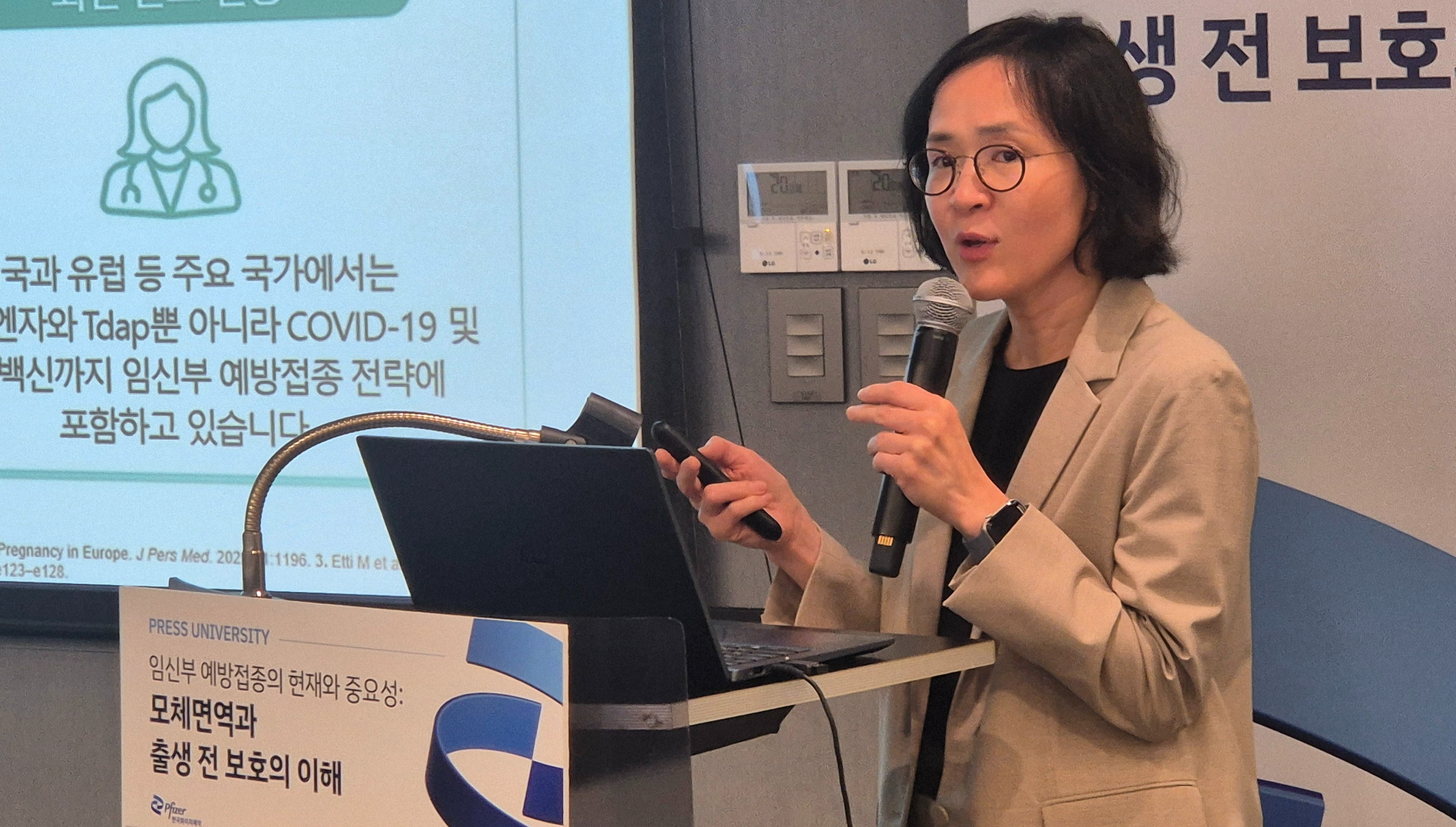
- Attention is drawn to maternal immunization as a strategy that extends beyond preventing maternal infections to complement the immune gap in infants immediately after birth.Leading experts believe that transferring maternal antibodies generated during pregnancy to the fetus via the placenta can help protect early-stage infants, whose immune systems are not yet fully mature, from infectious diseases.On the 10th, Pfizer Korea hosted the '2026 Pfizer Press University' under the theme "Current State and Importance of Maternal Immunization: Understanding Maternal Immunity and Antenatal Protection."Professor Ja Young Kwon, Department of Obstetrics and Gynecology, Severance HospitalAt the event, Professor Ja Young Kwon of the Department of Obstetrics and Gynecology at Severance Hospital and Professor Hyun-Joo Seol of the Department of Obstetrics and Gynecology at Korea University Guro Hospital presented the principles of vaccination during pregnancy, real-world clinical application, and the medical significance of infant protection through maternal immunity.During pregnancy, various physiological changes occur across the immune, respiratory, and cardiovascular systems. Consequently, when infections occur, the risk of disease severity, hospitalization, or severe complications can increase. Furthermore, inflammatory responses driven by severe infections can adversely affect pregnancy outcomes, such as preterm birth or stillbirth. Professor Kwon stated, "Maternal immunization not only protects the mother herself, but also holds vital significance in protecting the fetus and the newborn after birth."Although newborns are exposed to various pathogens immediately after birth, their immune systems remain insufficiently mature. Even following vaccination, establishing adequate immunological memory requires repeated doses and time. According to Professor Kwon, newborns have a high proportion of naive immune cells that have not encountered antigens at birth, and their capacity to rapidly differentiate into memory B cells, which govern long-term immunity following antigen exposure, is limited compared to adults. Consequently, a vulnerable 'immune gap' susceptible to infection can occur during early infancy.Utilizing maternal antibodies to bridge the postbirth vulnerability windowMaternal immunity serves as a key strategy to bridge this immune gap in early life. Because it takes time for infants to develop sufficient immunity, a vulnerable window for infection inevitably arises in early life. Experts explain that elevating maternal antibody levels through vaccination during pregnancy directly increases the volume of antibodies transferred to the fetus. When a pregnant woman generates antibodies via vaccination, immunoglobulin G (IgG) antibodies cross the placenta to the fetus. The infant can then utilize these maternally derived antibodies after birth to respond to infection.Gestational timing also impacts antibody transfer. The expression of Fc receptors responsible for IgG transport across the placenta increases progressively toward late pregnancy. Professor Kwon noted that transplacental transfer of maternal IgG becomes highly active starting around 28 to 32 weeks of gestation, with fetal antibody concentrations rising toward late pregnancy. Accordingly, administration is timed during late pregnancy based on specific vaccine characteristics to align peak maternal antibody response with optimal transplacental transfer windows. Professor Kwon explained, "If we elevate maternal antibody levels through vaccination before transfer, the infant can start life with high antibody titers from the moment of birth," and added, "Even as antibody levels gradually wane later on, the baby can remain protected over a longer duration."She added, "Maternal immunization delivers a triple benefit: protecting the mother, protecting the fetus, and ultimately protecting the newborn."Accumulating clinical evidence for maternal vaccines… Global expansion of target populationsSeol, Department of Obstetrics and Gynecology, Korea University Guro HospitalMaternal immunization is already widely utilized in real-world clinical practice, primarily centered on influenza and pertussis.Professor Hyun-Joo Seol emphasized that influenza vaccination reduces infection risks and disease severity in mothers while concurrently helping prevent infections in infants during early life.In particular, influenza vaccination holds significant medical value in bridging the immune gap before 6 months of age, when infants are not yet eligible for direct vaccination. Citing domestic and international real-world data, Professor Seol added that maternal vaccination reduced maternal influenza infection and hospitalization risks, while protective efficacy against infection was also confirmed in infants. Pertussis vaccination carries a distinct objective of infant protection. While pertussis often presents with mild severity in adults, it can cause severe complications such as apnea or lead to mortality in infants under 1 year of age, particularly those under 2 months.Consequently, administering the Tdap vaccine during pregnancy to transfer maternal antibodies to the fetus serves as an established strategy to protect infants until they receive their primary pediatric immunization.Recently, the application of maternal immunity has expanded to include respiratory syncytial virus (RSV). While RSV infection often manifests as a mild cold in adults, it can precipitate severe lower respiratory tract infections, such as bronchiolitis and pneumonia, in infants and young children. It is regarded as a critical target for prophylaxis due to the heavy clinical burden of hospitalizations and ICU admissions in infants under 1 year old. Professor Seol highlighted that unlike conventional maternal vaccines, the RSV vaccine was designed from its initial clinical development stage with the primary objective of protecting infants via maternal passive immunity.Professor Seol noted, "While influenza and COVID-19 vaccines were originally developed for the general population and subsequently accumulated clinical data in pregnant women, the maternal RSV vaccine differs in that it was specifically engineered from inception to protect infants through maternal passive immunity."Globally, more countries are integrating maternal RSV immunization into public health policy.According to Professor Seol, several countries have incorporated maternal RSV vaccines into their National Immunization Programs (NIPs). At the same time, guidance in the United States recommends late-pregnancy vaccination to prevent RSV-associated lower respiratory tract disease in infants after birth.Professor Seol stated, "Maternal vaccination represents a critical passive immunization strategy that protects the mother while bridging the immune gap in infants immediately after birth," and concluded, "From now on, when applying novel vaccines to pregnant women, providing robust evidence and accurate communication regarding gestational safety alongside clinical efficacy will be crucial."
- Product
- 12.5·15mg Mounjaro quickly sell out…retail price is being discussed
- by Kang, Hye-Kyung Aug 10, 2026 08:43am
- High-dose Mounjaro (tirzepatide) 12.5mg and 15mg are distributed in local pharmacies.As high-dose Mounjaro (tirzepatide) 12.5mg and 15mg are distributed, community pharmacies in South Korea are discussing retail pricing strategies and commercial considerations. High-dose Mounjaro, which was previously supplied and distributed primarily through hospital-adjacent pharmacies near major tertiary hospitals, is now being released to local community pharmacies.Following the sequential launches of the 2.5mg and 5mg doses in August of last year, 7.5mg in October, and 10mg in November, these high-dose 12.5mg and 15mg formulations are now available nationwide in South Korea's product supply system across all approved dosage strengths. However, due to limited initial stocking volumes, allocation quantities per pharmacy are reportedly restricted. A local community pharmacist said, "We were allocated just two units each for both the 12.5mg and 15mg strengths," adding, "As the distribution of high-dose products ramps up, patient dose escalations are expected to progress sequentially." This explains a step-by-step escalation process, where patients currently receiving the 10mg dose will gradually escalate to the 12.5mg and 15mg dose ranges.While inventory for lower Mounjaro doses remains ample, stock levels for 12.5mg and 15mg are currently registering as '0' across ordering platformsAnother pharmacist stated, "We initially received only the 15mg product and were informed that 12.5mg orders were backlogged and would be supplied sequentially starting later this week," adding that "pharmacies are receiving a stream of patient inquiries asking whether high-dose stock has arrived."The pharmacist added, "For patients, expanding treatment options is welcome news, particularly for those who have been waiting to step up their dosage."With the full distribution, pharmacies are also agonizing over how to set retail prices. The pharmacist voiced concern, saying, "Because the wholesale purchasing price for 12.5mg and 15mg is steep, deciding on retail pricing is difficult," and added, "It is particularly stressful given that certain pharmacies, notably in key commercial hubs like Jongno and Gangnam, are selling virtually at wholesale cost." Based on the lowest prices listed on non-face-to-face platforms, retail prices for the 12.5mg and 15mg doses were set only about KRW 15,000 to 20,000 above wholesale acquisition cost.Another pharmacist noted, "There has been a notion that products like Wegovy and Mounjaro are available for special prices at certain pharmacies registered as Onnuri traditional market gift certificate merchants," adding, "Local neighborhood pharmacies lack price competitiveness, and with high acquisition costs coupled with non-returnable inventory policies, a market distortion concentrating patient traffic toward select large pharmacies is present."
- Policy
- Pfizer’s hemophilia drug Hympavzi passes DREC review
- by Lee, Jeong-Hwan Aug 10, 2026 08:43am
- On the 6th, Pfizer Korea's reimbursement application for its hemophilia treatment ‘Hympavzi (marstacimab)’ received conditional approval from Korea's Drug Reimbursement Evaluation Committee (DREC).On the day, the Health Insurance Review and Assessment Service (HIRA) announced that the committee had determined the therapy to be eligible for National Health Insurance reimbursement provided that Pfizer accepts the reimbursement price below the assessed value.‘Acceptance of the proposed reimbursement price below the assessed value’ means that reimbursement may be applied if the company agrees to the price range determined by HIRA.The company submitted a reimbursement application for Hympavzi as a routine prophylactic treatment to reduce or prevent bleeding episodes in adults weighing at least 35 kg and pediatric patients aged 12 years or older.The proposed reimbursement population includes patients with severe hemophilia A (congenital factor VIII deficiency) without factor VIII inhibitors and severe hemophilia B (congenital factor IX deficiency) without factor IX inhibitors.If Pfizer accepts a reimbursement price proposed by the DREC, the company may proceed to the next stages of the reimbursement process, including drug price negotiations with the National Health Insurance Service (NHIS) and final deliberation by the Health Insurance Policy Deliberation Committee (HIPDC) before a final reimbursement decision is made.
- Company
- Emerging 'triple comb therapies for diabetes'...up 59% in the first half
- by Kim, Jin-Gu Aug 10, 2026 08:43am
- In the first half of this year, the South Korean triple-combination diabetes drug market expanded to KRW 6 billion, a 59% year-over-year (YoY) increase. Analysis suggests that the market is at its height, as products featuring various active ingredients and combinations have joined the market since the second half of last year.Furthermore, market growth is expected to accelerate as major pharmaceutical players, including Chong Kun Dang, Dong-A ST, Boryung, LG Chem, and Handok, add their respective triple-combination therapies to the market.Triple-combination therapies expand since H2 last year… Up 59% YoYAccording to pharmaceutical market research firm UBIST on the 8th, outpatient prescription sales in the domestic triple-combination diabetes drug market reached KRW 6 billion in the first half of this year, up 59% from KRW 3.8 billion in the first half of last year.Quarterly prescription sales of triple combination diabetes therapies (unit: KRW 100 million, source; UBIST)The market for triple-combination diabetes therapies formed in early 2023, following consecutive patent expirations of major DPP-4 inhibitors and SGLT-2 inhibitors, alongside the expansion of health insurance reimbursement coverage for triple combination therapy.Hanmi Pharm and Daewon Pharmaceutical joined. In the third quarter of 2023, they launched 'Sildapa M' and 'Dapasita M,' respectively, combining dapagliflozin + sitagliptin + metformin. In the first quarter of the following year, Dong-A ST launched 'Sugatree,' combining dapagliflozin and metformin with its proprietary novel drug Suganon (evogliptin).However, initial growth remained modest as only three companies had entered the market at the time. Led by these three products, quarterly prescription sales in the triple-combination diabetes market stayed below KRW 2 billion through the fourth quarter of 2024.The dynamic shifted starting in the second half of 2025 as follow-on products featuring similar active ingredients and combinations aggressively entered the market. During this period, Chong Kun Dang's 'Emsiformin,' Zenuone Sciences' 'Forxita M,' and GC Pharma's 'Sitadapam M' officially joined the market. Entering this year, additional latecomers, including KyungDong Pharma, joined. Currently, 47 products across 14 pharmaceutical companies have obtained approval as triple-combination diabetes drugs.Throughout this expansion, the prescription market for triple-combination diabetes drugs grew significantly. In the second quarter of this year, the market grew to KRW 3.3 billion, indicating that commercial growth is now in full gear. Industry projections suggest that if this trajectory continues, the market will expand beyond KRW 10 billion W by the end of this year.Major players (Chong Kun Dang, Dong-A, Boryung, LG Chem, and Handok) signal competition in the triple-combination therapy areaThe pharmaceutical industry anticipates that the growth trajectory of the triple-combination diabetes market will steepen further, driven by expectations that major manufacturers holding novel originator molecules will add their own triple-combination drugs to the market.For Chong Kun Dang, 'Duviempol,' formulated around its proprietary novel drug Duvie (lobeglitazone), was added to the reimbursement listing in June. The product combines lobeglitazone with empagliflozin and metformin, marking the first triple-combination therapy to pair an SGLT-2 inhibitor + TZD + metformin.Chong Kun Dang's diabetes treatment portfolio expands to 20 products, including Duvie and Januvia. Among these, three are triple-combination therapies: Duviempol, Duvimet-S (sitagliptin / lobeglitazone / metformin), and Emsiformin (empagliflozin / sitagliptin / metformin).Boryung received product approval for 'Truempa LM' in June and is preparing for its market launch. The drug is a combination of empagliflozin + linagliptin + metformin. Boryung's diabetes portfolio expands to 14 products, with two triple-combination therapies: Truempa LM and True DSM (dapagliflozin / sitagliptin / metformin).Dong-A ST has also announced the addition of another triple-combination drug. Building around its proprietary drug Suganon (evogliptin), Dong-A ST already markets Sugatree (dapagliflozin / evogliptin / metformin) and is expected to add "Suganova" (empagliflozin / evogliptin / metformin) to its lineup. Dong-A ST applied for product approval for Suganova in March.Additionally, LG Chem and Handok are reportedly developing triple-combination therapies based on their own proprietary novel drugs.In September of last year, LG Chem received Phase 1 clinical trial approval for "Zemidapamet," a triple-combination therapy combining Zemiglo (gemigliptin) with dapagliflozin and metformin. Handok has similarly conducted clinical trials evaluating a triple combination therapy combining its in-house drug Tenelia (teneligliptin) with empagliflozin and metformin.
- Company
- Flexible pricing contracts drive apparent surge in prescription sales
- by Kim, Jin-Gu Aug 10, 2026 08:43am
- Prescription sale data of several homegrown new drugs, including Fexuclue (fexuprazan), a P-CAB treatment for gastroesophageal reflux disease (GERD), and Envlo (enavogliflozin), an SGLT-2 inhibitor for diabetes, appeared to soar by as much as sixfold within a single month. Industry observers, however, analyzed that the spike is just an optical illusion that reflects the introduction of Korea's new flexible drug pricing contract system, rather than an explosive increase in actual prescriptions.Fexuclue sales double to KRW 15.1 billion, Envlo jumps nearly sixfoldAccording to the market research institution UBIST on the 7th, Daewoong Pharmaceutical's Fexuclue recorded KRW 15.1 billion in prescription sales in June, up 115% year over year from June last year (KRW 7.0 billion) and 113% month over month from May (KRW 7.1 billion).Since July 2024, Fexuclu had consistently generated monthly prescription sales of around KRW 7–8 billion. However, its June figure more than doubled.Prescription sales of Daewoong Pharmaceutical's SGLT-2 inhibitor Envlo rose even more sharply. After posting steady monthly sales of KRW 900 million to KRW 1.1 billion, Envlo recorded KRW 5.3 billion in June alone, roughly equivalent to its combined prescription sales over the previous 5 months.Monthly prescriptions of Fexuclue (top) and Envlo (bottom) (Unit: KRW 100 million, Source: UBIST)Similar trends were also observed with products containing the same active ingredient as Fexuclue. Daewoong Bio's GERD treatment Wecab generated KRW 1.9 billion in June prescription sales, up 214% year-on-year and 93% from the previous month.HanAll Biopharma's ‘Abcito,’ which had consistently posted KRW 200–300 million in monthly prescription sales, reached KRW 600 million in June. IN Therapeutics' ‘Velox Cab’ also nearly doubled its monthly prescription sales.Flexible pricing scheme behind the apparent surge…an optical illusion rising due to the raised list priceIndustry observers note that all 5 products were included in the government's flexible drug pricing scheme. The government recently introduced the scheme as part of broader drug pricing reforms. Under the system, a product's list price and actual transaction price can differ. The policy aims to improve patient access to innovative medicines while strengthening the global competitiveness of homegrown new drugs.The first project included 12 products from eight companies. Korean products selected were Fexuclue, Envlo, Wecab, Abcito, and Velox Cab. Daewoong Pharmaceutical adopted the flexible pricing scheme to strengthen competitiveness while expanding exports to Latin America, India, and other overseas markets. For Envlo, the strategy was adopted to preserve export pricing while competing globally against products such as Forxiga (dapagliflozin) and Jardiance (empagliflozin).Industry sources estimate that Fexuclue's list price roughly doubled, while Envlo's list price increased about fivefold. Fexuclue's list price was determined based on the highest adjusted A8-country price of its comparable drug ‘Vocinti (vonoprazan).’ Under the flexible pricing scheme, list prices are generally set within the highest adjusted price among the A8 countries (the United States, United Kingdom, Germany, France, Italy, Switzerland, Japan, and Canada). For homegrown new drugs that are not yet listed in A8 countries, comparable products are used as reference.Among multinational pharmaceutical products, ‘Xtandi (Astellas Korea),’ ‘Pergoveris (Merck),’ ‘Faslodex (AstraZeneca Korea),’ and ‘Skyrizi (AbbVie Korea)’ have also been included in the scheme. However, because these products account for very little outpatient prescribing, the impact was not significant in UBIST prescription data.More products are expected to adopt the flexible pricing track. Beginning in July, ‘Rinvoq (AbbVie Korea),’ ‘Xultophy (Novo Nordisk Korea),’ and ‘Scemblix (Novartis Korea)’ were additionally included. Also, drugs in the same class as Fexuclue, ‘K-CAB (tegoprazan, HK Inno.N),’ and ‘Vocinti (vonoprazan, Takeda Pharmaceuticals Korea)’ are being discussed as candidates. ‘Jaqbo (zastaprazan, Onconic Therapeutics)’ is also a potential candidate.However, pharmaceutical distributors and pharmacies say the monthly addition of new products to the scheme is creating significant administrative confusion. Although the government allows paperwork-based returns to reduce administrative burdens, settlement procedures for price differences remain complicated, and reimbursement timelines vary, resulting in a growing workload for frontline stakeholders.
- Opinion
- [Desk’s View] Rare disease pilot needs participation, not hesitation
- by Eo, Yun-Ho Aug 10, 2026 08:43am
- Fast-tracking the reimbursement listing process by reducing the review period for new drugs deemed necessary for patients. This is an objective few would oppose. That said, previous initiatives of this kind have consistently faced questions over their effectiveness.In many cases, difficulties in demonstrating cost-effectiveness or prolonged review timelines meant that products were rarely listed within the target timeframe. Against this backdrop, the government has introduced a far more ambitious proposal.The pilot program for the ‘expedited reimbursement of rare disease therapies’ aims to complete listing within 100 days. More significant than the timeline itself is the mechanism: both cost-effectiveness assessments and price negotiations will be waived, while eligible products will be listed upfront at 90% of the lowest adjusted A8 reference price without negotiations over projected budget impact.Eligible medicines must treat diseases covered under Korea's Critical Illness Special Calculation program, excluding rare cancers. Products should already be approved, under regulatory review, or preparing for submission, and must already be reimbursed in at least three of the eight A8 reference countries. Applications will be accepted through August, with the pilot scheduled to begin in October.By waiving pharmacoeconomic evaluation and adopting an upfront listing model similar to the waived products, the pilot effectively embraces the "list first, evaluate later" approach that the pharmaceutical industry has long advocated.Despite achieving this long-sought goal, the industry reaction is lukewarm. The industry's greatest concern is in generating evidence for the post-listing reassessment. The government plans to establish real-world registries to generate real-world evidence (RWE) and reassess products after 5 years. Depending on the results, reimbursement status could remain unchanged, the price could be reduced, or patients could be required to pay the full cost.With debate over the validity of RWE itself yet to be fully resolved, such reassessments could, in effect, cause a product to lose reimbursement status after 5 years. From the perspective of multinational pharmaceutical companies, this could mean that the Korean government officially labels one of their products as ‘ineffective.’Another new requirement is the mandatory submission of a ‘patient treatment continuity assurance plan,’ a document that has never before existed in Korea's reimbursement system. With no detailed guidance yet available, this unknown requirement is adding to companies' hesitation. Because the pilot targets rare disease therapies, whose patients generally have longer life expectancies than cancer patients, concerns also remain over expenditure caps.The industry needs to show courage. It was the one that had been persistently asking the government to "Open the door first and tighten the rules later." Bold reforms inevitably come with risks. A pilot program is, by definition, a testing ground that lays the ground for a permanent system. Pharmaceutical companies need to actively participate and voice their opinions to establish a stable framework for the final program. The government, too, is concerned that the Trump administration's most-favored-nation (MFN) pricing policy could affect access to innovative medicines. The rising awarness of the need for a change has triggered the pilot. Such a long-awaited project should not be left to wither away in calculated neglect."
- Company
- Jaqbo wins first overseas approval in India
- by Choi Da Eun Aug 09, 2026 04:04pm
- Onconic Therapeutics announced on Aug. 6 that its treatment for erosive gastroesophageal reflux disease (GERD), Jaqbo (zastaprazan), was granted manufacturing and marketing authorization from India's Central Drugs Standard Control Organization (CDSCO).The approval marks Jaqbo’s first regulatory approval outside Korea. Authorized as ‘Zastaprazan Citrate Tablets 20 mg,’ the product can now be manufactured and marketed in India as a treatment for erosive GERD.Jaqbo completed its Phase III clinical trial in India in June and filed a New Drug Application shortly thereafter. The company received regulatory approval approximately 2 months later.Last year, Onconic Therapeutics entered into an exclusive licensing agreement with a local Indian pharmaceutical company for Jaqbo. Under the agreement, the local partner is responsible for development, regulatory affairs, manufacturing and commercialization of Jaqbo in India. Following the approval, the company plans to move forward with launch preparations, including post-marketing surveillance (PMS), product registration, packaging, manufacturing and distribution.Onconic believes the approval marks the transition of the company’s overseas business from technology transfer and development to commercialization. Under the agreement, the approval is expected to trigger milestone payments. Once commercial sales begin in India, the company also expects to generate royalty income based on local sales performance.With a population of more than 1.4 billion, India is one of the world's largest pharmaceutical markets. Demand for GERD treatments has been on the rise alongside economic development and changing dietary habits. While proton pump inhibitors (PPIs) have traditionally dominated the market, potassium-competitive acid blockers (P-CABs) have recently emerged as an important new treatment option because of their rapid and sustained acid suppression.Since its launch in Korea in October 2024, Jaqbo has continued to expand its prescription volume. The drug generated KRW 21.2 billion in prescriptions in Q1 this year, followed by KRW 25.6 billion in Q2. It is currently pursuing regulatory approvals and commercialization across 27 countries, including China, India and Latin America.An Onconic Therapeutics official said, Following the successful completion of the Phase III trial in India and the submission of our marketing application in June, we secured manufacturing and marketing approval in just about 2 months, bringing the local launch into clear view. We will work closely with our partner to ensure a successful launch in India and translate it into global sales growth and royalty revenue."
- Policy
- "Ban on platform wholesale act"·"warehouse pharmacy reg act" expected passage in AUG
- by Lee, Jeong-Hwan Aug 09, 2026 04:04pm
- Attention is focused on whether amendments to the Pharmaceutical Affairs Act, which include restricting non-face-to-face intermediation platforms from concurrently operating pharmaceutical wholesaling businesses and regulating exaggerated signage and advertising by "warehouse-style" or "factory-style" pharmacies, will pass the plenary session of the extraordinary National Assembly this month (August). On the 4th, the Democratic Party of Korea held a strategy meeting. It proposed to the People Power Party that a National Assembly plenary session be convened on the 13th to pass delayed public welfare legislation. The two pieces of legislation attracting significant interest from the healthcare industry are amendments to the Pharmaceutical Affairs Act that have already cleared both the standing committee and the Legislation and Judiciary Committee.They are known as the "ban on non-face-to-face platform wholesale establishment and operation act" and the "warehouse-style pharmacy signage and advertising regulation act".Among them, the bill banning platform wholesale operations has been delayed for nine months without being tabled before the plenary session, even after passing the Legislation and Judiciary Committee on November 26 of last year. The delay stems from opposition raised by certain ruling and opposition lawmakers and the Ministry of Small and Medium Enterprises and Startups, who sympathized with pushback from the platform and venture startup industries, stalling the plenary vote on the bipartisan-approved bill.According to National Assembly officials, the bill is expected to be tabled and passed during this month's plenary session in its original form without modifications.This is because the bill was passed with bipartisan consensus, and there is no reasonable justification or rationale to undergo revisions at a point when non-face-to-face is set to be fully institutionalized on December 24.Key provisions of the bill include adding non-face-to-face intermediation operators under the Medical Service Act to the grounds for disqualification from obtaining an herbal medicine dealer or pharmaceutical wholesaler license, while prohibiting pharmaceutical wholesalers from selling drugs directly or through third-party wholesalers to pharmacies that have entered into service contracts with affiliated non-face-to-face intermediation operators.The bill also includes provisions mandating pharmacists to verify patient prescription and administration histories for narcotics or psychotropic drugs via the Drug Utilization Review (DUR) system when dispensing such controlled substances, as well as linking the DUR system with the Narcotics Information Management System (NIMS).Regarding the bill regulating warehouse-style pharmacy signage and advertising, an amendment to the Pharmaceutical Affairs Act sponsored by Vice Speaker Nam In-soon was independently reviewed and passed by the Legislation and Judiciary Committee on the 29th of last month.The core of the bill prohibits pharmacy founders from using designations as their pharmacy's formal business name that could induce drug misuse or abuse, as specified by Ordinance of the Ministry of Health and Welfare.A grace period provision was also established under the amendment, allowing pharmacy founders who currently use prohibited designations, such as "warehouse-style pharmacy", to retain those names for only up to six months following the implementation of the revised act.Upon plenary passage of the Pharmaceutical Affairs Act amendment sponsored by Vice Speaker Nam, the Ministry of Health and Welfare (MOHW) is expected to initiate the enactment and revision of subordinate regulations under the Pharmaceutical Affairs Act to restrict terms that encourage drug misuse or abuse, such as "warehouse-style pharmacies".A Health and Welfare Committee official of the National Assembly stated, "Both parties are agreeing on the necessity to process delayed public welfare bills during the August special National Assembly session," adding, "The Pharmaceutical Affairs Act amendment banning non-face-to-face platforms from operating drug wholesaling, which passed the Legislation and Judiciary Committee last year but remained unhandled across the year, is highly likely to be processed this month".

- Opinion
- [Reporter’s View] Tighter disclosure rules stall biotech innovation
- by Cha, Ji-Hyun Aug 09, 2026 04:04pm
- Korea's financial regulators have once again moved to tighten disclosure requirements for the pharmaceutical and biotech sector. The latest measures require companies to provide more detailed justification for valuations during initial public offerings (IPOs) and disclose more specific terms of technology licensing agreements. The stated goal is to reduce information asymmetry and strengthen investor protection.The government’s policy objective of improving disclosure transparency is well-founded. Confidence in capital markets begins with adequate disclosure. Given past cases in which clinical results or licensing deals were overstated, or public disclosures conflicted with media reports, specific standards and guidelines are a welcome development.The problem lies in the policy's overall direction. Recent regulatory reforms affecting the pharmaceutical and biotech industry have focused almost exclusively on investor protection and tighter oversight. Authorities have raised participation requirements for institutional investors involved in IPO pricing and expanded mandatory lock-up periods for allocated shares. They have now gone even further by strengthening disclosure obligations related to corporate valuations and research and development achievements.In contrast, little progress has been made in expanding exit opportunities for investors. For Korean biotech startups and their investors, an IPO remains virtually the only viable exit strategy. Because the mergers and acquisitions (M&A) market remains underdeveloped, opportunities to recover investments through corporate sales or stake disposals are limited. This is why a significant number of biotech ventures continue to rely almost exclusively on public listings, regardless of their stage of development or market conditions.Yet there has been little meaningful policy effort to address this structural issue. While IPO rules, disclosure requirements and listing regulations continue to become more stringent, few initiatives have been introduced to promote M&A activity or encourage corporate acquisitions through government incentives. In effect, policymakers are raising the bar for going public without preparing other exit routes for investors.When exits are blocked, venture capital cannot get back its investments from existing funds, making it difficult to raise new funds. As investment capital dries up, early-stage biotech startups are among the first to feel the impact. Even with technological capabilities, an increasing number of companies have no choice but to delay development schedules or halt pipelines because they fail to secure the funds necessary for entering clinical trials and conducting subsequent research and development.Meanwhile, companies that have lost their competitiveness often remain in the market instead of being consolidated through acquisitions or restructuring, surviving on government subsidies or repeated equity offerings and convertible bond issuances. As capital and talent remain tied up in underperforming companies, funding fails to reach more promising innovators. Ultimately, innovative companies lose growth opportunities, while so-called "zombie biotechs" remain in the market.Investor protection is a fundamental principle of any capital market. But a market that focuses solely on protection without providing viable exit opportunities cannot remain sustainable. It is time for policymakers to shift their focus beyond ‘how companies should be listed and regulated’ to ‘how investments can be exited and recycled into innovation.’ The government should introduce tax incentives and expand policy financing that reduce the burden of corporate acquisitions, and create diverse exit channels such as M&A and secondary share sales. Only then can recovered capital flow back into innovative companies, creating a sustainable virtuous cycle for Korea's biotech ecosystem.

- Opinion
- [Reporter's View] Surgical robotics, What is needed to export domestic tech?
- by Hwang, byoung woo Aug 09, 2026 04:04pm
- Surgical robotics companies in South Korea are seeking unexplored domains in the global market.Some companies are directly challenging the laparoscopic surgery market established by Da Vinci; others are focusing on specific surgical procedures, such as orthopedics, neurosurgery, and kidney stone removal. Rather than simply following the market built by the industry leader, this strategy aims first to secure domains where domestic companies can fully demonstrate their technological capabilities.What is noteworthy in these challenges extends beyond robotic technology. South Korea is a market equipped with highly skilled medical professionals and the capacity to integrate novel medical technologies into clinical practice rapidly. Intuitive, a global leader in surgical robotics, also highly values the proficiency and robotic surgery execution capabilities of Korean clinicians.Outcomes in robotic surgery are not determined solely by equipment performance. Clinical value is generated only when medical practitioners' surgical skills, hands-on experience with equipment, and hospital operating room management systems come together. For domestic companies, this means that surgical experience accumulated alongside Korean clinicians can itself serve as a core competitive advantage in overseas markets.Domestic references are also crucial. Not just merely tracking how many units were installed in which hospitals, real surgical volume, applicable surgical techniques, patient outcomes, and physician learning curves must be accumulated. If companies can package domestically validated equipment with surgical techniques and training programs, they can reduce the adoption barriers that foreign hospitals must overcome.Notably, many of the areas targeted by domestic companies do not directly compete with leading global platforms. If Korean physicians develop novel surgical techniques and companies reflect them into hardware and software improvements, there is potential to establish a Korean-style standard in specific surgical procedures. This creates an export model that goes beyond shipping a single device to bundling clinician training, surgical protocols, and clinical data together.Establishing such a virtuous cycle is difficult through corporate effort alone. For emerging medical device companies to secure sufficient domestic clinical experience, active hospital participation is required; conversely, for hospitals to adopt new systems, they must overcome burdens related to cost and safety. The time and financial investment needed to generate clinical evidence are also substantial.Policy support must also extend beyond simple R&D funding or capital equipment purchases. Public hospital demonstrations should be designed to lead to real-world surgeries and long-term data accumulation, with the resulting evidence used for international regulatory approvals and export documentation. The scope of support needs to be broadened to encompass clinician training, maintenance systems, and local partner identification.Institutional discussions to evaluate the clinical value of robotic surgery must progress concurrently. If comprehensive reimbursement is difficult, criteria should first be established to assess efficacy, safety, and patient benefits by specific surgical procedure. Products that fail to secure operational adoption in their home market face steep challenges in earning sufficient credibility overseas.The strength of South Korea's surgical robotics industry does not lie solely in robotic arms or software. Its core competitiveness is in the coexistence of highly-skilled medical professionals, real-world clinical settings, and companies capable of rapidly reflecting clinical feedback into product design.If the surgical skills of Korean medical professionals and real-world clinical data are integrated into the niche markets identified by domestic surgical robots, domestic references can become assets that drive overseas exports. What is needed now is not unconditional support for companies, but considerate policy design that connects these unique strengths into a sustainable industry ecosystem.
