
- LOGIN
- MemberShip
- 2026-05-04 10:36:30
- Policy
- AbbVie renews RSA for leukemia drug 'Venclexta'
- by Lee, Tak-Sun Jul 17, 2024 05:50am
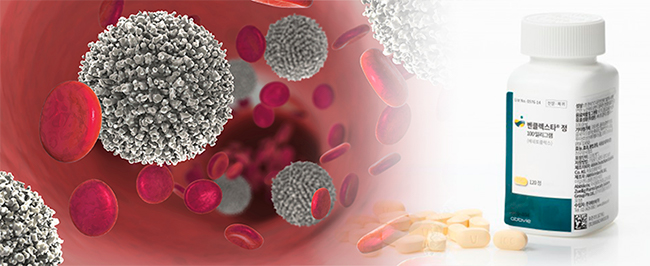
- Product photo of AbbVie Korea Sources said Abbvie Korea has signed a risk-sharing agreement (RSA) renewal agreement for its 'Venclexta Tab (Venetoclax).' Consequently, Venclexta Tab will be reimbursable for five years under the RSA agreement. According to sources on July 16th, AbbVie and the National Health Insurance Service (NHIS) have reached an agreement to sign RSA renewal for Venclexta. When it became reimbursement listed in April 2020, Venclexta was approved for the RSA agreement. The type was a total expenditure cap model. Venclexta can be reimbursed for use as monotherapy for the third-line treatment or more in patients with Chronic Lymphocytic Leukemia (CLL) who have relapsed or refractory to previous chemo-immunotherapy and inhibitors of B-cell receptor signaling and also for the second-line combination treatment of patients with relapsed or refractory CLL who have had previously undergone at least one or more chemotherapies. Since February last year, Venclexta can be reimbursed when used in combination with decitabine or azacytidine for the first-line treatment of adult patients over 75 years and above with newly diagnosed acute myeloid leukemia (AML) who are inadequate to receive induction chemotherapy. Due to expanded use, the price of the 10 mg product was reduced from KRW 4,299 to KRW 3,755, 50 mg product from KRW 21,492 to KRW 18,870, and 100 mg product reduced from KRW 42,984 to KRW 37,740. At that time, the company entered a negotiation for resigning RSA. The initial RSA agreement was set to end on March 31st of last year, but the company continued to negotiate by a temporary contract. Then, sources said that they had signed the final agreement this time. The RSA contracts are valid for five years. "Since Venclexta is a pharmacoeconomic evaluation exemption drug, it has a total expenditure cap. This might have been the focus of negotiations for the total expected claim amount resulting from expanded usage," an industry official said. In 2023, Venclexta's sales totaled KRW 7.5 billion, according to IQVIA data.
- Company
- Will Eylea K-biosimilar overcome evergreening in the U.S.?
- by Hwang, Byung-woo Jul 16, 2024 05:48am
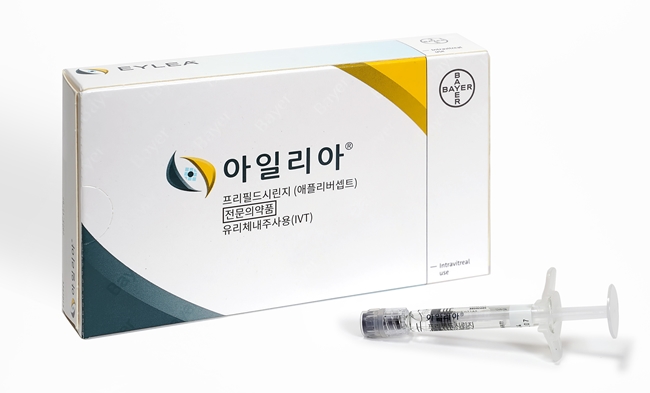
- The expiration of the U.S. substance patent for the blockbuster biopharmaceutical Eylea (aflibercept) is expected to spark competition in the biosimilar market. Samsung Bioepis, which preemptively received marketing authorization for an Eylea biosimilar, is stuck in a patent dispute with Regeneron, which owns the original Eylea. It is expected that other latecomers will also face a tough time entering the market depending on Regeneron’s patent response. Pic of Eylea Eylea is a treatment for eye diseases such as macular degeneration that binds to vascular endothelial growth factor (VEGF) and inhibits neovascularization. The drug generated global market sales of KRW 13 trillion. Of these, the U.S. market accounts for USD 5.719 billion in sales, accounting for a 62% share. Currently, Eylea’s patent has expired in Korea and its biosimilar has been launched into the market, and the patent is scheduled to expire in May 2025 in Europe. In the U.S., the product patent expired in June of this year, but the other patents will expire as follows: ▲formulation patent in 2027, ▲ regimen patent in 2032, ▲purification and batch patent in 2040 The difference between biosimilar entry in Korea and the United States is in the existence of patent disputes. In Korea, Bayer, which sells Eylea, did not file a patent suit, so there was no problem with the launch of Eylea biosimilars. However, in the U.S., Regeneron filed a patent infringement lawsuit against Celltrion and Samsung Bioepis in November last year. Regeneron patent defense remains a hurdle in the Eylea market...launch timing remains in question Samsung Bioepis is the company facing an immediate issue due to the patent suit. In May, the U.S. Food and Drug Administration (FDA) approved Samsung Bioepis' Eylea biosimilar, Opuviz, along with India's Biocon Biologics' Yesafili, as the first biosimilars. However, on June 15, the U.S. District Court for the Northern District of West Virginia granted Regeneron's motion for a preliminary injunction against Samsung Bioepis, which prevents Opuviz from launching in the United States. Samsung Bioepis immediately filed an appeal against the preliminary injunction, but the appeal is expected to take 6 months to a year. A Samsung Bioepis official said, “We have no position on the patent dispute that we can disclose at this time.” While it is difficult to predict the outcome of the patent dispute, the general consensus is that the ruling aligns with Regeneron’s intent as the request for a preliminary injunction has been granted. "In the current situation where the product patent has already expired, it is important to determine whether the formulation patent is infringed, and Samsung Bioepis or Celltrion must prove that the patent has not been infringed," said an official from the Korean Intellectual Property Office. "Regeneron's strategy will be to delay the launch of the similar by claiming patent infringement." "In addition to the remaining formulation patent, Regeneron's dosing regimen patent expires in 2032, among others, so the company has an evergreen strategy in place and does not need to hasten the process. The Korean company can appeal to the federal court, but that will also take time, so the originator has an advantage." Considering this, it is difficult to gauge the exact timing of Opuviz’slaunch as its launch is banned until the end of the patent dispute. Given the nature of biosimilars, where multiple competitors enter the market at the same time, it is important to arrive first into the market. However, in this situation, it is unclear whether the biosimilar companies will be able to enjoy the advantage of first approval. The industry believes this is a red flag for Celltrion as well, as the company has also completed applying for U.S. FDA marketing authorization for its biosimilar. However, the result may differ, as there have been cases like Humira where the original and generic companies discussed royalty payments to enable earlier market launch of the generics. AbbVie had delayed the launch of Humira biosimilars beyond the product patent term by building a patent barrier, but Amgen agreed to pay royalties on the remaining patents and released the first Humira generic. "At the time, the industry expected Humira’s generic release to be a long battle as well, but discussions were dramatically held, allowing for the generic’s launch last year,” said an industry official. "If the company feels that it has been extended Eylea’s patent long enough, there is a possibility that the timing of the launch of its generics could be coordinated through similar discussions.”
- Policy
- Temp reimb extension for antivirals including Tamiflu ends
- by Lee, Tak-Sun Jul 16, 2024 05:46am
- The limited reimbursement extension granted to antiviral drugs used for influenza such as Tamiflu has ended after 22 months. The program, which was introduced as a measure to prepare for the simultaneous spread of the COVID-19 and influenza pandemic, came to an end with the recent lifting of the flu pandemic warning. Now that the COVID-19 pandemic has subsided, the old reimbursement standard will be applied in the future in normal circumstances. According to the Health Insurance Review and Assessment Service (HIRA), the limited health insurance reimbursement coverage granted to influenza antiviral drugs, which had been in effect since September 13, 2022, ended on the 12th. The subject items were oral oseltamivir, such as Tamiflu Cap, and topical zanamivir, such as Relenza Rota Disk. Both drugs were used when the patient was confirmed positive for influenza through tests (rapid antigen test or polymerase chain reaction tests). However, when the influenza warning was issued, ▲patients under the age of 9, ▲pregnant or mothers within 2 weeks of giving birth, ▲65 years old or older, ▲immunocompromised, ▲metabolic disorders, ▲heart disease, ▲lung disease, ▲kidney dysfunction, ▲liver disease, ▲blood disorders, ▲neurological and neurodevelopmental disorders, and ▲patients under the age of 19 who are receiving long-term aspirin treatment were covered even without testing. In November 2021, the government temporarily extended health insurance coverage for antiviral drugs for suspected high-risk patients (pediatric, elderly, immunocompromised, etc.) even if they did not test positive and no influenza warning was issued, due to concerns about the outbreak of COVID-19 and influenza twindemic. The temporary extension was in effect from November 15, 2021, to June 20, 2022. Then, during the flu season, the measure was extended for a second time from Sept. 13, 2022, to July 12, 2024. The KDCA lifted the influenza pandemic warning for the 2023-2024 season on the 12th. As a result of the surveillance of influenza samples at the clinic level (300 centers), the number of suspected influenza patients fell below the epidemic threshold for 3 consecutive weeks, resulting in the decision to lift the flu pandemic warning after consultation with experts. Typically, the influenza season in Korea runs from November to April of the following year. If the number of cases remains below the epidemic threshold, it is unlikely that the reimbursement standard for antiviral drugs will be extended. In the case of Tamiflu Cap, the reimbursement extension and the flu epidemic resulted in KRW 15 billion in outpatient prescriptions (UBIST) last year. This was the highest in the last 5 years, and the explosive demand caused frontline pharmacies to struggle with supply. During the COVID-19 pandemic, on the contrary, sales were below KRW 5 billion as the flu waned. In 2020, sales recorded KRW 2.7 billion, and in 2021, no prescriptions were recorded at all. An industry official analyzed, "With the reduced flu epidemic and return to normal of the reimbursement standards, prescriptions for antiviral drugs such as Tamiflu will likely decrease.”
- Opinion
- [Desk’s View] Respect Korea's generic drug industry
- by Lee, Tak-Sun Jul 16, 2024 05:46am
- The Korean pharmaceutical industry is characterized by generic competition upon the original drug’s patent expiry. When a new drug's patent expires, companies develop products that contain the ingredients for marketing. Combination drugs, reformulated drugs, and generic drugs containing patent-expired drug ingredients are the weapons of domestic pharmaceutical companies. With more than 200 finished drug pharmaceutical companies focusing on the market for patent-expired drugs, it is indeed an inefficient industry. If 10 of these pharmaceutical companies devoted to new drug development, the industry would have been bigger with be less excessive competition. However, in the 100-year history of Korea’s pharmaceutical industry, the industry’s focus has always been on the development of generic drugs, not new drugs. With global pharmaceutical companies such as Pfizer, Novartis, and Roche dominating the new drug market, it is unlikely that the Korean pharmaceutical industry will be reorganized into a new drug-oriented industry in the near or even distant future. However, it is a self-evident fact that the generic drug industry is increasing Korea’s self-sufficiency in finished drugs. According to the Korea Food and Drug Statistical Yearbook, as of 2022, the self-sufficiency rate of finished drugs in Korea was 68.7%, and the self-sufficiency rate of API was 11.9%. Although we are highly dependent on foreign countries for APIs, a high proportion of the finished drugs are made in Korean factories and supplied to domestic patients. The self-sufficiency of finished drugs is also high because of Korea’s generics industry foundation. This is a factor that gives us a sense of stability in terms of market supply and demand. If Korea’s generic industry had been dominated by foreign companies, the Korean drug market would have been unstable, being fully dependent on imports. However, the excessive competition in the generic industry needs to be addressed as it leads to inefficient market conditions. Illegal rebates and substandard quality are among the issues that hinder the competitiveness of the Korean pharmaceutical industry. Furthermore, the inability of competition to drive down prices in the state-controlled insurance market also plays a role in the inability of this bad practice to be corrected In this regard, the key to the proper growth of the Korean generics industry depends on the creation of a normal competition system that does not break the current high degree of self-sufficiency. However, it is unclear whether the state’s recent drug price reduction policies reflect this situation, especially as the government's recent external reference pricing reevaluation disregards Korea’s situation. The very idea of comparing generic drug prices in 8 developed countries that have different pharmaceutical industry structures seems to be a misunderstanding or complete disregard of the Korean generic industry. A unilateral drug price reduction policy will kill the domestic generic industry. This is a problem that could lead to the retreat of the Korean pharmaceutical industry, which is built on generics. There is no guarantee that killing the generics industry will lead to the growth of the new drug industry. The recent 'Study on Improving the Drug Price System for Generic Drugs' that the government conducted to implement the generic drug price reduction policy also suggests that it is necessary to strengthen policies to encourage the use of low-priced products in the early stages. If the government doesn't intend to kill the generic industry, it should prepare measures to encourage the use of low-priced generics before unconditionally lowering drug prices. Korea's generic drug industry may look less sophisticated than those of developed countries that develop new drugs, but is not something to disregard.

- Policy
- ‘Exclude GER and CAN or cut price by 50% less'
- by Lee, Tak-Sun Jul 15, 2024 05:48am
- As the government is pushing for external reference pricing reevaluations, the pharmaceutical industry has proposed two alternatives: excluding Germany and Canada from the A8 countries used for comparison or reducing the drug price cut rate by 50%. The government is reportedly reviewing the proposed options. The industry has taken a hardline stance, stating how it will not go through with the government’s external reference pricing reevaluation plan as is in its current state. According to industry sources on the 12th, the industry officials that participated in the 10th meeting for the external reference pricing reevaluations that was held on the 5th proposed the options above. The industry suggested that 6 countries (the U.S., Japan, the U.K., Switzerland, France, Italy, and the U.K.) should be used as reference, excluding Germany and Canada, which have different drug pricing systems from Korea and will inevitably render significant losses when comparing the countries’ public reimbursement benefits. Germany and Canada use external reference pricing systems. Under the reference pricing system, only generics below a certain price are granted listing, so the reimbursed public price of drugs is significantly lower than that of Korea, which may increase the losses rendered by domestic pharmaceutical companies. The pharmaceutical industry is also reported to have proposed a plan that reduces the drug price reduction amount by 50% when Germany and Canada are included. This is a method that has been applied in past external reference pricing reevaluations. "Including the public reimbursement prices applied in Germany and Canada in Korea’s reevaluation is quite unreasonable on the industry’s part," said an industry insider, adding, "Considering how the reductions in the drug price cut amount were applied in the past, it shouldn't be a big problem this time around.” The insider added, “The government is well aware of the damage that adding Germany and Canada will bring to the industry, so I believe it will accept one of the two options we have proposed today.” The current sources of external reference prices in the MFDS’s regulations are the U.S. Redbook (wholesale prices), the U.K. MIMS (pharmacy prices), the German Rote Liste (pharmacy prices), the French French Public Drug Database (ex-factory prices), the Italian Codifa (ex-factory prices), the Swiss Specialties List (ex-factory prices), the Japanese Ministry of Health, Labor and Welfare's Drug Price Standard (pharmacy price), and the Canadian PMPRB & Ontario Drug Benefit Formulary (ex-factory prices) However, the government's proposal became controversial because it had calculated the external reference price of drugs for reevaluation based on the price that is publicly reimbursed or similarly paid. Therefore, it is expected that the government will soon decide on the issue of applying the drug prices in Germany and Canada or reducing the cut amount by 50% and finalizing its draft.
- Company
- Bladder cancer drug Balversa lands in KOR 1.5yr after apvl
- by Eo, Yun-Ho Jul 15, 2024 05:47am
- The new bladder cancer drug Balversa may now be prescribed, one year and a half after being approved in Korea. According to industry sources, Janssen Korea’s FGFR targeting urothelial carcinoma (bladder cancer) drug Balversa (erdafitinib) recently passed Seoul Asan Medical Center’s drug committee (DC) review. Balversa was approved by the Ministry of Food and Drug Safety in January 2022. Specifically, the drug is indicated for the treatment of adult patients with locally advanced or metastatic urothelial carcinoma (mUC) with FGFR2 or FGFR3 genetic alterations whose disease has progressed on or after at least one line of prior systemic therapy, which includes platinum-based chemotherapy, or whose disease has progressed within 12 months of neoadjuvant or adjuvant treatment with platinum-based chemotherapy. However, the approval of PD-1 and PD-L1-directed immuno-oncology agents in the first- and second-line settings that followed Balversa’s approval led to the need for Balversa todemonstrate efficacy in patients who previously received these agents. The situation was addressed with the publication of Balversa’s Phase III THOR trial study, which demonstrated a prolonged overall survival (OS) benefit with Balversa over chemotherapy in patients with metastatic urothelial carcinoma with FGFR3/2 gene alterations whose disease progressed after first-line treatment with immuno-oncology agents. In the study, Balversa prolonged overall survival (OS) compared with chemotherapy in patients with metastatic urothelial carcinoma. Results showed that over a median follow-up of 15.9 months, the mOS was 12.1 months in the Balversa arm, reducing the risk of death by 36% compared with the 7.8 months in the chemotherapy arm. Based on these findings, the U.S. Food and Drug Administration (FDA) granted Balversa formal approval in January, but with a more restricted indication than originally approved, and the European Medicines Agency's (EMA) Committee for Medicinal Products for Human Use (CHMP) recently recommended expanded indications for Balversa. Janssen Korea has also additional submitted results from the THOR study to Korea’s Ministry of Food and Drug Safety. Therefore, the company well may launch Balversa in earnest in the second half of the year. It remains to be seen whether Balversa will be able to go beyond landing in medical institutions and gain insurance coverage in Korea. Meanwhile, bladder cancer is one major cancer that has lacked a targeted therapy option. Balversa is the first targeted anti-cancer drug for bladder cancer with a novel mechanism of action that inhibits fibroblast growth factor receptor (FGFR). FGFR is a biomarker involved in cancer cell growth that is associated with various cancers. FGFR mutations are particularly common in bladder cancer, with 20 to 30% of patients carrying mutations.
- Company
- Severe asthma drug 'Fasenra' lands in general hospitals
- by Eo, Yun-Ho Jul 15, 2024 05:47am
- AstraZeneca Korea’s Fasenra (benralizumab) has passed the drug committees (DC) of tertiary general hospitals. ‘Fasenra,’ a severe asthma treatment, has been listed for insurance reimbursement this month and is now available for prescriptions at general hospitals. Industry sources said that AstraZeneca Korea’s Fasenra (benralizumab) has passed the drug committees (DC) of tertiary general hospitals, including Samsung Medical Center in Seoul, Seoul National University, Seoul Asan Hospital, and Seoul St. Mary’s Hospital, and medical institutions, including Kyungpook National University Hospital, Pusan National University Hospital, Seoul National University Bundang Hospital, Ajou University Hospital, Chonnam National University Hospital, and Chungnam National University Hospital. Since July 1st, Fasenra has been approved for reimbursement. Severe eosinophilic asthma accounts for most of the cases of severe asthma. The basis of Fasenra’s approval was improvements in patients with severe eosinophilic asthma: up to 87% of the patients treated with Fasenra no longer had advanced asthma. The drug can be reimbursed when treating patients with severe eosinophilic asthma who are inadequately controlled despite treatment with high-dose inhaled corticosteroid-long-acting beta-agonist (ICS/LABA) and long-acting muscarinic antagonist (LAMA). In detail, the following criteria should be met: ▲Within the year before starting treatment, the eosinophil count in the blood was 300 cells/㎕ or higher, and within the first year of treatment, systemic oral corticosteroids (OCS) were required for acute exacerbations four or more times, or within 6 months before starting therapy, systemic oral corticosteroids were continuously administered, or ▲The eosinophil count in the blood was 400 cells/㎕ or higher within the year before starting treatment. Systemic corticosteroids were required for acute exacerbations three or more times within the first year of treatment. Severe eosinophilic asthma accounts for approximately 84% of severe asthma cases. It involves frequent exacerbations and may lead to reduced quality of life despite treatment with high-dose inhaled corticosteroids and other conventional therapies. In particular, when symptoms are not controlled, even with asthma controllers, oral steroids may be necessary. However, long-term use of these medications is associated with systemic side effects such as osteoporosis, hypertension, and diabetes. Therefore, biological agents are recommended to reduce the dosage of these treatments. Fasenra is a targeted biologic agent that binds directly to interleukin-5 receptor alpha (IL-5Rα) expressed on eosinophils' surface, inducing cell apoptosis. It has been demonstrated to reduce blood eosinophil counts rapidly within one day of administration. In the global Phase 3 SIROCCO clinical study, enrolling 1205 severe eosinophilic asthma patients worldwide, including Korea, Fasenra administered at 8-week intervals showed a 51% reduction in annual asthma exacerbation rates compared to placebo after 48 weeks of treatment. In the CALIMA study, Fasenra treatment also resulted in a 28% reduction in annual asthma exacerbation rates compared to placebo.
- Company
- K-Bios make progress in new rare lung cancer drug dev
- by Son, Hyung-Min Jul 15, 2024 05:47am
- The c-MET-mutation-targeted NSCLC drugs that are being developed by Korean pharma and biotech companies have been recognized for their potential. Recently, Abion Bio signed an agreement with Janssen to receive Leclaza (lasertinib) free of charge. This agreement will allow Abion Bio to commercialize the combination of its in-development vabametkib and Leclaza for the treatment of lung cancer. InnoCure Therapeutics’s targeted therapy has been recognized for its value by being selected as a national new drug development project According to industry sources on the 13th, Johnson & Johnson’s subsidiary Janssen will provide domestic biotech Abion Bio free lasertinib for its EGFR-positive non-small cell lung cancer (NSCLC) clinical trial. Abion Bio’s NSCLC drug candidate in development is vabametkib, which targets the c-MET mutation. c-MET is a protein expressed by the mesenchymal-epithelial transition (MET) gene. It is one of the proteins that transmit signals to cells and is considered a typical oncogene and is associated with the development of various solid cancers, including lung, colon, stomach, and liver cancers. It is estimated that 6% of patients with non-small cell lung cancer harbor a c-MET mutation. Janssen will be testing lasertinib’s potential in EGFR-positive NSCLC in combination with Abion Bio’s vabametkib. Approximately 30-40% of patients with EGFR-mutated NSCLC develop a c-MET mutation after receiving a prior EGFR targeting therapy. In clinical results, vabametkib demonstrated an objective response rate (ORR) of 52.9% in patients with c-MET-mutated NSCLC who failed prior treatment. In previously untreated patients, the ORR was 75%. In terms of safety, vabametkib’s incidence of grade 3 or higher treatment-related adverse events (TRAE) was 10%. This was lower than the TRAE rates of 38% and 28% identified with Novartis' Tabrecta and Merck's Tepmetko. Abion is aiming to develop vabametkib as a treatment for EGFR-mutant NSCLC in combination with Leclaza and as monotherapy for MET-mutant NSCLC. InnoCure develops c-MET-mutated lung cancer treatment with target protein degrader InnoCure Therapeutics has also made progress in the development of c-MET lung cancer therapies. Recently, the company's new drug candidate was selected as an R&D project to support the establishment of a new drug ecosystem that is being organized by the Korea Drug Development Fund. InnoCure develops new drugs with next-generation target protein degrader (TPD) technology. The company is focused on the development of new drugs for non-small cell lung cancer by utilizing its main technologies, ELKBIL, NEOELKBIL platform, and its oral formulation platform MILPROTAC. InnoCure Based on its TPD technology, Innocure has been developing a c-MET targeted inhibitor for the treatment of NSCLC. With the selection of this new drug development project, the company plans to derive new drug candidates and conduct research to enter clinical trials. While there is a treatment available for MET exon 14 deletion among c-MET mutations, no other targeted therapies are available on the market. InnoCure Therapeutics aims to address this unmet need by degrading the c-MET target protein.
- Company
- K-Bio speeds up novel drug development to treat MASH
- by Son, Hyung-Min Jul 15, 2024 05:47am
- The biotech industry in South Korea has made notable achievements in treating MASH. Many pharmaceutical companies have failed in clinical trials to develop a treatment for MASH due to its complex pathogenesis. As the first treatment for MASH has been approved, the industry draws attention to the success of the commercialization of other new drug candidates of various pharmaceutical companies that entered clinical trials in South Korea. On July 11th, the current trend in the MASH treatment development was discussed during the Bioplus-Interphex Korea 2024 (BIX 2024), sponsored by the Korea Biotechnology Industry Organization (Korea Bio) and RX Korea. MASH was previously known as Non-Alcoholic Steatohepatitis (NASH). International academic associations, such as the American Association for the Study of Liver Diseases (AASLD), agreed upon the use of the term Metabolic dysfunction-associated steatohepatitis (MASH). Developing treatment for MASH has been challenging until now. However, the first novel drug to treat MASH in March became available after the U.S.-based Madrigal Pharmaceuticals’ Rezdiffra was approved. The late-comers eye on the opportunity to develop the second potential novel drug development through various mechanisms. Lee Seul-ki, D&D pharmatech CEO D&D pharmatech has entered a phase 2 trial in the United States. The company has recently received approval for its Investigational New Drug (IND) application from the U.S. Food and Drug Administration (FDA). DD01’s phase 2 trial will be conducted across 10 institutions in the United States, enrolling 68 patients with MASH-accompanying overweight and obesity. DD01 is an agent targeting both GLP-1 and glucagon. In preclinical trials, D&D pharmatech’s DD01, an agent targeting both GLP-1 and glucagon, has shown a significant decrease in liver fat and a weigh loss effect. DD01’s effect has been maintained in a phase 1 trial. The phase 1 trial evaluated the drug tolerance and safety of DD01 and placebo in patients with MASH accompanied by obesity instead of in healthy adults. The clinical results demonstrated that a 4-week DD01 treatment reduced liver fat by 52%. These results were similar to those of the 1-year treatment with semaglutide (57% reduction) or Tirzepatide (47% reduction). High-dose (80 mg) DD01 treatment reduced liver fat by 30% in all patients. In contrast, the placebo’s reduction effect was shown in 8% of all patients. Lee Seul-ki, D&D pharmatech’s CEO, said, “We believe that glucagon plays an important role because many obesity patients also have MASH. Clinical studies reported that glucagon therapy reduces liver fibrosis by 50-80%.” Lee added that “DD01 is formulated with GLP-1 and glucagon in a ratio of 10:1. In a preclinical study, DD01 demonstrated to maintain the effect of GLP-1 as well as the effect of glucagon.” “We need a drug that effectively regulates blood glucose and weight to treat MASH. GLP-1 drugs that can quickly elevate blood glucose have adverse reactions, such as dizziness and vomiting. For DD01, we confirmed that it is more slowly released into the blood than other therapies. Additionally, we received approval of an IND application for a new protein therapy targeting collagen synthesis and investigating the potential of various novel drugs,” Lee commented. OliX Pharmaceuticals is developing a new drug candidate, OLX75016, to treat MASH. OLX75016 works by inhibiting MARC1 expression, which is related to the pathogenesis of MASH and reducing liver fat. June Hyun Park, OliX Pharmaceuticals Director OliX Pharmaceuticals has recently entered a phase 1 trial for OLX75016 in Australia and started the first patient administration. Notably, OliX Pharmaceuticals is investigating the possibility of using OLX75016 in combination with novel drugs targeting GLP-1 and glucagon. Since most MASH treatments target GLP-1, OliX Pharmaceuticals plans to develop treatments that have distinguished mechanisms and improve synergistic effects with GLP-1 agents. In a preclinical trial, OLX702A demonstrated effects in reducing liver fat and reversing liver fibrosis. June Hyun Park, OliX Pharmaceuticals Director, said, “Fibrosis contributes to deaths associated with liver. We are confirming the role of MARC1 in liver fibrosis. As we confirm MARC1 as an important factor in fibrosis, we are exploring the potential of novel drug development.”
- Opinion
- [Reporter’s View] MFDS provides support for drug shortages
- by Lee, Hye-Kyung Jul 15, 2024 05:47am
- A thyroid cancer treatment ‘Theracap’ was once listed on a “Drug Shortages Database,” where suspension of the supply or shortages are listed as current, of the Ministry of Food and Drug Safety (MFDS)’s Drug Safety website and then removed. Saehan Industry expected the drug shortage and notified the MFDS of its suspension in accordance with the ‘Regulation on Safety of Pharmaceuticals (Ordinance of the Prime Minister), which states that when a marketing authorization holder of medicinal product discontinues production, importation, or supply of drug products, they must report to the MFDS the reasons no later than 60 days before the suspension day. Shortly after the notification, Theracap was removed from the Drug Shortages Database. Saehan Industry said reduced demand and an increase in raw materials produced in a manufacturing plant in Braunschweig, Germany, are the causes of drug shortages. After the MFDS let the company know that it would review possible administrative supports, the company likely withdrew reports of suspension of the drugs. Saehan Industry said, “We are internally reviewing alternative measures to produce the products instead of approval cancellation.” The MFDS anticipated that because 'Sodium Iodide(131I),' the active ingredient of Theracap, has been designated as an essential medicine, approval cancellation of the product due to a raw material issue would, in turn, affect patients. The MFDS already has various administrative support measures to resolve drug shortages after experiencing acetaminophen shortages during COVID-19. However, many small pharmaceutical companies are not aware of the administrative support provided by the MFDS. This year, the MFDS established a pharmaceutical management and support team and enhanced the management of items of drug shortages. Suppose other companies have difficulties manufacturing pharmaceuticals, such as National Essential Drugs, similar to the case of Saehan Industry. They may knock on the MFDS’ pharmaceutical management and support team. For instance, Bukwang Pharm’s ‘Synthyroid’ was a similar case. Synthyroid is designated as a National Essential Drug, containing ‘levothyroxine’ as the active ingredient used to treat hypothyroidism. Due to a recent increase in demand, it was sold out in pharmacies. After multiple press coverages of drug shortages, the MFDS sent an official request to Bukwang Pharm to contact the MFDS for the administrative support they needed. Bukwang Pharm needed support in relaxing the 52-hour working week for workers at the plant. Consequently, the MFDS is close to negotiating with the Ministry of Employment and Labor. Although the government is preparing various support measures to address drug shortages, this approach may not completely solve the shortages in clinical settings. However, we hope the government’s various support measures, such as the national essential drugs, will help stabilize the supply of medicinal products.
