
- LOGIN
- MemberShip
- 2026-05-04 10:36:31

- InterView
- ‘Ireland, a bridgehead for companies entering the EU mkt'
- by Nho, Byung Chul Jul 10, 2024 05:48am
- Rory Mullen, Global Head of Biopharma and Food at Investment Promotion & Development Agency Ireland "Ireland has the best condition for multinational pharmaceutical and biotech companies to invest and operate in as a bridgehead to the European market." Rory Mullen, Global Head of Biopharma and Food at Investment Promotion & Development Agency Ireland explained so during his recent visit to South Korea. Mr. Mullen visited Korea to discuss European expansion strategies with the country's health authorities and pharma and bio companies. He cited Ireland's abundant R&D talent, low corporate taxes, business-friendly state policies, and EU-GMP certification as some of the benefits. Global Head Mullen said, “Ireland's pharma and biotech industry is 95% foreign-owned, with academy-affiliated biotechs and indigenous pharmaceutical companies such as Chanelle Pharma and Alma.” Ireland is a pharma-bio powerhouse with combined domestic and foreign healthcare sales of KRW 110 trillion. Currently, more than 20 global Big Pharma companies, including Pfizer, Lilly, BMS, and Gilead, have established production bases and research centers in Ireland, which serve as a base for their entry into the European market. Pfizer and BMS were the first multinational pharmaceutical companies to set foot in Ireland more than 60 years ago. Today, Pfizer has 5 smart factories in the country, including a small molecule API product manufacturing facility and a biologic agent manufacturing facility. BMS has a biologics manufacturing facility in Ireland and recently announced plans to build an additional large-scale aseptic production plant. SK Biotech, a Korean company, acquired BMS's small molecule API manufacturing facility in Ireland and is currently executing a plan for its successful European expansion. Other Asia-Pacific pharma and biotech companies with a presence in Ireland include China's Wuxi and Japan's Takeda and Astellas. Wuxi is considered a successful example of an Ireland-based company that crossed the Atlantic and entered the U.S., the world's No. 1 healthcare market. Japanese pharmaceutical companies are also planning new roadmaps for establishing ADC manufacturing sites in Ireland, to ultimately capture the European market. One of the reasons Ireland is so highly regarded as a strategic location by 'Big Pharmas' is because of the country's pro-business policies and corporate tax breaks. Mr. Mullen said, "Ireland has one of the lowest corporate tax rates in the world, at 15% for large corporations (including multinational companies) and 12.5% for small and medium-sized enterprises. In addition, we have a tax refund system to encourage R&D activities, which allows companies to maximize profit value." Korea's corporate tax rate is 24%, while the OECD average is around 21%, meaning that if a Korean company were to relocate its production and R&D headquarters to Ireland, the company may benefit from a tax break of up to 10%. Mr. Mullen added, “Korea has been producing impressive results in the pharma and biotech industry in recent years. Samsung Biologics has already grown to become a global CDMO on par with Lonza. Celltrion and SK Bioscience are also on their way to becoming K-bio leaders." Meanwhile, Ireland, an island nation neighboring the United Kingdom, is a prime example of a former shepherding nation turned healthcare powerhouse. The country fostered the pharma-bio sector as its new growth engine more than 50 years ago and has since become a bridgehead and outpost for global Big Pharmas seeking to enter Europe. With a population of 5.5 million, it has half the population of Seoul, but as an EU-OECD-UN member, it has one of the highest quality of life in the world. With a nominal GDP per capita of about USD 100,000 (about KRW 120 million), the country’s GDP is more than 3 times higher than that of Korea's. The country also has a Human Development Index that ranks second in the world and is highly regarded as a hidden developed country.
- Company
- GC Biopharma ships first batch of ‘Alyglo’ to the U.S.
- by Son, Hyung-Min Jul 10, 2024 05:48am
- GC Biopharma announced on the 8th that it has completed the shipment of the first batch of its blood product ‘Alyglo’, which was approved by the U.S. Food and Drug Administration (FDA) late last year. The shipment will be delivered to specialized pharmacies through warehouses and distributors in the U.S. and is expected to be available for prescription from the middle of this month. Alyglo is a 10% liquid intravenous immunoglobulin treatment used to treat Primary Humoral Immunodeficiency. It received marketing authorization from the FDA in December last year, After approval, GC Biopharma has been carrying out activities to commercialize the drug around its U.S. subsidiary (GC Biopharma USA, Inc.), including signing PBM contracts formulary listings, as well as securing specialty pharmacies. On the 1st of this month, GC Biopharma signed a contract with a large Pharmacy Benefit Manager (PBM) in the U.S. to include Alyglo in its formulary and has also completed contracts with well-known specialty pharmacies and distributors that it targeted as core distribution channels. The company plans to actively secure additional vertically integrated channels, such as PBMs, specialty pharmacies, and distributors, to tap into the U.S. market. The U.S. immunoglobulin market is the world's largest at approximately KRW 16 trillion (USD 11.6 billion) and has been growing at a CAGR of 10.9% over the past 10 years (2013-2023). GC Biopharma’s strategy is to rapidly expand its market share by generating $50 million in sales this year and recording a growth rate of more than 50% every year thereafter.
- Policy
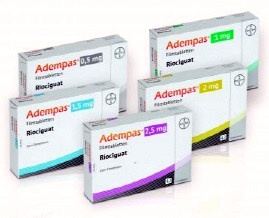
- Reimbursement application submitted for 'Adempas tab'
- by Lee, Tak-Sun Jul 10, 2024 05:48am
- Bayer’s Bayer’s 'Adempas tab,' a treatment for chronic thromboembolic pulmonary hypertension (CTEPH), is being considered for reimbursement listing 10 years after its approval as a novel drug. According to industry sources on July 2nd, a reimbursement decision application for Adempas was recently submitted to the Health Insurance Review and Assessment Service (HIRA). This drug obtained approval in South Korea as an orphan drug in June 2014. Five products with different doses are available, and it has the efficacy and the effect in ▲patients with persistent/recurrent chronic-thromboembolic pulmonary hypertension (CTEPH, WHO Group 4) after surgical treatment or inoperable CTEPH, to improve exercise capacity ▲adult patients with arterial pulmonary hypertension (PAH, WHO Group 1) who have WHO functional class 2-3, to improve exercise capacity. Adempas has been known as the first novel drug to treat CTEPH. CTEPH occurs in patients with chronic pulmonary embolism who progress to chronic obstructive pulmonary disease (COPD) and develop fibrotic stenosis and occlusion, leading to pathological vascular remodeling and increased resistance in the pulmonary arteries. CTEPH is a chronic disease that causes progressive shortness of breath and right heart failure. Symptoms include dyspnea, fatigue, chest pain, dizziness, peripheral edema, cough, and hemoptysis, significantly impacting quality of life. Ultimately, it can progress to heart, kidney, and liver failure, potentially leading to death. Treatment options include pulmonary endarterectomy (PEA) surgery. However, 40% of patients are ineligible for surgery, making drug therapy crucial. Therefore, Adempas was highly anticipated to be the first drug. It has been 10 years since it was approved in South Korea. However, patients had high economic burden because the drug was not covered by the National Health Insurance reimbursement. The industry attributes the drug’s case to the low drug price. According to IQVIA, the drug’s sales performances for the past five years remain at zero. However, Bayer applied for reimbursement 10 years after obtaining the approval. "In clinical trials, Adempas improved symptoms and occurrence rate in CTEPH patients, and it also demonstrated an effect in alleviating shortness of breath," a Bayer representative said. "When the drug becomes reimbursement listed, it will significantly help patients."
- Company
- Tecentriq reapplies for reimb in early stage NSCLC
- by Eo, Yun-Ho Jul 10, 2024 05:48am
- The immuno-oncology drug Tecentriq is reattempting to expand insurance reimbursement to early-stage lung cancer. According to Dailypharm coverage, Roche Korea's PD-L1 inhibitor Tecentriq (atezolizumab) will be presented to the Health Insurance Review and Assessment Service's Cancer Disease Deliberation Committee today (July 10). The specific indication is “postoperative adjuvant therapy after resection and platinum-based chemotherapy for the treatment of patients with PD-L1 TC ≥50% Stage II-IIIA NSCLC. NSCLC is the leading type of lung cancer, accounting for about 85-90% of lung cancer deaths in Korea. Most patients are diagnosed at locally advanced or metastatic stages and about half of the NSCLC patients who undergo complete resection still experience relapse after surgery, which poses a significant burden on the patients’ part. Tecentriq was deliberated as an agenda by the CDDC in May last year but failed to receive reimbursement standards at the time. This time, however, the company is equipped with a new weapon. At the recent American Society of Clinical Oncology (ASCO) meeting, the company added data on Tecentriq’s overall survival (OS) improvement. The data was from the 5-year follow-up of Tecentriq’s Phase III trial, IMpower010. Results showed that in patients with stage II-IIIA NSCLC with PD-L1 expression greater than 50% following complete resection and platinum-based chemotherapy, the OS was 82.7% with Tecentriq adjuvant therapy, significantly higher than that found in the optimal supportive care arm (65.3%). It remains to be seen if Tecentriq can achieve a different outcome by the CDDC this time. Tecentriq is indicated in multiple types of lung cancer and is the first immuno-oncology drug to be approved as a first-line treatment for patients with extensive stage small cell lung cancer in combination with carboplatin and etoposide (chemotherapy). The company is also conducting multiple clinical studies to address unmet medical needs in advanced or metastatic NSCLC as a monotherapy or in combination with other targeted therapies, chemotherapies, and immuno-oncology drugs.
- Company
- Industry struggles to develop new atopic dermatitis drugs
- by Son, Hyung-Min Jul 09, 2024 05:51am
- The domestic pharmaceutical bio-industry is facing difficulties in developing new drugs for atopic dermatitis. Recently, Kangstem Biotech's stem cell therapy drug completed Phase III clinical trials, but the results fell short of expectations. JW Pharmaceutical's atopic dermatitis drug candidate failed to prove its efficacy in a Phase II clinical trial. Nevertheless, the companies’ challenge to develop atopic dermatitis drugs continues. Enzychem Lifesciences submitted an IND for Phase II trial earlier this month, and Shapreon is conducting Phase I/IIa clinical trials in Korea and the United States. SCM Life Science, Daewoong Pharmaceutical, and Novacell Technology are also developing new drugs with new mechanisms of action for atopic dermatitis. #iOn the 19th, according to industry sources, Kangstem Biotech announced on the 4th that its atopic dermatitis drug candidate ‘Furestem-AD inj' failed to meet the primary endpoint in Phase III clinical trials. This is the second time in 2019 that Kangstem Biotech has failed to achieve statistical significance with Furestem-AD. In October 2019, the company failed to achieve statistical significance in the Eczema Severity Index (EASI)-50 endpoint with Furestem-AD and discontinued trials. Furestem-AD is being developed for patients with moderate-to-severe atopic dermatitis eczema who have not responded to existing treatments, including topical and systemic steroids. The Phase III trial was conducted from September 2021 through August 2023 and enrolled a total of 315 adult patients with moderate-to-severe chronic atopic dermatitis who had not responded to existing treatments. The primary endpoint was the percentage of patients achieving Eczema Severity Index (EASI)-50, a measure of atopic severity, at 12 weeks. EASI-50 is defined as a 50% improvement in atopic dermatitis symptoms after treatment. Clinical results showed that 33.0% of patients achieved EASI-50 in the Furestem-AD treatment arm compared to 29.3% of patients in the placebo arm. The percentage of patients achieving EASI-50, which is a measure of atopic severity, was 58% at 1 year, 66% at 2 years, and 75% at 3 years with Furestem-AD. While Furestem-AD was associated with a higher rate of EASI-50 achievement than placebo, the difference was not statistically significant (P=0.6111). However, Kangstem Biotech plans to proceed with the license application due to the significant effect of Furestem-AD in long-term administration. Furestem-AD increased the EASI-50 achievement rate to 48.1% at week 16 and 58.1% at week 24. In terms of safety, Furestem-AD was associated with fewer adverse events than placebo after week 12. JW Pharmaceutical's innovative new drug candidate also failed to meet the primary endpoint. The Danish pharmaceutical company LEO Pharma returned the rights to JW1601, an atopic dermatitis drug, and terminated the technology transfer agreement with JW Pharmaceutical. JW1601 has a dual mechanism of action that selectively acts on the histamine H4 receptor to block the activity and migration of immune cells that cause atopic dermatitis and inhibit histamine signal transduction. Histamine is a neurotransmitter involved in allergic reactions. However, the global Phase II trial reportedly failed to meet its primary endpoint. As there are no atopic dermatitis drugs with this mechanism of action, it could have become a first-in-class drug if developed but did not reach commercialization. The company plans to review future development directions, including the possibility of securing new indications. Development of new atopic dermatitis drugs continue Despite the failure experienced by some companies in proving the efficacy of their drug candidates in clinical trials, the challenge of developing new drugs for atopic dermatitis continues in the domestic pharmaceutical and biotech industry, SCM-AGH, a stem cell therapy for atopic dermatitis being developed by SCM Life Science, also secured positive results in Phase II clinical trials. The company held an IR meeting last month to explain the detailed clinical results of SCM-AGH and future development plans. In a study comparing the efficacy and safety of SCM-AGH versus placebo, SCM-AGH met its primary endpoint. The drug also showed significant results in the secondary endpoint, ESAI-90 at 24 weeks. Also, no adverse events were reported among the 55 subjects who received SCM-AGH. The no adverse events were deemed positive as some inflammation treatments have been associated with safety concerns. SCM Life Science plans to conduct a Phase III clinical trial in Korea with Handok. On the 3rd, Enzychem Lifesciences filed an IND to initiate a Phase II clinical trial for atopic dermatitis to the Ministry of Food and Drug Safety. Based on its immunomodulatory function, EC-18’s mechanism quickly eliminates the hypersensitive immune response caused by allergens, which is the main cause of atopic dermatitis. The trial will evaluate the efficacy and safety of EC-18 in 120 patients with moderate or severe atopic dermatitis. Shapreon’s atopic dermatitis treatment, NuGel, is in clinical trials in the U.S. After receiving global Phase II IND approval for NuGel from the U.S. Food and Drug Administration (FDA) in September last year, Shapreon successfully enrolled its first patient in March of this year. NuGel works by activating GPCR19, which blocks the inflammasome pathway to inhibit cytokine secretion. In addition, Daewoong Pharmaceutical is conducting 2 clinical trials in the United States. DWP212525, which targets JAK3 and TEC family kinase (TFK), is in the preclinical trial, and DWP213388, a BTK-ITK inhibitor, is in its Phase I clinical trial. Novacell, an affiliate of DongKoo Bio&Pharma, is developing NCP112 for the treatment of mild-to-moderate atopic dermatitis targeting formyl peptide receptor 2 (FPR2), a G protein-coupled receptor (GPCR) involved in inflammation.
- Policy
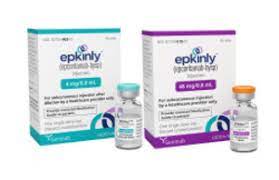
- 1st bispecific antibody Epkinly approved with a condition
- by Lee, Hye-Kyung Jul 09, 2024 05:51am
- 'Epkinly (epcoritamab),' the first T-cell–engaging bispecific antibody, was found to have been approved under the condition that the company submits Phase III trial data. In Korea, the approval was granted on March 20 based on Phase II clinical trial data and a Phase III trial protocol, but at the time, a condition was added that the company must submit data from a therapeutic confirmatory trial. According to the minutes of the Central Pharmaceutical Affairs Committee meeting held in April, which were recently released by the Ministry of Food and Drug Safety, Epkinly was granted conditional approval and was required to submit Phase III trial results after the approval of the product by applying Article 24, Paragraph 3 of the 'Regulations for Approval and Review of Biological Products, etc. 'Epkinly (epcoritamab),’ which is imported by Abbvie Korea, is a bispecific monoclonal antibody that binds to both the CD3 on the surface of T-cells and CD20 on the surface of B-cells and is indicated for the treatment of adult patients with relapsed or refractory diffuse large B-cell lymphoma (DLBCL) after 2 or more lines of systemic therapy In Korea, Polivy, Kymriah, Selinexor, and Columvi are approved for the treatment of patients with relapsed or refractory DLBCL. DLBCL is one of the most common blood cancers and is one of the most common types of widely spread (diffuse) non-Hodgkin lymphoma, characterized by rapid progression. Epkinly binds to CD3 to activate T cells and binds to CD20 to bring B cells to the side of activated T cells and induce B cell death. In this regard, a CPAC member said, "In a clinical trial in patients with persistent relapses requiring 3 or more cycles of treatment, Epkinly demonstrated some degree of effectiveness and safety. Its effectiveness and safety have been confirmed over other existing drugs, so we deemed granting conditional marketing authorization was appropriate pending the results of its Phase III clinical trial." When the U.S. FDA granted the drug through its accelerated approval program, the approval was based on the Phase I/II EPCORE NHL-1 study. In 148 patients with relapsed or refractory DLBCL who had received a median of 3 prior therapies, the drug demonstrated an objective response rate of 61%, a complete response rate of 38%, and a median duration of response of 15.6 months in patients with CD20-positive diffuse large B-cell lymphoma. Another CPAC member added, "Based on the Phase II results, Epkinly appears to be an effective and safe agent when compared to other 2nd or later line agents. Therefore, we believed the conditional approval was warranted, subject to submission of its Phase III results."
- Company
- Takeda seeks top-line growth to KRW 300 billion
- by Hwang, Byung-woo Jul 09, 2024 05:51am
- Takeda Pharmaceuticals Korea achieved a double win last year, seeing improvements in sales and operating income. In particular, thanks to the growth of its anti-cancer drug portfolio, the company's sales exceeded the KRW 250 billion mark for the first time in 3 years since 2020, increasing sales growth for the second consecutive year. Takeda Pharmaceuticals Korea logoIn the long run, the key question will be whether the growth of products such as Obizur, which will be listed for reimbursement this year, can offset the decline in sales of Dexilant and Pantoloc. Japanese pharmaceutical companies count the period from April 1 to March 31 as the first fiscal year, and the 16th fiscal year audited report, which includes last year's sales, records performance from April 1, 2023, to March 31, 2024. Sales rebound since 2021... second consecutive year of growth According to the audit reports disclosed in the Data Analysis, Retrieval and Transfer System (DART), Takeda Pharmaceuticals Korea’s (Takeda Korea) 16th fiscal period sales amounted to KRW 253.9 billion, surpassing the KRW 250 billion mark for the first time in 3 years. Takeda had posted sales of KRW 252.6 billion in 2020, and the sales fell to KRW 231.5 billion in 2021. It then rebounded to KRW 249.5 billion in 2022 and continued its upward trend. In line with the revenue growth, operating profit also rose, reaching KRW 9 billion. This is the highest in the last 5 years, with operating profit in the last 4 years being KRW 8.1 billion in 2020, KRW 8 billion in 2021, and KRW 7.5 billion in 2022. Net income also grew from KRW 6.8 billion to KRW 7.9 billion during the same period. This revenue growth indicates that Takeda Korea improved externally and internally last year. This was influenced by the company’s decrease in selling, general, and administrative expenses (SG&A). Commissions paid decreased from KRW 19.5 billion in the 15th period to KRW 5.1 billion in the 16th period, offsetting the increase in other SG&A expenses. In the footnote, it was indicated that the amount of commission paid to Baxalta GmbH of KRW 25.8 billion in the 15th period was eliminated in the 16th period with the company being merged and acquired by Takeda Pharmaceutical International AG. (from the left)Adcetris, ZejulaOncology products lead sales growth...sees sales growth in all major items Takeda Korea's sales recovery to KRW 250 billion was driven by growth in its oncology portfolio. Sales of Alunbrig and Adcetris grew more than 20% year-on-year, and Zejula grew 19%. According to the drug research institution IQVIA, Luprin recorded the highest sales of KRW 30.6 billion. After reaching KRW 32.2 billion in 2019, sales dropped to KRW 27.6 billion in 2022 but surpassed the KRW 30 billion mark again in 2023. In addition, Zejula, which is expanding its influence every year, had the second highest sales among anti-cancer drugs, with sales of KRW 22.6 billion in 2023, up from KRW 19 billion in 2022, and Alunbrig's sales increased from KRW 11 billion to 13.6 billion won during the same period. Sales of Adcetris showed the highest growth. Its sales increased by 29%, from KRW 7.6 billion in 2022 to KRW 9.8 billion in 2023. Taken together, the sales growth of major anticancer drugs last year was about KRW 13 billion. As a result, the company’s oncology portfolio will continue to drive sales growth this year. However, there is the possibility that Adcetris' sales growth may be limited hereon due to its lowered drug price cap on July 1. GI drug sales will inevitably decline...Obizur’s reimbursement is soon expected In the GI space, Mezavant's sales growth was notable. It crossed the KRW 10 billion mark for the first time with sales of KRW 10.1 billion in 2023, up 26% from the KRW 8 billion in 2022. In addition, sales of Kinteles grew 14% to KRW 16.5 billion in 2023 (from KRW 14.5 billion in 2022), and orphan drug Replagal grew 17% to KRW 16 billion (from KRW 13.6 billion in 2022). However, there were also some items that took a turn for the worse. Sales of Dexilant and Pantoloc decreased 8% (from KRW 16.7 billion to KRW 15.3 billion) and 7% (KRW 13.3 billion to KRW 12.4 billion), respectively, compared to 2022, and sales of Adynovate decreased by nearly 20%, from KRW 6.8 billion in 2022 to KRW 5.4 billion in 2023. Considering this, there are voices that it is necessary to prepare a portfolio to expand sales in the long term. The most anticipated item is the reimbursement of Obizur, a treatment for adults with acquired hemophilia A, which was reimbursed in February. The drug for the rare blood disorder has a limited patient population but is expected to contribute to sales with its differentiated sales.
- Policy
- BMS’ Camzyos and Handok’s Empaveli pass the DREC review
- by Lee, Tak-Sun Jul 09, 2024 05:51am
- Bristol Myers Squibb Korea’s 'Camzyos Cap,' a treatment for symptomatic obstructive hypertrophic cardiomyopathy (oHCM), has passed the Drug Reimbursement Evaluation Committee (DREC) review after reconsideration. Handok’s 'Empaveli Inj,' a treatment for paroxysmal nocturnal hemoglobinuria (PNH), also obtained approval for reimbursement and moved on to negotiations. The Health Insurance Review and Assessment Service (HIRA) commenced the 7th Drug Reimbursement Evaluation Committee (DREC) of 2024 and announced that it had decided the appropriateness of reimbursement for these drugs. The review outcome of assessing the appropriateness of benefit coverage for drugs that have applied for a decision: Three pharmaceuticals have been considered for this round of DREC review. The symptomatic oHCM treatment, Camzyos Cap, a PNH treatment, Empaveli Inj, and an NMOSD treatment, Uplizna Inj, received the assessment. Among these, Camzyos Cap and Empaveli Inj obtained appropriateness of reimbursement decisions. Two drugs are expected to undergo drug pricing negotiations with the HIRA and will receive the final decision for reimbursement listings. Camzyos received the reconsideration decision from the DREC review held last month. In just one month, DREC granted the reimbursement appropriateness. On the other hand, Uplizna Inj received a decision that it will meet the appropriateness of reimbursement if the company accepts an amount below the standard. If Mitsubishi Tanabe Pharma accepts an amount below the standard, the drug will be considered for negotiations with the HIRA. If the company fails to take it, the drug will not be listed for reimbursement. If the company accepts an amount below the standard for exemption from the drug pricing negotiations, it will only negotiate the expected claim amount.
- Policy
- Reassessing the comparison of foreign drug pricing is 'idle'
- by Lee, Tak-Sun Jul 08, 2024 05:46am
- The 10th public-private meeting has been held to reassess the comparative methods of foreign drug pricing. However, they exchanged different opinions without reaching a concrete decision. Pharmaceutical industry has particularly opposed to the use of drug pricing references from Germany and Canada. It remains to be seen how the two parties will continue the discussion regarding this matter. According to industry sources, the 10th meeting to reassess the comparative methods of referencing foreign drug pricing was held on the morning of July 5th. The government initially planned to convene the meeting in June, planning to complete gathering opinions, but due to schedule delays, the meeting took place in July. This indicates that the government has considered the current meeting as the final round of gathering opinions. However, the pharmaceutical industry, the attendee of the meeting, argues that further discussion is needed. The differences in opinions are in the reference drug pricing in Germany and Canada, which the government compares drug prices to. The Korean government advocates public reimbursement prices as the reference, while the pharmaceutical industry argues for sales prices. They argued strongly about this matter during the current meeting. The industry argues that comparing Korean drug prices by referencing the public reimbursement price in Germany and Canada, which are also implementing reference-pricing systems, will distort the differences in drug pricing. Under those countries’ reference-pricing systems, China and India’s low-priced generics are frequently reimbursed. The industry argues that the government’s current comparison method works against its aim to set a reasonable drug price by making comparisons to advanced countries (A8). The meeting confirmed the differences in opinions of the government and the industry. Therefore, it remains to be seen whether there will be a next meeting. Since the government claims to have gathered enough feedback, it will likely maintain its current position. Drug pricing is anticipated to be set this year by implementing a weighted mean price comparison method, excluding the highest and lowest drug prices of A8 countries, every three years. It will be applied to pharmaceuticals for chronic diseases that expect patent expirations. The government is likely to pursue the current drug pricing reference sources. However, the two parties are likely to communicate privately until the government makes an official announcement. As a result, the final proposal may change.
- Company
- HCV testing added to the National Health Screening Program
- by Hwang, Byung-woo Jul 08, 2024 05:46am
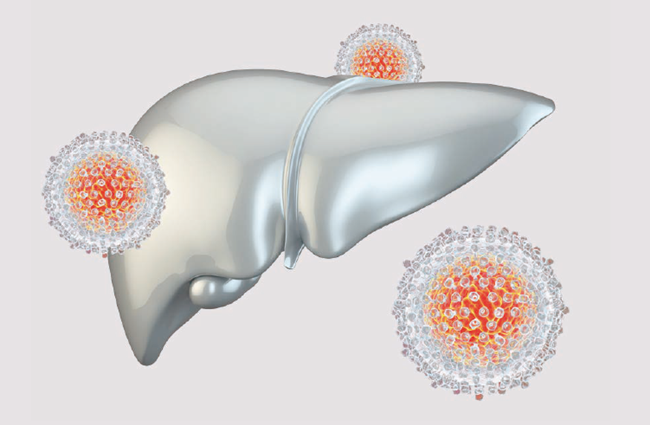
- The government's decision to introduce the long-discussed hepatitis C antibody testing to the national screening program is expected to have a positive impact on its treatment market. According to industry sources, the decision is encouraging as it enables the first step of identifying hepatitis C patients. However, how to link diagnosis and treatment will be a challenge in the future, as the treatment rate has been dropping despite patient identification. Recently, the Ministry of Health and Welfare held the 2nd National Health Screening Committee Meeting in 2024 and confirmed the introduction of new hepatitis C testing and the expansion of osteoporosis screening subjects in Korea’s general health screening program. As a result of the decision, people aged 56 and older will be able to receive an antibody test for hepatitis C during national health screening from 2025. According to the Korean Association for the Study of the Liver (KASL), hepatitis C is responsible for about 10% to 15% of liver cancer cases in Korea. Between 54% and 86% of hepatitis C patients progress to chronic hepatitis, and 15% to 51% of which progress to cirrhosis. The risk of liver cancer in cirrhosis is 1-5% per year, with the risk increasing with age. However, hepatitis C can be cured by taking oral antiviral drugs for 8 to 16 weeks, so screening and treating infected people early is the best way to prevent the spread of the disease. This is why the pharmaceutical industry’s hopes are rising on how the introduction of hepatitis C testing will lead to increased patient identification and treatment. An industry official said, "There had been a large unmet need in hepatitis C, but due to a lack of policy and awareness, many patients were unaware of their infection and were diagnosed late, often after the disease had progressed to liver cancer. The industry is pleased that a meaningful policy has been established." Will sales of AbbVie and Gilead’s treatments also rebound? Currently, the leading hepatitis C treatments are AbbVie’s Mavyret (glecaprevir/pibrentasvir) and Gilead Sciences' Epclusa (sofosbuvir/velpatasvir) and Vosevi (velpatasvir/sofosbuvir/voxilaprevir). In terms of sales, Mavyret sold KRW 57.3 billion in 2019, KRW 46.9 billion in 2020, KRW 46.6 billion in 2021, KRW 39.3 billion in 2022, and KRW 24.3 billion in 2023, showing a yearly decline. Epclusa and Bosebi Vosevi to generate sales in earnest after being granted reimbursement in November 2022, generating KRW 16.1 billion and KRW 3.5 billion respectively last year. In general, Mavyret’s sales have declined with Epclusa and Bosebi taking its place. However, the overall market for hepatitis C drugs has been on a decline or drifting sideways. Since 2020, the combined sales of the 3 products have been in the low to mid KRW 40 billion range. This is not unrelated to the decline in the number of hepatitis C patients in Korea. According to statistics from the Korea Disease Control and Prevention Agency’s Infectious Disease Portal, the number of hepatitis C patients decreased from ▲11,849 in 2020 to ▲11,115 in 2021, ▲8,308 in 2022, and ▲7,225 in 2023 Considering this situation, the introduction of hepatitis C antibody testing in the national health screening program is expected to lead to an increase in the use of hepatitis C treatment as well. An official from the KASL said, "Our society has been pondering how to combat hepatitis C for a long time, and although it is late, we are glad that screening for hepatitis C became possible through the national health screening program. The increase in screening will help us identify and treat patients at an earlier stage." However, there is also a view that additional efforts would need to be made to actively treat patients even after the national screening. According to KASL’s Fact Sheet which was published in 2023, the cure rate for hepatitis C patients was only 58.1% in 2019. This means that 4 out of 10 people diagnosed with hepatitis C do not actually receive treatment. It's also unclear how well the national screening program will be able to identify patients, given that the target age for screening is 56. For this reason, the KDCA is working on a plan to subsidize the cost of confirmatory tests for those who test positive for hepatitis C antibodies in the national health screening program so that they can be confirmed faster. A doctor at A General Hospital said, "The problem in Korea has been the low screening rate itself. Various studies have been conducted on how to treat the confirmed patients afterward. I think the introduction of hepatitis C testing in the national health program will increase patient treatment as well as the use of treatment."
