
- LOGIN
- MemberShip
- 2026-05-04 10:36:27
- Company
- GSK challenges Meningococcal serogroup B mkt with Bexsero
- by Hwang, Byung-woo Jul 18, 2024 05:49am
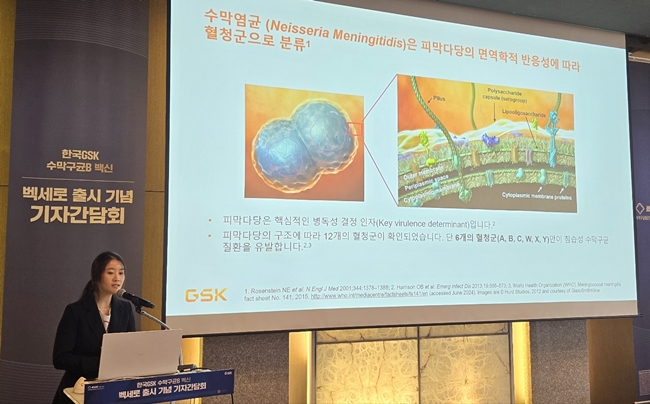
- GSK and Sanofi, the leading meningococcal vaccine companies in Korea, are set to face new competition with the approval of their next-generation vaccines. GSK Korea plans to gain competitivity with Bexsero, which has strengths in protecting against serogroup B, which accounts for the largest share of meningococcal infections in Korea since 2010. #1 GSK Korea held a press conference to celebrate the launch of Bexsero, the first meningococcal serogroup B vaccine in Korea, and discussed the current status of meningococcal B outbreaks and the effectiveness of its vaccine. Meningococcal infections can cause invasive meningococcal infections, meningitis, and sepsis. Invasive meningococcal infection progresses rapidly and can cause death within 24 to 48 hours of the onset of symptoms. Even with treatment, the disease is deadly, with a fatality rate of 8-15%. "Globally, meningococcal infections are most prevalent in infants under one year of age compared to other age groups,” explained Hyun-Mi Kang, Professor of Pediatrics, Seoul St.Mary’s Hospital, who made a presentation at the event, “It causes bacterial meningitis and sepsis, and one to two out of 10 survivor also experience brain damage, hearing loss, and limb loss.” Typical serogroups of meningococci that cause invasive meningococcal infections in humans include A, B, C, W, X, and Y. The most predominant meningococcal serogroup in Korea, the United States, and Europe is serogroup B, with high levels found in infancy and adolescence. From 2010 to 2016, the proportion of meningococcal B serogroup cases identified in Korea was 28%, but from 2017 to 2020, the rate increased significantly to 78%. "The prevalence of meningococcal serogroups varies across countries and time periods, so it is not easy to predict," said Professor Kang. "In Korea, the serogroup B meningococcal infection cases has increased in recent years, increasing the need for its prevention.” GSK had launched Bexsero to address this situation in Korea. "The predominance of meningococcal B in Korea has made it necessary for us to introduce a vaccine to prevent infections caused by meningococcal B," said Dr. Joon Bang, Director of Medical Affairs at GSK Korea. Meningococcal B's capsular polysaccharide is structurally similar to human tissue, which has made vaccine development challenging due to the risk of autoimmune damage. GSK developed Bexsero by applying novel technologies that employ genome sequencing. Since its initial European approval in 2013, GSK has accumulated over a decade of experience in preventing meningococcal B infections, conducting 17 studies on subjects aged 2 months to adults. The most predominant meningococcal serogroup in Korea, the United States, and Europe is serogroup B. However, meningococcal vaccines are not mandatory and are being administered without reimbursement, which means that patient opinions, pharmaceutical company strategies, and pricing influence market competition. With GSK's Menveo and Sanofi's Menactra currently available in the market, the launch price of Bexserois also an area of keen interest. "Bexsero is not intended as a replacement to Menveo; the scope of prevention offered by the two vaccines are different," said Hyunji Kwon, Head of GSK's Vaccine Business Unit in Korea. "We cannot give a specific number because the price of Bexsero is set after a comprehensive review of the vaccine's functions, efficacy, and value."
- InterView
- ‘We need to actively use acetaminophen ER tablets'
- by Eo, Yun-Ho Jul 18, 2024 05:49am
- Byung-Wook Yoo, Professor of Family Medicine, Soonchunhyang University Seoul Hospital and Young-Jin Kwak, Pharmacist, Raemian Star Pharmacy The use of extended-release formulations is increasing in the field of analgesics. Acetaminophen-based medicines, which consumers commonly regard as cold and fever relievers, are usually given in the form of IR tablets (Immediate Release tablets), which are regular tablets that dissolve quickly in the stomach without any special controlled release technology. On the other hand, extended-release tablets (ER tablets) are designed to release slowly in the body using special controlled release technology. Extended-release tablets are characterized by their longer-lasting effect compared to IR tablets and are convenient because they can be taken less often. Dailypharm met with Byung-Wook Yoo, Professor of Family Medicine, Soonchunhyang University Seoul Hospital, and Young-Jin Kwak, Pharmacist, Raemian Star Pharmacy, to hear about the safety and effect of the less familiar ‘acetaminophen ER tablets.’ ◆Useful for muscle and joint pain as it offers 8 hours of pain relief Studies have already demonstrated that acetaminophen extended-release tablets effectively relieve muscle pain. "In a study that provided acetaminophen extended-release tablets or a placebo to patients who experienced muscle soreness after a marathon, patients who received the extended-release tablets showed significantly higher levels of 'muscle soreness relief' and 'treatment satisfaction' than the placebo group, and significantly lower rates of ‘sleeplessness and sleep disturbance due to pain,’" said Professor Yoo. He added, “In practice, we often see age-related degenerative arthritis patients, many of which take multiple prescription medications. It is necessary to consider acetaminophen as a first-line analgesic in these patients due to concerns over drug interactions.” "The commercially available acetaminophen extended-release tablets are 650 mg in dosages and have a two-layer structure with an immediate-release layer and an extended-release layer. Half of the drug dissolves quickly while the other half dissolves slowly, lasting for 8 hours. Because it provides pain relief over a relatively long period of time, it can be useful for muscle and joint pain, which are often known to linger." ◆What about patients with a weak GI system or the need to take pain medication on an empty stomach? Gastrointestinal side effects are always a concern that accompanies the use of analgesics. Acetaminophen can help in this situation as well. "Acetaminophen has similar analgesic effects to non-steroidal anti-inflammatory drugs (NSAIDs), but with greater gastrointestinal safety and significantly lower side effects," explained Professor Kwak. “NSAIDs, on the other hand, can have problematic GI side effects and are sometimes difficult to use in older patients because of underlying medical conditions and drug interactions from polypharmacy." Kwak added that patients with a weak stomach, related medical conditions, and those taking medications that interact with NSAIDs, such as selective serotonin reuptake inhibitors, may want to first consider the use of acetaminophen. "Pharmacists can assess the patient's situation by asking questions on whether the patient usually has gastrointestinal problems and whether the patient often feels uncomfortable after taking medications, and first consider the use of acetaminophen extended-release tablets, which provide longer-lasting pain relief with fewer gastrointestinal side effects for patients with weak stomachs." "In addition, acetaminophen extended-release tablets are usually taken 3 times daily, usually 1-2 tablets, 8 hours apart, and should not be split, as splitting breaks down the drug’s bilayer structure. Also, care should be taken not to exceed the maximum dose of 4,000 mg (up to a maximum of 6 tablets per day)."
- Policy
- MSD begins cervical cancer trials for its drug candidate
- by Lee, Hye-Kyung Jul 18, 2024 05:48am
- The phase 3 clinical trials for MSD’s new drug candidate 'MK-2870 (sacituzumab tirumotecan)' for the second-line treatment of patients with cervical cancer are being conducted in South Korea. This drug is an antibody-drug conjugate (ADC) currently being studied in multi-national clinical trials for various cancer types, including cervical cancer. On July 16th, the Ministry of Food and Drug Safety (MFDS) approved 'The Phase 3 Randomized, Active-controlled, Open-label, Multicenter Study to Compare the Efficacy and Safety of MK-2870 Monotherapy versus Treatment of Physician's Choice as Second-line Treatment for Participants with Recurrent or Metastatic Cervical Cancer (TroFuse-020/GOG-3101/ENGOT-cx20).' MK-2870 is an ADC for which MSD acquired global rights, excluding China, from Kelun-Biotech. The deal size for this acquisition was US$1.41 billion. It targets TROP-2 (tumor-associated calcium signal transducer 2), which is overexpressed in over 80% of triple-negative breast cancer patients. TROP-2 is associated with growth, transformation, regeneration, and proliferation processes. Notably, in South Korea, 11 clinical trials have been approved, including those recently approved for the treatment of cervical cancer. Phase 3 clinical trials for MK-2870 have been approved since February. The clinical trials are recruiting ▲Patients with endometrial cancer who have previously received platinum-based chemotherapy and immunotherapy ▲Patients with advanced or metastatic non-squamous NSCLC who have previously been treated and have EGFR mutations or other genomic alterations, and ▲Patients with advanced or metastatic esophageal cancer (esophageal adenocarcinoma and esophagogastric junction adenocarcinoma) in third-line or later treatment settings. Since the patent of MSD's leading product, 'Keytruda,' used in cancer immunotherapy, will expire in 2028, MSD is focusing on developing ADC treatments that can substitute for Keytruda. In South Korea, clinical trials for drugs in combination with Keytruda were approved. For instance, the following clinical trials for monotherapies or treatments in combination with Keytruda have been approved: ▲Participants with resectable stage II-IIIB (N2) NSCLC who underwent surgery after platinum-based doublet chemotherapy plus Keytruda adjuvant therapy but did not achieve pathologic complete response (pCR) ▲Participants with EGFR mutation-positive advanced non-squamous NSCLC progressing on prior EGFR tyrosine kinase inhibitor therapy ▲First-line treatment in metastatic NSCLC patients with PD-L1 TPS ≥ 50% using Keytruda combination therapy, and ▲Monotherapy or Keytruda combination therapy in participants with HR+/HER2- inoperable locally advanced or metastatic breast cancer. Meanwhile, global pharmaceutical companies have developed ADCs that have demonstrated effects in various breast cancer types, including triple-negative breast cancer and hormone-positive·HER2-negative breast cancer. ADC is a new anticancer drug that combines an antibody targeting a specific antigen on cancer cell surfaces with a cell death-inducing drug (payload) linked via a linker molecule. ADC has the advantage of increasing treatment effects while minimizing adverse reactions. The drug selectively targets cancer cells using targeted antibody selectivity and cell death-activation.
- Company
- Organon introduces JADA system for postpartum hemorrhage
- by Hwang, Byung-woo Jul 18, 2024 05:48am
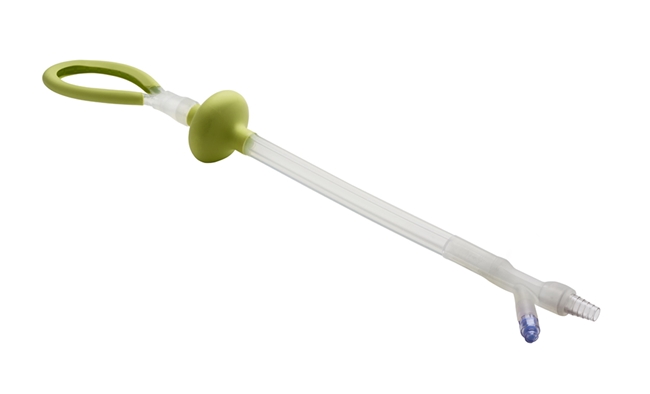
- Organon, which emphasizes its focus on women's health after spinning off from MSD, has launched its first product in Korea. The JADA system (JADA), a medical device for the control and treatment of postpartum hemorrhage, is the first product the company released in Korea since Organon officially launched its Korean subsidiary in June 2021. JADA, which can be used for intrauterine negative pressure hemostasis, was recognized as a safe and effective new health technology by the National Evidence-based Healthcare Collaborating Agency (NECA) late last month. For Organon, the approval of JADA is significant because it is the first new product the company has introduced in Korea since the spin-off. Since its launch, the company has been differentiating itself by providing solutions focused on women's health, and the JADA aligns with the company’s purpose. Among Organon's many solutions at the global level, the company chose to first introduce the JADA system to Korea to address the unmet need for postpartum hemorrhage. According to Organon, postpartum hemorrhage is one of the most common birth complications, but can even result in maternal death. According to a national survey conducted from 2009 to 2014, about one-fifth of all mothers experience postpartum hemorrhage. In other words, the introduction of the JADA system has significance because it provides a new treatment option that can quickly and accurately control postpartum hemorrhage, which is of high concern amid the declining birthrate and rising interest in maternal health. "JADA is the first fruit born through Organon's efforts to deliver new treatment options for unmet needs in women's health since its inception," said So Eun Kim, Managing Director of Organon Korea. "We will continue to lead the way in providing various innovative medicines and solutions that address the health challenges that women may face throughout their lifecycles." Product photo of the JADA system and a schematic diagram of its mechanism of action JADA is the first new technology introduced in 15 years since the introduction of the intrauterine balloon tamponade and compression suture. While conventional intrauterine balloon tamponade systems achieved hemostasis by applying direct pressure to the lining of the uterus for 12 to 24 hours, JADA creates a negative pressure state in the uterus within minutes and applies pressure (up to 90 mmHg) to induce physiologic contractions. In the PEARLE study, bleeding was controlled successfully with JADA in 94% of the participants without requiring further interventions, with a median time to control bleeding of 3 minutes. Since its U.S. Food and Drug Administration (FDA) approval in August 2020, JADA has been expanding its reach in Asia including Hong Kong and Singapore, as well as parts of the Middle East and South America. "As the risk of postpartum hemorrhage increases in line with an increase in the mother's age, the importance of controlling postpartum hemorrhage for healthy births will continue to increase," said an Organon representative. "We are working to launch JADA in Korea, but the official launch date has not been set yet." The representative added, “Organon Korea has identified a number of unmet needs in women's health and will continue to strive to provide a range of innovative medicines and solutions for various health issues that women may experience throughout their lifecycle."
- Company
- ProGen expands bi-specific antibody R&D with Korean partners
- by Son, Hyung-Min Jul 17, 2024 05:50am
- ProGen's R&D competitiveness in developing bi-specific antibodies expands to various fields, including immunotherapy, diabetes drugs, and new drugs for obesity. ProGen has started joint research with Yuhan Corp. to develop immunotherapy, and the company has also entered phase 2 trials for in-house developed drugs for diabetes and new drugs for obesity. Furthermore, ProGen has signed a business agreement with AbTis, a subsidiary of Dong-A ST, to develop bi-specific antibody-drug conjugates (ADC). Sources said on July 16th that earlier this month, ProGen signed a comprehensive R&D collaboration agreement with Yuhan Corp. to develop innovative new drug candidates. These companies have established a new drug development committee comprising new drug development experts, and they are set to develop next-generation new drugs and strengthen global market competitiveness. Under this agreement, ProGen and Yuhan Corp. plan to develop bi-specific antibody-mediated immunotherapy. These companies are currently developing PG-208, which is in the candidate product search stage. ProGen specializes in developing bi-specific antibodies, and the company has a proprietary 'NTIG' platform, which is a long-term fusion protein technology. The NTIG platform has the advantage of improving the half-life of proteins in various forms and administration intervals. The NTIG is optimized for the development of anti-cancer and immune disease treatments with multi-targeting and long-term durability. ProGen Progen also has another platform called 'Cyt-NTIG,' which combines NTIF platform technology and proprietary engineered cytokine. This platform targets cytokines that induce immune overactivation, overcoming systemic side effects of cytokines. Cytokines are proteins involved in immunity and inflammation, including the cell's proliferation, cell division, cell death, and wound healing. ProGen is investigating various possibilities with this bi-specific platform technology. In addition to developing immunotherapy, the company is investigating the potential of bi-specific antibodies in treating ADC, obesity, and diabetes. In April, ProGen signed a collaboration agreement with AbTis, a subsidiary of Dong-A ST, to develop bi-specific antibody-mediated ADC. AbTis plans to develop bi-specific antibody-mediated ADC by combining its third-generation ADC linker technology, 'AbClick,' which overcomes conventional ADC limitations, with ProGen's NTIG technology. ProGen and AbTis aim to develop new drugs for autoimmune diseases by working on new bi-specific antibody-drug conjugates (BsADC) for immune diseases. ProGen Developing bi-specific antibodies for diabetes and obesity ProGen is also developing bi-specific antibodies for diabetes and obesity. ProGen is developing PG-102, an obesity treatment that targets GLP-1 and GLP-2 bi-specifically. The Ministry of Food and Drug Safety (MFDS) recently approved a phase 2 trial in South Korea for this new drug candidate. The phase 2 trial will evaluate the safety and efficacy of PG-102 and placebo in patients with diabetes and obesity. GLP-1 is the incretin hormone secreted from the intestine, increasing glucose-induced insulin secretion. It is known to play an important role in regulating weight control. ProGen aims to maximize the effects, such as improving intestine function, glucose uptake in adipose tissue, and alleviating chronic inflammation, by targeting both GLP-1 and GLP-2. In a preclinical trial, PG-102 demonstrated more significant weight loss effects than tirzepatitide, the ingredient used in Zepbound. In detail, PG-102 improved the metabolic function in a mouse model of diabetes and obesity and demonstrated effective weight loss results in adipose cells. In the phase 1a trial involving healthy individuals, PG-102's safety and drug tolerance have been confirmed. When the effects of PG-102 on blood glucose and weight loss are confirmed through local phase 2 trials, ProGen aims to enter global phase 2 trials next year. Additionally, ProGen is collaborating with Rani Therapeutics, a United States-based company, to jointly develop the oral obesity drug, RPG-102. RPG-102 contains PG-102 in Rani Therapeutics' oral RaniPill capsule. The recently disclosed phase 1a trial results confirm RPG-102's drug tolerance and safety results. ProGen and Rani Therapeutics plan to develop RPG-102 as a once-weekly oral therapy.
- Opinion
- [Reporter’s view] public-private consultative body
- by Lee, Jeong-Hwan Jul 17, 2024 05:50am
- During the swine flu pandemic, South Korea had a challenging time due to the Tamiflu shortage. Then, during the COVID-19 pandemic, the government spent national finances to import vaccines from the U.S., Europe, and even Russia due to the absence of local mRNA vaccines. During the COVID-19 pandemic, countries worldwide focused on locally distributing medicines and active pharmaceutical ingredients (API), and strengthened the trade hurdle, maintaining a closed economy. Therefore, South Korea acknowledged the importance of the pharmaceutical and biotech industry as a national security industry. The World Health Organization (WHO) announced the end of the COVID-19 pandemic in May of last year. However, the pharmaceutical sector is still affected by its aftermath. There are shortages of basic essential drugs, such as antipyretic analgesic agents containing acetaminophen. Fortunately, the government department responsible for the sector actively meets with a public-private consultative body for drug shortages to resolve the issue. The Ministry of Health and Welfare (MOHW) and the Ministry of Food and Drug Safety (MFDS) regularly host meetings with officials from the Health Insurance Review and Assessment Service (HIRA), Korea Pharmaceutical Association, the Korean Medical Association, and the Korea Pharmaceutical and Bio-Pharma Manufacturers Association (KPBMA) to review current drug shortages list and possible causes and discuss solutions. Consequently, out-of-stock medicine issues have been resolved with updated policies, such as maintaining production cost and conditional drug price increase, to encourage the volume of production by the pharmaceutical companies that are manufacturing out-of-stock medicines, and administrative measures to simplify the distribution stage. For these effective administrative measures to continue producing positive results, we need to institutionalize them through legislation. In other words, this must be submitted for an item to the National Assembly to specify running a public-private consultative body for drug shortages in the Pharmaceutical Affairs Act. The "public-private consultative body for drug shortages" bill was passed by consensus in the relevant standing committee, the Health and Welfare Committee, in the 21st National Assembly and submitted to the Legislation & Judiciary Committee. However, it was not enacted due to the expiration of the legislative term, resulting in legislative failure. Fortunately, the same bill was reintroduced in the early stages of the 22nd National Assembly and will be considered for review. Drug shortages, which occur frequently and suddenly, disrupt pharmacies and pose a threat to public health. The National Assembly must prioritize and address this pressing national issue with total effort for the well-being of the citizens. Establishing a management committee involving both public and private sectors is crucial to supervising drug shortage distribution and implementing a drug shortage management system. Additionally, legislative measures should ensure the authority to issue emergency production and import orders for drugs in short supply. Establishing this will be essential for effectively addressing drug shortages without delays in an upcoming pandemic. We hope the new National Assembly is aware that the previous legislative term ended without passing this bill, and we hope they will promptly resolve issues through swift legislation.
- Company
- Botulinum toxin exports in 1H rise 17%
- by Kim, Jin-Gu Jul 17, 2024 05:50am
- Korea's botulinum toxin exports increased by 17% year-on-year in the first half of this year. This is the highest half-yearly export performance recorded ever. The increase in exports to the United States, China, and Japan is analyzed to have driven the increase in overall botulinum toxin exports. According to the Korea Customs Service on July 16, the amount of domestic botulinum toxin exports from January to June this year was USD 194.21 million (about KRW 270 billion). Compared to the USD 166.39 million recorded in the first half of last year, the amount has increased by 17% in just one year. This is the highest half-year export record ever. In the last three years, botulinum toxin exports have steadily increased, since recording USD 122.1 million in the first half of 2021 and USD 127.91 million in the second half; USD 131.41 million in the first half of 2022, and USD 164.9 million in second half; USD 166.39 million in the first half of 2023 and USD 186.62 million in the second half; and USD 194.21 million in the first half of this year. The industry is expecting to exceed the USD 200 million mark in the second half of the year. Semiannual exports of Korean botulinum toxins (Unit: USD 1 million, Source: Korea Customs Service) By country, exports to the United States, China, and Japan increased significantly. In the first half of the year, exports to the U.S. totaled at KRW 35.64 million, up 55% from the USD 23.01 million in the same period last year. Exports to China increased 53% from USD 23.55 million to USD 35.92 million. Exports to Japan increased 45% from USD 10.52 million to USD 15.27 million. Thailand and Brazil, which had been 2 of the leading exporting countries for domestically produced botulinum toxin, saw a slowdown. Exports to Thailand increased only 3%, from USD 14.01 million to USD 14.37 million. Brazil's exports dropped 25% from USD 21.07 million to USD 15.81 million. The industry expects a further increase in exports of domestic botulinum toxin products to the US and China markets in the future. In the US, Daewoong Pharmaceutical's Jubo (domestic product name: Nabota) has entered the market. The company has been selling its product through its local partner Evolus. Last year, Daewoong Pharmaceutical's botulinum toxin exports were estimated to be KRW 109.9 billion, with most coming from the US. 대웅제약 주보(좌), 휴젤 레티보 제품사진. Hugel is also preparing to enter the US market. In March this year, the company received the U.S. Food and Drug Administration's (FDA) approval for Retivo (domestic product name: Botulax). It is the second domestic botulinum toxin after Daewoong Pharmaceutical's ZuboJubo to receive marketing authorization in the US. In June, the company won a strain dispute with Medytox and overcame the biggest obstacle to entering the US market. The U.S. International Trade Commission (ITC) issued a preliminary ruling that Hugel did not infringe on Medytox's intellectual property rights. If this preliminary ruling leads to a final ruling in October, it is expected to accelerate Retivo's entry into the U.S. market. Hugel’s Retivo entered first in the Chinese market. Hugel received marketing authorization for Retivo in China in October 2020. Since then, it has reportedly been steadily increasing exports. Daewoong Pharmaceutical is also accelerating its entry into China with Nabota. Daewoong has applied for Nabota’s approval in China. Daewoong plans to launch Nabota in China early next year after receiving marketing authorization within the year. In addition to Daewoong, Huons is also in the process of applying for marketing authorization for its product to enter the Chinese market.
- Opinion
- [Reporter's View] Aspirations for Indication-based pricing
- by Eo, Yun-Ho Jul 17, 2024 05:50am
- The government doesn't seem to be considering it, but talks keep rising. At a recent media briefing held by the Korean Research-based Pharmaceutical Industry Association, Dong-Cheol Seo, Director of the Korea Institute for Pharmaceutical Policy Affairs (former professor at Chung-Ang University College of Pharmacy), emphasized the need for Korea to introduce Indication-based Pricing (IBP). Director Seo explained that domestic drugs are initially given a set price, which is reduced as the number of indications for the drug increases. However, the introduction of new drugs with many uses is increasing cases where reimbursement is often not expanded. What should we make of the existence of 'drugs that some people can use and others cannot' and the discussion over 'indication-based pricing' that comes with it? 'Indication-based pricing’ is a method of setting a drug price separately according to the innovativeness of each indication. It reflects the increasing number of cases where a single drug is approved for various indications. KRPIA, a representative organization of multinational pharmaceutical companies, has been calling for the introduction of indication-based pricing for several years. The government's response was more of a strong "No" than a "We will consider its review," but the industry is once again voicing a strong opinion on indication-based pricing. However, there are two main barriers to its adoption. “Can the billing system disaggregate prescription data by indication?,” and “Can patients accept paying different prices for the same drug?” The questions certainly pose a serious issue. However, administrative issues can be overcome with 'effort' if necessary. Also, the differentiated coinsurance rates by indication would require public acceptance. However, it is also true that drugs that have a clear use are currently unavailable for the right patients. Patients will obviously accept paying the different copayment price rather than have the drug remain nonreimbursed. The industry trend of having a single drug with multiple indications has been ongoing for at least 5 years, even if we base the timing on the drugs’ introduction in Korea. Indication-based pricing is currently being adopted by countries such as Australia, Switzerland, and the United States, and in many countries, the practice is to adjust the reimbursement rates while leaving the list price unchanged. We do not know whether indication-based pricing is the only answer. However, in just 3-5 more years, the issue of expanding indications and access to new drugs will be even more pressing than it is today. If we continue to put off addressing the piling up of off-label indications, the accessibility score of Korea’s reimbursement system will drop significantly.
- Company
- Ultomiris gets expanded indication for neuromyelitis optica
- by Hwang, Byung-woo Jul 17, 2024 05:50am
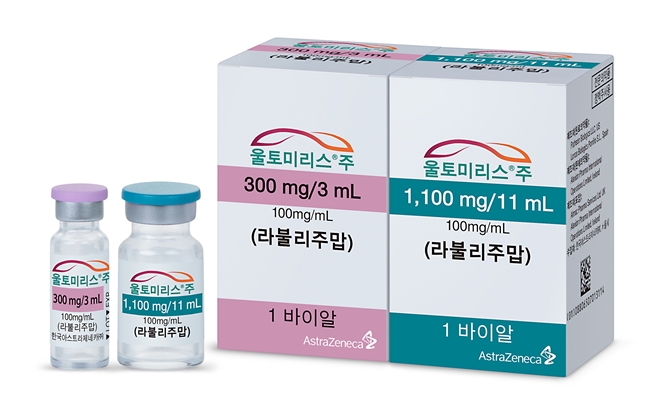
- Ultomiris (ravulizumab) has strengthened its position in the market for neuromyelitis optica after obtaining approval for expanded indication. Product photo of UltomirisOn July 11th, the Ministry of Food and Drug Safety (MFDS) granted approval of expanded indication for Ultomiris, a C5 complement inhibitor, for the treatment of adults aged 18 years and above with neuromyelitis optica spectrum disorder (NMOSD) who are anti-aquaporin-4 (AQP-4) antibody-positive. The approval of NMOSD indication was based on data from the external placebo-controlled, multi-center, open-label phase 3 CHAMPION-NMOSD trial, which evaluated the treatment effect and safety of Ultomiris. The placebo used in the control group was the placebo from Soliris’ phase 3 PREVENT trial for NMOSD, considering that NMOSD is a rare disease and Ultomiris and Soliris are similar treatment types. The data from the 73-week (median treatment period) clinical trial demonstrated that patients who received Ultomiris were recurrence-free and had a 98.7% reduction in the risk of recurrence compared to those who received placebo. Furthermore, the research confirmed a significant improvement in the secondary endpoints, annual recurrence rate (APR) and the Hauser Ambulatory Index (HAI). During the clinical trial, there were no cases with recurrence when treated with Ultomiris, recording 0.000 APR. It was reported that the rate of patients who experienced worsened HAI in Ultomiris was 3.4% (2 out of 58), whereas those who received placebo had a 23.4% HAI (11 out of 47). Additionally, the trial had three severe adverse cases after the start of treatment. Two patients had meningococcal infections but continued treatments after recovery without any side effects. Ho Jin Kim, Professor of the Neurology department at the National Cancer Center, said, “Ultomiris demonstrated no recurrences in NMOSD patients for 73.5 weeks. It is a treatment option with improved convenience of treatment, as it extends the duration interval from 2 weeks to 8 weeks.” Ultomiris is the next-generation C5 complement inhibitor, as it extended its half-life by four times compared to Soliris. Soliris required administration every two weeks, whereas Ultomiris improved the convenience of treatment by extending the interval to 8 weeks. “The interval of treatment not only reduces the number of hospital visits, but also saves the physical strength of patients with difficulties in walking and vision. It also reduces other costs related to hospital visits,” Kim added. “Improvements of convenience alleviate the burden of treatment and help improve patients’ quality of life and treatment compliance,” Kim explained. With the current indication approval, Ultomiris can be used to treat four rare diseases, including ▲paroxysmal nocturnal hemoglobinuria (PNH) ▲atypical hemolytic uremic syndrome (aHUS), and ▲generalized myasthenia gravis (gMG). Chul Woong Kim, Lead for Rare Diseases at AstraZeneca Korea, said, “After obtaining reimbursement approval for Soliris, we are pleased to contribute to the improvement of NMOSD treatment in South Korea with the expanded indication for Ultomiris.” Kim added, “We will strive to enhance treatment options so that more NMOSD patients can receive treatments without fear of recurrence and continue with their daily lives.”

- Policy
- Ilaris, Orkedia, Latuda will likely be reimbursed next month
- by Lee, Tak-Sun Jul 17, 2024 05:50am
- Novartis The companies of the rare disease treatment ‘Ilaris Inj.,’ secondary hyperparathyroidism treatment ‘Orkedia Tab,’ and schizophrenia treatment ‘Latuda Tab’ have reached an agreement with the National Health Insurance Service on the drugs’ insurance drug prices. Accordingly, if no specific issue arises, the 3 new drugs are expected to be reimbursed from August after passing the Health Insurance Policy Review Committee this month. According to the NHIS on the 16th, it has negotiated and agreed on the insurance drug prices and expected claims amounts with the drugmakers of Ilaris, Orkedia, and Latuda. Novartis Korea's Ilaris (canakinumab) is a rare disease drug used to treat Cryopyrin-Associated Periodic Syndromes (CAPS), Tumor Necrosis Factor Receptor Associated Periodic Syndrome (TRAPS), Hyper IgD Syndrome or Mevalonate Kinase Deficiency (HIDS/MKD), Familial Mediterranean Fever (FMF), and Systemic Juvenile Idiopathic Arthritis (SJIA). Of these, HIRA determined that its indications for CAPS, TRAPS, and FMF were eligible for reimbursement. However, the agency requested Novartis to submit supporting data afterward. Novartis did not accept the data submission condition after the first Drug Reimbursement Evaluation Committee review but accepted the condition after the second review. Novartis has since negotiated Ilaris’s insurance drug price with the NHIS and completed reimbursement preparations. Orkedia Tab (1·2mg, evocalcet) is Kyowa Kirin Korea’s secondary hyperparathyroidism treatment. .It was approved adequate for reimbursement alongside Ilaris in April .As an oral calcimimetics agent, it suppresses excessive parathyroid hormone (PTH) secretion by acting on the calcium receptors in parathyroid gland cells .Secondary hyperparathyroidism is a condition in which excessive secretion of parathyroid hormone persists due to hypocalcemia caused by decreased kidney function .If the condition continues, it can lead to complications such as bone fractures .Latuda (20·40·60·80·120mg, lurasidone HCI) is a new drug used to treat schizophrenia and Type 1 bipolar depression .It works by binding to dopamine and serotonin receptors in the central nervous system and blocking the action of brain neurotransmitters .It was developed by Japan's Sumitomo Pharma and is exclusively developed and distributed in Korea by Bukwang Pharmaceutical .In May, DREC ruled the reimbursement of Latuda adequate if the company accepts a price less than the evaluated amount, and Bukwang Pharmaceutical agreed on the condition and started pricing negotiations with the NHIS .To launch Latuda, Bukwang plans to establish a CNS business unit directly under the CEO, consisting of 25 people dedicated to sales and marketing ."We have started pre-marketing in May and plan to conduct marketing activities in all psychiatry and neurology clinics and hospitals," said a company official ."We aim to sell over KRW 30 billion in 3 years."
