
- LOGIN
- MemberShip
- 2026-07-22 06:53:41

- Policy
- [Desk's View] Requirements for Priority Marketing Authorization system entry
- by Lee, Tak-Sun Jun 16, 2026 08:33am
- It has been a decade since the introduction of the Priority Marketing Authorization system. Launched in March 2015 alongside the implementation of the Approval-Patent Linkage System under the South Korea-US FTA negotiations, the Priority Marketing Authorization has become a core system of generic marketing authorization.The system's foundational framework has remained unchanged for the past 10 years. Securing three specific requirements grants a 9-month window of market exclusivity. To obtain first generic exclusivity, a developer must satisfy three criteria. First, filing the initial patent challenge against the original patent; second, receiving a favorable trial decision upholding the challenge; and third, submitting the earliest application for marketing authorization. Over the past decade, the generic regulatory system has undergone notable changes, including the implementation of the "1+3 limit" on shared and sub-consigned bioequivalence (BE) studies, alongside drug pricing adjustments that preserve higher price tiers only for generics backed by independently conducted BE trials. These institutional shifts are driving a structural rationalization within the generic drug sector. However, critics point out that the requirements for Priority Marketing Authorization do not align with shifting market realities. In particular, the provision governing the initial patent challenge is cited as a major factor eroding the practical value of generic market exclusivity. This is because the qualification is not limited to the first company to file a patent challenge, but extends to any competitor that files its own challenge within 14 days of that initial filing date. Drop-in filings often occur after an initial patent challenge is logged, as generic developers rush to secure co-exclusivity rights within the 14-day window to avoid falling behind on commercial launch timelines. While challengers must still secure a favorable trial decision and meet the earliest marketing authorization application requirement, it has become commonplace for firms to rush to satisfy the initial filing condition before mapping out an actual downstream strategy. These patent challenges place an immense administrative strain on the Intellectual Property Trial and Appeal Board (IPTAB) and resulting in a substantial waste of public and corporate resources due to ballooning litigation costs.Ultimately, the broad granting of exclusivity status to a large pack of concurrent applicants dilutes the commercial value of market exclusivity, undermining the core regulatory intent and utility of the system.As a result, voices within the sector are calling for the outright elimination of the 14-day grace period clause from the initial patent challenge requirement.Restricting eligibility for exclusivity to the single firm that executes the initial patent challenge would discourage the influx of indiscriminate generic filings and significantly strengthen the commercial value of generic exclusivity.Yet, given the unique dynamics of the South Korean pharmaceutical landscape, where more than 100 drugmakers compete in the generic space, abolishing the 14-day rule could be perceived by some as granting an unfair advantage to a single company or as systematically depriving competitors of market opportunities. Furthermore, since identical generics can enter the market immediately after the exclusivity window closes, and non-identical alternatives, such as salt variations, can bypass the marketing exclusivity altogether, limiting these exclusivity rights to a single developer dose not eliminate competitive dynamics from the marketplace.Granting a market-exclusivity window to a single firm would amplify the practical impact of the system and prevent competition driven by a surplus of identical products. Furthermore, this mechanism could act as a catalyst for structural rationalization, encouraging high-value pipeline over speculative generic development.Changes across foundational marketing authorization and drug pricing frameworks are evident. It is now the time to recalibrate policies governing patent challenges, which represent the true starting point of generic development. The Ministry of Food and Drug Safety (MFDS) must not dismiss the recommendations from the Approval-Patent Linkage System impact assessment report published late last year, which strongly emphasized the urgent need to elevate the practical effectiveness of the Priority Marketing Authorization.
- Company
- The OS barrier to CDDC review and reimbursement in Korea
- by Eo, Yun-Ho Jun 16, 2026 08:33am
- Beyond its roughly 50% approval rate, there is little dispute that the Cancer Disease Deliberation Committee (CDDC) has become the highest hurdle in Korea's oncology reimbursement process.Originally established as a committee of prescribing physicians tasked with evaluating the clinical usefulness of cancer drugs seeking reimbursement, the CDDC became the center of controversy after 2020 when it began formally considering budget impact in addition to clinical value.The fact that a committee that used to review a drug’s usefulness began reviewing fiscal impact became an issue, as budget considerations are already addressed later in the reimbursement process by bodies such as the Pharmacoeconomic Evaluation Subcommittee and the Drug Reimbursement Evaluation Committee (DREC). Criticism intensified when physician members of the CDDC began opposing reimbursement for certain therapies based not only on medical judgment but also on pharmacoeconomic considerations.From a clinical perspective, it can appear counterintuitive for physicians who treat patients to oppose the reimbursement of new therapies. For physicians who prescribe the drugs, the more treatment options there are, the better. As a result, CDDC members have become a top priority for pharmaceutical companies seeking reimbursement approval.Don't expect to pass CDDC review without OS dataControversies surrounding the CDDC have included issues such as the composition of committee members, transparency, and fairness. Among them, one factor has increasingly been viewed as almost a guaranteed predictor of failure: the absence of overall survival (OS) data.OS measures the time from the start of treatment until death from any cause. Because patient outcomes vary widely, OS is generally reported as a median rather than an average. Patients who remain alive at the time of analysis are censored at their longest observed follow-up. Naturally, demonstrating an OS benefit requires lengthy follow-up periods.For this reason, oncology drugs are often approved initially based on progression-free survival (PFS) data, with OS evidence submitted later.PFS measures the length of time during which a patient remains alive without disease progression. Historically, PFS was widely accepted as a meaningful clinical endpoint. Many physicians continue to argue that “neither OS nor PFS should be viewed as inherently superior to the other.” However, under the growing influence of CDDC, some believe PFS has effectively become insufficient on its own.According to DailyPharm’s coverage, among solid-tumor therapies that underwent pharmacoeconomic evaluation and sought new reimbursement listings or reimbursement expansions over the past three and a half years, only a handful of products, including Lecluza, successfully passed the CDDC without OS data. While some hematologic malignancy treatments have obtained reimbursement without demonstrating OS benefits, in the field of solid tumors, the absence of OS data effectively leads to failure.Even in the adjuvant treatment setting, which is often regarded as one of the most challenging areas for reimbursement approval, therapies that successfully secured reimbursement generally did so only after obtaining OS data.However, officials from both the Ministry of Health and Welfare and the Health Insurance Review and Assessment Service (HIRA) emphasized, “We do not look solely at OS. The CDDC evaluates clinical usefulness, social need, budget impact, and other factors to make fair and balanced decisions."Two drugs that were simultaneously reviewed at the CDDC levelA recent case illustrates the issue. At last month's CDDC meeting, two drugs with the same mechanism of action were reviewed simultaneously for similar reimbursement expansions, to meet contrasting results. The drugs were the CDK4/6 inhibitors ‘Verzenio’ and ‘Kisqali.’Both sought reimbursement expansion for adjuvant treatment of early breast cancer, but only Verzenio passed review. The key difference was that Verzenio had generated OS data, while Kisqali had not yet done so.The simultaneous review of the two drugs attracted significant attention. Verzenio itself had previously failed 3 separate CDDC reviews before obtaining OS data. First submitted in May 2023, the product remained more than 3 years without reimbursement coverage.The fact that a drug repeatedly rejected due to lack of OS evidence was later reviewed alongside a same-class competitor that also lacked OS data sparked intense interest. Industry and academic observers argued over whether the committee would apply a class effect approach or continue to place primary emphasis on demonstrated OS benefits.One medical oncology professor who previously served on the CDDC said, “It is very difficult for a solid tumor drug to pass CDDC review without OS data. There is even a growing sentiment among committee members that 3-year OS data may not be enough. If the current trend continues, companies may eventually need even longer-term OS evidence to secure CDDC approval."
- Company
- Mounjaro and Wegovy generate KRW 427 billion in 3 months
- by Chon, Seung-Hyun Jun 15, 2026 09:19am
- The new obesity treatments Mounjaro and Wegovy have taken over the Korean market. Mounjaro generated over KRW 323.2 billion in sales in just 3 months, while Wegovy surpassed KRW 100 billion in quarterly sales for the fourth consecutive quarter. Mounjaro patients showed a stronger demand for lower-dose products, whereas Wegovy patients recorded a higher share of high-dose prescriptions. Meanwhile, Saxenda, once the dominant obesity treatment, has seen its market influence decline dramatically.According to IQVIA data released on June 11, Eli Lilly's Mounjaro recorded KRW 323.2 billion in sales during the first quarter, making it the top-selling obesity treatment in Korea. This figure was more than three times higher than that of Wegovy, which was KRW 104 billion, firmly establishing Mounjaro as the market leader.AI-generated imageMounjaro, which was released in Korea in August last year, is a dual agonist targeting both the glucose-dependent insulinotropic polypeptide (GIP) receptor and the glucagon-like peptide-1 (GLP-1) receptor. The drug lowers blood glucose levels before and after meals by stimulating insulin secretion, improving insulin resistance, and reducing glucagon secretion.Mounjaro was first approved in Korea in June 2023 as a diabetes treatment. It was approved for the treatment of type 2 diabetes as an adjunct to diet and exercise for glycemic control. In August 2024, it gained an additional indication for chronic weight management in adults, to be used alongside a reduced-calorie diet and exercise regimen.The drug generated its first sales of KRW 29.4 billion in the third quarter of last year and surged to KRW 191.6 billion in the fourth quarter, becoming the market leader in obesity treatment sales. Over the nine-month period from Q3 2025 through Q1 2026, cumulative sales reached KRW 544.1 billion, rapidly reshaping the obesity treatment landscape.Mounjaro has also overtaken Wegovy and risen to the lead in the global obesity drug market. Last year, Mounjaro recorded worldwide sales of USD 23.07 billion (approximately KRW 33 trillion), significantly exceeding Wegovy's sales of DKK 79.1 billion (approximately KRW 18 trillion).Industry analysis shows that obese patients in Korea have an increased demand for Mounjaro due to its superior weight-loss efficacy.GLP-1 suppresses appetite by stimulating satiety centers in the brain and slows gastric emptying. GIP not only enhances insulin secretion but also promotes fat metabolism and synergistically helps reduce gastrointestinal side effects commonly associated with GLP-1 therapies.Mounjaro demonstrated significant weight-loss benefits in the Phase 3 SURMOUNT-1 trial involving overweight adults without diabetes who had a BMI of at least 30 kg/m² or at least one weight-related comorbidity. In the trial, patients receiving Mounjaro experienced an average weight reduction exceeding 15% at Week 72, while those receiving the highest dose achieved weight loss of approximately 21% of body weight.Mounjaro also outperformed Wegovy in the head-to-head SURMOUNT-5 study. Results showed that patients receiving Mounjaro (10 mg or 15 mg) achieved an average weight reduction of 20.2% at Week 72, compared with 13.7% among patients receiving Wegovy (1.7 mg or 2.4 mg).Novo Nordisk's Wegovy may have lost its leadership position, but it continues to post quarterly sales exceeding KRW 100 billion.Wegovy generated KRW 104 billion in Q1 sales, representing a 26.6% increase from the same period a year earlier. The drug contains semaglutide, a GLP-1 receptor agonist. Novo Nordisk developed Wegovy after observing substantial weight-loss effects during clinical trials of GLP-1-based diabetes treatments.Following its launch in Korea in October 2024, Wegovy quickly became a commercial success. The drug generated KRW 62.3 billion in sales during the fourth quarter of 2024 and immediately became the market leader in obesity treatment sales.By Q2 2025, Wegovy had achieved KRW 138.5 billion in quarterly sales, surpassing the KRW 100 billion milestone within just nine months of launch. It has now maintained quarterly sales above KRW 100 billion for four consecutive quarters. Even before entering Korea, Wegovy gained global notoriety as a weight-loss aid favored by celebrities, contributing to worldwide supply shortages. Novo Nordisk strengthened its commercial presence by signing a co-promotion agreement with Chong Kun Dang in September last year.However, Wegovy's sales have declined for two consecutive quarters since peaking at KRW 142 billion in Q3 last year. Analysts attribute the slowdown to competition from Mounjaro and the impact of price reductions. After Mounjaro entered the Korean market in August last year, Wegovy reduced its supply price by approximately 40%. Since Q4 2024, Wegovy has generated cumulative sales of KRW 649.6 billion over an 18-month period. Combined cumulative sales of Mounjaro and Wegovy have now exceeded KRW 1 trillion.Mounjaro and Wegovy showed contrasting prescribing patterns by dose strength. Mounjaro had higher sales volumes in lower dosages, while Wegovy had a higher market share in higher-dosage products.Mounjaro is currently sold in four different strengths: 2.5mg, 5mg, 7.5mg, and 10mg. In the first quarter, a total of 3,868,149 units were sold, with 5mg and 2.5mg being the most popular, at 1,551,910 units and 1,474,823 units, respectively. The market shares for 5mg and 2.5mg were 40% and 38%, respectively, accounting for a total of 78%. In comparison, the higher-dose 7.5 mg and 10 mg products accounted for only 12% and 10% of Wegovy’s sales, respectively.Wegovy is approved in five strengths: 0.25 mg, 0.5 mg, 1 mg, 1.7 mg, and 2.4 mg. Each pen contains enough medication for four administrations. For instance, the 0.25mg product contains a total of 1mg, which can be administered four times using a single pen. In the first quarter, the 2.4mg dosage held the highest sales volume share at 34%, followed by 1mg at 22% and 1.7mg at 15%. The lowest dosage, 0.25mg, had the smallest share at 12%.It is analyzed that Mounjaro has a high share of low-dosage products intended for initial treatment due to its relatively late entry into the domestic market, whereas Wegovy, having been on the market for over a year, has a higher proportion of patients in follow-up treatment stages.Some industry observers suggest that the growing trend of ‘dose splitting’ with Wegovy may be contributing to the strong preference for higher-dose products. Unlike Mounjaro, which is supplied as a single-use prefilled pen, Wegovy is a multi-dose injection pen that allows users to select and adjust the dose before administration. As a result, many patients reportedly receive higher-dose prescriptions and divide them into multiple lower-dose injections. In fact, supply shortages have risen for Wegovy's higher-dose products. The proportion of the 2.4 mg dose among total Wegovy sales volume increased 15 percentage points from 19% in the first quarter of last year.The market positions of Saxenda and Qsymia, which dominated the obesity treatment market before the emergence of Wegovy, have shrunk significantly.Novo Nordisk's Saxenda generated only KRW 900 million in first-quarter sales. Before the launch of Wegovy, Saxenda recorded KRW 15.1 billion in first-quarter sales in 2024, but more than 90% of that revenue disappeared within 2 years. Launched in Korea in 2018, Saxenda was the world's first obesity treatment approved as a GLP-1 analogue. It contains the same active ingredient, liraglutide, as the diabetes treatment Victoza, differing only in dosage and administration. Following its launch, Saxenda became the leading obesity treatment in Korea, recording KRW 42.6 billion in sales in 2019 and maintaining the top position for five consecutive years through 2023. However, the introduction of Wegovy and Mounjaro has reduced its market presence to a minimal level. Industry observers believe that Wegovy, another GLP-1-based therapy, has effectively absorbed most of Saxenda's market.Meanwhile, Alvogen Korea's Qsymia posted KRW 7.1 billion in first-quarter sales, down 18.5% year-on-year. Launched in Korea at the end of 2019, Qsymia is a fixed-dose combination product containing phentermine and topiramate.’ Alvogen Korea acquired the domestic marketing rights from U.S.-based Vivus in 2017. Although Qsymia experienced a smaller sales decline than Saxenda, it remains far behind Wegovy and Mounjaro. Combined first-quarter sales of Saxenda and Qsymia totaled just KRW 7.9 billion, representing less than 2% of the combined KRW 427.2 billion generated by the newer obesity treatments Wegovy and Mounjaro during the same period.
- Company
- K-onocology drug Leclaza posts KRW 25.4B in sales in 3 mths
- by Chon, Seung-Hyun Jun 15, 2026 09:19am
- The domestically developed cancer drug Leclaza (lazertinib) continues to perform strongly in the prescription market. The drug generated over KRW 25 billion in sales during the first quarter alone, putting it on track to exceed KRW 100 billion in annual sales. Following reimbursement expansion as a first-line lung cancer treatment, Leclaza has maintained strong momentum and emerged as one of Korea's most successful homegrown oncology drugs. Being an oral medication, the unusual phenomenon of approximately 80% of total sales being generated through outpatient prescriptions has also emerged, as the patients may take the drug at home.According to IQVIA data released on June 13, Yuhan Corp’s Leclaza recorded KRW 25.4 billion in Q1 sales, representing an 8.0% increase YoY.AI-generated imageLeclaza was approved in January 2021 as Korea's 31st domestically developed new drug for the treatment of non-small cell lung cancer (NSCLC). It officially entered the prescription market in July 2021 following inclusion in the national reimbursement list.The product's growth grew steeply after its reimbursement coverage was expanded to first-line treatment.Leclaza was first approved as a second-line therapy for patients with locally advanced or metastatic NSCLC who developed the EGFR T790M resistance mutation after treatment with first- or second-generation EGFR tyrosine kinase inhibitors (TKIs). In June 2023, the Ministry of Food and Drug Safety allowed its indication expansion to include first-line treatment of NSCLC.Beginning in January 2024, the Ministry of Health and Welfare extended reimbursement coverage to first-line use. As a result, patients with EGFR mutation-positive locally advanced or metastatic NSCLC became eligible for reimbursement when receiving Leclaza as initial therapy. At the time, the ministry estimated that the reimbursement expansion would require an additional KRW 88.1 billion in healthcare spending.Leclaza generated KRW 6.2 billion in sales during Q4 2023, but sales surged to KRW 18.9 billion in the first quarter of 2024 following the expansion of reimbursement. This is almost a threefold increase in sales from the first-line reimbursement expansion. In effect, the reimbursement decision added more than KRW 10 billion in quarterly first-line treatment sales in just 3 months.Sales exceeded KRW 20 billion in the second quarter of 2024 and have continued to grow thereafter. Leclaza generated KRW 99.6 billion in sales last year and will potentially surpass the KRW 100 billion annual sales milestone for the first time this year.A defining feature of Leclaza is its overwhelming reliance on outpatient prescriptions.During Q1, outpatient prescriptions accounted for KRW 20.3 billion, representing 79.8% of total sales. The drug’s outpatient share has never fallen below 70% ever since it exceeded the mark in Q4 2022. In the fourth quarter of last year, outpatient prescriptions totaled KRW 19.5 billion, representing 80.4% of total quarterly sales of KRW 24.2 billion.Leclaza is setting a new sales record among domestically developed Korean anticancer drugs. Other domestically developed anticancer drugs approved in Korea before Leclaza include Il-Yang Pharm's Supect, Dong-wha Pharm's Milican, Chong Kun Dang's Camtobell, Samsung Pharm’s Riavax, and Hanmi Pharm's Olita. None of these products has achieved annual sales exceeding 100 billion won.
- Policy
- Generic drug mkt dominated by "CDMO·multi-product entries"
- by Jung, Heung-Jun Jun 15, 2026 09:19am
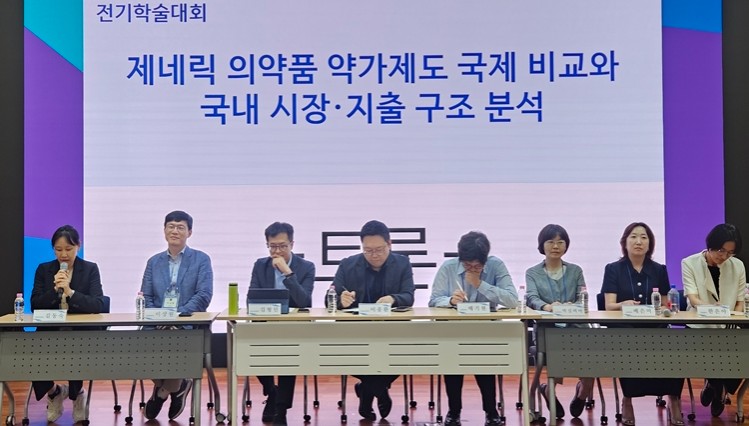
- Academic conference hosted by the Korean Academy of Social and Administrative Pharmacy.A research project commissioned by the Ministry of Health and Welfare (MOHW) before the recent drug pricing system reform identified 'long-listed, multi-product pharmaceuticals' as a primary cause of overall inflation in pharmaceutical expenditures in South Korea.Increased contract manufacturing has led to an abundance of low-revenue, marginalized products. The average annual reimbursement per individual items posted less than KRW 1 billion, even for active pharmaceutical ingredients (APIs) with substantial claim amount.On June 12, key findings from the MOHW-commissioned research were presented at the Korean Academy of Social and Administrative Pharmacy's academic conference.According to the study, national expenditures on generics surged by 60% between 2017 and 2024, increasing from KRW 7.7661 trillion to KRW 12.4409 trillion, a net increase of KRW 4.7 trillion. This represents a 46.2% share of total pharmaceutical spending. Eun Mi Bae, a professor at the Korea University College of Pharmacy, explained that an analysis of the top 20 active ingredients by generic expenditure revealed an average of 83.4 individual products per ingredient. Professor Bae noted that medications that have been listed for an extended period predominated, with an average listing duration of 16.7 years.Within the top 10 therapeutic categories by National Health Insurance spending, dyslipidemia treatments consistently ranked number one from 2017 through 2024. Furthermore, the category expenditure expanded 2.2-fold relative to 2017 levels, reaching KRW 2.78 trillion in 2024.The researcher also emphasized the critical need for closer regulatory oversight as fixed-dose combination (FDC) therapies increasingly become mainstream.Professor Bae said, "Combination therapies are actively prescribed for chronic conditions. Within the statin market segment, sales of combination therapy products officially eclipsed those of monotherapy agents in 2023."The report further evaluated past regulatory interventions, specifically the differential generic pricing policy based on criteria requirements and the primary re-evaluation scheme, concluding that they yielded no statistically significant impact on reducing overall pharmaceutical expenditures. Professor Bae said, "The pharmaceutical expenditure share of the group satisfying both the in-house bioequivalence and DMF registration criteria skyrocketed from 15.4% to 32.4%. While the policies successfully induced market restructuring, neither the differential pricing model nor the re-evaluation measures delivered a meaningful downward impact on overall drug expenditures."Contract manufacturing explodes from 44% to 63% over 7 years…Proliferation of low-revenue products under KRW 1B The generic pharmaceutical market remains dominated by larger corporations with annual revenues exceeding KRW 80 billion. This segment commands nearly 80% of total insurance reimbursement claims, and its market share is expanding steadily. The generic claim amount percentage for pharmaceutical companies with revenues exceeding KRW 80 billion increased from 71.9% in 2017 to 83.6% in 2024. In contrast, the market share for firms generating less than KRW 80 billion contracted from 24.3% to 12.4% over the same period.Furthermore, the proportion of generic drugs in total insurance billing for designated "Innovative Pharmaceutical Companies" decreased from 49% to 37% during this period.Professor Eunah Han said, "Generics constitute up to 78% of the products sold by companies with revenues exceeding KRW 80 billion. However, individual items with annual billing under KRW 1 billion make up the largest proportion of their portfolios. Furthermore, since contract-manufactured items account for 57.7% of the portfolios of these larger corporations, even big corporates lack clear strategic differentiation." The report clearly documented a dramatic upward trend in sub-consigned production. The proportion of contract-manufactured items escalated sharply from 44% in 2017 to 63% in 2024. Although the absolute number of registered products increased, their share of total reimbursement billing grew marginally, moving from 30% to only 35%.This data indicates that low-revenue, marginalized products heavily drove market expansion. In therapeutic categories characterized by intense multi-product entry, an average of 54 distinct brands competed head-to-head for market share.The high reliance on contract manufacturing means operational disruptions at a single manufacturing facility can instantly trigger widespread supply vulnerabilities across the entire market.Eunah Han, a professor at the Yonsei University College of Pharmacy, pointed out, "Competitive multi-product market segments represent a small slice (about 15%) of the overall generic therapeutic landscape. Yet, they absorb 60% of total reimbursement claims and contain 60% of all registered products."The study concludes that slashing generic prices specifically in these competitive, multi-product segments would yield the greatest savings for the national insurance fund while minimizing broader shocks to drug supply and demand. "Generic pricing cuts are the starting point…considering follow-up measures, including CSO·Essential medicines"During the panel discussion at the venue, officials from the MOHW, the National Health Insurance Service (NHIS), and the Health Insurance Review and Assessment Service (HIRA), who spearheaded the pricing reform, met consensus on these structural vulnerabilities.Jong-hwan Lee, Department head of the Pharmaceutical Reimbursement Evaluation Committee at HIRA, stated, "While foreign regulatory systems continually depress generic prices over time, South Korea links reductions to the Price-Volume Agreement (PVA) mechanism, which results in price drops only when specific sales volumes are cleared. This creates a regulatory blind spot for smaller, low-volume generic medications."Lee mentioned that "Because the current system links pricing to maximum price rates, if a single product evades post-marketing price controls and sustains its peak price tier, late-entering generics automatically receive high pricing benchmark." Lee emphasized the pressing need to refine post-marketing price controls and initial price calculation metrics.The NHIS announced it would systematically manage expenditure structures and volume utilization patterns to build a concrete, data-driven foundation for structural improvements.Hyung-min Kim, Department head of the Department of Drug Management at NHIS, stated, "A significant portion of listed medications are neither actively manufactured nor supplied, which stalls healthy market competition and artificially keeps drug prices high." Kim stated that the NHIS will tighten its monitoring of unmanufactured and unbilled line items.Ki-Hyun Bae, an administrative officer in the Division of Health Insurance Benefits at the MOHWKim added, "While drug pricing drive expenditure growth, volume expansion exert a far greater influence, prompting the agency to continuously track the volume footprints of newly listed generics."The MOHW stressed that lowering the generic pricing baseline via the recent drug pricing reform is merely the initial phase of system reform. The MOHW revealed it is currently deciding follow-up interventions targeting CSO fees and optimized incentive system for essential medicines. Ki-Hyun Bae, an administrative officer in the Division of Health Insurance Benefits at the MOHW, stated, "Adjusting the generic ceiling price down to 45% through the drug pricing reform represents the absolute baseline before executing broader structural improvements. It establishes the groundwork to eliminate redundant expenditures and move forward."Bae added, "Media reports suggest average CSO commission fees amount to around 37%. Given the findings that individual generic items average under KRW 1 billion in annual billing, it is questionable whether this structure will last," and concluded, "The current situation where no voluntary suppliers step forward for essential medicines while a flood of products clusters exclusively in stable, low-risk market segments remains a critical challenge that the government must continuously resolve."

- Company
- A numbers-driven look into Korea's reimbursement system
- by Son, Hyung Min Jun 15, 2026 09:18am
- It is no exaggeration to say that today's pharmaceutical market is defined by ‘reimbursement,’ no matter how strong the momentum behind new obesity drugs may be.Reimbursement listing and how quickly it is obtained ultimately determines the commercial success of a new medicine. Amid a flood of high-cost drugs with multiple indications, pharmaceutical market access (MA) professionals have become some of the industry's most sought-after specialists.Oncology drugs sit at the center of this trend. Cancer drug development is increasingly moving beyond single-cancer indications, with therapies expanding into multiple tumor types and treatment settings. Immuno-oncology drugs initially developed for lung cancer, for example, are now being used in gastric cancer, esophageal cancer, triple-negative breast cancer (TNBC), endometrial cancer, and renal cell carcinoma.Cancer treatment, which has been focused on end-stage disease management, has evolved to be used in neoadjuvant and adjuvant settings, for recurrence prevention, and as maintenance therapy, fundamentally reshaping treatment strategies.The challenge, however, is their reimbursement. A new oncology drug must pass through multiple stages before obtaining reimbursement coverage, including review by the Cancer Disease Deliberation Committee (CDDC), the Drug Reimbursement Evaluation Committee (DREC), price negotiations with the National Health Insurance Service (NHIS), and final approval by the Health Insurance Policy Deliberation Committee (HIPDC).Among these, the Cancer Disease Deliberation Committee serves as the first gateway to reimbursement. As it is the first and most critical gateway that determines reimbursement potential, the committee is often referred to as a "wall of lamentation" by companies with oncology products.Only half of approved oncology drugs passed final review during the past 3.5 yearsEven among drugs that received positive CDDC reviews, only 65.2% ultimately reached reimbursement listing after completing NHIS price negotiations and HIPDC review.An analysis conducted by DailyPharm on the Cancer Disease Deliberation Committee and Drug Reimbursement Evaluation Committee decisions between January 2023 and June 2026 found that only 65.2% of indications that passed reimbursement evaluation ultimately succeeded in obtaining reimbursement listing.During the same period, the Cancer Disease Deliberation Committee reviewed a total of 244 oncology drug indications. Of these, 124 indications (50.6%) received reimbursement criteria. On the other hand, 86 indications (35.2%) were denied reimbursement criteria, and 34 indications (13.9%) were sent back for reconsideration.In other words, only 1 out of every 2 oncology indications successfully cleared the first committee.By contrast, approval rates at the DREC level were considerably higher. Over the past 3 years, the committee reviewed 81 oncology indications, of which 59 received reimbursement adequacy approvals, resulting in an approval rate of 75.6%. Meanwhile, 9 indications (11.1%) were reconsidered, and 13 indications (16.0%) were deemed not appropriate for reimbursement. Ultimately, 65.2% eventually completed NHIS negotiations and secured reimbursement listing (excluding results from the 6th meeting of 2026).The time required to complete the reimbursement process also remains a significant issue. According to the Korea Alliance of Patient Organizations, the average period from regulatory approval to reimbursement listing for 32 oncology drugs listed between 2021 and 2025 was 659 days. This means patients waited an average of 1 year and 10 months after approval before gaining access to reimbursement benefits.Experts attribute these delays to redundant reviews of clinical value and budget impact that occur throughout the reimbursement process, from CDDC and DREC review, price negotiations, to HIPDC review.MSD makes the most attempt at reimbursement… Multi-indication development acceleratesAmong pharmaceutical companies, MSD was the most active in pursuing reimbursement expansion. Over the past three years, 44 MSD-related oncology indications were reviewed, the highest number among all companies. Most of these reviews involved expanding reimbursement for its immuno-oncology drug Keytruda (pembrolizumab).MSD was followed by Janssen (28), Roche (17), Pfizer and Lilly (10 each), Astellas (9), and AstraZeneca (8).Blockbuster oncology products such as ‘Darzalex (daratumumab),’ ‘Rybrevant (amivantamab),’ ‘Enhertu (trastuzumab deruxtecan),’ and ‘Tevimbra (tislelizumab)’ have repeatedly appeared before both the CDDC and DREC as their indications expanded across multiple cancer types and treatment settings.This trend reflects more than simply an increase in the number of reimbursement applications submitted by individual companies. It demonstrates a broader shift in the oncology drug development paradigm toward a multi-indication model.Rather than remaining confined to a single cancer type, new oncology drugs are increasingly expanding into early-stage and metastatic settings, combination regimens, and biomarker-defined patient populations. As a result, repetitive and ongoing reimbursement reviews have been ongoing for a single new drug.Among individual products, Keytruda was the most active. Over the past 3 years, Keytruda has pursued reimbursement expansion across 11 solid tumor indications, including lung cancer, gastric cancer, esophageal cancer, triple-negative breast cancer (TNBC), cervical cancer, endometrial cancer, and renal cell carcinoma. More specifically, the drug underwent review for a total of 41 indications.This reflects the rapid expansion of immuno-oncology therapies from an initial focus on metastatic cancers into neoadjuvant and adjuvant settings, biomarker-based populations, and combination therapies.Following Keytruda, the products with the highest number of reviews were Darzalex (11 indications), Rybrevant (9), Enhertu and Tevimbra (7 each), Verzenio (abemaciclib, 5), Columvi (glofitamab), 4), Polivy (polatuzumab vedotin, 4), Padcev (enfortumab vedotin, 4), and Opdivo (nivolumab) (4)Efforts to expand reimbursement coverage also continued in rare cancers. ‘Welireg (belzutifan)’ sought reimbursement for indications including Von Hippel-Lindau (VHL) disease-associated renal cell carcinoma and metastatic renal cell carcinoma (mRCC). However, discussions were prolonged because of the limited patient population and cost-effectiveness concerns.In particular, immuno-oncology therapies are considered the fastest-growing category in terms of indication expansion. Products such as Keytruda, Opdivo, and Tevimbra are extending beyond metastatic disease into earlier treatment settings and combination regimens, leading to broader reimbursement discussions. On the other hand, expanding patient populations and the potential for longer treatment durations have made reimbursement decisions increasingly complex for both the CDDC and DREC.Rybrevant, Verzenio, and Welireg…still await review at CDDC stageA considerable number of products repeatedly faced either the non-establishment of reimbursement criteria or requests for reconsideration.The product with the highest number of such cases was Keytruda. Over the past 3 years, Keytruda accumulated 30 indications that were either denied reimbursement criteria or sent back for reconsideration. Given the rapid pace of indication expansion, reimbursement discussions were repeatedly revisited.Rybrevant and Darzalex each experienced 8 indications that were either reconsidered or denied reimbursement criteria. Rybrevant repeatedly sought reimbursement expansion in areas of high unmet need, including EGFR exon 20 insertion-mutated non-small cell lung cancer and first-line combination therapy settings. However, many of these indications failed to advance to the reimbursement-criteria establishment stage.Enhertu and Verzenio each recorded 4 indications, and Welireg, Opdivo, Yervoy (ipilimumab), and Polivy each had 3 indications that failed to secure reimbursement criteria or were sent back for further review.For Verzenio, repeated reimbursement discussions centered on adjuvant treatment for HR-positive/HER2-negative early breast cancer, where the balance between recurrence prevention benefits and cost-effectiveness became a major issue. For Welireg, discussions were prolonged because of the combination of a small patient population, limited clinical evidence, and cost-effectiveness concerns.Ultimately, the results of the past 3 years suggest that Korea's oncology reimbursement system has struggled to keep pace with the rapid expansion of approved indications.With more therapies quickly expanding into multiple indications, like immunotherapies and antibody-drug conjugates (ADCs), reimbursement decisions are becoming increasingly complex. Finding the appropriate balance between patient access and the long-term sustainability of the National Health Insurance system is expected to remain a central challenge for future discussions within both the CDDC and DREC.A 50% pass rate: the gap between regulatory approval and reimbursementLooking solely at recent figures, the CDDC has emerged as the highest hurdle within Korea's oncology reimbursement framework.The committee does not merely assess whether a drug has received regulatory approval. Rather, it determines the actual scope of reimbursement criteria and conditions of use, taking into account clinical need, availability of alternative treatments, target patient populations, and budget impact. By contrast, DREC primarily reviews indications that have already passed CDDC review and focuses on cost-effectiveness, budget impact, and the potential applicability of risk-sharing agreements (RSAs).As a result, many observers argue that reimbursement outcomes for oncology drugs are largely determined at the CDDC stage. On-site, there has been criticism that considerations such as budget impact and cost-effectiveness exert substantial influence during the reimbursement-criteria setting process, limiting early patient access even to therapies that have become the global standard of care.The increasing use of adjuvant therapy in early-stage cancer has further complicated reimbursement discussions. As immunotherapies, targeted therapies, and CDK4/6 inhibitors are increasingly used after surgery to reduce recurrence risk, the question, “To what extent should recurrence prevention be recognized as a reimbursable clinical benefit?” has arisen as the new point of concern.Opinions remain divided regarding the CDDC’s relatively low approval rate. Some healthcare professionals argue that as oncology drugs expand into new indications at an accelerating pace, financial and cost-effectiveness considerations are being introduced too early in the reimbursement process. However, committee experts contend that prioritization is unavoidable given the constraints of a limited national health insurance budget.One committee member explained that reimbursement decisions for oncology drugs cannot be based solely on efficacy. Rather, they require a complex assessment that incorporates treatment outcomes, quality of life, and long-term financial sustainability.The member explained, "Patients would naturally want access to effective treatments as quickly as possible. However, because the national health insurance system is funded by public resources, cost-effectiveness is a must. As high-cost oncology drugs become more expensive and expand into more indications, we inevitably apply stricter standards when assessing which patient populations derive meaningful value from treatment."Even when differences in survival are modest, treatments that reduce toxicity and preserve quality of life can still provide meaningful benefits. Nevertheless, priorities must ultimately be established within budget constraints. The reimbursement process for oncology drugs is fundamentally about finding a balance between clinical value and financial sustainability."Many clinicians, however, see the situation differently. They argue that reimbursement discussions are failing to keep pace with the speed of clinical innovation.One medical oncologist noted, “Patients who experience recurrence often require longer treatment durations and sequential use of multiple therapies, which ultimately increases socioeconomic costs. Reducing the risk of recurrence early and maintaining patients in a healthy state for longer periods has value not only for individual patients but also from a long-term healthcare financing perspective."“Rather than granting reimbursement to all therapies, the more important task is identifying which patient populations derive the greatest clinical value. Ultimately, oncology reimbursement policy is about balancing short-term costs against long-term treatment value. Adjusting the current 5% patient co-insurance rate could also be one possible approach."
- Company
- "Prep for CSO regulations"… solution platform mkt
- by Kim, Jin-Gu Jun 14, 2026 12:13pm
- As the government reviews stringent regulations on contract sales organizations (CSOs), the market for related management platforms is expanding. With growing demands for sub-consignment structure monitoring, expense reporting, and compliance management, specialized solution providers supporting these needs are significantly increasing their market presence.According to pharmaceutical industry sources on the 9th, the Ministry of Health and Welfare (MOHW) recently initiated a comprehensive CSO field survey in collaboration with the Korea Pharmaceutical and Bio-Pharma Manufacturers Association (KPBMA). Industry analysis suggests that, based on this investigation, additional regulatory measures, such as tightening sub-consignment management and increasing the transparency of commission fee frameworks, are highly likely to be reviewed.The government is reportedly focused not only on investigating the primary consignment contracts between pharmaceutical companies and CSOs but also on the sub-consignment structures established among CSOs. The intent of this investigation is to verify the actual commercial operators and commision fee payout structures, thereby preemptively eliminating potential pathways for illegal rebates.These policy shifts are leading to an increased administrative burden for both pharmaceutical companies and CSOs. The industry explains that as sub-consignment architectures gain complexity, the compliance tracking burden grows exponentially heavier. Currently, a substantial number of pharmaceutical firms manage sub-consignment agreements and official notices through disparate emails or decentralized digital folders, with document storage and submission formats varying widely across PDFs, scanned copies, and Excel spreadsheets.Under these circumstances, relying solely on basic contract document storage presents a significant operational bottleneck, making it difficult to establish a management system that meets the rigorous standards mandated by the government. Beyond maintaining contract records ▲pharmaceutical companies must continuously monitor and manage business registration status ▲official CSO declaration compliance, initial and continuing education training status ▲sub-consignment contract and notification histories ▲ commission rates.CSO structure monitoring by specialized solution providers involves contract management, expense reporting, education, and compliance management.A pharmaceutical industry official said, "When sub-consignment structures are complex, it is not easy to track exactly which CSOs a specific item passes through or which field representative is executing the actual sales promotion," and added, "Many companies are experiencing significant difficulties during the government's current field audit, simply collecting and consolidating the necessary documentation."The official stated, "Moving forward, the compliance environment will demand that companies be able to explain exactly who delegated to whom and who ultimately executed the promotional activity. There are clear limitations to manually managing an interconnected structure that links primary to n-th tier CSOs down to the actual sales representatives."From sub-consignment management to expense reporting…CSO compliance platforms 'rises'In response to these shifts, tech solution vendors are actively targeting the CSO regulatory compliance market by introducing specialized software platforms engineered to fully digitize CSO-related workflows.For instance, CP-LINK, a platform operated by IlDong Group, focuses its capabilities on expense report compilation and comprehensive compliance program (CP) support. Following the enforcement of the mandatory CSO declaration system, the platform ensures that detailed expenditures regarding the provision of economic benefits, which CSOs are statutorily required to report to the MOHW, are accurately logged and submitted in full compliance with current regulations. Alongside these features, it delivers highly specialized regulatory updates, on-site corporate compliance training, and real-time advisory counseling services.Furthermore, the platform provides services related to CSO business operations, such as ▲a specialized promotional marketplace designed specifically for pharmaceutical marketing ▲partnerships with legal and tax accounting firms. In particular, the integration of a 'corporate ADMIN function' allows pharmaceutical corporations utilizing CSO networks, as well as large-scale corporate CSOs managing extensive internal agent rosters, to govern individual independent CSO operators in a highly structured and efficient manner.CSO24 offers an integrated management platform that unifies sub-consignment contracts, notification status tracking, electronic signatures, commission fees, and educational completion records. It is designed to transform the entire sub-consignment chain (from the originating pharmaceutical sponsor through primary, secondary, and n-th tier CSOs down to the individual medical representative) into structured, traceable data. Using this technology, the developer recently secured a proprietary patent for an enterprise resource planning (ERP) system designed specifically for managing pharmaceutical sub-consignment sales contracts.In addition, ProMR is capturing market share by offering robust consignment contract management, financial settlement accounting, and commercial sales performance tracking features. CORE CSO Solution delivers an all-in-one suite combining regulatory compliance, expense reporting, and tax accounting mechanisms. Medilink operates as a strategic commercial network platform designed to bridge pharmaceutical sponsors seeking qualified CSOs. Market analysts forecast that as regulatory pressure on CSOs intensifies, the landscape of specialized technical solutions will become increasingly diverse.Industry observers anticipate that if the MOHW further tightens its administrative oversight and supervisory framework governing sub-consignments in the future, the corresponding management platform market will experience parallel growth.An official from CSO24 said, "What the government intends to verify is not merely whether a company holds physical paperwork, but the sales structure and financial settlement flows. We are continuously upgrading our sub-consignment management data tracking and automation functions to aid pharmaceutical companies and CSOs to adapt seamlessly to the fluid regulatory climate."A representative from CP-LINK said, "We are actively contributing to cultivating an ethical operating culture and increasing compliance awareness across the CSO sector to align closely with the guidelines and policy intents of the health authorities. We plan to continuously upgrade our related systems and services to reflect evolving policy changes and market demands."
- Policy
- Seqirus’s flu vaccine fails to gain NIP status
- by Lee, Tak-Sun Jun 14, 2026 12:13pm
- CSL Seqirus Korea’s ambitious first bid to enter the National Immunization Program (NIP) has ended in failure. The company narrowly missed making the list in a fiercely competitive Public Procurement Service tender.According to industry and the Public Procurement Service (PPS) sources on June 10, the bid opening results for the ‘2026–2027 seasonal influenza vaccine procurement tender,’ for which the Korea Disease Control and Prevention Agency (KDCA) participated as the demand agency, showed that six companies were selected as final winners: SK Bioscience, GC Biopharma, Korea Vaccine, Sanofi-Aventis Korea, Boryung Biopharma, and Ilyang Pharmaceutical.The tender was conducted under a competitive desired-quantity bidding system, in which vaccine quantities are allocated to companies offering the lowest prices below the government's estimated price of KRW 9,690.07 per dose.The main topic of interest in this year's tender was whether CSL Seqirus Korea could successfully enter the NIP market. Seqirus bid at KRW 9,218 per dose and offered 1.2 million doses. Although the bid price was below the government's estimate, it was not low enough to surpass aggressive pricing from major domestic and international vaccine manufacturers.SK Bioscience submitted the lowest bid at KRW 8,851 per dose for 2.7 million doses, securing first place. GC Biopharma followed at KRW 8,920 for 2.66 million doses, Korea Vaccine at KRW 8,952 for 1.9 million doses, Sanofi-Aventis Korea at KRW 8,965 for 2.25 million doses, Boryung Biopharma at KRW 9,005 for 1.77 million doses, and then Ilyang Pharmaceutical at KRW 9,199 for 1.5 million doses.In contrast, Seqirus Korea's bid of KRW 9,218, which was just KRW 19 higher than Ilyang's, placed the company seventh. Although KDCA originally sought to procure 12.33 million doses, the cumulative winning bids had already secured 12.78 million doses by the time the sixth-ranked bidder was selected. As a result, Seqirus was automatically excluded from the final list.Final Successful Bidders for the 2026-2027 Influenza Vaccine Procurement Tender (Captured from the KONEPS/Nara Market Website)On KDCA’s part, the outcome represented a significant cost-saving achievement. The agency secured an additional 450,000 doses while paying prices substantially below its originally estimated unit cost of KRW 9,949. For participating companies, however, the tender effectively became a near-loss-making price war.CSL Seqirus Korea is the Korean subsidiary of CSL Seqirus, one of the world's leading influenza vaccine companies. In March, the company received Korean regulatory approval for Flucelvax Prefilled Syringe (a cell-cultured influenza surface antigen vaccine), raising expectations for a new generation of influenza vaccines in the domestic market.The vaccine is a WHO-recommended egg-free trivalent influenza vaccine produced using cell culture technology rather than eggs, reducing the risk of virus mutations that can occur during manufacturing. It is indicated for the prevention of influenza A and B infections in individuals aged six months and older.Seqirus Korea had hoped to secure stable NIP volumes through government procurement and rapidly expand its market share. However, following this setback, the company will now need to compete exclusively in the ‘private-pay 9non-reimbursed) vaccination market.’With established players such as GC Biopharma and SK Bioscience already leveraging their government-procurement volumes to strengthen market positions, industry observers are watching closely to see whether Seqirus Korea can carve out a niche in the non-reimbursed private market through collaboration with local partners, including Samjin Pharmaceutical, and through differentiated distribution strategies.

- InterView
- [Reporter's View] New policy required to facilitate drug discovery
- by Jung, Heung-Jun Jun 14, 2026 12:13pm
- The Korean government is pursuing an industrial restructuring of the pharmaceutical industry by relaxing the scale of mandatory drug price reductions and expanding preferential pricing incentives. However, if the government aims to drive healthcare innovation, these pricing overhauls must be integrated with highly granular, targeted support mechanisms designed specifically to facilitate novel drug discovery.In other words, in addition to achieving administrative completion of pricing system reforms, state agencies and industry must maintain a consultative bodies dedicated to formulating long-term new-drug development strategies.The core feature of the revised drug pricing policy centers on providing financial and pricing premiums to pharmaceutical companies that aggressively allocate capital to R&D. This strategy contains an intent to eliminate or consolidate marginalized drugmakers that have historically neglected research and development.The initiative is fundamentally viewed as a structural attempt to consolidate the broader industrial landscape around entities that demonstrate a genuine commitment and high technical capability for innovative pipeline cultivation.The question is will a mere increase in the number of pharmaceutical firms possessing revenue thresholds sufficient to underwrite high-risk drug discovery naturally result in an expansion of domestically developed novel therapies?Even if forecasting positively regarding the pricing reform’s capacity to achieve industrial consolidation, anticipating that this administrative shift will trigger robust pipeline vitalization or position South Korea as a global pharmaceutical powerhouse represents an excessive leap of optimism.Of course, in addition to pricing reforms, the government is actively developing support mechanisms to build a resilient R&D ecosystem. A pan-governmental National Growth Fund valued at KRW 150 trillion is being deployed, with a strategic allocation of KRW 11.6 trillion specifically for the biopharmaceutical and vaccine sectors. Additionally, the Ministry of Health and Welfare has established a KRW 150 billion specialized fund dedicated to late-stage clinical trials, alongside plans to scale up the K-Bio-Vaccine Fund,w hich has been operational since 2023, to a cumulative volume of KRW 1 trillion by 2027. State agencies are also advancing financial funding models tailored for domestic enterprises executing open innovation partnerships with global industry leaders. While the government's current funding measure appear highly sophisticated, for these financial resources to function as a stepping stone for innovation, the administration must actively capture the feedback of drug developers at the early stages of discovery and translate those insights into parallel institutional modernizations.Earlier this year, the Korea Health Industry Development Institute highlighted the perspectives of the pharmaceutical R&D community in an analytical report that audited the major developmental milestones of domestic novel therapeutics.The document proposed a diverse suite of actionable recommendations, including streamlining and expediting Investigational New Drug (IND) approval pathways, establishing intermediate preliminary evaluations during mid-stage clinical milestones, modernizing regulations to address shortages in specialized technical talent, expanding patient data utilization for scientific research, offering continuous non-severable R&D funding, and introducing reimbursement-based Phase III investment structures linked to commercial revenue generation.Ministries like the Ministry of Health and Welfare and the Ministry of Food and Drug Safety must collaborate, and a combined consultative body with industry participants must be formalized. Policymakers must engineer an end-to-end lifecycle cultivation framework that tightly overlooks the entire drug development stages.By employing this strategy, the current drug pricing overhaul can avoid being criticized as a blunt instrument for industrial downscaling and secure a re-evaluation as the foundational cornerstone that effectively nurtured global novel drug development?
- Policy
- Roche's new obesity drug candidate wins nod for Phase III in KOR
- by Lee, Tak-Sun Jun 14, 2026 12:13pm
- Global pharmaceutical giant Roche’s next-generation obesity drug candidate is finally entering the final hurdle of Phase III clinical trials in South Korea. As the drug is regarded as a competitive agent to Novo Nordisk and Eli Lilly, which currently dominate the market, the pharma-biotech industry is focusing heavily on initiating this large-scale trial targeting domestic patients.On June 9, the Ministry of Food and Drug Safety (MFDS) officially approved an 'Investigational New Drug (IND) application filed by Roche Korea for a Phase III clinical trial evaluating the efficacy and safety of once-weekly RO7795068 (CT-388) in participants with obesity or overweight without type 2 diabetes.' Conducted as part of a global multicenter study, this trial aims to enroll 2,000 participants worldwide, with 144 participants allocated for South Korean patients with obesity. The clinical study commenced its local trial setup in February 2026 and is scheduled to run for approximately 2 years and 10 months until December 2028.The newly cleared 'RO7795068' is a once-weekly subcutaneous dual GLP-1/GIP receptor agonist (development code name: CT-388), which Roche secured through its approximately $2.7 billion acquisition of US biotech firm Carmot Therapeutics in December 2023. It shares the same mechanism of action as Eli Lilly's mega-blockbuster obesity drug Zepbound (tirzepatide, Korean product name as Mounjaro). Roche's CT-388 previously shocked the market with its recently disclosed Phase II data. When a high dose (24 mg) was administered to obese patients over 48 weeks, it demonstrated a phenomenal mean weight reduction of 22.5% compared to the placebo group. These Phase II trial results had two disgtinguishing features. First, the 'weight loss plateau,' a common limitation observed with existing GLP-1 class therapeutics, was not observed even at 48-week, as the weight reduction curve maintained a continuous downward trajectory. Second, a staggering 47.8% of patients in the highest-dose cohort achieved a 20% or greater weight reduction, while roughly one in four (26.1%) demonstrated explosive efficacy, losing over 30% of their body weight. The drug also showed excellent results in resolving comorbidities, achieving a milestone. 73% of participants with prediabetes reverted to normal blood glucose levels. Currently, the global obesity market is dominated by Novo Nordisk’s Wegovy and Eli Lilly’s Zepbound, which has led to challenges in manufacturing and supply keeping up with demand. However, industry experts anticipate that the market landscape could shift rapidly following Roche's entry into Phase III testing. When compared with the clinical datasets of frontrunners Wegovy (approx. 15% weight loss) and Zepbound (approx. 20%), the '48-week 22.5% reduction without a plateau' demonstrated by Roche's CT-388 represents figures capable of establishing a clear competitive edge. Notably, Roche structurally engineered the molecule to minimize receptor desensitization, which occurs where drug receptor responses rapidly diminish, thereby maximizing the duration of efficacy. The company's strategic goal is to surpass existing standard-of-care medications in both ease of administration and tolerability. A biotech industry insider stated, "If the first round of competition of the obesity drug was centered on 'which product takes the market first,' the second round that has just commenced is a battle over 'which product can reduce body weight more completely without plateaus and side effects,'" and added, "Followingh Roche officially launching its global Phase III program, including South Korea, Roche's trial agent has emerged as the most promising next-generation contender with potential of breaking the current duopoly held by Lilly and Novo Nordisk."Based on this MFDS approval, Roche Korea plans to collaborate closely with clinical trial sites, including major hospitals in South Korea, to accelerate patient recruitment and dosing. If the trial concludes successfully by the end of 2028 as scheduled, a three-way battle among Lilly, Novo, and Roche in the obesity market is projected to materialize as early as 2029.
