
- LOGIN
- MemberShip
- 2026-05-07 18:03:11
- Policy
- Health plans expected to be implemented after NA audit
- by Lee, Jeong-Hwan Oct 05, 2023 05:27am
- The preferential drug price policy plan that reflects the value of new drugs and the 2nd comprehensive national health insurance plan, which the pharmaceutical and bio-industry are closely eyeing, is expected to be unveiled after the National Assembly audit this year. The amendment to the Instructions for the Biohealth Innovation Committee under the direct control of the Prime Minister is also expected to be promoted after the National Assembly audit. The schedules have been delayed compared to the original plan, and the government plans to complete the practicalities after collecting opinions from each sector after the completion of the National Assembly audit. The results were revealed on the 4th when the Press Corp covered the Ministry of Health and Welfare’s plans on the innovative drug pricing system reform plan and the 2nd Comprehensive National Health Insurance Plan. According to the original plan, the final results of the agenda were scheduled to be announced within September or October. The reform of the drug pricing system that reflects the innovative value of new drugs and health security seeks to provide preferential drug treatment for values of new drugs such as clinical superiority essential drug status, and use of domestic APIs. The MOHW originally intended to specify the policy direction by operating a public-private consultative body for preferential pricing of innovative new drugs and announce it before the NA audit, the announcement is likely to be made after the audit due to delayed operations of the consultative body. The announcement of the 2nd Comprehensive National Health Insurance Plan is also being delayed compared to the original plan. The pharmaceutical and bio-industry is paying close attention to the direction of the pharmaceutical policies that will be included in the 2nd Comprehensive National Health Insurance Plan. This is because the pricing systems for new drugs, incrementally modified drugs, and generic drugs depend on the direction of health insurance policy operation. The MOHW said that its researchers are seeking advice from the Health Insurance Policy Deliberative Committee and that it plans to hold a public hearing after the National Assembly audit to collect a broader range of opinions for the 2nd Comprehensive National Health Insurance Plan. A MOHW official said, “We are currently establishing plans after collecting various opinions. We plan to establish the 2nd Comprehensive National Health Insurance Pla within this year at the latest for disclosure.” The launch of the Biohealth Innovation Committee which will be directly controlled by the Prime Minister, is also being delayed. The committee was being prepared as a government control tower to foster Korea’s pharmaceutical bio industry. The establishment of the Biohealth Innovation Committee, a domestic pharmaceutical and bioindustry development organization that was set to be directly operated by the Prime Minister, is expected to be announced and operated through a presidential order. The MOHW is preparing to issue a notice on the order and appoint members to the Innovation Committee, and plans to launch the committee as soon as possible. According to the proposed regulations, the Biohealth Innovation Committee will consist of less than 30 members. The government plans to appoint the Prime Minister as the chair and 30 members including 12 ministers from each ministry and 17 civilian members. The 12 ministerial members will include Ministers of the Ministry of Health and Welfare, Ministry of Strategy and Finance, Ministry of Education, Ministry of Science and ICT, Ministry of Trade, Industry and Energy, Ministry of Foreign Affairs, and Ministry of SMEs and Startups, as well as the minister for the Office for Government Policy Coordination, the Chairperson of the Personal Information Protection Committee Commission, the Minister of Food and Drug Safety, Commissioner of the Korea Intellectual Property Office, and the Commissioner of the Korea Disease Control and Prevention Agency. The committee secretariat is scheduled to be established as a department called the ‘'Biohealth Innovation Promotion Team' under MOHW’s Bureau of Health Industry Division of Health Industry Policy. The MOHW’s Health Industry Policy Director will concurrently serve as the head of the Biohealth Innovation Promotion Team. The Biohealth Innovation Committee will seek to efficiently deliberate and adjust policies and tasks to comprehensively and systematically support the development of Korea’s health industry, including products and services related to pharmaceuticals, medical devices, and health technology, and their convergence and integration with cutting-edge technologies. The committee is also expected to be launched after the National Assembly audit.
- Policy
- Medical expenses exceed ₩1 trillion
- by Lee, Tak-Sun Oct 04, 2023 05:35am
- The number of lung cancer patients has steadily increased, and health insurance medical expenses exceeded 1 trillion won last year. The NHIS (Chairman Jeong Ki-seok) announced this by using health insurance treatment data to promote the status of health insurance treatment for lung cancer patients from 2018 to 2022. The number of patients treated increased by 25,236 (27.7%↑) from 91,192 in 2018 to 116,428 in 2022, and the average annual increase rate was 6.3%. The number of men will be 70,564 in 2022, an increase of 22.5% (↑12,969) compared to 57,595 in 2018, and the number of women will be 45,864 in 2022, an increase of 36.5% (↑12,267) compared to 33,597 in 2018. Looking at the composition of medical staff by age group, of the total medical staff (116,428 people), those in their 70s accounted for the most at 34% (39,541 people), those in their 60s accounted for 32.2% (37,516 people), and those in their 80s or older accounted for 17.8% (37,516 people). 20,704 people) followed. For men, those in their 70s accounted for the highest proportion at 37.3%, followed by those in their 60s at 31.1% and those in their 80s or older at 18.8%. For women, 33.9% were in their 60s, 28.8% were in their 70s, and 16.2% were in their 80s or older. Health insurance medical expenses for lung cancer patients increased by 39.9% (364.8 billion won) compared to 2018, from 915 billion won in 2018 to 1.2799 trillion won in 2022, with an average annual increase rate of 8.8%. Looking at medical expenses per person over five years, it increased by 9.6% from 10.03 million won in 2018 to 10.99 million won in 2022. Lung cancer refers to a malignant tumor that occurs in the lung and can be divided into 'primary lung cancer' in the tissues that make up the lung and 'metastatic lung cancer' in other organs and spreads to the lung. It is said that smoking is the leading cause of lung cancer known to date, with results showing that approximately 80% of deaths due to lung cancer are due to smoking. Lee Sang-cheol, a professor in the Department of Respiratory Allergy at National Health Insurance Ilsan Hospital, said, "More than 70% of the causes of cancer are due to environmental factors and lifestyle habits such as smoking, high-fat diet, drinking, and exposure to carcinogens. As we age, these risk factors decrease. “The amount of exposure increases,” he said. He explained, “The gradual increase in the elderly population due to aging is also the cause of the increasing cancer incidence rate in elderly patients.”

- Company
- Price cuts for 35 generics suspended…only 0.5% of all
- by Chon, Seung-Hyun Oct 04, 2023 05:35am
- The second case of suspension of execution of price cuts among 7,000 generic drugs emerged on the 5th. The price cuts for 12 generic items from Hutecs Korea will be suspended for 9 months. The number of products for which drug price reductions have been suspended, including the 17 drugs whose price cuts have been temporarily suspended, has increased to 35. However, the number of items that received a stay of execution is so small that it only accounts for 0.5% of all the generics that received price cuts. According to the Ministry of Health and Welfare on the 25th, the price cuts for 13 Hutecs Korea’s items will be suspended until June 30 next year. The prices of A Cet SR Tab, Alzpezil Tab 5mg, Lyreca Cap 75mg·25mg·50mg, Exforte Tab. 5/160mg, Amolvikar Tab 5/20mg·5/40mg·1/40mg, and Crestibe Tab. 10/5mg·10/10mg have been reduced by up to 15% on the 5th, but their prices will be kept at the level before the price reduction for 9 months. The MOHW announced price cuts for about 7,000 drugs from the 5th through a partial amendment announcement of the ‘drug reimbursement list and reimbursement ceiling price table.’ However, Hutecs Korea filed an administrative lawsuit and suspension of execution, claiming that it could not accept the drug price cuts for 13 items, after which the court decided to put the drug price cuts on hold. As a result, price cuts for 17 items from two companies received a stay of execution for 7 to 9 months after filing an administrative lawsuit. Previously, the Seoul Administrative Court decided to suspend Medica Korea's drug price cuts for 5 items, including Telmisartan Tab 40mg, until April 30, 2023. In the case of Hutex Korea, this is the first case where the drug price cut was reverted due to a lawsuit after the drug price cut had been implemented. Not only Medica Korea, but also Abbott Korea, SS Pharm, NBK Phparm, and Youngil Pharm filed a lawsuit to cancel the drug price cut, which resulted in a temporary suspension of execution before the drug price cuts were implemented. The products for which the companies filed lawsuits to cancel the drug price cuts had their drug prices reduced due to procedural inadequacies even though they submitted data that met the highest price requirements, such as conducting bioequivalence tests, and thus pursued legal action. For example, there was one case where a drug’s price was reduced after a bioequivalence test was performed and the conversion was completed because the company did not submit the change permit. There are also cases where the company conducted bioequivalence tests that cost hundreds of millions of won, but permit changes were not completed due to schedule delays. Also, even though companies proved that they fulfilled the requirements for the use of registered APIs, some have been classified as being subject to drug price cuts by raising issues over other ingredients listed in the authorization permit. However, among the total 7,355 drugs whose prices have been reduced, the number of products whose execution of price cuts has been suspended accounts for only 0.5%. There are a total of 179 pharmaceutical companies subject to drug price cuts, and only 3.4% of them filed administrative lawsuits. As there is no legal justification to claim unfairness in the drug price reduction process, the number of administrative lawsuits filed by pharmaceutical companies is expected to be minimal. Hutecs Korea filed a lawsuit to cancel only 13 of its 153 products that received drug price cuts, which amounts to only 8.5%. Hutecs Korea reduced the price of three dosage forms of Exforte tablets but filed a lawsuit to cancel the price cut for only one, 10/160mg dose, product. Medica Korea filed a lawsuit to cancel only 5 of the 91 products that were set to receive drug price cuts, which amounts to only 5.5%. This means that it accepted drug price cuts for 86 of its items. However, it is highly likely that the number of products for which drug price cuts will be suspended will continue to increase. The temporary stay of execution of price cuts made for the 15 items from 3 companies may receive a formal stay of execution before the end of the provisional suspension period. The execution of drug price cuts for 3 items, including Abbott Korea's Lypsta Plus Tab 10/5mg, has been suspended until the 28th of this month. The drug price reduction for 9 items including SS Pharm's S-nofen Tab, 2 items including NBK Pharmaceutical's Cebicox Cap 200mg, and 3 items including Youngil Pharmaceutical's Necfo Tab 5/160mg will be put on hold until the 29th. With cases of drug price cut suspensions rising, there is a possibility that other pharmaceutical companies may also file additional administrative lawsuits. This is because the companies can reduce financial losses during the suspension of the execution period, regardless of the success or failure of the drug price cut cancellation lawsuit. For example, the 35 items for which drug price cuts were suspended did not incur any losses due to price reductions.
- Company
- New urothelial cancer drug Padcev attempts reimb in KOR
- by Eo, Yun-Ho Oct 04, 2023 05:35am
- Padcev, the first targeted antibody-drug conjugate (ADC) for urothelial cancer, is attempting reimbursement in Korea. According to industry sources, Astellas Pharma Korea recently submitted a reimbursement application for its Padcev (enfortumab vedotin), its antibody-drug conjugate (ADC) that is directed against Nectin-4. The drug is recommended as Category 1 in the National Comprehensive Cancer Network (NCCN) guidelines. It is a new treatment option for urothelial cancer patients whose cancer has progressed or recurred even after receiving treatment with immunotherapy drugs and platinum-based chemotherapy, for whom no standard of care has existed as of yet. The drug was approved in March in Korea for the treatment of adult patients with locally advanced or metastatic urothelial cancer who have received prior treatment with PD-1 or PD-L1 inhibitors and platinum-based chemotherapy. Therefore, the industry’s eyes are on how well Padcev can fare in Korea’s drug reimbursement process this year. Padcev demonstrated its efficacy through the EV-301 study, an open-label, Phase III trial that was conducted on 608 patients with locally advanced or metastatic urothelial cancer who have previously been treated with platinum-based chemotherapy and PD-1 or PD-L1 inhibitors. Study results showed that Padcev reduced the risk of death by 30% compared to chemotherapy. The median overall survival (OS) of the Padcev group was 12.9 months, demonstrating a significant improvement in survival compared to chemotherapy's 9.0 months. In addition, Padcev significantly improved progression-free survival (PFS) with a 39% reduction in disease progression or death risk, with the median progression-free survival (PFS) for Padcev being 5.6 months and 3.7 months for the control group. Mi-so Kim, Professor of the Department of Oncology at Seoul National University Hospital, explained, “Urothelial cancer progresses quickly and requires continuous treatment, but patients were left to use chemotherapy for later line therapies after using immunotherapy in the second-line due to the lack of a standard later line treatment option. Padcev can be used in patients whose cancer had progressed or relapsed after chemotherapy (first-line therapy) and immunotherapy (second-line therapy or first-line maintenance therapy), and will open a new paradigm in the treatment of patients with locally advanced or metastatic urothelial cancer.” Urothelial cancer is the most common type of bladder cancer that accounts for around 91% of all bladder cancers. 8 of 10 patients are over the age of 60, and due to its prevalence in the elderly and its frequent recurrence and metastasis, it is a fatal disease with a 5-year survival rate of around 5%. It had been considered a representative disease that has a large unmet need due to its limited treatment options and the low quality of life caused by accompanying urinary disorder symptoms such as hematuria, frequent urination, and residual urine.
- Policy
- New pharmaceutical data protection system begins
- by Lee, Jeong-Hwan Oct 04, 2023 05:35am
- Legislation is being promoted to abolish the drug reexamination system, establish a separate legal basis for the drug data protection system, encourage research and development in the pharmaceutical industry, and strengthen the monopoly on the IMDs market. It also includes provisions to reduce the burden on pharmaceutical companies due to the reexamination system and overlapping operations by integrating the drug post-marketing safety management system into the risk management system. On the 3rd, Jeon Hye-sook, a member of the Democratic Party of Korea, announced that she had proposed a partial amendment to the Pharmaceutical Affairs Act to this effect. The Ministry of Food and Drug Safety has been insisting on the necessity of this legislation since 2020, and it is expected to be passed in the 21st National Assembly. The key to Representative Jeon Hye-sook's bill is to abolish the drug reexamination system and establish a separate legal basis for the drug data protection system. We encouraged domestic pharmaceutical companies to actively conduct clinical trials by expanding the scope of application of the law so that drugs approved by submitting new clinical trial data in addition to drugs under the existing reexamination system can also be subject to the data protection system. Looking at the data protection system contained in Representative Jeon Hye-sook's bill, 'orphan drugs' are 10 years from the date of product approval, 'new drugs' are 6 years, and 'the type of active ingredient is changed to improve the safety, efficacy, and usability of drugs that have already received product approval.' The protection period for clinical trial data was set at 6 years for 'medicines that require submission of new clinical trial data, such as 'for drugs that require submission of new clinical trial data to obtain product approval', and up to 4 years for 'other drugs that require submission of new clinical trial data to obtain product approval.' This is expected to lead to the effect of granting a 4-year data protection period to pharmaceutical companies that developed a new phase 3 clinical trial, allowing them to have market exclusivity for a certain period of time. This means that the current re-examination system has improved the irrationality of failing to grant a re-examination period to some IMDs. Rep. Jeon Hye-sook explained, “The drug re-examination system is intended to ensure post-marketing safety, and it has been pointed out that it does not fit the purpose of the data protection system.” She explained, "We will improve the pharmaceutical industry's research and development capabilities by submitting new clinical trial data in addition to drugs under the existing reexamination system so that approved drugs can also be subject to data protection."
- Policy
- Legislation to prevent reverse-payment agreements
- by Lee, Jeong-Hwan Oct 04, 2023 05:35am
- Legislation is being promoted to eradicate the so-called 'generic reverse-payment agreements’ that prevent the launch of generic drugs by delaying or suspending the price cuts made on new drugs. If passed, the legislation will stipulate the reduction in the reimbursement price or suspension of reimbursement of drugs that took part in unfair collusion, such as reverse-payment agreements. Rep. Young-Seok Seo of the Democratic Party of Korea announced on the 27th that he proposed a bill for the partial amendment to the National Health Insurance Act that contained the contents above. The current law sets the price of the original drug that is currently listed for reimbursement in Korea at 70% of its current price, and the price of the generic at 59.5% of the original drug’s price when the first generic version of the original drug is released. When the third generic drug is released, the price of the original and the generic drugs are set at 53.55% of the previous existing drug price. Rep. Seo believes that although the launch of generic drugs is what leads to the price reduction of the original drug, the issue is that some companies are employing expedient measures to avoid lowering the price of their drugs with collusion. The Fair Trade Commission had uncovered acts of collusion between companies, where pharmaceutical companies producing and releasing generic versions agreed not to produce or release their respective generic versions in return for receiving exclusive domestic distribution rights from the original company. In this regard, Rep. Seo proposed a bill to prevent pharmaceutical companies from making unfair profits through collusion by reducing the reimbursed insurance ceiling price or suspending reimbursement of drugs that took part in unfair collusion. Rep. Seo explained, “If generic drugs are not released due to collusion between pharmaceutical companies, it is the patients that suffer the burden of drug cost and the health authorities that bear the increased financial leakage burden. The bill can establish a fair drug sales order and prevent waste of Korea’s health insurance finances.”
- Policy
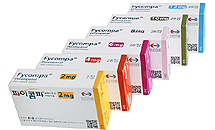
- Myung-in & Hwan-in are launching Fycompa’s generics
- by Lee, Tak-Sun Sep 27, 2023 05:44am
- 에자이 . It is to launch early , and through this, the drug price was added 6% more than before. According to the industry on the 25th, Myungin and Hwanin will be reimbursed, respectively, on the 14th, when Fycompa material patent expires. It is launched on the market with a total of 6 dosages, and it is the first of the same ingredient in Korea. They succeeded in evading Fycompa patent (expected to expire on October 14, 2026) for an early release. Through this, they also received permission of priority for exclusivity and obtained exclusive rights in the late-after drug market from the 14th to July next year. During this period, the same formulations as the two products cannot be put on the market. The original has never adjusted the upper limit to 53.55% because there are no generics. The government grants an additional to these first generics. The typical generic is adjusted to 53.55% of the original highest price, while the first generic is priced at 59.5%. Fycompa was released in Korea in February 2016. It can be used as a single therapy for patients with partial epiluretic seizures in adolescents 12 years and older. According to last year's IQVIA, sales were 5 billion won, up 8.9% from the previous year.
- Policy
- MFDS grants EUA of Moderna’s adapted COVID-19 vaccine
- by Lee, Hye-Kyung Sep 27, 2023 05:44am
- The Ministry of Food and Drug Safety (Minister: Yu-Kyung Oh) approved the emergency use of Moderna’s monovalent vaccine ‘Spikevax Inj (andusomeran)’ that targets the COVID-19 Omicron subvariant (XBB 1.5) on September 26. The emergency use approval was granted per request by the Korea Disease Control and Prevention Agency to carry out its vaccination plan to prevent COVID-19 in the 2023-2024 winter season. The vaccine has already been approved in the United States and Europe. Previously, on September 12, the MFDS had also granted emergency use approval of Pfizer’s ‘Comirnaty Inj 01.mg/ml (monovalent vaccine that targets the COVID-19 Omicron subvariant (XBB1.5). The MFDS expects that the approved vaccines will help prepare for the winter pandemic and expressed that it will continue to make the best efforts to ensure that the public can receive the vaccine with peace of mind by reinforcing its safety management, including thorough quality control and collection of adverse events.
- Company
- Padcev can be prescribed at tertiary hospitals in KOR
- by Eo, Yun-Ho Sep 27, 2023 05:44am
- Padcev, the first targeted treatment for metastatic urothelial cancer, can now be prescribed at tertiary hospitals in Korea. According to industry sources, Astellas Pharma Korea’s Padcev (enfortumab vedotin) has passed the review of drug committees (DCs) at all of the ‘Big 5’ tertiary hospitals in Korea - the Samsung Medical Center, Seoul, Asan Medical Center, Seoul St.Mary’s Hospital, Sinchon Severance Hospital, with the Seoul National University Hospital being the last. Padcev is a first-in-class antibody-drug conjugate (ADC) that is directed against Nectin-4. It is recommended as Category 1 in the National Comprehensive Cancer Network (NCCN) guidelines. It is a new treatment option for urothelial cancer patients whose cancer has progressed or recurred even after receiving treatment with immunotherapy drugs and platinum-based chemotherapy, for whom no standard of care has existed as of yet. The drug was approved in March in Korea for the treatment of adult patients with locally advanced or metastatic urothelial cancer who have received prior treatment with PD-1 or PD-L1 inhibitors and platinum-based chemotherapy. Padcev demonstrated its efficacy through the EV-301 study, an open-label, Phase III trial that was conducted on 608 patients with locally advanced or metastatic urothelial cancer who have previously been treated with platinum-based chemotherapy and PD-1 or PD-L1 inhibitors. In the trial, Padcev reduced the risk of death by 30% compared to chemotherapy. The median overall survival (OS) of the Padcev group was 12.9 months, demonstrating a significant improvement in survival compared to chemotherapy group's 9.0 months. In addition, Padcev significantly improved progression-free survival (PFS) with a 38% reduction in risk of disease progression or death. The median progression-free survival (PFS) for Padcev was 5.6 months and 3.7 months for the control group. Mi-so Kim, Professor of the Department of Oncology at Seoul National University Hospital, explained, “Urothelial cancer is the most common type of bladder cancer that accounts for around 91% of all bladder cancers. 8 of 10 patients are over the age of 60, and due to its prevalence in the elderly and its frequent recurrence and metastasis, it is a fatal disease with a 5-year survival rate of around 5%. It had been considered one of those representative diseases with a large unmet need due to its limited treatment options and the low quality of life caused by accompanying urinary disorder symptoms such as hematuria, frequent urination, and residual urine." Kim added, “Urothelial cancer progresses quickly and requires continuous treatment, but patients were left to use chemotherapy for later-line therapies after using immunotherapy in the second-line due to the lack of a standard later-line treatment option. Padcev can be used in patients whose cancer had progressed or relapsed after chemotherapy (first-line therapy) and immunotherapy (second-line therapy or first-line maintenance therapy), and therefore may open a new paradigm in the treatment of patients with locally advanced or metastatic urothelial cancer.”
- Policy
- Resolving Conflicts in Non-face-to-face Medical treatment
- by Lee, Jeong-Hwan Sep 27, 2023 05:44am
- The Ministry of Health and Welfare cited the legalization of non-face-to-face treatment through the revision of the Medical Act as a solution to resolve the conflict between the medical community and the medical community surrounding non-face-to-face-face treatment. In addition, the MOHW expressed his will to improve the non-face-to-face treatment pilot project as soon as possible, reflecting the on-site opinion that the scope of the first diagnosis is narrow, the criteria for re-examination is vague, and there is a gap between the medical field. On the 26th, the Ministry of Health and Welfare responded to the written question of Rep. Choi Young-hee, a member of the National Assembly Health and Welfare Committee. Rep. Choi Young-hee pointed out that it is necessary to institutionalize non-face-to-face treatment through the revision of the Medical Act based on the temporary non-face-to-face treatment results, but it is in a shutdown situation due to the non-infection of legalization. In response, the Ministry of Health and Welfare explained that the temporary non-face-to-face treatment conducted from the 2nd of 2020 to May of this year is only 0.3% of the total number of outpatient visits, and the pilot project carried out in June and July this year accounts for 0.2%, and explained that non-face-to-face-to-face treatment is being used as an auxiliary means of face-to-face treatment. The Ministry of Health and Welfare responded that revision of the law is essential to provide stable and predictable non-face-to-face treatment to the public, and it is urgent to deliberate on the revision of the medical law. In particular, the Ministry of Health and Welfare is that in order to resolve conflicts with the medical community and the pharmaceutical community, the National Assembly needs to reach a social agreement by revising the medical law. Furthermore, the Ministry of Health and Welfare has revealed a plan to objectively analyze and improve the current non-face-to-face treatment pilot project. The plan is to revise and improve the scope of the pilot project as soon as possible, reflecting the opinion that the scope of the initial diagnosis is too narrow and the criteria for re-examination is ambiguous, so there is a gap with the medical field. The Ministry of Health and Welfare said, "We will continue to prepare legislative and policy improvement measures for non-face-to-face treatment by reflecting the opinions of the field, evaluation and analysis results of pilot projects, discussions of advisory group, and satisfaction survey results. Legalization is essential to prevent illegal acts related to non-face-face-to-face treatment in advance and provide non-to-face treatment stably."
