
- LOGIN
- MemberShip
- 2026-05-07 18:03:06
- Policy
- Prostate cancer tx Xtandi·Zytiga, 5% pt copayment applied
- by Lee, Tak-Sun Oct 26, 2023 06:06am
- Mandatory coverage is applied to some treatments for prostate cancer treatments Xtandi soft capsule 40mg and Zytiga, which is expected to reduce the financial burden on patients. This is a measure of fairness as Erleada is subject to mandatory benefit as it was previously listed. The HIRA announced that it will revise the anticancer drug reimbursement standards including this information starting in November. Xtandi's pt copayment will be lowered from 30% to 5% due to expanded coverage for ADT combination therapy (first-line palliative treatment) for metastatic hormone-sensitive prostate cancer. Zytiga also lowers the pt copayment of prednisolone + ADT combination therapy (first-line, palliative treatment) from 30% to 5% for metastatic hormone-sensitive prostate cancer. HIRA said, "As Erleada, a drug in the ARTA (androgen receptor targeting agent) class, was recently applied for the same indication with a pt copayment of 5/100, issues such as confusion in actual clinical settings and patient equity were raised, so textbooks and guidelines were revised. · Referring to academic opinions, etc., it was judged to be a drug that needed expanded coverage, so the pt copayment was changed from 30% to 5%,” he explained. The upper limit amount was also adjusted according to the expansion of benefits. Zytiga has applied an ex officio adjusted upper limit amount as Hanmi Pharmaceutical's 'Abiteron 500mg', a generic drug, was listed starting this month. Accordingly, the upper limit will be reduced from 16,780 won per party, which is 70% of the previous highest price, to 11,746 won. After one year, it will drop to 8,986 won, which is 53.55%. For reference, Hanmi's first generic ‘Abiteron 500mg’ was listed at 8,537 won per tablet. The transition to mandatory coverage also greatly reduces the financial burden on patients. In the case of Xtandi, the cost per patient is reduced from about 5.84 million won to about 660,000 won per year, the NHIS said. Last year, based on IQVIA, domestic sales amounted to 29.1 billion won for Xtandi and 21.8 billion won for Zytiga.
- Policy
- Will restrictions be eased for vaccine clinical trials?
- by Lee, Jeong-Hwan Oct 26, 2023 06:06am
- Minister of Food and Drug Safety Yu-Kyung Oh promised to reduce or ease the mandatory participation rate of domestic clinical patients from the current 10% to 5% to strengthen sovereignty over domestically produced vaccines and increase self-sufficiency. The plan is to improve the current regulations by accepting the claims raised by domestic pharmaceutical companies that seek to develop domestic vaccines and agreeing with the National Assembly's suggestion to speed up development by lowering the domestic reference rate to reinforce actual vaccine self-sufficiency. On the 25th, Yu-Kyung Oh, Minister of Food and Drug Safety, responded as follows to an on-site inquiry made by Rep. Ki-Youn Kang of the People Power Party at the NA audit. Rep. Kang pointed out that vaccines to prevent diseases such as pertussis and cervical cancer are frequently sold out or out of stock domestically, thereby infringing on people's health and convenience. In particular, Rep. Kang pointed to the 10% domestic participation rate requirement set for clinical trials for vaccine development as the issue and urged it be lowered to 5%. Rep. Kang said, “South Korea, which ranks among the top 10 economies around the globe, is always low on vaccines. To secure sovereignty, the related R&D budget must be significantly increased. Also, the current 10% domestic participation rate required for vaccine clinical trials is very high compared to global standards. If this ratio is lowered to just 5%, the vaccine development period can be shortened by 2 to 3 years.” Rep. Kang added, “Please review the claim that the proportion of the Korean participants in the clinical trial should be lowered. The Ministry of Food and Drug Safety needs to ease regulations by actively listening to the pharmaceutical industry’s demands for vaccine development.” In response to Rep. Kang's criticism, MOHW Minister Kyoo-Hong Cho promised to secure the R&D budget necessary for vaccine development, and MFDS Minister Oh promised to push down the domestic participation rate requirement to 5% for vaccine clinical trials. Minister Cho said, “We will be able to better support vaccine sovereignty by introducing a new project called Korean ARPA-H in the 2024 budget. We will proceed according to plan.” Minister Oh said, “The 10% rate is not mandatory, but recommended. If the developer provides statistically valid evidence, the Korean participation rate can be adjusted flexibly.” When Rep. Kang requested easing of the regulation to 5%, Oh replied, “I will do so.”
- Company
- Verzenio reattempts reimb for early breast cancer in KOR
- by Eo, Yun-Ho Oct 26, 2023 06:06am
- Verzenio, the first CDK4/6 inhibitor to attempt reimbursement listing for early breast cancer, has begun its second journey toward reimbursement in Korea. This attempt is being made 5 months after the first failure. The news of Lilly Korea's Verzenio (Abemaciclip) reapplication for reimbursement was made known through a written inquiry made by Rep. Young-Seok Seo (Democratic Party of Korea) of the National Assembly Health and Welfare Committee to the Ministry of Health and Welfare during the NA audit. Rep Seo inquired about the status of reimbursement of drugs approved to prevent relapse in patients with early breast cancer and the MOHW’s position and plans regarding the application of coverage to related new drugs. Verzenio was mentioned as one of the 17 drugs that own an indication for early breast cancer in the response submitted by the MOHW. Other than the letrozole generic that is used as endocrine therapy, it is the only new drug for the HR+/HER2- type. The drug was first approved on November 18th, 2022 as an adjuvant treatment for adult patients with hormone receptor-positive/human epidermal growth factor receptor 2-negative (HR+/HER2-), node-positive, early breast cancer (EBC) at high risk of recurrence in combination with endocrine therapy. More specifically, a very limited range of patients with ▲ patients with 4 or more positive axillary lymph nodes, ▲ 1-3 positive axillary lymph nodes, and tumor size of 5 cm or larger, or ▲histological grade 3 disease. However, the drug struggled from the first step to its reimbursement at HIRA's Cancer Disease Review Committee level. After a long wait of 6 months after submitting the application, the agenda was finally reviewed at the 3rd CDDC meeting that was held on May 3rd. However, Verzenio had unfortunately many contestants. A total of 9 items were reviewed in the 3rd CDDC meeting. This was the largest amount of subjects among the 7 cancer screening meetings held this year. 5 months after failing the first CDDC review, Lilly filed for reimbursement again on October 4th to HIRA. The company was equipped with new supporting data presented at the 2023 ESMO Congress that had been held in Madrid, Spain recently. The 5-year morachE data that was released was a follow-up study of the 4-year data released at the San Antonio Breast Cancer Symposium published in Lancet Oncology in December 2022. Study results showed that the differences in the major clinical indicators - invasive disease-free survival (IDFS) and distant relapse-free survival (DRFS) rates – widened more distinctively between the Verzenio arm and the control arm (endocrine therapy alone) at 5 years compared to 4 years. At 5 years, the primary efficacy endpoint IDFS differed by 8%. This means that even after completing Verzenio treatment during the limited period of 2 years after surgery, its treatment effect continued until the 5th year. This data is even more significant as the term, ‘cure,’ is generally used 5 years after cancer treatment. Powered by the reinforced data, the key now lies in the hands of the MOHW. In response to Rep. Seo's written inquiry regarding the coverage of new drugs to prevent early breast cancer recurrence, the MOHW’s Pharmaceutical Benefits Division said, "We strongly agree with the direction of helping early breast cancer patients receive timely treatment and enjoy a better life. We are committed to preventing early breast cancer recurrence. When drugs with indications to prevent early breast cancer recurrence apply for reimbursement, we will review them in accordance with procedures, taking into full consideration their cost-effectiveness, etc..”
- Company
- Janssen ‘will continue endeavors to the Korean society’
- by Son, Hyung-Min Oct 25, 2023 11:08am
- Janssen Korea held a press conference celebrating its 40th year of establishment at the Seoul Plaza Hotel on the 23rd Janssen, which has succeeded in developing treatments in various areas including mental health, autoimmune diseases, and oncology over the past 40 years, emphasized that it will continue to contribute to Korean society by providing innovative medicines and fostering talent. On the 23rd, the company held a press conference celebrating its 40th year of establishment at the Seoul Plaza Hotel. At the event, the company introduced the major achievements it had made in the past 40 years and their significance in each of its therapeutic areas. Managing Director of Janssen Korea Cherry Huang, as well as Chris Hourigan, the Company Group Chairman, Pharmaceuticals, Asia Pacific, Jung-Hee Lee, Chairman of the Board at Yuhan Corp., Professor Sang-Yeol Lee, President of the Korean College of Neuropsychopharmacology, and Young-Shin Lee, CEO of the Korean Research-based Pharmaceutical Industry Association, attended the event. During the four decades, Janssen Korea has provided its innovative drugs to patients in various fields in Korea, including oncology, autoimmune diseases, mental health, and pulmonary hypertension, According to data disclosed by the company, its market share of prescription drugs for autoimmune diseases that are used to treat plaque psoriasis, ulcerative colitis, and Crohn’s disease, has occupied, and is leading the ETC market for autoimmune diseases in Korea. Janssen also strengthened its position in the field of neurology. Its Invega (paliperidone), a treatment for schizophrenia, and Concerta (methylphenidate), a treatment for severe attention deficit hyperactivity disorder (ADHD), were also successfully launched in Korea. In oncology, the company announced its market entry by receiving domestic approval for its CAR-T treatment Carvykti (ciltacabtagene autoleucel) and lung cancer treatment Rybrevant (amivantamab). Janssen Korea is recognized as a global pharmaceutical company that has successfully introduced open innovation to Korea. Janssen purchased the global distribution rights to Yuhan Corporation’s Leclaza (lasertinib) in 2018. Leclaza was developed by Genosco, an American subsidiary of Oscotec, whose technology Yuhan Corp imported to Korea. Since then, Janssen has been evaluating the effectiveness of Leclaza in combination with Rybrevant in lung cancer treatment. The two-drug combination is likely to become a first-line treatment option for non-small cell lung cancer in the future. Jung-Hee Lee, Chairman of Yuhan Corp, who participated that day, highly evaluated Janssen. Yuhan also took the company’s value into consideration when deciding to select Janssen as its global partner and licensed out Leclaza’s technology. Lee said, “I have high respect for Paul Janssen, who founded the company. “Janssen’s philosophy of ‘respect for humanity’ was greatly taken into consideration when choosing a global partner for Leclaza.” Janssen pointed to activities such as fostering domestic talent and providing innovative medicines as measures it will pursue to coexist with Korean society in the future. For this, Huang expressed intentions to cooperate closely with the Korean government, HCPs, and industry officials. Cherry Huang, Managing Director of Janssen Korea, said, “Janssen Korea and will work together with Korea to envision and depict a future in which innovative medicines can be provided to more domestic patients and a future in which we can foster talents that can contribute to the Korean society. I hope we can go beyond the 40 years we have spent together and record another 10 years of history, even 100 years.” Chris Hourigan, the Company Group Chairman, Pharmaceuticals, Asia Pacific, said, “We have been investing in the development of treatments with high unmet needs and for the underprivileged in our society, We are also working closely with the Korean government, HCPs, and industry partners to lead the wave of innovation that can fundamentally tackle the way we deal with disease.”
- Company
- JW Pharma terminates contract after 5 yrs of atopy new drug
- by Chon, Seung-Hyun Oct 25, 2023 05:25am
- View of JW Gwacheon office building JW Pharma announced on the 20th that the technology transfer contract for 'JW1601', a treatment for atopic dermatitis, signed with Danish pharmaceutical company Leopharma, has been terminated. The company explained, “We have received a notice of termination of the contract from the Leopharma side and have agreed to return all rights.” JW1601 was transferred to Leopharma in the preclinical phase by JW Pharmaceutical in August 2018. The contract size is $42 million. JW Pharmaceuticals is a condition of receiving a non-refundable down payment of $17 million from Leopharma and up to $385 million sequential milestones for clinical development, licensing, commercialization, and sales. With this termination of the contract, the down payment of $17 million received by JW Pharmaceutical does not need to be returned. Leopharma began clinical phase 2a/b in December 2021 after the introduction of JW1601, and the trial ended last July. JW Pharmaceutical explained that Leopharma has not met the primary evaluation indicators in the initial key results of global clinical phase 2a/b. JW Pharmaceutical said, "Tolerability has been confirmed in all drug dosing groups, and no new safety issues or concerns have been identified. Safety has also been confirmed in the results of clinical trials related to heart safety that were conducted separately." JW1601 has a dual mechanism of action, which selectively acts on the histamine H4' receptor, blocks the activity and movement of immune cells that cause atopic dermatitis, and inhibits the signaling of histamine, which causes itching. Histamine H4 is a receptor that regulates the movement and activity of inflammatory cells and regulates itching signaling, and is evaluated as a target that can fundamentally solve the pathological causes of atopic dermatitis. JW Pharmaceutical emphasized, “Based on the drug's properties that selectively act on the H4 receptor of histamine and the safety region that has been confirmed in clinical practice, we plan to review the future development direction, including the possibility of new indications,” JW Pharmaceuticals.
- Company
- Combo drugs strong in the COPD treatment market
- by Son, Hyung-Min Oct 25, 2023 05:24am
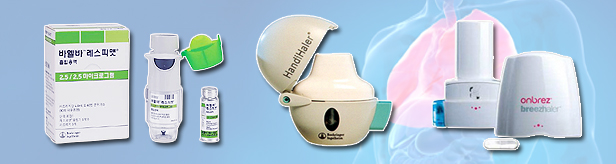
- The growth of the combination drugs was notable in the chronic obstructive pulmonary disease (COPD) treatment market in Q3 this year. With major COPD treatment guidelines recommending a long-acting muscarinic antagonist (LAMA) and long-acting beta2 agonist (LABA), the prescription trend appears to have shifted toward combination drugs. In particular, the growth of the LAMA+LABA combination drugs owned by GlaxoSmithKline (GSK) and Boehringer Ingelheim (BI) had stood out. Presciptions of LAMA+LABA combos (Source: UBIST). According to the market research institution UBIST on the 23rd, the amount of outpatient prescriptions for LAMA+LABA combination drugs in Q3 amounted to KRW 10.3 billion. This is a 10.8% YoY increase from last year. The bronchodilators LAMA and LABA are used to improve lung function in COPD patients. Anoro, a LAMA+LABA combination drug developed by GSK, recorded KRW 5.5 billion in prescriptions in Q3 this year, a 17.0% YoY increase compared to the same period of last year. Anoro’s sales have been steadily increasing since 2018, recording over KRW 10 billion every year. Anoro is a LAMA+LABA combination drug that was first released on the market in 2015. Boehringer Ingelheim's Vahelva's prescriptions rose 11.5% YoY to record KRW 2.9 billion, contributing to the rise in prescriptions in the LAMA+LABA combination drug market. Prescriptions of major LAMA+LABA COPD treatments (Source: UBIST) On the other hand, single-agent drug prescriptions had slowed down. Onbrez, a LABA single-agent drug developed by Novartis, was prescribed only worth KRW 130 million in Q3 this year. Onbrez’s sales have not exceeded KRW 1 billion in annual sales ever since 2021. Sales of LAMA single-agent drugs also showed a downward trend. Prescriptions of Boehringer Ingelheim's Spiriva increased to KRW 2.7 billion in Q3 this year. This is a 28.9% decrease from the KRW 3.8 billion recorded in the same period last year. GSK's Incruise also recorded KRW 970 million in Q3, down 30.7% YoY. Prescriptions of LAMA+LABA combinations are on the rise because of their effectiveness. In clinical trials that were conducted on COPD patients, combination drugs improved lung function by more than 2 times compared to single-agent drugs. Favorable results were also observed in major indicators such as lung function and shortness of breath. Analysts also have suggested that the COPD treatment guidelines have also contributed to the increase in prescriptions for LAMA+LABA combination drugs. The updated 2023 COPD treatment guidelines by the Global Initiative for Chronic Obstructive Lung Disease (GOLD), prioritized the use of LAMA+LABA combinations. GOLD recommended LABA+LAMA combination therapy or combination drugs for COPD treatment rather than LABA or LAMA monotherapy. The ICS + LABA combination therapy, which was previously recommended for treatment when the blood eosinophil count was over 300, was replaced by the LABA + LAMA + ICS combination therapy. The domestic COPD treatment guidelines also recommend prior use of LABA+LAMA combination drugs.
- Opinion
- [Reporter’s View] Asthma drugs reimb through diff tracks
- by Eo, Yun-Ho Oct 25, 2023 05:24am
- An unusual case has emerged where drugs for the same indication were listed through different tracks for reimbursement in Korea. The interleukin-5 antagonists for asthma, ‘Cinquair (reslizumab)’ and GSK Korea’s ‘Nucala (mepolizumab)’ have been simultaneously listed for reimbursement in Korea through different reimbursement tracks. Cinquair was listed through the standard reimbursement listing process whereas Nucala received reimbursement listing through the Risk Sharing Agreement (RSA) scheme. This is a situation that has been virtually unheard of. If a drug is listed through the regular reimbursement listing process, no latecomer drugs can enter Korea’s insurance system through the RSA track. Nucala's application for RSA itself was not impossible as Cinquair had not been yet listed. However, with Teva taking active steps to list Cinquair (in the drug pricing calculation phase), it was not at all easy for GSK, which wanted dual pricing, to enter the system. AstraZeneca Korea, which sought to list its drug Fasenra (benralizumab) with Nucala, was unable to pass the Health Insurance Review and Assessment Service’s Drug Reimbursement Evaluation Committee review in September. Nucala’s listing can be said to be the fruition of GSK's determination for reimbursement in Korea. With Cinquair already undergoing drug pricing negotiations through the general listing process, the government's willingness to leave open the possibility of securing additional treatment options also stands out. On the other hand, AstraZeneca's failure to overcome the same situation remains a disappointment. AstraZeneca’s drug was also an interleukin (IL)-5 antagonist that reduces the level of blood eosinophils, a type of white blood cell that is involved in the development of asthma exacerbation. At the time of their approval, it also received attention for being an effective treatment option that had not been available before However, no other drug has been reimbursed since the reimbursement approval of Novartis Korea’s ‘Xolair (omalizumab)’ in 2020. Although the three drugs all treat the same disease, ‘asthma,’ the three drugs and Xolair’s indication differ. However, the government had compared the drugs with Xolair, and therefore, the set price was difficult for the three new biological drugs to bear, which led to the discontinuation of their reimbursement listing process. And then, AstraZeneca was the only company to not join in the efforts the companies had reignited in 2023, which had led to the different results for the three asthma drugs.
- Company
- Hanmi’s P3T for ’Korean GLP-1 obesity drug’ is approved
- by Lee, Seok-Jun Oct 25, 2023 05:24am
- The development of an ‘GLP-1 obesity treatment optimized for Koreans' is gaining momentum. Hanmi Pharmaceutical announced on the 23rd that the Ministry of Food and Drug Safety approved the Phase III clinical trial for its ‘efpeglenatide,’ a glucagon-like peptide 1 (GLP-1) receptor agonist developed by the company. Epeglenatide is a GLP-1 receptor agonist that acts as a GLP-1 hormone analogue that helps secrete insulin and suppress appetite in the body. After being licensed out to the global pharmaceutical company Sanofi in 2015, its efficacy in weight loss and blood sugar control was confirmed through a large-scale global Phase III clinical trial. In addition, it significantly reduced the incidence of major cardiovascular and kidney diseases, and the results were published in a number of academic journals including the world-renowned New England Journal of Medicine (NEJM). As the innovativeness of efpeglenatide has been confirmed through large-scale global clinical trials, Hanmi Pharmaceutical plans to conduct clinical trials to commercialize the drug in Korea within 3 years. Efpeglenatide will be produced at Hanmi Pharmaceutical's state-of-the-art biopharmaceutical plant, 'Pyeongtaek Smart Plant'. This is because the domestic production of the drug will ensure stable supply at an economical cost, greatly increasing the accessibility and sustainability of drugs for obese patients in Korea. Hanmi Pharmaceutical recently launched the 'H.O.P Project’ that seeks a treatment approach that encompasses the whole cycle of obesity, from its treatment, and management, to prevention. The company seeks to accelerate the development of efpeglenatide as the first commercial model. Na-young Kim, Senior Managing Director at Hanmi Pharmaceutical (Head of new product development), said “Starting with the first new GLP-1 obesity drug developed solely by a Korean pharmaceutical company with its proprietary technology, we strive to bring innovative results through the simultaneous development of drugs through H.O.P. project.”
- Company
- Celltrion’s Remsima SC was approved in the US
- by Chon, Seung-Hyun Oct 24, 2023 05:22am
- Pic of ZYMFENTRA On the 23rd, Celltrion announced that it had received marketing authorization for Zymfentra, which is a subcutaneous formulation of its antibody biosimilar Remsima. Remsima is a Remicade biosimilar. Zymfentra has been approved in Europe under the product name Remsima SC. Celltrion said, “Zymfentra is the world’s only infliximab SC formulation treatment developed by changing the formulation of Remsima, an existing intravenous formulation drug, to a subcutaneous injection to secure strong competitiveness in the TNF-alpha inhibitor market. Remsima SC has obtained marketing authorization in approximately 50 countries, including Europe and Canada, and is rapidly expanding its share in the market. Zymfentra is Celltrion's first product approved as a new drug in the US market. According to Celltrion, the FDA recognized the product's differentiated value from the discussion stage and recommended it take the new drug approval process. To obtain approval as a new drug, Celltrion conducted two new global Phase III clinical trials. Based on the safety and efficacy results demonstrated through the clinical trials, Celltrion submitted an application for its approval in December of last year in accordance with the FDA's new drug approval process and obtained authorization in 10 months. In the new Phase III trials that were conducted on 343 Crohn's disease patients and 438 patients with ulcerative colitis for 54 weeks, Zymfentra demonstrated statistically superior efficacy and comparable safety with placebo as maintenance therapy in all endpoints including the primary endpoint of clinical remission and endoscopic response rate, as well as the other major secondary endpoints. The company said, “We expect to receive patent protection until 2040 through patents on the SC formulation and administration method that we have already filed patents for." This patent is a barrier patent designed to protect against the market entry of not only Zymfentra but also other infliximab subcutaneous injection biosimilars. If the company successfully receives the patent, Zymfentra will be able to enjoy its exclusive status until patent expiry. Through this, Celltrion expects that it will be able to set a higher selling price for Zymfentra than existing biosimilars, which will serve as a stable mid- to long-term profit base for the company. According to IQVIA, a pharmaceutical market research firm, the size of the U.S. TNF-alpha inhibitor market which includes infliximab, was USD 47.736 billion (approximately KRW 62 trillion) as of last year. Celltrion believes it would be possible to achieve annual sales that exceed KRW 600 billion and KRW 3 trillion in sales within 3 years. An official from Celltrion said, “Unlike existing new drugs, Zymfentra has already demonstrated its convenience and efficacy in major global markets including Europe, so it is expected to also show great success in the world’s largest pharmaceutical market. the United States, Given the relatively poor medical environment in the United States, where patients lack economic and physical access to medical facilities, the inherent convenience of the SC formulation, which allows patients to administer the medication at home, will serve as a significant competitive advantage.”
- Policy
- Severe asthma txs Nucala and Cinqair are to be reimbursed
- by Lee, Jeong-Hwan Oct 24, 2023 05:22am
- Reimbursement treatment options for the treatment of severe eosinophilic asthma are expanded. GSK Korea's Nucala and Handok Teva Cinqair will be listed on the payroll simultaneously next month. Eisai's JAK inhibitor Jyseleca will also have new insurance coverage standards, and Novartis' JAK1/JAK2 inhibitor Jakavi will have coverage standards for Graft-versus-host reaction or disease (GVHD) added. Recently, the Ministry of Health and Welfare announced the details of the standards and methods for applying such nursing care benefits. We will begin collecting opinions until the 29th for implementation on the 1st of next month. Nucala and Cinqair are used in adult patients with severe eosinophilic asthma who are not adequately controlled despite high-dose inhaled corticosteroids - long-acting inhaled β2 agonists (ICS-LABA) and long-acting muscarinic antagonists (LAMA). In this case, salary is recognized. Benefits are recognized only when ▲the blood eosinophil level is more than 300 cells/㎕ within 12 months before starting treatment, ▲ four or more acute exacerbations of asthma requiring systemic corticosteroids within 12 months prior to starting treatment, or ▲if oral corticosteroids equivalent to 5 mg/day of prednisone have been administered continuously for 6 months prior to starting treatment or, only when the blood eosinophil level is 400 cells/㎕ or more within 12 months before starting treatment and when there have been three or more acute exacerbations of asthma requiring systemic corticosteroids within 12 months before starting treatment. Continued administration is recognized upon evaluating before and every year after drug administration to ensure that the frequency of acute exacerbations of poly asthma has decreased by more than 50% compared to before starting treatment, ▲for patients who require continuous oral corticosteroid treatment, the oral corticosteroid dose is reduced by more than 50% compared to before starting treatment while improving or maintaining asthma symptom control. Nucala is registered with RSA applied, and Cinqair is registered as a general salary. Accordingly, Nucala's sticker price (maximum price) is much higher, but the actual price is known to be similar. If Cinqair had previously been listed as general, it would have been difficult to apply the RSA for Nucala, but with the two drugs being listed at the same time, they were able to be listed under a different reimbursement procedure track. Jyseleca has a new reimbursement standard for rheumatoid arthritis and moderate-to-severe active ulceritis in adults. The standard for benefits is when the patient does not respond appropriately to or is intolerant to common medications for each disease. For those over 65 years of age, benefits may be recognized if the patient does not respond appropriately to or is intolerant to TNF-α inhibitors. Novartis' JAK1/JAK2 inhibitor Jakavi has additional coverage criteria for steroid-refractory GVHD for those aged 12 years or older. Reimbursement is recognized for acute patients for whom a response is confirmed in a monthly evaluation 2, 4, 6, or 8 weeks after the start of Jakavi administration, and for chronic patients for whom a response is confirmed for a monthly evaluation 3 months after the start of Jakavi treatment. do. However, only chronic patients who show a more than adequate response to a daily dose of 10 mg or less can be evaluated at a maximum of 3 months, and re-administration is permitted for patients who stopped after improving. The maximum administration period is up to 6 months for acute administration and up to 3 years for chronic administration. Chronic administration after completion of acute administration, cases where acute and chronic symptoms overlap, and cases where a patient who stopped treatment after improvement relapses and administration exceeds the maximum administration period are case-by-case. In addition, if GVHD progresses during administration (symptoms worsen or new symptoms appear), adverse reactions that prevent administration occur, or systemic treatments other than steroids and calcineurin inhibitors are used, supplementation will be discontinued. Meanwhile, a new reimbursement standard for Celebrex and Layla was also established. Reimbursement is permitted within the scope of approval, but concurrent use of other digestive tract medications to prevent symptoms such as gastritis is not permitted.
