- LOGIN
- MemberShip
- 2026-09-09 13:44:56
- Dupixent is shifting the atopic dermatitis treatment
- by Hwang, byoung woo | translator Hong, Ji Yeon | 2026-04-22 08:53:59
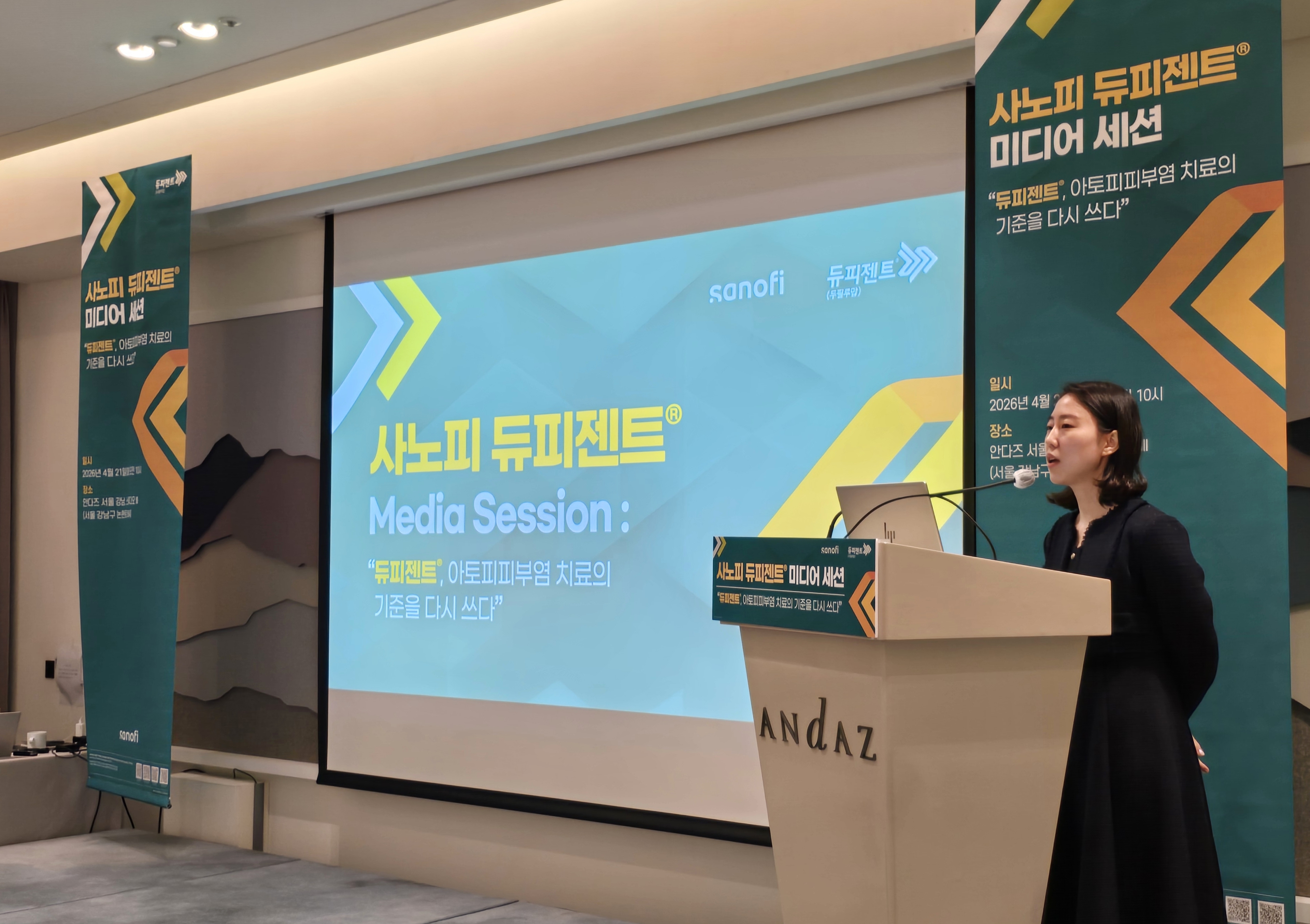
Atopic dermatitis treatment is expanding, moving from simple symptom relief toward changing the disease progression.
As treatment approaches shift toward mechanism-centered strategies following the introduction of biologics, the combination of long-term efficacy demonstrated in real-world data and early treatment strategies for children is prompting discussions of the possibility of 'disease modification.'
On the 21st, Sanofi held a media session titled 'Dupixent, Rewriting the Standards of Atopic Dermatitis Treatment' to share updates on the treatment paradigm and its clinical significance.
From Symptom Relief to Mechanistic Treatment…Changes in Atopic Dermatitis Approaches
Atopic dermatitis is increasingly recognized not just as a disease limited to skin symptoms, but as a chronic inflammatory condition that affects overall sleep, mental health, and comorbidities.
Jung Won Shin, Medical Lead at Sanofi, explained, "Atopic dermatitis is a disease accompanied by various disease burdens in addition to visible skin symptoms," and added, "A long-term management of the disease is crucial."
In particular, the emphasis was placed on the fact that the disease affects the patient's entire life, including sleep disorders, psychological withdrawal, and restrictions on social life, as well as an increased risk of infection due to skin barrier damage.
These disease characteristics are leading to changes in treatment goals. In the past, the focus was on short-term symptom relief using local steroids or systemic immunosuppressants. However, the current view is that treatment strategies are moving toward targeting the underlying inflammation of the disease.
Regarding this, Shin stated, "In the last 10 years, atopic dermatitis treatment has significantly changed, centering on mechanism-based targeted therapy."
In this process, Dupixent was presented as a representative case leading the expansion of treatment options as a biologic that simultaneously blocks the IL-4 and IL-13 pathways.
Efficacy Confirmed by Long-term Data…Strengthening Persistence·RWE Evidence
Long-term data collected in clinical settings were presented as key evidence supporting the treatment's persistence and efficacy.
According to Professor Yonghyun Jang of the Department of Dermatology at Kyungpook National University Hospital, who was in charge of the presentation, an analysis of domestic patient data showed a drug persistence rate of 80.4% over 4 years.
Furthermore, the EASI 75 achievement rate was 91.5%, and the EASI 90 achievement rate was approximately 44.1%, confirming that meaningful treatment responses are maintained in patients with moderate-to-severe conditions. These effects have been consistently demonstrated in actual clinical settings through global, long-term follow-up studies such as PROSE, GLOBOSTAD, and RELIEVE-AD.
Professor Jang stated, "EASI, pruritus (NRS), and quality of life (DLQI) indicators all show improvement from a relatively early point after starting treatment. Significant changes in indicators appear around the three-month mark."

Professor Jang explained that these improvement effects do not end with short-term responses but tend to remain stable during long-term follow-up.
Similar trends were confirmed regarding Patient-Reported Outcome (PRO) indicators.
Professor Jang stated, "Meaningful improvements were demonstrated not only in objective indicators of skin lesions but also in the itching and quality of life indicators perceived by the patient. In particular, the improvement in the quality of life is characterized by being confirmed from a relatively early stage."
Professor Jang added, "In the long-term follow-up data, new safety issues were limited, and there were not many cases leading to treatment discontinuation in clinical practice."

Attention to Early Childhood Treatment…Possibility of Disease Modification
In particular, the media session that day presented early treatment strategies in pediatric patients and the possibility of disease modification as key points.
Professor Jang said, "Atopic dermatitis is highly likely to progress along this path if inflammation is not sufficiently controlled at an early age and exacerbations are repeated," and added, "Managing the inflammatory state stably in the early stages of the disease is important to lower the long-term disease burden."
Professor Jang also highlighted the role of Dupixent. This means that there is a possibility of a treatment approach that changes the natural course of the disease beyond simple symptom control.
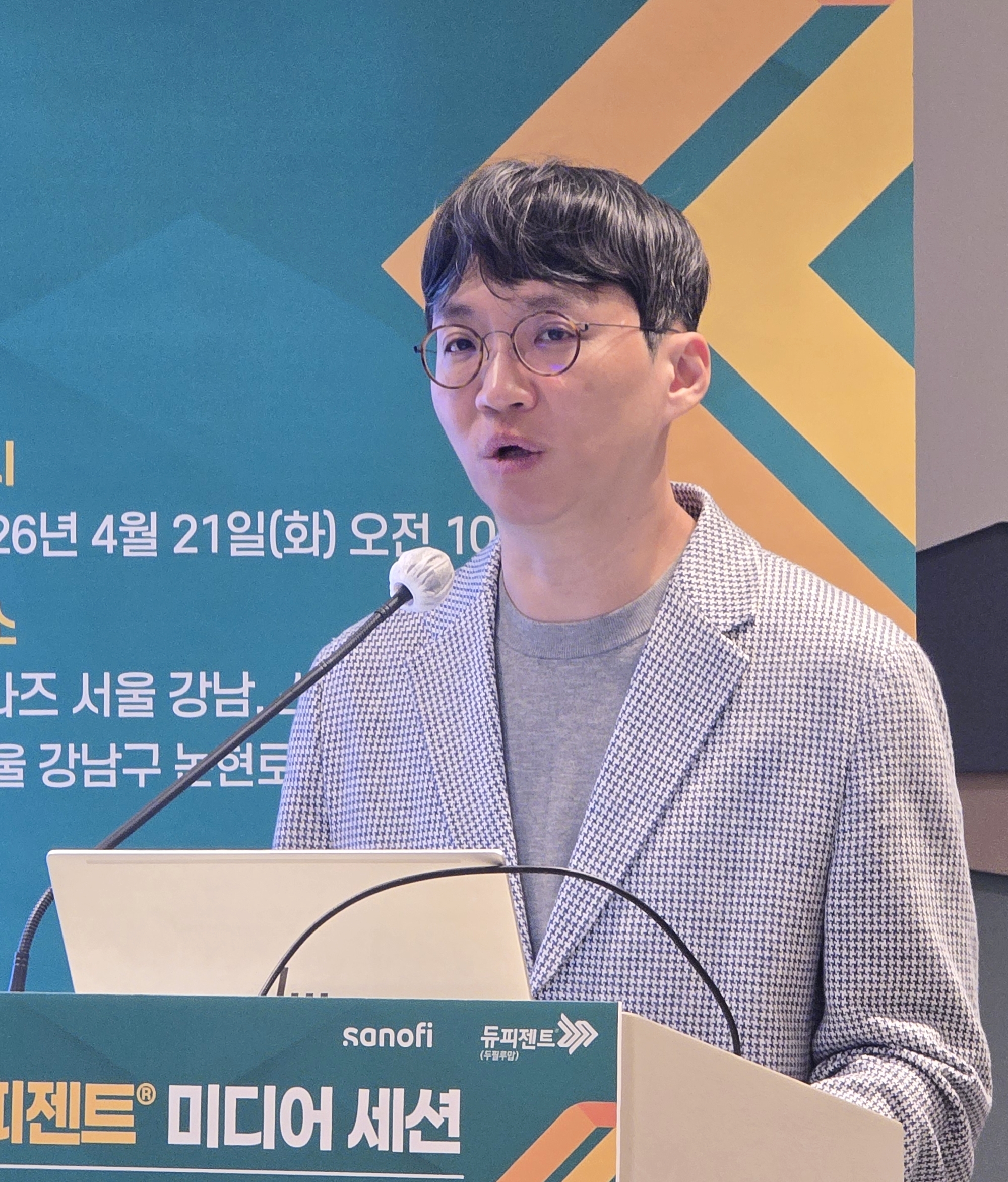
According to the presentation, long-term follow-up studies confirmed a tendency for the disease-controlled state to be maintained after Dupixent treatment, and improvements were reported to persist in the ADCT indicator, which assesses patients' self-reported disease state.
In addition, improvements continued in major symptoms, such as itching and sleep problems, which served as indicators directly linked to changes in the patient's quality of life.
Furthermore, it was reported that Dupixent treatment reduced the risk of new allergies by approximately 34%, the risk of asthma by approximately 40%, and the risk of allergic rhinitis by approximately 31%.
Regarding this, Professor Jang stated, "If treatment is applied early in severe patients, there is a possibility of changing the course of the disease itself in some patients. This can be seen as a treatment approach that can change long-term disease progression beyond simply controlling symptoms."
During the Q&A session, it was mentioned that there are no concerns regarding long-term administration safety when administering Dupixent from childhood.
Professor Jang said, "Atopic dermatitis can progress to a persistent disease once it exceeds a certain level of inflammatory state. An approach that blocks this progression through early treatment is important."
Professor Jang also noted, "It is reported that the effect reappears even if Dupixent is re-administered after discontinuation. Resistance due to long-term use is not a significant concern."
-

- 1
댓글 운영방식은
댓글은 실명게재와 익명게재 방식이 있으며, 실명은 이름과 아이디가 노출됩니다. 익명은 필명으로 등록 가능하며, 대댓글은 익명으로 등록 가능합니다.
댓글 노출방식은
댓글 명예자문위원(팜-코니언-필기모양 아이콘)으로 위촉된 데일리팜 회원의 댓글은 ‘게시판형 보기’와 ’펼쳐보기형’ 리스트에서 항상 최상단에 노출됩니다. 새로운 댓글을 올리는 일반회원은 ‘게시판형’과 ‘펼쳐보기형’ 모두 팜코니언 회원이 쓴 댓글의 하단에 실시간 노출됩니다.
댓글의 삭제 기준은
다음의 경우 사전 통보없이 삭제하고 아이디 이용정지 또는 영구 가입제한이 될 수도 있습니다.
-
저작권·인격권 등 타인의 권리를 침해하는 경우
상용 프로그램의 등록과 게재, 배포를 안내하는 게시물
타인 또는 제3자의 저작권 및 기타 권리를 침해한 내용을 담은 게시물
-
근거 없는 비방·명예를 훼손하는 게시물
특정 이용자 및 개인에 대한 인신 공격적인 내용의 글 및 직접적인 욕설이 사용된 경우
특정 지역 및 종교간의 감정대립을 조장하는 내용
사실 확인이 안된 소문을 유포 시키는 경우
욕설과 비어, 속어를 담은 내용
정당법 및 공직선거법, 관계 법령에 저촉되는 경우(선관위 요청 시 즉시 삭제)
특정 지역이나 단체를 비하하는 경우
특정인의 명예를 훼손하여 해당인이 삭제를 요청하는 경우
특정인의 개인정보(주민등록번호, 전화, 상세주소 등)를 무단으로 게시하는 경우
타인의 ID 혹은 닉네임을 도용하는 경우
-
게시판 특성상 제한되는 내용
서비스 주제와 맞지 않는 내용의 글을 게재한 경우
동일 내용의 연속 게재 및 여러 기사에 중복 게재한 경우
부분적으로 변경하여 반복 게재하는 경우도 포함
제목과 관련 없는 내용의 게시물, 제목과 본문이 무관한 경우
돈벌기 및 직·간접 상업적 목적의 내용이 포함된 게시물
게시물 읽기 유도 등을 위해 내용과 무관한 제목을 사용한 경우
-
수사기관 등의 공식적인 요청이 있는 경우
-
기타사항
각 서비스의 필요성에 따라 미리 공지한 경우
기타 법률에 저촉되는 정보 게재를 목적으로 할 경우
기타 원만한 운영을 위해 운영자가 필요하다고 판단되는 내용
-
사실 관계 확인 후 삭제
저작권자로부터 허락받지 않은 내용을 무단 게재, 복제, 배포하는 경우
타인의 초상권을 침해하거나 개인정보를 유출하는 경우
당사에 제공한 이용자의 정보가 허위인 경우 (타인의 ID, 비밀번호 도용 등)
※이상의 내용중 일부 사항에 적용될 경우 이용약관 및 관련 법률에 의해 제재를 받으실 수도 있으며, 민·형사상 처벌을 받을 수도 있습니다.
※위에 명시되지 않은 내용이더라도 불법적인 내용으로 판단되거나 데일리팜 서비스에 바람직하지 않다고 판단되는 경우는 선 조치 이후 본 관리 기준을 수정 공시하겠습니다.
※기타 문의 사항은 데일리팜 운영자에게 연락주십시오. 메일 주소는 dailypharm@dailypharm.com입니다.


-

- "SpaceOAR reduces rectal bleeding…major shift in radiation therapy"
- Prostate cancer is the most common cancer diagnosed in men…treatment demand increases among elderly patients