
- LOGIN
- MemberShip
- 2026-05-14 05:31:31

- Company
- The market is recovering for the first time in two years
- by Kim, Jin-Gu Nov 14, 2022 06:07am
- The size of outpatient prescriptions of Montelukast for asthma and allergic rhinitis has increased by 21% in a year. The market, which had been stagnant for the past two years due to the COVID-19 incident and side effect issues, seems to be recovering from its previous year's prescription performance this year. It was found that the impurity negative factor that occurred at the beginning of the year also did not have a significant impact on the market recovery. According to UBIST, a pharmaceutical market research institute on the 9th, the outpatient RX in the Montelukast asthma treatment market in the third quarter of this year was 80.5 billion won. It increased by 18% compared to 68 billion won in the same period last year. Compared to the cumulative prescription amount (75.3 billion won) in the third quarter of 2020, two years ago, it increased by 7%. Montelukast is a common drug for allergic rhinitis and asthma. The original is Singulair by Oganon, Korea. MSD Korea received domestic approval in 2000. More than 100 domestic pharmaceutical companies are selling generics with the same ingredients. The market for this ingredient treatment has grown steadily until 2019. However, due to the COVID-19 crisis in 2020, visits to hospitals for children and adolescents who are mainly prescribed this drug have decreased significantly. At the same time, the U.S. Food and Drug Administration (FDA) attached a black box warning, adding to the issue of side effects. The market suffered a slump for more than two years until the end of last year. The market size, which expanded to 123.9 billion won in 2019, shrunk to 101.8 billion won in 2020 and 96.3 billion won in 2021. It seems to be rebounding this year. It recovered to 92% of the cumulative prescription amount (88 billion won) in the third quarter of 2019 before the COVID-19 incident and side effect issues occurred. If the current trend continues, it is expected to expand to more than 110 billion won by the end of the year. ◆ Most of the major products have increased prescription amount Analysts say that the risk of impurities that occurred earlier this year did not lead to a decrease in prescription performance. In January of this year, the Ministry of Food and Drug Safety decided to introduce pharmaceutical companies Impurities tests have been ordered for montelukast ingredients and finished drugs. It was a precautionary measure according to safety information that NDPA was detected in Montelukast-based raw material drugs. Pharmaceutical companies submitted the results of the impurity test to the Ministry of Food and Drug Safety in April. However, it is reported that NDPA impurities were not detected in domestic products, including the original Singulair. In the case of Montelukas preparation, unlike Valsartan and Ranitidine, large-scale sales prohibition or recovery did not proceed. In fact, most of the major products' prescription performance increased compared to the same period last year-on-year. Hanmi Pharmaceutical's Monterizine recorded a cumulative prescription performance of 8.3 billion won in the third quarter of this year. It increased by 25% compared to 6.7 billion won in the same period last year. Compared to the cumulative 5.7 billion won in the third quarter of 2019, before the outbreak of COVID-19, it increased by 1.5 times. This year, for the first time, the annual prescription amount is expected to surpass 10 billion won. Montezal, another montelukas formulation of Hanmi Pharmaceutical, also saw its cumulative prescription increase by 20% from 3.3 billion won to 3.9 billion won in the third quarter. Monterizine is a combination that combines Montelukas with Levocetirizine, a third-generation antihistamine. During the same period, HK inno. N Lukio increased by 5% from 6.4 billion won to 6.7 billion won. Boryung Asluka rose 199% from 1.3 billion won to 4 billion won, Hutex Pharmaceutical's Singuldown rose 15% from 2.7 billion won to 3.2 billion won, Singulmon rose 7% from 2.6 billion won to 2.8 billion won, and Daewoong Bio's Dawoong Montelukast rose 85% from 1 billion won to 1.9 billion won. The original product, Singulair, saw its cumulative prescription amount fall 4% from 24.5 billion won last year to 23.4 billion won this year. Singulair is being sold by Oganon Korea. Oganon Korea was spun off from MSD Korea early last year. During the spin-off process, Singulair's copyright was transferred to Organon Korea.
- Company
- The popular Daewoong's Nabota
- by Nov 14, 2022 06:06am
- EvolusDaewoong Pharmaceutical's botulinum toxin drug Nabota exceeded $100 million in cumulative sales in North America this year. This is an increase of 61% compared to the previous year. According to the earnings report of Daewoong Pharmaceutical partner Evolus on the 9th (local time), Jeuveau, which is sold by the company, recorded cumulative sales of $13.6 million (14.3 billion won) in the third quarter of this year, up 61.1% from a year earlier. Jeuveau is the North American product name of Nabota, a botulinum toxin formulation exported by Daewoong Pharmaceutical. Sales in the third quarter were $33.21 million (45.6 billion won), the lowest this year, but increased by 24.5% compared to the same period last year. Evolus is a global copyright partner of Nabota developed by Daewoong Pharmaceutical. Since the approval of the U.S. Food and Drug Administration (FDA) in February 2019, Nabota has been actively sold in North America. Early last year, the ITC dispute with Allergan and Medytox was terminated to resolve the negative factors. Nabota has recorded more than $30 million in sales for the fourth consecutive quarter as active marketing for Nabota and demand that had slowed down due to COVID-19 have increased. In the second quarter of last year, it broke its biggest quarterly sales of $37.16 million (51 billion won). Evolus predicted that growth momentum will continue in the fourth quarter with the recently launched large-scale campaign "Switch Your Tox." The campaign added 650 new customer accounts in the third quarter, securing more than 8,800 customers so far. The rate of reordering remains above 70%. The number of consumers who wrote the Evolus Reward loyalty program reached nearly 450,000. "The large-scale campaign has kept demand for Nabota strong," said David Moatazedi, CEO of Evolus. "Evolus will be able to reach the top of this year's revenue guidance range of 143 million to 150 million dollars, which is about 50% annual growth." This is about three times the expected growth rate of the toxin market, he said. Evolus also started selling Nabota in the UK in October. Nabota, which was officially released under the name Nuceiva, delivered its first order last month. Evolus will also launch Nabota in other countries in Europe next year.
- Product
- Opening of FAPA (The Federation of Asian Pharmaceutical Asso
- by Kim JiEun Nov 11, 2022 05:52am
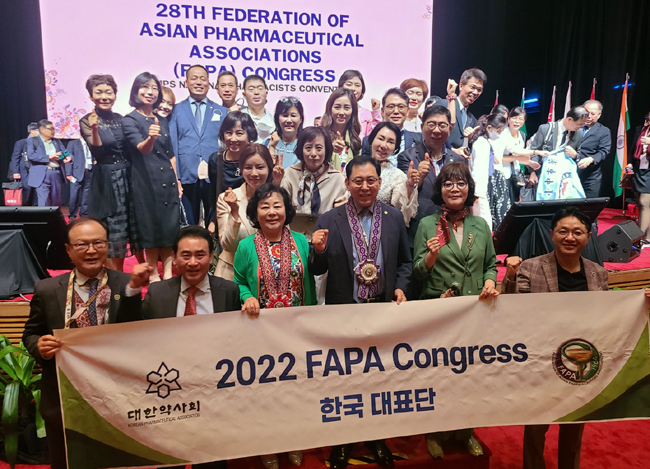
- KoreaAn academic festival of Asian Pharmacists was held in Kuala Lumpur, Malaysia. The interest of the Asian pharmacist community was also by far the digital great transformation of infectious diseases caused by COVID-19. On the 10th FAPA ( Asia Pharmaceutical Federation) and the academic competition center were opened at the Cala Convention Center. Due to the spread of the COVID-19 event, the event will be held for four years since the event of COVID-19 event. Under the theme of Pharmacists building better healthcare systems, Korea, Malaysia, and Taiwan participated in the event. In Korea, about 70 pharmacists and pharmacists participated. Chairman FAPA Yolanda R. Robert L At the opening ceremony, the FAPA jack Shen Lim, said, "The event will be held in Hong Kong and Sri Lanka," said, "The event will be held online in four years." At the opening ceremony, Jack Shen Lim, chairman of the organizing committee, said, "The event scheduled to be held in Hong Kong and Sri Lanka in 2020 has been postponed due to Corona," adding, "This year is an important turning point for FAPA to hold the first online and offline combination event." Malaysia, which hosted the event, said it had an opportunity to expand the role of pharmacists as pharmacists participated in vaccinations due to the spread of COVID-19. Malaysia's Amrahi Buang said, "In Malaysia, vaccination was given as a new pharmacist role, and we had an opportunity to expand the role of pharmacists and expand our functions." He said, "In addition, as pharmacists participated in preventing Nicotine addiction, it was an opportunity for pharmacists to increase their role in medicine." Pharmacists are playing an important role in primary medical care, he explained. Asian countries also suffered from a shortage of medicines due to COVID-19, and some said that the role of pharmacists has once again been proven in the process. FAPA Honorary Chairman Nam Soo-ja won the Achievement Award The 28th FAPA General Assembly and Academic Conference opened in Kuala Lumpur, Malaysia FAPA Yolanda R. Robels, chairman of FAPA, said, "We are suffering from a shortage of medicines amid a global disaster in COVID-19," adding, "Pharmacists are involved in the entire process of producing and distributing medicines in addition to local pharmacies." In the midst of the drug shortage, pharmacists actively responded and played a significant role in the disaster recovery, he said. The conference will feature three Plenary sessions and four symposiums. Ian Bates, a professor at the University College London School of Medicine in the UK, will give a keynote lecture on "Development of a Better Health System through Development of Better Human Resources." Malaysia's Jack Shen Lim, who chaired the event's organizing committee as the new chairman of the FAPA, was elected at the event, while Nam Soo-ja, honorary chairman of the FAPA, won the Achievement Award. The FAPA, which was founded in 1964, is currently participated by 24 member countries, including Malaysia, Korea, Japan, and Taiwan, and holds general meetings and academic conferences every two years.
- Product
- KMA proposes preconditions for non-face-to-face treatment
- by Kang, Shin-Kook Nov 11, 2022 05:52am
- Regarding the bill that allows non-face-to-face treatment that was recently submitted by the ruling party, the medical community asked the government to actively engage in communication with interested parties in the legislation process, as the systemic side effects should be addressed first. On the 10th, the Korean Medical Association (Chairman: Pil-Soo Lee) disclosed its opinion regarding the amendment to the Medical Service Act that was submitted by Rep. Jong-Sung Lee of the People Power Party. KMA said, “Considering the large number of side effects that have risen from the temporary implementation of the non-face-to-face treatment system that had been allowed due to COVID-19, the system itself should be first thoroughly evaluated and verified.” It added, "As it is clear that the side effects, such as the risk of misdiagnosis due to unproven safety and effectiveness, unclear legal responsibility for the results of treatment, and the collapse of the medical delivery system, will cause serious harm to public health, we must first prepare measures to address these issues.” “For non-face-to-face treatment to be carried out properly, the doctors that carry out the treatment should be able to safely and effectively apply it in practice. Mutual understanding and efforts should first be made on both parts to resolve the various concerns that have been arising around the implementation of the system.” “If the proposed bill is legislated in the current state without undergoing such processes, facilitating smooth cooperation across the medical community for the development of the system will inevitably become more difficult, and ultimately cause great confusion. Therefore, we ask the government to actively communicate with the medical community in advance and examine the specific issues that remain in the system.” Lastly, KMA added, ”We have consistently held the position that the general principle of face-to-face treatment shouldn't be undermined under the pretense of convenience to use non-face-to-face treatment, remote monitoring using wearable devices, patients’ transmission of self-information, and over-the-phone prescriptions. In order to preserve the original value of healthcare in protecting the people's lives and right to health, non-face-to-face treatment can never replace face-to-face treatment, and should only be used as a means of assistance.” Meanwhile, the bill proposed by Rep. Jong-Sung Lee contains measures that allow for non-face-to-face treatment to supplement face-to-face treatment, as well as authorize medical institutions at the clinic level to provide non-face-to-face treatment to a limited number of patients who have limited access to healthcare such as those in island/remote areas, infectious disease patients, overseas residents or the disabled, correctional facility patients, and chronically ill patients. With similar bills already been submitted to the National Assembly, it is expected that they will be collectively reviewed by the Health and Welfare Committee in the future.
- Company
- Daewoong obtained an item license for Fexuclu
- by Nov 11, 2022 05:52am
- FexuclueDaewoong Pharmaceutical announced on the 10th that Fexuclu, a new drug for gastroesophageal reflux disease, obtained an item license from the Philippines FDA on the 3rd. The approval was made about eight months after submitting an application for item permission (NDA) at the end of February. It takes about three years to obtain an item license in the Philippines, and Daewoong Pharmaceutical explained that it has greatly shortened the period based on its know-how. Daewoong Pharmaceutical will invite KOLs, including the chairman of the Philippine Gastroenterological Society, to hold a Fexuclu symposium on the 24th and share directions and opinions on entering the Philippine market. Starting from the Philippines, the company will accelerate its overseas expansion of Fexuclu. It plans to submit NDA to 10 countries around the world by the end of this year. So far, a total of eight countries have applied for item permits, including the Philippines, Brazil, Indonesia, Thailand, Mexico, Chile, Ecuador, and Peru. Fexuclu is a new drug for gastroesophageal reflux disease in the P-CAB series officially launched in Korea by Daewoong in July. By improving the shortcomings of existing PPI preparations, it is characterized by fast and stable suppression of gastric acid secretion by combining with a proton pump without the need for activation by gastric acid. There are a total of two indications of Fexuclu: ▲ treatment of erosive gastroesophageal reflux disease (40 mg) ▲ improvement of gastric mucosal lesions of acute gastritis, and chronic gastritis (10 mg). In particular, Fexuclu is the only P-CAB drug in Korea for gastritis indication, and the 2022 European Gastroenterology Association recently published the results of Fexuclu's gastritis adaptation study. Jeon Seung-ho, CEO of Daewoong Pharmaceutical, said, "It is very encouraging that Fexuclu received approval for the first time overseas by drastically shortening the license period in the Philippines, one of Daewoong Pharmaceutical's branch offices, and this is a proven case of Daewoong Pharmaceutical's global business capabilities."
- Company
- SK Biopharm’s Q3 sales rise 270% with rise in Xcopri sales
- by Nov 11, 2022 05:51am
- SK Biopharmaceutical’s sales rose greatly in Q3 with the rising sales of its new anti-epileptic drug ‘Xcopri (cenobamate)’ in the US. On the 10th, SK Biopharmaceutical announced sales of KRW 88.8 billion in Q3 this year, a 270.9% on-year increase. The company also reported an operating loss of KRW 9.2 billion in the same period. Almost half of its sales were driven by Xcopri. Xcopri generated sales of KRW 47.4 billion in the US in Q3 this year. This is over a twofold increase on-year from the KRW 19.9 billion it had generated in Q3 last year. Xcopri’s sales have been driving the performance of the company after getting on track this year. After recording KRW 10 billion in sales in Q1 2021, Xcopri’s sales exceeded KRW 20 billion by Q4 last year. Only a half year later, its sales exceeded KRW 40 billion. Xcopri’s cumulative sales this year reached KRW 119.4 billion. Xcopri’s amount of prescriptions in the US has also been rising continuously. Its prescriptions in Q3 this year rose 12% compared to those in Q2. Xcopri’s monthly prescriptions exceeded 15,000 in August. The company explained that this is a 1.8-time increase compared to the average prescription amount of its competitors at 29 months. SK Biopharmaceutical attributed the rise in US sales to the active online and digital marketing it had relayed in the US. To strengthen its sales capabilities for Xcopri in the US, the company carried out active marketing activities to HCPs and patients. Also, in line with the improvement seen in the face-to-face sales environment, the company reorganized its US local sales and marketing organization and maximized sales efficiency. The company’s analysis is that the activities led to the improvement of relevant indicators, including the total number of calls, rate of face-to-face sales activities, new prescription amount, etc. The company also actively embraced the use of social media and delivered various experiences of patients using Xcopri on the company’s official YouTube channel and sent Direct Messages to patients and their caregivers. Also, the company reserved a large booth at the American Epilepsy Society Annual Meeting that will be held in Q4 to further raise Xcopri’s brand awareness. The company plans to attend various academic conferences and focus on promoting and marketing its drug to epilepsy specialists. Also, a TV commercial for epilepsy patients is planned for the next year. SK Biopharmaceuticals predicted that this year's global sales of Xcopri will exceed its target of KRW 185 billion, with the product’s accelerated entry into new markets in Europe and Latin America. Xcopriis scheduled to be released in Finland, Switzerland, Spain, and France through its European partner Angelini Pharma within the year. The company’s operating loss was reduced by KRW 40.7 billion on-year to record KRW 9.2 billion. However, the cumulative operating loss amounted to KRW 86.5 billion due to its investments in clinical trials for follow-up drugs and promotional activity in the US in the first half of the year.

- Policy
- Some companies give up negotiations to recover Strepto
- by Lee, Tak-Sun Nov 11, 2022 05:51am
- Some pharmaceutical companies with the anti-inflammatory enzyme Streptokinase-streptodornase have conveyed to the NHIS that they are not willing to negotiate. Currently, about five of the 37 pharmaceutical companies subject to negotiation are known to have given up negotiations. However, as the end of the negotiations approaches, more pharmaceutical companies are likely to give up negotiations. According to the industry on the 9th, some pharmaceutical companies of Streptokinase-Streptodornase are giving up negotiations with the NHIS and accepting the deletion of benefits. Last month, the HIRA conducted a re-evaluation of the drug and decided to suspend the evaluation for one year only for items that were agreed to be recovered according to the results of the clinical re-evaluation, although there was no benefit adequacy. The clinical re-evaluation will end next year after submitting a result report. Accordingly, the NHIS is negotiating with pharmaceutical companies to recover salaries according to the results of clinical re-evaluation until the 14th. Pharmaceutical companies that have not reached an agreement in the redemption negotiations will be deleted due to a lack of benefit adequacy depending on the results of the revaluation. Some pharmaceutical companies are believed to have judged that the deletion of benefits is better. This is because if the recovery ratio is high and the clinical revaluation fails, the profit from product sales will also fall significantly. As a result, it is judged that it may be more profitable to close the business at all by deleting benefits. In the ongoing redemption negotiations, the NHIS and pharmaceutical companies are reportedly divided over the redemption rate. The NHIS sticks to more than 20% and pharmaceutical companies to less than 20%. Therefore, some predict that it will be difficult to conclude the negotiations by the deadline of the 14th of this month. Some predict that the delay in negotiations may be more disadvantageous for pharmaceutical companies as the Ministry of Health and Welfare may no longer issue a negotiation order and follow the HIRA opinion that there is no adequacy. As time goes by, there is a high possibility that more pharmaceutical companies will give up negotiations and accept the deletion of benefits. An industry official explained, "If a pharmaceutical company is disadvantaged in the negotiation for a refund, there is a high possibility that the pharmaceutical company with a small sales volume of the drug will choose to give up its business at all." The annual market size of Streptokinase-Streptodornase is about 35 billion won, which is not large. Among them, Hanmi Pharmaceutical's Mucorase and SK Chemicals' Varidase are said to be leading the way, so these pharmaceutical companies are also leading the clinical re-evaluation and negotiations for recovery.
- Company
- Impinzi's indication is expected to be approved in Korea
- by Eo, Yun-Ho Nov 10, 2022 05:46am
- Impinzi is also expected to have options for treating immuno-cancer drugs in the area of biliary tract cancer. According to related industries, the Ministry of Food and Drug Safety is reviewing the expansion of biliary tract cancer indications of Imfinzi, an immuno-cancer drug before PD-L1 inhibition mechanism. Permission is possible as early as this year. Impinzi is drawing more attention in Korea as researcher-led clinical trials conducted by Oh Do-yeon, a professor of oncology at Seoul National University Hospital, played a leading role in adding indications. Impinzi's specific biliary tract cancer indication was validated through a TOPAZ-1 study with "conventional chemotherapy (Gemcitabine·Cisplatin, GemCis) in the primary treatment of local progressive or metastatic biliary tract cancer" and obtained approval from the U.S. FDA in September. The TOPAZ-1 study is a multinational, randomized, double-blind, and placebo-controlled phase 3 clinical trial in 685 patients with progressive biliary tract cancer that compared and evaluated the combination of Impinzi, which is added to the existing standard treatment "GemCis." It is also worth noting that in the TOPAZ-1 study, patient recruitment was conducted in 17 countries, including the United States, Europe, and South America, and about 55% of the total was registered in Asian countries including Korea, Thailand, Japan, and China. As a result of the study, the Impinzi combined group had a 20% lower risk of death than the placebo combined group. However, the extension of the median value of the total survival period was only 1.3 months compared to the control group. The most commonly reported side effects were anemia (48.2%), neutropenia (31.7%), and zones (40.2%). Potentially serious side effects were 62.7% in the Impinge combined group and 64.9% in the placebo combined group, suggesting that most side effects were due to chemotherapy in both groups. Impinzi's expansion of biliary tract cancer indication was made under Project Orbis, priority screening, and designation of rare drugs. AstraZeneca, a developer, is currently in the process of expanding its indication in many countries, including Korea, Europe, and Japan.
- Policy
- Will expedited listing be possible within the year?
- by Lee, Tak-Sun Nov 10, 2022 05:46am
- The implementation of the measure that allows expedited listing for serious disease treatments is expected to be deferred somewhat. Although the government started the opinion collection process with the goal of implementing the measure in November, government officials see the measure to be implemented at the end of December at the earliest. According to industry sources on the 9th, the Health Insurance Review and Assessment Service and the National Health Insurance Service made a preannouncement on the proposed amendment to regulations that reduce the listing period of drugs related to life-threatening conditions and started the opinion collection process. The amendment contains plans to reduce the reimbursement review period of treatments for life-threatening conditions by 60 days through concurrent operation of reimbursement evaluation and pricing negotiations. Under the amendment, HIRA’s drug reimbursement evaluation period is set to be reduced from 150 days to 120 days, and the NHIS’s drug pricing negotiation period from 60 days to 30 days. Severe and rare disease treatments and PE exemption drugs are eligible for the expedited listing. The NHIS and HIRA will share data during HIRA’s review process and prepare a prior consultation process so as to establish a financial sharing plan. For this, HIRA decided to amend the ‘Regulation on the standards and procedures to evaluate the eligibility of reimbursement of drugs’ and the ‘Detailed evaluation standards for drugs subject to negotiations such as new drugs, etc,’ and the NHIS to revise the drug pricing negotiation guideline, with the common goal of implementing the measures in November. However, it is now November and the opinion collection process is now complete, but the amended regulations have not been announced yet. The industry believes that the implementation is being delayed due to a delay in the review of HIRA's regulations, and preparations for revision of drug price negotiation guidelines on NHIS's part are complete. HIRA’s proposed amendments to its regulations are now being discussed with the MOHW after completing the opinion collection process. Some are speculating that HIRA's delay may be due to amendments being made to address the criticism that arose regarding drugs eligible for pharmacoeconomic evaluation exemptions. In the proposed amendment to the regulations that are under review, the government added a clause allowing PE exemption for ‘drugs used to treat pediatric patients that are therapeutically equivalent or has no available treatment option and demonstrates improvement in quality of life or is otherwise approved by the committee.’ The industry has been voicing opposition to the system, saying that the amendment narrows the pathway for PE exemptions rather than expanding it. The Korean Research-based Pharmaceutical Industry Association had issued a statement, pointing out that “Drugs that fall under Item 2(a) and 2(b) that have difficulty generating evidence were eligible for PE exemptions even if they were not used to treat a ‘small number of’ patients. However, the amended regulation mandates the ‘small number’ condition to be met. This will only reduce the scope of eligible subjects. This rather reduced the scope of eligibility.” The same had been raised as an issue at the NA Audit. Rep. Sun-Woo Kang of the Democratic Party of Korea pointed out that the proposed system rather reduces the scope of eligible drugs by changing the standard of 'a small number of patients' that had been an ‘OR’ clause for PE exemptions into a requirement.” However, HIRA explained through a written response that “The ‘small number of patients’ standard is not absolute and drugs are evaluated for PE exemption through committee deliberations in consideration of the severity of disease, etc.” HIRA added that the ‘drugs used by pediatric patients’ mean drugs whose main indication is applied to pediatric patients, and recommended that companies prove the ‘meaningful improvement in quality of life’ through the use of Multi-Attribute Utility Instrument (MAUI) and that the drugs will be evaluated through committee deliberations in consideration of the characteristic of each disease. As such, there is an opinion that the implementation of the system is being delayed in order to revise the relevant regulations due to constant issues raised by the pharmaceutical industry and the National Assembly. An industry official said, “As the measure needs to be concurrently applied by HIRA and NHIS, implementation of the expedited listing system will inevitably be delayed if either side is less prepared. Therefore, it seems unlikely that the amendment will be implemented in November, and most are expecting the amendment to be applied at the end of December at the earliest.”
- Company
- Samjin-Pin to co-develop new targeted protein degrader
- by Lee, Seok-Jun Nov 10, 2022 05:46am
- Samjin Pharm announced on the 9th that it had signed a strategic Memorandum of Understanding (MOU) with the new drug developer Pin Therapeutics to develop a radical and improved treatment for cancer and fibrosis. Under the MOU, Samjin Pharm will conduct a comprehensive study on the targeted protein degrader (TPD) candidate to assess its efficacy, toxicity, formulation, and CMC. Pin Therapeutics will study its structural design and conduct screening on the drug. Pin Therapeutics is a new TPD drug developer that was established in 2017. Through collaboration with ‘PinUS,’ its 100% US subsidiary, the company has been conducting research and development at a global level. In addition to individual pipelines that degrade specific proteins, the company is also securing platform technology to overcome technical limitations in the field of TPD. New TPD therapies are a next-generation new drug development platform that can specifically degrade target proteins using the Ubiquitin-Proteasome system (UPS), which is one of the natural protein degradation systems in cells. TPD drugs fundamentally degrade and remove the pathogenic proteins whose function had been only inhibited with conventional small molecule inhibitors. It is a superior therapeutic modality compared to existing small molecule inhibitors in terms of efficacy and target selectivity. Sumin Lee, head of Samjin Pharmaceutical’s research center, said, “The TPD technology is expected to become a game changer in the field of new drug development as it can target more than 80% of the pathogenic proteins that could not be controlled by existing small molecule compounds.”
