
- LOGIN
- MemberShip
- 2026-05-14 05:31:34
- Policy
- Reimb standards will be newly established for Coagadex
- by Kim, Jung-Ju Nov 22, 2022 06:04am
- Reimbursement standards for the hemophilia treatment Coagadex (Human coagulation factor X) that had been granted urgent introduction in Korea have been newly established. Also, oral eperisone hydrochloride as well as oral and ophthalmic solutions that include syrup and oral suspension forms of sodium alginate that were subject to reevaluations on their reimbursement adequacy will be applied new reimbursement standards according to their reevaluation results. The Ministry of Health and Welfare announced its partial amendment to the ‘Details on the standards and methods for application and method (pharmaceuticals)‘ and is opinion inquiry until the 24th. The new reimbursement standards are set to be applied on December 1st. First, the MOHW recognized the need for reimbursement for the hemophilia treatment Coagadex (Human coagulation factor X) in patients confirmed with hereditary Factor X deficiency and willy newly establish reimbursement standards. Patients with hereditary Factor X deficiency will be allowed the administration of Coagadex. In terms of a single administration (single dose), 40 IU/kg in patients aged less than 12 years, 25 IU/kg in patients aged 12 years or older will be allowed, with up to 4 courses recognized per visit. Under the doctor’s discretion, such as when the patient's condition is stable, up to 8 courses of administration will be reimbursable if a patient visits once every 4 weeks. If Coagadex is administered in the hospital, those administered in hospitals are also counted. However, if bleeding occurs in the patient even after administering 8 courses for 4 weeks, an additional 2 courses per visit may be covered, but the doctors’ medical opinion in the medical record needs to be attached. Also, oral eperisone hydrochloride, oral, and ophthalmic solutions including syrup and oral suspension forms of sodium alginate that were subject to reevaluations on their reimbursement adequacy this year will be applied new reimbursement standards according to their reevaluation results. Eperisone hydrochloride drugs including CHodang Pharm’s Mulex Tab will be reimbursed for painful muscle spasms associated with musculoskeletal disorders such as cervicobrachial syndrome, periarthritis, and lower back pain. Sodium alginate preparations including Taejoon Pharm’s Lamina-G solution etc will be granted reimbursement for improving subjective symptoms of reflux esophagitis. For ophthalmic solutions including syrup and oral suspension forms, a new reimbursement standard will be set under oral sodium alginate products according to the reimbursement reassessment results, and be deleted under general principles for ophthalmic solutions. The restrictions set on the number of administrations for Hanmi Pharmaceutical’s Maqaid Inj (triamcinolone acetonide) will be deleted based on approvals in Korea and abroad, textbooks, clinical practice guidelines, clinical literature, and opinion from related societies, but readministration will only be applied reimbursement when administered in intervals that exceed 3 months. Also, Hanmi Pharmaceutical’s Esomezol Cap 10mg (oral esomeprazole 10mg) will be newly listed next month and be added to the list of proton pump inhibitors. Reimbrusement standards for oral proton pump inhibitors include omeprazoles like Yuhan Losec Cap, lansoprazoles like Lanston Cap, pantoprazole like Pantoloc Tab, rabeprazoles like Pariet Tab, and esomeprazoles like Nexium Tab. However, as Esomezole DR Cap 10mg was not approved for the treatment of H.pylori infections, this indication is off-label and excluded from reimbursement. Reimbursement for Kyowa Kirin Korea’s Romiplate Inj 250μg (Romiplostim) will be extended to the treatment of refractory or relapsed aplastic anemia following immunosuppressive therapy based on approvals in Korea and abroad, textbook, clinical practice guidelines, and clinical literature. Reimbursement standards for vedolizumab injections that are applied to Takeda Pharmaceuticals Korea’s Kynteles Inj (vedolizumab) will newly include Kynteles refilled Pen Inj to account for its new listing. However, in consideration of the differences between existing formulations and the approvals (dose and usage), the evaluation method for ulcerative colitis will be changed and new standards for self-injection and long-term prescription will be set. According to the new details, considering how Kynteles Prefilled Pen Inj is a self-injection formulation, the patient should fill out a 'patient dosing diary' to monitor the administration period of the drug for the management of medical care institutions. Also, for long-term prescriptions of Kynteles Prefilled Pen Inj, a single prescription period shall be up to 2 weeks upon discharge from the hospital and up to 3 weeks for outpatient prescriptions and shall be prescribed in hospitals in principle. Patients who show no side effects and stable disease activity 24 weeks since initial administration.
- Company
- GSK Duodart can be prescribed at general hospitals
- by Eo, Yun-Ho Nov 22, 2022 06:04am
- Duodart, a prostate hypertrophy compound, has settled in general hospitals. According to related industries, GSK Korea's Duodart recently passed DC of Big 5 General Hospitals such as Samsung Medical Center, Seoul National University Hospital, Asan Medical Center, and Sinchon Severance Hospital. This drug has been applied to insurance benefits since March. Duodart's benefit target is ▲ an International Prostate Symptom Score (IPSS) of 8 or more when administered to positive prostate hypertrophy, ▲ when the size of the prostate is 30ml or higher, the occupational balance test shows moderate or higher benign prostatic hypertrophy, or the Prostate specific antigen (PSA) level meets two conditions: 1.4ng/ml or higher. Duodart is the first combination of Dutasteride and Tamsulosin introduced as a treatment for prostate hypertrophy in Korea and can be used as an oral administration of one capsule once a day to treat symptoms. It was approved by the EU and the U.S. FDA in 2010 and was approved in Korea in May last year. Combination therapy of 5α-reducing urea inhibitor (Dutasteride) and α1a-adrenaline receptor blocker (Tamsulosin HCl) is recommended in global guidelines. The complementary mechanism of two components can be expected to improve symptoms quickly and control the progression of long-term diseases. Duodart showed statistically significantly higher compliance than conventional 5α-reducing factor inhibitors and α1a-adrenergic receptor blockers Free combination through real-world data. The European Association of Urology recommends introducing 5-ARI and α blocker combination therapy from the beginning as an appropriate and effective treatment for prostate hypertrophy patients with severe or moderate lower urinary tract symptoms (LUTS) with increased risk of disease progression. The AUA also recommends the introduction of combination therapy from the beginning to treat prostate hypertrophy. Duodart demonstrated efficacy and safety through a licensed clinical combAT study evaluated against Dutasteride or Tamsulosin monotherapy. In the third month of treatment, the Duodart administration group showed a rapid improvement in symptoms similar to that of the monotherapy administration group, and from 9 months, superior symptom improvement was confirmed, and the effect was maintained until 48 months. In addition, Duodart's combination therapy was 12.6% (17.8% Dutasteride monotherapy and 21.5% Tamsulosin monotherapy) and 4.2% (5.2% Dutasteride monotherapy and 11.8% Tamsulosin monotherapy) in the progression of symptoms of prostate hypertrophy. Chung Chang-wook, a professor of urology at Seoul National University Hospital, said, "With the introduction of Duodart, among prostate hypertrophy patients currently being treated, those who had difficulty suppressing disease progression and improving symptoms with existing drug therapy can choose a new treatment."
- Policy
- Phase 3 of Fitusiran, an all-around tx for hemophilia
- by Lee, Hye-Kyung Nov 22, 2022 06:04am
- Phase 3 clinical trials of Fitusiran, a treatment candidate substance that is effective for both hemophilia A and B, are also being conducted in Korea. The Ministry of Food and Drug Safety approved a phase 3 clinical trial of Sanofi-Aventis Korea on the 18th. This clinical trial is a phase 3, single group, multi-organ, multinational clinical trial to investigate the efficacy and safety of Fitusiran prevention therapy in male severe type A or type B test subjects over the age of 12 with or without inhibitory antibodies to coagulation factor VIII or IX. In phase 3 of multinational clinical trials targeting 75 male hemophilia patients around the world, Korea has been approved for clinical trials in five patients. Clinical trials are conducted at Kangdong Kyung Hee University Hospital, Severance Hospital, and Inha University Hospital. The Fitusiran global clinical trial was voluntarily suspended by Sanofi in October 2020 after non-fatal symptoms of thrombosis were found in phase 3 clinical trial participants. Sanofi also stopped all studies in September 2017 when one patient died of thromboembolism in the brain during phase 2 clinical trials. Hemophilia is a congenital hemorrhagic disease caused by a lack of blood clotting factors, and the incidence rate is estimated to be around one per 10,000 people. Depending on the type of insufficient coagulation factors, it is divided into two types: hemophilia A and hemophilia B, with type A accounting for 80% of the total and type B accounting for the remaining 20%. Fitusiran is a small interference RNA (siRNA) treatment that targets antithrombin, which is a treatment for hemophilia type A and type B patients and promotes thrombin production by lowering the level of antithrombin to prevent hemophilia's hemostasis and bleeding. Currently, Hemlibra, which is used for hemophilia type A, ranks first in the hemophilia treatment market, and Sanofi and Novonordisk's Concizumab are the development treatments used for both hemophilia type A and type B patients.
- Policy
- Gov't declines preferential pricing for innovative drugs
- by Lee, Jeong-Hwan Nov 21, 2022 05:56am
- Complaints are rising in various areas of the pharmaceutical industry with the Ministry of Health and Welfare maintaining its position that preferential pricing for new drugs manufactured by Korea Innovative Pharmaceutical Companies cannot be introduced in practicality due to issues including trade conflict, NHI finances, etc. The industry is complaining that the Ministry of Health and Welfare taking too much of a protective stance rather than focusing on preparing preferential pricing measures based on the fact that not only domestic pharmaceutical companies but US and UK companies are accredited as Korea Innovative Pharmaceutical Companies. On the 20th, MOHW reiterated its position that authorities must play caution in providing preferential pricing measures for Korea Innovative Pharmaceutical Companies and drugs that use domestically manufactured APIs, etc, virtually reaffirming its plan on the non-introduction of such policies. Although a clause for providing preferential pricing to Korea Innovative Pharmaceutical Companies had been prepared as of December 11th, 2018 under the Special Act On Fostering and Support of Pharmaceutical Industry, the government had also expressed practical difficulties in its implementation as providing pricing support for specific pharmaceutical companies, despite its legal basis, can lead to trade conflict. Regarding the enactment of subordinate statutes, the MOHW said it agrees with their necessity, but would need to consider whether it conforms to the international trade order. The ‘Premium drug pricing system for global innovative new drugs,’ which had been announced on July 7th, 2016 to provide preferential treatment for drugs developed by such companies, had been deleted in December 2018 as a discriminatory factor as a result of negotiations on amendments and modifications of the US-Korea (KORUS FTA). However, the domestic pharmaceutical industry stressed the need to promptly introduce a preferential pricing policy for innovative new drugs based on the fact that the criteria for accrediting innovative pharmaceutical companies are not limited to domestic companies. Also, the demand for preferential pricing of innovative new drugs by domestic pharmaceutical companies has been increasing further as MOHW Minister Kyu-Hong Cho stated that “further phased price cuts are deemed necessary as the price of generics are more expensive in Korea than overseas” regarding price cuts for generic drugs that are considered the basis of Korea’s pharmaceutical industry at the NA audit this year. The main reason for complaints raised by domestic pharmaceutical companies is that the Korean government is passive in preparing preferential treatment for innovative new drugs while concentrating on reducing the generic drug price. Also, the industry pointed out that as multinational pharmaceutical companies are also selected as Korea Innovative Pharmaceutical Companies in addition to domestic pharmaceutical companies, the policy should not be considered as being favorable for domestic pharmaceutical companies. Three multinational pharmaceutical companies – AstraZeneca Korea, Janssen Korea, and Korea Otsuka Pharmaceutical - have been accredited as Korea Innovative Pharmaceutical Companies. In other words, if the MOHW continues to solely pursue the plan to lower generic drug prices without specific preferential treatment or preservation measures, the concern of domestic pharmaceutical companies is likely to continue to deepen. A domestic pharmaceutical company official pointed out, “In every NA audit, the government had repeatedly promised policies to support drive new drug development, but no mechanism for preferential treatment for new drugs has been established as of now. The MOHW seems to have no plans to provide preferential treatment for drug prices and only have plans to lower generic drug prices." The official said, “If preferential pricing for Korea Innovative Pharmaceutical Companies may cause a trade dispute, the government should also separately contemplate measures to resolve the issue as well. Foreign pharmaceutical companies are also accredited as Korea Innovative Pharmaceutical Companies in addition to Korean companies.” Another official from a different pharmaceutical company in Korea also said, “The answer that the government would provide preferential treatment for new drugs after reviewing the international trade order and its financial impact on health insurance finances seems to mean that it will provide no preferential treatment. If this measure cannot be implemented, other measures to provide measures to preserve the drug price. The government has always been opposed to the request to preserve drug prices as well.” The official added, “If the government only formalizes the price cut of generic drugs and provides no response to the request for preferential treatment, reevaluation, or exceptions for the other drugs, domestic pharmaceutical companies will inevitably become more dissatisfied. The current response that no preservation or preferential treatment can be provided to domestic drugs because of NHI finances is quite irresponsible.” Meanwhile, members of the National Assembly's Health and Welfare Committee have also been demanding a drug price preservation policy every year, but it seems difficult for the NA to make further requests with the government continuing to repeat its principled answer. Following last year, members of the NA Health and Welfare Committee Rep. In-Soon Nam, Min-Seok Kim of the Democratic Party of Korea, and Rep. Jong-Seong Lee, Jong-Hean Baek, called for measures to provide preferential treatment for new drugs to foster Korea’s domestic pharmaceutical industry at this year’s NA audit.
- Company
- Evrysdi can be prescribed with non-reimbursement
- by Eo, Yun-Ho Nov 21, 2022 05:56am
- Evrysdi, an eating spinal muscular atrophy treatment, can be prescribed at hospitals and is still non-reimbursement. According to related industries, Roche Korea's Spinal Muscular Atrophy treatment passed through D.C. at medical institutions such as Severance Hospital, Seoul National University Hospital, Yangsan Pusan National University Hospital, and Yongin Severance Hospital. Evrysdi, which was approved in Korea in November 2020, was first approved for "adult and infant SMA patients for more than 2 months." On top of that, the U.S. recently expanded the scope of administration to infants under 2 months of age in the United States. Evrysdi, the first oral option as an SMA treatment, has the advantage of being able to be customized according to age and weight. The process of registering insurance benefits is still sluggish. Solidarity Against Disability Discrimination issued a statement last month when Zolgensma's benefit was applied, calling on the HIRA to abolish the criteria for suspension of Spinraza's benefit, the same SMA treatment, and implementation of Evrysdi discussions as soon as possible. Evrysdi points out that SMA patients are emerging in the blind spot of therapy as the Korea Appraisal Board continues to withhold discussions on benefits just because they will discuss them in the future in line with the adjustment of Spinraza's application standards. Currently, the SMA area lists Biogen's Spinraza and Novartis' Zolgensma. Evrysdi proved its efficacy through a FIREFISH study conducted on infants of 2 months to 7 months and a SUNFISH study conducted on children and adults aged 2 to 25. In SUNFISH conducted in 180 SMA type 2 or type 3 patients, Evrysdi demonstrated improvement in motor function at 12 months when measured with MFM-32, an exercise function evaluation measure. In addition, in FIREFISH conducted on infant SMA patients with type 1 2 to 7 months of age, 88% of patients who received Evrysdi for 2 years continued to survive without a ventilator for 2 years. During the two-year period, 59% of infants could sit unaided for at least 5 seconds on a BSID-III basis, which measures total infant and infant development exercise. In addition, 65 percent of infants were able to hold their throats for a year, 29 percent were able to turn themselves over for a year, and 30 percent were able to stand using support.
- Policy
- Label for rosuvastatin to change following ticagrelor
- by Lee, Hye-Kyung Nov 21, 2022 05:56am
- The drug-drug interaction label for rosuvastatin drugs that are used to treat hyperlipidemia including AstraZeneca’s ‘Crestor’ will be changed. The drugs that affect rosuvastatin are ticagrelor drugs including AstraZeneca’s antiplatelet drug ‘Brilinta.’ The labeling change for ticagrelor has been preannounced by the Ministry of Food and Drug Safety in August and is set to be made on December 2nd. The labeling changes for rosuvastatin in line with the changes made for ticagrelor will also be applied after collecting opinions until December 2nd. According to the planned changes that will be made, the phrase ‘Ticagrelor can cause renal insufficiency and may affect renal excretion of rosuvastatin, increasing the risk for rosuvastatin accumulation’ will be newly added in the drug-drug interaction label of both the monotherapy and combination therapies of rosuvastatin. In some cases, co-administered ticagrelor and rosuvastatin led to a renal function decrease, increased CPK level, and rhabdomyolysis. Therefore, renal function and CPK control are recommended while using ticagrelor and rosuvastatin concomitantly. The MFDS prepared the label change based on European Medicines Agency’s safety review results on rosuvastatin. Items approved in Korea that contain rosuvastatin include 974 items including Crestor, Kuhnil Biopharm’s ‘Rosucande Tab,’ Kims Pharmaceutical’s ‘Rosuvac Tab,’ Ahngook New Pharm’s ‘Newsuvatin Tab,’ HK Inno.N’s ‘Vivacor Tab,’ Novartis Korea’s ‘Rosuco Tab,’ and Abbott Korea’s ‘Lypsta Tab.’
- Company
- Dong-AST ended the clinical trial of Stelara biosimilar
- by Chon, Seung-Hyun Nov 21, 2022 05:56am
- A panoramic view of Dong-A ST headquartersDong-AST announced on the 17th that the global phase 3 clinical trial of Stella biosimilar DMB-3115 has ended. Phase 3 of global clinical trials of DMB-3115 was conducted for 52 weeks in a total of 605 patients in 9 countries, including Poland, Estonia, and Latvia, starting in the United States in 2021. Phase 3 of this global clinical trial was conducted with random assignment, double-blinding, multi-organ, and active-controlled trials to compare the efficacy, safety, and immunogenicity of DMB-3115 and Stelara subcutaneous injection in moderate to severe chronic plate psoriasis patients. Clinical samples produced by STGEN BIO, a biopharmaceutical CDMO affiliate of Dong-A Socio Holdings, were used. Dong-AST plans to apply for DMB-3115 item permits in the U.S. and Europe in the first half of 2023 when positive data are derived by analyzing the results of phase 3 global clinical trials. Stelara, developed by Janssen, is a treatment for inflammatory diseases such as plate psoriasis, psoriatic arthritis, Crohn's disease, and ulcerative colitis. It is a blockbuster product that recorded sales of 9.134 billion dollars (about 11.64 trillion won) last year. Since 2013, Dong-A Socio Holdings has promoted the joint development of the DMB-3115 with Meiji Seika Pharma. In July 2020, Dong-AST took over the right to develop and commercialize the global development project with the aim of promoting the efficiency of the global development project and jointly developed it with Meiji Seika Pharma. In 2019, phase 1 European clinical trials comparing the pharmacokinetic properties of DMB-3115 and Stelara in healthy adults demonstrated pharmacokinetic similarities between DMB-3115 and Stelara. Dong-AST signed a technology export contract for DMB-3115 with multinational pharmaceutical company Intas Pharmaceuticals in July last year. Intas Pharmaceuticals has secured exclusive rights to licenses and sales in global regions except for Korea, Japan, and some Asian countries. Global commercialization will be handled by Accord Healthcare, a subsidiary of Intas Pharmaceuticals. Dong-AST and Meiji Seika Pharma are responsible for the research and development of DMB-3115 and for the exclusive supply of products to Intas and Accord Healthcare.
- Policy
- Public policy fee for severely ill children is implemented
- by Kim, Jung-Ju Nov 21, 2022 05:56am
- The government will push for a pilot project for a new payment system for the sustainability of treatment for severely ill children and adolescents. The Ministry of Health and Welfare (Minister Cho Kyu-hong) announced that it will recruit participating institutions for about four weeks from today (17th) to December 15th, which will take effect in January next year. Participating institutions are Seoul National University Hospital, Asan Medical Center, Yonsei Severance Hospital, Samsung Medical Center, Chonbuk National University Hospital, Chonnam National University Hospital, Chungnam National University Hospital, Chilgok Kyungpook National University Hospital, Yangsan Pusan National University Hospital, and Kangwon National University Hospital. The Ministry of Health and Welfare explains that this is a pilot project to prevent the collapse of medical infrastructure with groundbreaking support for severe childhood diseases, which are weakening due to a decrease in the child population. The pilot project is the first step in implementing the public policy fee presented as a national task. The government introduces a new payment system called a package follow-up method rather than an additional method for individual medical services to strengthen support for pediatric specialized care infrastructure. The Ministry of Health and Welfare explained that it aims to lay the foundation for pediatric patients and guardians to receive sufficient professional treatment even close by supporting the maintenance of essential medical infrastructure by region through pilot projects. The Ministry of Health and Welfare plans to operate the pilot project by adopting a new support method to operate a stable treatment system for severely ill children by region. The selected medical institution will expand essential manpower such as pediatricians and nurses to provide high-quality children's medical services and carry out key projects suitable for each center's characteristics such as short-term hospitalization and home medical services. The pilot project will be conducted for three years from January 2023 to December 2025, and the target of the application is an institution designated as a children's public medical center that wishes to participate. The participating institution will be selected by comprehensively evaluating the level of securing pediatric professionals and the quality of pediatric treatment. Minister of Health and Welfare Cho Kyu-hong said, "This pilot project is part of the public policy fee to strengthen the public role of health insurance," adding, "We hope that an environment will be provided for all children to grow safely and healthily."
- InterView
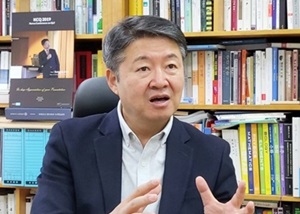
- “Korea is fully capable of developing new microbiome drugs"
- by Nho, Byung Chul Nov 18, 2022 06:04am
- Eung-Bin Kim, Professor of Systems Biology at Yonsei University “The development of metagenomics technology that extracts DNA directly from samples without culturing in 1998 enabled the field of human microbiome research to make a giant leap forward. The success and failure of innovative new microbiome-based therapeutics depend on identifying, standardizing, and materializing the keystone species in the human gut microbiome.“ The development direction for new, innovative next-generation human microbiome-based therapeutics sought by Professor Eung-Bin Kim, Department of Systems Biology at Yonsei University, is focused on the understanding of the material cycle in the ecological structure. More than 10,000 microorganisms inhabit our body (mouth, gut, nose, genital, skin, etc) along with 37 trillion bacteria. Regarding this, Professor Kim said, “What’s important is not the microorganisms themselves but the microbial genes and proteins. For example, microorganisms that digest fat are always present in a healthy intestine. However, the task is not always performed by the same microorganism. Just like how players replace each other’s role in sports games.” Among Professor Kim’s microbial studies, one that caught the reporter’s attention was his identification of the existence of probiotics in jeotgal (Korean traditional pickled fish made with croaker or hairtail, etc). In the early stages of the salt-aging period, jeotgal contains a lot of bacteria, but 99% of the bacteria are killed after 2 years of aging. In the end, only 2 or 3 types of basophilic lactic acid bacteria such as Tetragenococcus remain. The study received much interest from the academia and media. Professor Kim, who is considered an authority in microbiology, has his eyes on the potential held by Akkermansia muciniphila and Faecalibacterium prausnitzii in gut microbiota that is considered next-generation probiotic candidates.” Kim said, “The key to probiotics is in the time of residence in the intestine, and ‘Akkermansia’ and ‘Faecalibacterium’ were found to have a long survival time in the intestinal mucosal barrier. Also, the fact that these species were successfully cultured with domestic technology is also rated highly. We are looking forward to the development of innovative new drugs based on these species, which are the keystone species in the human gut microbiome.” On how to confidently compete against strong R&D players in developing new and innovative microbiome-based therapeutics in the global market, Kim said that the focus should be on treating various disease groups rather than simply developing and releasing intestinal microbiota products. In particular, open collaboration between the industry-academica-research and policy and systemic support should also be promptly prepared. Meanwhile, Professor Kim had served as the Dean of Admissions, and Dean of the College of Systems Biotechnology at Yonsei University, and authored ‘Alcohol, Disease, War: A History of Microorganisms', 'The Whole World is Full of Microorganisms', 'Biotechnology gives wings to Life Sciences’ and 'I Live with Microorganisms'.
- Company
- KPBMA visits Boston...expands exchanges with MIT, etc.
- by Chon, Seung-Hyun Nov 18, 2022 06:04am
- On the 14th (local time) KPBMA Director Hee-Mok Won (8th from the left), Huons Vice Chairman Sung-Tae Yoon (9th from the left), MIT Corporate Relations Executive Director John Roberts is taking a commemorative photograph at the EB that was held at MIT ILP Office at Boston, Cambridge, US On the 17th, Korea Pharmaceutical and Bio-Pharma Manufacturers Association (KPBMA) announced that its delegation had visited Boston, US to network with local companies and institutions. Hee-Mok Won, Director of KPBMA, Sung-Tae Yoon, Chairman of KPBMA, and other representatives of Korea’s pharmaceutical and bio business attended the executive briefing (EB) prepared through MIT Industrial Liaison Program (ILP) especially for Korean companies for 4 days from the 14th. In June 2020, KPBMA became the first association to join the consortium-type membership in the history of MIT ILP. The EB held this time was the first face-to-face event since the KPBMA became a member, and was held to directly communicate with MIT’s innovation ecosystem. At the event, member companies in the consortium discussed research technologies face-to-face with MIT's top professors in the field of their interest, such as oncology and new drug development. Also at the event, Professor Connor W. Coley from MIT presented on the development of AI-based organic compound synthesis. Also, Professor Arturo Vegas from Boston University and Sean Quinnell presented pm a small molecule inhibitor to the cytokine interleukin-4 related to inflammation and cancer. Then, presentations from MIT spin-off companies followed, including presentations on ▲Small molecule new drug development platform (Deepcure), ▲Innovative treatment methods for resting cancer cells (Felicitex Therapeutics), ▲ Effective drug delivery technology using high molecule dissociation oral administration (Veramorph), ▲Groundbreaking blood clotting diagnostics platform (Coagulo Medical Technologies). Heads and Business Development and R&D executives from Korean pharmaceutical and bio companies including Samjin Pharm, Yuhan Corp, Ildong Pharmaceutical Hanmi Pharmaceutical, and Huons sought partnership opportunities with startups that own advanced biotechnology in addition to MIT’s various academic achievements. After the event, the delegation visited Ginkgo Bioworks, a world-class biofoundry company, to discuss ways to cooperate with domestic companies. Ginko Bioworks, a bioventure that spun off from MIT in 2008, owns its own cell programming platform and provides services that meet the needs of customers in various industries. KPBMA Director Hee-Mok Won said, “In only three years since Korean pharmaceutical companies entered the Cambridge Innovation Center (CIC) and began industry-academia cooperation with MIT in earnest, more than 15 companies have entered the market. We will expand cooperation with Boston’s innovative ecosystem including MIT and new startups to bring practical results.”
