
- LOGIN
- MemberShip
- 2026-05-14 05:31:34
- Policy
- The budget for Paxlovid's SE relief will be prepared
- by Lee, Jeong-Hwan Nov 18, 2022 06:04am
- The Welfare Committee approved a budget of 1.7 billion won. Payment can be made next year if the plenary session is passed. The budget for relieving abnormal cases and side effects of drugs being administered in Korea through the EUA system, which is not approved based on the current Pharmaceutical Act, is smoothly being secured. This is because the National Assembly's Health and Welfare Committee recently voted 1.79 billion won for next year's budget to relieve damage to EUA drugs such as COVID-19 treatments, and attention is focused on the results of the special committee on budget settlement. Given that the EUA drug damage relief budget is recognized by multiple lawmakers and professional committee members of the Welfare Committee, and the government is also actively encouraging the administration for COVID-19 prevention, calls for a side effect damage compensation budget are gaining momentum. As of November this year, a total of six drugs including Paxlovid, Remdesivir, Actemra, Lagevrio, Evusheld, and Comirnaty 2 are being administered in Korea as EUA drugs by the Ministry of Food and Drug Safety. There is no way to relieve the damage even if serious side effects such as abnormal reactions, deaths, and diseases are developed in patients who have taken six drugs approved for emergency use. This is because the drug and vaccine damage relief system is operated only for drugs and vaccines that are officially approved based on the Pharmaceutical Affairs Act. Choi Hye-young of the Democratic Party of Korea and Kim Mi-ae of the People's Power, who are members of the Welfare Committee, have proposed a bill to relieve the state from side effects caused by EUA drugs. Prior to the legislation, the Welfare Committee voted to increase the budget of 1.79 billion won to compensate for damages to EUA drugs during next year's budget review. If the budget bill passes through the Special Committee on Budget and Accounts and passes the plenary session, it will be able to compensate for side effects caused by the administration of EUA drugs such as Paxlovid from next year. Currently, the quarantine authorities are actively encouraging the use of EUA drugs such as oral COVID-19 treatments to prevent and treat severe COVID-19 and death, so there is a high expectation that the budget for damage relief will also pass the committee. There have been cases in which applications for relief from abnormal cases that occurred after taking Paxlovid have been received, and compensation for the cases will be possible only when the budget for next year is prepared. The Welfare Committee voted 271 million won, the same as this year, for the budget for the "relief from side effects of drugs" project.
- Policy
- Quick diagnosis is essential for Hepatitis C
- by Nov 18, 2022 06:03am
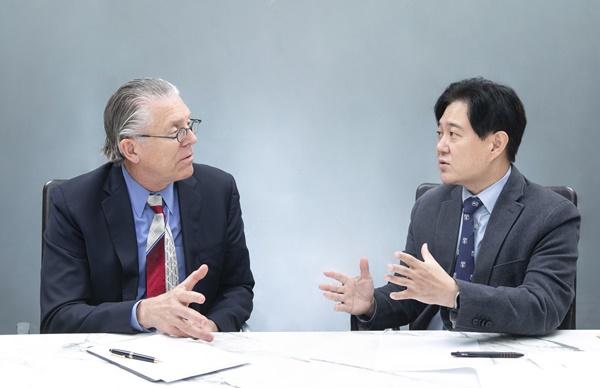
- Pharmaceutical companies such as BMS, Gilead, and Abbvie introduced direct anti-virus (DAA) treatments, and hepatitis C opened the era of complete recovery. Re-treatment options for a small number of patients who failed to treat also appeared this year. The goal of hepatitis C is to find "hidden patients" who have not yet been diagnosed. Experts stress that national checkups should include hepatitis C. Bruce Kreter, general manager of Global Medical, who was in charge of the development of hepatitis C treatment at Gilead, and Ahn Sang-hoon, a professor of gastroenterology at Yonsei University Severance Hospital, asked about the current status of hepatitis C screening at home and abroad. ◆ Government-led hepatitis C screening test vs. repeated discussions for years The World Health Organization (WHO) declared the fight against hepatitis C by 2030 and urged international efforts. As the treatment is completed, it can be managed by simply finding hepatitis C carriers. The domestic prevalence rate is estimated to be around 1%, and it is considered an important strategy to quickly find and treat patients who can be the source of infection because there is no separate vaccine. Unlike the United States, which conducted a government-led hepatitis C screening test under the WHO's declaration, Korea has been only discussing whether to include hepatitis C tests in national checkups for years. The paradigm of hepatitis C treatment completely changed after the introduction of DAA preparations. With a treatment success rate of nearly 100%, complete recovery can be expected, treatment can be performed regardless of genotype, and the treatment period, which was up to one year, has been greatly reduced to two to three months. Even this year, a re-treatment system has been created that can be used by a small number of patients who have failed to treat due to resistance. The success rate of re-treatment is also close to 100%. It is evaluated that treatment is close to completion among the two factors for eradicating disease, "prevention" and "treatment." The problem is prevention. Hepatitis C does not have a vaccine, so a quick diagnosis is the best. Professor Ahn pointed out that it is meant to treat only patients without prevention. In particular, it is analyzed that Korea has never been tested for hepatitis C and does not even know that it is a carrier. Professor Ahn said, "More than 70% of hepatitis C patients in Korea were asymptomatic patients who did not know that they were hepatitis C, and more than 60% had never been tested for hepatitis C in their lives," and stressed, "There are more recent situations such as drugs and tattoos, so we need to quickly detect and treat the source of infection." In 2020, the United States began recommending screening tests for hepatitis C under the leadership of the CDC. This is a change to keep pace with the WHO's announced goal of eradicating hepatitis C. The United States recommends that all adults undergo at least one hepatitis C screening test. Countries with national examination programs such as Taiwan, Japan, and Egypt included hepatitis C tests in the category. " Hepatitis C is asymptomatic and the patient cannot be recognized as a carrier unless diagnosed through a test. However, these patients may have been in poor condition for a long time, but they feel that their quality of life is improved through treatment. At the national level, medical costs can be lowered by lowering the probability of liver cirrhosis or hepatocellular carcinoma when hepatitis C is completely cured, he explained. In Korea, discussions have also been made since late 2015 to include hepatitis C tests in the national health examination category, but no conclusion has been reached even seven years later. It is not that the utility value that can be included in national projects has not been proven. Although the Korean Association for the study of the Liver has consistently proven cost-effectiveness through feasibility studies and pilot projects, there is still no progress. The Korean Association for the study of the Liver is conducting additional research to analyze the government's financial impact assessment. Professor Ahn said, "The Korean Association for the study of the Liver confirmed the cost-effectiveness of national hepatitis C screening through an early detection pilot project for hepatitis C for 105,000 people aged 55 in 2020. "When comparing the costs of treatment with screening tests and neglecting liver cirrhosis, it was much more effective to conduct screening tests for high-risk groups," he explained. He said, "In addition, research to verify whether the government's financial consumption of national checkups is possible through the government's fiscal impact assessment will be announced within this year as it is almost the final stage."
- Policy
- Budget increase for drugs and vaccines under NA review
- by Lee, Jeong-Hwan Nov 17, 2022 05:54am
- The proposal to set a new budget worth KRW 14.4 billion to support the patients’ medical expenses of ultra-high-priced new drugs for rare diseases will be reviewed by the Adjustment Subcommittee of the National Assembly’s Special Committee on Budget and Accounts. A plan to increase the budget for the K-global vaccine fund project by KRW 40 billion or KRW 20 billion from the KRW 10 billion that was originally submitted by the government, will also be discussed at the Adjustment Subcommittee of the Special Committee on Budget and Accounts. The Adjustment Subcommittee of the Special Committee on Budget and Accounts will be reviewing the agendas above on the 16th. The budget to support the medical expense for non-reimbursed new orphan drugs is a new budget that had not been reflected in both the government’s original proposal or the resolution bill of NA’s Health and Welfare Committee The agenda became subject to review after Rep. Cheol-Gyu Lee and Dong-Hyuk Jang, Hee-Young of the Special Committee on Budget and Accounts raised the need for a new budget. The plan is to increase the budget by KRW 14.4 billion to support medical expenses for non-reimbursed drugs before they are applied insurance coverage. If the budget plan is reflected, rare disease patients that use ultra-high-priced drugs that are yet to be reimbursed may receive benefits. Also, for the ‘K-Global Vaccine Fund Project’ that had been passed by the NA Health and Welfare Committee, two budget increase proposals – one to increase the budget by KRW 40 billion requested by Rep. Hyun-Young Shin and Hye-Young Choi, and the other to increase the budget by KRW 20 billion requested by Rep. Dae-Sik Kang, Sun-Woo Kang, Jin-Gyo Bae, Hyun-Jin Bae, Jung-Sook Suh, Yong-Ho Lee, Hye-Sook Jun, Su-Jin Cho will be reviewed by the special subcommittee. In other words, plans to increase the budget for the fund to support the development of local homegrown vaccines and new drugs to KRW 50 billion and KRW 30 billion are set to be reviewed side by side. The pharmaceutical and bio-industry is of the opinion that it is necessary to secure as much government budget as possible to actively support companies that develop homegrown vaccines and new drugs who are preparing to conduct Phase II or III trials. All the plans are for budget increases, and the subcommittee review of the agendas is scheduled for next week.
- Opinion
- [Reporter's view] Generic drugs can't be me-too drug
- by Kim, Jin-Gu Nov 17, 2022 05:54am
- Controversy is brewing over the government's push to replace the term "generic" with me-too-drug. The KPBMA and the Korean Pharmaceutical Association immediately objected. They stress that it is not enough to contain all the meanings of the term generic in the term copy drug. The backlash from the pharmaceutical industry seems reasonable. This is because there is a very large difference. The meaning of generic is the same as general. It is also defined in the dictionary as 'comprehensive', 'no characteristics', and 'no name'. The English dictionary describes it as "not sold or made under a specific brand name" as the second meaning. Me-too drug is defined as 'making or doing the same thing as the original'. The word 'Reproduction' or 'Copy' is more like the word 'Generic'. However, no generic drug is named Reproduced Medicine or Copy Drug anywhere in the UK. Even if you look at the process of generics development, it is different from a me-too-drug. The Ministry of Food and Drug Safety explains that generic drugs are "first developed (original) drugs and drugs that are made equal in the content of main ingredients, how to take them, efficacy, effectiveness, and quality." It goes through a process called a biological equivalence test to see if the original and generic are the same. Instead of simply copying the original, it is necessary to examine whether the efficacy and safety of the human body are the same, and then undergo a separate permission review. This is why the KPBMA expressed its opinion, saying, "It is not the result of reproduction created as if it were simply printed." If a generic is replaced with a generic drug, there is a high concern that it will be recognized differently from the essence of the general public. The Korean Pharmaceutical Association is concerned that "it may be sold under the name of 'fake medicine' or 'copy medicine' in the sense of the word cloning." Language is a vessel for thought. It's not just a symbol to express things. It acts like a kind of formwork that determines the scope of perception. If generic drugs are replaced by the term me-too drug, it is difficult to escape the range of recognition of 'replication'. The term generic may be a somewhat unfamiliar word from the perspective of the general public. Nevertheless, me-too-drug should not be a substitute for a generic. The word me-too drug does not seem appropriate to represent the nature of generic.
- InterView
- “Amgen addresses all unmet needs regardless of indication”
- by Eo, Yun-Ho Nov 17, 2022 05:54am
- Philip Tagari, VP of Research at Amgen Global Amgen owns a vast portfolio of treatments in many areas. Rather than focusing on a particular field, the company has been known to release new drugs in the right places at the right time In addition to actively developing drugs for chronic diseases such as the osteoporosis treatments 'Prolia (denosumab)’ and ‘Evenity (romosozumab),’ the osteoporosis complication prevention drug ‘Xgeva (denosumab),’ and the dyslipidemia treatment ‘Repatha (evolocumab),’ the company has also followed up with the recent trend and released oncology drugs such as the acute lymphoblastic leukemia drug ‘Blincyto (blinatumomab), multiple myeloma treatment 'Kyprolis (carfilzomib),' and the recent KRAS inhibitor ‘Lumakras (sotorasib).’ These achievements were of course made possible with the support of the company’s R&D department. Dailypharm met with Philip Tagari, Vice President of Research at Amgen Global, who recently visited Korea, to hear about the company’s R&D direction and open innovation strategy. -You served over 20 years in Amgen’s R&D department. Which treatment were you most deeply involved in developing? I would say Lumakras. Amgen won the 2022 Prix Galien Award for Best Pharmaceutical Agent with Lumakras. This was very meaningful for us as the Prix Galien Award is considered the industry’s equivalent of the Nobel prize and the highest accolade for pharmaceutical research and development. I have been involved in the research and development of Lumakras in Amgen's R&D department for more than a decade with many colleagues. In a way, the drug has been researched and developed in the shortest time not only in Amgen but throughout the whole industry. I still remember the joy I felt when our belief was confirmed in the clinical trial with groundbreaking data in non-small-cell lung cancer. Also, there is Repatha, our hypercholesterolemia treatment. We had great confidence in Repatha since the discovery of its candidate substance. I think Repatha will continue to have significance in the field and bring positive impact on public health for decades to come. -You said Repatha was commercialized in the shortest period yet. Is there a special know-how of Amgen's or any episode behind the rapid development of Lumakras you’d like to share? Amgen had long been thoroughly analyzing how to shorten the entire new drug development process, since several years before we discovered sotorasib, the active substance of Lumakras. After several years of analysis, we had gained some idea on how to conduct the R&D. It was around that time we discovered AMG 510, the candidate substance that later became Lumakras. So I would say our rapid development was a result of the company’s implementation of a delicate and carefully planned development plan rather than a special technology or ability. -Amgen is also known to be interested in open innovation. Were any of the products in your pipeline born through open innovation? Evenity is one representative result of our open innovation. The drug was developed through collaboration with a doctor in South Africa, a UK-based small biotechnology company British Biotech, and Amgen. At the time, a doctor in South Africa recognized how a specific disease continued to emerge in the local community and asked British Biotech to analyze the cause. Results showed that the disease was caused by a mutation of the sclerostin protein. So the company first needed sclerostin to develop a treatment, and Amgen was the only company that owned such technology. Amgen produced the protein, which led to the commercialization of Evenity. -Would you like to introduce any promising candidate substances that are in development? It is difficult to mention specifics before approvals, but one of the most promising items in our development pipeline is an obesity drug. Obesity is a serious global public health issue that is growing in importance. So you can expect various treatments for obesity and cardiovascular diseases from Amgen to come in the future.
- Company
- Generic companies won 9 out of 10 patent disputes
- by Kim, Jin-Gu Nov 17, 2022 05:54am
- In a patent dispute between the original company and the generic company over generic for exclusivity, a study found that the generic company's first trial winning rate reached 88.5%. Lee Myung-hee, a senior researcher at the KIIP, announced the results of the impact assessment of the licensing patent-linked system at the 2022 Pharmaceutical Intellectual Property Policy Forum co-hosted by the Ministry of Food and Drug Safety and the Korea Intellectual Property Protection Agency on the 15th. According to the researcher, a total of 1,087 patent trials have been filed over the nine years since 2013 until the end of last year. Generic companies have a winning rate of 88.5%. Generic companies claim the patent held by the original company in three ways. They include a passive judgment for confirming the scope of rights, a judgment for invalidation, and a judgment for invalidation of the extension of the duration. Among them, the passive judgment on the scope of rights has the highest winning rate for Generic companies. Since 2013, 795 passive rights scope confirmation trials have been filed, of which 767 (96.5%) have been cited. Some citations include 19 cases (2.4%), 8 cases (1.0%), and 1 case of withdrawal. If Generic companies request a passive judgment on the scope of rights, 98.9% of them were cited or partially used. In the case of invalidation trials, the winning rate of General Motors is a little low at 78.9%. A total of 218 invalidation trials were filed over the nine years from 2013 to last year, of which 161 (73.9%) were cited and 13 (6.0%) were partially cited. The winning rate of generic companies, which combines citation and partial citation, is 79.8%. The Korean Intellectual Property Tribunal's rejection (24 cases), partial dismissal (13 cases), and withdrawal (7 cases) were 20.2%. In other words, if General Electric filed for invalidation judgment, the original company succeeded in one out of five cases. Generics have not won the trial that was filed to invalidate some of the extended patent duration. There were a total of 74 trials for invalidation of the extension of the patent duration from 2013 to last year. Among them, only two cases (2.7%) were cited. There were 68 cases of rejection (91.9%), and 4 cases of withdrawal (5.4%). This means that most of the original companies won the dispute over the extended patent duration. Lee Myung-hee, a senior researcher, said, "The Ministry of Food and Drug Safety's approval rate for generic exclusivity sales items is 79.2%, which can be interpreted as meaning that generics are taking on patent challenges with considerable grounds."
- Company
- Announcement of commercialization of oral insulin
- by Eo, Yun-Ho Nov 17, 2022 05:54am
- Expectations are rising for PO use for injectable insulin. Medicox recently signed an exclusive distribution contract with Israeli pharmaceutical company Oramed Pharmaceuticals following the introduction of oral insulin technology. As a result, Medicox will be able to distribute Oramed's oral insulin candidate "ORMD-0801" for 10 years in Korea after approval by the Ministry of Food and Drug Safety. Oramed is said to be innovating the diabetes treatment market through the development of ORMD-0801, which is undergoing phase 3. Topline results of Phase 3 will be released in January 2023, and ORMD-0801 is expected to be the world's first commercial oral insulin capsule for diabetes treatment in the future. SCD Pharmaceutical, a domestic pharmaceutical company, is also developing oral insulin. The company is currently preparing an IND application for oral insulin SCD-0503. This clinical review period takes at least six months, but the clinical review period can be shortened through the submission of data from previous studies. It will be possible to consult with the Ministry of Food and Drug Safety in major countries to simplify the clinical trial period and conditions. In addition, based on the results of previous studies, it is possible to advantageously adjust the contract terms with partners. SCD conducted prior research for the purpose of final verification of global clinical, registration, and commercialization at the request of partners in the United States, Europe, China, and Japan. The company explained that SCD-0503 showed faster drug expression time and higher absorption rate than Israel Oramed at Human Pilot Study. Insulin PO is delivered to the liver through the intestinal absorption process. It is evaluated that insulin can prevent hypoglycemia and help control weight with a principle similar to that of going from the pancreas to the liver.
- Company
- The aftermath of stricter generic regulations?
- by Kim, Jin-Gu Nov 16, 2022 06:11am
- It was found that the number of applications for generic for exclusivity decreased sharply. Experts agree that the implementation of the 1+3 system has affected the decrease in the number of generic for exclusivity applications. Lee Myung-hee, a senior researcher at KIIP, introduced the number of generic for exclusivity applications in 2020 and 2021 at the 2022 Pharmaceutical Intellectual Property Policy Forum held on the 15th. According to him, the number of generic for exclusivity, which reached 272 in 2020, plunged to 26 in 2021. The implementation of the 1+3 system is likely to be the reason for the sharp drop in the number of applications for generic for exclusivity. Lee Myung-hee said, "The 1+3 system has been in effect since July 2021. The number of generic for exclusivity applications has decreased significantly compared to the previous year, he said. "We need to accumulate more data to see if it is the result of the implementation of the system, but we believe that the implementation of the system has affected the decline in a number of generic for exclusion applications." Until now, the pharmaceutical industry has consistently pointed out that the effectiveness of the system is poor due to the acquisition of generic for exclusivity. It was criticized that it did not fit the purpose of introducing the system to induce patent challenges by granting exclusive sales rights. In the case of Jardiance Duo, 99 generics obtained generic for exclusivity. 45 generics for Amosartan, and 33 generics for Janumet won generics. Lawyer Lee & Ko, an example, pointed out, "As many generics acquire generic for exclusivity at the same time, pharmaceutical companies have repeatedly challenged patents due to economic losses due to non-acquisition rather than economic benefits from acquiring generic for exclusivity." A lawyer said, "Since the 1+3 system was implemented in July 2021, BA test data have not been available indefinitely," adding, "As a result, the number of applications for generic for exclusivity seems to have decreased sharply. "In 2022, the acquisition of generic for exclusivity is expected to decrease further," he said. "However, as the effectiveness of the generic for exclusivity increases, it is necessary to examine whether the 1+3 system hinders generic development or hinders generic companies' patent challenges," a lawyer stressed. Attorney Kim Ji-hee said, "A close analysis is needed to see if the implementation of the 1+3 system has actually affected the reduction of generic for exclusivity."
- Company
- Gavreto applies for reimbursement following Retevmo
- by Eo, Yun-Ho Nov 16, 2022 06:10am
- In line with the progress made in Retevmo’s reimbursement review process, its competitor Gavreto was also found to have started its reimbursement process in Korea. According to industry sources, Roche Korea submitted an application for the reimbursement of its RET (Rearranged during transfection) gene fusion targeted therapy Gavreto (pralsetinib). With the reimbursement agenda for Lilly Korea’s Retevmo (selpercatinib) passing the Health Insurance Review and Assessment Service’s Cancer Disease Deliberation Committee (CDDC) meeting earlier this month, the industry’s eyes are on the reimbursement progress of the two drugs. At the meeting, the CDDC set reimbursement standards for Retevmo as a treatment for patients with metastatic RET fusion-positive non-small-cell lung cancer, thyroid cancer who require systemic therapy with prior sorafenib and/or lenvatinib treatment history, etc. Although Gavreto was slightly behind in applying for reimbursement, as both are advanced new drugs that target a very small number of patients, there lies the possibility that the government will discuss the reimbursement listing of the two drugs together. The two RET-targeted anticancer drugs may also benefit from HIRA’s plan to reduce the reimbursement listing period of drugs by 30 days used for life-threatening diseases, depending on the specific timing of its implementation. Meanwhile, Retevmo and Gavreto were both granted marketing authorization by the Ministry of Food and Drug Safety in March this year. As the two drugs not only inhibit primary RET fusions and mutations but also secondary RET mutations that cause resistance to anticancer treatment, the drugs are expected to address the unmet needs that remain in various types of cancers. In terms of the approval period, Retevmo became the first to receive global approval by a few months. Retevmo received marketing authorization from the US FDA in May last year, and Gavreto in September. Retevmo was approved for NSCLC and thyroid cancer indications, whereas Gavreto was first approved as a lung cancer treatment and then approved for thyroid cancer in December of the same year.
- Policy
- Use of Evusheld extended to the severely immunocompromised
- by Kim, Jung-Ju Nov 16, 2022 06:10am
- The COVID-19 Vaccination Response Promotion Team (Head: KDCA Commissioner Kyung-Ran Baek) announced that it had expanded the eligibility of Evusheld as of the 14th to protect the severely immunocompromised from the next wave of COVID-19 outbreak that may arise in the winter season. With the expansion, blood cancer patients, transplant recipients, and people with congenital immunodeficiency who are severely immunocompromised; those with solid cancer, HIV, or rheumatism following deliberation by the Infectious Disease Control Committee; and patients who are receiving serious immunosuppressive treatment such as chemotherapy or B-cell depletion treatment regardless of disease are eligible for Evusheld. Also, the treatment period for patients to apply for the treatment has been extended from the previous 2-4 months to 6-12 months. The dose, which had previously been 300mg, was also increased to 600mg based on MFDS’ Emergency Use Authorization which allows ‘patents to recieve 600mg in the event variants arise,’ cases in the US where the authorities granted increasing the dosage to 600mg to respond to the Omicron variant, and committee deliberation, etc. Those who already received the 300 mg dose within 3 months may receive an additional dose of 300mg, and those who received Evusheld over 3 months ago may receive an additional dose of 600mg. The COVID-19 Vaccination Response Promotion Team said, “As we have expanded the target and increased the administered dose of Evusheld in preparation for the next wave of COVID-19 that may arise in the winter season, we ask the severely immunocompromised that receive serious immunosuppressive treatments to receive Evusheld for further protection. Healthcare professionals at medical institutions that administer Evusheld should actively explain the changes to eligible patients and encourage prompt administration and apply for Evusheld.”
