
- LOGIN
- MemberShip
- 2026-05-11 19:39:24
- Company
- Hemlibra is also effective for mild and secondary hemophilia
- by Kim, Jin-Gu Mar 09, 2023 06:00am
- JW Pharma announced on the 6th that Phase III clinical trials that proved the effects and safety of patients with type hemophilia have been published in the online edition of the Lancet Hematology 2023, an international journal. Hemlibra is a type A hemophilia disease caused by the deficiency of factor XIII. It is the only anti-antibody patient and non-antibody patient with resistance to the existing therapeutic agent (8-factor formulations), and the prevention effect persists with subcutaneous injections for up to 4 weeks. Type A hemophilia is divided into mildness (more than 5% to less than 5% to less than 40%), moderate (1% or more to 5% or less), and severe (less than 1%) according to the figures of factor XIII activation. Hemlibra has been licensed in Korea for severe A-type hemophilia prevention therapy. 18 professors, including Claude Bernard Lyon 1 University, conducted about 55 weeks of clinical trials for 72 patients with mild and secondary A-type hemophilia in 22 institutions, including Europe, North America, and South Africa. The researchers administered to patients once a week for the first four weeks of Hemlibra, and then selected once a week or once ▲ 4 weeks once a week to evaluate the bleeding volume and thrombosis adverse events. Annual Bleed Rate, which was 10.1 times, decreased by 0.9 times after hembra administration. Among them, joint bleeding and natural bleeding ABRs, which required treatment, were 0.2 times. 21 mild patients have decreased from 20.2 times before Hemlibra administration, and 2.4 times after administration, while moderate patients decreased from 6.0 to 2.2 times. The ABR of the patient group, which had been treated with the existing coagulation factor treatment as a preventive therapy, was improved from 8.0 to 2.4 times after clinical 12.2 times before clinical trials and bleeding groups. Eight patients were not bleeding during the clinic. In terms of safety, 15 patients had minor side effects related to the injection site, but no death or thrombectomy microvascular disease occurred. Based on these clinical results, Hemlibra was approved by the European Union (EU) as a preventive treatment for patients with non-antibody aid type hemophilia. An official of JW Pharma said, "This clinical trial indicates that Hemlibra is effective in preventing bleeding for patients with mild and secondary A-type hemophilia." said. Hemlibra was developed by Japan's Chugai Pharmaceutical, a subsidiary of Global Pharm Roche. JW Sino -Pharmaceuticals secured domestic development and copyrights of Hemlibra in 2017 and launched it as a treatment for severe A-type hemophilia in 2020.
- Policy
- Gov expands SGLT-2 diabetes drug combi benefit from April
- by Lee, Jeong-Hwan Mar 08, 2023 05:53am
- The Ministry of Health and Welfare will be the first to recognize the 3-drug combination benefit for diabetes treatment with SGLT-2 inhibition mechanism from April and expand the scope of the 2-drug combination benefit compared to the previous one. Specifically, 'Metformin + SGLT-2 inhibitor + DPP-4 inhibitor' and 'Metformin + SGLT-2 inhibitor + TZD-type drugs' are covered by health insurance benefits when 3 drugs are prescribed together, and sulfonylurea (SU)-type drugs and When using SGLT-2 inhibitors together, the number of covered drugs will be increased from the current one to four. In the case of insulin injection and SGLT-2 inhibitor combination therapy, the number of covered drugs will be expanded from the current two to four. On the 5th, Director Oh Chang-hyeon of the Insurance Pharmaceutical Division of the Ministry of Health and Welfare met with the Ministry of Health and Welfare Professional Correspondents Association and announced the plan to expand the SGLT-2 inhibitor combination benefit. If the health insurance benefit is revised as announced by the Ministry of Health and Welfare, all three-drug and second-drug combination benefits for all SGLT-2 inhibitory diabetes drugs currently approved for marketing in Korea will be recognized. AstraZeneca Forxiga, Boehringer Ingelheim Jardiance, Astellas Suglat, and MSD Steglatro Korea are a total of four SGLT-2 single-drug original diabetes drugs prescribed under domestic approval. There are a total of seven therapies for which the Ministry of Health and Welfare announced the expansion of SGLT-2 combination benefits, including generics that are identical to the original ingredients, from next month. There are 2 oral 3-drug therapies, 3 oral 2-drug therapies, and 2 insulin-oral combination therapies. First of all, the health insurance benefits for the oral triple therapy are 'metformin + SGLT-2 inhibitor + DPP-4 inhibitor' and 'metformin + SGLT-2 inhibitor + TZD-type drugs'. Oral double-drug therapy is a combination of a SU-type drug and an SGLT-2 inhibitor. Currently, dapagliflozin is the only SGLT-2 diabetes drug that is approved for concurrent benefit with SU. Ministry of Health and Welfare from next month following Dapagliflozin, Empagliflozin, Ertugliflozin, and Ipragliflozin will be approved for SU concomitant benefit. The combination therapy of insulin and oral medication will be expanded compared to the current one. Currently, two drugs, Dapagliflozin and Empagliflozin, are approved for reimbursement when insulin and SGLT-2 diabetes drugs are prescribed together. The Ministry of Health and Welfare will expand insulin combination benefits to Ertugliflozin and Ipragliflozin starting next month. Oh Chang-hyun said, "We plan to implement 7 therapies in April that will expand the 3-drug and 2-drug combination benefits for diabetes drugs with SGLT-2 inhibitory mechanisms." explained.
- Company
- Becton Dickinson achieves a 90% customer satisfaction rate
- by Eo, Yun-Ho Mar 08, 2023 05:53am
- Becton Dickinson (BD Korea), a multinational medical device and equipment manufacturing company, achieved a customer satisfaction rate of 90%. The company conducted a customer satisfaction survey for domestic pharmaceutical and bio customers and announced the results on the 6th. The survey was conducted between January 9 and February 3 of this year for a total of 74 domestic pharmaceutical and bio customers that supply drug delivery systems including pre-filled syringes from the BD Pharmaceutical Division. It was conducted online for about a month until the day. The survey consisted of a total of 25 questions in five areas: product ordering and delivery, quality and technical support, understanding customer needs, prospects for partnerships, and online resources. As a result of the survey, more than 90% of customers responded that they were satisfied with BD Korea's order, delivery, and supply system. Out of BD Korea's services, items of interest were answered in the order of ▲approval support (31.52%) ▲container tightness test (25.0%) ▲device, and drug convergence product test (22.83%). BD Korea provides customized permit support services optimized for each country's regulations, requirements, and guidelines in various countries including Korea, Europe, the United States, China, and Malaysia. Representatively, there are RA services (Regulatory Support Service), which supports convergence product registration, and Your Path (BD YourPathTM), which provides product and test permit consulting online and offline. BD Korea merged with ZebraSci Inc., a company specializing in convergence product testing, in 2021 to provide various service items from the initial development stage of customers' products to clinical and commercialization. Through this, BD Korea has expanded its capabilities to smoothly support customers' goals and timely market entry during the development of convergence products. In addition, in a survey of innovative drug delivery system products and service solutions, ▲ technology that enables product traceability (30.82%) ▲ wearable devices for injection (29.56%) ▲ reusable autoinjectors (18.87%) were the main areas of interest for customers. appear. In addition, as a result of a satisfaction survey on BD Korea's technical support, data provision, and quality policy, it was tallied that more than 80% were satisfied. BD Korea plans to hold a professional consulting meeting with a BD Global license support manager for pre-booked customers at the International Pharmaceutical, Bio, and Cosmetics Technology Exhibition (COPHEX), which will be held from April 18 to 21 this year.
- Company
- Hemophilia A treatment market sales were 66 billion won
- by Kim, Jin-Gu Mar 08, 2023 05:53am
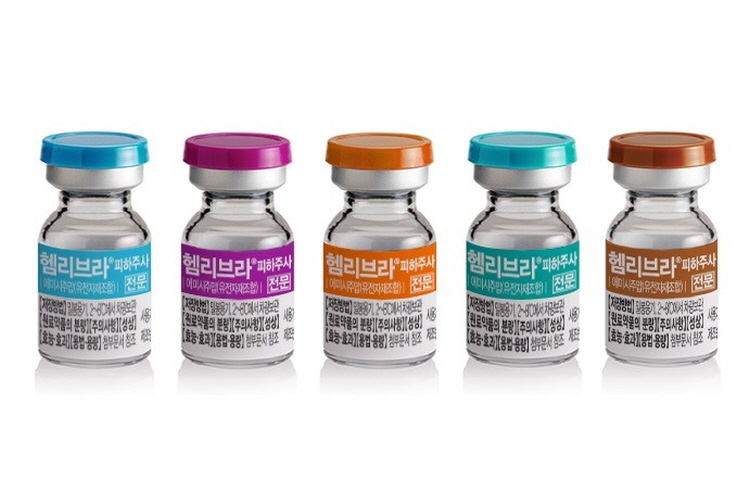
- Hemlibra Last year, sales of hemophilia A treatment in hospitals and clinics were tallied at 66 billion won. While existing major drugs are sluggish in hospitals and clinics, JW Pharmaceutical's Hemlibra, which recently joined the market, has risen in sales for two consecutive years, rising to No. 2 in the market. In the pharmaceutical industry, sales of Hemlibra are expected to increase further as benefits for Hemlibra are expected to increase in the first half. As a result, there is a prospect that the hemophilia A treatment market, which has been led by GC Pharma, will be greatly shaken. According to IQVIA, a pharmaceutical market research institute on the 7th, sales of hemophilia A treatment to hospitals and clinics last year were 66.2 billion won. It decreased by 15% compared to 78.2 billion won in 2021. Sales data generated by medical institutions operated by the Hemophilia Foundation were excluded from the tally. In the pharmaceutical industry, if this data is included, it is estimated that the total sales volume would have been maintained at the level of the previous year. While the overall market size of hospitals and clinics has been reduced, JW Pharmaceutical Hemlibra has succeeded in increasing sales for two consecutive years. Last year, Hemlibra sales were 7.6 billion won, up 5% from 7.2 billion won in 2021. Although the increase in sales last year was not large, it is analyzed that it rose to the second place in the market at once as major competing products performed poorly overall. Hemlibra is a hemophilia A treatment introduced by JW Pharmaceutical in Korea. In 2017, JW Pharmaceutical secured exclusive domestic development and sales rights for Hemlibra from Chugai Pharmaceuticals. In January 2019, domestic item permission was obtained, and in May 2020, it was listed as a salary and released in earnest. In the first year of its release, it recorded sales of 2.1 billion won. It is evaluated that Hemlibra succeeded in making a soft landing in the market by improving the convenience of administration. Hemlibra is the first subcutaneous injection formulation among hemophilia A treatments. Existing treatments required patients to find a vein and inject themselves. In particular, since many of the patients are children and adolescents, there was not a little inconvenience with the intravenous injection formulation. Existing major products such as Takeda Pharmaceutical's Adynovate, Novo Nordisk's Novoseven, and GC Pharma's GreenMono saw a simultaneous decrease in sales. Adynovate's sales last year were 19.5 billion won. It decreased by 15% compared to 22.9 billion won in 2021. Adynovate peaked at 27.7 billion won in 2019, and sales declined for three consecutive years until last year. However, it still ranks first in the market. In the case of Novoseven, it decreased by less than half from 14 billion won in 2021 to 5.5 billion won last year. The market ranking fell from 2nd to 5th. It recorded sales of 19.5 billion won in 2018, but since then, it has steadily decreased, and the new sales volume has reached a quarter of the level in four years. Green Mono decreased from 8.3 billion won in 2021 to 6.6 billion won last year. It's ranking in the hemophilia A treatment market fell from third to fourth. The pharmaceutical industry predicts that Hemlibra will grow more rapidly in the future. This is because the scope of benefits is expected to expand in the first half of this year. Last February, the HIRA recognized the adequacy of Hemlibra's reimbursement as a 'prophylactic treatment for patients with severe non-antibody hemophilia A'. JW Pharmaceutical plans to begin negotiating the drug price of Hemlibra with the NHIS soon. It is expected that the benefit increase will be decided within the first half of this year at the earliest. Currently, Hemlibra is covered only by antibody patients resistant to existing treatments. It is known that 9 out of 10 hemophilia A patients in Korea do not have antibodies. According to the 2019 Hemophilia White Paper, there are 1,746 patients with hemophilia A in Korea, of which 1,589 are non-antibody patients, accounting for 91%. In effect, Hemlibra's salary range is expanded 10 times, and industry insiders predict that related sales will surge in the process. Attention is focused on whether JW Pharmaceutical will emerge as a strong competitor to GC Pharma in the hemophilia A treatment market due to Hemlibra's coverage expansion. GC Pharma dominates the domestic hemophilia A treatment market. GC Pharma sells its own products, GreenMono and Greengene F. In addition, Takeda Adynovate and Adynovate, the No. 1 and No. 3 products in the market, will be jointly sold. The combined sales of the four products last year were 35.6 billion won, accounting for more than half of the hemophilia A treatment market last year.
- Company
- 'Vabysmo’s 4mth dosing interval may reduce patient burden'
- by Jung, Sae-Im Mar 08, 2023 05:53am
- A new drug for Neovascular (Wet) Age-Related Macular Degeneration (nAMD) that offers treatment effect with once every 4-month administration has landed in Korea. The new option is expected to greatly improve the convenience of administration in domestic patients whose number has been increasing with Korea’s aging population. Roche Korea held a press conference on the 7th to celebrate the approval of Vabysmo (faricimab) at its headquarters in Seocho-gu, Seoul. Vabysmo is the first bispecific antibody that targets both the VEGF that is commonly targeted by existing ocular disease treatments as well as angiopoietin-2 (Ang-2) that are considered to be the cause of retinal disease to block both pathways. MOA of Vabysmo Vabysmo has demonstrated non-inferiority over Eylea in improving vision outcomes in a Phase III study and was approved in Korea in January as a treatment for the treatment of patients with Neovascular (Wet) Age-Related Macular Degeneration (nAMD) and Diabetic Macular Edema (DME). With the approval, the total number of AMD treatments available in Korea increased to 4 – Vabysmo (Roche), Eylea (Bayer), Lucentis (Novartis), and Beovu (Novartis). nAMD is considered one of the 3 major causes of blindness in the elderly aged 65 or older. The importance of its treatment is increasing with the rising number of patients in the rapidly aging society. During his presentation, ophthalmologist Kim Jae-hui, (Kim’s Eye Hospital) said, “The widely used nAMD treatments Eylea and Lucentis are effective but have their limitations. One is that the drugs have to be injected frequently for a longer period of time to maintain the patients' vision and anatomical improvements. Also, the response may be limited even with treatment depending on the patient. In this sense, expectations are rising on treatment effect as the only drug that also inhibits Ang-2. “ Ophthalmologist Jae-Hui Kim (Kim The bispecific antibody Vabysmo has demonstrated that it can produce comparable effects to existing treatments while significantly increasing the dosing interval. After the first 4 doses are administered by intravenous injection every 4 weeks, the dosing interval for patients with no disease activity can be extended to every 16 weeks (4 months). In other words, the effect that existing treatments offered with every 1-2 month administration can be achieved with up to every 4-month administration of Vabysmo. In two Phase III trials conducted on 1,329 patients, patients who received Vabysmo at dosing intervals of up to 4 months showed non-inferiority over its comparator, the 2-month interval treatment Eylea, in improving vision outcomes after 1 year of treatment. Over half of the Vabysmo-administred patients were maintaining the 4-month dosing interval after 1 year of treatment. Kim expected that the introduction of Vabysmo and its longer dosing interval would benefit patients who had felt burdened by the frequent injections to the eye. Kim said, “In many cases, it was difficult to reproduce the results that were found in the clinical setting on-site because patients cannot receive regular injections in the long term as strictly as they would have had in clinical trials. So, their effect was reduced in line with the reduced number of injections the patients received. In this sense, I have higher hopes for Vabysmo as it only needs to be injected once every four months, which reduces patient burden. During practice, I often encountered patients whose edema does not go away with existing treatments, but data has shown that Vabysmo can remove edema at a higher rate. I think this will benefit the patients who have had shown limited response to existing treatments” At the press conference, Roche Korea expressed the company's plans to promptly supply Vabysmo in Korea through quick reimbursement listing. In-Hwa Choi, Lead at Roche Korea, said, “Vabysmo has been approved in 50 countries worldwide and is reimbursed in A7 countries and Australia. We have already applied for its reimbursement at the end of last year before it was approved in Korea.”
- Company
- Self-administered Kynteles lands at general hospitals
- by Eo, Yun-Ho Mar 08, 2023 05:52am
- The self-injectable formulation of the inflammatory bowel disease treatment ‘Kynteles’ can now be prescribed at general hospitals in Korea. According to industry sources, the subcutaneous injection formulation of Takeda Pharmaceuticals Korea’s Kynteles (vedolizumab) has passed the drug committee (DC) reviews in tertiary hospitals such as Samsung Medical Center and Seoul Asan Medical Center and other general hospitals including Kyungpook National University Hospital, Yeungnam University Medical Center, and Inje University Haeundae Paik Hospital. The company has been quickly expanding its prescription area after the drug was listed for reimbursement in December last year. Kynteles is reimbursed in Korea if the patient ▲writes a ‘patient administration journal’ that is managed by his/her healthcare institution within 14 weeks of the first administration. For long-term prescriptions, ▲up to 2 weeks’ worth of prescriptions is allowed per prescription upon discharge, and up to 4 weeks’ worth of prescriptions is allowed for outpatient care patients. Also, up to 8-12 weeks’ worth of administration is approved for reimbursement in patients who show stable disease activity after 24 weeks of administration with no side effects. The subcutaneous injection formulation of Kynteles, ‘Kynteles Prefilled Pen inj.’ can be self-administered by the patient without visiting hospitals, and was approved for the same efficacy and effect as ‘Kynteles Inj,’ the intravenous injection formulation, in Korea on February 17. In addition to the existing strength held by the intravenous injection formulation of having a short administration period of 30 minutes, the added reimbursement of the subcutaneous injection formulation has provided a wider treatment option for Korean patients. The subcutaneous formulation of Kynteles showed a similar rate of clinical remission to that of the intravenous injection in the VISIBLE trials. In the VISIBLE 1 study that was conducted on adult patients with ulcerative colitis, the subcutaneous formulation showed comparable improved improvement with the intravenous formulation in terms of efficacy, safety profile, and tolerability. The VISIBLE 2 trial that evaluated the subcutaneous formulation as a maintenance treatment in adults with Crohn’s disease also confirmed the significant improvement in results, demonstrating the new formulation’s effect as a maintenance treatment. Kynteles is a biological agent used to treat patients with moderate-to-severe active ulcerative colitis or Crohn's disease. As the only anti-integrin therapy among inflammatory bowel disease treatments, the drug owns a safety profile that does not cause systemic immunosuppressive activity.
- Policy
- PVA, the higher the bill, the greater the discount rate
- by Lee, Tak-Sun Mar 08, 2023 05:52am
- Lee Sang-il, executive director of NHIS, held a meeting with the Korea Special Press Association on the 7thThe NHIS plans to increase the reduction rate of the upper limit for drugs with high claims in the PVA, and lower the reduction rate or exclude drugs with low claims. This is based on research conducted last year. The results of the research service (performance evaluation and improvement plan of PVA (researcher: Bae Seung-jin, Ewha Womans University)) has not yet been disclosed, but will be disclosed at the end of this month and discussed at the Workie Group, which will be held from May. At the Korea Special Press Association meeting held on the 7th with Lee Sang-il, executive director of the NHIS, this PVA improvement plan was revealed for the first time. Director Lee said, "In order to improve the effectiveness of drug cost management, we conducted a research service last year to evaluate the performance of the PVA system and improve it." As a way to improve the system, we suggested selective management of drugs with high fiscal impact and efficient system operation.” Accordingly, a plan was devised to expand the selection criteria for usage type 'Ka' by adding 5 billion won and 10% increase conditions from the existing 30% increase condition for the selective management of drugs with high financial impact. The reference formula is differentiated by dividing it into three sections according to the size of the bill, and a plan to increase the maximum reduction rate in consideration of the coefficient of the reference formula was proposed. As a result, the plan is to increase financial efficiency by increasing the reduction rate for drugs with high claims. Currently, the maximum reduction rate is limited to 10%, but the maximum reduction rate is expected to exceed 10% for drugs with high claims through improvement measures. Conversely, a plan was proposed to further include drugs with low claims, which have a small reduction rate and are excluded from negotiations. For efficient operation of the system, the exclusion criteria will be raised from 2 billion to 3 to 5 billion, and a temporary refund system will be introduced. In addition, a plan to lower the maximum reduction rate for small-amount drugs was also proposed. The temporary refund system refers to a one-time refund to the NHIS by a pharmaceutical company for a price cut instead of a price cut for a drug whose usage has temporarily increased due to a pandemic or other reasons. The target and materialization plan will be discussed in the working group to be held in May, but this plan is not expected to be promoted immediately as a mid-term task. Jeong Hae-min, head of the NHIS Pharmaceutical Management Office, said, “The rest of the parts except for the temporary refund system are short-term tasks, and we plan to promote system improvement through a working group that will be held from May.” We plan to operate according to the schedule of, and based on the matters discussed through this, we will come up with an improvement plan, revise the relevant regulations in the second half of the year, and implement them from next year.” A plan to correct the number of drugs related to COVID-19 has also been outlined to some extent. The target drugs are cold medicines and antibiotics that are encouraged to be produced by the Ministry of Food and Drug Safety, and it is explained that they correspond to about 2,600 items based on the 2022 benefit list. As for the correction method, a method of correcting the usage amount was proposed, excluding the period (month) when usage increased sharply during the pandemic, and the director Lee explained that they are currently in final coordination with the pharmaceutical industry. The NHIS plans to finalize the correction plan this month when discussions with the pharmaceutical industry are completed and to apply to monitor for negotiations in April.
- Company
- Celltrion Healthcare published clinical result of Remsima SC
- by Hwang, Jin-joon Mar 08, 2023 05:51am
- An official from Celltrion Healthcare is giving a presentation on Remsima SC at ECCO. (Photo by Celltrion Healthcare)Celltrion Healthcare announced on the 6th in Copenhagen, Denmark, that it was holding the '2023 European Crohn's Disease and Colitis Society (ECCO)' for four days from the 1st (local time), and 'Remsima SC' was held for the purpose of US approval. announced that it had unveiled a new global clinical trial of '. The first clinical trial is the result of analyzing the efficacy and safety of Remsima SC compared to placebo during maintenance therapy after administering Remsima to patients with Crohn's disease (CD). It was released as a digital oral presentation online. 343 patients with moderate to severe CD were randomly assigned to the Remsima SC treatment group and the placebo control group in a 2:1 ratio at week 10 and compared at week 54. Clinical outcome The primary endpoint, clinical remission (CR), was 62.3% for Remsima SC and 32.1% for placebo. In the endoscopic response (ER), Remsima SC 51.1% and placebo 17.9%, a statistically higher efficacy result than the control group was confirmed. No new safety issues were identified with Remsima SC maintenance treatment. The second clinical trial was released through a poster presentation as a result of analyzing whether Remsima SC maintained a statistically significant advantage over placebo in phase 3 clinical trials for patients with ulcerative colitis (UC). After 438 patients with UC were treated with Remsima up to week 10, they were randomly assigned to receive Remsima SC or placebo in a 2:1 ratio, and data from week 54 were compared. The CR set as the primary evaluation index for clinical results was 43.2% in the Remsima SC-administered group, higher than 20.8% in the placebo control group. No new safety issues were found in the clinical trial. The results of the post-clinical phase 1 post-analysis confirming the correlation between high serum trough concentration and low immunogenicity of Remsima SC were also released as a poster. Predictors of Immunogenicity in IBD Patients Treated with Infliximab: According to CT-P13 SC Phase 1 Post-Clinical Analysis', maintenance treatment with Remsima SC confirmed that the proportion of patients whose blood concentration reached a certain threshold or higher was higher than that of patients receiving an intravenous injection. done. Through this, indices such as antibody to the drug (ADA) and neutralizing antibody (NAb) involved in the immune process were lower, confirming the potential advantage of Remsima SC in terms of immunogenicity. Celltrion Healthcare also published three posters, including 'Network meta-analysis for comparative evaluation of the efficacy of Infliximab IV and SC and Vedolizumab IV and SC in the maintenance treatment of patients with Crohn's disease and ulcerative colitis'. presented at the conference.
- Policy
- Free vaccination of Rotarix·RotaTeq is available
- by Lee, Jeong-Hwan Mar 07, 2023 05:39am
- The Korea Centers for Disease Control and Prevention (KCDC) will start a national vaccination project for Rotavirus vaccines Rotarix and RotaTeq, which are distributed in Korea, from the 6th. From this day, infants aged 2 to 6 months who are subject to vaccination will be able to receive one of the two vaccines free of charge at nationally consigned medical institutions or public health centers. Rotavirus is easily spread through the hands and mouths of infants from contaminants in diapers or toys. Infection can cause vomiting, high fever, and severe diarrhea, leading to dehydration and requiring hospitalization. Even if the 1st rotavirus vaccine was charged for 6 days before the implementation date of the national vaccination program, free vaccination is possible from the remaining 2nd or 3rd vaccination for complete vaccination. Rota vaccination requires 2 or 3 doses depending on the type of vaccine used to obtain the sufficient preventive effect. Rotarix requires a total of 2 doses and RotaTeq requires a total of 3 doses. The current status of the nearest vaccination institution can be checked on the vaccination helper website. Rotarix and RotaTeq are classified into monovalent and pentavalent depending on the number of serotypes included in the vaccine, but both vaccines showed similar efficacy and safety in terms of preventing rotavirus infection and severe disease in Korea. Since cross-inoculation is not allowed, it should be noted that after the first vaccination, all rounds must be completed only with the same manufacturer's vaccine. Director Ji Young-mi of the Agency for Disease Control and Prevention said, “The introduction of this national rotavirus vaccination will lower the cost burden for parents who needed about 200,000 to 300,000 won for vaccination,” and “the incidence of rotavirus infection, which causes acute diarrhea and high fever in infants, will also decrease. I expect that," he said.
- Policy
- ‘Improve rare disease designations standards for equity'
- by Lee, Jeong-Hwan Mar 07, 2023 05:38am
- The claim that Korea’s rare disease designation standards should be improved and expanded to ease the disease burden borne by patients from drug costs, etc. The request arose with the rising need to address the irrationalities in the current rare disease designation system, such as those from the unclear diagnostic criteria set due to the extremely small number of patients or irrational standards set for acquired (secondary) rather than congenital diseases. On the 6th, Professor Hyun-Young Kim of Pediatric Surgery at Seoul National University Hospital claimed so during her presentation at the ‘Discussions for a national measure to manage life-threatening rare diseases’ that was held at the Members' Office Building of the National Assembly. The meeting was hosted by Rep. Sun-Woo Kang of the Democratic Party of Korea. Professor Kim's presentation was about ‘Limitations in the designation of rare diseases and application of special calculations.’ The Rare Disease Management Act defines a rare disease as a ‘disease that affects fewer than 20,000 people, or whose number of carriers is unknown because diagnosis of the disease is difficult, which is determined according to the procedures and standards prescribed by Ordinance of the Ministry of Health and Welfare.’ Most treatments for diseases that are designated as rare diseases can be applied the special calculation system, which allows the patient’s coinsurance rate to be reduced to 10% of all medical expenses. Due to this, the burden of treatment and drug expense among rare disease patients whose condition has not been designated as a rare disease increases significantly and is excluded from legal support Regarding the limitations in rare disease designations, Kim pointed out that there is a gap between the definition and designation of a rare disease, and the problem of equity in designation and non-designation exists even in the same disease depending on whether the condition is congenital or acquired. Also, she raised the issue of how patients with secondary conditions that suffer the same symptoms, disease burden, and pain as the congenital condition are not allowed designation as a rare disease. Professor Kim said, “It is necessary to designate rare diseases after comprehensive consideration of the characteristic of the disease, the pain suffered by the patients, and its effect on the quality of life. The authorities should provide ample opportunity for relevant academic societies and patient groups to submit opinions and actively review the designations.” As an example, Professor Kim pointed to short bowel syndrome to point out the issues that exist in Korea’s rare disease designation system. Short bowel syndrome is not designated as a rare disease as it affects over 20,000 patients and is an infectious and transient condition with a low socioeconomic cost. Also, the fact that it is a secondary disease and has unclear diagnostic criteria and diagnosis was also a reason for its non-designation as a rare disease. In other words, patients with congenital short bowel syndrome can receive special calculation benefits for their treatment expense with a rare disease designation, but patients with acquired short bowel syndrome are deprived of the same benefit. This non-designation of rare diseases has led to the non-application of reimbursement for a short bowel syndrome treatment. In Korea, teduglutide was approved to treat short bowel syndrome in 2018. However, the drug is unavailable for use due to its non-reimbursement. Without reimbursement, the drug costs KRW 50 million with 3-6 month administration, and KRW 100 million with 1-year administration. Professor Kim stressed, “In Korea, if the doctors work hard and save the patients, the patients cannot receive the benefit as they exceed the rare diseases designations standards. The standards need to be improved to provide benefit to these rare disease patients who are left unattended in the blind spot."
