
- LOGIN
- MemberShip
- 2026-05-07 20:36:42
- Opinion
- [Reporter's view] Obesity-themed stocks
- by Lee, Seok-Jun Sep 11, 2023 05:29am
- The theme stock craze is happening again. This time it is related to obesity treatment. Companies that ride on theme stocks easily hit the upper price limit. There is also a bio venture that recorded the upper limit three times, ‘up, up, up’ on the full moon. It is easy to find companies whose market capitalization has doubled in just a few months. As obesity treatment has recently become a global issue, the corporate value of related theme stocks is also increasing. In fact, Eli Lilly ranked first in market capitalization among global pharmaceutical companies as its diabetes treatment (Maunjaro) showed effectiveness in treating obesity. It can be seen as ‘theme stock = future growth potential’. The possibility leads to a rise in ransom prices. Everyone can understand the upper price limit phenomenon to some extent. However, we need to take a closer look. Above all, attention should be paid to the feasibility of realization (commercialization). This is because most of the theme companies only discovered the possibility of treating obesity in the early stages of clinical trials. These are materials that have potential but still require time and money to create substance. Hanmi Pharmaceuticals, which is preparing for phase 3, is only in late-stage clinical trials for some products, including 'Efpeglenatide'. Even if it is developed, it must be checked whether it is the first in class, the best new drug (best in class), or simply a drug in the same class. You should also look at the development status of other competitors. Only then can you truly know the corporate value of theme stocks. Some companies launch large-scale promotions related to themed stocks. “We discovered the potential for an innovative new drug in preclinical trials,” “We are negotiating with a number of global companies for technology transfer,” and “We have overcome the limitations of the world’s No. 1 obesity formulation.” Just looking at the press release, it appears that it has already achieved innovative new drug status. At this time, stock prices fluctuate. Some even feel pressured to promote even the slightest possibility in order to belong to a themed stock. In reality, Pharmaceutical Company A is under pressure from its owner. Bio ventures that need financing are also active. Companies under put option pressure are busy riding theme stocks. Raising the stock price makes it easier to raise funds and avoid put option pressure. “It is safe to say that corporate value is based on theme stocks. Objective figures such as performance do not apply. I believe rapid fluctuations are determined simply by whether influence is brought in or not. This is why companies related to theme stocks are excessively promoting them. In particular, to raise funds, etc. “Bio ventures that need to raise their stock prices sometimes throw unreasonable numbers.” This is not an unconditional criticism of the theme stock craze. In the case of a company, it must make its value known. However, what is unfortunate is that companies are often found to focus on increasing market capitalization by riding the bandwagon of theme stocks rather than the company's original value. It is also unfortunate that the market trend is ‘theme stocks, power = market cap’ rather than ‘performance, potential = market cap’. On the other side the surge in theme stock prices is a bitter reality.
- Company
- 2nd-gen CML drug approved for reimb following 4th-gen drug
- by Eo, Yun-Ho Sep 11, 2023 05:29am
- Companies are actively working to expand insurance coverage for their prescription chronic myeloid leukemia treatments in Korea. According to the industry sources, Novartis Korea's 4th generation CML treatment ‘Scemblix (asciminib)' was listed for reimbursement last July, and Pfizer Korea's 2nd generation drug 'Bosulif (bosutinib)' also recently received conditional approval and passed the National Health Insurance Service’s Drug Reimbursement Evaluation Committee review. As Bosulif is a latecomer to the area, it is expected that there will be no major difficulties for the company in accepting DREC’s evaluated amount. Contrary to expectations, Scemblix, a next-generation new drug, attracted attention by completing the registration process within a year after applying for reimbursement. Although it is a 4th generation treatment, Scemblix submitted an estimated cost calculated to be similar to that of Korea Otsuka Pharmaceutical’s ‘Iclusig (ponatinib)', a 3rd generation drug, and was listed without drug pricing negotiations by accepting a price less than 100% of the weighted average price (WAP) of its alternative. The reimbursement progress for Bosulif is not so slow either. The drug, which was approved in January, has been commercialized later in Korea than in other countries as it was approved by the U.S. FDA in 2012, but has submitted reimbursement applications immediately after receiving marketing authorization, and made smooth progress to the DREC review stage. Bosulif is a 2nd generation-targeted anticancer therapy like Novartis Kroea’s ’ ‘Tasigna (nilotinib),’ BMS Korea’s ‘Sprycel (dasatinib),’ Il-Yang Pharamceutical’s ‘Supect (ladotinib)’. With so many drugs already on the market, no major difficulties are expected in Bosulif’s reimbursement process. Meanwhile, Scemblix was approved as a treatment for adult patients with Ph+ CML in the chronic phase previously treated with two or more tyrosine kinase inhibitors (TKIs) after demonstrating its safety and efficacy through the Phase III ASCEMBL trial. Study results showed that Scemblix improved the rate of major molecular response (MMR) compared to its comparator bosutinib by 2 times. Also, the rate of treatment discontinuation due to adverse reactions in the Scemblix group was 5.8%, about one-fourth of the control group's 21.1%, confirming its overall safety profile. Bosulif’s safety and efficacy were verified through the Phase III NCT02130557 trial that was conducted on patients with newly diagnosed Ph+ CML. The major efficacy outcome measure was the major molecular response (MMR) at 12 months. Results showed that MMR at 12 months was 47% in the Bosulif arm and 36% in the Glivec (imatinib) arm. MMR at 60 months was 74% in the Bosulif arm and 66% in the Glivec arm. The median time to MMR in respondents after 60 weeks of follow-up was 9.0 months in the Bosulif arm and 11.9 months in the Glivec arm.
- Company
- The generic for exclusivity period for Vemlidy ends
- by Kim, Jin-Gu Sep 08, 2023 05:34am
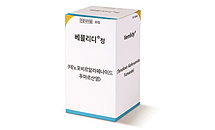
- The generic exclusivity period for the hepatitis B treatment Vemlidy expires on the 15th of this month. Five additional companies that have received approval for generic drugs for this ingredient are expected to enter the market. The pharmaceutical industry is paying attention to whether the original will have an impact on the market share, which accounts for 99%. According to the Ministry of Food and Drug Safety on the 6th, the generic exclusivity period for Daewoong's Vemliver, Dong-A ST's Vemlia, and Chong Kun Dang's Tenofobell-A expires on the 15th of this month. Three companies avoided the Vemlidy salt patent in March last year. They succeeded in evading the patent by using a salt different from the original drug, Vemlidy. Subsequently, it received generic for exclusivity in December of last year and January of this year, respectively. The generic exclusivity period is until the 15th of this month. Five additional companies, including DongKook, Samil Pharmaceutical, Samjin Pharmaceutical, Jeil, and Hutecs, received approval for the generic Vemlidy. The pharmaceutical industry predicts that they will release generics after the 15th. Attention is focused on how much influence additional generic products can have on the market landscape. Currently, the original drug Vemlidy dominates the hepatitis B treatment market containing Tenofovir Alafenamide. According to IQVIA, a pharmaceutical market research firm, Vemlidy's sales in the first half of last year were 20.5 billion won, a 23% increase compared to 16.6 billion won in the same period last year. In particular, quarterly sales exceeded 10 billion won for the first time in the second quarter of this year. Although a generic version was released at the beginning of the year, the price of Vemlidy was not lowered because it uses a different salt than the original. The analysis is that it is rapidly replacing Gilead's existing hepatitis B treatment, Viread. Beread's sales decreased 4% from 31.5 billion won to 30.4 billion won during the same period. Vemlidy generics are not selling well. The combined sales of the three Vemlidy generic products in the first half of this year amounted to only 200 million won. In terms of market share, the original Vemlidy is at 99%. Among the five companies releasing new generic Vemlidy, Samjin does not sell the product directly. Samjin's Taflead was sold by Bukwang Pharmaceutical, which has strengths in the hepatitis B treatment market. DongKook's Alfoterin and Samil's Vemlino join the competition with low drug prices. The prices of the two products are 2,424 won and 2,425 won, respectively. At 70% of the original price, it is the cheapest including previously released generics. The price of Vemlidy's generic drug from Daewoong Pharmaceutical, Dong-A ST, and Chong Kun Dang is in the range of 2,439 to 2,474 won. Vemlidy is an upgraded treatment from Gilead's existing hepatitis B treatment, Viread. It was developed in the form of a prodrug to improve tolerability and nephrotoxic side effects.
- Policy
- Next year's new drug R&D budget: 58 billion won
- by Lee, Jeong-Hwan Sep 08, 2023 05:34am
- The Ministry of Health and Welfare has set the national new drug development (R&D) budget for next year (2024) to 57.99 billion won, an increase of about 16.1 billion won from this year's budget of 41.19 billion won. 10.4 billion won was allocated to research to expand the new drug base, 16.5 billion won to research to build a new drug R&D ecosystem, 8.6 billion won to clinical development of new drugs, and 19.1 billion won to support the development of excellent new drugs to promote global expansion and partnerships. On the 6th, the Ministry of Health and Welfare submitted next year's budget plan to the National Assembly with these contents. National new drug development is a national task of the Yoon Seok-yeol administration. We have set a national scheme to become a global center for bio and digital health and to join the G5 in science and technology by fostering super-gap strategic technologies. The total budget for the project increased compared to the previous year, but most of the items have decreased if you look at the detailed project details. This is due to a decrease in the existing business budget as a new budget for promoting global expansion and partnership worth close to 20 billion won was established. Specifically, 10.465 billion won was earmarked for next year's budget for 'acid drug-based expansion research' to support researchers in deriving active substances and lead substances in order to continuously supply an early-stage new drug pipeline that is qualitatively and quantitatively excellent, compared to this year's 12.76 billion won. This is a decrease of 2.295 billion won compared to 10,000 won. Next year's budget for research on building a new drug R&D ecosystem is also 16.491 billion won, a decrease of 560 million won compared to this year's 17.051 billion won. The goal of the budget is to build an ecosystem that can smoothly connect basic research and clinical research and to intensively foster small and medium-sized enterprises and venture companies. Next year's budget for new drug clinical development has increased. 8.685 billion won was allocated, which is 645 million won more than this year's budget of 8.04 billion won. It is used to support phase 1 and 2 clinical trials for company-centered new drug development and global-level technology transfer. Next year's budget for new drug R&D commercialization support, which supports the resolution of barriers in significant stages of new drug development such as clinical trials, technology commercialization, and manufacturing/production, is 719 million won, a whopping 36.3% decrease from this year's 1.147 billion won. The amount was reduced by 428 million won. Next year's business unit operating expenses are 2.424 billion won, a 10.6% increase from this year's 2.192 billion won. The budget to support the development of excellent new drugs to promote global expansion and partnering, which will be deployed starting next year, is 19.125 billion won. The goal is to intensively foster and support next-generation new drugs that the global pharmaceutical and bio industries are paying attention to. KRW 2.363 billion is spent on lead drugs, 5.437 billion won on candidate drugs, 5.625 billion won on non-clinical trials, and 5.7 billion won on clinical trials. Specifically, the Ministry of Health and Welfare established a new budget to secure differentiated competitiveness and support new drug technologies that can actively advance into the global market. The intention is to strengthen global cooperation to intensively foster and develop next-generation food and new drugs such as ADC, TPD, new targets, and modalities, and to promote five projects that will be successfully carried out. The Ministry of Health and Welfare expects that after 2024, the expected effects will be to expand the domestic new drug development base by deriving excellent effective substances and lead substances, establishing a new drug R&D ecosystem, and enhancing company-centered new drug development capabilities.
- Product
- Phentermine and Saxenda has most reported adverse events
- by Lee, Jeong-Hwan Sep 08, 2023 05:33am
- Phentermine, a psychotropic appetite suppressant, was found to have the highest number of reported adverse events among anti-obesity drugs prescribed in Korea. Saxenda, an anti-obesity drug that was developed by changing the MOA of a diabetes drug, had the second-most reported number of side effects after phentermine. On the 7th, the joint research team of the Kyung Hee University College of Pharmacy, Ajou University Hospital, and Ajou University College of Pharmacy announced that phentermine and Saxenda (liraglutide) were the most common causative anti-obesity medications after analyzing 13,766 adverse drug event cases spontaneously reported to the Korea Adverse Event Reporting System Database (KIDS-KD) between 2010 and 2019. The average age of patients who experienced adverse vents was 41 years, and most (89.02%) were women. The side effect reporting rate was highest among pharmacists (44.62%), followed by the general public (29.63%), doctors (17.3%), then nurses (5.24%). Phentermine is an anti-obesity drug that suppresses appetite by activating neurotransmitters in the brain that reduce hunger and increase satiety. It is designated as a narcotic (psychotropic drug). It can be easily prescribed after consulting a doctor, but cannot prescribed to anyone under the age of 16. Saxenda increases satiety and suppresses appetite by delaying gastric emptying. It was originally developed as a treatment for diabetes, but the scope of treatment (indications) was extended after it was confirmed to be effective in obesity. Among the adverse events reported, 4,168 cases were confirmed to have definite or probable causal relationships. Of those, phentermine had the most adverse events at 33.2% (1,385 cases), followed by Saxenda at 27.7% (1,155 cases). Among the 105 (2.5%) ‘serious adverse event’ cases, phentermine and Saxenda accounted for the highest proportion at 26.7% each. The most common adverse drug events caused by anti-obesity drugs were gastrointestinal disorders (29.1%), central and peripheral nervous system disorders (19.2%), and mental disorders (16.9%). However, when narrowing the cases to serious adverse events, the most common were psychiatric disorders (25.7%) followed by central and peripheral nervous system disorders (19.0%). Phentermine accounted for 30% of the psychiatric disorder adverse events. By gender, men were more likely to experience adverse drug events related to gastrointestinal disorders but women were more likely to experience heart and heart rate disorders. Additional analysis also confirmed that men tended to take obesity medication more often. Also, 16% of the patients were found to be taking two or three obesity medications concomitantly, which increased the risk of side effects. The research team estimated that the risk of adverse events developing into serious cases from the use of anti-obesity drugs such as phentermine and Saxenda was 1.73 times higher for mental disorders, 4.57 times higher for respiratory disorders, 5.70 times higher for cardiovascular disorders, and 22.95 times higher for liver and biliary system disorders. The study results were published in the latest issue of the international academic journal, 'Journal of Global Health'.
- Company
- Appearance of 3rd generation MAO-B inhibitors
- by Eo, Yun-Ho Sep 08, 2023 05:33am
- Professor Dongwoo Ryu Parkinson's disease is one of the diseases for which treatment development is slow. It is known that a cure is still impossible, and treatment focuses on suppressing the progression of the disease or alleviating symptoms. Madopar, a representative treatment, is the drug with the greatest anti-Parkinson effect and has become the gold standard for Parkinson's disease treatment since its first release in the 1960s. However, it is known that approximately 75% of Parkinson's disease patients who take levodopa for more than 5 years experience complications. About two years have passed since the third-generation MAO-B inhibitor Equfina was launched in Korea. This drug was commercially launched in January 2021, 7 months after approval by the Ministry of Food and Drug Safety in June 2020. Dailypharm met with Ryu Dong-woo, professor of neurology at Yeouido St. Mary's Hospital of the Catholic University of Korea, to hear about changes and treatment trends in Parkinson's disease, where treatment options have been added for the first time in a long time. -Have there been any changes in Parkinson's disease drug treatment strategies? With the advent of the MAO-B inhibitor Equfina, one more new option has been added to improve patients' motor symptoms. Previously, there were not many options other than increasing the dosage of dopamine-related drugs to improve patient symptoms, but as new drugs appeared one by one, it became possible to formulate or suggest slightly different treatment strategies. However, the fact that there are still no drugs that actually treat Parkinson's disease is still an issue. -The standard treatment for Parkinson's disease is Levodopa medication. However, because there are several limitations when using Levodopa, it is understood that additional therapy is necessary. Levodopa is a drug that has a clear symptom improvement effect in terms of treatment, but side effects caused by dopamine, such as dizziness and nausea, can occur, and because of these side effects, it is often difficult to use the drug in high doses. Additionally, with long-term use, you may experience complications such as motor fluctuations, dyskinesias, or shortened drug duration. This is a phenomenon that occurs when people suffer from the disease for a long time, but it is also possible that it is worsened by dopamine drugs. There are also hypotheses that these side effects that may occur due to long-term use of the drug may accelerate the progression of Parkinson's disease or reduce drug response. -What is the treatment strategy to control the side effects or complications of levodopa? A strategy can be developed to maintain the body's dose of dopamine at a constant level by administering drugs such as MAO-B inhibitors or COMT inhibitors. All of these strategies are ultimately strategies to control levodopa usage, and they need to be used more actively, especially in young patients who are at high risk of motor complications. -What is the frequency of levodopa side effects? The side effects of levodopa are something that will eventually occur to anyone who uses it over a long period of time, and it is known that symptoms of motor fluctuations can usually be experienced within two years of starting use. It is known that dyskinesias develop in 40% of patients after 4 to 6 years, but this period varies slightly from patient to patient. -What is the effect of third-generation MAO-B inhibitors? How does it compare to existing generation drugs? In the case of Equfina, in addition to the effects seen in existing MAO-B inhibitors, it also has the effect of suppressing glutamate release. Glutamic acid is known to be involved in the progression of Parkinson's disease as well as complications resulting from long-term use of levodopa. Therefore, safinamide may be more effective in improving dyskinesia. So far, there is no clear difference in effectiveness between the previous and third-generation MAO-B inhibitors, but the new MAO-B inhibitors may be more stable when treating patients.
- Policy
- Advanced biologics to receive expedited review
- by Lee, Hye-Kyung Sep 08, 2023 05:33am
- Advanced biological drugs that have demonstrated a significant improvement in safety or effect compared to existing treatments will be regarded as ‘drugs with no alternatives’ and allowed to receive expedited review in Korea. Until now, only advanced biopharmaceuticals with limited scope of application (such as patients who have positive or negative biomarkers) compared to existing treatments or those for patients who are unresponsive to existing treatments were regarded as ‘drugs with no alternatives.’ However, the Ministry of Food and Drug Safety decided to expand treatment opportunities for patients with rare and incurable diseases by revising the regulations and allowing expedited processing for biopharmaceuticals that have proven improved safety or efficacy compared to existing treatments. On the 7th, the MFDS issued a pre-announcement of administration of the ‘Partial amendment of the marketing authorization and review regulations for advanced biopharmaceuticals' and announced that it will expand patient treatment opportunities and harmonize domestic and foreign standards and regulations. Article 21 of the regulations that will be amended contains the designation of subjects eligible for fast-track review, which includes cases where there are no alternative treatments. Such cases were defined as ▲ cases where there are no domestically approved drugs, and ▲ cases where the target of application is limited due to the existence of positive or negative biomarkers compared to existing treatments, or cases where existing treatments cannot be used. When targeting patients who could not receive it or were unresponsive, it was limited to cases where there were no alternative treatments. However, through the amendment, the government decided to designate advanced biopharmaceuticals that have proven to have significantly improved safety or effectiveness, as well as drugs where production, import, and supply have been suspended and supply has not been resumed, as those subject to fast track review. In addition, probiotics were included in the definition of biological drugs, and the legal basis for restricting marketing authorization for gene therapies was specified as 'Article 11 (1) 9 (c) and (1) of the Rules on the Safety of Drugs, etc.' Also, terms such as quality review and quality evaluation were unified into standards and test method review, and provisions based on submitted data for conditional approval were also revised. The MFDS is accepting opinion submissions about the pre-announced administrative notice until November 6.
- Policy
- Yooyoung will newly release repackaged flagship Pravafenix
- by Lee, Tak-Sun Sep 07, 2023 03:50pm
- Yooyoung Pharmaceutical has voluntarily withdrawn the marketing authorization for its product, ‘Pravafenix Cap’, as the product is due for a packaging renewal. As a flagship product, Pravefenix Cap has been recording annual sales of approximately 20 billion KRW. The newly self-packaged product is expected to be listed for reimbursement this upcoming October. According to the industry, Yooyoung Pharmaceutical voluntarily withdrew its permit for Pravafenix Cap (pravastatin+fenofibrate) on the 18th. This comes 11 years after the company first received approval in July of 2012. The drug is a treatment for dyslipidemia, imported from the Belgian pharmaceutical company, SMB. Since then, the drug has settled as a flagship item and has long served as Yooyoung's cash cow. Based on UBIST, the drug reached an outpatient prescription sales of 21.4 billion KRW last year. Considering Yooyoung’s total sales being approximately122.1 billion KRW last year, Pravafenix accounted for a high proportion of the company’s total sales. The company received approval for ‘Yooyoung Pravafen Cap’ in February before withdrawing its approval for the existing Pravafenix. In the past, Yooyoung imported Pravafenix from SMB as fully packaged finished goods under an import permit. The new manufacturing approval for Pravafenix allows for the company to import the capsules in bulk and package the products at Yooyoung’s manufacturing facility. The company explained that this decision was made to flexibly respond to market demands. The newly packaged drug is expected to be listed for reimbursement in October. A company official stated that Yooyoung voluntarily withdrew the import permit in order to use the trademark “Pravafenix Cap”, as for the MFDS would not allow two authorizations under identical names. The product name of the new manufactuiring approval has been changed from “Pravafen Cap” to “Pravafenix Cap”. He added, "The newly released Pravafenix Cap is expected to be reimbursed from October, however reimbusment may be claimed for the original Pravafenix Cap as well during a short overlapping period in order to minimize supply interruptions. Although some domestic companies are developing generic versions of Pravafenix, there has been no news of an item receiving marketing authorization yet.
- Company
- Ildong’s new GLP-1 analogue starts clinical trial
- by Chon, Seung-Hyun Sep 07, 2023 05:31am
- Pic of Ildong Pharmaceutical Ildong Pharmaceutical announced on the 6th that it recently received investigational new drug (IND) approval from the Ministry of Food and Drug Safety for its ID110521156’s Phase I clinical trial. ID110521156 is Ildong’s new GLP-1 receptor agonist drug candidate. Through the trial, the company plans to evaluate the tolerability, safety, and pharmacokinetic properties of ID110521156 in healthy adults. ID110521156 acts as an analog of the GLP-1 hormone, which regulates blood sugar levels by inducing insulin secretion in the body. GLP-1 hormone is produced in pancreatic beta cells and is known to be involved in insulin synthesis and secretion in the body, reduction of blood sugar level, regulation of gastrointestinal motility, and appetite suppression. Based on the clinical development and commercialization progress, the company plans to develop ID110521156 into an oral new drug targeting type 2 diabetes and obesity in the future. ID110521156 is a new compound that serves the same function as the GLP-1 hormone. Compared to biological agents such as peptides, it has a low molecular weight and is structurally stable. In an efficacy and toxicity evaluation of ID110521156 that was conducted using diseased animal models, the drug candidate has demonstrated superior efficacy in insulin secretion and glucose control, as well as superior safety compared to other same-class competitors. Ildong Pharmaceutical plans to develop an oral formulation that has advantages in terms of marketability and dosing convenience, unlike existing injection-type formulations, by utilizing the differences in effectiveness, safety, and stability resulting from the structural characteristics of its active substance. An official from Ildong Pharmaceutical said, “We have been actively discussing partnership opportunities with many global pharmaceutical companies, including licensing out our technology. To secure a favorable position in terms of promoting commercialization and securing rights, we have completed patent registration or applications in major market countries including Korea, the United States, Europe, China, and Japan.”
- Policy
- MFDS amends medical device permit renewal regulations
- by Lee, Hye-Kyung Sep 07, 2023 05:31am
- The Ministry of Food and Drug Safety (Minister: Yu-Kyung Oh) issued a pre-announcement of administration on September 6th regarding the amendment of the ‘Regulations on Renewal of Medical Device Manufacturing Permits.’ and will be receiving opinions until September 26th. The amendment contains changes such as requiring different data submissions for each medical device in consideration of each device’s characteristics to ensure the smooth operation of the medical device product renewal system that will be implemented in 2025. The medical device permit renewal system was introduced to periodically check the safety and effectiveness of products that have already been approved, reported, and certified, and requires companies to submit the latest safety and efficacy data, manufacturing and import records, etc. every 5 years to the MFDS. After the MFDS review, companies can continue manufacturing or importing their devices. The main contents of the amendment made are: ▲reasonable application of data submission requirements according to the characteristics of each medical device subject to report production and import discontinuations, etc. ▲focus on maintenance of distributed products during 1st renewal, and full-scale comprehensive review of safety and efficacy during 2nd renewal. For ‘reported products' that are relatively low risk to the human body and medical devices that must submit production/import discontinuation reports because a stable supply of such is necessary for patient safety, companies would need to submit a declaration of conformity as proof that it had reflected the latest standards. Also, ‘maintenance products’ that do not require the application of the latest standards due to discontinuation, companies will only need to submit production/import performance records and safety information measures. In the first renewal period (2025-2029), the government plans to focus on reorganizing the products already in distribution, including reorganizing product names and grades to conform with the current regulations. In the second renewal period (2030-2034), the government plans to reflect the latest standards and comprehensively review the safety and efficacy of medical devices, including safety information actions details made by companies, etc. Also, to increase industry predictability, the renewal application deadline will be clearly defined as 270 to 180 days before the expiration date of the validity period, and specify that safety information and action details that have already been reported (submitted) do not need to be submitted separately. The MFDS had held continuous meetings to listen to opinions in the field on ways to improve the industry's predictability and acceptance of the new system and has actively reviewed the opinions for the amendment. The MFDS said that it expects the new amendment to support the rational operation of the medical device product permit renewal system based on regulatory science and expertise, and stated that it will continue to make efforts to create grounds for the public to use medical devices with greater peace of mind. Opinions submitted during the administrative notice period will be actively reviewed and reflected if necessary. For further information regarding the amendment, please visit the Ministry of Food and Drug Safety’s website (http://mfds.go.kr > Laws/Data > Legislation Data > Legislation/Pre-Announcement of Administration) for review.
