
- LOGIN
- MemberShip
- 2026-05-07 20:36:41
- Company
- RET-targeted anticancer drugs fail reimb…no promise
- by Eo, Yun-Ho Sep 25, 2023 05:34am
- With RET-targeted anticancer drugs failing to receive reimbursement, patients are now left to wait indefinitely for coverage of their drugs. Lilly Korea's RET inhibitor Retevmo (selpercatinib) failed to be listed for reimbursement last month due to the final breakdown in drug price negotiations with the National Health Insurance Service. This drug was the first treatment option for patients with RET gene mutated non-small cell lung cancer and thyroid cancer and was the only drug that continued on evaluations for reimbursement in Korea. Only two RET-targeted therapies – Retevmo and Gavreto – are currently approved in Korea. In the case of Gavreto, the Health Insurance Review and Assessment Service’s Cancer Disease Deliberation Committee and the Drug Reimbursement Evaluation Committee determined the drug inadequate for reimbursement and made a final ‘non-reimbursement’ decision. Only Retevmo passed the DREC meeting Before Retevmo, no other option had been available for RET-mutated NSCLC or thyroid cancer in Korea. This is why the Ministry of Food and Drug Safety had approved Retevmo for the treatment of: ▲adult patients with metastatic RET fusion-positive non-small cell lung cancer (NSCLC); ▲adults and pediatric patients 12 years of age or older with advanced or metastatic RET-mutated medullary thyroid cancer who require systemic therapy; and ▲ adult patients who are refractory to radioactive iodine therapy and who have prior sorafenib and/or lenvatinib treatment, with advanced or metastatic RET-fusion benign thyroid cancer who require systemic therapy. The company had attempted to receive reimbursement for the thyroid cancer and NSCLC indications. In other words, Retevmo was accepted as a drug that requires urgent introduction in recognition of its innovation and clinical value in Korea. In fact, among the A7 countries that are used as Korea’s drug price reference countries, Retevmo is covered and used in 6 countries (US, Germany, Italy, UK, Switzerland, Japan) other than France. This was why Retevmo had applied for expedited reimbursement listing through the approval-evaluation linkage system and engaged in discussions with the relevant authorities for a year and a half but to no avail. Although the authorities acknowledged the innovativeness of the drug, they deemed that there remained uncertainty about the efficacy of the specific gene-targeting drug as it was approved through a single-arm study without a comparator rather than a Phase II trial. The MFDS has been operating an expedited review system to promptly launch and supply highly innovative drugs for life-threatening or serious conditions to the market and patients. However, only 1 out of 23 approved through the fast track is currently being covered by insurance. This means that even after the drugs receive approval quickly through fast-track review, it is difficult for cancer patients to receive treatment benefits without reimbursement. This is why non-small cell lung cancer and thyroid cancer specialists who have been longing for Retevmo’s listing are expressing the most disappointment. Se-Hoon Lee, Professor of Hematology-Oncology at Samsung Medical Center, said, “Retevmo is recommended as a first-line treatment for patients with RET fusion-positive NSCLC in the NCCN guidelines. It is very unfortunate that our patients have no opportunity to receive the proven therapeutic benefits of Retevmo.” Dong-Jun Lim, Professor of Endocrinology and Metabolism at the Catholic University of Korea Seoul St.Mary’s Hospital, said, “Although thyroid cancer is generally known to be an easy-to-treat cancer with a high survival rate, patients with medullary thyroid cancer with RET mutations have a poor prognosis and low survival rate. It is a very difficult situation for both the patients and doctors, being unable to use treatments with proven, significant clinical results on patients with RET-mutated medullary thyroid cancer due to the lack of treatment access, or in other words, coverage.”
- Company
- Boryung develops 4-drug kanarb combo… increases lineup
- by Chon, Seung-Hyun Sep 22, 2023 05:42am
- Pic of Kanarb Family On the 20th, Boryung Pharmaceutical announced that the Ministry of Food and Drug Safety has approved the Phase III clinical trial plan (investigational new drug, IND) for ‘BR1018,’ its incrementally modified drug candidate for hypertension and dyslipidemia. BR1018 is a four-drug combination that combined amlodipine, atorvastatin, and ezetimibe with fimasartan. Fimasartan is the main active ingredient of Kanarb, a new hypertension drug developed by Boryung. Kanarb was released in 2011 as a new drug for high blood pressure in the angiotensin II receptor blocker (ARB) class and was developed by Boryung with its proprietary technology. Amlodipine is a calcium channel blocker (CCB) type hypertension treatment drug. Atorvastatin and ezetimibe are treatments for hyperlipidemia. The clinical trial for BR1018 will test the drug’s efficacy on 156 patients with essential hypertension and primary hypercholesterolemia for 2 years. The company explained, “As the drug contains 4 ingredients in a single pill, we expect it may improve the patient’s medication compliance.” By releasing a series of combination drugs that use its Kanarb, Boryung has provided various treatment options in the field. In 2013, the company released LaCor, which was a combination of Kanarb and the diuretic hydrochlorothiazide. In 2016, the company introduced Tuvero, a combination of Dukarb (Kanarb+calcium channel blocker (CCB) drug amlodipine) and rosuvastatin, a hyperlipidemia treatment drug. In 2019, the company launched Dukaro, a 3-drug combination drug that combined rosuvastatin with Dukarb, and Akarb, a combination of Kanarb and atorvastatin, for hypertension and hyperlipidemia. In June last year, it released Dukarb Plus, a combination of Kanarb with amlodipine and hydrochlorothiazide. Last year, the Kanarb family recorded prescription sales of KRW 141.8 billion. Its sales have continued to grow at an average rate of more than 23% over the past 5 years. Boryung secured 131 papers and over 72,000 clinical cases related to Kanarb, added an indication for reducing proteinuria, and expanded the age of use. It also demonstrated its effect in controlling blood pressure in stroke patients and reducing stroke recurrence. Boryung plans to continue launching combination drugs and expand clinical research to achieve annual sales of KRW 200 billion by 2026 through the ‘Great Kanarb’ strategy. Currently, Boryung is developing additional Kanarb fixed-dose combinations including BR1015, a combination drug for high blood pressure, and BR1017, a combination drug for hypertension and dyslipidemia. The company had also applied for IND for BR1019, a combination drug that can simultaneously treat high blood pressure and diabetes. Jong-Rae Lim, Head of R&D at Boryung said, “We aim to provide various treatment options to prescribing doctors through continuous development of Kanarb combinations while improving patients’ medication compliance. We will enhance the clinical excellence of our Kanarb family by continuing to add indications through continuous research and investment.”
- Policy
- How Samsung’s biosimilar became covered in the US
- by Lee, Hye-Kyung Sep 22, 2023 05:41am
- Language barriers, insufficient handling of administrative issues related to regulations and visas, difficulties in recruiting and managing local personnel, and lack of a network infrastructure were pointed to as barriers to the Korean pharmaceutical companies’ entry into the U.S. Entry into the U.S. market holds significance in the industry as it is the world's largest pharmaceutical market that leads global technological standards. However, due to the various risk factors that exist, thorough preliminary research and simulation are necessary before making an attempt. The '2023 Global Pharmaceutical-Bio Market Export Support Report' that was issued by the Korea Health Industry Development Institute on the 21st published the difficulties and entry strategies for domestic companies seeking to enter the US market. First, the report said that companies should consider a strategy of being listed in the private insurance market through pricing, like Celltrion Healthcare and Samsung Bioepis. Celltrion Healthcare's Humira biosimilar’ Yuflyma’ was listed on the formulary of OptumRx, which is a subsidiary of one of the top 3 PBMs in the US, United Healthcare. The company pursued a high price strategy of setting the price at USD 6,576, which is only 5% cheaper than the original Humira. It is said that the high drug price allows room for much margin, increasing rebate resources and being advantageous in negotiations with PBMs. Samsung Bioepis’s Humira biosimilar ‘Hadlima’ was listed as a preferred drug in the formulary of Cigna Healthcare, a major private insurance company. The company had set the Wholesale Acquisition Cost (WAC) of its drug at USD 1,038, which was the lowest among all Humira biosimilars in competition in Korea, and 85% lower than that of the original. On the other hand, SK Biopharmaceuticals had prepared a direct sales approach due to a lack of network infrastructure. When using a direct sales system, profitability increases as the number of products sold increases, but initially, it imposes a huge fixed cost burden as the company needs to establish a local corporate body and hire professional sales and marketing personnel. SK Biopharmaceuticals explained that its SG&A expenses have continued to rise for the company since 2019 when it began preparing for a direct sales system. According to KAPAL (Korean-American Professional Association in Life Sciences), difficulties faced by Korean companies entering the US include language barriers, poor administrative management related to regulations/visas, difficulties in recruiting and managing local personnel, and lack of a network infrastructure. It also advised that preliminary research, thorough simulation, and advice from local experts and the experienced should be used to address the difficulties. In other words, companies need to understand and overcome local environmental and cultural differences, including by thorough localization of personnel and business operations, understanding and accepting the high wages and flexible working conditions, and taking a long-term approach based on an understanding of the relatively slow business progress and invest the time for information collection and networking to continuously develop its technology and intelligence property to successfully enter the US market. Although the CDMO infrastructure in the US is saturated, the government announced a policy to strengthen manufacturing. This is expected to expand medical and pharmaceutical production facilities and bases in the US, and the situation could be used in favor of the Korean companies as it would allow the companies to receive incentives and secure leadership in local production. New investment in the field of new drug development and clinical trials has been increasing in the US, and the government has been investing particularly in cancer treatment. Anticancer drug development and clinical trials account for 40% of all clinical trials conducted in the US, therefore, companies can seek entry into relevant fields through licensing out, technology transfers, and M&A with companies related to anticancer drug development.
- Product
- Will Insulin being sold out persist for a long time?
- by Kim JiEun Sep 22, 2023 05:41am
- There are signs that the sell-out of insulin preparations will continue for a long time. Some pharmaceutical companies have announced the timing of the resumption of supply, but the wholesale industry predicts that the current crisis will not be resolved in the near future. Novo Nordisk Pharmaceuticals recently announced the schedule for the resumption of the supply of Xultophy FlexTouch and Novorephid to pharmaceutical wholesalers. According to the information provided this time, the expected supply resumption date for Xultophy FlexTouch Injection 100U/ml, 3.6mg/ml is the first week of November, and for Novorephid 100U/ml is the fourth week of September. The company said, “We are continuously working to normalize the supply of Xultophy Flextouch Injection products.” The company explained, “We will secure supply so that patients who have been prescribed Xultophy FlexTouch Injection can continue treatment and provide information on the expected supply resumption date.” A company official added, “We deeply apologize for any inconvenience caused to patient care or work due to the instability of product supply due to the global imbalance in supply and demand.” According to the industry, Novo Nordisk had previously announced the resumption of Xultophy supply in September, but this announcement announced that it would resume supply in November, effectively delaying the restart by about two months. As of September 21, products such as Tresiba and Trulicity were still unable to be ordered from online malls, and it was confirmed that product supply and shipment were not smooth in the wholesale industry. Local pharmacies and the industry predict that if patients with long-term prescriptions flock to hospitals and clinics ahead of the long Chuseok holiday next week, the difficulties faced by front-line pharmacies due to shortages of insulin preparations may double. An official from the wholesale industry said, “Items such as Tresiba and Trulicity have been stocked and shipped in small quantities since August, but it is difficult to meet all the demand. In the case of Xultophy, it has not been seen in the market for several months even though there is considerable demand.” “As the resumption of supply has been postponed again to November, difficulties will inevitably arise at pharmacies where prescriptions for the product are delivered,” he said. This official said, “As this Chuseok holiday is so long, the number of visits to hospitals and pharmacies by patients with long-term prescriptions may increase next week.” He said, “If this happens, there could be another shortage of insulin products.”
- Company
- Next-gen asthma drug Tezspire to soon be introduced to KOR
- by Eo, Yun-Ho Sep 22, 2023 05:41am
- The next-generation drug for severe asthma, ‘Tezpire' is soon expected to enter the Korean market. According to industry sources, AstraZeneca Korea has submitted an application for the approval of ‘Tezspire (tezepelumab)’ in H2 to the Ministry of Food and Drug Safety and is receiving its final review. Whether AstraZeneca will be able to continue on its lineage in the field of asthma with Tezspire after failing to list its ‘Fasenra (benralizumab)’ for reimbursement remains to be seen. As a viable competitor to Sanofi’s ‘Dupixent (dupilumab),’ Tezspire inhibits the action of the thymic stromal lymphopoietin (TSLP), a key epithelial cytokine that sits at the top of multiple inflammatory cascades, to block the inflammatory chain reaction. The drug was approved by the US FDA in 2021 as a treatment for adult and pediatric patients aged 12 years and older with severe asthma., and added a self-injection formulation to its approval in February this year. Tezspire demonstrated a consistent and significant reduction in asthma exacerbation in the Phase II PATHWAY trial and Phase III NAVIGATOR trial, which included a broad population of severe asthma patients irrespective of key biomarkers, including blood eosinophil counts, allergic status, and fractional exhaled nitric oxide (FeNO). In the study, the most common adverse reactions shown in patients who received Tezspire were pharyngitis, rash, arthralgia, and injection site reactions. The findings from the NAVIGATOR study were published in The New England Journal of Medicine in May 2021. The Korea National Enterprise for Clinical Trials had designated Tezspire as the No.1 drug in need of urgent introduction to Korea in its report on the ‘List of foreign new unintroduced drugs that should be promptly Introduced to Korea.’
- Policy
- Vabysmo·Evrysdi, listed as reimbursement
- by Lee, Tak-Sun Sep 22, 2023 05:41am
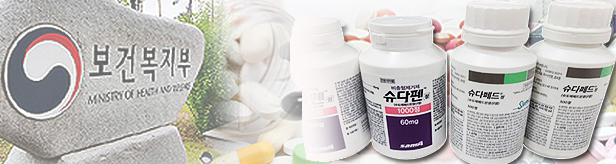
- It is reported that Vabysmo and Spinal Muscular Atrophy Evrysdi Dry Syrup 0.75mg/mL will be listed on the benefit in October. Additionally, the upper limit for 2 Jardiance items and 2 Ninlaro items is expected to be reduced due to PVA. It is reported that the upper limit price of pseudoephedrine ingredient preparations that have completed negotiations will be adjusted to 29 to 32 won as a condition of supply expansion. According to the industry on the 21st, the government is pushing for such revisions to the drug list. It is expected to take effect as early as September 1. Vabysmo passed the HIRA Pharmaceutical Reimbursement Evaluation Committee last July. It is said that at the time of passage, the upper limit of the drug price negotiation standard was accepted and the NHIS only negotiated the estimated billing amount. This drug is used to treat nAMD and vision impairment caused by DME. In particular, it is attracting attention because it is a new drug that targets both VEGF-A and Ang-2, which are major disease pathogenesis. Evrysdi is used for symptomatic SMA patients under the age of 18. Along with the listing of Evrysdi, the existing SMA treatment Spinraza will also have expanded coverage. Only patients under the age of 3 with symptoms could be administered, but with the expansion of coverage, it is expected that patients under the age of 18 with symptoms, like Evrysdi, will also be able to use it. The upper limit for SGLT-2 inhibitory diabetes drugs Jardiance 10mg and Jardiance 25mg will be adjusted due to increased usage. PVA type Na standard was applied. The upper limit price for Takeda's multiple myeloma treatments Ninlaro 2.3mg, Ninlaro 3mg, and Ninlaro 4mg will be reduced based on the type price standard. Pfizer's acute lymphoblastic leukemia treatment Besponsa and Takeda's ovarian cancer treatment Zejula 100mg successfully renewed their RSA contracts. For the four single-drug pseudoephedrine products (Samil Pseudoephedrine Tablets, SamA Schdafen, Kolon Cosue, and Shinil Shinil Pseudoephedrine Tablets) for which price increases have been confirmed due to supply shortages, the upper limit price will range from 29 won to 32 won depending on the amount of supply expansion stipulated as a condition. It is applied differentially. Currently, one item is 20 won and the remaining three items are 23 won.

- Policy
- Bioequivalence reevals speed up in line with drug price reev
- by Lee, Hye-Kyung Sep 21, 2023 05:24am
- With the number of items requiring equivalence tests expanded as such, the Ministry of Food and Drug Safety is also accelerating the reevaluation of those that were previously approved. In particular, it is said that the review is being further accelerated this year as its timing overlaps with the reevaluation of the insurance price ceiling amount, which requires self-bioequivalence tests. So-Hee Kim, Director of the Bioequivalence Evaluation Division at the Ministry of Food and Drug Safety's National Institute of Food and Drug Safety Evaluation, said so at a press briefing it had held together with the Drug Evaluation Department. Director Kim explained, "The initial results of the Ministry of Health and Welfare's 'insurance price ceiling reevaluations (standard requirements)' have come out, and pharmaceutical companies are showing mixed responses based on their results. At the time of the drug pricing reevaluations that were conducted, the MFDS reviewed the equivalence reevaluation of many items in a short period of time, and have completed the first review and are reviewing the data again,” The MFDS has expanded the scope of equivalence reevaluations to include all prescription drug generics, starting with oral tablets (uncoated tablets) this year, tablets (film-coated tablets) in 2024, and capsules, granules, and syrups in 2025. For the equivalence reevaluation, subject companies would have to submit a bioequivalence testing result or plan by March of every year. If the companies find it difficult to submit the test result report by then, they may first submit a plan, and submit the results by December after completing the test according to plan. The reevaluation results will be released around February of the following year. The problem was the drug price reevaluations that took place this year. Generic drugs subject to drug price reevaluations had to satisfy both requirements - conducting bioequivalence tests and using registered raw drug substances - to receive the highest insurance price. For items that are subject to both equivalence reevaluations and drug price reevaluations, it was difficult for the companies to submit a notice of completion of their bioequivalence tests in accordance with the drug pricing reevaluation schedule under the Ministry of Food and Drug Safety’s plan. Kim explained, “ The MFDS also had to conduct many equivalence reevaluations in a short period to meet the pricing reevaluation schedule. The review of the items subject to drug price re-evaluation has been completed, and we are now reviewing the remaining equivalence re-evaluation data.” For companies to receive the highest price, the MFDS had to submit a notice of completion of the equivalence reevaluation review to HIRA within the drug pricing reevaluation period, which forced the MFDS to also accelerate its review. Kim said, “Pharmaceutical companies have been expressing difficulties. We have been guiding ways to resolve their issues to help them follow the government’s policies.” (from the left) Sang-Ae Park, Director of the Advanced Drug Quality Division, Mi-Jung Kim, Director of the Pharmaceutical Standardization Division, Young-Rim Kim, Director-General of the Drug Evaluation Department, Ho-Jung Oh, Director of the Oncology and Antimicrobial Products Division, So-Hee Kim, Director of the Pharmaceutical Standardization Division Regarding the need to engage in continuous communication with the pharmaceutical industry to respond to various issues including the recent reevaluations, Young-Rim Kim, Director-General of the Drug Evaluation Department, explained the plan. Director-General Kim said, "Last March, we launched CHORUS (CHannel On RegUlatory Submission & Review) to discover two-way agendas between the industry and the MFDS industry, and we are forming and have been operating five branches to allow various companies to cooperate with working-level members that directly carry out the actual work.” He added that CHORUS plans to announce the performance of each branch this year and establish a plan for next year at the H2 CHORUS workshop. In addition to related associations and industry meetings, it plans to strengthen communication with companies that directly meet reviewers. Director-General Kim said, “We have procedures in place so that companies can officially request a supplementary meeting or in-person consultation when applying for marketing authorizations. The temporary restrictions made on phone consultations for relevant departments due to COVID-19 have been lifted. Now, companies can call for consultation without any time limit.” However, as only 124 review personnel are available in the Institute which needs 135, the institute lacks the manpower to address the absolute number of civil complaints. For example, the U.S. FDA has 8,000 review personnel. Director-General Kim said, “We will take the domestic pharmaceutical industry environment into consideration, adjust the timing, and approach it step by step to ensure that the policy is well established and implemented, and we will fully listen to the industry’s opinions during the process.”
- Policy
- Pseudoephedrine price negotiations have been concluded
- by Lee, Tak-Sun Sep 21, 2023 05:24am
- Quick agreement reached after a week of negotiations, likely to be implemented in October It appears that the single agent for colds, Pseudoephedrine, will be subject to increased drug prices starting in October. There is news that drug price adjustment negotiations with the NHIS, which have been ongoing since last week, have been concluded. Attention is being paid to whether this drug price increase will increase the supply of products from pharmaceutical companies and alleviate supply and demand difficulties. According to the industry on the 19th, the corporation and pharmaceutical companies agreed to increase the price of 60mg of single drug Pseudoephedrine HCl. It is said that negotiations were concluded around 30 won, an increase from the current 23 won. Pseudoephedrine HCl 60mg products are sold as Cosue by Kolon, Schdafen by Sam-A, Sudafed by Samil, and Pseudoephedrine by Shinil. Among these, Pseudoephedrine is worth 20 won, and the rest are worth 23 won. This ingredient has been in short supply since last year. This is because, as the number of respiratory patients as well as COVID-19 increases, prescriptions for medications containing Pseudoephedrine, which are used for colds, sinusitis, and upper respiratory allergies, have increased. Accordingly, pharmacies have requested increased supply. Last May, the Pharmaceutical Association supplied one bottle of 500 tablets to each pharmacy to solve the supply shortage. Supply shortages continued, and recently, the ‘Public-Private Response Consultative Group on Instability in Pharmaceutical Supply and Demand’ composed of the Ministry of Health and Welfare, the Ministry of Food and Drug Safety, the Pharmaceutical Association, the Pharmaceutical and Biopharmaceutical Association, and the Pharmaceutical Distribution Association decided to push for an increase in drug prices. After the drug price increase agenda passed the HIRA on the 6th, the NHIS began drug price negotiations last week and announced a settlement within a week. Accordingly, the agenda for increasing the price of pseudoephedrine will be reported to the Health Policy Review Committee of the Ministry of Health and Welfare, which will be held soon, and the adjusted drug price is expected to be applied from October 1. The NHIS appears to have received confirmation from pharmaceutical companies regarding drug price increases as well as supply expansion. Accordingly, it is expected that the problem of a supply shortage of Pseudoephedrine single drugs will be resolved.
- Policy
- ‘Introduce a Korean Cancer Moonshot Plan for patients'
- by Lee, Jeong-Hwan Sep 21, 2023 05:24am
- It has been pointed out that Korea also needs a policy that can improve the quality of life of cancer patients by providing reasonable compensation for cancer treatment technologies such as robot-assisted surgery and advanced radiation therapy to improve the quality of life of cancer patients in Korea, like in the case of the U.S. Cancer Moonshot Initiative or the EU’s Beating Cancer Plan. On the 20th, the AI law, regulation, and policy platform CODIT’s (Jeong Ji-eun Chung) Global Policy Empirical Research Institute pointed out in an issue paper called 'Implications of the development of advanced cancer treatment technology - Focusing on improving the quality of life of cancer patients.’.' According to the issue paper, countries around the world have been making national efforts with the explicit goal of improving the quality of life of cancer patients and their families, with plans such as U.S. President Biden's 'Cancer Moonshot Initiative' and the EU's ‘Beating Cancer Plan.’ On the other hand, the paper criticized that in Korea, improving the quality of life of cancer patients is being pushed back from the priority list of health authorities due to frequent transfers of officials from the relevant ministries and seasonal changes in national health issues. The issue paper introduced examples of advanced treatment technologies that have a significant impact on improving the quality of life of cancer patients and emphasized the need for the government to contemplate on an institutional level on improving the quality of life of cancer patients. The paper pointed to robot-assisted surgery reducing bleeding and complications by enabling sophisticated surgery based on hand tremor correction, wide joint range of motion, and delicate joint movements, as well as advanced radiation that maximizes effectiveness through customized radiation therapy using artificial intelligence (AI) as examples. Such advanced treatment technology can greatly contribute to improving the quality of life of patients during the treatment process by increasing the likelihood of their successful return to society after surgery. However, in the current healthcare system, it is not easy for people to receive the benefits of advanced treatment technologies due to cost issues, and the paper stressed that the government needs to actively make considerations on that aspect. In addition, the issue paper emphasized that the government needs to improve social and emotional awareness to prevent having been or being a cancer patient or from acting as an invisible stigma in this society, which is ranked among the Top 10 in regards to its economic achievement in the world, while at the same time actively improving healthcare policies to build a healthcare system that allows patients to enjoy a better quality of life physically.
- Opinion
- [Reporter’s View] Biobetters to prosper with better prices
- by Eo, Yun-Ho Sep 21, 2023 05:23am
- A series of cases where preferential pricing has been applied to biobetter drugs are being introduced to Korea. In 2016, the government announced a plan to provide preferential pricing for biosimilars and biobetters, which are improved versions of already approved biopharmaceuticals, that have contributed to the improvement of Korea’s healthcare. Considering how biobetters are more difficult to develop compared to incrementally modified drugs (chemical drugs), the government decided to set the overall price of biobetters at the 100-120% range of the original drug. However, no drug had reaped the benefit until recently. And then in September, Sanofi-Aventis Korea’s Nexviazyme (avalglucosidase alfa-ngpt) made the start. Nexviazyme is an improved biological drug that offers improved dosing and administration compared to Myozyme (alglucosidase alfa), a recombinant human acid alpha-glucosidase (rhGAA), that is developed by the same company, Sanofi. The drug has increased the amount of M6P, which plays an important role in the intracellular uptake of drugs, by about 15-fold compared to Myozyme through the glycol-engineering technology. Nexviazyme’s increased M6P increases drug uptake over Myozyme and GAA activity to enable more effective glycogenolysis and less damage to muscle cells. Also, the increase in surface M6P contributes to improved immunogenicity, providing benefits in terms of safety. And another drug is soon to be added to the list. The second to benefit is expected to be Roche Korea’s subcutaneous fixed-dose combination injection Phesgo (pertuzumab, trastuzumab), which combines the company’s ‘Perjeta’ and ‘Herceptin.’ The drug passed the Health Insurance Review and Assessment Service’s Cancer Disease Deliberation Committee review last month. If listed, Phesgo will become the first anticancer drug and the second drug to benefit from the biobetter preferential treatment plan. Phesgo was recognized for its innovation in improving patient convenience and reducing treatment time by changing the IV-injected Herceptin and Perjeta into a fixed-dose subcutaneous injection and was named as the first biobetter approved for cancer in Korea. Metastatic HER2-positive breast cancer patients who had received maintenance therapy with IV Herceptin and Perjeta injections every three weeks may reduce their administration and monitoring time by 90% from 270 minutes (90min+180min) to 20 minutes (5min+15min) when switching to Phesgo. Also, as Phesgo is a subcutaneous formulation injected in the thigh rather than into the veins, it can reduce blood vessel and nerve damage that can be caused by repeated intravenous injections. Biobetters are much more difficult to develop than IMDs. It mainly offers improved convenience over the existing original drugs, but the improvement in convenience of injectable drugs has a greater impact on patients compared to orally administered synthetic drugs. Although the first case had been implemented so late, it is encouraging that more cases are starting to emerge. In addition, domestic companies are also developing biobetters. As the likelihood of success is higher for biobetters than new drugs, we expect more to benefit in the future. Amid the many imminent patent expiries of blockbuster drugs, this is now the time for companies to take the opportunity.
