
- LOGIN
- MemberShip
- 2026-05-06 15:19:54
- Opinion
- [Reporter’s View] CSO is a double-edged sword
- by Kim, Jin-Gu Dec 07, 2023 05:47am
- Over the past few years, small mid-sized pharmaceutical companies and contract sales organizations (CSOS) have developed a strong symbiotic relationship. Small and mid-sized pharmaceutical companies have provided work for CSOs, and CSOs have repaid the companies by improving their performance. Due to this, many companies, especially small- and mid-sized companies, have partnered with CSOs. Over the past few years, CSOs have become "the trend" for small- and mid-sized pharma companies, as their performance varied depending on whether they used CSOs. Also, CSOs have expanded their role by specializing in sales for specific products or regions. They have been praised for improving cost-effectiveness and profitability through flexible sales activities, but they have also been criticized that it has become a ‘breeding ground for rebates.’ It was constantly pointed out that CSOs were being utilized as a rebate delivery channel, hiding in the blind spots of the system. Then, the CSO Reporting System emerged to address this issue. A bill to amend the Pharmaceutical Affairs Act to require CSOs to report to the government and local governments passed the National Assembly in the first half of this year. The revised Pharmaceutical Affairs Act will come into effect on October 19 next year Once implemented, the government will be able to hold pharmaceutical companies that signed contract sales agreements with CSOs accountable for the CSO’s deviant activities. This means when rebates are made, not only the CSO but also the pharmaceutical company involved could be criminally punished as an "accomplice". Even if the company avoids criminal penalties, it will be difficult to avoid administrative penalties because criminal penalties and administrative penalties are imposed separately. The administrative penalty imposed on a Korean pharmaceutical company that was finalized in July this year is a good example. Although the company was acquitted by the prosecution due to insufficient evidence for the rebate case that was discovered in 2016, the Supreme Court made the final ruling to impose a 3-month suspension on the sales of 14 items. Therefore, cases of rebates made through CSOs may also be judged similarly. Even if the companies avoid criminal penalties, they may still face strong administrative penalties. Moreover, if multiple rebate cases are found at the same time, the administrative penalties may be accrued or raised. For small- and mid-sized pharmaceutical companies, such rulings will be a hard blow. In this sense, CSOs are now a double-edged sword for small- and mid-sized pharmaceutical companies. They can improve performance but the companies will have to also bear the risk. The time has come for pharmaceutical companies that have already built a symbiotic relationship with CSOs to make a choice. Will the companies continue to work with CSOs that deliver high performance, or reduce the role of CSOs to mitigate risk? The companies will need to make their decision quickly, as just over 10 months remain until the CSO reporting system comes into effect.
- Company
- Bemarituzumab is granted ODD status in Korea
- by Eo, Yun-Ho Dec 07, 2023 05:47am
- The new gastric cancer drug bemarituzumab received an orphan drug status in Korea. The Ministry of Food and Drug Safety (MFDS) recently announced so through the orphan drug designation notice. Specifically, the drug is indicated to treat patients with fibroblast growth factor receptor 2b (FGFR2b) overexpression and unresectable locally advanced or metastatic gastric or GEJ adenocarcinoma. Amgen’s bemarituzumab is a first-in-class investigational FGFR2b targeted antibody. And, Amgen gained access to the drug as part of its acquisition of Five Prime Therapeutics in 2021. In the same year, the FDA has granted bermarituzumab a Breakthrough Therapy designation (BTD). Bermarituzumab is a humanized IgG1 monoclonal antibody that targets the binding of FGFR2b. It blocks FGFR2b activation and slows cancer progression. The data from the its Phase 2 FIGHT clinical trial was been released in October 2022. For patients with HER2-negative FGFR2b-overexpressing tumor, bemarituzumab plus combination chemotherapy demonstrated clinically significant results in progression free survival (9.5 months vs 7.4 months), overall survival (19.2 months vs 13.5 months), and response rate (53% vs 40%). Based on the previous results, the company has been conducting FORTITUDE-101 and FORTITUDE-102 Phase 3 trials to further evaluate bemarituzumab in FGFR2b overexpression gastric cancer patients. In the Phase 1 trial, bemarituzumab showed no dose-limiting toxicities and a had confirmed objective response rate (ORR) of 18% in patients with refractory FGFR2b-positive gastric cancer.
- Company
- Dong-A and Pfizer win Industry Ad-PR Awards
- by Kim, Jin-Gu Dec 07, 2023 05:47am
- Dong-A Pharmaceutical's ‘Bacchus’ and Pfizer Korea's 'Green Move Campaign' won the grand award in the advertising and PR categories of the 2023 Korea Pharmaceutical and Bio-Industry Advertising and PR Awards. On the 6th, Dailypharm (CEO: Jeong Seok Lee) held the ‘2023 Korea Pharmaceutical and Bio-Industry Advertising and PR Awards Ceremony’ at the K-room of the Korea Pharmaceutical and Bio-Pharma Manufacturers Association heqdquarters. Now celebrating its 11th year, the competition for the award had been stronger than ever, with 77 entries from 39 pharmaceutical companies. The awards were divided into advertising and PR categories. In the advertising category, 1 grand prize, 1 best excellence prize, and 1-3 excellence prizes were given in each of the 3 areas: ▲TV-CF, ▲print-radio, and ▲Internet-SNS. In the PR category, one grand prize, 1 best excellence prize, and 2 excellence prizes were awarded given in 2 areas: ▲social contribution and disease promotion campaigns, and ▲corporate and product promotion. Dong-A Pharmaceutical's ‘Bacchus’ seized the grand prize in the advertisement category. Among the 49 entries that were made in the category, Dong-A’s advertisement received the highest scores for message clarity, novelty, and consumer trust. The grand prize awardee received a trophy and a cash prize of KRW 5 million. Sang-Hyun Han, Advertisement Team Lead at Dong-A Pharmaceutical, said, “This year marks the 60th anniversary of Bacchus’s launch. We prepared an ad that looked back on the past 60 years of Korea with Bacchus and is pleased that our ad received good reviews as a result.” Han said, “We plan to release a more youthful and dynamic ad next year that celebrates Bacchus’s 60 years to come. We are planning an innovative and fresh advertisement that can lift the public's fatigue like our product.” In the TV-CF field, Dong Wha Pharm’s ‘Pancol’ received the best excellence prize, and was awarded a trophy and a cash prize of KRW 3 million. Boryung Consumer Healthcare’s ‘Younggaksan Cool,’ Johnson & Johnson Korea’s ‘Tylenol,’ and Samjin Pharm’s ‘Anjung Sol’ received excellence prizes and a cash prize of KRW 2 million. In the Internet and SNS field, Yuhan Corp’s ‘Contac Gold’ received the best excellence prize. Ahn-gook Pharm’s ‘Tobicom’ and Daewon Pharm’s ‘Newbein’ received excellence prizes. In the Print-Radio field, Daewoong Pharmaceuticals ‘Impactamin’ received the best excellence prize, and Kukje Pharm’s ‘Company PR ad’ received the excellence prize. In the PR category, 28 entries on the company’s CSR activities and company promotion were submitted by companies. Among the 28, Pfizer won the grand prize in the PR category with its ‘Green Move Campaign.’ As the grand prize awardee, Pfizer received a trophy and a cash prize of KRW 5 million. Oh Hye-min, Policy & Public Affairs Lead at Pfizer Korea, said, “Corporate ESG activities are no longer an option – it is an obligation. As our company is already engaged in various ESG activities at the headquarters level, we decided to start the Green Move campaign after long discussions on what Pfizer Korea could additionally provide to society. We want to make it a mid-to-long-term project rather than just a one-time event. We look forward to your interest." In the CSR and disease awareness campaign, area Sinsin Pharm’s ‘Shinshin H2O Life’ won the best excellence prize. The runners-up were Withus Pharmaceutical's ‘Sponsorship of the Korea Ssireum Association’ and Korea United Pharm’s ‘Global Talent Development Program.’ In Company PR and product promotion area, Hanmi Pharm’s ‘50th Anniversary History Discovery Campaign’ won the best excellence prize, while Geo-Young’s " Zyrtec 10mg for Allergic Rhinitis" and Boehringer Ingelheim's ‘Trajenta’ received excellence prizes. Dae-Chun Ahn, former president of the Korea Advertising Society (Inha University) served as the head of the judging panel for this year’s event, and Jae-Hoon Cheong, professor of Pharmacy at Sahmyook University, and Jae-Kook Lee, executive director of the Korea Pharmaceutical and Bio-Pharma Manufacturers Association served as expert judges. Ahn said, "In the Advertising category, the judges focused on the delivery and clarity of the theme and message, how novel and original the ideas and expressions were, and how credible the message was beneficial to the consumers’ public interests." He added, "In the corporate PR category, we focused on how timely the message was from a long-term perspective and how it contributed to the consumers’ public interest. For CSR activities, an area that was newly introduced this year, we focused on the authenticity of the message, the degree of reflection into society, and the continuity and consistency of the campaign activities." The Korea Pharma & Bio Industry Advertising-PR Award was launched in 2013 to encourage advertisers to add new value to the pharmaceutical industry and drugs, and to encourage the creation of advertisements that resonate with pharmacists, the primary consumers of pharmaceutical advertisements." Jeong Seok Lee, CEO of Dailypharm, said, "I would like to congratulate the 17 pharmaceutical company officials that won today's awards. The awards are one recognition of the hard promoting and marketing work and efforts companies made throughout the year. We look forward to seeing more great work next year."

- Policy
- HIRA’s reimb reevaluation results to be released on the 7th
- by Lee, Tak-Sun Dec 07, 2023 05:47am
- The final results of the 2023 reimbursement adequacy reevaluations will be released on the 7th. On the day, the Health Insurance Review and Assessment Service’s Drug Reimbursement Evolution Committee will deliberate on the final reevaluation results that reflect the appeals made by pharmaceutical companies on the first results. In general, the pharmaceutical industry is not expecting the results to differ greatly from the first results, given the lack of appeals that were filed. However, in the case of hyaluronic acid eye drops, the committee discussed revising the reimbursement standards regarding the use amount after releasing the initial results, so industry eyes are on whether DREC will make a final decision on this on the 7th. The initial results announced at the end of DREC’s September 6 meeting concluded that rebamipid and levosulfiride were reimbursable. However, limaprostalpha-dex for improving ischemic symptoms of Berger's disease, such as ulcers, arterial pain, and coldness, was not considered to be adequate for reimbursement. Also, loxoprofen’s use to reduce fever and pain related to acute upper respiratory tract infection was not considered to be adequate for reimbursement. In the case of hyaluronic acid eye drops, which attracted the most attention, the committee deemed reimbursement inadequate for its use for exogenous diseases caused by surgery, drugs, trauma, or contact lens wear. Although its use for endogenous diseases such as Sjögren's syndrome, mucocutaneous ocular syndrome, and dry eye syndrome were deemed adequate, the committee determined that its reimbursement standards such as the number of prescriptions per patient visit and the total number of prescriptions per patient per year would need to be established for its appropriate use. The industry generally expressed pleasure about the initial results because the indications that were deemed non-reimbursable were not the drugs’ primary indications. However, as antipyretic and analgesic indications for loxoprofen have been heavily used during the COVID-19 pandemic, there was some pushback regarding its non-reimbursement in the medical community. In the case of the hyaluronic acid eye drops, there were fewer appeals from pharmaceutical companies because s its use for exogenous diseases is relatively low. The approved use for endogenous diseases accounts for the absolute majority of hyaluronic acid eye drop prescriptions, with over an 80% share. However, the industry is keeping a keen eye on restrictions that may be made on its use volume. Although there has been an opinion that its annual use should be restricted to 60 eyedrops (4 boxes), it has been reported that the committee had difficulty coming up with a unified plan due to strong opposition from the medical community and the pharmaceutical industry. Nevertheless, the industry prospects are that HIRA will report the results of its discussion to DREC to make a final decision. However, it is unlikely that DREC will come to an easy conclusion, therefore the reimbursement standards for restricting the volume is likely to be discussed beyond the year, according to industry analysis. If revisions to the reimbursement standards are postponed for this reason, it is expected that sodium hyaluronate eye drops’ reimbursement standards for exogenous diseases will first be removed and be granted reimbursement use only for endogenous diseases from January next year. An industry official said, "In the case of sodium hyaluronate eye drops, restricting its usage may greatly affect performance. We are waiting to see what decision DREC will make on this tomorrow."
- Policy
- Bill proposed to prioritize domestic drugs and vaccines
- by Lee, Jeong-Hwan Dec 06, 2023 06:00am
- A bill has been presented to prioritize purchases and use of domestic drugs and vaccines when Korea's national and local governments conduct drug stockpiling and National Immunization Programs (NIP). The bill also contains a provision to strengthen Korea's pharmaceutical sovereignty, including a plan to promote self-sufficiency of drugs in the Comprehensive Plan for Pharmaceutical Industry Development and Support. On April 24, Rep. Young-hee Choi, a member of the People Power Party presented a bill as representative to partially amend the Special Act on Fostering and Supporting the Pharmaceutical Industry. The current law requires the Minister of Health and Welfare to establish a Comprehensive Plan for Pharmaceutical Industry Development and Support every 5 years, which includes mid-to-long-term goals for fostering the pharmaceutical industry, to create a basis for industry development and strengthen its international competitiveness. However, the need to strengthen Korea’s drug sovereignty to enable domestic companies to develop and produce vaccines and essential medicines independently to overcome public health crises such as COVID-19 has been constantly raised since the COVID-19 outbreak. As competition among countries to foster the pharmaceutical industry is intensifying, the argument is that Korea also needs a policy to firmly establish its pharmaceutical sovereignty and rise to become a pharmaceutical powerhouse. For this, the revision presented by Rep. Choi includes amendments to provide grounds for the national government and local governments to prioritize the purchase of domestically produced drugs when conducting drug stockpiling or for Korea’s National Immunization Program (NIP), and to include a plan that can promote self-sufficiency of drugs in the contents of the Comprehensive Plan for Pharmaceutical Industry Development and Support. Rep. Choi said, "The Yoon Suk-yeol government has set the goal of making Korea one of the Top 6 global pharmaceutical and bio-pharma powerhouses by 2027. In the post-COVID-19 era, where the world is pursuing a “My nation first” policy for medicines, we hope that Korea will be able to achieve pharmaceutical sovereignty and emerge as a pharmaceutical and bio-pharma powerhouse by increasing the self-sufficiency rate of medicines.”
- Company
- Jemperli becomes 1st immunotherapy for endometrial cancer
- by Eo, Yun-Ho Dec 06, 2023 06:00am
- The first reimbursed immunotherapy option has been introduced to the field of endometrial cancer in Korea. According to industry sources, GSK Korea’s PD-1 inhibitor Jemperli (dostarlimab) has been listed for reimbursement in Korea from December 1st. Since receiving marketing authorization from the Ministry of Food and Drug Safety in December last year, the company moved relatively quickly through the reimbursement process, passing HIRA’s Drug Reimbursement Evaluation Committee deliberation in August, and recently completed drug price negotiations with the NHIS and received approval from the Health Insurance Policy Review Committee. GSK has been carrying out an Expanded Access Program (EAP) in 15 major medical institutions in Korea even before filing for reimbursement to provide access to patients in need of treatment for endometrial cancer. The program has now been closed and Jemperli is being reimbursed through the NHIS as of this month. Jemperli’s approval was based on the cohort A1 analysis results of the Phase I multicohort GARNET trial that demonstrated the efficacy of Jemperli in a cohort of patients with relapsed or advanced dMMR/MSI-H endometrial cancer who progressed on or following prior treatment with a platinum-containing regimen. In particular, this study had the largest cohort among PD-1 inhibitor monotherapy studies for dMMR/MSI-H endometrial cancer patients among those that have been conducted so far. The major efficacy outcome measures of the study were Objective Response Rate (ORR) and Duration Of Response (DOR) as determined by a Blinded Independent Central Review (BICR) according to (Response Evaluation Criteria Solid Tumors) RECIST v 1.1. As a result of analyzing a total of 108 patients with a median follow-up of 16.3 months, Jemperli demonstrated durable antitumor activity with a manageable safety profile. In the cohort, the ORR was 43.5% (95% CI, 34.0-53.4) and the median DOR was not yet reached. Disease Control Rate (DCR) was 55.6%, and the proportions of responses lasting 6 and 12 months were 97.9% and 90.9%, respectively. Endometrial cancer develops in the endometrium, the inner lining of the uterus, and accounts for the majority of cervical cancer. Roughly, 1 out of 4 endometrial cancer patients are diagnosed to be in the advanced stage or experience recurrence, and patients whose disease recurs after platinum-based chemotherapy have limited treatment options.
- Company
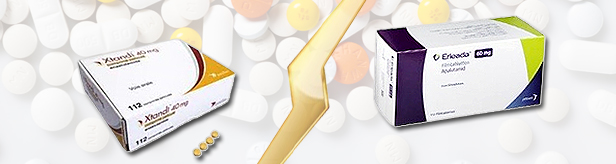
- Erleada chases leader Xtandi in prostate cancer mkt
- by Kim, Jin-Gu Dec 06, 2023 06:00am
- Pic of Astella Astellas Pharm Korea ‘Xtandi (enzalutamide)’ took the lead among oral androgen receptor targeted agents (ARTAs) used to treat prostate cancer. In comparison to declining sales of Janssen's ‘Zytiga (Abiraterone),’ sales of Janssen's other prostate cancer drug ‘Erleada (Apalutamide)’ has been rapidly increasing since being released just 6 months ago, chasing Xtandi in the market. Xtandi's Q3 sales KRW 11.7 billion…top among ARTAs for prostate cancer The ARTA-type prostate cancer treatment, Xtandi, posted KRW 11.7 billion in sales in Q3. According to IQVIA, a pharmaceutical industry research institute, this represents a 53% increase from the KRW 7.6 billion it had raised in the same quarter last year. Xtandi is approved for ▲the treatment of asymptomatic or mildly symptomatic metastatic castration-resistant prostate cancer (mCRPC), ▲mCRPC previously treated with docetaxel, ▲high-risk non-metastatic castration-resistant prostate cancer, and ▲hormone-sensitive metastatic prostate cancer (mHSPC) in combination with androgen deprivation therapy (ADT). It was approved in Korea in June 2013 and received reimbursement in November following year. Recently, Xtandi's sales have increased sharply, especially since Q3 last year. Previously, its sales ranged around KRW 6 billion, but this significantly increased to KRW 7.6 billion in Q3 last year, then to KRW 8.7 billion in tQ4, KRW 10.5 billion in Q1 this year, and KRW 11 billion in Q2. The increase in sales last year is attributed to the expanded reimbursement. In August, selective reimbursement was granted for the use of ADT as combination therapy for patients with progressive prostate cancer accompanied by distant metastasis. Starting this November, reimbursement for ADTs were extended and is applied regardless of the use of other androgen-production-suppressing drugs. Despite a 3% reduction in the insurance price due to its increased usage, its increase in prescriptions is said to have offset this decrease. Quarterly sales of major ARTA prostate cancer treatments (Unit: KRW 100 mil, Data: IQVIA) Zytiga sales 'slow down'...Erleada sales reach KRW 4.8 billion in only half a year ' Zytiga, a previous competitor of Xtandi, has recently shown a decline in sales. Zytiga's sales in the last quarter were KRW 4.8 billion, a 14% decrease from KRW 5.6 billion of the previous year. Since 2021, Zytiga had closely chased Xtandi in terms of sales. In Q1 2021, sales of Xtandi and Zytiga were KRW 7.6 billion and KRW 2.9 billion, respectively, which is a 2.7 times difference. By Q1 2022, this gap narrowed to 1.2 times, with sales reaching KRW 6.4 billion for Xtandi and KRW 5.2 billion for Zytiga. The sales difference between the 2 drugs further decreased to less than KRW 1 billion in Q2 that year. However, Zytiga's sales have continued to remain in the range of KRW 5 billion since then. Meanwhile, Xtandi's sales increased rapidly. From Q2 his year, the sales difference between the two drugs doubled. Pic of JanssenJanssen's new ATRA-type prostate cancer treatment, Erleada, has rapidly increased its sales since its introduction. In December 2020, Erleada was approved as Janssen's third ATRA prostate cancer therapy. It was added to the reimbursement listing in April this year. Following the listing, Erleada generated sales of KRW 2.7 billion in the second quarter and increased to KRW 4.8 billion in the third quarter, marginally surpassing the sales of Zytiga. Therefore, Janssen plans to focus on Erleada as a latecomer follow-on drugs to Zytiga, aiming to challenge the market leader Xtandi. The market stirrer would be the change in the patient co-payment rates for Xtandi and Zytiga, and the generics development by domestic pharmaceutical companies. Last month, the co-payment rates for Xtandi and Zytiga were adjusted from 30% to 5%. This change occurred following the listing of Erleada, the third ARTA prostate cancer therapy, at a 5% co-payment rate. The maximum reimbursement amount (listed price) for Xtandi was adjusted in the process. Xtandi was registered as a subject to essential reimbursement through a risk-sharing agreement (RSA). With expanded reimbursement, the listed price per tablet was reduced from KRW 28,820 to KRW 14,170. This will be reflected after the fourth quarter of this year. The release of a Zytiga generic by a domestic pharmaceutical company is also anticipated to significantly influence the competitive ground. Hanmi Pharm launched Abiraterone, a generic of Zytiga, under reimbursement in October. As a result, the price of Zytiga was reduced by 30%, from KRW 16,780 to KRW 11,746 per tablet. This price reduction is expected to be reflected in sales after the fourth quarter of this year, potentially resulting steeper decline in Zytiga's sales.
- Opinion
- [Reporter's View] Covid-19, endemic is not 'The End'
- by Eo, Yun-Ho Dec 06, 2023 06:00am
- ‘Endemic’ doesn’t mean THE END. Covid-19 has transitioned to an endemic after a long-fight against the virus for three years. Accordingly, each country is making an adjustment to the health protocol in a bid to meet domestic needs. The Korean government had announced that it will work to list Covid-19 treatments for reimbursement within the first half of 2024 through the Covid-19 risk level management roadmap. And the public’s sense of crisis has dropped with the eased restrictions. Covid-19 transitioned from pandemic to endemic. Yet, the continued introduction of new Covid-19 variant make high-risk patients, particularly those with underlying diseases and senior patients, all the more vulnerable. Up until now, excess deaths associated with Covid-19 is continuing, according to the KDCA report citing KOSTAT data submitted to the office of Rep. Jung Chounsook, a member of the Democratic Party of Korea and a member of NA's Health and Welfare Committee. The Covid-19 associated excess deaths toll over 65,000 people, and in this case, ‘excess deaths’ are typically defined as the difference between the observed numbers of deaths in Covid-19 periods and expected numbers of deaths in the same time periods. Be prepared for battle yet again. We should not forget the times when all people worn masks and had restricted gatherings. Continued supply of vaccines and patient management would be the most important part of the preparation. However, a sense of crisis is hard to achieve once lowered. A lowered crisis-level would result in the transition of reimbursement of Covid-19 treatment to non-reimbursement. After initiating phase 2 of the COVID-19 risk level management roadmap, Covid-19 will be treated as level 4 infectious diseases similar to influenza (flu). In other words, drugs such as Gilead Sciences Korea's ‘Veklury’ and Pfizer's ‘Paxlovid’ will now only be available through the regular reimbursement scheme. Although the government promised to continue providing oral Covid-19 drugs without charge, it can just as well abruptly discontinue provision. As a solution to the problem, pharmaceutical companies have submitted insurance reimbursement applications for drugs in October and are in discussion with HIRA. Yet, no progress has been made. Time is ticking for the upcoming crisis-level adjustment deadline. If we were to treat people with non-reimbursed drugs, copayment rate would be skyrocketed. The problem is that people would start to think, ‘Why should we pay this much for the treatment?’ due to a lowered sense of crisis. We are running out of time. The government should promptly proceed with the debate, and the pharmaceutical companies should consider proposing reasonable drug pricing in preparation for a long fight against COVID-19.
- Policy
- New price adj guidelines set for drugs with unstable supply
- by Lee, Tak-Sun Dec 06, 2023 06:00am
- On the 5th, the National Health Insurance Service established the ‘Pricing adjustment negotiation guidelines for insurance ceiling price of drugs.’ The guideline gained attention for specifying the negotiation content for drugs that have an unstable supply. The guideline also includes the submission of pre-negotiation materials for drugs with unstable supply and premium pricing measures. The NHIS explained that the purpose of the Pricing adjustment negotiation guidelines is to stabilize the supply and demand of drugs that are essential for patient care but do not have smooth supply due to low profitability. The pricing adjustment negotiations are conducted for drugs that have received a negotiation order from the Ministry of Health and Welfare as deemed necessary based on the NHIS Drug Reimbursement Evaluation Committee’s evaluation results of submitted pricing adjustment applications. After receiving the negotiation order, subject companies need to submit evidence of drug cost for the drug subject to negotiation and data on the contract production (import) volume that would be produced (imported) after adjusting the upper price limit. The new guideline requires drugs that need prior discussion to speed up the negotiation period by submitting the abovementioned data prior to negotiations. Therefore, if the MOHW requests prior consultation, the company is required to submit evidence of drug cost for the drug subject to negotiation and data on the contract production (import) volume that would be produced (imported) after adjusting the upper price limit. In addition, if there is an urgent request from the public-private consultative body on the need for a specific drug with unstable supply, the estimated contract production (import) volume data after adjusting the upper price limit must be submitted within 5 days of request. The guidelines set for drugs with unstable supply and demand show the government’s plan to first discuss the contracted production volume amount that will be produced after pricing adjustments to speed up production. Also, drugs with unstable supply and demand will be granted a premium when raising the upper price limit. One percent of the price will be additionally raised if the drug satisfies 1 of the 10 items in the list of policy-related premium pricing conditions, which include cases evaluated as ‘exceptional cases such as infectious disease crises or urgent supply shortages, for which central administrative agencies request cooperation related to drug supply.’ In other words, pricing adjustments requested by the public-private consultative body for drugs with unstable supply and demand will be granted a premium. However, the policy-added benefit is not to exceed a maximum of 7%. The guideline also specified a follow-up plan conditional on production expansion. The NHIS and the company can contract a certain amount of mandatory production (import) volume as needed for a certain period of time, which the company must produce (import) and supply faithfully according to the contract. It also prohibits companies from applying pricing adjustments again for 3 years after receiving pricing adjustments but leaves the door open for cases of medical necessity for the public, such as the spread of infectious diseases. Specifically, negotiations and pricing readjustments are allowed for drugs deemed necessary by the Drug Reimbursement Evaluation Committee. According to the formula, only up to 22% of Selling, General and Administrative Expenses (SGA) will be recognized, and non-operating profits and losses will not be recognized. In addition, a maximum of 17% of the total cost is recognized as reasonable profit, and the distribution margin of 3.44% will be applied to high-priced drugs and 5.15% to low-priced drugs. Hae-Min Jung, Deputy Minister of NHIS Pharmaceutical Management Department, said, “We created the new guideline because it took a long time for pharmaceutical companies to prepare data required for the previous adjustment negotiations, and issues such as sales and administrative costs had hindered prompt negotiations. The NHIS will conduct prompt negotiations per the new guidelines and actively sign and manage supply volume contracts to ensure that essential drugs are supplied to the front line." Meanwhile, the government is actively reviewing drug price increases for drugs with unstable supply and demand and is considering including them eligible for adjustment applications. In line with the government's policy, the guidelines for pricing adjustment negotiations also include exceptional negotiation clauses for drugs with unstable supply and demand. Only this year, prices of magnesium hydroxide, pseudoephedrine budesonide, suspension for nebulizer were granted price hikes through pricing adjustment negotiations, and acetaminophen fever reducer syrups and cefditoren pivoxil Fine Granule and constipation treatments that contain lactulose are being reviewed for pricing adjustments.
- Opinion
- [Desk’s View] On resolving the stock shortage of drugs
- by Lee, Tak-Sun Dec 05, 2023 05:49am
- As a parent, I feel like I've been visiting hospitals after the endemic than I did during the COVID-19 pandemic. At the height of the pandemic, I only had to worry about COVID-19, but after the pandemic has passed, children with weak immunity are suffering from various viral diseases including colds, flu, and adenovirus. When my older daughter got sick, my younger one also got sick, and us parents were no exception. After going through a series of these vicious cycles, I pulled out my mask again and wondered whether I had removed my mask too soon. With this increase in hospital visits, drug shortages are quite understandable. However, as a healthcare consumer, I don't understand the seriousness of it. It's not as bad as when I had to go from pharmacy to pharmacy seeking acetaminophen fever reducers for my COVID-19 vaccination. I never had to go to another pharmacy because the prescriptions written by my local pediatrician or ENT were not available at one site. However, when I look at the prescribed drugs, I see the ingredients of the “drug with unstable supply" that are often mentioned in recent articles. Although these are not the items that are being discussed for price hikes, they contain the same active ingredients. This shows that there may be differences in demand for different products even within those that contain the same ingredients. Also, in one corner of the pharmacy, I saw a lot of over-the-counter fever reducers. Although the supply of prescribed fever reducers is running low, the over-the-counter ones still seem to be available. The government's response to the ‘unstable supply of medicines’ seems to have been successful to a certain extent, as consumers are not feeling any inconvenience yet. If the consumers had felt and experienced the drug shortage firsthand, the anger against the government would have been extreme, as people become most emotional when they are sick. However, I am disappointed that the government's solution seems to be focused on 'increasing production.’ Even the most effective card the government has played, the drug price increase, is aimed at increasing production. If only certain products are out of stock and other drugs with the same ingredient are available, efforts should be made to diversify prescriptions. It would be best if the system allows full utilization of the substitution system, but it is unlikely to have an effect under the current system, as the pharmacies need to bear the inconvenience. In this case, why not amend the enforcement decree to temporarily exempt pharmacies from notifying the medical institutions about the substitutions for drugs that are in unstable supply? In the long run, we can also expect to alleviate the concentrated prescription of certain ingredients by removing reimbursement of general medicines used for mild illnesses such as the common cold. However, as such options are not even being considered as a way to solve the supply and demand instability of drugs, this further narrow the options that the government can take. The government should seriously monitor the market first, and consider measures to diversify prescription if other drugs with the same ingredient are left for immediate utilization.
