
- LOGIN
- MemberShip
- 2026-05-06 15:19:58
- Company
- Keytruda's indication expanded for early-stage lung cancer
- by Son, Hyung-Min Dec 27, 2023 06:05am
- MSD’s immuno-oncology drug Keytruda has been approved for early-stage lung cancer, totaling its indication count to 25. With the latest approval, Keytruda became the third treatment, alongside AstraZeneca’s Tagrisso and Roche’s Alecensa, that can be used as neoadjuvant and adjuvant therapy. With major lung cancer treatment now approved for early-stage treatments, this approval enhances preventive measures against metastasis and recurrence. According to the pharmaceutical industry, on 23rd, Ministry of Food and Drug Safety (MFDS) approved an expanded indication for Keytruda (pembrolizumab), a PD-1 inhibitor class anticancer immunotherapy. Previously, on the 19th, Keytruda had received approval for two indications as a combination with platinum-based chemotherapy for pre-surgical neoadjuvant therapy, and as a monotherapy for the adjuvant therapy following surgical resection in patients with non-small cell lung cancer (NSCLC). MSD KoreaKeytruda has become the first anti-cancer immunotherapy to receive approval for both pre- and post-operative adjuvant therapy in early-stage-lung cancer. Including targeted therapies, Keytruda became the third treatment, alongside AstraZeneca’s Tagrisso (osimertinib), which targets EGFR mutation, and Roche’s Alecensa (alectinib), which targets ALK mutation, to be approved. The current expanded indications for Keytruda were based on results from the Phase 3 KEYNOTE-811 clinical trial, which compared trastuzumab plus fluoropyrimidine and chemotherapy against trastuzumab plus chemotherapy. Findings from 28.3 months follow-up of NSCLC indicated that patients with PD-L1(CPS≥1) in Keytruda combination therapy group experienced a median progression-free survival (PFS) of 10.8 months. This was longer compared to the 7.2 months PFS observed in trastuzumab plus chemotherapy group. Keytruda’s effectiveness was also confirmed in the Phase 3 KEYNOTE-671 clinical trial, which evaluated Keytruda as neoadjuvant and adjuvant therapy regimen for patients with stage 2, stage 3A, or stage 3B NSCLC. The trial enrolled 797 patients with stage 2, stage3A-B NSCLC. The effectiveness and safety of Keytruda were evaluated in patients who were randomized (1:1) to either Keytruda or placebo following adjuvant cisplantin-based chemotherapy for 4 cycles, and were treated up to 13 cycles. In the trial, the primary endpoints included event-free survival (EFS) and overall survival (OS). Secondary endpoints included pathological responses, pathological complete response (CR), and safety. During a 25.2-month follow-up of patients, the study found that the 24-month EFS rate was 62.4% in the Keytruda group compared to 40.6% in the placebo group. While the OS rate for the Keytruda group was significantly higher than the control group, median values were not reached. Pathological CR, a secondary endpoint, was observed in 30.2% of patients in the Keytruda group and 11.0% in the placebo group. The researchers concluded that, “the inclusion of Keytruda after adjuvant platinum-based chemotherapy notably improved the pathological CR in patients with resectable early-stage NSCLC.” Keytruda’s indications are expanding, but few of those indications received a notice for re-evaluation at the Cancer Disease Review Committee. On the 19th, Keytruda has been approved for a first-line treatment of patients with human epidermal growth factor receptor 2 (HER2)-positive gastric cancer. According to the approval, Keytruda is indicated for patients whose tumors express PD‑L1 (Combined Positive Score [CPS] ≥1), and to be used in combination with trastuzumab, fluoropyrimidine- and platinum-containing chemotherapy for the first-line treatment of patients with locally advanced unresectable or metastatic HER2 positive gastric or gastroesophageal junction (GEJ) adenocarcinoma. There is a need for new treatments for HER2-positive gastric cancer, as there have been no new treatment options since combination therapy of trastuzumab plus chemotherapy was approved in 2010. Likewise, Keyruda is expanding its range of applications, yet discussion for its reimbursement are still ongoing. Moreover, in June, Keytruda submitted a request for expanded reimbursement for 13 indications, including those for non-small cell lung cancer (NSCLC), head and neck cancer, esophageal cancer, urothelial carcinoma, ovarian cancer, pancreatic cancer, colorectal cancer, triple-negative breast cancer, cervical cancer, and etc. The majority of indications have not cleared the hurdle of the Cancer Disease Review Committee. Four indications, including those for head and neck cancer, endometrial cancer, urothelial carcinoma, and triple-negative breast cancer, were submitted to the Health Insurance Review and Assessment Service (HIRA)’s Cancer Disease Review Committee, but they have received a notice for re-evaluation. After receiving the re-evaluation notice in October including esophageal cancer, endometrial cancer, pancreatic cancer, and colorectal cancer, a total of seven indications of Keytruda have yet to receive approval by the Cancer Disease Review Committee.
- Policy
- Reform should drive development of 2 homegrown blockbusters
- by Lee, Jeong-Hwan Dec 27, 2023 06:03am
- The government expressed the will to encourage pharmaceutical companies to invest in research and development (R&D) and secure the momentum of developing two homegrown blockbuster drugs through the reform of the drug pricing system to reflect innovative value. Above all, the government has made it clear that it will strengthen the sustainability of national health insurance finances by reducing the proportion of pharmaceutical expenses, and at the same time, investing the funds generated by trimming the insurance drug prices of drugs that violate the purpose of selective benefits into innovative new drugs and essential drugs. In particular, the government said it had devised the reform of the drug pricing system to strengthen the supply chain of essential drugs in terms of health security, which arose as a key issue of concern during the COVID-19 pandemic. On the 22nd, Director Chang-Hyun Oh, Director of Pharmaceutical Benefits at MOHW, said at a meeting with the press corp to explain the implications of the 'Plan to Reflect the Innovation Value of New Drugs and Improve the Drug Price System for Health Security' that was recently passed by the Health Insurance Policy Review Committee. The Ministry of Health and Welfare will revise the drug pricing system to favor the drug prices of domestically developed new drugs made by innovative pharmaceutical companies and support the export of domestic new drugs at the listed price after applying the risk-sharing agreement system homegrown new drugs exported overseas. The government will also ease regulations on drug price reductions based on the Price-Volume Agreement system and establish regulations on preferential drug prices for botanical drugs. New drugs that are recognized as innovative will be exceptionally recognized for cost-effectiveness even if they exceed the ICER threshold during pharmacoeconomic evaluations and will be applied eased evaluation standards when being reviewed for RSS renewals. Also, the government will provide preferential pricing for drugs based on natural products that demonstrate superiority and innovation. To strengthen the national security of pharmaceuticals, a system will be operated to grant a 68% drug pricing premium for up to 10 years (basic 5 years, additional 5 years) for national essential drugs that use domestic APIs. Chang-Hyun Oh, Director of Pharmaceutical Benefits at MOHW explains the background and goals of the reform of the drug pricing system reflecting innovation value In addition, the evaluation criteria for adjusting the upper limit for national essential drugs will be relaxed, and the cost preservation procedure will be simplified, through measures such as ordering prior drug pricing negotiation, if the cost increase factor of supply and demand insecurity drugs is proven. Oh said he hopes the reforms will lead to stronger investment in new drug R&D by pharmaceutical companies and the development of real blockbuster drugs. "Until now, we have streamlined many procedures to strengthen coverage of serious drugs. However, there were not many cases where we raised the appraisal value of drugs (preferential drug prices).” So this time, we seek to first focus on rewarding innovative value (during drug pricing). This will encourage pharmaceutical companies to invest more in R&D, which will increase jobs and lead to the development of new drugs." Oh continued, "Korea is aiming to develop two blockbuster drugs by 2027, and for that, there needs to be a drive that recognizes innovative value within the national health insurance system. Next, the global supply chain has been severely disrupted by COVID-19. We did a lot of work last year, such as urgently raising the price of acetaminophen, but in the end, we concluded that it is important to increase localization and self-sufficiency of necessary drugs." "We devised a reform plan that emphasizes the need to create an environment for domestic pharmaceutical companies to produce their own drugs, with the belief that this, to a certain extent, would stabilize drug supply during disasters such as the spread of infectious diseases. Adding premium pricing for drugs using APIs from Korea and limiting it to national essential drugs was to build external rationale, as well as conflict with the FTA and WTO trade issues. Also, we were worried that creating a system that favors only our country would violate the law, and prioritize national essential drugs because of their rightful preferential status." Regarding the revision of the Price-Volume Agreement system (PVA), Oh said that a proposal to adjust the price discount imposed on drugs by a certain percentage is likely for drugs that are subject to price reductions more than 3 times in 5 years. However, he said that it is difficult to disclose the exact percentage. For example, when the domestic new drug K-CAB was repeatedly subjected to PVA price cuts, the ministry said that if the developer, HK Inno. N, was designated as an innovative pharmaceutical company, part of the price reduction would be removed. When asked how the government plans to balance drug costs in health insurance finances, Oh said, "Currently, drug costs account for 23.3% of NHI medical expenditures, and I don't know how much it will go down (with the reform), but we are aiming for 21% to 22%. We will continue to narrow down drugs that do not meet the purpose of selective reimbursement. Also, we're going to cut reimbursement of drugs that don't fit the actuarial principle of the system. Naturally, there will be savings, and if we use them for innovation, it may serve as an incentive for pharmaceutical companies to develop new drugs."
- Company
- LegoChem licenses out ADC technology... a KRW 2.2 tril deal
- by Son, Hyung-Min Dec 27, 2023 06:03am
- LegoChem Biosciences' TROP2 targeted antibody-drug conjugate technology has been licensed out to Janssen. By signing a total of 13 technology transfer and option agreements in the field of ADC alone this year. According to industry sources, LegoChem Biosciences signed a technology transfer agreement with Janssen on the 26th for its TROP2 targeted new ADC drug candidate. #1 The contract is valued at USD 1.7 billion (approx KRW 224). It includes an upfront payment of $100 million (approx 260 billion) an exclusive development rights payment of $200 million and tiered milestones based on development, licensing, and commercialization. Royalties based on net sales will be earned separately. Both the size of the contract and the upfront payment are the largest technology exports by the Korean pharma and biotech industry this year. In terms of contract size, it exceeds the KRW 1.7 trillion technology exported by Dhong Kun Dang to public, and in terms of upfront payment, it is tied with the KRW 130 billion paid by Orm Therapeutics to BMS. LCB84 is an ADC-targeted drug candidate that can target various solid tumors including triple-negative breast cancer and non-small cell lung cancer. LCB84 incorporates four microtubule-inhibiting MMAEs, centered on the company’s proprietary ConjuALL linker. An ADC consists of a linker, a payload (drug), and an antibody. The ConjuALL linker is believed to be able to overcome the release of cytotoxic drugs in the blood and attack normal cells. In preclinical studies, LCB84 has shown efficacy in patients whose solid tumors are refractory to topoisomerase payload-based TROP2 ADC drugs. Topoisomerase is a technology that has been used in leading ADCs such as Enhertu (trastuzumab deruxtecan). LegoChem Bio received IND clearance from the US Food and Drug Administration (FDA) in June and is currently conducting Phase I/II studies in the United States. In the trial, the company plans to confirm the preliminary efficacy of LCB84 as monotherapy and LCB84 plus an immuno-oncology drug combination. Upon signing the agreement, Janssen will retain worldwide development and commercialization rights to LCB84 and will collaborate with LegoChem Bio on the trial. After exercising the exclusive development rights, Janssen will be solely responsible for clinical development and commercialization. With this technology export, LegoChem Bio has exported 13 technology related to its ADC platform and candidates to date. Starting with the transfer of its HER2-targeting ADC LCB14 technology to Fosun Pharmaceutical in China in 2015, LegoChem Bio has successfully exported its technology to various global pharmaceutical companies including Takeda, Harbour Biomed, and Iksuda Therapeutics. In December last year, the company exported platform technology for 5 of its ADC pipelines to the US pharmaceutical company Amgen. TROP2 protein overexpressed in solid cancers...only Trodelvy succeeds in commercialization TROP2 is an intracellular calcium signal transducer involved in cell proliferation and survival. The protein is present in normal cells but tends to be overexpressed in cancer cells and has been linked to drug resistance. TROP2 has been identified mainly in breast, non-small cell lung cancer, and colorectal cancers; and developers are conducting clinical trials targeting these major solid tumors. To date, only Gilead's Trodelvy (sasituzumab govitecan) has been successfully commercialized using the same mechanism. Trodelvy was approved by the Ministry of Food and Drug Safety in May for the treatment of adult patients with unresectable locally advanced or metastatic triple-negative breast cancer. Daiichi Sankyo and AstraZeneca, developers of Enhertu, are also developing a TROP-2-targeting ADC with datopotamab deruxtecan. Both companies are currently conducting concurrent trials targeting hormone-positive, HER2-negative breast cancer and non-small cell lung cancer. Clinical results presented at the European Society for Medical Oncology Annual Congress (ESMO 2023) in October confirmed the efficacy of datopotamab over existing treatment options.
- Policy
- Swiss’s Idorsia applies for the reimb of its first product
- by Lee, Tak-Sun Dec 27, 2023 06:03am
- The Korean subsidiary of the Swiss pharmaceutical company Idorsia has started the reimbursement process for the drug upon receiving approval for Pivlaz Inj (clazosentan sodium). The drug, which is used to prevent cerebral vasospasm, is expected to be sold by Handok in Korea, with the company also conducting domestic clinical trials. According to industry sources on the 26th, Idorsia Pharmaceuticals Korea (President: Minbok Lee) recently applied for the reimbursement of its Pivlaz Inj to the Health Insurance Review and Assessment Service. The company quickly started the reimbursement listing process after obtaining marketing authorization from the Ministry of Food and Drug Safety on July 7. The drug is a selective endothelin A receptor antagonist indicated for the prevention of cerebral vasospasm, vasospasm-related cerebral infarction, and cerebral ischemic events in adults who have undergone craniotomy or procedures after aneurysmal subarachnoid hemorrhage. The company explained that Pivlaz is the first drug approved in Korea to prevent both cerebral vasospasm and its complications. At least 25% of patients diagnosed with aneurysmal subarachnoid hemorrhage die, and approximately 50% of survivors suffer neurological deficits. Globally, the disease affects 6.7 people per 100,000 people per year and 9 people per 100,000 in Korea. In a Phase III trial that was conducted in Japan, Pivlaz significantly reduced the incidence of cerebral vasospasm-related complications and all-cause mortality within 6 weeks of subarachnoid hemorrhage, which confirmed its safety. Another Phase II trial that was jointly conducted in Korea and Japan enrolled 74 Korean patients. Handok has been conducting domestic clinical trials and licensing the product in collaboration with Idorsia. Both are expected to jointly take charge of reimbursement and sales as well. Idorsia recently launched its insomnia drug Quviviq in the U.S. and Europe, and arose as one of the hottest pharmaceutical companies in the country, recording sales of KRW 100 billion in Q2 2022 alone. Domestic clinical trials for Quviviq have also been carried out by Handok since 2019 in Korea. Japan’s Sosei Group holds all of the sales rights for Quviviq. In July, the Sosei Group acquired Idorsia's pharmaceutical business in the Asia-Pacific region, excluding China, for approximately 65 billion yen. With the acquisition, Sosei Group now reportedly holds all of the shares of Idorsia's Japanese and Korean subsidiaries. In addition to Pivlaz, Sosei plans to market insomnia treatment Quviviq and up to seven other products from Idorsia's global pipeline in Asia-Pacific.
- Company
- Reimbursed Leclaza nears annual sales of 1T won
- by Chon, Seung-Hyun Dec 26, 2023 01:11pm
- Yuhan Corp.'s new cancer drug, Leclaza, swiftly wins reimbursement listing for its use as a first-line treatment. Following success with its second-line treatment, Leclaza received reimbursement for the first-line treatment within just six months of approval. The second-line treatment alone has generated quarterly sales of 6 billion won and continues to perform well. Similar to the success of the anticancer immunotherapy Keytruda after its reimbursement expansion , Leclaza is also anticipated to considerably benefit from its inclusion as first-line treatment. Recently, the Ministry of Health and Welfare (MOHW) held a meeting of the Health Insurance Policy Deliberation Committee and approved the reimbursement expansion for Leclaza and Tagrisso as first-line treatment options. Beginning next month, National Health Insurance will begin reimbursement for the use of Leclaza and Tagrisso as the "first-line treatment of locally advanced or metastatic non-small cell lung cancer (NSCLC) with specific genetic mutations." Leclaza, which was approved in January 2021 as the 31st Korean-made new drug, is indicated for treating NSCLC. Initially, Leclaza was approved as a second-line treatment for patients with locally advanced or metastatic NSCLC who had developed chemical resistance to a specific genetic mutation (T790M) following the administration of first or second-generation epidermal growth factor receptor (EGFR) tyrosine kinase inhibitors (TKI). In June 2023, the Ministry of Food and Drug Safety (MFDS) approved the use of Yuhan’s Leclaza for first-line treatment of NSCLC. Within just six months, Leclaza successfully passed the National Health Insurance’s reimbursement review. Originally, Leclaza was launched in the Korean market with a reimbursement listing in July 2021, just six months following its approval by MFDS as second-line treatment. It only took six months for Yuhan to obtain reimbursement approval for Leclaza’s first-line and second-line treatment uses following its approval by the MFDS. This timeline is unprecedented in comparison to AstraZeneca’s effort to list Tagrisso in the national insurance reimbursement scheme. Tagrisso became reimbursable more than five years after its first-line treatment use was approved in 2018. Furthermore, in March 2023, Yuhan received marketing approval only three months after applying to the MFDS for Leclaza’s first-line treatment. Yuhan continues to benefit from the rapid approval of Leclaza, having had its conditional approval removed just three years after its initial regulatory approval. As of November 28th, Leclaza secured full approval to change indications by meeting all the conditions for the second-line treatment indication. Yuhan presented additional analysis data that demonstrated Leclaza’s statistically significant effectiveness as a second-line treatment when compared to platinum-based chemotherapy. Yuhan submitted an application for converting from conditional to full approval in August. Impressively, Leclaza secured full approval within two years and ten months after its initial conditional approval. Leclaza received approval first as a first-line treatment after demonstrating statistically significant improvement in progression-free survival in a multinational Phase 3 clinical trial (LASER301 study) for EGFR mutation-positive NSCLC. Just 2 years and 10 months after obtaining conditional approval as a second-line treatment, Leclaza is now officially approved for both first and second-line treatments in EGFR mutation-positive NSCLC. Increased sales is expected following Leclaza’s reimbursement approval for a first-line treatment option. MOHW explains that "patients with locally advanced or metastatic NSCLC had to bear an annual medication cost of approximately 68 million won per person. With National Health Insurance coverage, a patient’s out-of-pocket expense will be limited to a 5% co-payment, which comes to about 3.4 million won per year." Even though Leclaza is only reimbursed as a second-line treatment, it continues to show strong performance in the prescription market. IQVIA, a drug market research company, reported on December 22nd that Leclaza's sales in Q3 reached 6 billion won. In 2021, Leclaza recorded sales of 1.5 billion won and 2.6 billion won in Q3 and Q4, respectively. Last year, it accumulated sales of 16.1 billion won, surpassing 10 billion won in its second year. In 2023, Leclaza recorded sales in the upwards of 5 billion won in both Q1 and Q2, with a notable increase in Q3. Leclaza’s total sales amounted to 164 billion won in Q3 in 2023. Leclaza is on track to surpass the 200 billion won mark within three years of launching. The initial sales of Leclaza show a promising start. Commercial success of a domestically developed anticancer drug is challenging as it must compete with new products from global pharmaceutical companies. Before Leclaza, other domestically developed anticancer drugs approved in Korea include Il-Yang Pharm's Supect, Dong-A Pharm's Milican, Chong Kun Dang's Camtobell, Samsung Pharm’s Riavax, and Hanmi Pharm's Olita. Among these, only Leclaza exceeded an annual sales of 100 billion won. MOHW has estimated that the inclusion of Leclaza as a first-line treatment option will require an additional budget of 881 billion won. Mathmatically, there is a potential for Leclaza’s sales to surpass 1 trillion won next year. In turn, the competition will intensify with Tagrisso, a similar cancer drug in the same class. MOHW has projected an additional budget of 920 billion won for the reimbursement of Tagrisso as a first-line treatment. HK Inno.N’s K-CAB stands out as the only domestically developed new drug to have achieved annual sales surpassing 1 trillion won. Approved in 2018 as the 30th Korean-made new drug, K-CAB is categorized as a 'potassium-competitive acid blocker (P-CAB)' in the anti-ulcer drug class. Its competitively binds with the proton pump and potassium ions in gastric cells' final acid secretion step, thereby inhibiting acid production. K-CAB, now in its third year of sales, surpassed 1 trillion won in prescription sales in 2021 and thereafter continued to exceed this milestone for two consecutive years. K-CAB has already made its mark in the "1 Trillion Won Club" for prescription sales by recording 1.141 trillion won in prescription sales in Q3 of this year. Leclaza is postulated to enter the U.S. market shortly. On December 21, 2023, Johnson & Johnson (J&J) submitted to the U.S. Food and Drug Administration (FDA) a new drug application for Leclaza and supplemental biologics license application for Rybrevant’s use in combination with Leclaza. Previously, in November 2018, Yuhan licensed Leclaza's technology to Janssen Biotech and received an initial non-refundable licensing fee of $50 million. The recent FDA submissions are based on results from the Phase 3 MARIPOSA clinical study, which tested the efficacy of the combination therapy of Rybrevant and Leclaza. Interim analysis data from this clinical trial were presented at the European Society for Medical Oncology Annual Meeting (ESMO 2023) in October 2023. In the clinical trial, Rybrevant and Leclaza combination therapy showed improvement in the primary endpoint of progression-free survival (PFS) when compared to Tagrisso (osimertinib) monotherapy. The median PFS was 23.7 months with Rybrevant and Leclaza combination therapy versus 16.6 months with Tagrisso monotherapy. The combination therapy demonstrated a 30% reduction in disease progression and mortality risk compared to Tagrisso monotherapy.
- Company
- Restrictions on new AML drug Xospata may be lifted next yr
- by Eo, Yun-Ho Dec 26, 2023 05:47am
- The acute myeloid leukemia drug Xospata has entered the last gateway to resolving its dosing cycle restrictions. According to industry sources, Astellas Korea has started drug pricing negotiations with the National Health Insurance Service for its Xospata (gilteritinib), a new drug for patients with relapsed or refractory acute myeloid leukemia (AML) with an FLT3 mutation If the negotiations are finalized by the deadline, the drug could be covered in the first quarter of next year. The drug applied for reimbursement extensions in November last year passed the Cancer Disease Review Committee in May, and passed the Drug Reimbursement Evaluation Committee last month. The drug is indicated as monotherapy for the treatment of patients with relapsed or refractory acute myeloid leukemia (AML) with a FLT3 mutation (FLT3mut+). However, only patients who received allogeneic hematopoietic stem cell transplantation are eligible for reimbursement, for up to 4 cycles, under the current reimbursement standards. Other than the financial issues, there are no specific reasons to limit the number of administration cycles for Xospata. This is why the need for its reimbursement extensions was already suggested in the Cancer Disease Deliberation Committee review stage during the initial reimbursement listing. In the ADMIRAL trial, Xospata was used without limiting the treatment period, and the NCCN guidelines also issued a ‘Category 1 recommendation for the drug without restricting its treatment period. The current best option to cure AML patients is hematopoietic stem cell transplantation, but this is accompanied by a high risk of recurrence, and transplantation is not an option for the large number of elderly AML patients that exist. Therefore, there is no suitable treatment alternative other than Xospata available for patients who cannot undergo hematopoietic stem cell transplantations, and these patients are still using the chemotherapy that was developed over 40 years ago due to ineligibility for reimbursement of Xospata. Xospata targets both types of FLT3 mutations, FLT3-ITD and FLT3-TKD, and may be self-administered at home as a single oral tablet once daily without frequent hospital visits. Also, Xostapa has demonstrated improved safety and efficacy compared with existing chemotherapy.
- Policy
- Enhertu, G-tec will benefit from new govn't plan
- by Lee, Tak-Sun Dec 26, 2023 05:47am
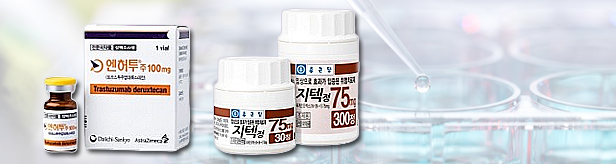
- According to the ‘Plan for the compensation of the innovative value of new drugs’ that the government announced on the 22nd, the breast cancer treatment ‘Enhertu (Daiichi Sankyo-AstraZeneca),’ and the new gastrointestinal botanical drug ‘G-tec (Chong Kund Dang)’ are being regarded as immediate beneficiaries. In the case of Enhertu, it is expected to receive a reimbursement and make way for its reimbursement according to the benefit plan for innovative new drugs according to preferential price awarded to new innovative drugs.' G-tec will receive preferential treatment as a new botanical drug. The burden of drug price cuts for new products produced by innovative pharmaceutical companies will also be reduced based on the eased Price-Volume Agreement system. The government decided to accept reimbursement of innovative new drugs that are recognized by the state. as an innovative new drug, even if they exceed the drug’s ICER threshold, an economic evaluation indicator. The new breast cancer drug Entertu is being evaluated as the only new drug that satisfies the government’s innovativeness standards. The criteria for innovativeness are ▲ there is no substitute or therapeutically equivalent product or treatment ▲ demonstrated clinically meaningful improvement, such as a significant extension in survival ▲ the new drug has been approved by the Ministry of Food and Drug Safety under Article 35(4)(2) of the Pharmaceutical Affairs Act (designation of priority review) and were approved through the fast-track (GIFT) or received a breakthrough therapy designation (BTD) by the US FDA or a priority review (PRIME) by the European Union’s EMA. Enhertu met all of these criteria and is expected be applied a flexible ICER threshold. Enhertu’s reimbursement process is stuck at the pharmacoeconomic evaluation stage because it improved life expectancy and rather increased treatment cost per patient. For example, if the ICER threshold exceeds KRW 50 million, its cost-effectiveness is not recognized, making it difficult to pass the pharmacoeconomic evaluation. However, in this improvement plan, a measure to accept drugs whose innovativeness is recognized, therefore, the drug’s reimbursement progress gains momentum. In addition, Chong Kun Dang’s new drug G-tec will likely benefit and be eligible for preferential drug pricing as a new botanical drug during the reimbursement process. G-tec is a cinnamon bark dried extract that was granted marketing authorization in July last year. The improvement plan reportedly includes preferential drug pricing for drugs developed by innovative pharmaceutical companies. for non-inferior new botanical drugs and new botanical drugs. As a result, there is a possibility that drug prices that were previously set below the weighted average price of alternative drugs or be set in between the highest weighted average price and the weighted average price of alternative drugs. This means that drug prices will be set slightly higher. Chong Kun Dang is an innovative pharmaceutical company, and G-tec is a new botanical drug, so it is likely that the two drugs will both benefit through reimbursement negotiations. On the other hand, Jeil Pharmaceutical’s new Gastroesophageal Reflux Disease (GERD) drug ‘zastaprazan,’ which is considered a potential novel homegrown drug candidate for commercialization next year, is not eligible for this improvement plan. This is because neither Jeil Pharmaceutical nor the drug’s developer, Onconic Therapeutics, is regarded as an innovative pharmaceutical company. Although not immediately eligible, new products from innovative pharmaceutical companies will be able to ease the burden of drug price cuts as they are applied to an eased PVA system. The improvement contains a plan that lowers the drug price cut rate for drugs produced by innovative pharmaceutical companies or an equivalent if the drug is subject to continued PVA price cuts - three times in five years, due to a continuous increase in usage. As a result, products that were subject to more than 3 out of 5 PVA price cuts will receive a reduced price cut rate next year. However, the key is the timing of implementation. The government plans to apply the measures sequentially from the beginning of next year, and the outline of eligible products is expected to be clarified depending on the timing of the revision. An official from the domestic pharmaceutical industry said, "The proposed new drug value compensation plan will at least induce the development of domestically developed drugs, increasing their motivation to develop new drugs.” "This is why domestic pharmaceutical companies have long desired preferential drug pricing for innovative pharmaceutical companies," he said.
- Opinion
- [Reporter’s view] Expanded catastrophic medical expenses
- by Lee, Hye-Kyung Dec 22, 2023 05:47am
- Among foreigners, the saying, "If you are ill, you should go to Korea," had once become a trend. Foreigners that stay in the country for over 6 months are eligible for the National Health Insurance subscription as a local subscriber, allowing them to receive reimbursement benefits. This issue has been a topic of heated debate during the annual National Assembly audit. As a result, the National Health Insurance Service (NHIS) has been implementing safety measures every year to prevent foreigners from freeloading on Korea's National Health Insurance. For foreigners, the National Health Insurance is a cost-effective benefit, but there are Korean citizens who cannot afford medical bills even with the National Health Insurance coverage. In the past, when the cost coverage was not high enough, medical bills used to be one of the top three causes of household bankruptcy. In Korea, many citizens still subscribe to private health insurance. Starting in the early 2000s, there was a movement with the initiative "Single-payer healthcare: all medical fees to be covered by National Health Insurance," but it was often seen as an empty slogan. In response, the government introduced measures to alleviate the financial burden on the people. These measures included the introduction of the copayment maximum in 2004, the special assessment for cancer, cerebrovascular disease, and heart disease in 2005, and the implementation of the Catastrophic Medical Expenses Support Program in 2013. The Catastrophic Medical Expenses Support Program is designed to alleviate the burden of medical fees on households facing excessive expenses, and its insurance coverage is expanding. At a recent cabinet meeting, the partial amendment to the "Enforcement Decree for the Catastrophic Medical Expenses Support Program," was approved. Starting on January 1st, 2024, the Catastrophic Medical Expenses Support Program will be expanded to include all medical conditions that occurred within one year prior to the final inpatient or outpatient treatment. Prior to the revision, the previous system combined all medical expenses for inpatient care, but for outpatient care, it only considered expenses for the same disease, and application was restricted to the six major severe diseases. Even if the total medical expenses for the entire year reached the standard for the Catastrophic Medical Expenses Support Program, there were situations where support could not be provided because the standard was not met for the same diseases alone. Starting next year, with the expansion that includes all diseases, reimbursement for catastrophic medical expenses can be claimed if the total medical expenses for all conditions exceed 4.1 million won. Previously, a four-person household earning 100% of the median income could only apply for support if medical expenses for the same condition exceeded 5.9 million won. However, lowering the standard means that more people will be able to benefit from catastrophic medical expense support. The Catastrophic Medical Expenses Support Program is designed to prevent households from facing financial disaster due to medical expenses. Questions have arisen regarding the implementation of reimbursement for all types of diseases, including non-reimbursement and total copay, selective reimbursement, implants for those aged 65 and older, double and triple room hospitalization fees, Chuna manual therapy, and senior dentures, based on income levels. The National Health Insurance system was established to enhance the quality of national healthcare and improve social security. To ensure that people do not have to worry about medical expenses, catastrophic medical expenses coverage should be expanded to include all diseases could serve as a significant step toward the establishment of a single-payer healthcare system.

- Company
- Fierce competition heralded in the hair loss treatment mkt
- by Nho, Byung Chul Dec 22, 2023 05:47am
- Enterobiome confirms the efficacy of akkermansia muciniphila in preclinical trial The battle between global big pharma and domestic pharma-bio companies is expected to unfold in the field of hair loss treatment. Multinational pharmaceutical companies that have succeeded in commercializing alopecia areata treatments - U.S. companies Eli Lilly and Pfizer - have been leading the market, but local pharmaceutical companies have also been completing their clinical trials, heralding an imminent clash between them in the global market. In terms of U.S. FDA approval, the foreign company at the most advantage is Eli Lilly, whose Olumiant was approved in June 2022 to treat alopecia areata. The drug is a Janus kinase (JAK) inhibitor class drug that contains baricitinib, an immunomodulatory and anti-inflammatory enzyme, and is the first drug that works systemically, unlike existing alopecia areata treatments that work locally on the lesion. Pfizer also received FDA approval in June 2023 for Litfulo, a ritlecitinib-based treatment for alopecia areata. This drug is also a JAK inhibitor class drug. In particular, Pfizer’s drug gained attention as the first hair loss treatment for adolescents aged 12 and older, as previous treatments were only available for adults aged 18 and older. The domestic pharmaceutical industry is focusing on developing new types of hair loss treatments that offer a better effect and convenience in intake. Daewoong Pharmaceutical is making significant progress in developing a long-acting injectable that can be administered only once a month, dramatically reducing the number of doses. In July last year, Daewoong completed a Phase 1 clinical trial of IVL3001, a long-acting injectable drug candidate for the treatment of hair loss, that was conducted in Australia. IVL3001 is being developed as a long-acting injectable version of finasteride, an existing oral drug prescribed for androgenic alopecia in adult men. Patients will be able to see an identical effect to the daily pill with once-monthly injections. The results of the Phase 1 IVL3001 trial showed no evidence of an initial burst, a major weakness of existing long-acting injectables, where a large amount of drug is released into the body immediately after administration. Also, the study showed that a steady level of the drug flowed steadily into the blood for more than a month, and blood levels of DHT, the male hormone that causes hair loss, remained as low as they would have been with an oral drug during the monitoring period. In particular, oral finasteride is strictly off-limits to women of childbearing age because it can suppress male hormones and affect the genitals of an unborn child. The availability of long-acting injectable formulations could be convenient for patients and pharmacists alike, eliminating the need for personal storage of medications due to the reduced risk of human contact. Se-ho Jin, Head of Raw Material Research Center at JW Pharmaceutical, and Kim Kyoung-dong, CEO of Theraject Asia shake hand after signing an agreement this October JW Pharmaceutical signed a joint research agreement with Theraject Asia in October and is developing a microneedle hair loss treatment. Microneedle, also known as the "sticker injection," adopts a transdermal drug delivery technology that delivers drugs through the skin with a microscopic needle about one-third the size of a human hair. When a microneedle is applied to the skin, the microneedle pierces the skin and injects the drug, making it a next-generation drug delivery technology that can replace existing injections or oral medications. In addition to the convenience of dosing, it has the advantage of faster recovery compared to injections and the possibility of mass production at low cost. Enterobiome had also recently published the results of its research on hair loss treatment in the International Journal of the Federation of American Societies for Experimental Biology (FASEB), suggesting the possibility of new microbiome drugs.” The research was conducted in collaboration with Dr. Changhwa Jung of the Korea Food Research Institute through R&D support from the Korea Institute for Advancement of Technology. When orally administering the live and killed stains of Enterobiome’s leading strain, akkermansia muciniphila ‘EB-AMDK19’ to animal models with testosterone-induced hair loss for 5 weeks, both models showed a significant increase in the number of hair follicles and improved hair loss by activating beta-catenin protein, which is involved in hair follicle growth and promoting beta-catenin protein proliferation. Furthermore, its hair growth efficacy was equivalent to that of finasteride, the representative hair loss treatment in the field, and the expression of fibroblast growth factor (FGF) and insulin-like growth factor-1 (IGF-1), which are well-known factors for promoting hair growth, was significantly higher in the EB-AMDK19 administered group, indicating the potential for developing innovative hair loss treatments. Meanwhile, according to the Korea Health Insurance Review and Assessment Service, 243,609 patients in Korea received medical treatment for hair loss in 2021, which is an increase of about 15% compared to the 212,041 in 2016. The domestic hair loss treatment market is expected to double from KRW 103.4 billion in 2021 to KRW 200 billion in 2028. The global hair loss treatment market is also expected to grow at an annual rate of 8% from KRW 8 trillion in 2020 to around KRW 15 trillion in 2028, drawing attention to the emergence of new hair loss treatments both in Korea and abroad.
- Policy
- Series of expectorant Prospan generics enter KOR mkt
- by Lee, Tak-Sun Dec 22, 2023 05:46am
- Generic versions of Prospan Syrup, a drug that dominated the phyto-expectorant market in the 2000s, are again being introduced to the market. Prospan Syrup, which has been resold by Kwangdong Pharmaceutical since 2012, is the only available 200mL bottle formulation of Prospan, and 7.5mL and bottle formulations of the drug are only available from Kwangdong Pharmaceutical and Youngjin Pharmaceutical. However, 500mL bottle formulations from Ildong Pharmaceutical, Sama Pharm, and Pharmgen Scien are available with reimbursement. In total, 5 companies are selling ivy leaf dried extracts (dried extract of ivy leaves (extraction solvent, 30% ethanol), the active pharmaceutical ingredient in Prospan Syrup. In this situation, four companies will be listed for reimbursement at once next month. According to the industry on the 21st, Ilsung Pharmaceuticals, Kuhnil Biopharm, and Daewoong Bio's Ivy Leaf 30% Ethanol Dried Ext 7.5mL package products will be listed on the reimbursement list from the 1st of next month. Also, Nexpharm Korea and Ilsung Pharmaceuticals’ 500mL vial product will be applied reimbursement. As there are more than 2 but less than 19 identical preparations available in the market, Prospa Syrup generic companies can receive the highest price if they meet the pricing criteria. The products on the list met all the requirements and received the highest price of KRW 240 per packet and 32 won per mL bottle. Prospan syrup was the leading phyto-expectorant with a market share of 25% in the 2000s. In 2010, UBIST statistics show that outpatient prescription sales for the drug alone reached KRW 37.8 billion. The frog character on the product package reflected the popularity of Prospan alone. The drug, which was introduced by Ahn-gook Pharm in 2010 from Germany's Engelhard, suffered a downturn due to its switch to an over-the-counter drug. In 2011, the drug was reevaluated by the Ministry of Food and Drug Safety (MFDS) and converted to an over-the-counter drug, and in that year, the was covered by health insurance only for people under 12 years of age based on the principles set for the oral liquid formulation. Ahn-gook Pharm released Synatura, a combination drug that contains Prospan in March 2011, and parted ways with Prospan in September of the same year. After seemingly ending its relationship with the domestic market, Prospan was reintroduced to the Korean market by Kwangdong Pharmaceutical in 2012 and has remained available ever since. However, Prospan failed to regain its former glory due to the rise of the use of combination drugs such as Synechura. According to IQVIA statistics, Prospan’s sales last year were only KRW 500 million. Nevertheless, there are reasons why generic companies are launching their respective versions. First of all, the number of generics is small, so there are no concerns about receiving discounted prices through the stepped pricing system. Moreover, over-the-counter syrups do not have to meet the ‘own bioequivalence testing’ requirements, so there is no burden on contract manufacturers. All of the pharmaceutical companies that have received the salary this time are being supplied the drug in consignment from Daewon Pharmaceutical. Another favorable factor is that adults can be prescribed Prospan with reimbursement following the change in reimbursement standards that were made in February 2019. In addition, Kwangdong Pharmaceutical's launch of a conveniently packaged product in 2021 has also contributed to the upward trend. Above all, the rise in demand for respiratory drugs after COVID-19 is likely to have attracted the entry of new generics. More Prospan syrup generics are expected to be introduced to the market. Three more pharmaceutical companies received approval for the product, including Daewon Pharmaceutical, Ilhwa, and Hutecs Korea Pharmaceutical.
