
- LOGIN
- MemberShip
- 2026-05-06 15:23:56
- Company
- Daewoong attempts at first Lupron Depot generic in the US
- by Chon, Seung-Hyun Dec 13, 2023 05:38am
- Daewoong Pharmaceutical is seeking to enter the U.S. anticancer market with the global pharmaceutical company, Zydus Worldwide DMCC. Daewoong Pharmaceutical announced on the 11th that it had signed a licensing agreement with Zydus Worldwide DMCC. to co-develop and commercialize the anticancer drug DWJ108U Depot suspension injection. The value of the agreement is estimated to be near KRW 12.22 billion at most. This includes an upfront payment of $9.24 million (KRW 12.2 billion), development and commercialization milestones of $2.55 million (KRW 3.4 billion), and an additional supply agreement worth $66.89 million (KRW 88.5 billion). Under the agreement, Zydus will be assuming full responsibility for the joint clinical development and commercialization of Daewoong’s Depo injection product in the US market. The contract term is seven years after launch in the US and may be subject to change depending on the drug’s release date in the US. DWJ108U, which is being jointly developed by Daewoong Pharmaceutical and Zydus, is the first generic of ‘Lupron Depot’ to be introduced to the US. Lupron Depot was released in the US in 1898, but due to the difficulty of developing a generic version of the drug, no generic product has ever passed the Abbreviated New Drug Application (ANDA) process in the U.S. market. The US leuprolide acetate market is valued at approximately $1.6 trillion, with Lupron Depot holding a dominant position in the market. Daewoong Pharmaceutical's DWJ108U utilizes the emulsion principle to encapsulate the drug in microscopic polymer particles, which is the same manufacturing method as the original Lupron Depot. If DWJ108U is approved as a generic for Lupron Depot in the United States, it will be approved for 4 indications at once - prostate cancer, premenopausal breast cancer, endometriosis, and uterine fibroids. Daewoong Pharmaceutical will be responsible for the pre-clinical studies, production, and supply of the product, with Zydus pursuing its clinical development and commercialization in the US market. Seng-Ho Jeon, CEO of Daewoong Pharmaceutical, said, “Although Lupron Depot has been in the US market for 35 years, no single generic product to date has been introduced to date due to difficulties in its development. With Zydus, who owns a strong presence in the US market, we plan to complete the clinical trials of DWJ108U, the first generic version of Lupron Depo, and successfully introduce it to the US anticancer drug market." Sharvil Patel, Managing Director of Zydus Lifesciences, said, "The agreement is another step towards strengthening our injectable portfolio, and is an important step towards enabling access to affordable generic versions for patients in the US. This is an important milestone and we are happy to work with Daewoong for a generic version of Lupron Depot, and wish for its successful launch in the US.” Zydus Worldwide DMC is a wholly-owned subsidiary of Zydus Lifesciences, a global pharmaceutical group headquartered in Ahmedabad, India. The company owns 36 manufacturing sites worldwide. Fourteen of these facilities are US cGMP certified. The company is an expert in regulatory approvals, with more than 350 ANDAs approved in the U.S. alone. Last year, Zydus sales in the US market were approximately $1.2 trillion and total global sales were approximately $2.7 trillion.
- Policy
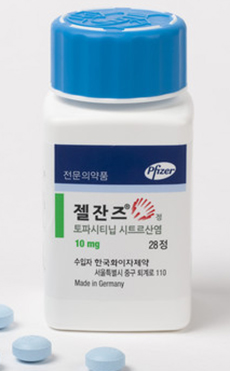
- Only CKD and Jeil have high-dose Xeljanz generics approved
- by Lee, Hye-Kyung Dec 13, 2023 05:38am
- Pfizer Jeil Pharm received approval for its ‘Topazan Tab 10mg,’ a high-dose generic version of the rheumatoid arthritis treatment ‘Xeljanz (tofacitinib citrate).’ With the Ministry of Food and Drug Safety’s approval of Topazan Tab 10mg on November 11 in addition to the Topazan Tab 5mg that was approved on November 27, Jeil Pharm now owns both low- and high-dose generic versions of Xeljanz. Following Boryung, which received approval for ‘Boryung Tofacitinib TAb 5mg (tofacitinib aspartate) as the first Xeljanz generic in August 2020, 58 generics have been approved to date, but Chong Kun Dang is the only company that received approval for both the 5mg and 10mg doses. Reasons include safety concerns and reduced indications associated with the higher dosage formulation, and even the outpatient prescription amount of the original shows this clear difference in demand between the low and high doses. The low dose is approved for five indications including rheumatoid arthritis, psoriatic arthritis, ankylosing spondylitis, ulcerative colitis, polyarticular juvenile idiopathic arthritis (pJIA), and juvenile psoriatic arthritis, whereas the indication for the high dose formulation is limited to ulcerative colitis. In addition, post-marketing surveillance studies of Xeljanz have shown that the drug is associated with an increased risk of blood clots in ulcerative colitis. The MFDS also added a warning to the drug’s label in 2020, cautioning healthcare providers to evaluate the risk of thrombosis in patients with ulcerative colitis and to cautiously use Xeljanz 10mg in patients with risk factors for thrombosis. With persisting safety concerns over the higher dose, according to the market research institution IQIVA, out of the KRW 15.9 billion sales of Xeljanz in 2021, the 5mg dose accounted for about KRW 13 billion, while the 10mg dose accounted for only a mere KRW 2.1 billion. Meanwhile, Xeljanz owns a substance patent that expires in November 2025 and a crystalline patent that expires in November 2027. 20 companies, led by Chong Kun Dang, have tried to overcome it by filing an invalidation trial, and 16 companies including Boryung Pharmaceutical, have tried to avoid the patents by filing a passive scope of patent rights trial. As a result, generic companies succeeded in avoiding Xeljanz’s patent in January 2018, and then won the invalidation trial in November 2019, thereby removing the crystalline patent from the green list in March 2020. As a result, Xeljanz generics that are being granted marketing authorization will be launched after November 2025, when the substance patent expires.
- Opinion
- [Reporter’s View] Amid hopes for K-drugs, beware
- by Eo, Yun-Ho Dec 13, 2023 05:38am
- It is not only the patients that are now interested in the research and development of new drugs. The interest in high-value-added industry and aspirations for the development of the domestic industry has never been hotter. Industry development is good. New drugs? Even better. However, the rise of the stock market bubble that stirs investment interest in the sector is potentially detrimental to the advancement and success of the industry and new drug discovery. New drug development would not have risen as a trend if it was easy. Due to rising interest in Korea's biopharmaceutical industry grows, information about the pharmaceutical industries’ clinical trial failures, discontinuation, or efficacy issues are being constantly covered online. When successful, reports on these clinical trials make it into the headline news. The current trend is understandable. Biosimilars from companies like Samsung and Celltrion are increasingly gaining recognition in the US and Europe, and the Korean government is coming up with a favorable drug pricing policy for domestically produced new drugs, based on the government's premise of devising a measure to foster the biopharmaceutical industry. Let’s get one thing clear. Suceeding in new drug development is far from easy. According to an analysis conducted by the Biotechnology Innovation Organization (BIO) in the US, which examined data from 9,985 clinical trials either completed or underway by the U.S. Food and Drug Administration (FDA) from 2006 to 2015, the success rates were 63.2% for Phase 1, 30.7% for Phase 2, and 58.1% for Phase 3 clinical trials. When these rates are calculated to determine the probability of a new drug reaching the commercialization stage, the number renders to a mere 9.6%. Development discontinuation and clinical trial failures in the pharmaceutical industry are common; it would rather be odder if they didn't occur. However, the issue lies in transparency. It's a fact that numerous pharmaceutical companies have jumped on the new drug development bandwagon, trying to take advantage of the rising tide. Clinical data on candidate substances and presentations made at international conferences are being often distributed indiscriminately without adequate drug information. Its phrases, "shows superior effectiveness compared to drug X," "the first treatment for X cancer," or "significantly improves survival duration," seem to be primarily aimed at influencing investor psychology, Such headlines do seem attractive, but the articles frequently lack basis. Detailed information, such as the number of patients involved in clinical trials, the duration of the research, and quantitative data from comparing different cohorts on the drug's effectiveness and safety, are not provided. Moreover, drug descriptions are frequently oversimplified to terms like ‘good drug’ stated by a company personnel. Keep in mind that drug discovery is science and has patients as the end-customers. Any success in new drug development by Korean companies are encouraging news. Therefore, other companies should embrace the transparency and open up information for a fair evaluation. They must stop worrying about IR (Investor Relations). Just as they addressed the rebate issue, it is now the time for the companies to dispel any doubts about stock price manipulations.
- Company
- Jeil will exclusively supply Norvatis’ 9 ophthalmic drugs
- by Nho, Byung Chul Dec 12, 2023 10:33pm
- Jeil is venturing into the field of ophthalmic diseases for the first time. Jeil Pharmaceutical (CEO Sung Suk-Je) announced on the 11th that it has signed an exclusive distribution agreement with Novartis Korea (CEO Yoo Byung-Jae) for the sale and supply of nine drugs in ophthalmic diseases including glaucoma and conjunctivitis. to target the ophthalmic disease market. With this partnership, Jeil will be venturing into the field of ophthalmic diseases for the first time. Jeil plans to enter the market in Jan 2024 and establish its position in the field of ophthalmic diseases, including in glaucoma and conjunctivitis. Under the agreement, Jeil will receive exclusive sales and distribution rights in Korea for six glaucoma treatments and three conjunctivitis treatments from Novartis Korea. The nine drugs will include Elazop, Simbrinza, Azopt, Travatan, Izba, and Duotrav for ocular hypertension and open-angle glaucoma, zs well as Pazeo, Pataday, and Patanol for allergic conjunctivitis. These nine drugs recorded sales of 25 billion won in Korea last year, according to IQVIA. In particular, Elazop holds a 14% market share in the glaucoma eye drop combination market in Korea, rendering annual sales of over 11 billion won, and is also consistently prescribed in the global market. “We are pleased to be partnering with Novartis, a global healthcare company,” said Sung Suk-Je, CEO of Jeil Pharmaceutical. Sung added, “We will concentrate our efforts on broadly supplying these globally recognized, excellent ophthalmic disease treatments to improve the quality of life for patients in Korea.” “Novartis will focus on the sales of retinal disease treatments Beovu and Lucentis," said Yoo Byung-Jae, CEO of Novartis Korea. "Through our partnership with Jeil, which has strong competitiveness in terms of sales power at hospitals and clinics, we will make our best efforts to stably supply ophthalmic treatments, particularly glaucoma and allergy treatments, to patients and medical professionals in Korea.”
- Company
- Evenity and Prolia sales surge...combined sales rise 47%
- by Kim, Jin-Gu Dec 12, 2023 05:38am
- Amgen’s two osteoporosis treatments, Prolia (denosumab) and Evenity (romosozumab) are repeatedly posting high growth in sales. Together, these two treatments generated over 130 billion won in Q3 sales, dominating the osteoporosis treatment market in Korea. In the first-line, osteoporosis treatment is trending towards sequential Evenity followed by Prolia for high-risk fracture osteoporosis patients. With this approach increasingly becoming the norm, the analysis is that these two treatments are deemed to be making a synergistic effect, leading to improved outcomes. Prolia's Q3 cumulative sales up 33% YoY…over 150 bil won expected by the end of the year According to the market research institution IQVIA, Prolia’s cumulative sales in Q3 were 111.5 billion won, representing an increase of 33% year-over-year (YoY) from the 83.8 billion won last year. Prolia was approved in September 2014 in Korea. It is a biologic for osteoporosis that targets RANKL, an essential protein for the formation, function, and survival of osteoclasts that destroys the bone. Prolia began seeing an upward sales trend after its reimbursement as a second-line treatment in 2017. The sales growth became steeper after Prolia received expanded reimbursement as a first-line treatment in April 2019. Quarterly sales of Prolia In 2019, Prolia's sales were 47.3 billion won, and this nearly doubled to 92.1 billion won in 2021 over two years. Last year, its annual sales expanded to exceed 100 billion won. If the current sales growth continues, its annual sales are projected to reach close to 150 billion won by the end of the year. The analysis is that both the expansion of reimbursement and enhanced sales efforts contributed to Prolia's growth. Amgen has been co-marketing Prolia with Chong Kun Dang since September 2017. This method of collaboration involves Amgen focusing on general hospitals, while Chong Kun Dang handles the drug's sales and marketing in secondary hospitals and clinics. Evenity's salses rise 61% YoY… accelerated by Prolia’s sales growth Evenity, which was released following Prolia, is showing an even steeper growth. This year, its cumulative sales for Q3 reached 19.7 billion won, an increase of 61% YoY. Evenity is an osteogenic agent with a dual effect of promoting bone formation and inhibiting bone resorption. Amgen's strategy for marketing for Evenity is 'sequential Evenity followed by Prolia' regimen. Evenity is administered monthly for one year for patients with osteoporosis at high risk of fracture to rapidly increase bone density and reduce fracture risk. The patients are then administered Prolia, once every six months, to continue treatment over a longer period. The pharmaceutical industry’s analysis is that this treatment approach is increasingly becoming common in clinical prescription settings. Also, the analysis is that this sequential administration of Evenity followed by Prolia is contributing to the sales growth. Evenity was approved in Korea in June 2019. It was listed for reimbursement in Dec. 2020, which led to significant sales starting the following year. The sales from Evenity increased by 42%, from 12.3 billion won in 2021 to 17.4 billion won last year. It is forecasted that the sales will exceed 25 billion won by the end of this year. In fact, two treatments from Amgen have effectively dominated the osteoporosis treatment market in Korea. Combined, these two products recorded sales of 131.2 billion won up to Q3, representing a YoY increase of 37% from the 96 billion won recorded in the last year. Quarterly sales of major OP treatments With the rapid rise in sales of Amgen's two treatments, the existing bisphosphonate class of osteoporosis treatments generally showed poor performance. Hanmi Pharmaceutical's RaboneD Cap. recorded a 9% decrease in sales, down from 7.3 billion won in Q3 last year to 6.7 billion won in Q3 this year. Meanwhile, sales of Daewoong Pharmaceutical's Daewoong Zoledronic Acid Inj. also fell 20%, from 5.2 billion won to 4.1 billion won. During the same period, Jeil Pharmaceutical's Bonviva and Bonviva Plus recorded a 26% decrease in sales, dropping from 6.4 billion won to 4.7 billion won. Jeil Pharmaceutical has been in charge of the domestic sales of Bonviva and Bonviva Plus since October last year, taking over the rights from Handok. Bonviva Plus is Vitamin D reinforced version of Bonviva. Among the major bisphosphonate class treatments, Eli Lilly's Forsteo Inj. showed an increase in sales. Forsteo Inj.'s cumulative sales in Q3 amounted to 11.6 billion won, showing a growth of 19% YoY.
- Policy
- KIDS ‘Oral VEGFR-TKI use may increase risk of AAD’
- by Lee, Hye-Kyung Dec 12, 2023 05:38am
- The Korea Institute of Drug Safety & Risk Management (President: Jeong Wyan Oh, KIDS) announced that the use of Vascular Endothelial Growth Factor Receptor-Tyrosine Kinase Inhibitor (VEGFR-TKI) was associated with an increased risk of aneurysm and artery dissection occurrence. The findings were published in the internationally recognized American Medical Association (AMA) journal, JAMA Network Open (IF=13.8) on November 29. Recently, the U.S. FDA identified an association between VEGF-TKI inhibitors such as sorafenib and pazopanib and the development of aneurysms and arterial dissection through an analysis of the FDA Adverse Event Reporting System (FAERS) data and reflected the results in the indication of identified drugs. Korea’s Ministry of Food and Safety also reflected the association in the indications of affected drugs after conducting a safety information review. The MFDS conducted a study to investigate the risk of aneurysm and arterial dissection associated with the use of VEGFR-TKIs in the Korean population, after deeming that prior epidemiologic studies were lacking in Korea. The study collected information on 127,710 cancer patients aged 40 years or older who were prescribed VEGFR-TKIs or capecitabine based on the National Health Insurance Service’s insurance claims data (2007-2020) and followed them for 1 year after use. Among patients receiving VEGFR-TKIs, the incidence of AAD within 1 year of treatment initiation was 6.0 per 1000 person-years (1,000 subjects observed for 1 year). The incidence of AAD in those receiving capecitabine was 4.1 per 1000 person-years, showing that the risk of AAD occurrence was significantly higher by 1.48 times (95% CI, 1.08-2.02) among patients prescribed VEGFR-TKIs than those receiving capecitabin. The incidence and risk of AAD were significantly higher among patients treated with VEGFR-TKIs than those treated with capecitabine in females (2.08 times), older adults aged 65 years or older (1.42 times), and patients with dyslipidemia (1.58). KIDS President Oh said, “The study holds significance as that it demonstrated the possibility of an association between aneurysm and arterial dissection and the use of VEGFR-TKIs in cancer patients in Korea. This is expected to not only increase the treatment effect but also reduce socioeconomic losses and contribute to building a safer drug use environment."
- Company
- AZ will withdraw its KRW 50 bil Forxiga from KOR mkt
- by Kim, Jin-Gu Dec 12, 2023 05:38am
- Forxiga (dapagliflozin), an SGLT-2 inhibitor class diabetes drug worth KRW 50 billion a year, will withdraw from the domestic market. According to industry sources on the 11th, AstraZeneca Korea recently made the decision to discontinue supply of Forxiga in Korea. However, the company will continue to supply its dapagliflozin and metformin combination drug Xigduo in Korea. An official from AstraZeneca told Dailypharm, "We have decided to discontinue the domestic supply of Forxiga in Korea to reorganize our portfolio. We have started discussions with the Ministry of Food and Drug Safety regarding withdrawing our marketing authorization. We will do our best to ensure that there is no interruption in domestic supply before withdrawing the drug in the first half of next year." The decision to discontinue the supply is deemed to have been made upon the expiration of Forxiga’s patent. Forxiga’s substance patent expired in April. Since then, a total of 60 companies have launched generic versions of Forxiga simultaneously, heralding fierce competition. Forxiga’s prescription performance has been declining ever since the launch of its generics. According to market research institution UBIST, Forxiga’s outpatient prescriptions in Q3 totaled at KRW 13.7 billion, up 4% YoY. However, this is the second consecutive quarter the drug saw a decline in sales from the KRW 14.5 billion it had posted in Q1 this year, just before its patent expiry. This is likely due to the increased competition following the release of the large number of generics. In fact, Forxiga’s generics generated prescription sales of KRW 5.9 billion in Q2 and KRW 10.6 billion in Q3. The generic's share of the dapagliflozin diabetes drug market has increased to 30% within 6 months of its launch. Quarterly prescriptions of Forxiga andn Xigduo Forxiga’s full withdrawal is expected to create a void worth KRW 50 billion in the diabetes treatment market. And this void is expected to be filled by Forxiga genetics and generics of another SGLT-2 inhibitor, Jardiance (empagliflozin). Also, generic competition is expected to intensify in the process. Forxiga was previously copromoted in Korea by Daewoong Pharmaceutical. Daewoong plans to fill the Forxiga gap with based on its SGLT-2 inhibitor diabetes drug, Envlo (enavogliflozin).
- Policy
- MOHW agrees to review current prior authorization system
- by Lee, Jeong-Hwan Dec 12, 2023 05:38am
- Director Chang-hyun Oh Medical professionals are raising concerns about significant disparities in approval rates of the 'rare diseases drug prior authorization system,' which differ by patients and by diseases, and the ambiguity of the criteria. The government appears to be failing to provide a direction for system improvement and address these concerns. However, the government also agreed that significant disparities do exsit in the approval rates of prior authorization by diseases and by medical institutions. Thus, it has expressed plans to improve the approval rate through case-by-case feedback. On 11th, Oh Chang-hyun, Director of Pharmaceutical Benefits at the Ministry of Health and Welfare, spoke at the National Assembly roundtable discussion for the institutional improvement of the rare disease drug prior authorization system, saying, “We’re considering various systemic improvements to enhance patient access to high-cost drugs, and investigating why approval rates vary for the same drug in different diseases." The low approval rate of Soliris (eculizumab) for aHUS (atypical hemolytic uremic syndrome) sparked this issue of disparity in the reimbursement approval rate following prior authorization review. aHUS is a severe genetic rare disease. Up to 79% of patients die, require dialysis or experience permanent renal damage within 3 years of diagnosis. The prior authorization system allows reimbursement eligibility decisions to be made for each individual patient prior to treatment so that high-priced rare diseases treatments can be provided to patients in need. Individual cases are determined by an expert prior authorization subcommittee. The review started in 1992 and was expanded to include medications in 2007. The approval rate for Soliris, a treatment for aHUS (atypical hemolytic uremic syndrome), is currently below 30%. In contrast, the approval rate for the same drug for Paroxysmal Nocturnal Hemoglobinuria (PNH) is around 90%. Medical professionals and patients have consistently raised concerns that the disparities in prior authorization rates for the same medication by different diseases and by medical institutions, are causing difficulties in patient treatment. In response, Shin Hyun-Young, a member of the Democratic Party of Korea, hosted a symposium to discuss improvements to the prior authorization system, gathering opinions from government agencies and experts. Oh Chang-hyun, Director of Pharmaceutical Benefits at Ministry of Health and Welfare, who attended the symposium said that he is aware of the concern regarding the disparity in pre-approval rates, and is committed to finding solutions to the issue. Director Oh revealed that out of the 18 new drugs approved this year (2023), only two are subject to the prior authorization system. He explained, "The decision was not due to financial reasons, but because of the high cost, uncertainties, and misuse concerns. The Health Insurance Review and Assessment Service (HIRA) is working on an improvement plan." "The prior authorization rate for most drugs is above 80%, but in the case of Soliris, its approval rate last year for PNH was 90.7%, while being below 50% for aHUS," said Director Oh, adding, “There is a need to scrutinize why there are disparities in approval rates by different diseases and to strictly enforce compliance requirements for medical institutions seeking approval.” Director Oh stated, “Approval rates would improve if we conduct a statistical analysis on the reasons behind the many rejections that were made, and providing this feedback to individual medical institutions and doctors." Oh stressed, “The reliability of the data will go up during the process, and the Ministry is considering transitioning drugs with a long-term stable approval rate from prior approval to post approval.” Likewise, the MOHW acknowledged the problem regarding disparities in the prior authorization system rates, but hadn't yet established a specific and finalized improvement plan. However, improvements are expected soon, as the Ministry is working to address the issue quickly in collaboration with HIRA. Panelist Choi Seungwon, Director of Doctors News, suggested that the MOHW should create and reinforce a channel for clear communication and discussion with medical professionals and patients about the reasons for rejections. Director Choi said, “Patients should not suffer due to systemic uncertainties. The prior authorization system should be based on the principle that it’s better that nine guilty ones escape, rather than let one innocent suffer,” he stressed, “It’s the doctor’s duty to their patients to provide an explanation. The government should be able to explain how it will communicate its decisions in cases where medical professionals and patients find rejection decisions unacceptable." "A system that specifies which person and method of inquiry should be used to inquire about the government’s disapproval decision, is necessary and must be included as part of the prior authorization system," said Director Choi Seungwon, adding, “We ask Director Oh to preprare this."
- Company
- Reimb at a halt for one-shot IRD drug Luxturna
- by Eo, Yun-Ho Dec 12, 2023 05:38am
- Reimbursement discussions for the one-shot retinal disease treatment Luxturna is being delayed in Korea. According to Dailypharm coverage, Novartis Korea failed to reach an agreement with the National Health Insurance Service on the drug price of uxturna (voretigene neparvovec) for inherited retinal dystrophy (IRD) within the 60-day deadline and will enter into extended negotiations. This suggests that the two parties involved (government-pharmaceutical company) were unable to reach an opinion regarding finances for the drug. Although the company had applied for reimbursement of the drug in September 2021, no progress had been made on its listing for a while and was finally presented as an agenda for deliberation by HIRA’s Drug Reimbursement Evaluation Committee in March this year. However, the drug failed to pass DREC review and receive reimbursement standards at the time. The company supplemented and reapplied for the drug’s reimbursement thereafter, thanks to which the company was able to start reimbursement negotiations. As disagreements over the terms of the risk-sharing agreement (RSA), including the refund rate, had previously stalled DREC deliberations, this may have played a role in stalling the pricing negotiations between NHIS and Novartis Korea as well. An official from Novartis said, “Luxturna is the only treatment option available for patients with IRD. As both the company and the government are well aware of this, we will do our best to overcome our differences within the extended negotiation period." Meanwhile, the efficacy of Luxturna was demonstrated through a Phase III trial that was conducted on IRD patients with confirmed biallelic RPE65 mutations. Study results showed that the group of patients that received Luxturna demonstrated statistically significant improvements in their functional vision compared to the control group at one year of treatment. Using the mean score of the multi-luminance mobility test (MLMT), which evaluates the ability to complete the obstacle course at low light levels by recreating the daily walking environment, as the primary endpoint at one year of treatment, the MLMT score change in the Luxturna treatment group was 1.8 points, 1.6 points higher than the 0.2 points in the control group.
- Policy
- Roche’s DLBCL treatment Columvi approved in Korea
- by Lee, Hye-Kyung Dec 11, 2023 05:02am
- Commissioner Oh Yu-Kyoung of the Ministry of Food and Drug Safety (MFDS) announced on the 7th that MFDS has approved Roche Korea's rare disease drug 'Columvi (glofitamab)' for the treatment of diffuse large B cell lymphoma (DLBCL). The drug is a CD20/CD3 bispecific monoclonal antibody that binds to CD3 on the surface of T cells and CD20 on B cells. Columvi provides a new treatment opportunity for DLBCL patients who had relapsed or were refractory after two or more lines of systemic therapies. Columvi (Glofitamab) binds to the CD3 and activates the T cells, it simultaneously binds to CD20, to redirecting B cells closer to activated T cells and inducing cytosis. The MFDS stated that based on their regulatory science expertise, they will continue to promptly supply treatments that have proven safety and effectiveness.
