
- LOGIN
- MemberShip
- 2026-05-03 23:15:14
- InterView
- "An OTC drug increases lymphedema patient satisfaction"
- by Kim, Jin-Gu Sep 23, 2024 05:50am
- Lymphedema occurs when the body's flow of lymph fluid is disrupted. Due to a particular reason, the build-up of lymph fluid between cells causes swelling and hardening of fatty tissues in the arms and legs. Unfortunately, the number of medicines for treating lymphedema is limited. Therefore, there are unmet needs in clinical practices. Hence, Ha Suk Bae, Director of the Lymphedema Center at Ewha Womans University Mokdong Hospital, draws attention to 'Newbein (troxerutin).' Bae said, "We recommend this drug to patients with lymphedema who visit our hospital," adding, "Although it was approved as an over-the-counter (OTC) drug, we prescribe it because Newbein provides administration convenience and is more effective than the existing drugs." Despite a variety of treatment methods, the number of drugs is limiting…"in search for better drugs" Lymphedema commonly occurs in patients undergone cancer surgeries. For example, those who have breast cancer. During the procedure of removing cancer tissues, a portion of lymph nodes is removed, and this causes disruptions to the lymphatic system, leading to swelling of arms. Ha Suk Bae, Director of the Lymphedema Center at Ewha Womans University Mokdong Hospital. There are several treatment methods for lymphedema. Lymphedema bandaging, which applies a compression wrap to the lymphedema area, is combined with exercise therapy or massage therapy. It may be treated with surgeries. However, the number of medicines is limited. Medicines that help the vein and lymph circulation are often used, but there aren't many types. Most drugs cause patient inconvenience because they are orally administered three times a day. Such limitations have raised concerns for Bae. Bae attempts to find new medicines to assist in treatment courses. Bae explained, "For example, Breast cancer patients have to focus primarily on cancer treatment because cancer has to be immediately removed and to save their lives," adding, "This is the reason why there aren't many lymphedema medicines." Bae said, "However, patients have lives after the cancer treatment. When patients experience lymphedema after recovering from cancer, it substantially reduces the quality of life," adding, "I was hoping that medicines that can easily be administered are available considering that patients have to manage lymphedema their whole life." Drug containing troxerutin…"prescribing this drug raises patient satisfaction" Bae started reviewing drug approval documents in South Korea and overseas in search of a better drug. He sighted an OTC drug containing troxerutin. The Ministry of Food and Drug Safety (MFDS) approved the drug for the use of 'improving swelling and pain in lower part of the body (legs) due to vein and lymph circulation disruptions.' Although it is a vein circulation enhancer, Bae was hoping that it would be effective in lymphedema. Bae also reviewed research articles and found that troxerutin works in the inner wall of micro vessels, reducing permeability, and lowering the burden on the lymphatic system. Additionally, Bae found research showing that troxerutin can alleviate swelling by reducing the protein content rise that often occurs in lymphedema. Troxerutin prevents neutrophils and platelets from attaching to the inner wall and inhibits excessive aggregation of red blood cells. It also inhibits damaging substances in vascular endothelial cells and improves the elasticity of blood vessels. In this process, venous flow becomes smoother, and lymphatic circulation improves. Troxerutin seems adequate for lymphedema and edema of the lower body caused by varicose veins. After securing these grounds, Bae recommended an OTC drug containing troxerutin for patients with lymphedema. Bae explained that in addition to alleviating edema symptoms, the drug also increased patients' satisfaction compared to the existing drug. Bae said, "Because troxerutin drugs introduced in South Korea are in liquid formulation, taking these drugs is convenient. It has the advantage of taking the drugs once daily," adding, "Hence, patient satisfaction is high." "In our hospital, we recommend these drugs to patients with lymphedema. OTC drugs are not usually prescribed in hospitals, but we have been prescribing these drugs because troxerutin drug is quite effective in treating lymphedema," Bae added. This drug has been prescribed at four general hospitals and Ewha Womans University Mokdong Hospital. Bae emphasized that he hopes this drug will be used in more patients. Bae stated he would announce it through Ewha Womans University Mokdong Hospital. Bae said, "Not many doctors are familiar with this drug. I hope more patients can access this drug."

- Company
- Will restrictions on oral SMA drug Evrysdi be lifted?
- by Eo, Yun-Ho Sep 23, 2024 05:50am
- Whether the prescription restrictions set on the oral spinal muscular atrophy (SMA) treatment ‘Evrysdi’ may be lifted is gaining attention in Korea. According to Dailypharm coverage, Roche Korea applied to expand the reimbursement of its SMA treatment Evrysdi (risdiplam), which is currently allowed up to 2 bottles per day, and the agenda is currently under review by the Korea Health Insurance Review and Assessment Service. The need to expand Evrysdi’s reimbursement coverage has been continuously raised not only by the pharmaceutical company but also by prescribers on-site. In fact, relevant academic societies and patient organizations have also submitted their statements to HIRA. Spinraza is currently reimbursed for the treatment of 5q Spinal Muscular Atrophy in patients who received a genetic diagnosis of 5q SMN-1 deficiency or mutation that ▲ have 3 or fewer copies of SMN2 even before the onset of symptoms, and are less than 6 months old at the time of treatment initiation; or ▲ have SMA types 1-3 with clinical symptoms and signs related to SMA and are not on permanent ventilation. However, the prescription volume restriction under the then-new reimbursement standards has resulted in unmet patient demand on-site. According to the reimbursement standards, Evrysdi is prescribed on an in-patient basis and is allowed a maximum of 2 bottles per prescription for long-term use. This is enough for adolescent and adult patients weighing 20kg or greater to take for about 3 weeks, which poses a challenge for patients with limited mobility and their caregivers to visit the hospital once every three weeks to refill their prescriptions. In addition, additional visits to perform motor function assessments are required to continue receiving the medication, which may require more frequent visits than the reimbursement standards, increasing the burden on patients and their caregivers. Oral medications have the advantage of being oral - therefore being easy to take - which can significantly reduce the burden of hospital visits. However, it has been noted that the restriction set on the prescription volume may serve as a barrier for patients in need of oral medications. Therefore, the industry’s eyes are focused on whether the reimbursement standards for Evrysdi may be improved this time. Currently, Evrysdi is the only oral option available in the SMA space, with Biogen's Spinraza (nusinersen) and Novartis' Zolgensma (onasemnogene abeparvovec-xioi) being prescribed for SMA in Korea.
- Policy
- AZ's bispecific ab 'Rilvegostomig' vs Keytruda trial
- by Lee, Hye-Kyung Sep 20, 2024 05:51am
- A Phase 3 trial comparing a combination therapy containing 'Rilvegostomig (Trial name: AZD2936),' AstraZeneca's bispecific antibody gathering attention as the next-generation medicine, to 'Keytruda (pembrolizumab),' a type of immunotherapy drug used to treat cancer, will be conducted in South Korea. The Ministry of Food and Drug Safety (MFDS) has approved a Phase 3, randomized, double-blind, multicenter, and global ARTEMIDE-Lung03 study, evaluating Rilvegostomig or pembrolizumab in combination with platinum-based chemotherapy as first-line treatment for patients with metastatic non-squamous PD-L1-positive metastatic non-small cell lung cancer (NSCLC). Rilvegostomig is a PD-1/TIGIT targeting bispecific antibody that AstraZeneca acquired from Compugen, a company specializing in developing bispecific antibodies. The drug targets PD-1 and TIGIT, which are receptors that inhibit anti-cancer T-cell activities. The Phase 3 trial is being conducted worldwide, enrolling 858 patients. In South Korea, the MFDS approval grants the study to enroll 50 patients at Seoul National University, Severance Hospital, Seoul Asan Medical Center, Samsung Medical Center, Seoul St. Mary's Hospital, Seoul National University Bundang Hospital, and Seoul Boramae Hospital. The current clinical trial is a follow-up study of 'ARTEMIDE-Lung01' and 'ARTEMIDE-Lung02' to evaluate the safety of Rilvegostomig. Keytruda will be used as a control drug to Rilvegostomig, and platinum-based chemotherapy (carboplatin, paclitaxel, and lead-paclitaxel) will be used in combination. Participants will use Rilvegostomig 750 mg or Keytruda 200 mg in combination with the participant's choice of a platinum doublet chemotherapy for the first 4th cycle, administering a single dose infusion every 3 weeks. When the patients do not show clinically significant infusion response within 21 days after the second blinded trial treatment, the investigator will choose to immediately administer pemetrexed upon the completion of the blinded trial treatment, followed by administration of cisplatin and carboplatin in all other cycles. AstraZeneca has been conducting the global Phase 3 trial of Rilvegostomig in South Korea for bile duct cancer and NSCLC. Meanwhile, the data from Rilvegostomig's Phase 1/2 ARTEMIDE-01 study (NCT04995523), presented at the 2024 IASLC International Lung Cancer Summit, have shown that the drug induces continual responses and favorable drug tolerance in patients with metastatic NSCLC. When the patients were given a dose of Rilvegostomig 750 mg every 3 weeks in those with PD-L1 tumor proportion score (TPS) of 1%-49% (n=31), it resulted in an overall response (ORR) of 29%, with 38.7% continuing treatment at the time of data cutoff.
- Company
- Peter Trang will head Business Operations at Takeda Korea
- by Whang, byung-woo Sep 20, 2024 05:51am
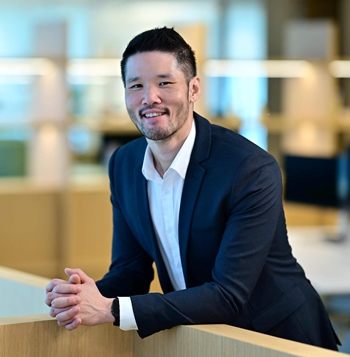
- Peter Trang, Head of Business Operations, Takeda Korea On the 19th, Takeda Korea announced that it appointed Peter Trang from Australia as the new Head of Business Operations. The new head joined Takeda Pharmaceuticals Australia in 2016 as Business Insights Manager, then moved on and became the Strategy Lead of the Growth & Emerging Markets Business Unit (BU), which oversaw operations in more than 30 countries, including Australia. In this role, he developed geographic, commercial, and long-term strategies, including post-merger strategy and franchise-specific strategic direction and guidance for the Growth & Emerging Markets BU, helping Takeda build a differentiated portfolio and contributing to the double-digit growth of the Growth & Emerging MarketsBU countries. Takeda Korea’s Business Operations analyzes corporate capabilities and sets goals from a company-wide perspective. Building on his global experience, Trang is expected to help shape and direct Korea's contribution to Takeda's global presence, which is spread across over 80 countries, through business planning, performance management and evaluation, issue and resource management, and by securing a sustainable pipeline. “Our unit will actively support other business units to build capabilities for a better future in the ever-changing environment, and make every effort to bring innovative medicines to patients in Korea,” said Peter Trang, the new Head of Business Operations at Takeda Korea. “Drawing on my experience in the Growth & Emerging MarketsBU, I will make the best efforts to bring positive influence to patients in Korea. “We see Mr. Trang’s appointment as an opportunity to strengthen the company’s organizational capabilities as it brings together business planning and strategic planning, which are like interlocking cogs in a wheel,” said Donghoon Lee, Director of Human Resources at Takeda Korea. ”We believe his appointment will serve as a driver of growth, building on the flexible and collaborative organizational culture that Takeda Korea has established over the years, to create an environment that enables us to work organically and agilely with our headquarters.” Meanwhile, Sehee Lee, who had been leading both the Business Planning Department and the Data, Digital & Technology Department, will now dedicated to leading the company's digital transformation efforts. Lee will continue to lead the company's digital transformation efforts to unlock the value of data and digital to deliver exceptional experiences for patients and customers and embed digital strategies into the business to drive sustainable growth and productivity for the organization.
- Company
- Ipsen Korea appoints Yang mi-sun as new CEO
- by Eo, Yun-Ho Sep 20, 2024 05:51am
- Ipsen Korea named Yang Mi-sun as the new CEO. Ipsen Korea has appointed Yang Mi-sun, AstraZeneca Korea’s former Business Unit Director, as the new Chief Executive Officer (CEO). Sources said that Ipsen Korea has appointed its new CEO, replacing former CEO Audrey Schweitzer after the end of her term. Audrey Schweitzer has been in charge of Ipsen Korea since 2021. Yang is an industry specialist with extensive knowledge and 20 years of experience working in Korean and overseas pharmaceutical companies. Yang obtained a degree from Chung-Ang University College of Pharmacy and has held positions for various medicines in South Korean and overseas pharmaceutical companies, including Samil-Pharm, Bayer, and MSD, since 2000. Yang worked at MSD Korea for 10 years since 2008, where she was responsible for respiratory disease marketing and served as Specialty Business Unit Manager and anti-cancer agent marketing manager. Yang brings broad experience and understanding of sales and marketing of various diseases. Yang served as a Business Unit Head for HIV & Antifungal Business and Digital marketing at Gilead Sciences in 2017, and she previously led the anti-cancer business unit at AstraZeneca Korea since 2021 before the current appointment. Meanwhile, Ipsen was established in 1929 in France. The company focuses on medicines for cancer, rare diseases, and neuroscience. Since late 2010, Ipsen has been trying a new approach by acquiring biopharmaceutical companies specializing in rare diseases and neuroscience. In 2017, Ipsen acquired U.S.-based Merrimack Pharmaceuticals, the developer of the metastatic pancreatic cancer treatment Onivyde, for US$1.25 billion (around KRW 1.65 trillion). In February 2019, Ipsen acquired Clementia Pharmaceuticals, a biotech venture specializing in rare bone diseases, for US$ 1.3 billion (around KRW 2 trillion).
- Company
- Inventage Lab to codevelop a long-acting injectable with BI
- by Lee, Seok-Jun Sep 20, 2024 05:51am
- Inventage Lab (CEO Ju-Hee Kim) announced on the 19th that it has signed an agreement with Boehringer Ingelheim, a German multinational pharmaceutical company, to co-develop a long-acting injectable formulation for a new peptide drug. Inventage Lab will develop a long-acting injectable formulation based on Boehringer Ingelheim's drug candidate and supply samples for preclinical trials. Following Boehringer Ingelheim's internal evaluation process, the two companies will collaborate on clinical development and enter into a global supply agreement for joint response to clinical development, clinical sample manufacturing, and commercialization. After the product launch, a separate agreement may be signed for the technology transfer of the manufacturing platform to support global market expansion. Inventage Lab’s platform utilizes high-quality polymer microspheres to create long-acting injectable formulations. It is a formulation platform that can achieve long-lasting effects while minimizing the side effects of the drug (API). The fact that Boehringer Ingelheim, with its expertise in technology procurement and high standards of validation, decided to partner with Inventage Lab for this important development project, proves the differentiated technological level of the IVL-DrugFluidic® platform technology in the global market. An official from Inventage Lab said, “This co-development project has significance as it is not a typical case of a biotech company proposing a specific pipeline to a major pharmaceutical company, but the Big Pharma’s selecting a technology supplier and advancing the formulation based on the Big Pharma’s own demand and needs”

- Policy
- Cushing’s syndrome drug Isturisa is approved in Korea
- by Lee, Hye-Kyung Sep 20, 2024 05:51am
- Various doses of ‘Isturisa’ (osilodrostat), a treatment for Cushing's syndrome, are expected to be approved in Korea soon. According to industry sources on the 19th, the Ministry of Food and Drug Safety concluded the safety and efficacy review of Recordati Korea's Isturisa Film Coated Tab 1mg earlier this month and recently completed the safety and efficacy review of the 5mg dose as well. Isturisa was previously approved by the US Food and Drug Administration (FDA) on March 6, 2020, the European Medicines Agency (EMA) on January 9, 2020, and Japan’s Pharmaceuticals and Medical Devices Agency (PMDA) on March 23, 2021. Among the three dosage forms available – 1, 5, and 10 mg – the MFDS has completed a safety and efficacy review for the 1 and 5 mg doses. Isturisa has been under review for approval in Korea since November last year after being designated as a Global Innovative products on Fast Track (GIFT) by the MFDS. As the safety and efficacy review is the final step in the approval process, the drug’s approval is expected soon. Isturisa inhibits CYP1181, an enzyme responsible for the final step of the cortisol pathway in the adrenal glands, and was designated as a GIFT product in April 2022, when Novartis' ‘Signifor Inj’ was withdrawn from the market and the only existing treatment option was eliminated. The drug is indicated for the treatment of adult patients with Cushing’s disease for whom pituitary surgery is not an option or has not been curative and is taken orally twice a day. Cushing's syndrome occurs when the body is exposed to excessive amounts of a hormone called glucocorticoids. Glucocorticoids are produced by an endocrine organ called the adrenal glands, which are located on top of the kidneys and can occur when the adrenal glands produce more glucocorticoids than necessary, or when excessive amounts of glucocorticoids enter the body from the outside for various reasons. Cushing's syndrome is characterized by a rounded, moon-shaped face and excessive subcutaneous fat deposits on the back of the neck and shoulders, and is most common in adults between the ages of 30 and 50. It affects women three times more often than men. It can cause health issues such as hypertension, obesity, type 2 diabetes, blood clots in the legs and feet, fractures, a weakened immune system, and depression, and can be diagnosed through a blood test and a 24-hour urine test. Isturisa is also the first FDA-approved drug to work directly on cortisol overproduction by blocking an enzyme known as 11-beta-hydroxylase and preventing cortisol synthesis. The safety and effectiveness of Isturisa were demonstrated in a clinical study involving 137 adult patients, where approximately half of the patients reached cortisol levels within normal limits at Week 24. After Week 24, 71 patients who did not require further dose escalation and tolerated the drug participated in an 8-week double-blind, randomized withdrawal study in which withdrawals were treated with either Isturisa or placebo. Results showed that 86% of the patients in the Isturisa arm maintained cortisol levels within normal limits. On the other hand, only 30% of the placebo arm reached the same result.
- Company
- Samsung Bioepis recruits Lina Choi as new global head
- by Nho, Byung Chul Sep 19, 2024 05:48am
- Lina Choi named as new global head for Samsung Bioepis. Samsung Bioepis garners attention as the company recruits specialists to strengthen its global entry capacity. Sources said that Samsung Bioepis has recruited Linda Choi, Vice President, as the Head of Global Commercial in August. Choi studied pharmacy at Ohio State University College of Pharmacy and has 28 years of experience in multinational pharmaceutical companies. She is recognized as a specialist with expertise in sales and marketing. Choi started a career at Eli Lily in the United States, where she served as Senior Director. At UCB Biopharma in Belgium, Choi was the chief operating officer for global marketing. Before joining Samsung Bioepis, Choi also served as the Chief Operating Officer (COO) at AVANIR, Japan's Otsuka Holdings subsidiary, and ADESIS, a U.S.-based CDMO. By recruiting Choi, who has years of experience in the global biopharmaceutical industry, Samsung Bioepis is expected to further strengthen biosimilar product sales in the global market. Samsung Bioepis has commercialized 9 biosimilar products in immunology, oncology, ophthalmology, and hematology. Partnering with Biogen, Organon, and Sandoz, Samsung Bioepis sells 8 products in Europe and 4 in the United States. In addition to partnership deals, Samsung Bioepis focuses on establishing an independent sales network overseas. For 'Episcli,' a rare disease drug launched in Europe in July 2023, Samsung Bioepis' local subsidiary was responsible for direct sales. Samsung Bioepis has become the company with the most FDA-approved biosimilar antibody products after obtaining eight marketing authorizations from the U.S. FDA. The company expects to launch Stelara biosimilar (U.S. product name, 'Pyzchiva') in the United States. Samsung Bioepis plans to expand its product portfolio for various diseases in the global market.
- Opinion
- [Reporter’s View] The new drug approval fee hike
- by Lee, Hye-Kyung Sep 19, 2024 05:48am
- The Ministry of Food and Drug Safety has announced an amendment to the “Fee Regulations for the Approval of Drugs, etc.” that will significantly increase the fee for new drug approvals from KRW 8.83 million to KRW 410 million. This is the first time in 4 years that the government has decided to increase the new drug approval fee, which is in line with the previous four-year cycle fee hike. In 2016, the fee was raised from KRW 6.82 million to KRW 8.83 million in 2020, and this time in 2024, another 4 years later, the fee is being raised to KRW 410 million. The MFDS’s fee hike announcement was received with surprise in the industry. The MFDS had been conducting a study to increase the fee for new drug approvals, so there had been a widespread assumption that the fee would be increased within the year. However, few thought that the increase, which had been 30% four years ago, would soar to 4500% and exceed KRW 400 million. No one expected the MFDS to raise the drug approval fee to a level similar to Europe and Japan at once. Most had expected the government to raise the fee in phases as before. When considering the fees charged by advanced regulatory agencies abroad, Korea's current KRW 8.83 million is unreasonable, to say the least. Even the industry acknowledged this. In Japan alone, which has a similar GDP per capita level, the PMDA KRW 430 million, the European EMA KRW 490 million, and the Canadian HC KRW 550 million. The US FDA charges KRW 5.3 billion, therefore, the MFDS’s administrative notice of raising the fee to 410 million is appropriate to align the fee to a realistic price at the global level. In particular, it has been pointed out the MFDS’s new drug approval fee is much lower than that of advanced regulatory agencies overseas, leading global pharmaceutical companies to apply for approval in a ‘testing the water’ type of manner. Before applying for approval to the FDA or EMA, the companies first apply to the MFDS, and then add the supplementary data requested by the MFDS before applying to regulatory agencies abroad. There has also been a feeling that MFDS is being regarded as a ‘consultant’ for overseas regulators. The damage caused by the understaffed reviewers reviewing the data of false applications was the delay in review, which was ultimately borne by domestic pharmaceutical companies that needed new drug approvals. The increase in the new drug approval fee seems to mean that MFDS will no longer act as a ‘consultant’ and fulfill its purpose as a proper regulator. Moreover, it seems like the government decided to foster the development of new drugs by domestic pharmaceutical companies rather than global pharmaceutical companies as the new amendment specifies the benefits provided to such by the MFDS, such as a 50% reduction in fees for domestic pharmaceutical companies and a 90% reduction in fees for modifications made to existing drugs. Although the new drug approval fee seems to have suddenly risen to KRW 410 million, this was an inevitable raise that had to be made to meet the global level sooner or later. The MFDS announced that the new drug approval period will be shortened from 420 days to 295 days with this increase. If it goes as planned, new drugs developed by domestic pharmaceutical companies will be able to enter the market a little faster. However, it would be necessary to expand the number of expert staff to accommodate this. The MFDS has set aside half of the increased fees for labor costs. The amount may seem like a lot, but it will be used as a basis for expanding the number of reviewers. If the increase in the number of expert staff can actually shorten the time it takes to approve a new drug, the fee increase would have been necessary sooner or later.
- Policy
- MFDS approves Hemgenix for Hemophilia B in Korea
- by Lee, Hye-Kyung Sep 19, 2024 05:48am
- The Ministry of Food and Drug Safety (MFDS) announced on the 13th that it has approved the orphan drug ‘Hemgenix Inj (etranacogene dezaparvovec)’ imported by CSL Behring Korea. Hemgenix is used to treat moderate-to-severe hemophilia B (congenital blood clotting factor IX deficiency) in adults without a history of Factor IX inhibitors. The drug is expected to provide new treatment opportunities for hemophilia B patients by offering a long-term, single-shot treatment option, unlike existing treatments. The MFDS explained that the quality, safety and effectiveness, manufacturing and quality control standards of Hemgenixwere thoroughly reviewed and evaluated scientifically in accordance with the review criteria outlined in the “Act on The Safety of and Support for Advanced Regenerative Medicine and Advanced Biological Products (“Advanced Regenerative Bio Act”),” which enabled the product’s expedited review and prompt introduction into the field. Hemgenix will be subject to long-term follow-up under Article 30 of the Advanced Regenerative Bio Act, which requires pharmaceutical companies to follow up on the occurrence of adverse events for 15 years from the date of administration. The MFDS said, "Based on our expertise in regulatory science, we will continue to make our best efforts to ensure that novel therapies for severe and rare diseases are promptly supplied to patients in Korea.”
