
- LOGIN
- MemberShip
- 2026-07-23 06:44:26

- Company
- Pharma-distributor 'margin war' heats up again
- by Son, Hyung Min Jun 13, 2025 06:03am
- The pharmaceutical industry and distribution industry are in conflict over profit margins. Janssen Korea reportedly notified its training companies of a 2%p reduction in margins and continuing negotiations with individual companies. Some domestic pharmaceutical companies are implementing margin reductions starting this year. Pharmaceutical companies are citing sluggish sales, drug price reductions, and increasing debt ratios as background for these margin cuts. However, the distribution industry is showing strong resistance, claiming that if they bear labor costs, delivery fees, and other commissions, they will incur losses with every transaction. Domestic and foreign pharmaceutical companies announce margin reductions According to industry sources on June 13, VivaCell Biotechnology recently officially informed its distributors of a plan to lower sales discount rates. According to the official letter, the company will reduce the sales discount rate from the current 4% to 3% of the cash collection starting in July. The pharmaceutical distribution industry interprets this as a strategy to cut margins. The distribution industry is expressing concern that numerous pharmaceutical companies are implementing margin reductions this year. Indeed, Korea Pharma, Kolon Pharm, and Ahn-Gook Pharmaceutical have also announced plans to lower their distribution margins this year. Recently, the global pharmaceutical company Janssen Korea joined in. Janssen Korea notified its trading partners that it would pursue a 2%p reduction from existing margins. The distribution industry asserts that while some pharmaceuticalcompanies have attempted margin adjustments of around 1%p due to declining profitability, it's rare for a company like Janssen to pursue a reduction as significant as 2%p. The distribution industry has expressed strong objection, particularly because this measure was announced without prior discussion or consultation with the distribution industry. The distribution industry immediately began to protest, demanding negotiations through their association. They assert that if Janssen Korea negotiates with individual companies, it's highly likely to result in a mere notification. However, Janssen Korea maintains that negotiations with individual companies are appropriate, given the varying contract terms and scale of trading partners, rather than with the association. In this regard, Janssen Korea is reportedly conducting individual negotiations with companies starting this week. Industry leaders, including Korea Pharmaceutical Distributors Association Chairman Park Ho-young, are expressing a strong commitment to respond, stating, "The association will reflect on its member companies and strive to eliminate factors threatening the pharmaceutical distribution industry." Margin narrowing and conflict increasing...the endless tug-of-war between pharma-distribution Margin rate reductions are ongoing conflict issue between the pharmaceutical and distribution industries. Pharmaceutical companies push for lower margins, while distributors try to prevent them. The recent decision by Janssen Korea to cut margins, in particular, signals a potential escalation of this conflict, as the distribution industry mounts a strong backlash. The association recently agreed that Janssen's margin cut threatens the very existence of the distribution industry. In fact, this is the first time in several years that the issue of pharmaceutical companies' distribution margins has been formally placed on the association's agenda, highlighting the severity of the current situation. The distribution industry began direct confrontation, including demonstrations against pharmaceutical companies, years ago. In 2013, the association held collective protests, including one-person demonstrations against Handok, demanding an increase in distribution margin rates. At the time, the association emphasized that a 5% margin, as proposed by Handok, made distribution unfeasible and strongly advocated for additional margins. In 2014, the distribution industry requested a margin increase from GSK, citing deteriorating business conditions, leading to another conflict. They stressed the necessity of a margin increase to cover credit card fees and labor costs, among other expenses, and threatened to refuse to handle GSK products if their request was not met. However, the conflict was temporarily resolved in October of the same year when the Korea Pharmaceutical Distributors Association and GSK agreed on a margin increase. Since then, the distribution industry has engaged in discussions and negotiations with pharmaceutical companies regarding margin reductions, aiming for mutual growth. However, in the case of Janssen Korea's recent margin cut, they are adopting strong opposing stance. The distribution industry refutes the pharmaceutical companies' calls for mutual growth, asserting that their very survival is at stake. Indeed, the gross margin rate for the pharmaceutical distribution industry has been on a continuous decline. The gross margin rate is a key indicator used to measure distributors' profitability before deducting all expenses, including labor costs and selling, general, and administrative expenses. While the exact margin pharmaceutical distributors earn from purchasing drugs from manufacturers is not precisely known, they generally consider gross profit, the opposite of cost of goods sold, as their margin. A comparison of the gross margin rates of 55 pharmaceutical distribution companies with over KRW 100 billion in sales last year showed an average of 6.2%. The margin rate, which was 7.1% in 2020, recorded 7.0% in 2021 before entering a downward trend. A closer look by sales bracket reveals that companies with annual sales of over 500 billion KRW had an average margin rate of 6.6% last year. The highest margin rate recorded in the last five years was 6.8% in 2023, failing to exceed 7%. Companies with sales between KRW 200 billion and KRW 500 billion also saw their margin rates decline. Their average margin rate last year was 7.4%, the lowest in the past five years. Notably, excluding Korea Medix, which operates under a CSO (Contract Sales Organization) model and had a margin rate of 43.9%, the average for this group sharply drops to 5.8% based on last year's figures. The average margin rate for companies with annual sales between KRW 100 billion and KRW 200 billion has also been decreasing each year. Their average margin rate last year was 6.4%, a 0.2 percentage point increase from 2023, but it has remained at an average of 6.3% over the past five years. The pharmaceutical distribution industry believes that current margin rates make survival difficult, considering credit card fees, labor costs, delivery fees, and returns. An official from the pharmaceutical distribution industry said, "The continuous decrease in margin rates is attributable to the pharmaceutical companies' declining sales. Pharmaceutical companies are responding to losses incurred from drug price reductions by reducing margins for pharmaceutical distributors. If margins continue to decrease, small and medium-sized distributors simply cannot survive." Adding, "It's a situation where pharmaceutical companies advocate for mutual growth while the distribution industry asserts its right to survival. A compromise needs to be found, but relationships between trading partners must also be considered. The proliferation of distributors and CSO companies has intensified competition, making excessive return orders and aggressive labor cost expenditures issues that also need careful consideration. However, it is an undeniable fact that operating businesses is not easy with the current margin rates."
- Policy
- Ruling party proposes bill for free HPV vaccination
- by Lee, Jeong-Hwan Jun 13, 2025 06:02am
- Rep Lee Su-Jin (Democratic Party of Korea) The Democratic Party of Korea has submitted a bill to the National Assembly to significantly expand the scope of Korea’s National Immunization Program for human papillomavirus (HPV) vaccines. The bill proposes to provide free HPV vaccinations to all males and females aged 12 to 26, regardless of gender or income level. This legislation is in line with President Lee Jae-myung's campaign pledge to expand the National Immunization Program (NIP) for HPV vaccines. On the 12th, Rep. Lee Su-Jin (Seongnam City) of the Democratic Party of Korea submitted a bill titled “Partial Amendment to the Infectious Disease Control and Prevention Act” as representative. The bill aims to expand HPV vaccination coverage to all men and women aged 12 to 26, regardless of income or gender, for the prevention of HPV infection. The current law stipulates that the government shall provide NIP for HPV prevention to “female adolescents aged 12 to 17” and “low-income women aged 18 to 26.” However, Rep. Lee pointed out that individuals who are not eligible for government support are equally exposed to the risk of HPV infection, yet receive no assistance at all. Depending on age, two to three doses may be required, and each dose costs over KRW 150,000, placing a financial burden on individuals who must cover the expense themselves. President Lee included the expansion of the HPV NIP support program in his campaign pledge for the 21st presidential election, and Rep. Lee has proposed a corresponding legislative bill. Rep. Lee stated, “By providing HPV vaccination to all individuals aged 12 to 26, regardless of income or gender, we can prevent HPV infection and cervical cancer. I pledge to spare no legislative support to ensure women's right to health through proactive prevention.”
- Company
- Distributors Association plans "strong response"
- by Son, Hyung Min Jun 13, 2025 06:01am
- The Korean pharmaceutical distribution industry is rallying around the Korea Pharmaceutical Distributors Association in response to Janssen Korea's reduction of distribution margins. Park Ho-young, Chairman of the Korea Pharmaceutical Distributors Association, described Janssen Korea's margin reduction as an arbitrary act rather than a negotiation, indicating a firm stance of strong countermeasures. The Wednesday Forum (Chairman Nam Sang-gil), a private gathering within the pharmaceutical distribution industry, recently held its regular monthly meeting in June to discuss key issues, including countermeasures against Janssen Korea's margin reduction, and foster camaraderie among members. At the forum, opinions were raised that small and medium-sized hospitals must seek alternatives for Janssen Korea products, such as the biologic Remicade. Additionally, it was argued that with the reduced distribution margins, pharmacy deliveries are practically difficult, thus necessitating the minimization of orders for Janssen Korea pharmaceuticals. Notably, Chairman Park Ho-young of the Korea Pharmaceutical Distributors Association also attended the meeting to explain the association's response plan to the issues threatening the distribution industry. Park stated, "The 2%p distribution margin reduction being pushed by Janssen Korea goes beyond the scope of a simple negotiation; it is an act of tyranny." Park added, "Member companies have conveyed their concerns to the association. The association will step forward and respond proactively." He further emphasized, "The association will exert all its capabilities to eliminate elements that threaten the pharmaceutical distribution industry." Park repeatedly urged unity among member companies, stating, "If we fail to properly defend against this Janssen Korea issue and fail to demonstrate the united power of the distribution industry, a greater crisis will come in the future." An advisor to the Wednesday Forum who attended the meeting also supported Chairman Park, saying, "Now is the time to build a strong front, centered on the association, against Janssen Korea's attempt to cut distribution margins." He added, "Sanctions are also necessary for member companies that act against the association's policy." Following the Wednesday Forum, the Korea Pharmaceutical Distributors Association plans to hold a series of follow-up response meetings. The Seoul Pharmaceutical Distributors Association will have an expanded board meeting on the 18th to discuss key issues in depth, including the Janssen Korea margin reduction issue. The Seoul Pharmaceutical Distributors Association, which had initially sought countermeasures through hospital branch meetings, is said to have shifted the discussion among the board of directors, considering the seriousness of this matter. The Gyeonggi-Incheon Pharmaceutical Distributors Association also expressed deep concern about Janssen Korea's move to reduce distribution margins. It will lend its support to the association's response, including preparing a statement of opposition. The heads of regional branches under the Korea Pharmaceutical Distributors Association are expected to meet next Monday, and pharmaceutical distributors in the Busan, Gwangju, and Daegu regions are also expected to voice their concerns, centered around the association. As they have delegated negotiation authority for margin reductions to the association, regional pharmaceutical distributors are likely to strengthen their resolve to participate actively. A high-ranking official from the Korea Pharmaceutical Distributors Association warned, "The latest margin reduction is not just a simple profit structure adjustment; it is an issue directly linked to the survival of small and medium-sized distributors," and added, "If we fail to withdraw Janssen Korea's measure this time, a crisis will sweep over the entire distribution industry." He further pointed out, "Margins are like a cost concept for distributors, and pharmaceutical companies must accurately recognize this concept."
- Company
- Trodelvy approved for reimbursement with the ICER value
- by Whang, byung-woo Jun 12, 2025 06:06am
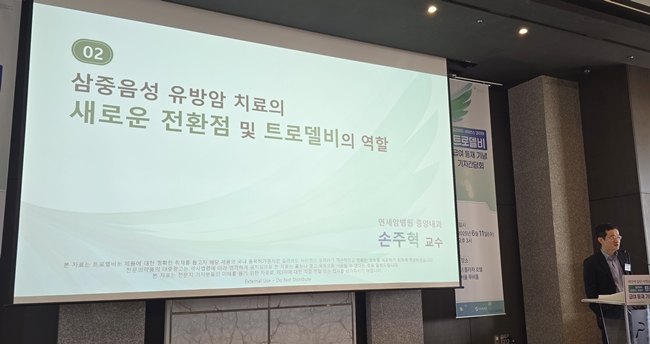
- As Trodelvy (sacituzumab govitecan), the first antibody-drug conjugates (ADC) for treating Triple-Negative Breast Cancer (TNBC) available in South Korea, becomes reimbursed, a paradigm shift in the treatment is expected. Experts assess that the metastatic TNBC treatment, which has been challenging due to a high risk of metastasis and relapse and relied on chemotherapy, has undergone a transition. There is a high demand for Trodelvy, as demonstrated by two previous National Petitions with over 50,000. In the future, the survival benefit is expected to rise. Trodelvy can be reimbursed by the national health insurance from June for the treatment of Triple-Negative Breast Cancer (TNBC). A paradigm shift in TNBC treatment is expected. On June 11, Gilead Sciences Korea hosted a session to celebrate reimbursement approval of Trodelvy, and the company shared the latest updates on TNBC treatment and the significance of reimbursement. TNBC is a type of breast cancer that is negative for three receptors: two types of hormone receptors and the HER2 receptor. TNBC has unmet needs because there is no receptor that treatment can target, and treatment options have been limited to cytotoxic anticancer agents. Trodelvy is known to bind Trop-2 protein, releasing the medicine inside tumor cells. It minimally affects healthy cells, and it can destroy not only tumor cells but also the tumor microenvironment (TME). Besides cytotoxic anticancer agents, Trodelvy is the only treatment approved by the Ministry of Food and Drug Safety (MFDS) as a second-line treatment for patients with metastatic TNBC, regardless of existing genetic mutations or biomarkers. When MFDS granted approval in May 2023, Trodelvy presented a cost burden of KRW 10 million per cycle. It was approved for national health insurance reimbursement in June, thereby expanding patient accessibility. Specifically, Trodelvy can be reimbursed for treating locally advanced or metastatic TNBC as a third-line or later treatment. If recurrence occurs during or within one year of completing neoadjuvant or adjuvant chemotherapy, previous treatments are considered as first-line treatment, allowing for reimbursement of Trodelvy in the second-line setting as well. Trodelvy was categorized as having innovativeness. It gained attention for becoming the first case to clear the DREC review, with its price being measured based on its an Incremental Cost-Effectiveness Ratio (ICER) values. Dr. Joohyuk Sohn, a Professor at Yonsei Cancer Hospital's Department of Oncology, who presented during the meeting, assessed that reimbursement approval of Trodelvy will bring a new shift in the treatment of TNBC. Dr. Joohyuk Sohn, a Professor at Yonsei Cancer HospitalDr. Sohn explained, "While there has been remarkable progress with the emergence of various new drugs for breast cancer, treatment options for TNBC have remained limited. It has been challenging to treat due to its faster and more aggressive progression compared to other types of breast cancer." Additionally, Trodelvy, with efficacy confirmed through the Phase 3 ASCENT study and now reimbursed, is considered a potential new game changer. Dr. Sohn stated, "The final analysis results of the ASCENT study showed that the overall survival (OS) of the Trodelvy treatment group, including patients with brain metastases, was 11.8 months, approximately twice as long as the single-agent chemotherapy group (6.9 months), and it reduced the risk of death by 49%." The breast cancer guidelines of the National Comprehensive Cancer Network (NCCN) and the European Society for Medical Oncology (ESMO) foremost recommend Trodelvy as a second-line treatment for metastatic triple-negative breast cancer. Dr. Sohn emphasized, "For patients who were hesitant to receive treatment because Trodevly was not reimbursable, despite the clear clinically confirmed treatment benefits, the reimbursement listing of Trodelvy will bring survival benefits." "When new drug efficacy is proven, rapid reimbursement approval is needed to expand patient access" In particular, Dr. Sohn suggested that if a new drug's efficacy is sufficient, a rapid reimbursement approval is necessary. Dr. Sohn stressed, "Regarding (new drug) accessibility, it takes too long, usually 3 to 4 years, and I think it's problematic that we consider it a good thing when it takes only 2 years," and added, "While reimbursement listings can be delayed due to health insurance finances. If the research data is not accurate, it can also be delayed. However, if the benefit in OS is proven, rapidly expanded reimbursement is necessary." Meanwhile, Trodelvy is recently expected to expand its indication as a first-line treatment for TNBC through combination therapy with the immunotherapy Keytruda. In the interim analysis results of the Phase 3 'ASCENT-04/KEYNOTE-D19' clinical trial, presented at the recent American Society of Clinical Oncology (ASCO 2025) Annual Meeting, the median progression-free survival (mPFS) for the Keytruda-Trodelvy group was 11.2 months, showing a significant improvement over the control group's chemotherapy+Keytruda at 7.8 months. The duration of response (DOR) for the Trodelvy-Keytruda treatment group was 16.5 months, while chemotherapy+Keytruda was limited to 9.2 months. The OS data were yet incomplete, but a positive trend was observed with Trodelvy plus Keytruda.
- Company
- Tevimbra seeks to add 6 indications in Korea
- by Eo, Yun-Ho Jun 12, 2025 06:05am
- The use of the immuno-oncology drug Tevimbra is set to be extended further in Korea. The Ministry of Food and Drug Safety is in the final stages of reviewing and approving the additional indications for BeOne Medicines Korea’s Tevimbra (tiselizumab). The drug is expected to be approved for the extended indications within the month. Specifically, the extended indications include its use as: ▲First-line combination therapy for patients with unresectable, locally advanced, or metastatic esophageal cancer; ▲First-line combination therapy for patients with unresectable or metastatic, HER2-negative gastric cancer or gastroesophageal junction adenocarcinoma; and ▲First-line combination and second-line monotherapy therapy for non-small cell lung cancer (NSCLC). Tevimbra has already been approved by the U.S. Food and Drug Administration (FDA) for a first- and second-line treatment for patients with unresectable or metastatic esophageal squamous cell carcinoma, as well as for the first-line treatment for patients with advanced gastric cancer (GC). The drug has been expanding its indications in the global market. The European Medicines Agency (EMA) has approved Tevimbra as a first- and second-line treatment of esophageal squamous cell carcinoma, a first-line treatment of advanced gastric cancer, and as a first- and second-line treatment of non-small cell lung cancer (NSCLC). In line with the global trend, Tevimbra’s role is expected to expand to treating various types of cancer in Korea in the future as well. Tevimbra is an immuno-oncology drug with a PD-1 inhibition mechanism of action that recently demonstrated clinical efficacy in second-line treatment of esophageal squamous cell carcinoma, was approved in Korea in November last year and became the first immuno-oncology drug to be reimbursed for esophageal cancer in March this year. This drug is designed based on the technological expertise of BeOne Medicines and employs a dual mechanism of action that effectively blocks PD-L1 while minimizing binding to Fc-gamma receptors (FcγR), thereby inducing potent antitumor responses through a mechanism distinct from that of existing immuno-oncology agents. Notably, it demonstrated superior PD-L1 blocking efficacy (>99%) compared to other immunotherapy agents of the same class, and according to the company, it has a higher binding affinity and a half-life 30-80 times longer than existing drugs, suggesting a more sustained therapeutic effect. Based on this unique mechanism of action, Tevimbra demonstrated treatment efficacy by significantly improving overall survival rates compared to chemotherapy in patients with esophageal squamous cell carcinoma, where over 70% of patients have low or no PD-L1 expression, regardless of PD-L1 expression status. Meanwhile, BeOne Medicines Ltd. recently changed its name from Beigene and relocated its corporate headquarters to Switzerland, marking its new beginning.

- Policy
- Measures to reduce industry burden for stronger GMP
- by Lee, Hye-Kyung Jun 12, 2025 06:04am
- With the Ministry of Food and Drug Safety set to enforce the revised GMP standards for aseptic drugs reflecting the international Pharmaceutical Inspection Co-operation Scheme (PIC/S) standards from December, measures are being prepared by the industry to reduce its burden. Ahead of its rejoin into PIC/S in 2023, the MFDS announced the “Regulations on Drug Manufacturing and Quality Control (MFDS Notice)” which outlines a risk-based, systematic contamination control strategy to enhance the quality assurance of aseptic pharmaceuticals. At the time, in consideration of the need for sufficient preparation time for all pharmaceutical companies to establish contamination management strategies, the government decided to implement the regulations first for aseptic finished pharmaceutical products until 2 years after the announcement, and then for aseptic active pharmaceutical ingredients until 3 years after the announcement. The implementation of measures such as PUPSIT (Pre-Use Post-Sterilization Integrity Testing) for verifying the integrity of sterilizing filters has been granted a uniform grace period—up to three years from the date of the revised GMP regulation—considering the need for additional preparation time for revalidation of aseptic processes and administrative procedures for GMP compliance determinations under the current guidelines. However, as the implementation of certain requirements for sterile finished pharmaceutical products approaches, including ▲the obligation to establish and implement a systematic contamination control strategy for the manufacture of aseptic drugs, ▲ the establishment of individual manufacturing and quality control standards (GMP) for advanced biopharmaceuticals, and ▲ the clarification of detailed specifications for the types of formulations subject to GMP compliance assessment, as well as the procedures and methods for such assessments, some pharmaceutical companies are halting or withdrawing their aseptic product manufacturing operations on itself. Particularly, following the announcement by Ildong Pharmaceutical that it would discontinue production and supply of its ‘Ativan Inj,’ which has experienced repeated supply instability over the past 3 years since 2022, speculation has emerged that the ripple effects of the strengthened GMP standards for aseptic drugs may have begun. Jung-yeon Kim, director of the MFDS In response, Jung-yeon Kim, director of the MFDS's Pharmaceutical Quality Division, said at a briefing with reporters on the 10th, “There have been ongoing issues with the supply of Ativan, and we have been in constant communication with the manufacturer since the end of last year. The company did not decide to withdraw from the market due to the stricter GMP standards, rather, there were internal circumstances, such as product profitability and drug price issues.” It is known that a similar sentiment was conveyed at a meeting between the MFDS and the heads of aseptic drug manufacturers on April 30. Kim explained, “About 20 companies participated in a factory manager meeting last month. At the time, the MFDS conveyed its position that it had no choice but to apply the same standards used by the 52 PIC/S member countries. Manufacturers also expressed difficulties in the preparation process, and that the MFDS should prepare supporting data through a research platform to reduce the burden on the industry and provide technical and regulatory support.” Instead of implementing the PIC/S-level GMP strengthening measures for aseptic preparations as scheduled in December, the MFDS plans to establish guidelines for large-volume IV solutions, contamination control strategies (CCS), and PUPSIT, referring to the results of the “Study on the Harmonizing the GMP Regulations on Aseptic Drugs” currently being conducted by the Korea Pharmaceutical and Bio-Pharma Manufacturers Association (KPBMA) Kim added, “In the case of large-volume IV solutions, strengthening GMP standards to comply with EU Annex 1 would require establishing a contamination control strategy for each batch, which companies find most burdensome. We are conducting research with three companies— HK Inno.N, JW Pharmaceutical, and Dai Han Pharm— and KPBMA to establish grounds that show there will be no changes in GMP quality even with eased standards.” The three companies participating in this study account for 90% of the large-volume IV solution market, and since November last year, they have been meeting with the KPBMA and MFDS to develop a research protocol and have completed kick-off meetings and preliminary workshops. Cheon-Woon Cheon, a research committee member at the KPBMA Cheon-Woon Cheon, a research committee member at KPBMA who is leading the study, said, “We have held meetings with the MFDS and companies to clearly set the direction of the project, and our goal is to produce results by October so that they can be reflected in the policy.” Cheon added, “The revision of Annex 1 has placed a significant burden on manufacturers of sterile products. We are seeking ways to reduce this burden and are currently researching the appropriate level of validation required for processes such as formulation, filtration, filling, and sterilization.” In this regard, Kim said, “There is no single correct answer in GMP. What matters is having a technically and scientifically justified rationale that achieves the intended goal. I hope that the research findings will provide a sufficient basis to support the level of aseptic control expected by PIC/S.” Through this study, the MFDS expects not only to relax the standards for large-volume IV solutions but also to establish guidelines for CCS and PUPSIT. Cheon said, “Small companies lack experience and have difficulty just approaching CCS. Our goal is to establish guidelines by the end of the year that small companies can follow by conducting research through large companies.” In the case of PUPSIT, which is scheduled to be implemented in December next year, a separate project team has been formed to establish its guidelines. Kim said, “In principle, each company is responsible for implementing GMP issues per the system, but the MFDS has tried to provide assistance through industry communication. Since November last year, we have been meeting with associations and industry representatives to ask them to follow the international standards, and we have formed a consensus on common research tasks.” Kim added, “While direct financial support is difficult at this time, we are exploring ways to reduce industry burdens through regulatory or technical support. Once research results are available, we aim to establish GMP management measures with a clear direction, which should also lead to cost savings.”
- Opinion
- [Reporter's View] Fostering BD talent requires tech·strateg
- by Whang, byung-woo Jun 12, 2025 06:04am
- Recently, the role of business development (BD) in the pharmaceutical and biotech industry has been rapidly advancing. Previously regarded simply as a sales task, BD changed to one of the core strategic teams that oversees the success of new drug development. BD is responsible for key discovery and execution of various opportunities for new drug commercialization, including domestic and overseas market analysis, candidate product entries, license-out (L/O) agreements, strategic collaborations, and joint research. Now, BD is an essential expert team required for the success of new drug development. However, it was once seen as simply a sales team. Recently, as the importance of BD has been highlighted, BD's role expanded, and the industry often says that 'BD is the competitiveness.' There are cases where the achievement of new drug L/O (technology transfers) has significantly changed the corporate value. Therefore, a BD team is no longer considered simply a subordinate team but a strategy team responsible for determining the success of new drug development. This aligns with major pharmaceutical companies in Korea that run convergent R&D and BD teams, keeping commercialization in mind from the early stages of research. Their goal is to create synergy between research and BD. Park, Yeong-Min, Business Head of the National New Drug Development Division, emphasized, "A precise commercialization strategy is necessary from the early stages for successful new drug development." However, despite such changes, clinical practices are challenged with BD talent shortages. A biotech company head stated, "Talents with both technological understanding and business communication skills are difficult to find. Therefore, collaborations and supplementation are mandatory." It is challenging to find BD talents who simultaneously possess technical expertise, negotiation skills, and an understanding of the global market. To address this talent shortage, organizations like the Korea Drug Development Fund (KDDF) are running programs such as 'Young BD' workshops to strengthen the practical capabilities of young professionals. However, these initiatives are criticized for still being insufficient for effective talent development, as they cannot replace real-world experience and face structural limitations such as short training periods and limited enrollment. The global competitive environment further emphasizes the importance of BD talent training. With Chinese biotech companies recently surpassing those in South Korea in securing large-scale technology exports, many analyses suggest that soft skills, such as business strategy and negotiation prowess, are crucial beyond just technical excellence. Several experts said, "It's difficult to be competitive in global partnering by only emphasizing technological prowess," and added, "Strategic capabilities to accurately convey the value partners seek are desperately needed." With the new government taking office, attention is also being drawn to potential changes in bio-industry policy. The industry anticipates practical support measures from the government for nurturing BD professionals across the entire cycle, from R&D to commercialization. The Korea Pharmaceutical and Bio-Pharma Manufacturers Association also recently emphasized, "We must expand support for late-stage clinical trials and companies closer to the commercialization phase," adding, "The government's pharmaceutical and bio R&D policy should be restructured to focus on achieving tangible results." Fostering BD talent is no longer an issue for individual companies but a challenge directly linked to the competitiveness of the entire industry ecosystem. Only when the harmonious development of R&D personnel, who drive technological innovation, and BD personnel, who connect this to success, is supported can South Korea truly leap forward as a new drug powerhouse. It is time for companies, academia, and the government to collectively gather their wisdom to bridge the gap between technology and communication.
- Policy
- Qlaris starts Phase II trial for its glaucoma drug in KOR
- by Lee, Hye-Kyung Jun 12, 2025 06:03am
- Qlaris Bio, a US biotech company, is conducting a Phase II clinical trial in Korea for 'QLS-111,' a drug candidate for primary open-angle glaucoma (POAG) and ocular hypertension (OHT). On the 5th, the Ministry of Food and Drug Safety approved a randomized, active-controlled, multicenter, double-blind, preliminary study to evaluate the safety and tolerability of QLS-111 versus preservative-free 0.5% timolol maleate ophthalmic solution in subjects with normal-tension glaucoma (NTG). QLS-111 is a novel therapeutic agent that targets episcleral venous pressure (EVP), which reduces intraocular pressure by relaxing the vascular and vascular-like tissues in the trabecular meshwork to lower EVP. As there are currently no glaucoma treatments that reduce EVP (episcleral venous pressure), a successful clinical outcome would likely expand treatment options for patients. According to Qlaris, its two Phase II clinical trials conducted in the U.S. – the Osprey and Apteryx trials - met all primary and secondary endpoints. The Osprey study was a randomized, double-blind, placebo-controlled trial evaluating the safety, tolerability, and intraocular pressure (IOP) lowering efficacy of QLS-111 compared to placebo in 62 adult patients with POAG or OHT across a range of doses. Study results showed that QLS-111 at a concentration of 0.015% administered once daily in the evening (QPM) resulted in the greatest reduction in intraocular pressure, with a mean reduction of 3.7 mmHg compared to the average intraday IOP of 23.0 mmHg. The Apteryx study was a randomized clinical trial evaluating the safety, tolerability, and additional IOP-lowering efficacy of QLS-111 when added to latanoprost in 32 patients aged 12 years or older with stable POAG or OHT using latanoprost monotherapy. When latanoprost monotherapy was administered, the mean intraday baseline IOP was 19.8 mmHg. QLS-111 0.015% administered in combination with latanoprost induced additional mean IOP reduction compared to latanoprost monotherapy, with a reduction of 3.2 mmHg with QLS-111 QPM administration and 3.6 mmHg with QLS-111 BID (twice daily) administration. Qlaris stated, “We are satisfied with the efficacy QLS-111 demonstrated in the Phase II Osprey and Apteryx trials. These results from our preservative-free new formulation reinforce our confidence that QLS-111 has the potential to become the first-in-class EVP selective targeted therapy.” Qlaris was founded in 2019 with a primary focus on the development of treatments for ophthalmic diseases. Last year, the company successfully secured $24 million in funding.
- Company
- 'Ocrevus' for multiple sclerosis available at hospitals
- by Eo, Yun-Ho Jun 11, 2025 06:03am
- Product photo of OcrevusThe new drug 'Ocrevus' for treating multiple sclerosis is becoming available at general hospitals. According to sources, Roche Korea's Ocrevus (ocrelizumab), the treatment for relapsing multiple sclerosis (RMS), has passed drug committees of tertiary general hospitals, including Samsung Medical Center, Seoul National University, Asan Medical Center in Seoul, and Sinchon Severance Hospital, and medical institutes, including Chonnam National University Hospital and Inje University Haeundae Paik Hospital. Ocrevus is expanding its prescription areas after being included in the insurance reimbursement list in March. Ocrevus is a drug that targets B-cells expressing CD20, which affects the demyelination causing neurological disorder in patients with multiple sclerosis. Multiple sclerosis is a chronic disease in which the myelin sheaths are damaged due to autoimmune inflammatory responses. Damages to the myelin sheaths cause muscle weakening, fatigue, and vision impairment, and the disease could lead to atraumatic disorders. As of 2022, there are approximately 2674 patients with multiple sclerosis in South Korea, and people aged 20-40 account for 62% of all patients. Until now, antibody medications such as 'Tysabri (natalizumab),' 'Gilenya (fingolimod),' and 'Mabthera (rituximab)' have been used for treating multiple sclerosis. However, there are ongoing requests for new drugs. In overseas, various new drugs were developed, such as Novartis 'Briumvi (ublituximab)' TG Therapeutics 'Kesimpta (ofatumumab).' However, Roche's Ocrevus is the only drug introduced to Korea. Ocrevus has the advantage of administration duration. Ocrevus can be taken once every 6 months, providing greater convenience of administration compared to Kesimpta (administered once a month). The basis of this drug is the Phase 3 OPERA-I and II studies. These trials comparatively evaluated the efficacy and the safety of Ocrevus and Biogen's Plegridy (pegInterferon beta-1a) in patients with relapsing multiple sclerosis. In the clinical trials, Ocrevus reduced the annual recurring revenue (ARR) by almost half compared to Plegridy. Specifically, in the OPERA I trial, the ARR of the group treated with Ocrevus for 96 weeks had an ARR of 0.156, compared to 0.292 in the control group. In the OPERA II trial, the ARR of the group treated with Ocrevus for 96 weeks had an ARR of 0.155, which was lower than the 0.290 ARR of the control group. Additionally, in the Phase 3 ORATIORIO clinical trial involving patients with primary progressive multiple sclerosis (PPMS), Ocrevus demonstrated effectiveness. In the clinical trial, Ocrevus reduced the confirmed disease progression (CDP) by 24% for 12 weeks compared to the control group. Dr. Ho Jin Kim, Professor of the Department of Neurology at the National Cancer Center, said, "Even a small difference in the early stage of multiple sclerosis has significant cumulative results. Using treatments with higher treatment effects at an earlier stage offers significant benefits. Using these treatments will be helpful in terms of improving the quality of life and reducing the economic cost burden. Ocrevus is useful because of its efficacy and sufficient data regarding long-term administration."
- Company
- Janssen Korea to cut distribution margins… sparks pushback
- by Son, Hyung Min Jun 11, 2025 06:03am
- # i1 Janssen Korea, which has announced a 2% reduction in distribution margins, is expected to engage in dialogue with individual pharmaceutical distribution companies rather than the Korea Pharmaceutical Distribution Association (KPDA) to resolve the current issue. The KPDA has sent two official letters to Janssen Korea, demanding negotiations via the association, but the company did not accept the request. As a result, the KPDA has expressed concerns that the margin cut will become more of a unilateral notification rather than a matter for negotiation. According to the pharmaceutical distribution industry on the 11th, Janssen Korea is expected to visit multiple pharmaceutical distribution companies this week to address the current issue of pharmaceutical distribution margins. Notably, Christian Rodseth, the Senior Vice President of Janssen Korean, plans to visit the companies in person for the negotiations. Janssen Korea recently notified its distribution partners of a 2% margin reduction. However, the distributors have strongly opposed the additional margin reduction, arguing that it threatens their survival as they are already struggling with low margins. In response, Janssen Korea sent a formal statement to the KPDA on the 29th of last month, stating that the decision to adjust pharmaceutical distribution margins was not a unilateral decision being imposed by the company, but rather a part made under the spirit of mutual cooperation. It emphasized that it will continue discussions with individual distributors based on reasonable standards and procedures. In the official statement, Janssen Korea stated, “Considering the number, scale, and diversity of the distribution companies we deal with, we believe it is unrealistic to uniformly apply the same transaction conditions to all distribution companies.” It further explained, “Transaction conditions between suppliers and distribution companies are typically determined through individual negotiations, which is the normal industry practice.” Previously, the KPDA had reached a consensus that Janssen Korea’s margin reduction measures threaten the survival of the distribution industry and agreed on joint countermeasures. A representative from a pharmaceutical distribution company stated, “The margin reduction being pushed by Janssen Korea is at a level that threatens the survival of the pharmaceutical distribution industry. Given that negotiations with Janssen Korea, a company that holds a dominant position in the relationship, are likely to amount to mere notifications, we have decided to have the association represent the positions of pharmaceutical distribution companies.”
