
- LOGIN
- MemberShip
- 2026-09-08 03:14:05
- Policy
- KOR gov’t has started to establish AI infrastructure…case in Denmark referenced
- by Jung, Heung-Jun Aug 31, 2026 08:57am
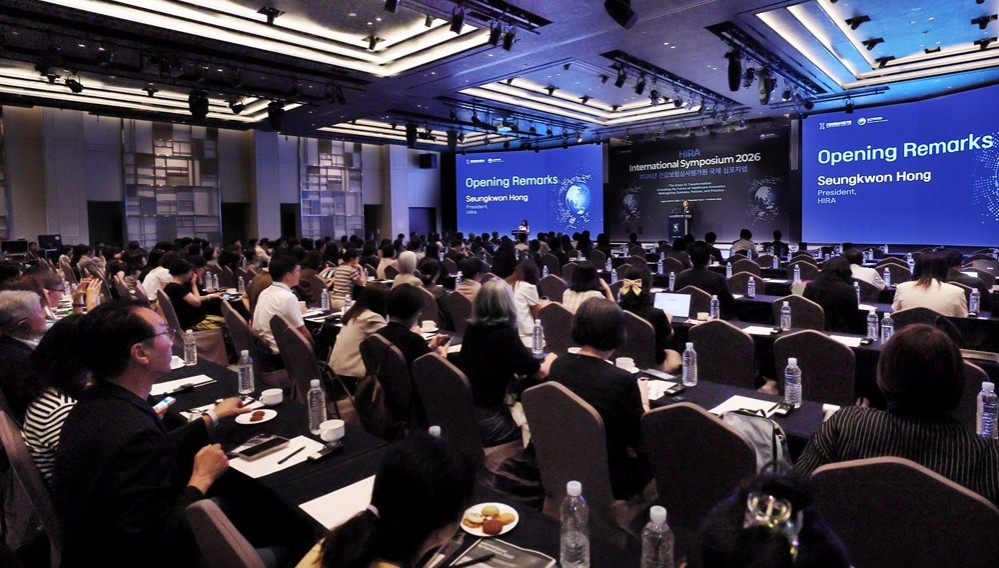
- While South Korea takes initial steps to build artificial intelligence (AI) in public healthcare and debates data standardization and infrastructure development, Denmark already uses AI across diverse regulatory functions, from drug review and authorization to post-marketing pharmacovigilance.Aligning with this global trend, the Ministry of Health and Welfare (MOHW) and the Health Insurance Review and Assessment Service (HIRA) have announced plans to drive a full-scale AI transformation across the public healthcare sector based on the government's recently announced "Basic Strategy for Medical AI."Claus Møldrup, Director of Data and Analytics at the Danish Medicines Agency (DKMA).Claus Møldrup, Director of Data and Analytics at the Danish Medicines Agency (DKMA), shared how the European Union is utilizing AI in regulatory affairs during an international symposium hosted by HIRA on the 28th, under the title "The Great AI Transformation and Healthcare Innovation".The Danish Medicines Agency established a principle against utilizing general commercial AI platforms, such as ChatGPT or Claude, for official regulatory tasks, including marketing authorization reviews.This is because such tools risk leaking data to external servers and operate as "black box" systems with untraceable training datasets.The agency reasoned that commercial models of ambiguous origin are unsuitable because regulatory bodies must clearly substantiate the rationale behind their decisions to pharmaceutical companies.Møldrup said, "Generative AI models such as ChatGPT and Claude function like black boxes where the underlying data and training sets remain unknown," adding, "If regulators submit draft reviews generated by such AI to pharmaceutical companies, the companies could legitimately question the evidentiary basis of those determinations."Consequently, the Danish Medicines Agency developed and currently operates an AI model deployed within its private on-premises network using open-source large language models, engineered to generate responses strictly bounded within specific regulatory guidelines and standard operating procedures (SOPs) designated by review officers.In addition, the agency instituted a "human-in-the-loop (HITL)" control principle, ensuring that specialized reviewers in the respective domain directly review and finalize determinations.Møldrup emphasized that staff are directed to use AI only within their respective areas of expertise, explaining that personnel cannot effectively control the system in unfamiliar domains and that only subject-matter experts can screen out AI-generated hallucinations.However, AI's operational scope remains broad. Beyond marketing authorization reviews, it is also being utilized in ▲post-marketing pharmacovigilance ▲prescription optimization support.Møldrup explained, "While a patient taking a new epilepsy medication might report hormonal fluctuations to a physician who might not officially log it as an adverse event," adding, "The agency's system, capable of accessing comprehensive national healthcare data in Denmark, can rapidly uncover such unreported adverse reaction cases."The agency is also pursuing pilot demonstration projects that analyze real-world clinical data to guide patient-tailored prescribing.Møldrup added, "Approximately 10% of patients prescribed metformin discontinue their regimen within 90 days due to factors such as taking five to six concurrent medications," and further stated, "If AI can predict treatment failure patterns and identify high-risk populations in advance, clinicians could be guided from the outset to prescribe alternatives, such as once-weekly formulations, for elderly polypharmacy patients projected to discontinue therapy."MOHW "Outcomes-based reimbursement"...HIRA "Transforming appropriate care beyond review automation"Jung-Hwan Park, Director General of the Division of Medical AI and Data Policy at the MOHW.In line with the AI transformation trends across global regulatory authorities such as Denmark, the MOHW and HIRA are substantiating strategies to integrate AI across public healthcare and broader claims review and evaluation systems.Following the government's recent announcement of the "Basic Strategy for Medical AI," both entities maintain that they will fully fulfill their roles as the competent ministry and overseeing institution.However, practical hurdles such as data standardization, substantial infrastructure expenditure, and the establishment of reimbursement frameworks must also be resolved.Jung-Hwan Park, Director General of the Division of Medical AI and Data Policy at the MOHW, stated, "The government should act as a key player in the development of medical AI," adding, "Active investments will be made spanning from the initial development of AI models to their integration into the public healthcare system.Park emphasized that the government will provide state-owned GPU resources to ensure that a lack of computing capacity does not impede AI utilization in public healthcare.However, the ministry maintains that reimbursement frameworks for healthcare AI utilization in clinical settings must be established after rigorous post-implementation evaluations.Moo-Sung Kim, Director General of AX Innovation Department.Park said, "Simply providing financial incentives proportional to utilization frequency could undermine the financial sustainability of the National Health Insurance (NHI) fund," pointing out that "High usage volume does not automatically translate into patient benefit."Park added, "The MOHW is carefully deliberating how to structure appropriate compensation based on rigorous post-hoc assessments of whether meaningful clinical efficacy was achieved."HIRA announced its commitment to proactively adopting AI to advance public health and support the fiscal sustainability of National Health Insurance finances.Despite constraints related to private data security, data standardization, and substantial infrastructure costs, the agency plans to pursue AI integration that establishes a feedback loop to promote appropriate clinical care.Moo-Sung Kim, Director General of AX Innovation Department, said, "Ultimately, the answer to why adopting AI is necessary lies in enhancing public health and optimizing NHI expenditure," and Kim emphasized that "The need for a feedback system that enables healthcare institutions to deliver appropriate care in real time rather than merely deploying AI for routine claims review tasks."
- Policy
- Vonoprazan market braces for fierce competition
- by Lee, Tak-Sun Aug 28, 2026 09:51am
- As competition intensifies to launch versions of Takeda Pharmaceuticals’ potassium-competitive acid blocker (P-CAB) Vonoprazan before its patent expiry, Alvogen Korea has begun carving out a differentiated path by developing an ‘orally disintegrating tablet’ formulation designed to improve patient convenience.The move is seen as the company’s attempt to avoid price cuts from a proliferation of generics and secure a more favorable reimbursement price.According to the Ministry of Food and Drug Safety on the 27th, Alvogen Korea recently received approval for a Phase I clinical trial protocol evaluating the bioequivalence of an orally disintegrating formulation of its vonoprazan fumarate (codename: AK-R320).The trial will enroll 36 healthy adult volunteers and use a two-treatment, two-period crossover design to compare the pharmacokinetic profiles and safety of the test drug, AK-R320, and the reference drug, AK-R320-R, administered under fasting conditions.Although the original product has yet to be launched, the market for follow-on vonoprazan products is already witnessing fierce competition among Korean pharmaceutical companies pursuing an “at-risk launch (launch then suit)” strategy. Salt-modified drug developers, including Kyongbo Pharmaceutical and Mothers Pharmaceutical, and same-ingredient generic manufacturers such as Hanmi Pharmaceutical, JW Pharmaceutical, and Shinpoong Pharm have filed patent invalidation challenges against the original product (Vonsinty), whose patents are scheduled to expire between 2027 and 2028. They are also accelerating preparations to secure reimbursement listings.Taking advantage of the weakened original drug’s regulatory defense, more than 70 generic products have already received approval.As the market becomes increasingly crowded with generics in the same conventional tablet formulation, Alvogen Korea has played the orally disintegrating tablet, or ODT, card. ODTs dissolve in the mouth and can be taken without water.ODTs can significantly improve medication adherence among older patients and those with dysphagia who have difficulty swallowing conventional tablets. Major existing P-CAB products, including HK inno.N’s K-CAB, have previously expanded their prescribing reach by introducing orally disintegrating formulations.The industry is interpreting Alvogen Korea’s move in particular as part of a ‘drug price defense strategy.’ Under Korea’s current tiered generic pricing system, the listing of large numbers of generics with the same active ingredient reduces the reimbursement ceilings for later entrants, causing their profitability to deteriorate sharply.However, incrementally modified formulations such as ODTs may be able to avoid direct price-grouping competition with conventional generics or qualify for more favorable pricing criteria, giving them an advantage in securing a relatively higher reimbursement price.The calculation is ultimately to avoid the bloodletting in the “red ocean” conventional tablet market dominated by major pharmaceutical companies, while simultaneously securing the practical benefits of a differentiated and more convenient formulation and a more stable pricing structure.An industry official said, “With dozens of vonoprazan generics already approved, competition over prescriptions and prices in the conventional tablet market is likely to reach extreme levels. The development of an orally disintegrating tablet by Alvogen Korea is a highly strategic decision aimed not only at targeting a niche market through greater dosing convenience, but also at maximizing profitability by securing a higher price during the anticipated wave of aggressive generic discounting.”

- Policy
- Criteria for classifying combination drugs will be relaxed
- by Jung, Heung-Jun Aug 28, 2026 09:51am
- The maximum price ceiling for combination drugs will be reduced to 45% from 53.55%. Drug price reductions from the re-evaluation of previously listed pharmaceuticals, originally expected by the end of this year, have been postponed to April next year. As criteria classifying combination drugs into Phase 1 and Phase 2 are relaxed, the number of combination products categorized under Phase 2 is projected to expand significantly. On the 26th, the Ministry of Health and Welfare (MOHW), the Health Insurance Review and Assessment Service (HIRA), and the National Health Insurance Service (NHIS) convened a consultative body with industry representatives, including the Korea Pharmaceutical and Bio-Pharma Manufacturers Association (KPBMA), to deliberate key issues surrounding the re-evaluation of listed pharmaceuticals.A substantial portion of the industry demands compiled and submitted to the government by the KPBMA was discussed.Combination drugs containing Phase 1 ingredients also classified as Phase 2 Previously, the government maintained the stance that any combination drug containing at least one Phase 1 active pharmaceutical ingredient (listed before 2013) would be categorized under Phase 1. With a large proportion of combination drugs scheduled for inclusion in Phase 1, price cuts were expected immediately. The consultative body reached a consensus to separate the re-evaluation timeline from individual constituent active ingredients. In other words, combination drugs listed from 2013 onwards will be categorized under Phase 2 regardless of their Phase 1 component combinations. However, industry requests to adjust combination drug prices based on the combined sum of the 45%-reduced single-agent components were not accepted. The maximum price ceiling for combination drugs will be reduced to 45% based on the standard benchmark of 53.55%. 'Innovative and semi-innovative pharmaceuticals' special rates applied even to drugs failing evaluation criteria During the re-evaluation of listed drugs, the government granted a special rate of 49% for four years to Innovative Pharmaceutical Companies and 47% for three years to Semi-Innovative Pharmaceutical Companies.Although proposals previously discussed excluding drugs that fail to meet baseline evaluation criteria from these special cuts, the government decided to maintain special rates as intended. However, the 20% price penalty for non-compliance with evaluation criteria will apply to the 49% and 47% thresholds. For instance, if an Innovative Pharmaceutical Company holds a product that fails the baseline criteria, the reimbursement price will be reduced to 80% of the 49% rate. Additionally, products failing baseline criteria due to consigned bioequivalence testing will be recognized if in-house bioequivalence studies are conducted before the listed drug re-evaluation is implemented. Because Phase 1 will be implemented in April of next year and Phase 2 in October 2030, fulfilling baseline criteria before those dates will be credited in the re-evaluation pricing. Incrementally modified drugs among dossier-submission products excluded from re-evaluation The scope of exemptions from re-evaluation has expanded. Previously, exempt categories were restricted to single-listed products, low-priced pharmaceuticals, drugs designated to prevent market withdrawal, and orphan drugs. Incrementally modified drugs (IMDs) among dossier-submission products have now been exempted from re-evaluation. Additionally, pharmaceuticals designated separately by the MOHW to ensure stable healthcare supply are also excluded. Other categories exempt from re-evaluation include ▲identical formulation products without a history of ex officio price adjustments ▲products whose prices were increased within the past five years ▲biologics and emergency-use imported pharmaceuticals ▲basic IV fluids, narcotics, medical oxygen, nitrous oxide, radiopharmaceuticals, and artificial irrigation solutions. Benchmark price set for September of this Year...Heavily discounted drugs adjusted to Phase 2 The methodology for determining the benchmark maximum ceiling price based on the Drug Reimbursement List as of September of this year, and reducing prices to 45%, will remain in place. Although the pharmaceutical industry requested that benchmark pricing be set based on drug prices at the time of the 2012 blanket price reduction, the government did not accept this proposal. However, for pharmaceuticals that have previously experienced substantial cumulative price cuts, the government plans to accept manufacturer applications to reclassify them as Phase 2 products.The government will accept adjustment applications after the official re-evaluation announcement. Because the criteria defining 'excessively adjusted prices' remain ambiguous, further industry feedback and petitions are expected. Phase 1 re-evaluation implemented in April...Phase 2 in October 2030 The implementation timeline for the Phase 1 re-evaluation has been deferred to April of next year. While December of this year was previously the primary target, the schedule was postponed to allow for industry feedback. The re-evaluation will be officially announced this month, followed by deliberations by the Pharmaceutical Reimbursement Evaluation Committee and the Health Insurance Policy Deliberative Committee in February of next year. The price cuts will be executed in April to align with the regularized post-marketing price adjustment schedule (April and October). Companies certified as Innovative Pharmaceutical Companies in December of this year are also slated to receive the special grace provisions. Furthermore, enterprises certified under the Semi-Innovative designation are also expected to qualify for the special provisions.Re-evaluation for Phase 2 pharmaceuticals is scheduled to commence in October 2030 and conclude by October 2036.
- Policy
- Ministries clash over legality of DoctorNow’s obesity drug listings
- by Lee, Jeong-Hwan Aug 27, 2026 09:43am
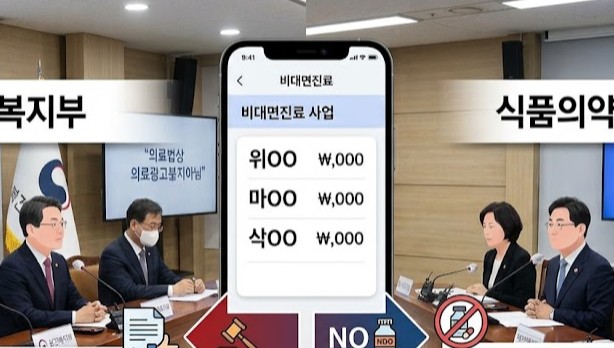
- Conflicting positions from the Ministry of Health and Welfare and the Ministry of Food and Drug Safety over the display of brand names, dosages, prices and prescribing clinics for prescription obesity drugs such as Wegovy and Mounjaro on apps operated by DoctorNow and other telemedicine platforms are creating serious regulatory confusion.The Ministry of Health and Welfare concluded that the practice of displaying on telemedicine platforms the prices or brand names of injectable obesity treatments available at hospitals and clinics following an in-person consultation—on the basis that such treatments, while restricted from telemedicine prescribing, may be prescribed in person—is unlikely to constitute medical advertising prohibited under the Medical Service Act.The Ministry of Food and Drug Safety, however, expressed a different view, stating that identifying the names or effects of prescription drugs through telemedicine apps or other online media could violate the Pharmaceutical Affairs Act, which prohibits direct-to-consumer advertising of prescription drugs.These were the positions provided by the ministries on the 26th regarding the display of injectable obesity drug brands, dosages, out-of-pocket prices and prescribing institutions on telemedicine apps.Telemedicine platform operators currently provide information through their apps that allows patients to select the weight-loss injection they wish to have prescribed.The apps display partially redacted names from which users can infer popular injectable and oral drug brands, such as MouOOO, WegOO, SaxOO and ConOOO.After selecting or tapping a partially redacted brand name (by touch or click), users are presented with the available dosages and can even choose the quantity they wish to receive.The patient can then visit the relevant medical institution for an in-person consultation and receive the selected prescription obesity drug in the chosen dosage and quantity.Doctors, pharmacists and other healthcare professionals have criticized platforms’ display and promotion of obesity drug brands, dosages, out-of-pocket prices and prescribing institutions, arguing that the practice may violate existing laws.The two ministries, however, reached different conclusions. While MOHW judged it could not definitively characterize the practice as illegal advertising prohibited under the Medical Service Act, the MFDS concluded that it could constitute advertising of prescription drugs prohibited under the Pharmaceutical Affairs Act.MOHW, “Difficult to regard as medical advertising prohibited under the Medical Service Act”Based on the Medical Service Act, the MOHW determined that listing obesity drug brand names on a telemedicine platform app was unlikely to constitute illegal medical advertising.Although obesity drugs cannot generally be prescribed through telemedicine, they may be prescribed following an in-person consultation. The ministry therefore maintains that displaying information about clinics where such prescriptions are available, along with drug names and prices, is unlikely to constitute medical advertising prohibited under the Medical Service Act.However, the MOHW said it would consider introducing provisions prohibiting the display of prescribing institutions, brand names, and prices for obesity drugs in the course of discussing subordinate legislation, as the amended Medical Service Act establishing telemedicine as a permanent program has created a legal basis for the supervision and regulation of platform operators.MFDS, “Violates the Pharmaceutical Affairs Act’s ban on prescription drug advertising”Unlike the MOHW, the MFDS pointed out that posting prescription drug brand names or dosages on telemedicine apps has potential legal violations.The current Pharmaceutical Affairs Act strictly prohibits direct-to-consumer advertising of prescription drugs, which require a physician’s prescription.According to the ministry, displaying the name or effects of a prescription drug through an online medium such as a telemedicine platform may be considered an act of broadly communicating or presenting information about a particular medicine to telemedicine users and consumers.The ministry therefore concluded that the practice could violate the Pharmaceutical Affairs Act’s prohibition on direct-to-consumer advertising of prescription drugs.Interministerial discord… “worsens regulatory blind spots for platforms”The same display and advertising practice on telemedicine platforms has thus been deemed clearly unlawful by one ministry and unobjectionable under existing law by another, creating confusion for both the industry and consumers.Critics argue that the MOHW, which oversees national health policy, has given a de facto free pass by passively interpreting the situation—where specific prescription drug names and prices are openly exposed to the public—solely based on the formal criteria of the Medical Service Act.They also criticize the ministry’s passive stance, saying only that it will consider the issue when “drafting subordinate legislation,” even though telemedicine prescribing of obesity drugs has been restricted over concerns about misuse and platforms are circumventing the restriction by serving as gateways connecting patients with clinics and drug prices.With telemedicine scheduled to transition to a permanent program on Dec. 24, continued controversy over the indiscriminate advertising, promotion, display and commercialization of prescription drug information through platforms has prompted calls for the ministries to swiftly reconcile their positions and establish clear regulatory standards.Medical and pharmacy groups said, “While the MFDS has clearly concluded that the practice violates the Pharmaceutical Affairs Act, the MOHW is leaving a regulatory vacuum to persist by creating the impression that it is lawful under the Medical Service Act. Poor communication between ministries and their lukewarm administrative response are encouraging workaround marketing by platforms and the misuse of medicines.”
- Policy
- Another salt-modified drug competes with Daewoong's "Jakavi follow-on"
- by Lee, Tak-Sun Aug 27, 2026 09:43am
- Product photo of 'Jakavi'As Daewoong Pharmaceutical secured follow-on drug exclusivity by obtaining priority sales marketing authorization in the generic drug market for Novartis Korea's rare hematologic malignancy treatment 'Jakavi (ruxolitinib phosphate),' another salt-modified product has announced market entry by submitting a marketing authorization application.Salt-modified therapeutics are scheduled to be commercialized starting January 15, 2027, after the original drug's patent expires.According to the Ministry of Food and Drug Safety (MFDS) on the 26th, a follow-on drug containing 'ruxolitinib hydrochloride' submitted a marketing authorization application to the MFDS in late July and notified the original drug company. This product used a hydrochloride salt rather than the phosphate salt of the originator Jakavi, designed specifically to circumvent the patent.Previously, Daewoong Pharmaceutical's salt-modified document-submission drug "Ruxovi Tab (ruxolitinib hemifumarate)" secured priority sales marketing authorization valid for nine months from January 15, 2027, to October 14, 2027.Daewoong circumvented the original drug's composition (salt) patent, originally scheduled to expire in June 2028, through a negative scope confirmation trial and structured a strategic indication portfolio that accounted for the remaining post-marketing surveillance (PMS) period for expedited review, thereby capturing both the initial marketing authorization and first-generic exclusivity. Consequently, it can be commercialized after the original drug's substance patent expires on January 14, 2027.However, a new variable has emerged in Daewoong Pharmaceutical's exclusive market structure: a follow-on drug containing ruxolitinib hydrochloride, distinct from the existing hemifumarate salt, has been filed for marketing authorization with the MFDS.Under South Korea's current patent linkage system, the marketing ban effect held by priority sales marketing authorization applies strictly to 'identical pharmaceuticals' sharing the same active ingredient, dose strength, and dosage form. Because the newly filed product uses ruxolitinib hydrochloride, it contains a different salt than Daewoong Pharmaceutical's ruxolitinib hemifumarate and is legally classified as a distinct pharmaceutical entity.Therefore, if the newly submitted product meets patent circumvention requirements and first-to-file criteria, it can be granted its own independent first-generic exclusivity over the same timeframe as Daewoong Pharmaceutical's, enabling joint market entry.With annual outpatient prescription sales reaching approximately KRW 9.1 billion (based on 2025 UBIST data), Jakavi is a high-value rare disease treatment, with numerous pharmaceutical companies, including Chong Kun Dang, Samyang Holdings, and Dongkook Pharmaceutical, currently competing in development. An industry official said, "While Daewoong Pharmaceutical first secured first sales marketing authorization, there is a possibility for late-entrant developers utilizing different salts to secure additional exclusive sales rights," adding, "As the substance patent is set to expire in early 2027, competition among salt-modified generics to capture early market share will intensify."
- Policy
- Generic drug spots a gap in Revolade mkt...listing a high-dose formulation
- by Jung, Heung-Jun Aug 26, 2026 10:16am
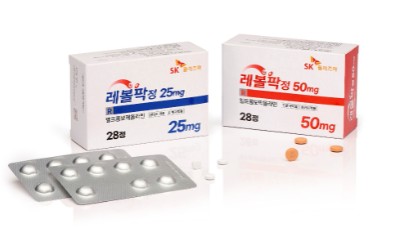
- A generic version of the immune thrombocytopenia (ITP) therapeutic 'Revolade (eltrombopag olamine)' is entering the market in a high-dose formulation not offered by the original drug.As a late-entrant generic developer, SK Plasma is expected to pursue full-scale market share expansion through a differentiation strategy focusing on enhanced dosing convenience.According to industry sources on the 25th, following the National Health Insurance (NHI) reimbursement listing of the 25 mg and 50 mg doses of SK Plasma's Revolpaq Tab this month, the 75 mg product is scheduled to enter the reimbursement scope next month.This month, reimbursement prices are KRW 28,398 for the 25 mg strength and KRW 55,188 for the 50 mg strength. The 75 mg dose scheduled for listing next month is priced at KRW 68,985. Because no identical dose strength is available on the market, the reimbursement ceiling was determined by applying the dosage-proportional pricing formula.Revolpaq Tab is indicated for chronic immune thrombocytopenia and severe aplastic anemia, referencing Novartis's Revolade as the originator product.The first generic referencing Revolade is Pharmbio Korea's Elpaq Tab. The company pioneered the generic market entry by securing reimbursement listing in October 2024.Although it was eligible for the same reimbursement price as the previously listed identical formulation due to its orphan drug designation, Pharmbio adopted a niche strategy by pricing the product 30% lower than the original drug.SK Plasma listed its two strengths, 25 mg and 50 mg, at prices lower than the original drug Revolade but higher than Pharmbio's Elpaq Tab.After obtaining regulatory approval in June for the 75 mg strength, which is unavailable in both the originator and existing generic lines, SK Plasma is now awaiting reimbursement listing next month.The 75 mg high-dose formulation set for listing offers enhanced dosing convenience as its core advantage. Patients with severe aplastic anemia (adults and adolescents) are indicated to take 75 mg daily for six months. This formulation offers the convenience of a single 75 mg tablet, eliminating the need to co-administer 25 mg and 50 mg tablets.According to UBIST data, Revolade prescription sales reached KRW 4.7 billion last year. With the entry of a high-dose generic targeting a gap left by the original drug, competition to capture market share across the Revolade market is expected to intensify further.
- Policy
- Drugs discussed last NA audit face loss of orphan drug status
- by Lee, Tak-Sun Aug 26, 2026 10:15am
- AI-generated imageMajor injectable immunostimulants whose efficacy was questioned during last year’s National Assembly audit now face the possible ‘revocation of their orphan drug designation,’ the first step toward being subject to clinical reassessment.The Ministry of Food and Drug Safety (MFDS) convened an advisory meeting of the Central Pharmaceutical Affairs Council (CPAC) on the 21st to review the matter, focusing on whether the products will ultimately be subject to clinical reassessment.The discussions covered injectable products containing viscum album (40 products marketed by LB Abnoba, Dalim Biotech and Hospi Care) and immunocyanin (2 products marketed by Biosyn Korea) which are currently designated as orphan drugs. Along with thymosin alpha-1 products (approved for 26 companies), the two agents have received criticism during both the health technology reassessment by the National Evidence-based Healthcare Collaborating Agency (NECA) and the NA audit for excessive non-reimbursed prescribing and insufficient evidence of efficacy.Under current regulations, orphan drugs are excluded from clinical reassessment. The MFDS therefore sought advice from CPAC on revoking the designation, determining that the prevalence of the diseases for which the two ingredients are indicated exceeds the ‘20,000 patient’ threshold set for orphan drug designation.However, it remains unclear whether the council will actually recommend revocation. Companies involved are visibly tense, as the council’s conclusion could determine whether the clinical reassessment proceeds.The MFDS is proceeding cautiously. Skepticism also exists within the ministry over the rationality of reassessing officially approved indications as a means of curbing off-label use, such as non-reimbursed prescriptions for cancer patients, because the administrative objective does not appear aligned with the regulatory measure being considered.Although the ministry initially considered reassessment in response to criticism raised during the NA audit, some observers believe the ministry does not appear particularly intent on pushing the measure forward.Opposition from the pharmaceutical industry and the possibility of legal action also weigh heavily on the ministry. The industry argues that ordering companies to redemonstrate a drug’s already approved efficacy through costly clinical trials, while leaving the KRW 200 billion non-reimbursed prescribing market left unchecked, violates the principle of proportionality.Industry officials believe that if the MFDS pushes forward with revoking the orphan drug designation and ordering clinical reassessment based on the council’s conclusion, the dispute is highly likely to escalate into a full-scale legal battle involving applications for injunctions to suspend enforcement and administrative lawsuits, echoing the earlier choline alfoscerate case.The industry is therefore closely watching how the CPAC will ultimately formalize its decision.

- Policy
- Regulations regarding non-face-to-face treatment still in draft form
- by Lee, Jeong-Hwan Aug 25, 2026 08:54am
- Ahead of the official institutionalization (nationwide program) of non-face-to-face treatment in December, the expansion of prescription drug delivery has become a central point of dispute, driving conflicts among government ministries, pharmacy associations, and the platform industry to an extreme.The confrontation between these stakeholders has spread to the drafting of subordinate statutes, specifically enforcement decrees and enforcement rules, under the amended Medical Service Act being prepared for the launch of the permanent program, indicating the potential for deepening conflict.On the 24th, the Ministry of Health and Welfare (MOHW) drafted subordinate statutes under the amended Medical Service Act to institutionalize non-face-to-face treatment.In addition, the MOHW formalized discussions on supplementary legislation to fully expand prescription drug delivery with the Ministry of SMEs and Startups, the Office for Government Policy Coordination, and the platform industry; however, these efforts have stalled after the Korean Pharmaceutical Association decided to stage a full boycott.Under the current framework of the amended Medical Service Act, drug delivery is scheduled to be permitted only on a restricted basis to specific populations, such as residents of island or remote regions and vulnerable groups, but the government intends to deliberate measures to permit universal prescription drug delivery for all non-face-to-face treatment users.Pharmacy groups do not conceal their concerns that if the principle of in-person medication counseling collapses, regulatory control mechanisms over non-reimbursed prescription pharmaceuticals, narcotics, and drugs prone to misuse could disappear, potentially exacerbating the concentration of prescriptions into specific pharmacies.Conversely, platform industry groups, including the Non-face-to-face Treatment Industry Association, maintain that institutionalizing non-face-to-face treatment without drug delivery would result in an incomplete half-measure. They argue that prescription delivery is essential because public convenience can be maximized only when care flows seamlessly as a one-stop process from consultation to prescription and medication intake.As tensions between pharmacy associations and the platform industry escalate rapidly, observers note that rifts may also disrupt discussions on detailed clauses within the subordinate statutes intended for the permanent program's launch in December.This is because physicians' and pharmacists' views differ directly from those of platform operators on every major agenda item.The central point of contention is the restriction on prescription durations for first-visit non-face-to-face treatment patients. The Korean Medical Association and the Korean Pharmaceutical Association maintain that prescription days for initial non-face-to-face treatment consultations must be strictly capped between 3 and 7 days to prevent drug misuse and overuse.In contrast, the platform industry argues that physicians should set prescription lengths based on clinical judgment and responsibility to ensure continuity of care for patients using non-face-to-face treatment services.Regulations concerning pharmacies dedicated to non-face-to-face treatment, as well as daily dispensing volume limits, are another important issue to consider. To prevent pharmacies from operating exclusively for remote consultations, the MOHW is considering capping daily remote dispensing volumes, such as limiting them to within 30% of total dispensing volume or to 25 cases per day. Because stakeholder interests diverge sharply regarding pharmacy choice and patient access, close attention is fixed on the ministry's final decision.Over restricted prescription lists for non-reimbursed pharmaceuticals, such as alopecia and acne treatments, pharmacy groups demand stricter controls, while the platform industry calls for deregulation.While the government plans to continue gathering feedback through an inter-ministerial public-private consultative body, the wide disparity in perspectives between professional associations and industry groups over drug delivery increases the likelihood of prolonged friction during subordinate statute negotiations ahead of the December rollout.The MOHW said, "The MOHW will work through the public-private consultative body to support the stable integration of non-face-to-face treatment services and create an environment where the public can safely receive their medications."Nevertheless, pharmacy associations plan to oppose government ministries' administrative measures by boycotting the ministry's consultative body and insisting on strictly adhering to the principle of restricted home delivery for non-face-to-face treatment prescriptions.
- Policy
- Roche Korea’s Polivy likely to gain reimb next month
- by Jung, Heung-Jun Aug 24, 2026 09:14am
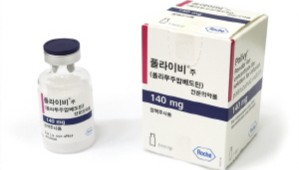
- Roche Korea’s diffuse large B-cell lymphoma (DLBCL) treatment ‘Polivy Inj (polatuzumab vedotin)’ is expected to gain reimbursement coverage next month.The anticipated listing comes 5 years after the company first sought reimbursement in 2021. Polivy passed the Drug Reimbursement Evaluation Committee (DREC) in May this year and entered price negotiations with the National Health Insurance Service (NHIS) in June.According to industry sources on the 21st, Roche’s Polivy recently cleared the price negotiation stage and is expected to be added to the reimbursement list next month. The reimbursement comes after 3 attempts over the past 5 years.As a high-priced drug, the company is known to have entered into a flexible pricing agreement for Polivy, under which its actual price differs from its listed price.It is reportedly among the drugs subject to flexible pricing agreements alongside new drugs from multinational pharmaceutical companies being listed this month, including Fintepla and Breztri Aerosphere.Polivy’s path to reimbursement has not been smooth. In 2020, the drug was approved in Korea in combination with bendamustine and rituximab for adult patients with relapsed or refractory DLBCL who were not candidates for hematopoietic stem cell transplantation and had failed at least one prior therapy.Roche applied for reimbursement in 2021, but Polivy failed to pass the Cancer Disease Deliberation Committee review. The drug subsequently gained an additional indication ▲in combination with rituximab, cyclophosphamide, doxorubicin and prednisone/prednisolone (R-CHP) for adult patients with previously untreated DLBCL.Roche then made its next reimbursement attempt in 2023 based on the expanded indication, but the drug again failed to clear the Cancer Disease Deliberation Committee in 2024.The company immediately made its third attempt. In July last year, the committee ultimately established reimbursement criteria for only the latter of the drug’s two indications.In May this year, the DREC recognized Polivy as appropriate for reimbursement in combination with rituximab, cyclophosphamide, doxorubicin and prednisone/prednisolone in adult patients with previously untreated DLBCL.Polivy is currently designated as an orphan drug in Korea. With the drug set to enter the reimbursement list 6 years after approval, reimbursement is expected to improve the treatment environment for patients with rare diseases.
- Policy
- "Polypharmacy Management Project" drags on for 8 years
- by Lee, Jeong-Hwan Aug 24, 2026 09:14am
- Rep. Paik Sun-hee (left) and Minister of Health and Welfare Jung Eun Kyeong (right)Attention is on whether the Ministry of Health and Welfare (MOHW) will establish institutional frameworks to transition the "Polypharmacy Management Project," which has remained in pilot for eight years, into a permanent nationwide program.In response to the National Assembly's push to transition the polypharmacy management pilot into a formal program, Minister of Health and Welfare Jung Eun Kyeong acknowledged several operational challenges and said the government is actively seeking measures to formalize it.During the National Assembly Health and Welfare Committee briefing on the 19th, Rep. Paik Sun-hee of the Rebuilding Korea Party questioned Minister Jung regarding the polypharmacy management initiative integrated into Phase 2 of the Integrated Community Care Project and urged its transition to a full-scale program.Rep. Paik pointed out, "The Polypharmacy Management Project has been conducted as a National Health Insurance Service (NHIS) pilot program since 2018," and questioned, "Is there any precedent for a national pilot project dragging on for eight years?"Rep. Paik continued, "In my opinion, the transition has stalled due to reimbursement tariffs or budgetary constraints. However, we must drop the eight-year 'pilot' tag and make it a formal program because of community-based integrated care," and emphasized, "Polypharmacy management must be incorporated into this framework. Unless we prepare now, we cannot achieve it. When local governments and regional pharmacy associations implemented this initiative, outcomes showed over 20% efficacy in reducing emergency department visits and hospital readmission risks. This is profoundly meaningful."Minister Jung Eun Kyeong cited the lack of a designated central entity to coordinate comprehensive prescriptions and the limits of inter-institutional medication data sharing as the main reasons for the delayed program transition. Minister Jung explained that the core challenge remains establishing an operational model that can integrate medication intake data across multiple healthcare providers and link it to actual prescription reconciliation.Minister Jung responded that effective polypharmacy management requires institutional mechanisms beyond pharmacists' medication reviews to involve prescribing physicians, which presents structural difficulties. Nevertheless, she affirmed that the ministry will review past pilot models to pursue formal institutionalization.Minister Jung stated, "To effectively manage polypharmacy, there must be an attending primary care physician who comprehensively evaluates all medications a patient is taking, but South Korea currently lacks such a primary care framework," and added, "There is no designated practitioner to adjust overall prescriptions."Minister Jung added, "With an aging population and a growing number of patients taking multiple medications, I fully agree on the critical need for rational medication management," and concluded, "However, structural constraints limit an immediate nationwide transition. The MOHW is closely examining past pilot models to determine how to institutionalize this into a permanent program, including methods to facilitate prescription adjustments."
