- LOGIN
- MemberShip
- 2026-08-27 13:17:51
- Ministries clash over legality of DoctorNow’s obesity drug listings
- by Lee, Jeong-Hwan | translator Alice Kang | 2026-08-27 09:43:44
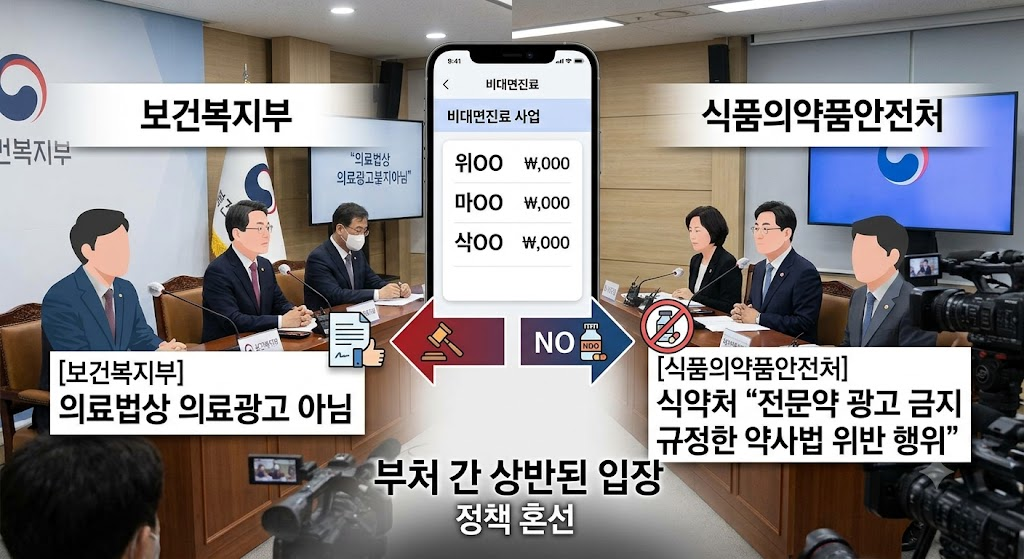
Conflicting positions from the Ministry of Health and Welfare and the Ministry of Food and Drug Safety over the display of brand names, dosages, prices and prescribing clinics for prescription obesity drugs such as Wegovy and Mounjaro on apps operated by DoctorNow and other telemedicine platforms are creating serious regulatory confusion.
The Ministry of Health and Welfare concluded that the practice of displaying on telemedicine platforms the prices or brand names of injectable obesity treatments available at hospitals and clinics following an in-person consultation—on the basis that such treatments, while restricted from telemedicine prescribing, may be prescribed in person—is unlikely to constitute medical advertising prohibited under the Medical Service Act.
The Ministry of Food and Drug Safety, however, expressed a different view, stating that identifying the names or effects of prescription drugs through telemedicine apps or other online media could violate the Pharmaceutical Affairs Act, which prohibits direct-to-consumer advertising of prescription drugs.
These were the positions provided by the ministries on the 26th regarding the display of injectable obesity drug brands, dosages, out-of-pocket prices and prescribing institutions on telemedicine apps.
Telemedicine platform operators currently provide information through their apps that allows patients to select the weight-loss injection they wish to have prescribed.
The apps display partially redacted names from which users can infer popular injectable and oral drug brands, such as MouOOO, WegOO, SaxOO and ConOOO.
After selecting or tapping a partially redacted brand name (by touch or click), users are presented with the available dosages and can even choose the quantity they wish to receive.
The patient can then visit the relevant medical institution for an in-person consultation and receive the selected prescription obesity drug in the chosen dosage and quantity.
Doctors, pharmacists and other healthcare professionals have criticized platforms’ display and promotion of obesity drug brands, dosages, out-of-pocket prices and prescribing institutions, arguing that the practice may violate existing laws.
The two ministries, however, reached different conclusions. While MOHW judged it could not definitively characterize the practice as illegal advertising prohibited under the Medical Service Act, the MFDS concluded that it could constitute advertising of prescription drugs prohibited under the Pharmaceutical Affairs Act.
MOHW, “Difficult to regard as medical advertising prohibited under the Medical Service Act”
Based on the Medical Service Act, the MOHW determined that listing obesity drug brand names on a telemedicine platform app was unlikely to constitute illegal medical advertising.
Although obesity drugs cannot generally be prescribed through telemedicine, they may be prescribed following an in-person consultation. The ministry therefore maintains that displaying information about clinics where such prescriptions are available, along with drug names and prices, is unlikely to constitute medical advertising prohibited under the Medical Service Act.
However, the MOHW said it would consider introducing provisions prohibiting the display of prescribing institutions, brand names, and prices for obesity drugs in the course of discussing subordinate legislation, as the amended Medical Service Act establishing telemedicine as a permanent program has created a legal basis for the supervision and regulation of platform operators.
MFDS, “Violates the Pharmaceutical Affairs Act’s ban on prescription drug advertising”
Unlike the MOHW, the MFDS pointed out that posting prescription drug brand names or dosages on telemedicine apps has potential legal violations.
The current Pharmaceutical Affairs Act strictly prohibits direct-to-consumer advertising of prescription drugs, which require a physician’s prescription.
According to the ministry, displaying the name or effects of a prescription drug through an online medium such as a telemedicine platform may be considered an act of broadly communicating or presenting information about a particular medicine to telemedicine users and consumers.
The ministry therefore concluded that the practice could violate the Pharmaceutical Affairs Act’s prohibition on direct-to-consumer advertising of prescription drugs.
Interministerial discord… “worsens regulatory blind spots for platforms”
The same display and advertising practice on telemedicine platforms has thus been deemed clearly unlawful by one ministry and unobjectionable under existing law by another, creating confusion for both the industry and consumers.
Critics argue that the MOHW, which oversees national health policy, has given a de facto free pass by passively interpreting the situation—where specific prescription drug names and prices are openly exposed to the public—solely based on the formal criteria of the Medical Service Act.
They also criticize the ministry’s passive stance, saying only that it will consider the issue when “drafting subordinate legislation,” even though telemedicine prescribing of obesity drugs has been restricted over concerns about misuse and platforms are circumventing the restriction by serving as gateways connecting patients with clinics and drug prices.
With telemedicine scheduled to transition to a permanent program on Dec. 24, continued controversy over the indiscriminate advertising, promotion, display and commercialization of prescription drug information through platforms has prompted calls for the ministries to swiftly reconcile their positions and establish clear regulatory standards.
Medical and pharmacy groups said, “While the MFDS has clearly concluded that the practice violates the Pharmaceutical Affairs Act, the MOHW is leaving a regulatory vacuum to persist by creating the impression that it is lawful under the Medical Service Act. Poor communication between ministries and their lukewarm administrative response are encouraging workaround marketing by platforms and the misuse of medicines.”
-

- 0
댓글 운영방식은
댓글은 실명게재와 익명게재 방식이 있으며, 실명은 이름과 아이디가 노출됩니다. 익명은 필명으로 등록 가능하며, 대댓글은 익명으로 등록 가능합니다.
댓글 노출방식은
댓글 명예자문위원(팜-코니언-필기모양 아이콘)으로 위촉된 데일리팜 회원의 댓글은 ‘게시판형 보기’와 ’펼쳐보기형’ 리스트에서 항상 최상단에 노출됩니다. 새로운 댓글을 올리는 일반회원은 ‘게시판형’과 ‘펼쳐보기형’ 모두 팜코니언 회원이 쓴 댓글의 하단에 실시간 노출됩니다.
댓글의 삭제 기준은
다음의 경우 사전 통보없이 삭제하고 아이디 이용정지 또는 영구 가입제한이 될 수도 있습니다.
-
저작권·인격권 등 타인의 권리를 침해하는 경우
상용 프로그램의 등록과 게재, 배포를 안내하는 게시물
타인 또는 제3자의 저작권 및 기타 권리를 침해한 내용을 담은 게시물
-
근거 없는 비방·명예를 훼손하는 게시물
특정 이용자 및 개인에 대한 인신 공격적인 내용의 글 및 직접적인 욕설이 사용된 경우
특정 지역 및 종교간의 감정대립을 조장하는 내용
사실 확인이 안된 소문을 유포 시키는 경우
욕설과 비어, 속어를 담은 내용
정당법 및 공직선거법, 관계 법령에 저촉되는 경우(선관위 요청 시 즉시 삭제)
특정 지역이나 단체를 비하하는 경우
특정인의 명예를 훼손하여 해당인이 삭제를 요청하는 경우
특정인의 개인정보(주민등록번호, 전화, 상세주소 등)를 무단으로 게시하는 경우
타인의 ID 혹은 닉네임을 도용하는 경우
-
게시판 특성상 제한되는 내용
서비스 주제와 맞지 않는 내용의 글을 게재한 경우
동일 내용의 연속 게재 및 여러 기사에 중복 게재한 경우
부분적으로 변경하여 반복 게재하는 경우도 포함
제목과 관련 없는 내용의 게시물, 제목과 본문이 무관한 경우
돈벌기 및 직·간접 상업적 목적의 내용이 포함된 게시물
게시물 읽기 유도 등을 위해 내용과 무관한 제목을 사용한 경우
-
수사기관 등의 공식적인 요청이 있는 경우
-
기타사항
각 서비스의 필요성에 따라 미리 공지한 경우
기타 법률에 저촉되는 정보 게재를 목적으로 할 경우
기타 원만한 운영을 위해 운영자가 필요하다고 판단되는 내용
-
사실 관계 확인 후 삭제
저작권자로부터 허락받지 않은 내용을 무단 게재, 복제, 배포하는 경우
타인의 초상권을 침해하거나 개인정보를 유출하는 경우
당사에 제공한 이용자의 정보가 허위인 경우 (타인의 ID, 비밀번호 도용 등)
※이상의 내용중 일부 사항에 적용될 경우 이용약관 및 관련 법률에 의해 제재를 받으실 수도 있으며, 민·형사상 처벌을 받을 수도 있습니다.
※위에 명시되지 않은 내용이더라도 불법적인 내용으로 판단되거나 데일리팜 서비스에 바람직하지 않다고 판단되는 경우는 선 조치 이후 본 관리 기준을 수정 공시하겠습니다.
※기타 문의 사항은 데일리팜 운영자에게 연락주십시오. 메일 주소는 dailypharm@dailypharm.com입니다.

- [Reporter's View] Surgical robotics, What is needed to export domestic tech?
- Reporter's view | Hwang, byoung woo