- LOGIN
- MemberShip
- 2026-09-18 14:04:53
- ‘Much work remains to be done for new drug access in Korea'
- by Eo, Yun-Ho | translator Kang, Shin-Kook | 2024-05-20 05:42:06

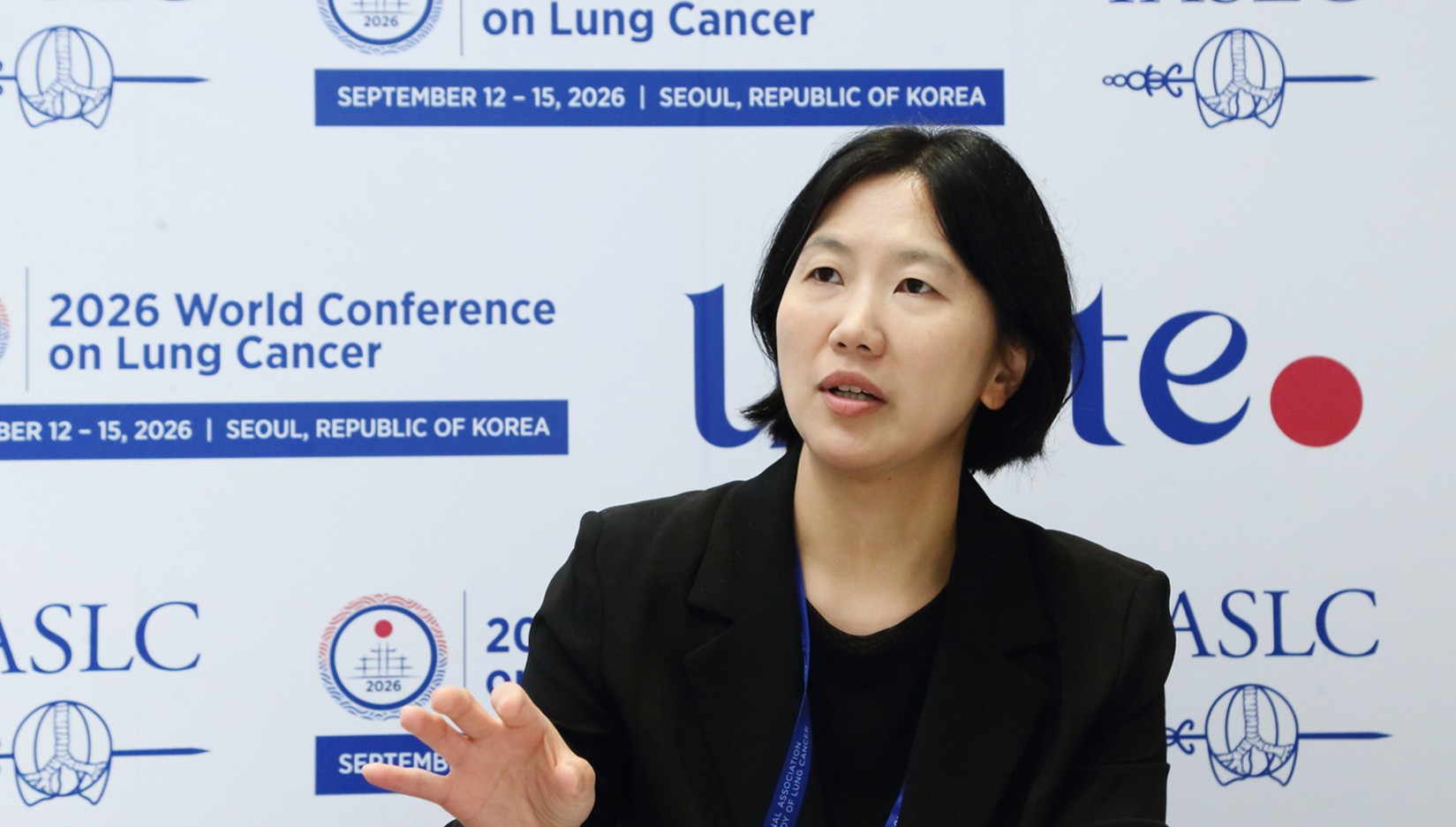
After being appointed as the general manager to lead subsidiaries including Korea, New Zealand, and Australia of the Sanofi Group, Bae was also appointed Chair of the Korean Research-based Pharmaceutical Industry Association (KRPIA) Being appointed to head the association representing multinational pharmaceutical companies in Korea along with Sanofi Group’s major Asia-Pacific countries, Bae has become a key figure in communicating with the industry and regulatory authorities, including Sanofi headquarters and the Korean government.
Bae’s appointment came at the busiest time.
Bae has received an offer every time the KRPIA Chair position became open, but she has turned down the offer up to now.
And in a situation where her scope of work became broader than ever before, she accepted the long-declined offer.
Serving as KRPIA Chair at the busiest time of her career, there had been concerns amid rising expectations about whether Bae would be able to do her part and perform both roles well.
As a control tower, KRPIA has been working to make new drugs more affordable than ever before.
Making proposals to reform the drug pricing system and engaging in government communications for its support has become a key role of the association.
In her two roles, Bae will be overseeing two of Korea’s regular drug pricing reference countries - New Zealand and Australia – at Sanofi, and be determining KRPIA’s key message and strategy on behalf of the industry.
In other words, Bae may be best positioned to make the most appropriate policy recommendations.
Dailpharm met with Bae to find out more about her new roles.
- Your appointment as KRPIA Chair came as a surprise because I thought you were going to turn down the position again. I became the head of Sanofi Australia and New Zealand and the Chair of KRPIA at the same time.
I was hesitant at first because I didn't think I had the capability yet.
However, I have always felt that I should contribute to the association's development because KRPIA's mission aligns with the values that global pharmaceutical companies deem important.
I thought this year was the right time to take on the role.
It seems to be that time of life for me when I’m destined to work.
So I plan to dedicate myself to the work at hand while taking care of my physical health.
I apologize for the unpredictability (laughs).
- This is a very important time for multinational pharmaceutical companies.
Looking at the government's policy direction, although there are still some policies that add pressure, there are also positive signals, such as the recent plan to compensate for the value of innovative new drugs. The phrase 'new drug value recognition' appeared for the first time in the 'Second Comprehensive National Health Insurance Plan' released by the government this year.
It's a good start and an encouraging achievement as it lays the groundwork for improving patient access, including recognizing the innovativeness and value of new drugs and strengthening coverage for seriously ill patients.
However, it is important to come up with concrete measures that are effective in practice so that new drugs can be supplied to patients quickly and lead to a virtuous cycle of R&D.
-What are the KRPIA's recommendations to the government to address the practical issues you mentioned? There are two main areas I would like to point out.
First, Korea is still too late in introducing new drugs.
Statistics show that the percentage of new drugs introduced in Korea within 1 year of initial global (US, EU, etc.) approval is only 5%, which is very low compared to Japan and the US.
Whether a new drug can actually be used by patients is most important.
To address this issue, Korea has a Global Innovative Products on Fast Track (GIFT) system in place.
However, we need to check whether the system is really shortening the review period and where the bottlenecks are.
I think we first need to come up with a solution for drugs that are in urgent need of introduction.
The second is in recognizing the value of new drugs.
Companies are motivated when the value of new drugs is recognized, which in turn generates profits and creates a virtuous cycle of R&D.
This ultimately requires a significant change in drug pricing policies, including a dramatic improvement in ICER values.
When global pharmaceutical companies consider whether to invest in R&D in China, Japan, Southeast Asia, and Singapore, among other countries, they have to prioritize investing in countries with a strong R&D reputation.
From an industrial perspective, this is why we need to move to reinforce Korea’s R&D competitiveness.
Also, due to limited national health insurance finances, we need to take a look at the expenditure structure.
In terms of the proportion of new drugs in drug expenditures, new drugs account for 60 to 70% of all drug expenditures abroad, but they account for less than 10% in Korea.
We need to reorganize the inefficient systems that allow polypharmacy and clinic shopping.
This way, we can budget for new drugs without putting a strain on insurance finances.
-It was also surprising to see KRPIA voice the need to improve Korea’s expenditure structure.
structure.
Multinational pharmaceutical companies have been cautious in speaking out on the issue because the domestic market still has a strong tendency to look at new drugs as being from multinational companies, and generic drugs from domestic companies. Many were surprised that we released data on Korea’s drug expenditure structure (and the proportion of new drugs) last year.
However, the government should be encouraging domestic companies to develop new drugs now.
From the PE exemption system to ICER valuations, everything is connected, so KRPIA plans to communicate with the government on the issue whenever there is an opportunity.
-It was also unexpected that KRPIA would request the government to disclose the discussions and results of committee reviews (such as those by the Pharmacoeconomic Evaluation Subcommittee) that new drugs undergo in the reimbursement process. Of course, securing the transparency of the reimbursement process may be a cautious matter for companies due to each company’s strategic secrets and so forth.
But in the big picture of healthcare, patients are waiting.
Information sharing is really important for decision-making.
Transparency in that area is a win-win for the companies.
I think this is why the government has been responding to many of the requests.
-The government's efforts to strengthen post-listing control of drugs are also expected to be in full swing this year.
Policies such as those that utilize real-world data (RWD) and switching the pharmacoeconomic evaluation exemption system to a temporary deferral of evaluation system may be of concern and dissatisfaction to KRPIA. I think post-listing control is necessary in part to manage the overall insurance finances.
However, Korea’s post-management system is not integrated and is too fragmented, including the PVA (price-volume agreement), which often results in redundant drug price reduction mechanisms From the company's point of view, the system needs to be simplified to be predictable.
Currently, the government operates a follow-up system that focuses only on drug prices, such as PVA, which creates a high administrative burden.
I would like to see a system that takes into account the structural aspects, such as strengthening health insurance coverage for severe diseases over mild diseases.
There seems to be too much focus on just reducing drug prices.
Strengthening post-listing control without improving the system and policies for rapid new drug registration in Korea will eventually lead to another decline in access to new drugs.
KRPIA is preparing a report on the problems of the post-listing control measures and suggestions for their improvement that we plan to propose to the government based on the views of professionals with extensive experience in the field.
-

- 0
댓글 운영방식은
댓글은 실명게재와 익명게재 방식이 있으며, 실명은 이름과 아이디가 노출됩니다. 익명은 필명으로 등록 가능하며, 대댓글은 익명으로 등록 가능합니다.
댓글 노출방식은
댓글 명예자문위원(팜-코니언-필기모양 아이콘)으로 위촉된 데일리팜 회원의 댓글은 ‘게시판형 보기’와 ’펼쳐보기형’ 리스트에서 항상 최상단에 노출됩니다. 새로운 댓글을 올리는 일반회원은 ‘게시판형’과 ‘펼쳐보기형’ 모두 팜코니언 회원이 쓴 댓글의 하단에 실시간 노출됩니다.
댓글의 삭제 기준은
다음의 경우 사전 통보없이 삭제하고 아이디 이용정지 또는 영구 가입제한이 될 수도 있습니다.
-
저작권·인격권 등 타인의 권리를 침해하는 경우
상용 프로그램의 등록과 게재, 배포를 안내하는 게시물
타인 또는 제3자의 저작권 및 기타 권리를 침해한 내용을 담은 게시물
-
근거 없는 비방·명예를 훼손하는 게시물
특정 이용자 및 개인에 대한 인신 공격적인 내용의 글 및 직접적인 욕설이 사용된 경우
특정 지역 및 종교간의 감정대립을 조장하는 내용
사실 확인이 안된 소문을 유포 시키는 경우
욕설과 비어, 속어를 담은 내용
정당법 및 공직선거법, 관계 법령에 저촉되는 경우(선관위 요청 시 즉시 삭제)
특정 지역이나 단체를 비하하는 경우
특정인의 명예를 훼손하여 해당인이 삭제를 요청하는 경우
특정인의 개인정보(주민등록번호, 전화, 상세주소 등)를 무단으로 게시하는 경우
타인의 ID 혹은 닉네임을 도용하는 경우
-
게시판 특성상 제한되는 내용
서비스 주제와 맞지 않는 내용의 글을 게재한 경우
동일 내용의 연속 게재 및 여러 기사에 중복 게재한 경우
부분적으로 변경하여 반복 게재하는 경우도 포함
제목과 관련 없는 내용의 게시물, 제목과 본문이 무관한 경우
돈벌기 및 직·간접 상업적 목적의 내용이 포함된 게시물
게시물 읽기 유도 등을 위해 내용과 무관한 제목을 사용한 경우
-
수사기관 등의 공식적인 요청이 있는 경우
-
기타사항
각 서비스의 필요성에 따라 미리 공지한 경우
기타 법률에 저촉되는 정보 게재를 목적으로 할 경우
기타 원만한 운영을 위해 운영자가 필요하다고 판단되는 내용
-
사실 관계 확인 후 삭제
저작권자로부터 허락받지 않은 내용을 무단 게재, 복제, 배포하는 경우
타인의 초상권을 침해하거나 개인정보를 유출하는 경우
당사에 제공한 이용자의 정보가 허위인 경우 (타인의 ID, 비밀번호 도용 등)
※이상의 내용중 일부 사항에 적용될 경우 이용약관 및 관련 법률에 의해 제재를 받으실 수도 있으며, 민·형사상 처벌을 받을 수도 있습니다.
※위에 명시되지 않은 내용이더라도 불법적인 내용으로 판단되거나 데일리팜 서비스에 바람직하지 않다고 판단되는 경우는 선 조치 이후 본 관리 기준을 수정 공시하겠습니다.
※기타 문의 사항은 데일리팜 운영자에게 연락주십시오. 메일 주소는 dailypharm@dailypharm.com입니다.