- LOGIN
- MemberShip
- 2026-09-13 11:43:11
- 'Treatment options for psoriasis are evolving'
- by Son, Hyung Min | translator Alice Kang | 2024-09-27 05:53:27
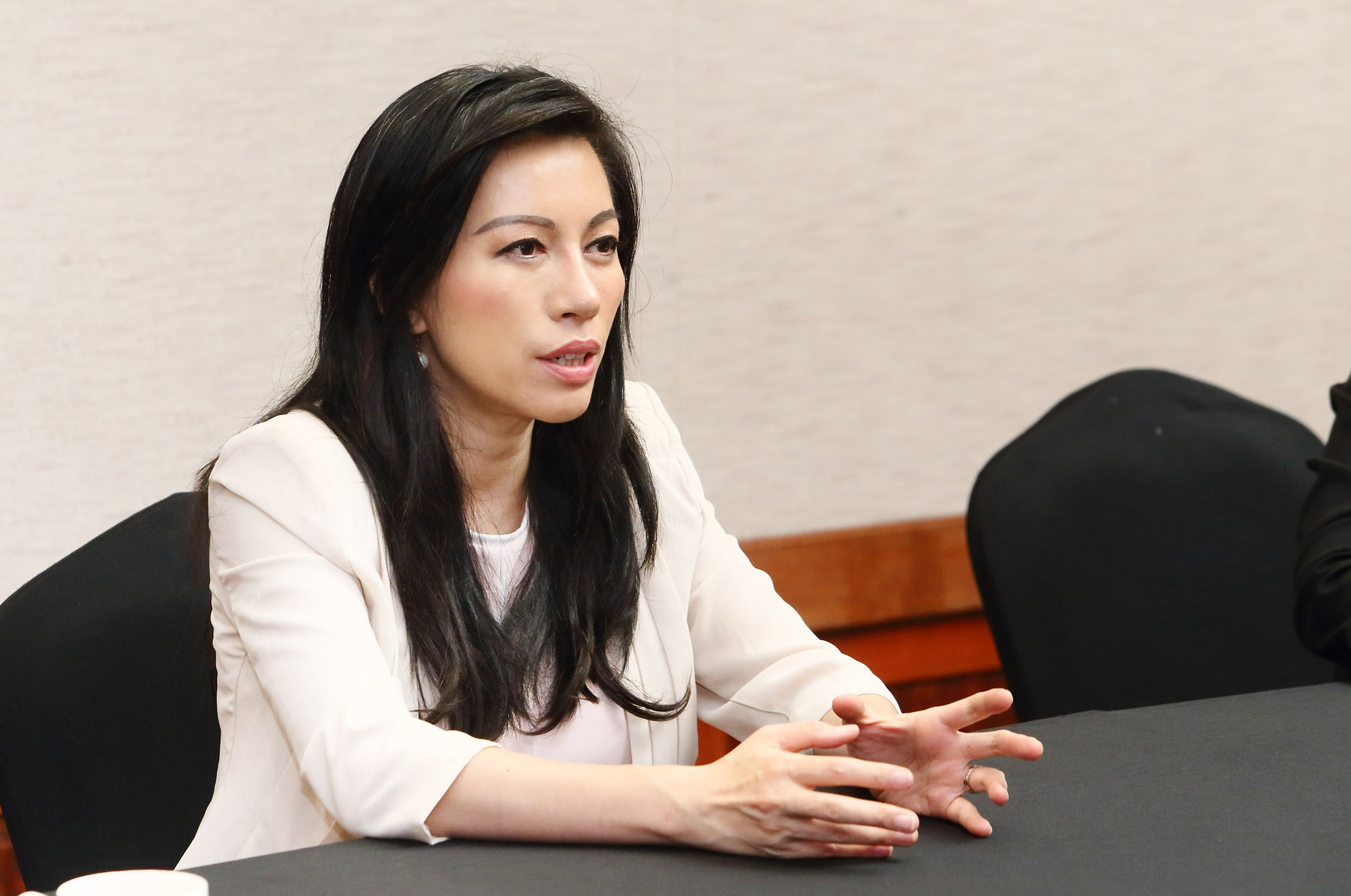
April W.
Armstrong, Professor and Chief of Dermatology at the University of California Los Angeles (UCLA) David Geffen School of Medicine “In the field of psoriasis, the development of many biologics has been largely abandoned due to the lack of convincing data showing similar efficacy to marketed drugs.
On the other hand, in the field of oral drugs, interest in the TYK2 mechanism has increased upon the introduction of Sotyktu, increasing the industry’s R&D on such oral drugs.
I expect to see an active oral psoriasis treatment option development in the coming years.” Dr.
April Armstrong, a professor at the David Geffen School of Medicine at UCLA, recently spoke to Dailypharm about her rising expectations in the future of psoriasis treatment upon the introduction of various psoriasis treatment options.
Professor Armstrong is an expert in the field of psoriasis, having served as chair of the Medical Board at the National Psoriasis Foundation and co-president of the Group for Research and Assessment of Psoriasis and Psoriatic Arthritis (GRAPPA).
Psoriasis is a chronic, non-contagious skin condition with flare-ups and remissions, with an estimated prevalence of 3% in Korea and an estimated 1.5 million patients.
It is characterized by narrow, rice-like red patches on the skin, covered with white dead skin cells, which can grow from the size of a coin to the size of the palm of your hand when the rash becomes aggravated.
Psoriasis is categorized by clinical type, and in “plaque psoriasis, which accounts for 80 to 90 percent of all cases, the rash is shaped like a plaque.
Psoriasis is not just a skin disease, but a systemic and persistent immunologic abnormality that is difficult to cure and requires long-term management.
The goal of treatment for psoriasis is to improve the quality of life by improving skin lesions and controlling flare-ups and exacerbations while minimizing the side effects of medications and preventing the many systemic complications caused by chronic inflammation.
A variety of treatment options have already emerged for psoriasis, including TNF-α inhibitors and interleukin (IL)-inhibitors.
In addition, new oral therapies, such as BMS' Sotyktu, have emerged to target both therapeutic efficacy and patient convenience.
Sotyktu is the first TYK2 inhibitor approved for moderate-to-severe plaque psoriasis in adults.
Sotyktu is taken orally once daily, regardless of meals, with no dosage adjustments, expanding the patients’ options in a setting where biologics were the only treatment option available outside of the existing universal treatment.
Professor Armstrong emphasized that Sotyktu brought the psoriasis treatment environment a step forward and that oral formulations could be the next big R&D trend.
Introductino of Sotyktu...first oral treatment option to target TKY2 Sotyktu is a TYK2 inhibitor.
TYK2 is an important link in the signaling pathway of IL-23, a cytokine known to play a key role in the pathogenesis of psoriasis.
TYK2 mediates multiple cytokine pathways, such as IL-23, which in turn triggers the production of pro-inflammatory cytokines including IL-17 that promote keratinocyte proliferation and epidermal overgrowth, resulting in psoriasis.
As a TYK2 inhibitor, Sotyktu selectively binds to the regulatory domain of TYK2 and blocks IL-23 signaling, thereby reducing the production of IL-23 and IL-17, which in turn reduces keratinocyte proliferation.
“Patients with psoriasis have long suffered from a lack of adequate treatments, and only recently have started gaining access to moderately effective treatments,” said Professor Armstrong.
However, there is still an unmet need.
Healthcare providers need to ensure that patients have access to treatments that fit their preferences and lifestyle.
Some patients may be uncomfortable with the idea of injections.
Some patients avoid Injectable medications due to significant anxiety, such as fear of needles, in which case oral medications can be an alternative.” The introduction of Sotyktu expanded options for patients who have primarily been prescribed injectables.
In addition to the clinical trial that became the basis of its approval, Sotyktu’s efficacy and safety were confirmed in recently published 4-year patient follow-up results.
The study, named POETYK PSO-1,2, LTE, looked at the Psoriasis Area and Severity Index (PASI) 75 response rate and static Physician's Global Assessment (sPGA) 0/1 response rate from 52 weeks to 4 years in 513 patients who continuously received Sotyktu for 4 years.
Results showed that 71% of patients treated with Sotyktu maintained PASI 75 over the 4 years, and 57% of patients achieved and maintained a high standard of “clear” and “almost clear” skin.
“No new adverse events or signals were identified in the safety data collected over the 4 years,” said Professor Armstrong.
The safety profile and tolerability seen in the parent study were well maintained in the Sotyktu arm.” “In terms of safety, Sotyktu was free of serious or major adverse events, including major adverse cardiovascular events, cancer, and venous thromboembolism.
Also, the serious adverse events that may arise with the Janus kinase (JAK) 1/2/3 inhibitors, such as serious infections and psoriatic arthritis, were not reported with the use of Sotyktu.” Another strength of Sotyktu is that it is effective in Asian patients.
In the PSO-3 study, which focused on Asian patients from Korea, China, and Taiwan, the PASI response rate was approximately 10% higher than that identified in the global study.
“The superior data of Sotyktu identified in the Asian study may be due to the fact that Asians tend to weigh less than Westerners, as well as genetic differences,” explained Professor Armstrong.
“The PSO-4 clinical data in Japanese patients showed a 76% PASI 75 rate and 83% sPGA 0/1 rate at Week 16.” “However, it should be noted that both PSO-3 and 4 trials were relatively small studies compared to global studies, and PSO-4 was a single-arm study in Japanese patients.
Single-arm studies without control arms tend to show higher rates,” added Professor Armstrong.
Increased psoriasis treatment options...
broaden choices for patients Treatment options for psoriasis have expanded with the introduction of a variety of new drugs, including injectable and oral therapies.
Various treatment options, which include IL-17, IL-23, TNF-α inhibitors, and Sotyktu, are all improving the quality of life for patients with psoriasis.
However, Professor Armstrong suggests that the future trend in R&D for psoriasis treatments will likely shift toward oral agents.
“With the introduction of Sotyktu, the development of biologics (injectables) in the treatment of psoriasis has gradually faded away,” said Professor Armstrong, ”Fewer new biologics are being developed, except for those that are nearing the end of development or have already been launched in other countries and are expected to be introduced to Korea.” According to Professor Armstrong, some biologics are under clinical trials in the U.S., but many of them have been discontinued due to the lack of convincing data, showing similar efficacy to drugs already on the market.
In the case of IL-17 inhibitors, concerns have been raised about the exacerbation of inflammatory bowel diseases such as ulcerative colitis and Crohn's disease, as well as oral candidiasis.
IL-23 inhibitors have not been associated with any significant adverse events, but there have been concerns about pain or discomfort at the injection site and upper respiratory tract infections.
On the other hand, the safety of oral Sotyktu is considered to be well-established with 4 years of data.
While other oral therapies have been associated with higher rates of adverse events such as nausea and vomiting than placebo, Sotyktu has been well tolerated, with rates of these events not significantly different from placebo, said Professor Armstrong.
“This is an exciting time for patients with psoriasis, due to the increasing treatment options available.
Contrary to how patients had to choose between safety or efficacy when opting to use oral treatment options, oral therapies have evolved since then.
New oral drugs such as Sotyktu have demonstrated long-term efficacy and safety comparable to first-generation biologics such as TNF-α inhibitors and IL-12/23 inhibitors,” said Professor Armstrong.
”The treatment options have significantly improved than in the past.”
-

- 0
댓글 운영방식은
댓글은 실명게재와 익명게재 방식이 있으며, 실명은 이름과 아이디가 노출됩니다. 익명은 필명으로 등록 가능하며, 대댓글은 익명으로 등록 가능합니다.
댓글 노출방식은
댓글 명예자문위원(팜-코니언-필기모양 아이콘)으로 위촉된 데일리팜 회원의 댓글은 ‘게시판형 보기’와 ’펼쳐보기형’ 리스트에서 항상 최상단에 노출됩니다. 새로운 댓글을 올리는 일반회원은 ‘게시판형’과 ‘펼쳐보기형’ 모두 팜코니언 회원이 쓴 댓글의 하단에 실시간 노출됩니다.
댓글의 삭제 기준은
다음의 경우 사전 통보없이 삭제하고 아이디 이용정지 또는 영구 가입제한이 될 수도 있습니다.
-
저작권·인격권 등 타인의 권리를 침해하는 경우
상용 프로그램의 등록과 게재, 배포를 안내하는 게시물
타인 또는 제3자의 저작권 및 기타 권리를 침해한 내용을 담은 게시물
-
근거 없는 비방·명예를 훼손하는 게시물
특정 이용자 및 개인에 대한 인신 공격적인 내용의 글 및 직접적인 욕설이 사용된 경우
특정 지역 및 종교간의 감정대립을 조장하는 내용
사실 확인이 안된 소문을 유포 시키는 경우
욕설과 비어, 속어를 담은 내용
정당법 및 공직선거법, 관계 법령에 저촉되는 경우(선관위 요청 시 즉시 삭제)
특정 지역이나 단체를 비하하는 경우
특정인의 명예를 훼손하여 해당인이 삭제를 요청하는 경우
특정인의 개인정보(주민등록번호, 전화, 상세주소 등)를 무단으로 게시하는 경우
타인의 ID 혹은 닉네임을 도용하는 경우
-
게시판 특성상 제한되는 내용
서비스 주제와 맞지 않는 내용의 글을 게재한 경우
동일 내용의 연속 게재 및 여러 기사에 중복 게재한 경우
부분적으로 변경하여 반복 게재하는 경우도 포함
제목과 관련 없는 내용의 게시물, 제목과 본문이 무관한 경우
돈벌기 및 직·간접 상업적 목적의 내용이 포함된 게시물
게시물 읽기 유도 등을 위해 내용과 무관한 제목을 사용한 경우
-
수사기관 등의 공식적인 요청이 있는 경우
-
기타사항
각 서비스의 필요성에 따라 미리 공지한 경우
기타 법률에 저촉되는 정보 게재를 목적으로 할 경우
기타 원만한 운영을 위해 운영자가 필요하다고 판단되는 내용
-
사실 관계 확인 후 삭제
저작권자로부터 허락받지 않은 내용을 무단 게재, 복제, 배포하는 경우
타인의 초상권을 침해하거나 개인정보를 유출하는 경우
당사에 제공한 이용자의 정보가 허위인 경우 (타인의 ID, 비밀번호 도용 등)
※이상의 내용중 일부 사항에 적용될 경우 이용약관 및 관련 법률에 의해 제재를 받으실 수도 있으며, 민·형사상 처벌을 받을 수도 있습니다.
※위에 명시되지 않은 내용이더라도 불법적인 내용으로 판단되거나 데일리팜 서비스에 바람직하지 않다고 판단되는 경우는 선 조치 이후 본 관리 기준을 수정 공시하겠습니다.
※기타 문의 사항은 데일리팜 운영자에게 연락주십시오. 메일 주소는 dailypharm@dailypharm.com입니다.