- LOGIN
- MemberShip
- 2026-09-12 22:56:26
- New treatment options for pancreatic cancer arise
- by Son, Hyung Min | translator Alice Kang | 2024-12-09 05:47:07
New antibody drugs are showing results in pancreatic cancer, a disease area that has been regarded as an incurable disease.
Recently, a new bispecific antibody drug from the Dutch company Merus was approved for the treatment of pancreatic cancer in the United States.
In clinical trials, the drug has shown therapeutic effects in patients with pancreatic cancer and non-small cell lung cancer.
In Korea, efforts to develop new antibody drugs for pancreatic cancer are also underway.
Prestige BioPharma, Aptamer Sciences, and ABL Bio have confirmed the potential of antibody drugs in pancreatic cancer.
Merus’s HER2·HER3 targeted bispecific antibody secures indications for pancreatic cancer and non-small cell lung cancer

Bizengri is the first bispecific antibody approved for neuregulin 1 gene (NRG1) fusion lung and pancreatic cancer.
The drug received accelerated approval and is subject to further confirmatory clinical trials to determine full approval.
Bizengri was first under clinical development as a HER2-targeted antibody but was redirected to simultaneously target the NRG1 gene fusion, a variant of the HER2 and HER3 antibodies, to increase the therapeutic effect.
Bizengri’s license was based on a Phase I/II eNRGy study.
The study included 30 patients with NRG1-positive pancreatic cancer and 64 patients with non-small cell lung cancer who had failed prior therapy.
The mean age of the pancreatic cancer patients was 49 years, and 57% were male.
The primary endpoints were overall response rate (ORR) and duration of response (DOR) as determined by Blinded Independent Central Review (BICR).
Clinical results showed an ORR of 40% in patients with pancreatic cancer.
DOR ranged from a median of 3.7 months to up to 16.6 months.
Bizengri showed a strong suit in terms of safety.
The most common adverse events occurring after treatment with Bizengri were diarrhea, musculoskeletal pain, fatigue, nausea, constipation, vomiting, and abdominal pain.
Adverse reactions occurred in approximately 10% of patients and were generally mild.
Merus is recruiting patients to participate in a confirmatory clinical trial for full approval of Bizengri.
The company expects Bizengri to be effective in all cancer types driven by NRG1 fusions.
Monoclonal antibody, ADC, bispecific antibody for pancreatic cancer

Prestige Biopharma, LigaChem Biosciences, ABL Bio, and Aptamer Sciences are checking the potential of monoclonal antibodies, ADCs, and bispecific antibodies.
Pancreatic cancer has one of the lowest survival rates among cancer diseases.
According to the National Cancer Center, the 5-year survival rate for pancreatic cancer from 2017 to 2021 is only 15.9%.
Due to its organ location, pancreatic cancer has an early detection rate of less than 10%, making it easy to metastasize to surrounding organs.
New drugs from various domestic and foreign pharmaceutical companies have tried their hand in this field, but most of them have failed in the clinical trial stage.
As such, antibody drugs are emerging as an alternative.
Antibody-drug conjugates (ADCs) and multi-antibodies that target 2 or more biomarkers at the same time are actively being tested to conquer intractable diseases.
Prestige Biopharma is developing an antibody drug candidate, PBP1510.
PBP1510 neutralizes the pancreatic ductal adenocarcinoma overexpression factor PAUF protein, which is a therapeutic target for pancreatic cancer.
PBP1510 is currently in Phase I/IIa clinical trials in Spain, the United States, Singapore, and Australia.
Through this study, Prestige Biopharma plans to determine the safety and tolerability of PBP1510 in combination with gemcitabine.
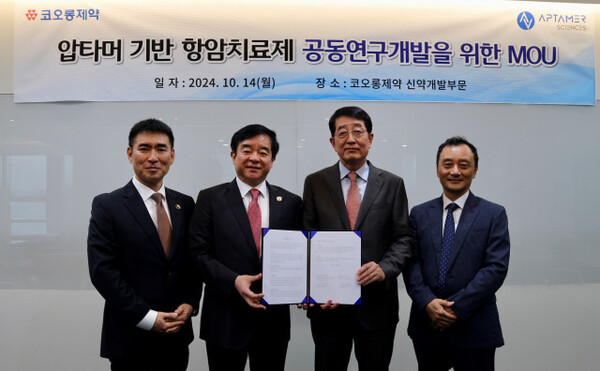
Aptamer Sciences recently signed a collaboration agreement with Kolon Pharmaceuticals to jointly develop its ADC candidate AST-203.
The two companies plan to conduct clinical studies of AST-203 with the goal of securing an indication for pancreatic cancer.
The new drug candidate selectively binds to TROP2-positive tumors and penetrates the cell, releasing MMAE, which inhibits cell division, to induce cancer cell death.
TROP2 is an intracellular calcium signal transducer involved in cell proliferation and survival.
The protein is present in normal cells but tends to be overexpressed in cancer cells and has been linked to drug resistance.
The only commercialized drug targeting TROP2 is Gilead's ADC Trodelvy, which is approved for triple-negative breast cancer.
In preclinical studies, Aptamer Sciences has shown promise for AST-203 in tumor spheroid (3D aggregates of tumor cells) models.
According to the company, AST-203 demonstrated a 6.7-fold higher tumor penetration rate than the existing Trodelvy.
ABL Bio is developing bispecific ADCs targeting major solid tumors, including pancreatic, esophageal, colon, and head and neck cancers.
Its target antigens are not yet known, but the company says it has shown efficacy compared to single-target ADCs.
The company plans to file an IND later next year to test the bispecific ADC in the clinic.
-

- 0
댓글 운영방식은
댓글은 실명게재와 익명게재 방식이 있으며, 실명은 이름과 아이디가 노출됩니다. 익명은 필명으로 등록 가능하며, 대댓글은 익명으로 등록 가능합니다.
댓글 노출방식은
댓글 명예자문위원(팜-코니언-필기모양 아이콘)으로 위촉된 데일리팜 회원의 댓글은 ‘게시판형 보기’와 ’펼쳐보기형’ 리스트에서 항상 최상단에 노출됩니다. 새로운 댓글을 올리는 일반회원은 ‘게시판형’과 ‘펼쳐보기형’ 모두 팜코니언 회원이 쓴 댓글의 하단에 실시간 노출됩니다.
댓글의 삭제 기준은
다음의 경우 사전 통보없이 삭제하고 아이디 이용정지 또는 영구 가입제한이 될 수도 있습니다.
-
저작권·인격권 등 타인의 권리를 침해하는 경우
상용 프로그램의 등록과 게재, 배포를 안내하는 게시물
타인 또는 제3자의 저작권 및 기타 권리를 침해한 내용을 담은 게시물
-
근거 없는 비방·명예를 훼손하는 게시물
특정 이용자 및 개인에 대한 인신 공격적인 내용의 글 및 직접적인 욕설이 사용된 경우
특정 지역 및 종교간의 감정대립을 조장하는 내용
사실 확인이 안된 소문을 유포 시키는 경우
욕설과 비어, 속어를 담은 내용
정당법 및 공직선거법, 관계 법령에 저촉되는 경우(선관위 요청 시 즉시 삭제)
특정 지역이나 단체를 비하하는 경우
특정인의 명예를 훼손하여 해당인이 삭제를 요청하는 경우
특정인의 개인정보(주민등록번호, 전화, 상세주소 등)를 무단으로 게시하는 경우
타인의 ID 혹은 닉네임을 도용하는 경우
-
게시판 특성상 제한되는 내용
서비스 주제와 맞지 않는 내용의 글을 게재한 경우
동일 내용의 연속 게재 및 여러 기사에 중복 게재한 경우
부분적으로 변경하여 반복 게재하는 경우도 포함
제목과 관련 없는 내용의 게시물, 제목과 본문이 무관한 경우
돈벌기 및 직·간접 상업적 목적의 내용이 포함된 게시물
게시물 읽기 유도 등을 위해 내용과 무관한 제목을 사용한 경우
-
수사기관 등의 공식적인 요청이 있는 경우
-
기타사항
각 서비스의 필요성에 따라 미리 공지한 경우
기타 법률에 저촉되는 정보 게재를 목적으로 할 경우
기타 원만한 운영을 위해 운영자가 필요하다고 판단되는 내용
-
사실 관계 확인 후 삭제
저작권자로부터 허락받지 않은 내용을 무단 게재, 복제, 배포하는 경우
타인의 초상권을 침해하거나 개인정보를 유출하는 경우
당사에 제공한 이용자의 정보가 허위인 경우 (타인의 ID, 비밀번호 도용 등)
※이상의 내용중 일부 사항에 적용될 경우 이용약관 및 관련 법률에 의해 제재를 받으실 수도 있으며, 민·형사상 처벌을 받을 수도 있습니다.
※위에 명시되지 않은 내용이더라도 불법적인 내용으로 판단되거나 데일리팜 서비스에 바람직하지 않다고 판단되는 경우는 선 조치 이후 본 관리 기준을 수정 공시하겠습니다.
※기타 문의 사항은 데일리팜 운영자에게 연락주십시오. 메일 주소는 dailypharm@dailypharm.com입니다.