- LOGIN
- MemberShip
- 2026-07-23 01:08:20
- Keytruda and Vyloy to transform gastric cancer treatment
- by Moon, sung-ho | translator Alice Kang | 2024-12-17 05:51:13
Metastatic gastric cancer has long been labeled as a drug-barren area on site.
Various clinical studies have been conducted to develop new therapies for the area, but most have been unsuccessful.
This is due to the tumor's heterogeneity, which makes it difficult to prove the efficacy of treatments.
However, the recent introduction of immuno-oncology drugs and targeted therapies has changed the treatment strategy in clinical practice.
However, due to obstacles in the domestic health insurance system, such as reimbursement and companion diagnostics, the use of these drugs in clinical practice is still limited.
And pharmaceutical companies that are well aware of the situation have been scrambling to solve the problem.
According to industry sources on the 13th, several drugs from global pharmaceutical companies have been approved in Korea for metastatic gastric cancer this year and are now available for clinical use.
One representative drug is MSD Korea’s Keytruda (pembrolizumab).
Keytruda was approved for the first-line treatment of metastatic HER2-positive gastric cancer, and in March this year, the indication was expanded to include HER2-negative gastric cancer.
This makes Keytruda the first immuno-oncology option approved for both HER2-positive and HER2-negative gastric cancer.
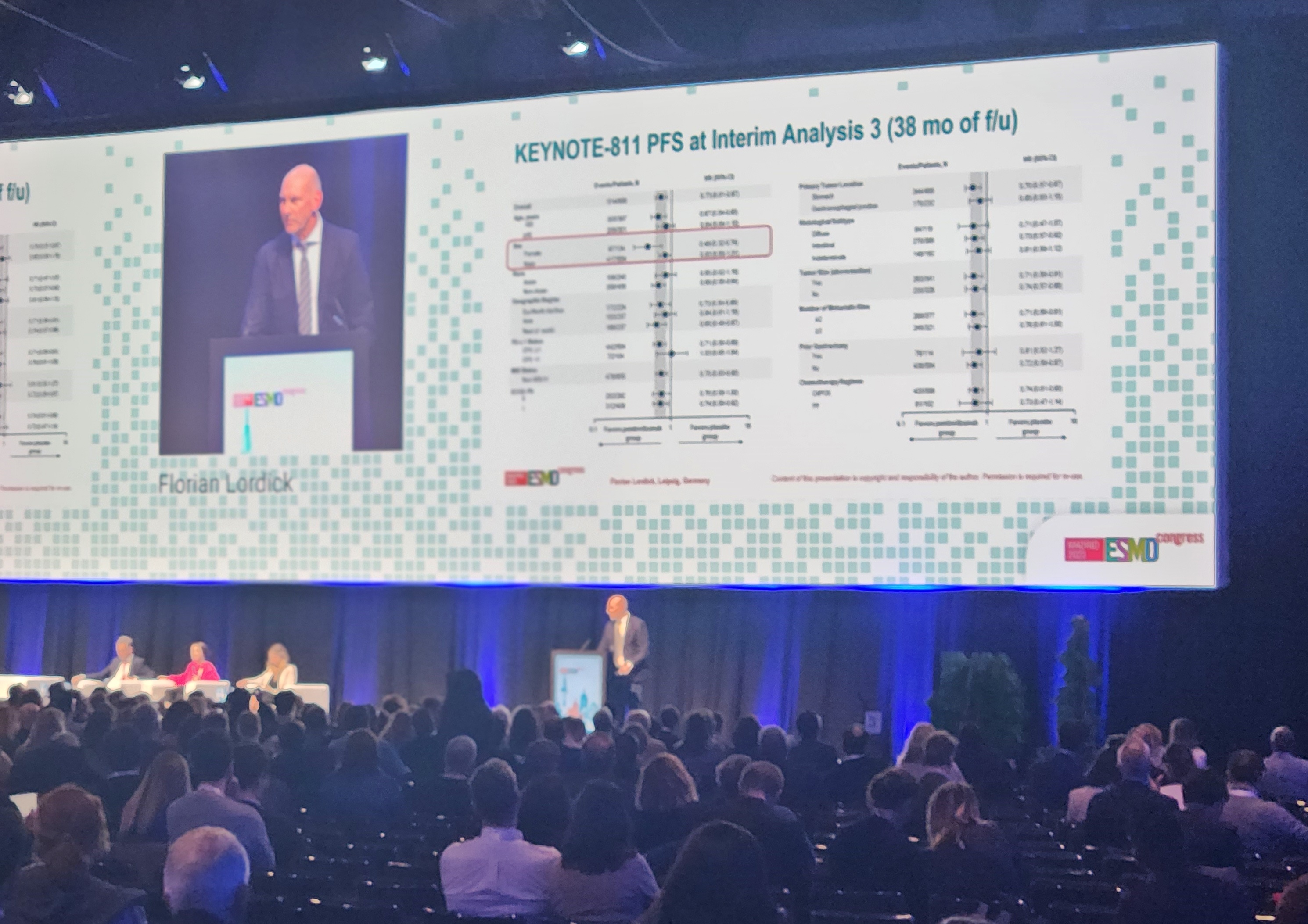
In the case of metastatic HER2-positive gastric cancer, the new indication was based on KEYNOTE-811, which was presented at the European Society for Medical Oncology’s ESMO Congress 2023.
Specifically, after a median follow-up of 28.4 months, the Keytruda-trastuzumab-chemotherapy combination (10.0 months) reduced the risk of disease progression or death by 28% compared to trastuzumab-chemotherapy (8.1 months), resulting in a statistically significant improvement in PFS in the advanced HER2-positive gastric cancer ITT(intention to treat) population.
The KEYNOTE-811 study, in particular, was expanded to a global clinical trial based on a trial led by Professor Sun Young Rha (Medical Oncology) at Yonsei Cancer Hospital.
In addition, Keytruda was approved in March this year for the first-line treatment of HER2-negative gastric cancer, demonstrating clinical utility over chemotherapy regardless of the patient’s PD-L1 expression.
Results from the KEYNOTE-859 trial, which became the basis of the drug’s approval for the indication, showed that at a median follow-up of 31 months, the median overall survival (OS) of the Keytruda-antineoplastic chemotherapy combination was 12.9 months, compared to 11.5 months with chemotherapy alone, and the risk of death was reduced by 22%.
If Keytruda has changed the landscape of gastric cancer treatment as an immuno-oncology agent, Astellas' Vyloy (zolbetuximab) is the representative targeted therapy option.
Vyloy is the first globally approved Claudin 18.2-targeted treatment, an immunoglobulin monoclonal antibody that binds to Claudin 18.2, a protein expressed and exposed in the stomach.
Its approval in Korea allows Vyloy to be used in combination with fluoropyrimidine and platinum-based chemotherapy as a first-line treatment for patients with Claudin 18.2-positive, HER2-negative, unresectable locally advanced or metastatic gastric adenocarcinoma or gastro-oesophageal junction adenocarcinoma.
The approval of Vyloy was based on two Phase 3 trials in patients with Claudin 18.2-positive and HER2-negative unresectable, locally advanced or metastatic gastric adenocarcinoma or gastro-oesophageal junction adenocarcinoma, the SPOTLIGHT and GLOW studies.
In SPOTLIGHT, the median progression-free survival (PFS) in the Vyloy arm was 10.61 months, compared to 8.67 months in the control arm, reducing the risk of disease progression or death by approximately 25%.
The secondary endpoint, median OS, was significantly higher in the Vyloy arm at 18.23 months versus 15.54 months in the placebo arm.
Professor Sun Young Rha (Medical Oncology, Yonsei Cancer Hospital), Chairman of the Korean Cancer Association, said, “With an estimated prevalence of more than 100,000 patients with Stage IV gastric cancer in Korea, the approval of the first Claudin 18.2-targeted therapy will provide a breakthrough in the treatment of metastatic gastric cancer, an area that had limited options.
In addition to expanding treatment options, the significant improvement in mOS compared to conventional chemotherapy, as Vyloy reduced the risk of disease progression or death by approximately 25%, is very encouraging in the treatment of metastatic gastric cancer due to its stagnant survival rate.” Keytruda’s expanded indication and the introduction of Vyloy have changed the treatment strategy for metastatic gastric cancer in Korea, but institutional obstacles have been obstructing its full use on-site.
In the case of Keytruda, it has been difficult to cross the threshold of the Health Insurance Review and Assessment Service's Cancer Disease Deliberation Committee.
It has applied for reimbursement for 17 indications but is being held up by the CDDC because it would require a significant investment in health insurance finances.
As of August, the company has applied for insurance reimbursement benefits to the CDDC for a total of 17 indications, upon being granted marketing authorization for 33 indications in 17 cancers.
After applying for reimbursement for 13 indications last year, the company added four more indications to the application this year, including MSI-H gastric cancer, MSI-H biliary tract cancer, HER2-positive gastric cancer, and HER2-negative gastric cancer.
In addition, MSD Korea submitted a new reimbursement proposal in October to expand the reimbursement standard for 17 indications, including gastric cancer and is making every effort to set reimbursement standards this year.
For reference, HIRA’s last CDDC meeting this year is scheduled for the 18th.
However, it has been reported that there has not been a proper discussion made on the gastric cancer indication yet.
If it fails to pass this year's CDDC review, Keytruda's application will enter its third year of deliberations.
An MSD Korea official said, “Patients with gastric cancer, triple-negative breast cancer, and head and neck cancer, for which there are no current therapies available, are longing for the opportunity to be treated with Keytruda, which has demonstrated sufficient clinical utility.
This reimbursement submission also includes the gastric cancer indication for which we applied for additional reimbursement expansion earlier this year.
We hope it will be included in the final CDDC review.” Vyloy’s situation is different, but similar to Keytruda's.
Companion diagnostics are required to use the drug, but this restriction is holding the drug’s use back.
This is because HIRA is reportedly considering whether Roche Diagnostics' companion diagnostic test for Claudin 18.2, immunohistochemistry (IHC), should be evaluated as a new health technology in the reimbursement review process.
If it is subject to a new health technology assessment, it would be difficult to utilize Vyloy in clinical practice during the review period, apart from its reimbursement.
“If the companion diagnostic test method for Vyloy is subject to new health technology assessments, the introduction of the treatment in Korea may be delayed for up to a year,” said Rha.
Targeted anticancer drugs and companion diagnostics inevitably go hand in hand, but the current system has structural limitations that do not support this, and patients are left to suffer the consequences.
The KCA will continue to advocate for policy changes.”
-

- 0
댓글 운영방식은
댓글은 실명게재와 익명게재 방식이 있으며, 실명은 이름과 아이디가 노출됩니다. 익명은 필명으로 등록 가능하며, 대댓글은 익명으로 등록 가능합니다.
댓글 노출방식은
댓글 명예자문위원(팜-코니언-필기모양 아이콘)으로 위촉된 데일리팜 회원의 댓글은 ‘게시판형 보기’와 ’펼쳐보기형’ 리스트에서 항상 최상단에 노출됩니다. 새로운 댓글을 올리는 일반회원은 ‘게시판형’과 ‘펼쳐보기형’ 모두 팜코니언 회원이 쓴 댓글의 하단에 실시간 노출됩니다.
댓글의 삭제 기준은
다음의 경우 사전 통보없이 삭제하고 아이디 이용정지 또는 영구 가입제한이 될 수도 있습니다.
-
저작권·인격권 등 타인의 권리를 침해하는 경우
상용 프로그램의 등록과 게재, 배포를 안내하는 게시물
타인 또는 제3자의 저작권 및 기타 권리를 침해한 내용을 담은 게시물
-
근거 없는 비방·명예를 훼손하는 게시물
특정 이용자 및 개인에 대한 인신 공격적인 내용의 글 및 직접적인 욕설이 사용된 경우
특정 지역 및 종교간의 감정대립을 조장하는 내용
사실 확인이 안된 소문을 유포 시키는 경우
욕설과 비어, 속어를 담은 내용
정당법 및 공직선거법, 관계 법령에 저촉되는 경우(선관위 요청 시 즉시 삭제)
특정 지역이나 단체를 비하하는 경우
특정인의 명예를 훼손하여 해당인이 삭제를 요청하는 경우
특정인의 개인정보(주민등록번호, 전화, 상세주소 등)를 무단으로 게시하는 경우
타인의 ID 혹은 닉네임을 도용하는 경우
-
게시판 특성상 제한되는 내용
서비스 주제와 맞지 않는 내용의 글을 게재한 경우
동일 내용의 연속 게재 및 여러 기사에 중복 게재한 경우
부분적으로 변경하여 반복 게재하는 경우도 포함
제목과 관련 없는 내용의 게시물, 제목과 본문이 무관한 경우
돈벌기 및 직·간접 상업적 목적의 내용이 포함된 게시물
게시물 읽기 유도 등을 위해 내용과 무관한 제목을 사용한 경우
-
수사기관 등의 공식적인 요청이 있는 경우
-
기타사항
각 서비스의 필요성에 따라 미리 공지한 경우
기타 법률에 저촉되는 정보 게재를 목적으로 할 경우
기타 원만한 운영을 위해 운영자가 필요하다고 판단되는 내용
-
사실 관계 확인 후 삭제
저작권자로부터 허락받지 않은 내용을 무단 게재, 복제, 배포하는 경우
타인의 초상권을 침해하거나 개인정보를 유출하는 경우
당사에 제공한 이용자의 정보가 허위인 경우 (타인의 ID, 비밀번호 도용 등)
※이상의 내용중 일부 사항에 적용될 경우 이용약관 및 관련 법률에 의해 제재를 받으실 수도 있으며, 민·형사상 처벌을 받을 수도 있습니다.
※위에 명시되지 않은 내용이더라도 불법적인 내용으로 판단되거나 데일리팜 서비스에 바람직하지 않다고 판단되는 경우는 선 조치 이후 본 관리 기준을 수정 공시하겠습니다.
※기타 문의 사항은 데일리팜 운영자에게 연락주십시오. 메일 주소는 dailypharm@dailypharm.com입니다.

- Samoh Pharm’s expansion after Voxzogo reimb…orphan drug portfolio
- Reporter's view | Hwang, byoung woo

- “7-year Lorviqua data reshape trt strategy for ALK-positive lung cancer”
- Reporter's view | Son, Hyung Min