
- LOGIN
- MemberShip
- 2026-05-18 20:59:55
- Company
- Roche’s Polivy can be prescribed at general hospitals
- by Eo, Yun-Ho Aug 05, 2021 12:40am
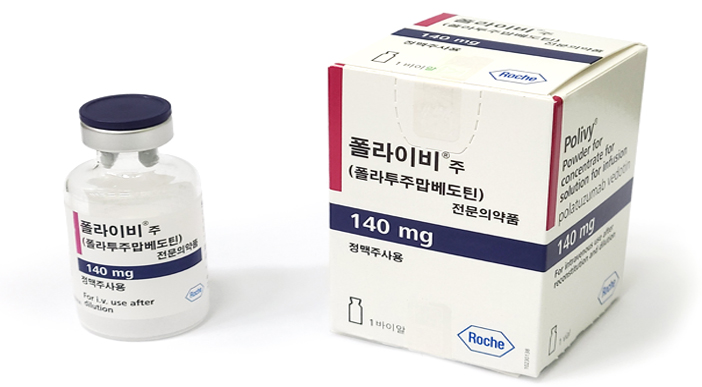
- The new lymphoma drug Polivy can be prescribed at general hospitals. According to related industries, ADC that combine with conventional BR therapy (Bendamustine/ Rituximab) treatments for diffuse large B-cell lymphoma (DLBCL) that have poor non-responsive prognosis of Roche. However, Polivy is still a non-reimbursed drug. Roche applied insurance benefit earlier this year, but failed to pass HIRA's Cancer Drugs Benefit Appraisal Committee in April. Roche is attempting to register Polivy in the future. Diffuse large B-cell lymphoma, which accounts for the highest percentage of non-Hodgkin lymphoma, is a type of aggressive lymphoma that requires immediate treatment due to its fast progression. More than half of patients have good treatment response rates to reach related levels, but 30 to 40% of patients do not respond to the standard therapy, R-CHOP, or experience recurrence after the first treatment. Most patients experience recurrence within two years, and the disease is fatal enough to last only six months. Recurrent and nonresponsive diffuse large B-cell lymphoma has been an area that lacks effective treatment options. Polivy is the first ADC drug to target CD79b, which binds to CD79b expressed in B cells and has the mechanism of inducing apoptosis. Polivy was validated by phase 1b/2 clinical trials in 80 patients with recurrent or diffuse large B-cell lymphoma patients who could not receive hematopoietic stem cell transplants and had more than one treatment experience. It was designated as a rare drug in Korea in October last year. Studies have shown that the Polivy co-therapy group extends CR, Complete Response and OS and Overall Surviva compared to the BR therapy group. Ko Young-il, a professor of hematology at Seoul National University Hospital, said, "Polivy has confirmed its usefulness through clinical use and is a treatment option recommended by international guidelines, which is significant in that it has proposed a new alternative to re-use or diffuse large B-cell lymphoma treatment.

- Policy
- No prior approval req. filed for Soliris, 47 for Ultomiris
- by Lee, Hye-Kyung Aug 04, 2021 06:01am
- ‘Ultomiris (ravulizumab),’ a follow-on drug of ‘Soliris (eculizumab)’ that was approved for reimbursement from June, has taken away all new prescriptions for the treatment of paroxysmal nocturnal hemoglobinuria (PNH) from Soliris. Reimbursement for Ultomiris, like Soliris, needs to be authorized in advance through a prior authorization application process to the NHIS before administration at a medical care facility equipped with the personnel and facilities as specified in the ‘Criteria on the medical care benefit for hematopoietic stem cell transplantation.' According to the eligibility for reimbursement of Soliris and Ultomiris deliberated in July by HIRA’s Healthcare Review and Assessment Committee, new approval applications filed by PNH patients were 0 for Soliris and 47 for Ultomiris. The doctors and new PNH patients were seen to have selected Ultomiris, which can be administered every 8 weeks as maintenance therapy 2 weeks after the initial dose, over Solaris, which needs to be administered biweekly. Ultomiris received approval from the U.S. FDA in December 2018, and from the EMA in July 2018. The drug received marketing authorization in Korea on May 21st, 2020. After receiving approval, Handok applied for the insurance benefit listing on August 31st last year. After receiving approval from HIRA’s Pharmaceutical Benefit Assessment Committee, going through NHIS’s drug pricing negotiations, and deliberation by MOHW’s Health Insurance Policy Deliberative Committee, Ultomiris was listed at ₩5,598,942 per vial from June 7th. Based on the clinical trial results, Ultomiris was found to be clinically non-inferior to its substitute Soliris. Also, Ultomiris was considered cost-effective if its price is set at Solaris's weighted average price of ₩5,598,942 or less. Meanwhile, 43 PNH patients receiving Soliris that were monitored received approval to continue administration of Soliris. 6 cases that were filed to newly administer Soliris for atypical hemolytic uremic syndrome (aHUS) were all disapproved, and 2 monitoring cases for Soliris were approved and the other 2 were disapproved.
- Policy
- Will changes be made to Hemlibra’s reimbursement standards?
- by Lee, Jeong-Hwan Aug 04, 2021 06:01am
- As the Anti-Corruption & Civil Rights Commission (ACRC) in addition to the National Assembly raised the need to ease the reimbursement standards for the hemophilia treatment Hemlibra (emicizumab), the growing sense of urgency on the Ministry of Health and Welfare (MOHW) and the Health Insurance Review and Assessment Service (HIRA)’s behalf to take follow-up actions is expected to increase. The NA and ACRC requested the standards be changed so that pediatric patients under the age of 12 can use the subcutaneous injection Hemlibra immediately without prior use of the intravenous drug treatment ‘immune tolerance induction (ITI) therapies. Sun-Woo Kang of the Democratic Party of Korea had first criticized the inappropriateness of Hemlibra’s reimbursement standards in June, then the ACRC had also made recommendations to the MOHW to change the reimbursement standards. The NA member pointed out that the existing reimbursement standards that acknowledge reimbursement of Hemlibra in pediatric patients aged under 12 only after they fail intravenous injections that accompany great pain should be changed. The ACRC also decided that it was harsh to recognize insurance benefits for Hemlibra only after the pediatric patients that have weak blood vessels undergo ITI therapy that require intravenous injections for 2-3 years. The NA and ACRC’s move was influenced by the appeals made by guardians of pediatric patients with hemophilia that were posted on the National Petition board of Cheong Wa Dae. A total of 4 requests to change the reimbursement standards of Hemlibra had been posted on the national petition board from November 2019 to date. 2019 was when JW Pharmaceutical had received marketing authorization for Hemlibra. JW Pharmaceutical received approval for Hemlibra from the Ministry of Food and Drug Safety on January 20th, 2019. In the earlier petitions, the request was focused on approving reimbursement for Hemlibra, but from last year, the content of the petitions changed to request modification or ease of reimbursement standards for patients aged less than 12 years. Recently, the caregivers of patients (parents) had requested MOHW and HIRA to delete the mandatory ITI therapy prerequisite for Hemlibra’s reimbursement in pediatric patients aged 1 to 12 years old. They criticized that the current reimbursement standards violate human rights by forcing pediatric patients to receive intravenous injections even though Hemlibra, a subcutaneous injection option, is available. Upon receiving such criticism, the MOHW and HIRA are making a move to improve the reimbursement standards. HIRA had held an expert advisory meeting on the efficient operation of ITI therapies for hemophilia A, and the MOHW is planning to amend the reimbursement standards for pediatric patients based on HIRA’s discussion results. In particular, the need to improve the standards grew with the NA strongly criticizing Hemlibra’s reimbursement standards as “standards that approve reimbursements based on the pain and suffering of our children.” Also, the fact that other countries do not limit reimbursement of Hemlibra by age raises the validity on the need for the health authorities to improve the benefit standards. The U.K .approves reimbursement of Hemlibra when the patient satisfies any one of the following conditions: those who fail ITI therapy, or cannot control bleeding, or administers the drug as maintenance therapy or bleeding therapy with bypassing agents, or as maintenance therapy to prevent bleeding symptoms during ITI therapy. In response to the continued criticism from the NA, ACRC, and caregivers of pediatric patients, the MOHW and HIRA are expected to present a bill to revise the benefit standards in the near future. On Sun-Woo Kang’s criticism, the Minister of Health and Welfare Kwon Deok-Cheol said that he would “comprehensively review the issue with experts and discuss how to improve the reimbursement standard of Hemlibra in consideration of the characteristics of pediatric patients.”
- Policy
- Daewoong has added a line-up of osteoporosis treatments PO
- by Lee, Tak-Sun Aug 03, 2021 08:27pm
- Daewoong's Evimax 45mg was approved on July 29. It is generic for Raloxifene HCl 45mg. The original for Raloxifene HCl is Evista from Alvogen Korea. Evista contains Raloxifene HCl 60 mg. Raloxifene HCl 45mg was first developed by Yuhan. In September 2019, Yuhan was granted 'Raboni 45mg', a product containing Raloxifene HCl 45mg. The company explains that safety has been increased by lowering the content of Raloxifene HCl by improving its bioavailability. Daewoong's approved product is also manufactured and supplied by Yuhan. In June, Daewoong was previously granted "Evimax D," a combination of Raloxifene HCl 45mg and a concentrated vitamin D powder. This is also an item produced by Yuhan. As a result, Daewoong will have three Raloxifene preparations, including Daewoong Raloxifene HCl 60mg, which was approved in March last year. Daewoong has been selling Daewoong Zoledronic Acid as a treatment for osteoporosis and Ricen Plus as an oral medicine. The performance is not bad either. Based on IQVIA last year, Daewoong Zoledronic Acid recorded ₩11.2 billion and Ricen Plus, which is a combination of Risedronic acid and Cholesterol, recorded ₩1.5 billion. In terms of sales, oral products are less competitive than injection products. For this reason, Daewoong needed the latest treatment for oral osteoporosis. It is believed that the company introduced Raloxifene HCl 45mg developed by its competitor Yuhan first. In the past, Daewoong sold original osteoporosis drugs such as Fosamax Plus D and had the largest share in the oral market. However, due to the termination of the contract for MSD's Fosamax, it suffered from losing its main items. Zoldronic Acid, which had little sales at the time, was successful by co-promoting with Sandoz. Since then, the Zoldronic Acid injection has been manufactured by Daewoong by purchasing copyrights. Considering Daewoong's business competitiveness in the osteoporosis treatment market, the introduction of Raloxifene HCl 45mg is also likely to be successful. Attention is focusing on how much sales Daewoong will make in the osteoporosis treatment oral market through the launch of a new product.
- Policy
- The number one treatment for mild COVID is Kaletra
- by Kim, Jung-Ju Aug 03, 2021 08:24pm
- The number one drug used to treat mild COVID in the first half of this year was AbbVie's Kaletra, which amounted to ₩596 million. The total amount of drugs spent on the entire treatment, including severe cases, amounted to ₩12.1 billion. Among the data on "COVID-19 Treatment Expenditure in the first half of the year," the "Status of Drug Administration by severe cases" showed this. According to the current status, the amount of drugs used to treat COVID-19 in the first half of this year amounted to ₩12.1 billion, or 2.5% of the total medical expenses. AbbVie's Kaletra (₩596 million) is the number 1 based on drug costs . Then, Chong Kun Dang's Tazoperan 4.5g , ₩107 million, Samsung's Combicin 3g, ₩98 million, Ukchemipharm's Trison Kit 2g is ₩88 million, Boryung's Maxipim 1g is ₩83 million, SK Chemical's Huthan 50mg is ₩72 million, Bayer Korea Avelox 400mg, ₩68 million, and Yuhan's Meropen 0.5g, ₩65 million. Following oxygen, cost of AbbVie's Kaletra is the most at ₩128 million, Yuhan's Meropen 0.5g, ₩112 million, Chong Kun Dang's Tazoperan 4.5g, ₩99 million, Maxipim 1g, ₩72 million, Huthan, ₩51 million, Avelox 400mg, ₩47 million, and Clexane, ₩45 million, Vfend 200mg, ₩4400 million. Excluding oxygen, Fresofol 2% of Fresenius Kabi Korea was the most used, followed by Meropen 0.5g of Yuhan with ₩238 million and Huthan 50 with ₩1.9 million. Greencross Human Serum Album 20%, ₩173 million, Human Serum Album 20%. ₩127 million, Vfend 200mg, ₩120 million, Boxter's Phoxilium Phosphate Solution 1.2 mmol/L, ₩85 million, and JW Life Science's Winuf, ₩83 million, respectively.
- Company
- Will regulations on ERP be established?
- by Aug 03, 2021 08:24pm
- Presidential candidate Lee Nak-yeonLee Nak-yeon, a presidential candidate for the Democratic Party of Korea, mentioned the need to draw up regulations on the Early Retention Program (ERP) of foreign-invested companies, including foreign pharmaceutical companies. Attention is focusing on whether frequent ERP regulations in the pharmaceutical industry will be possible. He made the remarks at a recent meeting in Gwangju Metropolitan City, "How to improve the working environment and secure the right to survive for workers in office research jobs and foreign-invested companies." "Recently, foreign-invested companies, including multinational pharmaceutical companies, have unilaterally implemented corporate changes such as division, acquisition, merger, and transfer of operations, and the government's investment in the name of internal restructuring. He agreed, "Changing legislative and public policies for new types of workers with different working conditions from existing production service jobs is an important task." "We need additional protective measures to regulate reckless abuse of voluntary retirement," he said. "We will make efforts to respect the value of labor in the future and not ignore the legal system for workers who are not legally protected in blind spots other than existing production, service, and even those who are not properly protected," he said. ERP of foreign pharmaceutical companies is being implemented more frequently following the outbreak of COVID-19. Sanofi, Lilly, and Roche conducted ERP in the second half of last year, and five to six companies, including Viatris, Astellas, GSK and Roche, conducted ERP in the first half of this year. He also said, "The comprehensive wage management is a structure in which it is difficult to reflect the opinions of workers because there is a possibility that users will unilaterally decide," adding, "We need to think about ways to increase the bargaining power of office research." The meeting, hosted by LG Electronics' human-centered office workers' union and the Korea MSD labor union, and organized by Daesang LLF, drew attention from unions of three pharmaceutical companies as representatives of foreign investment companies. They emphasized the reality that Korean branch employees are harmed by unilateral M&As at the global level and the need to pass legislative proposals for safety measures.

- Policy
- Pfizer aims to commercialize PF-07321332 by the end of 2021
- by Lee, Tak-Sun Aug 03, 2021 08:09pm
- On the 29th, the MFDS approved 3 multi-national clinical plans for "PF-07321332," a candidate for COVID-19 oral treatment applied by Pfizer. The first clinical trial was the oral administration of PF-07321332 to prevent postmortem infections in adults who had contact with people with COVID-19, and the validity and safety of Ritonavir's two methods. The total number of test subjects is 2,634 and 22 people will be recruited in Korea. The test is conducted at Chilgok Kyungbuk National University Hospital. The second clinical trial assesses the mediated validity and safety of oral administration PF-07321332/Ritonavir in comparison to placebo in non-admission-bearing adult participants with severe cases and low risk of progression. The total number of test subjects is 800, and the number of subjects in Korea is 14. The test will be conducted at Busan National University Hospital, Seoul Medical Center, Boramae Hospital, Chonnam National University Hospital and Chilgok Gyeongbuk National University Hospital. The third clinical trial assesses the mediated validity and safety of oral administration PF-07321332/Ritonavir compared to placebo in non-admission-bearing adult participants with severe cases and high risk of progressive coronavirus. The total number of test subjects is 2,260, and the number of domestic recruitment subjects is 62. It is carried out in the same institution as clinicians earlier. Pfizer launched a clinical trial of PF-07321332 in the United States in March. It aims to release a treatment at the end of the year after going through a large-scale clinical trial. Ritonavir, administered in conjunction with PF-07321332, is the original of the antiviral drug Norvir of AbbVie in Korea.

- Company
- Samsung launches Humira Biosimilar ‘Adalloce’ in Korea
- by Eo, Yun-Ho Aug 03, 2021 07:04am
- Domestic supply of the domestic biosimilar of ‘Humira’ has begun in full scale. According to industry sources, Adalloce, a biosimilar of the TNF- alpha blocker Humira(adalimumab)’s that was developed by Samsung Bioepis and sold by Yuhan Corporation in Korea, passed the Drug Committees (DCs) of 20 medical institutions including the Big-5s such as the Samsung Medical Center (SMC), Asan Medical Center (AMC), and Severance Hospital. Adalloce was the first biosimilar adalimumab product to receive marketing approval in Korea. It is a tumor necrosis factor (TNF)-alpha-blocker that is used to treat autoimmune conditions including rheumatoid arthritis, ankylosing spondylitis, and Crohn's disease. The commercialization of Adalloce will enable a more affordable prescription of adalimumab products in Korea, including the originator Humira. Adalloce’s listing will lead to Humira’s price being cut. According to the ‘Criteria for Decision or Adjustment on Drugs,’ the government can make a single price adjustment to the original drug as well as the generic with the same route of administration, ingredient, and formulation or combined nutritional infusion fluids with the same ingredient to be set at 53.55% of the original price. After received marketing approval for Adalloce from the Ministry of Food and Drug Safety in September 2017, Samsung Bioepis has been preparing for its release through a licensing agreement with the original drug developer. Adalloce was first released in Europe in October 2018 under the brand name ‘Imraldi,’ and has generated cumulative sales of $417 million (₩450 billion) by the end of 2020. In the United States, the drug received marketing authorization in May 2019 under the brand name ‘Hadlima.’ Under the licensing agreement made with AbbVie, the company plans to release Adalloce in July 2023. Meanwhile, Yuhan Corporation is also in charge of domestic sales of Samsung Bioepis’ Enbrel biosimilar ‘Etoloce’ and Remicade biosimilar ‘Remaloce’ in the domestic market.
- Policy
- Peramivir has earned its generic exclusivity
- by Lee, Tak-Sun Aug 02, 2021 08:41pm
- JW Life Science is the first known Peramivir drug to win a generic for exclusivity. It is known to have been applied by JW Life Science's premium technology. Premix preparation is an injection that does not need to be diluted with saline water and is convenient to use. However, GC Pharma and Chong Kun Dang were also allowed to impose premix sanctions in May, signaling competition. The MFDS approved JW Life Sciences' Fluenpera on Wednesday. It is a premix formulation that does not require dilution, and can be used once. In particular, JW Life Science's premix technology is applied, and it is a multi-layered film plastic container filling injection. Peramivir is a single intravenous treatment for the flu. Oseltamivir (Tamiflu) preparation requires for five days PO. Peramivir premix was approved first by GC Pharma and Chong Kun Dang. In May, the two companies introduced the first Peramivir premix formulation, with Peramiflu Premix Inj and Peraonce Inj, respectively. Both products are produced in Chong Kun Dang. JW's "Fluenpera" is different in appearance, indication and doses from products licensed by GC Pharma and Chong Kun Dang. Therefore, JW has acquired generic for exclusivity this time, but it does not affect the sales of products of GC Pharma and Chong Kun Dang because it is not the same formulations. It will take effect from yesterday (28th) to April 28th next year. It also reflected the cited invalidation of the JW Life Science's claim to Peramiflu's patent on the original product.
- Company
- Beijing Hanmi's 2Q operating profit increased by 50%
- by Chon, Seung-Hyun Aug 02, 2021 08:37pm
- Hanmi Pharmaceutical's second-quarter performance improved. In the domestic market, self-developed new drug products have done well. Sales of Beijing Hanmi have more than doubled despite the sluggishness caused by COVID-19. Hanmi announced on the 29th that its operating profit in the second quarter increased 49.6% year-on-year to ₩15.9 billion. Its sales increased 14.7% year-on-year to ₩279.3 billion, while its net profit expanded 43.1% to ₩8.3 billion. Quarterly sales (left) operating profit (unit: ₩1 million, data: Financial Supervisory Service) Hanmi explained, "The stable prescription sales of self-developed products and the explosive growth of Chinese local Beijing pharmaceuticals caused strong sales." Rosuzet, Amosartan, and Esomzol are the reasons for this. The hyperlipidemia compound Rosuzet rose 11.% year-on-year to ₩26.9 billion in prescriptions in the second quarter. It is expected to surpass ₩100 billion in annual prescription amount this year, following the second-largest outpatient prescription among all medicines last year. Amosartan, a hypertension drug, recorded a prescription record of ₩18.9 billion in the second quarter. Although it decreased 7.4% year-on-year, it strengthened its position as a major drug. Amosartan is a combination of Amlodipine and Losartan. Esomezol posted a prescription amount of ₩12.2 billion in the second quarter, up 22.8% from the previous year. Beijing Hanmi overcame last year's slump and posted ₩59.5 billion in sales in the second quarter of this year, up 119.9 percent% year-on-year. It is the biggest sales in the first half of this year. Beijing Hanmi saw its sales drop 52% year-on-year in the second quarter of last year due to worsening market conditions caused by COVID-19. In the second quarter of this year, Ambrocol, one of Beijing Hanmi's flagship products, posted sales of ₩19.4 billion, more than 20 times the year-on-year. Sales of the children medicine Medilac-Vita increased by 147.6% to ₩13.6 billion, while constipation drug Lidong achieved sales of ₩15 billion.
