
- LOGIN
- MemberShip
- 2026-05-19 06:13:41
- Company
- Celltrion's developing next-generation mRNA vaccine platform
- by Lee, Seok-Jun Aug 08, 2021 06:49pm
- Celltrion has started developing next-generation mRNA vaccine platform with TriLink Biotechnology in the U.S. According to the company on the 4th, TriLink is a contract development and manufacturing organization (CDMO) based on the mRNA platform located in San Diego, U.S. It has its own Vactor and Gen3 CleanCap, which are essential for the development of mRNA vaccines, and has the ability to provide technology transfer along with clinical materials. TriLink plans to produce and supply substances that can proceed with Phase 1 and Phase 2 clinical trials to Celltrion by utilizing its own capping technology along with verification of antigen sequences. It also provides Celltrion with a GMP production scale-capable mould vector and mRNA process technology. Celltrion is expected to develop next-generation vaccines independently that have preventive effects against various mutated viruses, including COVID, and at the same time accelerate the development of mRNA platforms using its own patented technology. Celltrion is focusing on developing the next generation COVID vaccine using various mutated virus antigens, rather than developing and commercializing vaccines using the existing COVID antigens. It is planning to produce large-scale clinical phase 3 substances by establishing mRNA process facilities along with development of vectors that avoided patents. Through the development of the mRNA platform, it is planning to expand its technical scope beyond COVID to other diseases such as anticancer.
- Company
- Pfizer seeks generation change in the ALK market
- by Aug 08, 2021 06:48pm
- ALK target treatment Xalkori and Pfizer’s LorviquaPfizer, which developed the first ALK-targeted treatment, has released a third-generation new product. A new option has emerged in the ALK targeted treatment market, where subsequent drugs were not appropriate. Third-generation drugs are also expected to compete with second-generation products as a primary treatment. Pfizer was approved by the MFDS on the 29th of last month to treat ALK-positive non-small cell lung cancer. Lorviqua can be used at least once to treat patients who have been treated with conventional first-generation or second-generation treatments. The third-generation drug, Lorviqua, can be an alternative to the treatment of patients with resistance after the first-generation drugs Xalkori and the second-generation drugs Zykadia, Alecensa and Alunbrig. If Xalkori is used in the first generation, it can be used in the second generation and then in the second generation, it can be used in the second generation, and chemotherapy had to be used if secondary drugs developed resistance. G1202R is the most common type of resistant mutation that occurs after the second generation medication, and depending on the drug, F1174L (Zykadia), I1171T/N/S (Alecensa), and E1210K (Alunbrig). Lorlatinib is known to have an effect on all known resistant mutations. In the second phase of 275 previously treated patients, including the second generation ALK TKI, Lorviqua showed 47% ORR and 63% ORR in patients with brain metastasis. Lorviqua quickly became effective after taking. The time median to the first response and the time median to the first two in-reactions were 1.4 months, respectively. In the sub-analysis classified by second-generation drugs, Lorviqua maintained a consistently significant effect.The objective response rates in Alecensa, Alunbrig and Zykadia groups were 40.3%, 37.5%, and 40.4%, respectively. Attention is focusing on whether Pfizer, which has weakened its position in the ALK TKI market due to the advent of second-generation drugs, will succeed as third-generation Lorviqua. Pfizer has developed the first ALK targeted treatment called Xalkori, but sales continue to decline as second-generation drugs enter the primary treatment option. Xalkori, which had more than ₩10 billion in sales in the quarter of 2018 based on IQVIA, started to see a sharp drop in sales in 2019 due to the expansion of benefit for the second generation Alecensa and the termination of the risk-sharing contract. Annual sales fell 59% from ₩49.6 billion in 2018 to ₩20.3 billion in 2019. Last year, it also dropped 28% year-on-year to ₩14.6 billion. A three-phase CROWN study identified the primary treatment effect of Lorviqua. In this clinical trial, Lorviqua showed an improved OR (73% vs. 58%). It also reduced the risk of disease progression and death compared to Xalkori by 72%. The U.S. Food and Drug Administration (FDA) added an indication in March to use Lorviqua as a primary drug. It is expected that it will soon obtain additional indications in Europe. It is also expected that Lorviqua will expand its adaptation in Korea. However, competition between second-generation drugs is expected to continue for the time being because many steps have to be passed before applying domestic benefits.
- Policy
- PBAC results on Leclaza that was listed in 165 days show...
- by Lee, Hye-Kyung Aug 06, 2021 06:05am
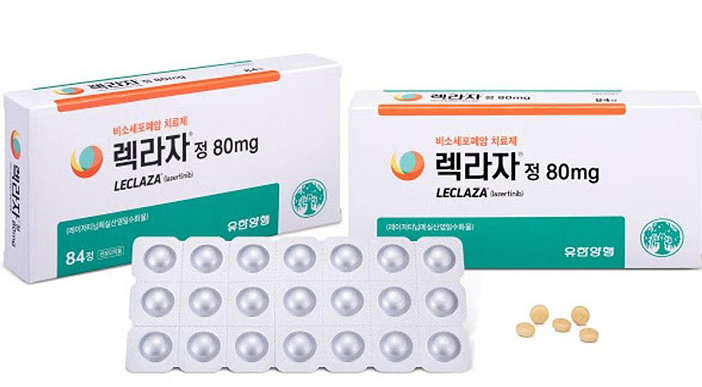
- ‘Leclaza tab. (lazertinib mesylate monohydrate),' the 31st novel drug to be developed in Korea that received approval for insurance benefit in only 165 days after its approval, was reviewed as a 'new treatment alternative for non-small cell lung cancer patients' in the evaluation process for assessing the reasonableness of the medical care benefits for drugs. The Health Insurance Review and Assessment Service (HIRA) had recently disclosed the results and minutes of the benefit evaluation that was conducted on Leclaza by the Pharmaceutical Benefit Assessment Committee on April 8th. Leclaza was approved by the Ministry of Food and Drug Safety on January 18th as a ‘treatment for patients with EGFR T790M mutation-positive, locally advanced or metastatic NSCLC who were previously treated with an EGFR-TKI, then received reimbursement from July 1st after the notice was issued on the ‘amendment to the drug benefit list and the maximum ceiling price table’ on July 1st. Yuhan Corp had applied for the insurance benefit listing of Leclaza on December 30th, 2020 with the ‘approval-benefit appraisal linkage system.’ Through the system, the drug received insurance benefits at an unprecedented pace - in only184 days from its listing application and 165 days since receiving the marketing authorization. According to data disclosed by HIRA in 2017, it generally takes 1030 days for anticancer drugs, 475 days for rare disease drugs, 550 days for general drugs to receive notification for benefit listing since MFDS approval. Compared to the average, Leclaza shortened the listing registration period by 30 months. As a domestically developed novel drug that received its first approval this year, Leclaza’s approval status in the A7 countries, listing status in drug price reference books, and data on the clinical effectiveness in textbooks and clinical practice guidelines were not available for evaluation. In the PBAC evaluation results disclosed, the committee members concluded that “it is difficult to see a difference between Leclaza, which was approved for the treatment of patients with EGFR T790M mutation-positive, locally advanced or metastatic NSCLC who were previously treated with an EGFR-TKI, and the alternative drug.” Despite the review, the reason why the domestic new drug was able to be listed for reimbursement in only 165 days since its approval was because its reasonableness of receiving medical care benefits was recognized from the cost-effectiveness aspect, as the drug ‘is therapeutically equivalent to Tagrisso (osimertinib) while being cheaper than Tagrisso when using the RSA scheme proposed by the pharmaceutical company.’ The comparator in the evaluation was Tagrisso (osimertinib), and PBAC emphasized that the “evaluation results and conditions of Tagrisso’s RSA scheme should be considered in Leclaza’s pricing negotiations.” Also, relevant academic societies including the Korean Cancer Study Group, Korean Society of Medical Oncology, Korean Association for Lung Cancer added their support, saying that, “Leclaza showed a similar effect to the already-approved Tagrisso, and demonstrated an acceptable safety profile and low cardiac toxicity. We can fully expect Leclaza to become a viable substitute to Tagrisso” The societies requested reimbursement for Leclaza stating that “The drug can bring new opportunity to patients with EGFR T790M mutation-positive, locally advanced or metastatic NSCLC who had limited treatment options.” At the Cancer Disease Deliberation Committee meeting that was conducted on February 24th before the PBAC review, the committee had set the standard - ‘medical care benefit will be recognized for patients with Stage IIIA or higher NSCLC as second-line or later therapy that belong to one of the subject numbers (other than No.22,23,24)' for Leclaza. After deliberation and decision by the PBAC and the negotiations with NHIS that followed from April 23rd to June 8th, Leclaza was applied the RSA refund-type and expenditure cap type and listed for medical care benefit at a ceiling price of ₩68,964 per tablet.

- InterView
- “Olumiant provides rapid AD symptom improvement"
- by jung, sae-im Aug 06, 2021 06:04am
- The introduction of JAK inhibitors in the field of moderate-to-severe atopic dermatitis (AD) treatment was like a welcome rain in the drought of treatment options in AD. In 2018, the approval of the biologic agent ‘Dupixent’ transformed the AD treatment paradigm, however, many patients still feel an unmet need existed due to the limited reimbursement conditions and high drug price. JAK inhibitors are expected to widen the scope of treatment options for AD patients with features different than those offered by Dupixent. The first JAK inhibitor to receive approval for the AD indication was Eli Lilly’s ‘Olumiant (baricitinib)’ The treatment effect and safety of Olumiant were identified in the three clinical trials - BREEZE-AD1, BREEZE-AD2, BREEZE-AD7 –as a monotherapy and combination therapy with a topical corticosteroid (TCS) in adult patients with moderate to severe AD. In particular, Olumiant rapidly improved itching that severely deteriorates the quality of life from Day 2. Professor Sang Wook Son (Department of Dermatology, Korea University Ansan Hospital), who has been prescribing Olumiant from the clinical stages said, “Olumiant will play an important role in improving the symptoms and quality of life of patients. The various new drugs that have been introduced to the AD treatment environment have brought a ‘revolution’ to the AD treatment environment.” Dailypharm met with Professor Son to hear about the adult atopic dermatitis treatment environment and the role of Olumiant in Korea. Professor Sang Wook Son -Clinical trials on Olumiant have shown that it rapidly improves symptoms from the second day since its first administration. What does this mean for moderate to severe AD patients?” = For AD patients, managing pruritus, or itching, is very important. However, this symptom was difficult to control, as the inflammatory response or immune response, which are mechanical aspects that cause itching, are difficult to control. We use immunosuppressants and antihistamines for pruritus treatment, but it was difficult to expect dramatic effects with these treatments. This lack of a rapid and effective treatment option for severe itching had made treating AD patients quite difficult, and Olumiant’s data on its rapid effect was the most awaited aspect of the new drug. I have been experiencing this rapid symptom improvement effect of Olumiant in clinical practice, and believe this feature will continue to be one of the greatest strengths of Olumiant. - Olumiant’s oral formulation is also considered beneficial. For which patients would the oral Olumiant tablet be appropriate? =According to Olumiant’s indication, patients with moderate to severe AD, in other words, those whose Eczema Area and Severity Index (EASI) score is between 16-23 or over may use Olumiant. However, as there is only little experience accumulated in the actual clinical field with Olumiant, there is still no consensus or guideline on which treatment should be used for which patient. However, Olumiant has the benefit of being easy to carry as an oral formulation. Patients may conveniently carry around and take Olumiant from their bag according to their dosing schedule. Also, they can flexibly apply doses, reducing the dose or taking a resting period when symptoms improve. Also, patients who fear needles would also prefer oral forms of treatment. -AD is a chronic disease that requires long-term use of treatments. Therefore, the safety of long-term administration is also an important aspect in selecting treatments. I heard there were safety concerns in using JAK inhibitors. How about Olumiant? =Olumiant has around 7 years’ worth of long-term safety data accumulated in the field of rheumatoid arthritis. No special adverse events were identified as an issue during that period. Based on these results, there are expectations that Olumiant will have fewer side effects than existing treatment options not only in clinical studies but also in actual clinical settings -Olumiant can be administered alone or in combination with a topical corticosteroid (TCS) =Combination therapies are considered a sort of principle in AD treatment as it requires the use of TCS and other topical immunomodulators to achieve full effect. In particular, data has shown that the efficacy of treatment improves when using Olumiant with TCS in AD. -What role do you expect Olumiant will play in the treatment of adult AD? = I felt more confident treating patients after Olumiant was added as an AD treatment option. Compared to existing treatments, Olumiant has little burden of safety has a positive therapeutic effect. As patients can experience dramatic changes in various aspects including treatment satisfaction, improvement of quality of life, and improvement of itching and lesions, I have high expectations for Olumiant's role in the field of AD treatment.
- Policy
- Last year, the drug trade surplus was achieved
- by Lee, Tak-Sun Aug 05, 2021 08:47pm
- Domestic medicine achieved its trade surplus for the first time last year. This is because biosimilar led the export. The MFDS announced on the 1st that it analyzed the production, export, and import performance of drugs, quasi-drugs in 2020. Drugs achieved the trade surplus (₩1.394 trillion won) for the first time since 1998, when the MFDS compiled statistics. The main reason for this is that exports of finished drugs, which accounted for 79.6% of total exports (₩9.96 trillion), increased 92.3% (₩7.9308 trillion) compared to 2019. Quasi-drugs showed a 124% increase in production performance of anti-COVID-19 products (₩3.7149 trillion) compared to 2019. This is largely due to the increase in demand for products to prevent infectious diseases, with production performance of masks and disinfectants rising by 818% and 926% respectively compared to 2019. The average annual growth rate of drug production is 6.9%, which is six times higher than the manufacturing average. In 2020, drug production increased 10.1% year-on-year to ₩24.565.5 trillion, while export performance increased 5.2% year-on-year to ₩9.96 trillion ($8.44 billion), 62.5% year-on-year and import performance to ₩8.57 trillion ($7.26331 billion). Its production performance was 1.2% compared to GDP and 5.1% compared to domestic manufacturers. The MFDS explained that the average annual growth rate over the past five years is 6.9%, which is more than six times higher than the total domestic manufacturing production (1.1%), indicating the possibility of the pharmaceutical industry as Korea's future industry. In 2020, there were two companies with production performance of more than ₩1 trillion, while Celltrion rose 149.2% year-on-year to ₩1.476.9 trillion, followed by Hanmi with ₩1.14.3 trillion, similar to that of 2019. Although the size of the pharmaceutical market fell 4.7% year-on-year to ₩23.17 trillion in 2020, the size of the pharmaceutical market has grown 1.6% annually over the past five years. It was attributed to a significant increase in export performance to 62.5%, respectively, compared to the increase in production performance and import performance (10.1%, 5.2%, respectively). Remsima, Herzuma and Truxima exported the most to Germany In 2020, the drug trade balance recorded ₩1.394 trillion due to rising drug export performance, the first time since 1998, when the MFDS compiled performance statistics such as drug production, export and import. The main characteristic of the domestic pharmaceutical market in 2020 is that the export performance of finished drugs, which led to the ▲ trade surplus, increased by 92.3% and ▲ biosimilar exports are active amid strong performance in the production and export of bio pharmaceuticals,▲ and this is because the proportion of Rx drugs production has been maintained and the production of new drugs in Korea has steadily increased. In the case of finished drugs, which accounted for 79.6% (₩7.9308 trillion) of total drug exports in 2020, exports increased by 92.3% compared to 2019, and were larger than 62.5% of total drug exports, leading to a trade surplus. Among the finished drugs, the top three products in the size of exports are all bio pharmaceuticals, and bio pharmaceuticals account for a large portion of all domestic pharmaceutical exports. Among the finished drugs, Remsima was the No. 1 export, followed by Herzuma 150mg with ₩98.6 billion ($80million) and Truxima with ₩75.3 billion ($60million). Germany ($1.855.96 million), the U.S. ($780.61 million), and Turkey ($589.55 million) are the countries that Korea exports the most finished drugs. And, the largest importers of finished medicines were the United States ($977.61 million), Germany ($806.65 million), and China ($887.74 million). As a result, the U.S. and Germany have been identified as the largest trading partners. Twelve of the top 20 items in 2020 were bio-medicine products, and eight out of the 12 items accounted for 79.7% ($1.69.65 billion) as bio-similar products. Exports of bio pharmaceuticals have increased significantly in Europe and North America, which is analyzed to have been approved for new item licenses or listed on the prescription list in Europe and the United States in the second half of 2019. The production performance of Rx medicines (₩17.84 trillion) accounted for 84.9% of the finished medicines, 83-84%, which has been maintained for the past five years. Six new domestic drugs produced more than ₩10 billion, and 19 new domestic drugs produced ₩322.1 billion, up 38.2% from 2019. Meanwhile, the production performance of quasi-drugs in 2020 increased by 124% to ₩3.7149 trillion from 2019 (₩1.657 trillion), the highest growth in the past three years, and the trade balance of quasi-drugs recorded a surplus of ₩214 billion in 2020.
- Company
- Generic share in the Tamsulosin market has surpassed 60%
- by Kim, Jin-Gu Aug 05, 2021 08:46pm
- Harnal-DIn the Tamsulosin prostate hypertrophy treatment market worth ₩170 billion per year, Rx amount of generics increased by 10% compared to last year. During the same period, the original decreased by 10%, with generic accounting for more than 60% of the total market. According to UBIST, a pharmaceutical market research institute on the 2nd, the market size of Tamsulosin for prostate hypertrophy in the first half of last year is ₩83.7 billion. Compared to ₩82.6 billion in the first half of last year, it increased by 1%. Considering that prescriptions for prostate hypertrophy treatments are usually concentrated in the third and fourth quarters, it is expected to expand to more than ₩170 billion by the end of this year. Original Rx performance is decreasing, and generic performance is gradually increasing. The original Hannal-D by Astellas recorded ₩33 billion in prescription in the first half of this year. Compared to ₩36.6 billion in the first half of last year, it decreased by 10%. Generics increased 10% from ₩46 billion to ₩50.7 billion during the same period. Its market share is 61%. It surpassed 50% for the first time in the second half of 2019, and exceeded 60% in a year and a half. Since the expiration of the original patent in 2015, generic has joined the market in earnest. Currently, 107 companies are licensed for generics. Among them, 86 companies are competing in the market. Among generic companies, Hanmi posted ₩13.6 billion in prescription records in the first half alone with Hanmi Tams and Hanmi Tams OD. Analysts say that the release of Hanmi Tams 0.4mg and Hanmi Toms OD, which are high-capacity products in line with market demand, was significant. Genuine Science, DongKoo, Kyung Dong, and Celltrion posted more than ₩2 billion in prescriptions in the first half of the year. A variable in this market is combination formulations. Recently, pharmaceutical industries are developing a variety of combination formulations centered on Tamsulosin. GSK's Duodart was approved in May, a compound that combines Tamsulosin with another ingredient in the treatment of prostate hypertrophy. This compound is the first licensed drug in Korea. Given that there is a combination of two components in the prostate hypertrophy treatment market, attention is being paid to whether a compound including two components will reorganize the market composition. Development of a compound targeted at both prostate hypertrophy and irritable bladder is also in full swing. Ildong and Jeil are the hypersensitivity bladder therapy ingredients for Tamsulosin. Clinical treatment for a combination drugs that combines Solifenacin has been completed. DongKoo and Kyung Dong are developing a combination of Tamsulosin and Mirabegron, an irritant bladder treatment ingredient. Because there are many patients suffering from both diseases at the same time, it is explained that the possibility is sufficient. It is also developing combined drugs that targets prostate hypertrophy and erectile dysfunction at the same time. Hanmi's Gugutams (Tamsulosin+Tadalafil) was approved. Chong Kun Dang is also undergoing phase 3 of the compound clinical trial, which combines the same ingredients. Dongkuk and Yuyu are developing a compound that combines Dutasteride with Tadalafil.

- Company
- Keytruda's sales in Q1 of the year are ₩9 trillion
- by Aug 05, 2021 08:46pm
- (Top left clockwise) Yervoy, Opdivo, Keytruda, Imfinzi, and Tecentriq MSD's Keytruda (Pembrolizumab)'s global quarterly sales surpassed $4 billion for the first time, ranking first in immuno-cancer drugs. According to related industries on the 2nd, the total global performance of five Checkpoint inhibitors (Keytruda, Opdivo, Tecentriq, Imfinzi, and Yervoy) in the first half of this year was $15.558 billion, up 17.7% year-on-year. All immuno-cancer drugs, except Opdivo, recorded 20% year-on-year growth. Keytruda posted the highest sales of $8.075 billion. It is a 21% increase compared to the same period last year-on-year. Keytruda surpassed $4 billion for the first time in the second quarter of this year, recording $4.176 billion due to increased sales every quarter. Keytruda, which added six new indications, including bladder cancer, skin cancer, colorectal cancer, lymphoma, triple negative breast cancer, and solid cancer with TMB, expanded its scope to esophageal cancer and early triple negative breast cancer this year. Keytruda was the second-highest selling drug after Humira with annual sales of ₩14.4 billion last year. It is expected to beat Humira next year. BMS and Ono's Opdivo made $3.63 billion in sales. Opdivo made up for the second quarter of this year. Sales in the second quarter rose 15.5% year-on-year to $1.91 billion. However, due to stagnant sales in the first quarter, the growth rate in the first half of the year was only 6.2%. Yervoy (Ipilimumab), a CTLA-4 family used as a combination therapy with Opdivo, posted $966 million in sales, up 26.4% from the previous year. Sales of Roche's Atezolizumab and Astrazeneca's Imfinzi are also increasing. Tecentriq rose 22.7% year-on-year to $1.727 billion in the first half of the year, while Imfinzi expanded 21.6% to $1.16 billion. Keytruda, the No. 1 market share, is also growing by a similar margin. Keytruda accounts for more than half (51.9%) of the five Checkpoint inhibitors. Meanwhile, Merck-Pfizer's most recently licensed "Bavencio" still stands at $60 million to $70 million in quarterly sales, less than ₩100 billion.

- Company
- Sales of PPI antiulcer agents rise 30% in 2 years
- by An, Kyung-Jin Aug 05, 2021 06:03am
- The ranitidine impurity issue gave wings to the rising prescription of proton pump inhibitors (PPIs). The share of PPI prescriptions in the antiulcer agent market grew 30% in only 2 years after the drugs containing ranitidine – which used to occupy the largest share of the H2 receptor antagonists - were pulled from the market. Hanmi’s incrementally modified drug ‘Esomezol’ gained marked influence over the antiulcer drug market with the impurity issue and COVID-19 as momentum. ◆PPI prescriptions increase 5%...reaps benefits despite prolonged COVID-19 crisis According to the pharmaceutical market research institution UBIST on the 4th, outpatient prescription of PPIs recorded ₩616.7 billion in Q2 this year, which is a 5.0% year-on-year increase from the same period of the previous year. Compared to Q2 2019, sales had risen 29%. Despite the overall contraction of the prescription drug market due to the prolonged COVID-19 pandemic, PPI prescriptions have maintained quarterly sales of over ₩160 billion during the past year. The cumulative PPI prescriptions in the first half of this year amounted to ₩323.6 billion, which was a 7.3% year-on-year increase. Proton pump inhibitors (PPIs) block the final step of acid secretion and maintain a high pH level in the stomach to treat peptic ulcer disease and gastroesophageal reflux disease (GERD). Since recording ₩335.8 billion in outpatient prescription sales in 2015, sales of PPIs have increased over 10% each year to account for the largest share of anti-ulcer drugs prescribed in Korea. The rate of increase became greater since 2019. The ranitidine impurity issue was pointed to as the reason for the surge in PPI prescriptions. Analysts believe the suspended sales of 'ranitidine' products among H2 receptor antagonists that used to hold the largest proportion of prescriptions and had a similar prescription target to PPIs, led to PPIs receiving the benefit. ◆Sales of Esomeprazole jump 33%·rabeprazole 22%...polarization intensifies in PPI prescriptions The ranitidine impurity first led to an improvement in the prescription performance of all the 7 PPI ingredients. However, after two years, the different PPI ingredients saw mixed results. Prescription of esomeprazole and rabeprazole, which accounted for a large proportion of prescriptions, have continued to rise after their prescription performance surged in Q4 2019, while the upsurge in the rest of the ingredients was only temporary, showing the intensifying gap between the ingredients. The esomeprazole ingredient that is prescribed the most has continued to make double-digit growth despite the COVID-19 crisis. Outpatient prescriptions of esomeprazole amounted to ₩70.4 billion in Q2. This is a 4.0% increase from the previous year and a 33.3% increase from the year before the last. In Q3 2019, esomeprazole sold around ₩53.7 billion, however, after ranitidine was removed from the market in Q4 2019, its sales rose sharply to reach ₩67.9 billion. The upward growth continued afterward to reach ₩70.8 billion in Q4 last year. The rabeprazole ingredient sold ₩38.1 billion in Q2, marking a 4.5% year-on-year increase. Rabeprazole’s sales in Q4 2019 rose to ₩36.5 billion and continued its rise to reach ₩ 41 billion in Q4 last year. Compared to 2Q 2019, prescriptions rose 22.0% in just 2 years. Although the increase was not as prominent as in esomeprazole or rabeprazole, Ilaprazole also benefited from the market withdrawal of ranitidine. Ilaprazole’s outpatient prescriptions reached ₩8 billion in Q2. This was an 8.8% year-on-year decrease, but a 2.3% increase from 2 years before. The other PPI ingredients received less impact from the impurity issue. Omeprazole sold ₩6.4 billion in Q2. This was a 10.2% and 6.6% decrease from the same period a year and 2 years ago. In the same period, pantoprazole sold ₩9.6 billion, an 11.2% and 6.5% decrease from the previous year and 2 years ago. Outpatient prescriptions of lansoprazole in Q2 was ₩3.9 billion. This was an 11.6% year-on-year increase, but a 12.2% decrease from the 2 years ago, showing less performance than usual. ◆Prescriptions of Hanmi’s 'Esomezol' rise 45%...Products see mixed results from COVID-19 The key PPI products have experienced a sharp change in their prescription performance during the past 2 years, with the lessening impact of the impurity crisis and the increasing impact of the COVID-19 crisis. Hanmi Pharmaceutical’s ‘Esomezol’ showed the most marked growth. In 1H this year, Esomezol sold ₩23.3 billion in outpatient prescriptions. Despite the COVID-19 crisis, prescription of the drug increased 14.2% year-on-year to exceed ‘Nexium’ and become the leader in the PPI prescription market. Esomezol is a salt-modified drug of esomeprazole. The impurity issue led to an upsurge in prescription demand for Esomezol, with outpatient prescriptions rising 44.8% in just 2 years. AstraZeneca’s Nexium sold ₩18.7 billion in outpatient prescriptions in Q2. This is a 17.6% decrease from the year before and a 5.8% decrease from 2 years ago. Due to the COVID-19 crisis, prescriptions of Nexium decreased significantly, enough to hand over its long-held lead in the PPI prescription market. Nexium is the original esomeprazole brand that is distributed and sold by Daewoong Pharmaceutical in Korea. The other items were also not free from the impact of COVID-19. Il-Yang Pharmaceutical’s ‘Noltec’ sold ₩16.2 billion in 1H this year. This was a 4.3% year-on-year decrease, but also a 4.7% increase from 2 years ago. Noltec was able to maintain its 3rd place among prescriptions of single-agent PPIs. Noltec, an ilaprazole PPI agent developed by Il-Yang Pharmaceutical, was released as the nation’s 14th new indigenous drug at the end of 2009. Takeda Pharmaceuticals Korea’s ‘Lanston LFDT’ also rose to the ranks in H1 this year, selling ₩13.8 billion in outpatient prescriptions. In the same period, Daewon Pharm's ‘Eswonamp’ sold ₩8.3 billion. After the ranitidine issue, Eswonamp had enjoyed a profit with the annual prescription amount exceeding ₩20 billion for the first time, but prescription performance fell 17.3% this year. In addition to the impurity issue, analysts believe that the COVID-19 pandemic has acted as a variable that increased the gap between prescriptions of the products. HK Inno.N’s release of the antiulcer agent ‘K-Cab (tegoprazan) that has a new mechanism of action, has also intensified the change in the dominion of antiulcer drug prescriptions.
- Product
- "Inhibiting ANO1 activity has effect on treating psoriasis"
- by Lee, Jeong-Hwan Aug 05, 2021 06:02am
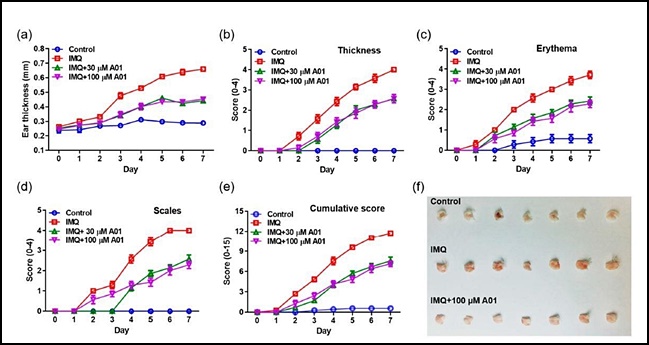
- A study result has shown that inhibiting the activity of the Anoctamin-1 (ANO1) protein may be effective in treating psoriasis, an intractable skin disorder. The results are expected to aid further research in developing ANO1 inhibitors for the treatment of intractable diseases such as psoriasis and cancer. On the 4th, the joint research team of Gyeonggi-do Regional Research Center and Professor Young Duk Yang’s team at the CHA University School of Medicine announced the results of the study that contained these findings. Psoriasis is an intractable skin condition that causes a build-up of extra dead cells and inflammation that occurs due to abnormal function of the immune system. The joint research team found that effectively blocking one of the ion channels that exist in the body – the ANO1 ion channel – reduced key symptoms of psoriasis such as rash, erythema, white scales, etc. while reducing inflammation-inducing substances that cause psoriasis Accordingly, the teams plan to expand their scope of research to develop new ANO1 inhibitors for the treatment of intractable diseases such as psoriasis and cancer. ANO1 is a membrane protein that acts as a channel for chloride ion transport. Professor Young Duk Yang said, “Psoriasis is an intractable skin disorder with no identified cause that is difficult to treat and recurs well. The study results may be used as a new breakthrough in the development of treating psoriasis.” The study results were published in the International Journal of Molecules Sciences in July 2021.
- Company
- Restylane Kysse has been approved in Korea
- by jung, sae-im Aug 05, 2021 12:41am
- Galderma Korea announced on the 2nd that Hyaluronic acid filler Restylane Kysse was approved by the MFDS on July 26 for the purpose of temporarily expanding the volume of lips for adults aged 21 or older. Restylane Kysse, which received Korea's first permission for lip fillers, was developed by Galderma as Optical Balanced Technology( OBT). Customized procedures can be performed to suit the patient's skin condition, and lip volume can be restored to create natural and beautiful lip volume. More than 78% of all patients who participated in Restylane Kysse's clinical trial said they were still satisfied with the results of the procedure a year later. The effect of Restylane Kysse was confirmed by a clinical trial. A total of 270 people were evaluated for the validity and satisfaction of the product by measuring changes after the lip enlargement procedure every eight weeks for 12 months. Clinical results showed that it lasted up to a year and showed high treatment satisfaction not only in middle-aged people who lost lip volume due to aging but also in young patients who wanted natural and thick lips. Based on this, it was approved by the FDA on March 26 last year as a lip filler. Lee Jae-hyuk, executive director of Galderma Korea's Aesthetic Division, said, "We reaffirmed the technical skills of Galderma, which developed the Hyaluronic acid filler Restylane Kysse. We will continue to make efforts as a helper to complete each person's skin through products like Restylane Kysse. We have been constantly innovating for healthy and beautiful skin."
