
- LOGIN
- MemberShip
- 2026-07-22 13:20:40
- Policy
- "MOHW will design the drug pricing policy considering NHI cost"
- by Lee, Jeong-Hwan Mar 19, 2026 12:38pm
- Lee Hyung-hoon, Second Vice Minister of Health and Welfare"We recognize that the pharmaceutical industry has varying opinions regarding government policy. However, the government designs policy by looking at where the public's expectations lie and what their interests are. The necessity of fostering the pharmaceutical industry and the fact that domestic generic drug prices are high are areas where society relatively shares a consensus, and social agreement is required. We are not setting a single specific drug pricing reform plan and trying to force it through. We will repeatedly collect and discuss opinions from the pharmaceutical industry. Since policy can change at any time, there is room to modify the reform plan."Lee Hyung-hoon, Second Vice Minister of Health and Welfare (60, Yonsei University), has drawn significant attention by highlighting the difficulties of reconciling diverse interests in a single policy for drug pricing reform, which primarily focuses on lowering the prices of previously-listed generic drugs.Lee stated that, given South Korea's adoption and operation of a single-payer National Health Insurance system, writing a reform plan that simultaneously achieves the goals of fostering the pharmaceutical industry and ensuring efficient, rational national pharmaceutical expenditures requires considering the interests of both the industry and the public as beneficiaries of health insurance.Meeting with the Korea Special Press Association on the 18th, Vice Minister Lee promised, "Rather than taking the stance of a policy authority, the Ministry of Health and Welfare designs policy by examining public interests. However, we have not finished setting a single drug pricing reform plan. Policy is open and can continue to change. We will communicate with the pharmaceutical industry."This was the Vice Minister's response when asked how the Ministry intends to resolve the industry's backlash against the drug pricing system reform plan announced on November 28 last year.Lee stated that, while agreeing on the necessity of fostering the South Korean pharmaceutical and biotech industry on a global scale to strengthen national competitiveness, the final reform plan would be finalized after collecting opposing opinions from the industry on uniform price cuts.The Ministry intends to listen to the industry's voice and to prepare a revised proposal until the Health Insurance Policy Deliberation Committee deliberates on the reform plan on the 26th.Since releasing the initial draft of the reform plan on November 28 last year, the Ministry has presented a revised draft to the industry on March 11 at the subcommittee. However, the domestic pharmaceutical industry continues to criticize the process as 'closed administration,' citing the failure to specify clear generic price calculation rates, mentioning only a range of 'low-to-mid 40%,' the lack of specific timing and methods for price cuts per item, and the absence of detailed criteria and periods for preferential drug pricing.Lee repeatedly stated that he would gather industry opinions before the committee's final decision. He emphasized that, because pharmaceutical expenditures are funded through the health insurance budget, the government views the drug pricing system considering the efficiency of public insurance premiums."South Korea operates the drug pricing system based on the health insurance finances funded by the mandatory premiums paid by citizens," Lee stated. "Because medical fees and drug prices for both generics and new drugs are operated through health insurance finances, we value the National Health Insurance cost, which represents public expectations."Lee also noted that he recognizes the domestic pharmaceutical industry as a partner in South Korea's efforts to advance to one of the top five global pharmaceutical and biopharmaceutical powers. This is interpreted as a necessity for the administration to communicate and make adjustments to the aspects the industry hopes will be reflected in the reform plan.Lee stated, "Since the Ministry of Health and Welfare also aims to leap into a top-five pharmaceutical and bio-powerhouse as a national task, the pharmaceutical industry is an important partner," Lee explained. "We are discussing the reform plan with the industry. There is a backlash because the industry has more favorable, explicit expectations, but we will continue to communicate. There is room for modification within the system."Lee added, "There may be differing opinions because the industry has its own perspective and expected levels. While the Ministry has its position as a policy authority, we work by looking at where the public views, perspective, and interests lie."Lee stated, "We are open to differing opinions on Ministry policy or points raised by the media. We are not setting one thing and trying to force it through," adding, "Policy can continue to change."Lee concluded by saying, "The need to foster the pharmaceutical industry and the fact that generic prices are high are areas where there is a relatively social consensus. We have carefully considered the drug pricing policy. We are listening to the pharmaceutical industry's opinions," adding, "We fully recognize, acknowledge, and respect the necessity for innovative pharmaceutical companies and the domestic industry to possess national competitiveness and move toward becoming a bio-power. We support and share with the industry's aspiration to expand to a larger global stage."
- Company
- Multi-indication anti-cancer drugs, 'Tevimbra' offers alternative
- by Eo, Yun-Ho Mar 18, 2026 09:12am
- Product photo of 'Tevimbra (tislelizumab)' As advanced oncology treatments surge, discussions are in full swing to bridge the gap between the financial burden and improved patient access.The government recently presented the enhancement of coverage for rare cancers as a core task through the 5th Comprehensive Cancer Control Plan (2026–2030), and the need to re-examine the overall financial structure of oncology reimbursement is gaining attention.Related to this, the Korean Society of Medical Oncology has also emphasized the need to expand the scope of reimbursement for rare cancer treatments, calling for a balance between coverage expansion and fiscal sustainability.The background to these policy discussions is the rapid expansion of approved uses for multi-indication oncology drugs, such as immune checkpoint inhibitors, antibody-drug conjugates, and bispecific antibodies, which could accelerate the pace of expenditure growth.The recent regulatory and expanded reimbursement of the immunotherapy 'Tevimbra (tislelizumab)' is garnering significant attention. It is being interpreted as a case study demonstrating how realistic alternatives can be implemented amidst spending on multi-indication oncology drugs is skyrocketing.Tevimbra entered the Korean market in April last year, becoming the first immunotherapy to successfully secure reimbursement for the first-line treatment of esophageal cancer in combination with chemotherapy. Within just two months, it expanded its approved indications to a total of five, including esophageal cancer, gastric cancer, and first- and second-line treatment of non-small cell lung cancer.In December of the same year, an unusual record for Tevimbra was set when all five of these indications passed the Cancer Drug Review Committee in a single session. After that, it secured additional indications in perioperative adjuvant therapy for non-small cell lung cancer, extensive-stage small-cell lung cancer, and nasopharyngeal cancer. This drug's scope was expanded from major to rare cancers with limited existing treatment options in a short period. However, the expanded reimbursement for major indications remains ongoing.Despite concerns in the medical community that regulatory and reimbursement hurdles are rising, Tevimbra's rapid achievement is raising expectations, largely due to a strategy that combines proven clinical equivalence with a rational pricing model. By demonstrating clinical utility equivalent to first-in-class agents while offering a pricing structure that reduces the financial burden relative to competitors, the drug has navigated the approval and reimbursement processes swiftly. Experts evaluate Tevimbra as a symbolic case that tests the consistency of the reimbursement review process.Both clinicians and National Health Insurance subscribers are also welcoming Tevimbra as an expansion of treatment options. Clinicians appreciate the increased choices within the same efficacy profile, allowing for prescriptions tailored to patient characteristics. At the same time, payers view the situation positively as price competition between drugs with equivalent clinical effects can lead to significant cost savings.Providing options for rare cancers like nasopharyngeal cancer, or for areas like perioperative non-small cell lung cancer and esophageal cancer where reimbursed treatment options were previously lacking, aligns with the government's goal of expanding reimbursement coverage.In a situation where the reimbursement system is becoming restricted due to spending being concentrated on specific immunotherapies, a drug that successfully enters the reimbursement list by presenting a new price structure based on clinical similarity is expected to set a favorable precedent.Professor Ji-Youn Han of the Hematology-Oncology Department at the National Cancer Center said, "Tevimbra demonstrated an efficacy and safety profile equivalent to that of existing immunotherapies across various studies. In certain patient subgroups, it has shown clear relative advantages." Professor Han added, "As clinical evidence for Tevimbra grows, it is an option that can broaden the scope of treatment selection and improve clinical benefits and access. We hope for rapid reimbursement expansion so that patients can receive benefits."
- Policy
- MOHW drug pricing reform to likely bypasses NA briefing
- by Lee, Jeong-Hwan Mar 18, 2026 09:11am
- Joomin Park, chair of NA Health and Welfare CommitteeThere is a growing likelihood that the Ministry of Health and Welfare’s drug pricing system reform plan, the first in 14 years, will be finalized and implemented without a formal briefing to the National Assembly.Although Joomin Park, Chair of the National Assembly Health and Welfare Committee from the Democratic Party of Korea, instructed Health and Welfare Minister Jung Eun-kyung to provide a separate briefing on the reform plan, it has been confirmed that the ruling and opposition floor leaders on the committee are not actively coordinating a schedule for a plenary session.On the 17th, an official from an opposition lawmaker’s office on the National Assembly’s Health and Welfare Committee explained, “We have heard absolutely nothing regarding a plenary session for a separate briefing on the drug pricing reform plan.”If this explanation is correct, it means that despite Chair Park’s remarks on the need for a separate briefing on the drug pricing system, negotiations between Democratic Party floor leader Sujin Lee and People Power Party floor leader Miae Kim have come to a complete standstill. If an additional plenary session for the briefing is not held, the Ministry of Health and Welfare will proceed with the drug pricing reform plan, which has faced backlash from the pharmaceutical industry, without reporting to the National Assembly.The need for an additional National Assembly briefing on the drug pricing reform plan first arose during the plenary session held on the 10th for the annual policy briefing by relevant government ministries, when Rep. Sun-min Kim of the Rebuilding Korea Party raised the need through a procedural intervention.Rep. Kim criticized the ministry for attempting to push forward rapidly with the drug pricing reform—centered on across-the-board generic price cuts—despite opposition from the pharmaceutical industry, while including no update at all on the reform plan among the key issues in its official policy briefing.At the time, Committee Chair Park agreed with Kim and told Minister Eun-Kyoung Jeong, “Because this is a very important matter, it would be a good idea to provide an additional briefing at a plenary session once the procedures related to the reform plan are completed.”Nevertheless, the reason why the convening of the Welfare Committee’s plenary session remains a distant prospect appears to be rooted in the Ministry of Health and Welfare’s passive attitude and the suspension of consultations between the ruling and opposition parties.The Ministry of Health and Welfare has no incentive to take the lead in convening a plenary session at the administrative level, free from the burden of a one-point briefing, as the reform plan to lower the generic drug pricing rate from 53.55% to the 40% range has met with opposition from the pharmaceutical industry.As for the ruling party, given the ongoing fierce criticism from the opposition regarding the national vaccination campaign for COVID-19 vaccines found to contain foreign substances, which proceeded without proper procedure, the party has no reason to hold an additional plenary session that would expose it to further attacks from the opposition.In fact, People Power Party lawmakers on the Legislation and Judiciary Committee have decided to file a complaint accusing Minister Eun-kyoung Jeong, who served as Commissioner of the Korea Disease Control and Prevention Agency during the COVID-19 pandemic, of alleged dereliction of duty over the administration of 14.2 million doses of contaminated vaccines.Time constraints also make an additional plenary session difficult. The ministry plans to finalize the details and implementation schedule of the drug pricing reform at the HIPDC meeting on the 26th, and physically, it may be impossible to hold an additional National Assembly briefing before then.If the additional plenary session of the Health and Welfare Committee fails to materialize, the ministry is expected to have the reform plan approved at the HIPDC without first reporting it to the National Assembly.The Ministry of Health and Welfare plans to finalize the specific details and implementation date of the reform plan at the full HIPDC meeting on the 26th, following a subcommittee meeting on the 11th focused solely on the drug pricing reform plan and another subcommittee meeting on the 18th.An official from an opposition party lawmaker’s office on the Health and Welfare Committee said, “It is uncertain whether a plenary session for an additional briefing on the drug pricing reform plan will be held. Time is tight physically, and I understand that both the ruling party and the ministry are passive about holding one. The conflict between the ruling and opposition parties over the contaminated vaccine issue and calls for Minister Jeong’s accountability are also affecting the failure to agree on the briefing for the drug pricing reform plan.”The official continued, “In a situation where the opposition is demanding a hearing on contaminated vaccines and the indictment of Minister Jeong, an additional briefing on the drug pricing reform plan, which is already drawing strong resistance from the pharmaceutical industry, would naturally be burdensome for the ruling party. Although the pricing reform is an important policy that will shape the future of the pharmaceutical industry, and although Chair Park has requested a report on it, the government and ruling party seem to lack the will to proceed.”An official from the office of Democratic Party floor leader Sujin Lee stated, “Given the timing, it seems difficult to hold an additional plenary session on the drug pricing system, but we plan to hear the opinions of the opposition party’s floor leadership. If an additional briefing proves difficult, we will also consider a plan for ruling party lawmakers to receive individual briefings on the reform plan from the Ministry of Health and Welfare.”
- Company
- 'Nubeqa' reimb progress…changes to prostate cancer trt strategies
- by Son, Hyung Min Mar 18, 2026 09:11am
- Prostate cancer treatment 'Nubeqa' The prostate cancer treatment 'Nubeqa' is under reviews for final insurance reimbursement hurdle.As the competing drug 'Erleada' faced setbacks in price negotiations and the patent expiration of Xtandi approaches, a total shift in the competitive landscape among Androgen Receptor Pathway Inhibitors (ARPI) is expected.According to industry sources, Bayer Korea is set to enter price negotiations with the National Health Insurance Service for Nubeqa (darolutamide). Nubeqa passed the Drug Benefit Evaluation Committee earlier this month, advancing to the final stage of coverage.The indications that passed the reimbursement evaluation include ▲high-risk non-metastatic castration-resistant prostate cancer ▲hormone-sensitive metastatic prostate cancer (mHSPC) in combination with androgen deprivation therapy (ADT) ▲mHSPC in combination with docetaxel and ADT.Among these, the hormone-sensitive combination therapies were approved as suitable for reimbursement on the condition that a price below the evaluated amount be accepted.Once reimbursement discussions are finalized, Nubeqa will be available for practical clinical use in both triplet and doublet therapies. The strength of this drug lies in its differentiated treatment strategies, depending on whether docetaxel is co-administered, allowing for customized treatment tailored to the patient's condition.Doctors evaluate that this will expand treatment options, as triplet therapy (Nubeqa+ADT+docetaxel) can be used for patients who require aggressive early treatment. In contrast, doublet therapy (Nubeqa+ADT) can be considered for elderly patients or those with high chemotherapy burdens due to comorbidities.Clinical evidence for Nubeqa continues to accumulate, with the ARANOTE study targeting mHSPC patients showing that the Nubeqa + ADT doublet therapy significantly improved outcomes, reducing the risk of radiological progression or death by 46% compared to placebo.It also delayed the time to progression and PSA progression, showing consistent results across secondary endpoints. A post-monitoring analysis confirmed delay in time to deterioration of quality-of-life and pain progression.Furthermore, the ARASENS study showed that the triplet combination of Nubeqa + ADT + docetaxel significantly improved overall survival, reducing the risk of death by 32.5%.Competition among ARPIs intensifies…the market is closely watching variables such as reimbursement and patentsCurrently, the prostate cancer treatment landscape is centered on androgen receptor inhibitors.Major treatment options include Janssen's 'Zytiga (abiraterone),' 'Erleada (apalutamide),' and 'Xtandi (enzalutamide)' serving as major options alongside Nubeqa.However, several variables surround the market environment. Competing drug Erleada reportedly failed to reach an agreement during recent price negotiations with the National Health Insurance Service on expanding reimbursement for its high-risk non-metastatic indication.Prostate cancer treatment 'Xtandi'Analysis suggests that the adjustment of the Risk-Sharing Agreements (RSA) rate following the expansion of the target population is a key point of contention.Furthermore, the patent for Xtandi, which has led the market, is set to expire in major countries, starting with the U.S., in 2027. As Xtandi is a blockbuster with annual sales of approximately $6 billion, the possibility of structural market changes due to generic entry is being discussed in the mid- to long-term.Ultimately, Nubeqa's reimbursement progress, beyond a new listing, is evaluated as a variable that will influence the overall competitive landscape.As treatment options with clinical use as both doublet and triplet combination strategies are made available, depending on reimbursement status, the paradigm of prostate cancer treatment in Korea is increasingly likely to be restructured toward more patient-centered care.
- Policy
- Scope expanded, outcomes tightened for reimbursement reassessment in Korea
- by Jung, Heung-Jun Mar 18, 2026 09:11am
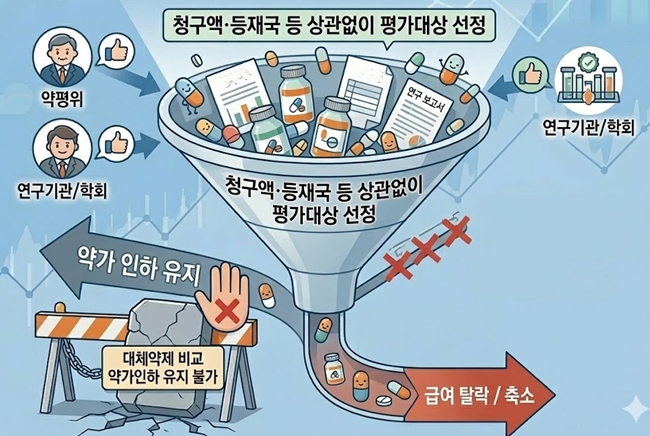
- The government is moving to specify implementation criteria as part of its efforts to reform the reimbursement adequacy reassessment system. It appears that ingredients for which the Drug Reimbursement Evaluation Committee (DREC), research institutes, academic societies, and others raise the need for reassessment will undergo reevaluation regardless of claim volume or listing-country criteria.In addition, the option of maintaining reimbursement through price cuts by comparing a product with its alternatives is expected to disappear going forward.The government is specifying the implementation criteria for reimbursement adequacy reassessment. AI-generated image.According to industry sources on the 17th, the government is specifying the implementation requirements for reimbursement reevaluation reassessments ahead of deliberation by the Health Insurance Policy Deliberation Committee (HIPDC) later this month.Until now, reassessments have been conducted on ingredients among older listed drugs that met the claim volume and countries of listing criteria.The reform plan announced last November signaled a shift away from criteria based on claim volume and listed countries, instead focusing on: ▲ ingredients for which national health authorities in A8 countries have initiated clinical or reimbursement adequacy reassessment; ▲ cases where data or clinical evidence contradicting previously reported efficacy has been published; and ▲ drugs for which the need for reassessment has been recommended by academic societies or experts.Recently, ingredients deemed necessary by DREC through monitoring, as well as those evaluated by research institutions or public agencies, have been subject to additional review.This means the committee will be able to proactively examine and designate a broader range of candidates for reassessment. As a result, concerns are emerging within the industry that the number of drugs subject to reassessment may increase.A pharmaceutical industry official said, “There had already been a tendency to broaden the criteria and expand the scope of targets. The intent is to cut drug spending by strengthening reassessment. Since the idea is that reassessment will proceed whenever there is a perceived need, I believe the number of targets will likely increase.”In particular, because the results of reassessment are being simplified into either delisting or positive listing, the weight of target selection becomes even greater. The option of comparing a product with alternative therapies and maintaining reimbursement through price cuts will disappear.Another industry official said, “It is difficult to predict how things will unfold next year. Depending on the new implementation criteria, the number of targets could either increase or decrease. However, considering the practical work involved in reassessment, the authorities cannot simply increase the number of ingredients indiscriminately, so the annual number of reassessment targets may not change significantly.”
- Policy
- Prices of top-priced generics could drop 32% upon pricing reform
- by Chon, Seung-Hyun Mar 18, 2026 09:11am
- The government’s announced tiered pricing system for generics is expected to function as a powerful mechanism that significantly lowers generic drug prices. Concerns have been raised that the faster exposure to the tiered pricing system compared to the current system could dampen the momentum for later-entering generics. It is estimated that the price of the 13th generic to enter the market will drop to half the current level, as the discount rate increases for products that fail to meet the highest-price criteria, such as those failing bioequivalence tests.Analysis suggests that even if a product meets the highest-price criteria, if more than 13 products are launched simultaneously, a new price reduction mechanism, which applies an additional 15% price cut one year later, will be triggered, causing the price of the first generic to fall by 32% compared to current levels.Tiered pricing system with 15% reduction applied from the 13th generic onward... Drug prices plummet due to stricter eligibility requirementsAccording to industry sources on the 16th, the Ministry of Health and Welfare presented a principle at the HIPDC subcommittee meeting held on the 11th that, under the price reform, the 13th generic would be subject to pricing. The price reduction rate applied to each tier would be 15%.The price drop for generics become greater with the reformThe tiered pricing system is structured such that the insurance ceiling price decreases on a monthly basis, the later a generic enters the market. Although it was abolished in 2012, the system was reinstated with the 2020 drug pricing reform. Under the current system, if there are more than 20 pre-listed products of the same formulation, the price of generics entering the market as latecomers is reduced by 15% at each step.When reporting the drug pricing system reform to the Health Insurance Policy Deliberation Committee on November 11 of last year, the Ministry of Health and Welfare proposed a policy to grant the first generic a price reduced by 5 percentage points (p) from the calculated price starting from the 11th listing of the same formulation. This effectively means the Ministry presented a relaxed version of the stepped pricing system just four months after its initial report.However, because the tiered system would now begin applying from the 13th generic instead of the 21st under the current system, products would be exposed much earlier to this additional price-cutting mechanism.The impact of the tiered pricing system becomes even greater as the generic pricing benchmark itself is lowered. The government has proposed lowering the benchmark for calculating generic drug prices from the current 53.55% to the low to mid-40% range, a reduction of about 10 percentage points. If the generic drug pricing benchmark drops from 53.55% to 43%, the maximum generic price would be reduced by 19.7% in absolute terms.For example, under the current drug pricing system, when the maximum generic price is KRW 53.55, the 21st generic’s price cannot exceed KRW 45.52, which is a 15% reduction. The price of 22nd and 23rd generics then drops to KRW 38.69 and KRW 32.89, respectively. The 24th generic would be KRW 27.95, and the 25th would be KRW 23.76, meaning drug prices decrease as generics enter the market later.Under the revised pricing system, where the generic drug pricing benchmark is set at 43%, if the maximum price is KRW 43, the price of the 13th and 14th generics drops to KRW 36.55 and KRW 31.07, respectively, following a 15% step-down reduction. The price of the 15th generic drops to KRW 26.4. Under the current drug pricing system, the 15th generic drug is not subject to the tiered pricing structure and can maintain a price of 53.55%, but under the revised system, its price drops to less than half that level.As the stricter maximum price requirements under the revised system will also be applied, the magnitude of price reductions under the tiered pricing system will become even greater.Since July 2020, under the revised generic pricing rules, a generic product must both conduct its own bioequivalence study and use a registered active pharmaceutical ingredient to qualify for the top price. For each unmet requirement, the ceiling price is reduced by 15%. If both requirements are not met, the price falls by 27.75%. Applying that 15% reduction, the 53.55% premium benchmark falls to 45.52% if one requirement is unmet and to 38.69% if both are unmet.According to the criteria introduced by the ministry after the 2020 pricing reform, “Even if a product meets both premium-price requirements, if there are already 20 or more listed identical products, starting from the 21st product, the price will be listed at 85% of the lower of the lowest price of the identical product or 38.69%.” The 38.69% rate is the result of two 15% reductions applied when a product failed to meet both of the highest-price criteria. (53.55% × 0.85 × 0.85)When 20 or more generics are listed, the 21st drug is listed at the lowest price vs 38.69%, whichever is lowerCurrently, the 21st generic drug,the first to be subject to the tiered drug pricing system, is priced at 32.86%, which is a 15% reduction from the 38.69% baseline. Compared to the highest price of 53.33%, this means the first generic drug subject to the tiered pricing system will see a 38.6% reduction. The prices of the 22nd and 23rd generic drugs will be reduced even further.The Ministry of Health and Welfare plans to increase the reduction rate applied when the highest price requirement is not met under the revised drug pricing system from 15% to 20%. If the benchmark for the highest generic drug price is set at 43%, the calculation standard will be further lowered to 34.40% for generics that fail to meet one requirement, and to 27.52% for generics that fail to meet both requirements.Under the revised drug pricing system’s tiered pricing structure, which applies the highest-price requirement, the ceiling price drops significantly starting with the 13th generic.The price of the 13th generic is calculated to drop from 27.52%, the rate applied to generics failing to meet two highest-price requirements, to 23.39%, a reduction of 15%. Comparing the same 13th generic drug, the price under the current system is KRW 53.55, whereas under the revised system, it drops to roughly half that amount. The 13th and 14th generic drugs each decrease by 38.6% from the lowest price, falling to KRW 14.36 and KRW 8.8, respectively.Under the revised drug pricing reform, the combined effects of shortening the sequence for applying the tiered pricing system, a 15% reduction upon tiered application, and a 20% price reduction for drugs that do not meet the highest-price requirement create a structure that effectively prevents late-entrant generics from entering the market.If 13 or more highest-priced generics are listed, prices will be reduced by 15% after one year.Even top-priced generics could see their prices cut a year later, depending on the number of products listed at the same time.To prevent excessive competition when the first generics enter, the ministry plans to apply pricing standards equivalent to tiered cuts to generics whose listing causes the total number of identical products to exceed 13.Even if a generic is listed within the first 12 products and initially receives the top price of 43%, if that product is among a group whose simultaneous entry causes the total to exceed 13, its price would be cut by 15% one year later.The price of generics with many listings will fall to a greater extent with the new reformFor example, if 8 generic products are listed in January and receive prices in the low-to-mid 40% range, and another 8 generics are listed in February, those products would all be treated as being listed simultaneously starting from the 9th position and could receive the top price. However, because the additional eight February listings push the total number of identical products beyond 13, those products would, one year later, fall to the 85% tiered level.Even the earliest listed generic could have its price cut by 15% one year later if 13 or more products enter simultaneously. In other words, even if it initially secures the top-price benchmark of 43%, it could later fall to 36.55% after one year. In that case, the price would be 31.75% lower than the current ceiling price.Within the industry, this is being interpreted as the government effectively intending to allow only up to 12 generics. Under restrictions on joint development, only three products may participate in one bioequivalence study. Generics beyond three such groups would face such sharp price declines that their incentive to enter the market would effectively collapse.One industry official noted, “Once the revised drug pricing system is implemented, late-entering generics will effectively be unable to turn a profit, so competition to secure the highest price by capturing the market first will inevitably intensify. Even if a company secures a leading position in the generic market, if there are many competing products, the tiered pricing mechanism will cause drug prices to fall, which could even lead to companies abandoning their plans to enter the generic market altogether.”
- InterView
- [Reporter’s View] MOHW-Industry clash over reform plan
- by Lee, Jeong-Hwan Mar 17, 2026 09:22am
- The biggest justification for the drug pricing reform plan, which the Ministry of Health and Welfare is accelerating, is “improving the structure of the domestic pharmaceutical industry with a focus on domestically developed new drugs.”Minister Eun Kyoung Jeong and Second Vice Minister Hyung-Hoon Lee have expressed their ambition to create a drug pricing environment that properly rewards pharmaceutical companies that generate innovative value through new drugs, as well as those that are willing to develop medicines essential for public health and life despite low profitability.The ministry has also emphasized the need for a swift overhaul of Korea’s pharmaceutical ecosystem, in which more than 100 companies obtain generic approvals for each active ingredient in a scattered and individual manner, resulting in excessive sales-promotion competition.The domestic pharmaceutical industry, however, is strongly opposing the reform plan, questioning its effectiveness. Companies that have built clinical achievements in new drugs and improved drugs and contributed to the development of Korean new drugs argue that the reform plan, which centers on price cuts for already listed generics and preferential pricing for innovative pharmaceutical companies, will, in fact, bring considerable regression to the domestic pharmaceutical industry.They point out that both the reform plan first unveiled by the Ministry on November 28 of last year and the revised version presented at the Health Insurance Policy Deliberation Committee’s subcommittee meeting on the 11th of this month are far removed from policies that genuinely benefit the “real pharmaceutical companies” that have demonstrated tangible achievements in advancing the domestic pharmaceutical industry and improving public health.A closer look at the domestic industry’s position shows that there is no disagreement with the broad policy direction of rewarding companies that have produced new drug R&D outcomes and contributed to manufacturing drugs vulnerable to supply instability, while cutting prices for those that have not, thereby encouraging new drug creation and a stable supply of essential medicines.The problem is that the Ministry of Health and Welfare’s reform plan cannot escape criticism that “the devil is in the details”—a cliché, but one that rings true.The main point of criticism from pharmaceutical companies regarding the Ministry’s reform plan is the “price cuts for already listed generics.”The Ministry has proposed a policy that uniformly cuts the prices of already listed generics without significant differentiation between pharmaceutical companies that have consistently maintained innovation and continued financial investment, and those that have relied on contract manufacturing of generics to generate profits.That is precisely the clause in the reform plan first disclosed on November 28 last year, which proposed lowering the current generic pricing ratio of 53.55% uniformly to the 40% range.Later, in the revised proposal presented at the HIPDC subcommittee on the 11th, the ministry adjusted the generic pricing ratio from the 40% range to the low-to-mid 40% range, while at the same time establishing a provision to temporarily defer price cuts for already listed generics for certified innovative pharmaceutical companies and companies deemed equivalent to innovative pharmaceutical firms.However, this was accompanied by a proviso stating that the deferment would not apply to ingredients with ‘21 or more listed products.’Pharmaceutical companies argue that the price reduction deferral for innovative pharmaceutical companies does not offer significant merit or benefit, and that, given the proviso regarding the 21-product threshold, the actual benefit effectively converges to zero.They argue that the price reduction deferral provision for innovative pharmaceutical companies appears, at first glance, to be a perfectly fine and sweet piece of fruit, but when you cut it open and look inside, it is rotten to the core—a regulation that has no real substance.Pharmaceutical companies also express dissatisfaction with the preferential drug pricing regulations designed by the Ministry of Health and Welfare, claiming that they are constrained by a piecemeal surcharge system and cannot generate any substantial price benefits, no matter how hard they try. The logic goes that if the government truly wants to build an innovative pharmaceutical ecosystem, it must go beyond mere drug price markups. Through inter-ministerial consultations, the government needs to dramatically strengthen tax benefits and create policies that allow pharmaceutical companies to see tangible benefits, such as regulatory exemptions for those contributing to the production of high-quality medicines, so that companies can generate profits that can then be reinvested into new drug R&D.Then why are the Ministry of Health and Welfare and the pharmaceutical industry clashing so sharply over the same reform plan when they share the same policy objective?Ultimately, it is due to insufficient public-private consultation between the government and the industry before the draft reform plan was disclosed on November 28, resulting in a drug pricing system that started strong but fizzled out.Despite growing backlash from the pharmaceutical industry immediately after the draft was released, the Ministry of Health and Welfare did not engage in any meaningful consultations with pharmaceutical companies until the revised proposal was prepared. The only face-to-face case between the ministry and the pharmaceutical industry was a single working-level consultation in which officials from around 20 pharmaceutical companies were gathered and asked to submit fragmented opinions.Multiple pricing managers at pharmaceutical companies say, “We have worked in market access and drug pricing policy for 10 or even over 15 years, but we have never seen the ministry put forward such a sweeping and unilateral drug pricing reform plan and then make so little effort at mutual consultation.”There is also strong criticism saying, “We don’t understand why the Ministry is turning a deaf ear and continuing with unilateral administration. If this continues, a pricing system will be established in which generic prices for domestic pharmaceutical companies are cut in order to fund innovative new drugs from global pharmaceutical companies. That would be the exact opposite of the ministry’s stated policy goal of fostering the domestic pharmaceutical industry and building a pharmaceutical environment based on new drugs.”There are even accusations that the ministry is merely kowtowing to the Trump administration’s pressure regarding reciprocal drug tariffs, having drafted a drug pricing reform plan out of fear of offending the US, and is now refusing to respond to any requests for revisions.The one thing the domestic pharmaceutical industry is asking of the ministry is a pause on the drug pricing reform plan that has been pushed forward hastily without mutual consultation.Pharmaceutical companies are calling on the ministry that, if it truly intends to design and operate the reform plan with the real goal of pharmaceutical industry innovation, it should stop insisting on a unilateral and coercive proposal and instead set a final timetable even now, promptly launch a public-private joint governance framework on the drug pricing reform plan, and derive a fully revised version.The unwavering stance of solid domestic pharmaceutical companies dedicated to innovation is that the reform plan and amendments presented by the Ministry of Health and Welfare to date are absolutely insufficient to create global blockbuster-level domestic new drugs, resolve crises involving essential medicines and medicines with unstable supply, solve the problem of generic drug proliferation, and eradicate rebate competition caused by pharmaceutical companies trapped in contract generic manufacturing, all of which are necessary to protect both a healthy domestic pharmaceutical environment and the public’s right to health.The words of one pricing manager that I heard while covering the reform continue to ring in my ears. “If the goal of this price cut is simply to reduce drug spending in the National Health Insurance budget, then there is nothing more to say. But we cannot agree at all with the ministry’s claim that its administrative rationale is preferential treatment for innovative pharmaceutical companies and building a new drug ecosystem. If the goal is to foster the pharmaceutical industry and reward real pharmaceutical companies, why are drug prices being cut across the board? Why does the ministry insist on turning a blind eye to the reality where only global big pharma companies end up laughing while domestic pharmaceutical companies are sweating bullets, calculating their losses? Rather than engaging in media stunts, wouldn’t it be the proper attitude for an administrator to put their heads together with industry practitioners and design a proper system?”
- Policy
- Boehringer discontinues original meloxicam 'Mobic Capsules' in KOR
- by Lee, Tak-Sun Mar 17, 2026 09:22am
- Product photo of 'Mobic Capsules''Mobic Capsules,' the original drug of the Non-Steroidal Anti-Inflammatory Drug (NSAID) meloxicam, is set to discontinue its supply in South Korea.Boehringer Ingelheim's headquarters has decided to stop imports, with product stocks expected to be depleted by April next year. The decision to withdraw from the Korean market is interpreted as a result of low sales performance and a market saturated with numerous alternatives of the same ingredient and class.According to industry sources on the 16th, Boehringer Ingelheim Korea has notified distributors regarding the discontinuation of Mobic Capsules.Boehringer Ingelheim stated, "The company has decided to discontinue the supply after recognizing that a wide variety of alternative treatments are already available in the Korean market." The company added, "Currently imported stocks will be supplied until they are exhausted, noting that the expected depletion date may vary depending on usage volume. The projected depletion for Mobic Capsules 7.5mg is around April next year, while Mobic Capsules 15mg is expected to run out by March next year."Mobic is an NSAID containing meloxicam as its active ingredient. It is effective in alleviating inflammation and pain associated with rheumatoid arthritis, osteoarthritis, and ankylosing spondylitis by selectively inhibiting COX-2. While it tends to have fewer gastrointestinal side effects compared to traditional anti-inflammatory drugs, it carries risks of blood clots and cardiovascular issues; therefore, it should be taken at the lowest effective dose for the shortest duration possible.Currently, there are 82 meloxicam products in South Korea at the 7.5mg dose and 15 at the 15mg dose. Even with the withdrawal of the original brand, the impact of the supply disruption is expected to be minimal due to the abundance of substitute medications.Mobic's sales have also been decreasing. According to UBIST, its outpatient prescription sales last year were KRW 1.5 billion, a 2% decrease from the previous year. This is a significant gap compared to Celebrex, another drug in the same NSAID class, which recorded KRW 41.7 billion in outpatient prescriptions last year.Consequently, Boehringer Ingelheim may have decided to halt supply to focus on other pharmaceutical products, given Mobic's low profitability in the Korean market.
- Policy
- Generics companies challenge ₩100B Lixiana·Livalozet mkt
- by Lee, Tak-Sun Mar 17, 2026 09:22am
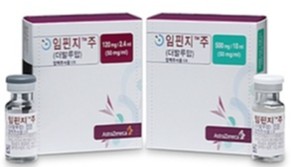
- LixianaGeneric drug development is accelerating for Lixiana (edoxaban tosylate hydrate, Daiichi Sankyo Korea) and Livalozet (pitavastatin calcium + ezetimibe, JW Pharmaceutical), both of which are approaching the end of their exclusivity periods.Because both drugs have recorded more than KRW 100 billion in prescription sales, they are emerging as major targets for generic manufacturers this year and next.In the case of Lixiana, it has been disclosed that 13 products have applied for approval this year alone.According to the Ministry of Food and Drug Safety on the 16th, under the approval-patent linkage system, the original company was notified of marketing authorization applications filed for 13 generic products containing edoxaban tosylate hydrate in 2026.The recent increase in Lixiana generic approval applications is due to the fact that its substance patent is scheduled to expire on November 10 of this year.As for the pharmaceutical composition patent, which is scheduled to expire on August 21, 2028, most generic manufacturers have already succeeded in circumventing it through passive scope-of-rights confirmation trials. Once the patent expires, there will be no obstacles to launching generic drugs on the market.Lixiana is a direct oral anticoagulant (DOAC) whose prescription volume has continued to expand as it replaces warfarin. According to UBIST, its outpatient prescription sales alone reached KRW 117.5 billion last year.Generic companies had made attempts to invalidate the substance patent due to its strong commercial value, but failed. In addition to the original product, nine follow-on companies have already obtained product approvals, and their generic versions are expected to be launched after the substance patent expires.Since no follow-on product has secured first generic exclusivity, it appears that many products will flood the market simultaneously upon expiry of the substance patent, without restrictions on sales.LivalozetThere is also a strong possibility that a large number of generics will emerge for Livalozet, which posted KRW 117 billion in outpatient prescription sales last year. On the 13th, Nelson Korea, Pharmbio Korea, and Austin Pharmaceuticals all received approval on the same day for their bioequivalence study protocols for generic development.Generic development has already begun in earnest since 2024, with many pharmaceutical companies aiming to file applications. Applications can be submitted after the Livalozet re-examination period ends on July 27 next year.Livalozet is a dyslipidemia treatment combining pitavastatin and ezetimibe, and it has gained popularity due to its lower risk of diabetic side effects and strong lipid-lowering efficacy.In addition to the original company, JW Pharmaceutical, 5 companies have directly launched products with the same active ingredients through their own clinical trials. Ahn Gook Pharmaceutical, Boryung Pharmaceutical, Dongkwang Pharmaceutical, Hanlim Pharm, and Daewon Pharmaceutical launched related products in the second half of 2023 and have continued rapid growth. Last year, Ahn Gook Pharmaceutical’s Pevarozet recorded KRW 29.2 billion in outpatient prescription sales, while Daewon’s Tavalozet recorded KRW 18.2 billion. These companies also succeeded in launching their products early by invalidating Livalozet’s use patent.More recently, low-dose products combining pitavastatin 1 mg and ezetimibe 10 mg have also appeared. In January, Ilsung IS, Ildong, Daewoong, and Hanlim obtained approvals for related products, and this month, JW Pharmaceutical also received approval for a new product.Given recent sales trends, there is a high likelihood that generic drugs will flood the market once the re-evaluation period ends next July.
- Company
- Adjuvant immunotherapies shift gastric cancer trt paradigm
- by Son, Hyung Min Mar 17, 2026 09:22am
- Cancer immunotherapy 'Imfinzi'Major immune checkpoint inhibitors have demonstrated effects in pre- and post-operative adjuvant therapy. A paradigm shift in the treatment of gastric cancer is expected.According to industry sources on the 17th, the addition of an indication for the immunotherapy 'Imfinzi (durvalumab)' in advanced gastric cancer is imminent. AstraZeneca Korea anticipates approval within this month.While East Asia is notable for excellent early diagnosis and surgical outcomes, the risk of recurrence due to residual micrometastases remains high for patients with Stage 2–3 locally advanced disease. A perioperative treatment strategy, administering anticancer drugs both before and after surgery, has emerged as a solution to improve clinical outcomes.According to the final analysis of the Phase 3 MATTERHORN trial presented at the European Society for Medical Oncology (ESMO 2025) in Berlin last October, Imfinzi's perioperative adjuvant therapy significantly improved overall survival (OS) with statistical significance. Furthermore, clinical results for Asian patients, including South Koreans, were introduced at ESMO ASIA 2025.A total of 180 Asian patients participated in this analysis. The Asian cohort had a higher proportion of high-risk patients, with a greater frequency of T4 staging and lymph node positivity compared to the overall study population.Despite this, the Imfinzi combination therapy showed positive results, reducing the risk of disease progression by 26% in the event-free survival (EFS) endpoint compared with the placebo combination group. The 24-month EFS rate was 72.1% for the Imfinzi group, higher than the 64.2% in the placebo group. As the median EFS has not yet been reached in either group, the treatment benefit may become even more pronounced during long-term follow-up. The OS benefits were also consistent with the previous global clinical data.A particularly striking result was the pathological complete response (pCR). In the Asian cohort, the Imfinzi combination increased the proportion of patients whose tumors completely disappeared at the time of surgery to 18.9%, more than triple the 5.6% recorded in the placebo group. This level is similar to the overall analysis results, demonstrating that Imfinzi can significantly enhance tumor shrinkage effects during the preoperative phase.Safety was also confirmed to be at a manageable level, with no specific increase in toxicity compared to the standard FLOT (fluorouracil, leucovorin, oxaliplatin, and docetaxel) regimen. There was no significant difference in Grade 3 or higher adverse events between the two groups, and treatment discontinuation rates were similar, indicating no new safety concerns arising from the addition of Imfinzi. Given that FLOT itself is an intensive regimen, this is interpreted as an important finding.Based on these clinical results, the U.S. Food and Drug Administration (FDA) last month approved Imfinzi monotherapy as maintenance treatment following FLOT combination therapy in adult patients with resectable gastric and gastroesophageal junction adenocarcinoma.While surgery remains the cornerstone of curative treatment for gastric cancer, there is a growing global consensus, including in Asia, that surgery alone is often insufficient for a full cure. The MATTERHORN study has shown that administering immunotherapy in combination with FLOT before surgery, followed by radical resection and subsequent treatment, can meaningfully improve long-term outcomes.Clinical trials of major immunotherapies in perioperative adjuvant therapyCancer immunotherapy 'Keytruda'The attempt to integrate immunotherapy into perioperative care is not limited to Imfinzi. Various studies combining different immunotherapies with chemotherapy are confirming the potential for expanding gastric cancer treatment strategies.For example, improvements in preoperative pathological response rates have been reported in several studies, including studies involving avelumab + FLOT (MONEO), sintilimab + FLOT, toripalimab + SOX, and tislelizumab + SOX. Some studies are also exploring strategies that combine immunotherapy with anti-angiogenic agents or radiation therapy.Recently, the potential to improve tumor response rates has also been identified in preoperative adjuvant strategies involving the PD-1 inhibitor Tevimbra (tislelizumab), further raising the possibility of expanding preoperative immunotherapy.However, not all immunotherapies have achieved the same level of success.MSD's Keytruda (pembrolizumab) demonstrated improved pCR in the Phase 3 KEYNOTE-585 study evaluating a perioperative adjuvant strategy but failed to improve EFS, thus failing to meet its primary endpoints.
