
- LOGIN
- MemberShip
- 2026-05-13 23:39:02
- Company
- Nucala retries insurance benefits for the first time in five
- by Eo, Yun-Ho Dec 12, 2022 05:48am
- Nucala, a respiratory antibody drug, is seeking to register insurance benefits again. According to related industries, GSK Korea recently submitted an application for the salary of Nucala, a severe eosinophilic asthma treatment. It is the first re-challenge in about five years since the non-reimbursed decision of the Drug Benefit Evaluation Committee of the Health Insurance Review and Assessment Service in 2017. At that time, the committee decided that the cost effectiveness was unclear as a result of Nucala's PE data analysis. Nucala is an interleukin (IL)-5 antagonist that reduces eosinophilic levels, a type of white blood cell involved in asthma triggers. Currently, it can be used as an additional maintenance treatment for asthma treatment in adult patients suffering from severe eosinophilic asthma with 150 cells/㎕ or more in the blood or 300 cells/㎕ or more in the blood within 12 months before the start of ▲ treatment, and is prescribed as a non-reimbursement. Nucala proved its validity through phase DREAM, MENSA, and SIRIUS studies. Among them, MENSA was published in the NEJM in 2014 as a representative study of this drug. This study was conducted on patients with severe asthma who developed exacerbations despite the use of several regulators, including high-dose inhaled corticosteroids (ICS), and in particular, patients with increased eosinophils by more than 150 cells/㎕ (more than 300 cells/㎕ a year ago) were recruited in the initial screening. They were administered Mepolizumab and placebo, and the annual incidence of exacerbation was observed. As a result, the annual incidence of exacerbation in the Mepolizumab 75mg intravenous treatment group at 32 weeks decreased by 47% compared to the placebo group, and the Mepolizumab 100mg subcutaneous injection treatment group also decreased by 53%. In addition, the quality of life was improved, and asthma control satisfaction was higher than placebo. The SIRIUS study observed dose changes in OCS after 20–24 weeks when Mepolizumab was administered in patients with oral corticosteroids (OCS). As a result, the dose of OCS in the Mepolizumab 100 mg subcutaneous injection group was reduced by 50% compared to the placebo group, and asthma control satisfaction and quality of life evaluation were significantly improved. This study was published in the ERJ in 2014 as the first to demonstrate a decrease in the dose of OCS when administering antibody drugs. In addition, various sub-analysis confirmed the effect of improving the incidence rate of deterioration and quality of life according to the eosinophil level.
- Company
- Daewoong suspends clinical trials of COVID-19 treatments
- by Kim, Jin-Gu Dec 12, 2022 05:47am
- All three clinical trials have been discontinued, and DWRX2003' has not progressed in domestic and foreign clinical trials. Daewoong decided to voluntarily stop the last clinical trial of DWJ1248, which was being developed as a treatment for severe COVID-19. Analysts say that Daewoong's COVID-19 project has also ended as all three clinical trials of the drug have been suspended. Daewoong announced on the 9th that it will voluntarily suspend the phase 3 clinical trial of the COVID-19 treatment DWJ1248. Daewoong explained the reason, "It is expected that it will be difficult to secure clinical results as the transition rate to severe patients decreases due to the rapidly changing COVID-19 situation and the expansion of vaccination." With this decision to suspend clinical trials, all clinical projects related to Daewoong's DWJ1248 have been terminated. Daewoong announced in July 2020 that it would develop Foistar, which was previously used to treat chronic pancreatitis, as a treatment for COVID-19. Daewoong then operated three clinical trials at the same time. They include two-thirds clinical trials for mild and moderate patients, three clinical trials for combination therapy with Remdesivir for severe patients, and three clinical trials for severe prevention purposes. Among them, phase 3 clinical trials for preventive purposes were suspended in December last year. In addition to DWJ1248, Daewoong is developing DWRX2003 containing Niclosamide as a treatment for COVID-19. However, this candidate substance is also said to have difficulty in clinical trials. Daewoong was approved for phase 1 clinical trial in October 2020. The clinical trial conducted at Chungnam National University Hospital was completed in June last year. However, there is no news that the second phase will be held since then. Overseas clinical trials of this drug are also failing to boost. In the Philippines, phase 1 clinical trials were started with the aim of recruiting 40 people, but phase 1 ended early with only two people gathered. The company's strategy is to focus on clinical trials in Australia, India, and Indonesia. However, even this is said to have difficulty recruiting patients as the local vaccination rate increases rapidly. In the case of DWRX2003 clinical trials, vaccinations are excluded from recruitment.
- Product
- Jeil will stop distributing Viagra, Cardura, Detrusitol
- by Kim JiEun Dec 12, 2022 05:47am
- Jeil Pharmaceutical will discontinue distributing Viagra at the end of this month after parting ways with Viatris Korea that it had made a distribution agreement with for the drug. Jeil Pharmaceutical has recently sent an official notice to drug wholesalers about the company’s discontinued distribution of some products. In the notice, Jeil Pharmaceutical wrote, “Due to the termination of the distribution agreement with Viatris Korea, we will be discontinuing the distribution of Viagra Tab, Viagra L film, Cardura XL Tab, and Detrusitol SR Cap.” Jeil Pharmaceutical also wrote that its distribution license with Viatris Korea terminates as of December 30th and asked that inquiries about the aforementioned products be directed to the license holder, Viatris Korea. Distribution of the following 7 products will be discontinued under Jeil’s measure: ▲Viagra Tab 50mg (4 tablets); ▲Viagra Tab 100mg (4 tablets); ▲Viagra L ODF 50mg (4 sheets); ▲Viagra L ODF 100mg (4 sheets); ▲Detrusitol SR Cap 2mg (30 capsules); ▲Detrusitol SR Cap 4mg (30 capsules); and ▲Cardura XL Tab. The date of their distribution discontinuation will be December 23. Due to Jeil’s suspension of distribution, the affected drugs are rapidly running out of stock at online malls that sell drugs to pharmacies. Cardura XL Tab In the case of Viagra Tab., the product is already sold out in some online malls and is not available for order. Also, only a small stock of Viagra L, Detrusitol SR Cap, and Cardura XL Tab is said to remain for order. As the drugs being discontinued distribution are urology-related products, it is expected that pharmacies near urology clinics will be affected for a certain period of time. A local pharmacist said, “If a wholesaler notifies pharmacies of a discontinuation of distribution, the temporary demand for the drugs will inevitably rise. In the case of Viagra Tab, there has already been a shortage since last month due to delays in production schedules. As it may take some time to normalize sales, pharmacies that receive related prescriptions may have difficulty dispensing the drug.” Meanwhile, Viatris Korea is the Korean subsidiary of Viatris that was launched in November 2020 through a merger between Global Pfizer’s business division Upjohn and the global healthcare company Mylan.
- Company
- GLP-1 Diabetic Trulicity's High Flux
- by Kim, Jin-Gu Dec 12, 2022 05:47am
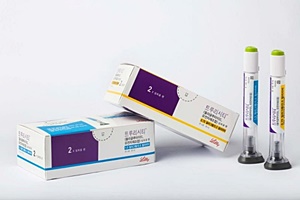
- Trulicity GLP-1 analog diabetes treatment Trulicity is on the rise. In the third quarter of last year, sales increased by 22% compared to the same period last year, continuing to grow. Attention is drawn to the competitive drug Ozempic. The pharmaceutical industry predicts that Ozempic will be a strong opponent of Trulicity. In the global market, Ozempic has already surpassed Trulicity sales. According to IQVIA, a pharmaceutical market research firm, Trulicity's sales in the third quarter were 15.8 billion won. It increased by 22.3% compared to 12.9 billion won in the third quarter of last year. Trulicity is a GLP-1 analog diabetes treatment. GLP-1 analogs are drugs developed using GLP-1 (Glucagon-Like Peptide-1) hormones that are involved in controlling blood sugar in the body. GLP-1 hormones promote insulin secretion immediately after meals, lowering blood sugar, and reducing insulin secretion when blood sugar falls below a certain level to help prevent hypoglycemia. Trulicity monopolizes the GLP-1 analog diabetes drug market. As of the third quarter, the sales share reached 99.8%. Trulicity received domestic item approval in May 2015 and released its salary in May 2016. It was the latest GLP-1 analog diabetes drug to be released, but it grew steeply every quarter. Since 2017, it has virtually solidified its dominance system. At the same time, it is breaking new sales records every quarter. In addition to Trulicity, Lyxumia, Victoza, and Byetta have entered the domestic market, but they seem to have been completely pushed out of the competition with Trulicity. Lyxumia and Byetta withdrew their item permits and withdrew from the domestic market, while Victoza's quarterly sales fell to around 30 million won. Ozempic & RybelsusThe pharmaceutical industry's attention is focused on competitive products to be released by Novono Disc Pharmaceutical. Novo Nordisk was granted Ozempic in April and Rybelsus in May. Ozempic is a long-term, once-a-week injection of the same type as Trulicity, and Rybelsus is a drug that converts it into an oral drug. Rybelsus is a once-a-day drug. In the pharmaceutical industry, It includes an indication of reducing the risk of cardiovascular events compared to Trulicity. Synergy with Rybelsus, the world's first oral GLP-1 analog, is also expected. In the global market, Ozempic has already overtaken Trulicity. According to a quarterly report by Eli Lilly and Novo Nordisk as of the second quarter, Ozempic's global sales in the second quarter amounted to $1.986 billion. During this period, Trulicity's global sales were $1.94 billion.
- Company
- “Immunotherapies take lead in liver cancer treatment"
- by Dec 09, 2022 06:04am
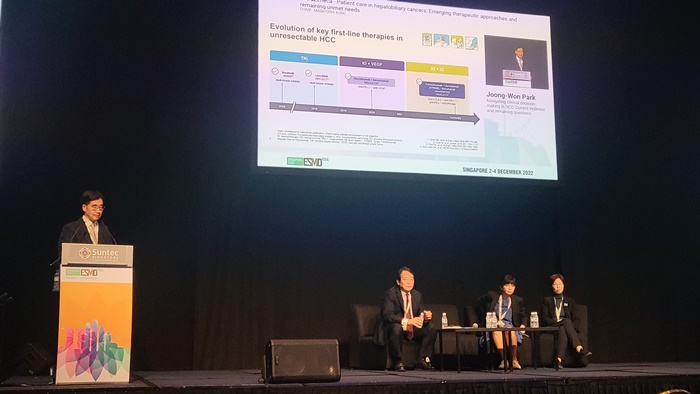
- “Immuno-oncology drugs have brought great advances in the treatment of unresectable advanced hepatocellular carcinoma. However, the unfortunate fact is that these are not well used in the field due to lack of later-line options.” Professor Joong-Won Park, Division of Gastroenterology, National Cancer Center Korea, said so to Dailypharm at the ‘ESMO Asia Congress 2022’ that had been held in Singapore. On the same day, Professor Park introduced the latest research trends in liver cancer treatment at a session held on ‘Patient care in hepatobiliary cancers: Emerging therapeutic approaches and remaining unmet needs.’ According to Professor Park, the treatment paradigm for unresectable advanced liver cancer (hepatocellular carcinoma) has been evolving quickly with the introduction of immuno-oncology drugs. Roche’s ‘Tecentriq’ had been granted as a first-line treatment for HCC in combination with the VEGF inhibitor ‘Avastin.’ It became the first immunotherapy approved for the systemic treatment of liver cancer. Following the combination, AstraZeneca’s immuno-oncology drug Imfinzi’ was also approved in combination with ‘Imjudo,’ another immuno-oncology drug with a different mechanism of action. The Imfinzi+Imjudo combination was approved in the US in October and is expected to be soon introduced to Korea as well. Through the STRIDE regimen (single dose of Imjudo as an initial dose followed by Imfinzi every four weeks), the Imfinzi+Imjudo combination improved the effect while minimizing safety risks. Another benefit of using Immuno-oncology drug combinations is that patients can worry less about the risk of hepatotoxicity that arises from the use of TKIs or bleeding from Avastin. Professor Park said, “We consider bleeding risk an important factor when selecting primary treatments. Patients with hepatic-portal hypertension must be tested for risk of hemorrhage. Slight concerns (adverse event) remain in the use of Imjudo in the Imfinzi+Imjudo combination, but it is only administered once, so if the patient well passes that period, the combination is well-tolerated." Its effect was also positive. According to the HIMALAYA Phase III trial, the Imfinzi+Imjudo combination using the STRIDE regimen recorded a median overall survival (mOS) of 16.4 months and reduced the risk of death over Nexavar by 22%. At 36 months of follow-up, the proportion of patients that reached OS in the Imfinzi+Imjudo group and Nexavar group was 30.7% and 20.2%, respectively, demonstrating an improvement in long-term survival with the use of Imfinzi+Imjudo. The Asian (excluding Japan) subanalysis results of the HIMALAYA trial were also disclosed at the ESMO Asia Congress. In Asians, the mOS of Imfinzi+Imjudo was 16.5 months, consistent with the global data. At 35 months, the OS was 32.2% in the Asian group. Professor Park explained, “It is encouraging that the data showed positive results in Asians, as we have a higher prevalence of hepatitis B than in the West. Immuno-oncology drugs came to the fore in this year’s guideline for HCC treatment in Korea. According to the '2022 Practice Guideline for Diagnosis and Treatment of Hepatocellular Carcinoma’ that was published by the Korean Liver Cancer Association, the Tecentriq + Avastin and Imfinzi + Imjudo combinations received A1 recommendations. This is the first time an immuno-oncology drug received a priority recommendation, overtaking Nexavar, which had been the standard treatment for liver cancer for a long time. The biggest challenge that remains for the use of these immunotherapy combinations is in receiving reimbursement. The key lies in how fast the Imfinzi + Imjudo combination will be able to receive reimbursement after it is introduced to Korea. The high prices of Tecentriq and Avastin had been the biggest barrier to their reimbursement in HCC. Fortunately, the introduction of Avastin biosimilars after the expiry of Avastin's patent lowered the drug price and allowed progress in their reimbursement. On the other hand, Imfinzi's partner, Imjudo, is expected to have a higher price barrier because it is a new immuno-oncology drug. The later-line therapies following the use of immunotherapy-based regimens also remain a barrier. The guidelines recommend physicians and patients consider the use of 6 drugs including Nexavar, Lenvima, Stivarga, and Cabometyx. However, in practice, the only realistic option is to use Nexavar without reimbursement. Lenvima is not approved for use in the second line in Korea. In the case of Stivarga and Cabometyx, they are only allowed for use after using Nexavar in the first line. Professor Park said, “Using Nexavar or Cabometyx in the second line is not an issue in the US or in Japan. It is even covered by insurance there. However, in Korea, reimbursement is strictly set for each line of therapy, therefore, it is difficult to use new drugs that are introduced in Korea due to the lack of later-line options. Using the recommended drugs in the later line as in the US or Japan is off-label and illegal or rejected from reimbursement. This is one of the biggest barriers in HCC treatment in Korea.”
- Company
- Ildong's new migraine drug Reyvow can be prescribed at gener
- by Eo, Yun-Ho Dec 09, 2022 06:04am
- According to related industries, Lilly and Ildong Pharmaceutical's Reyvow passed the Drug Commission (DC) of medical institutions such as Kangwon National University Hospital, Nowon-eulji Hospital, and Sinchon Severance Hospital, and advanced general hospitals such as Seoul National University Hospital, Asan Medical Center, and Seoul St. Mary's Hospital are also undergoing procedures. Reyvow is attracting attention as an expected replacement for tryptan-based drugs, which are most commonly used to treat migraines. This drug targets serotonin (5-HT) 1F receptors like conventional tryptan drugs, but has the advantage of not having cardiovascular side effects by acting selectively. On the other hand, tryptan-based drugs were limited in use because they contract blood vessels in the mechanism, causing cardiovascular diseases such as myocardial infarction and stroke. Reyvow proved its validity through a three-phase study. In two studies of 4,439 migraine patients, 28-39% of the Raybow administration group disappeared within two hours, and 41-48% were free from Most Bothersome Symptom (MBS) symptoms that overreacted to light, sound, and nausea. Reyvow is still unpaid. In August, the HIRA received a conditional salary judgment, but the company did not accept the offered drug price. Ildong Pharmaceutical plans not to give up the registration process afterwards. Meanwhile, Ildong Pharmaceutical signed a development partnership with Raybow developer CoLucid in 2013 to secure copyrights in eight ASEAN countries, including Taiwan, including domestic sales licenses.
- Policy
- “Yoon admin’s healthcare policy reduces coverage"
- by Kim, Jung-Ju Dec 09, 2022 06:03am
- "Stop deceiving the public with an erroneous essential healthcare policy that lays the responsibility for wasteful spending of commercial healthcare to the patients. Civic groups related to healthcare united and strongly voiced their opposition to the essential healthcare measures that were announced by the government. The Korean Federation Medical Activist Groups For Health Rights (KFHR) issued a joint statement in the afternoon today (8th) to “condemn the erroneous essential healthcare policy that reduces coverage of the national health insurance and solidifies the commercial healthcare system.” The Ministry of Health and Welfare had previously held a public hearing after announcing ‘Measures to Improve the Sustainability of Health Insurance and Support Essential Healthcare.’ The KFHR strongly criticized, “Contrary to what’s indicated in the title, the content aims to pass the pain on to the patients by reducing health insurance coverage, and use the issue of essential healthcare that requires the expansion of public health as an excuse to provide financial support to private hospitals. The Yoon Yoon Seok-yeol administration is the first administration to propose a plan to reduce coverage ever since the universal health insurance system was introduced in 1988. The reasons for KFHR’s opposition were: ▲ The plan to reduce health insurance coverage is a historical regression that has never been proposed ever since the introduction of national health insurance, ▲It is passing on the responsibility for wasteful financial expenditures that had been generated by the commercial medical system to the patients ▲And is providing support to private medical institutions and calling them essential healthcare support. KFHR said, “Korea's level of healthcare coverage is placed at the lowest among OECD countries, and this was why all the previous governments had no choice but to come up with a target plan to strengthen coverage, however insufficient. But the Yoon administration is attempting to reduce the little coverage that we have under the pretext of fiscal soundness rather than reinforcing it. The federation also voiced criticism on how the government is shifting the responsibility for wasteful financial expenditures caused by the commercial medical system to the patients. “Excessive medical treatment is prevalent in Korea because the government maintains a system that encourages profit in an extremely commercialized system where private medical institutions account for 95%. Many countries in Europe that run nearly free healthcare systems have fewer issues with excessive medical treatment because this is not caused by high coverage, rather, it is due to the commercialization of healthcare.” Regarding the support for essential healthcare, KFHR criticized it as an attempt to increase compensation to private medical institutions. In other words, the government is repeating the failures of the past. KFHR said, “Many premium fee systems are already in place in Emergency, Pediatrics, and Thoracic Surgery departments, the departments are still being avoided by private medical institutions due to their small number of non-reimbursed services and difficulty in filing excessive medical treatments. These issues cannot be resolved just by raising medical service fees.” KFHR added, “We oppose the government’s enforcement of such erroneous policy after holding a public hearing in which only some interested parties as a formality. Citizens have no choice but to resist if the government, the one that caused the Itaewon disaster, tries to cause a medical catastrophe that will drive people to death and suffering. The government must rescind the health insurance reforms and erroneous policies it is pursuing under the name of essential healthcare.” The KFHR consists of the Korean Nurses Association for Health Rights, the Pharmacists’ Association for Healthy Society, the Dentists' Association for Healthy Society, Solidarity for Worker's Health, the Association of Physicians for Humanism, and Doctors of Korean Medicine for Health Rights.
- Company
- Enhertu seeks approval as 2nd-line tx in breast cancer
- by Eo, Yun-Ho Dec 08, 2022 06:05am
- The antibody-drug conjugate anticancer drug ‘Enhertu’ is attempting to extend its indication to the second line in breast cancer. According to industry sources, the Ministry of Food and Drug Safety is currently reviewing whether to expand the indication for the ADC drug Enhertu (trastuzumab deruxtecan). Its approval is expected in Q1 next year (2023) at the earliest. The indication extension is to treat adult patients with unresectable or metastatic HER2-positive breast cancer who have received a prior anti-HER2-based regimen either in the metastatic setting or in the neoadjuvant or adjuvant setting and have developed disease recurrence during or within 6 months of completing therapy. The drug has been approved to extend its indication to the second line by the US FDA in May and by the European Commission in July. In Korea, Enhertu is being jointly promoted by AstraZeneca and Daiichi Sankyo. The drug is considered a next-generation ADC drug that has been designed using DXd ADC technology. With the drug yet to be listed for reimbursement, what strategy the companies will implement to attract prescriptions after expanding indications remains to be seen. The efficacy of Enhertu in the second line had been identified through the Phase III DESTINY-Breast03 trial. DESTINY-Breast03 is a head-to-head trial that evaluated the efficacy and safety of Enhertu versus the first-generation ADC ‘Kadcyla (trastuzumab emtansine).’ The trial enrolled 524 patients to evaluate the efficacy and safety of Enhertu in patients with HER2-positive unresectable and/or metastatic breast cancer previously treated with trastuzumab and a taxane. The primary efficacy endpoint of DESTINY-Breast03 was progression-free survival (PFS) based on blinded independent central review (BICR). Secondary efficacy endpoints included overall survival (OS), objective response rate (ORR) based on BICR, duration of response (DoR), and PFS based on investigator assessment. Results showed that Enhertu reduced the risk of disease progression or death by 72% compared with Kadcyla in patients with HER2-positive unresectable and/or metastatic breast cancer previously treated with trastuzumab and a taxane.
- Policy
- Dong-A launches its first generic Dapapro
- by Lee, Tak-Sun Dec 08, 2022 06:05am
- Despite the patent dispute, Dong-A ST has released Dapapro, the first generic of SGLT-2 diabetes treatment Forxiga. Dapapro was listed for the upper limit of 684 won this month. According to industries on the 7th, Dong-A ST started selling with Dapapro salary registration. Dapapro is a prodrug product with a different chemical structure from the original. When Dapapro is absorbed, the structure changes afterwards, showing the same medicinal effect as Forxiga. SGLT-2 inhibitors such as Forxiga and Dapapro have the effect of lowering blood sugar by selectively and reversibly blocking SGLT-2 involved in glucose absorption, inducing the remaining glucose to be discharged into urine. It succeeded in evading the material patent of Forxiga. Exactly, the argument that the 917 days of existence added to the Forxiga material patent are not included in the patent rights restricting Dapapro was accepted. This is the decision of the Patent Tribunal last month. However, there is a high possibility that AstraZeneca, the patentee, will appeal to the patent court against the trial decision. There is a possibility that the ruling will change. Earlier, Dong-A requested a trial to confirm the scope of rights for the same patent, but it was cited in the first trial, but it is difficult to predict the conclusion of the patent dispute because it has a history of losing in the second trial. Dong-A's rush to sell products seems to be a willingness to preoccupy the generic market before the patent expires in April next year. This is because other generics are likely to pour out after April next year. Currently, 266 Dapagliflozin products are licensed only by the Ministry of Food and Drug Safety. An industry official analyzed, "From Dong-A's point of view, it would have been difficult to miss the opportunity he had taken for the first time in a while." Dong-A also has a DPP-4 diabetes treatment new drug called Suganon. It is calculated that sufficient synergy can be seen in conjunction with Dapapro, an SGLT-2 formulation. With Dong-A's launch of the product, attention is now focused on the direction of patent disputes. It remains to be seen whether Dong-A will resolve patent disputes and preoccupy the generic market of Forxiga worth 100 billion won.
- Company
- AbTis contracts ADC technology cooperation/ world's #1
- by Dec 08, 2022 06:05am
- ApTis, a company specializing in antibody-drug conjugate (ADC) development, announced on the 7th that it has signed a technology cooperation contract for antibody-drug combination platform for new drug development with global CDMO company Ron. With this cooperation, AbTis' "AppClick" platform technology will be included in Lonza's customized solution toolbox for developing antibody-binding candidate drugs. AppClick is a location-selective ADC linker platform technology that allows users to easily and quickly connect various drugs without antibody deformation. Appclick improved the chemical stability of ADCs by using cyclic peptides that irreversibly bind to specific sites of antibodies. By being included in Lonza's customized solution, AbTis has opened the way to expand technology partnerships with various ADC new drug development companies. In addition, AbTis will be able to receive integrated services on the development and manufacture of Lonza's antibody-binding drug. "The AppClick platform is expected to be used in various ways because it can selectively combine various drugs with existing antibodies," said Gene Christophe, president of Hibert Lonza's bio division. "When developing new treatments such as ADC, it is possible to provide effective technology to various customers who suffer from antibody modifications." In the process of realizing the entry of the AbTis ADC linker platform into the global market, we are very happy to cooperate with the global No. 1 CDMO investor, said Jeong Sang-jeon. "Through this cooperation with Lonza, many ADC new drug developers are expected to apply AbTis Technology to shorten the period of development."
