
- LOGIN
- MemberShip
- 2026-09-08 02:14:52
- Policy
- Xeljanz frequently granted off-label use in lupus and dermatomyositis
- by Jung, Heung-Jun Sep 07, 2026 08:59am
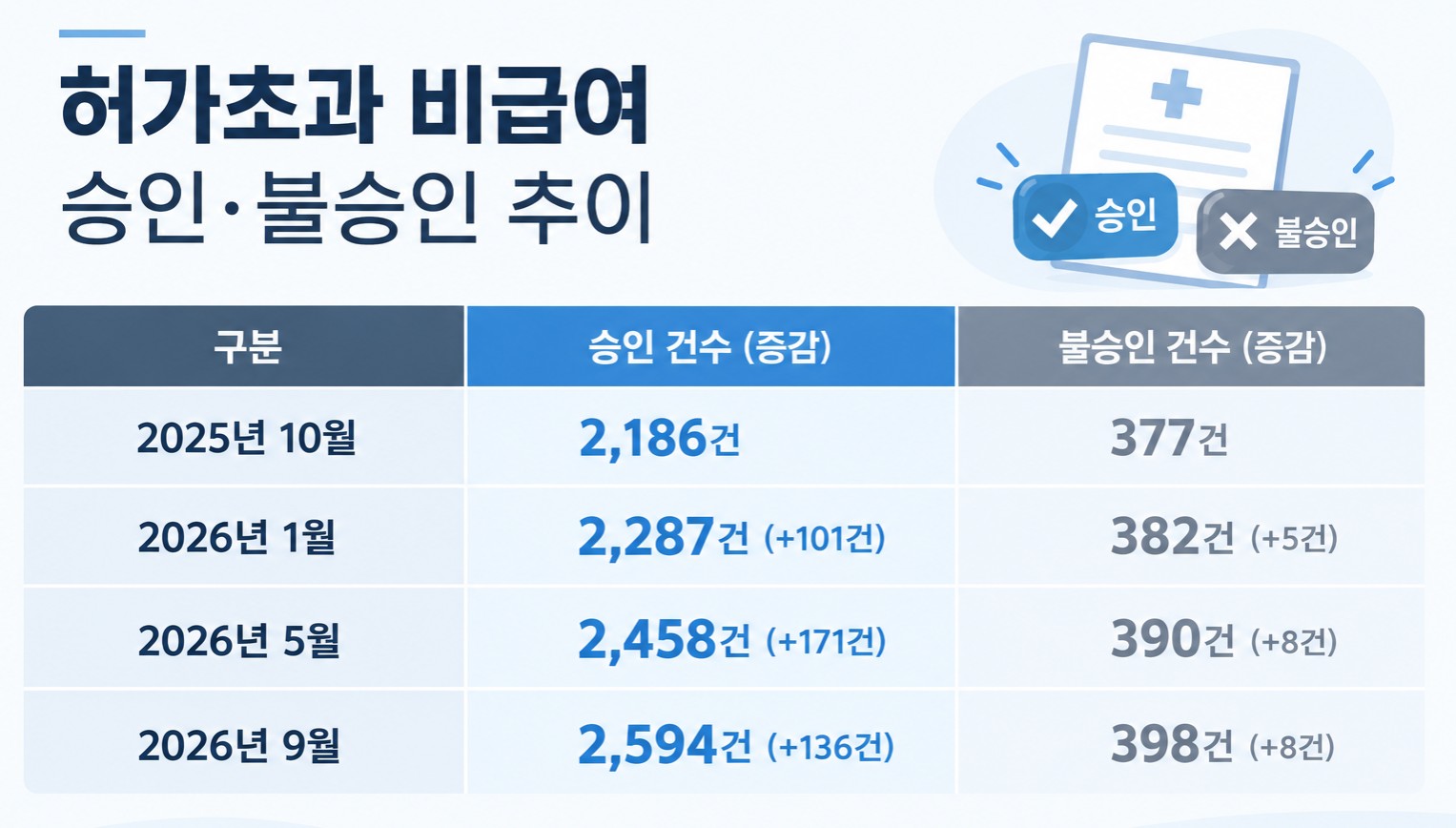
- With the number of approved non-reimbursed off-label drug use applications increasing to 136 since the previous tally, Xeljanz (tofacitinib) was found to have been frequently approved for conditions including refractory dermatomyositis.Although Xeljanz is approved for rheumatoid arthritis and ulcerative colitis, it is also used in practice as salvage therapy for severe autoimmune diseases.According to HIRA’s data on ‘Approved and rejected applications for non-reimbursed off-label drug use’ that was issued on the 7th, a total of 2,594 cumulative applications have been approved as of this month.Since HIRA began disclosing the figures in October last year, 408 additional applications have been approved over approximately 1 year. Rejections increased by only 21 during the same period, putting the approval rate at approximately 95%.Since HIRA began disclosing the figures in October last year, 408 additional applications have been approved over approximately 1 year. AI-generated imageThe low rejection rate is interpreted as applications having already secured supporting evidence through review by hospital institutional review boards (IRBs) or medical societies.This month’s tally included 136 more approvals than the previous count in May. Xeljanz (tofacitinib) accounted for 11 of them, a particularly notable increase.Xeljanz is currently indicated for ulcerative colitis, rheumatoid arthritis, psoriatic arthritis and ankylosing spondylitis, among other conditions. Its approved off-label uses include treatment of patients with refractory dermatomyositis or systemic lupus erythematosus who have failed to respond to existing therapies.The cumulative number of approvals for Xeljanz has risen from 3 as of October last year to 20 this month.Plasma-derived products also continue to show frequent off-label use. GC Biopharma’s IV-Globulin SN Injection and SK Plasma’s Liv-Gamma SN Injection received 11 additional off-label approvals compared with May.The products are approved for ▲hypo- or agammaglobulinemia, ▲use in combination with antibiotics in severe infections, ▲idiopathic thrombocytopenic purpura, ▲Guillain-Barré syndrome and ▲Kawasaki disease.In clinical practice, they are prescribed off-label mainly for complications following organ transplantation and severe autoimmune diseases, generating continued demand.However, an application to use the products in patients with postural orthostatic tachycardia syndrome, which is not an autoimmune disease, was rejected due to insufficient medical evidence.
- Policy
- Shing Poong Pharm’s Prolia biosimilar approved in Korea
- by Lee, Tak-Sun Sep 04, 2026 08:47am
- Shin Poong Pharm has secured marketing authorization for Denovon, a biosimilar version of Amgen’s blockbuster osteoporosis treatment Prolia (denosumab), bringing the product one step closer to launch. Given the usual timetable for health insurance pricing and listing, Denovon is expected to enter the market around the end of the year.With 7 Prolia biosimilars now approved in Korea, competition in the market is expected to intensify further.On the 3rd, the Ministry of Food and Drug Safety approved Shin Poong’s Denovon Prefilled Syringe Injection, a denosumab treatment for osteoporosis.Denovon is supplied as a 60 mg/1 mL prefilled syringe formulation. Like the reference product Prolia, it is indicated for ▲the treatment of osteoporosis in postmenopausal women, ▲increasing bone mass in men with osteoporosis, ▲glucocorticoid-induced osteoporosis, and ▲bone loss in patients with nonmetastatic prostate cancer or breast cancer. Shin Poong acquired exclusive rights to develop and market the product in Korea from India’s Enzene Biosciences in 2021.Seven biosimilars vie for market…first 4 biosimilars already secure reimbursement listingThe approval of Denovon brings the total number of Prolia biosimilars authorized in Korea to seven. Shin Poong is the latest company to join a field that already includes Celltrion, Samsung Bioepis, LG Chem, HK inno.N, Daewon Pharmaceutical and Alvogen Korea.Four of the products have already secured reimbursement and are competing in the market. According to the national health insurance reimbursement list, four 60 mg Prolia biosimilars – Samsung Bioepis’ Obodence, Celltrion’s Stoboclo, HK inno.N’s Izambia and Daewon Pharmaceutical’s Junode – are already listed and are being sold in Korea.Samsung Bioepis (Xbryk), Celltrion (Osenvelt) and HK inno.N (Denbrace) have also received reimbursement approval for their biosimilar versions of Xgeva 120 mg, which is used to treat skeletal complications in patients with cancer.Shin Poong’s newly approved Denovon will now undergo the reimbursement process alongside LG Chem’s Jubbonti and Alvogen Korea’s Ducolia, neither of which has yet been listed.Late entrants seek foothold in KRW 170 billion blockbuster marketAmgen’s ProliaThe Korean Prolia market generates approximately KRW 170 billion in annual prescriptions, making Prolia the largest product in the osteoporosis treatment market. Its convenient once-every-six-month dosing regimen and continued coverage under national health insurance criteria have helped it establish a solid prescription base.In the existing market, early biosimilar entrants are leveraging approvals from drug committees at hospitals and clinics to carve out market share against the sales force of Chong Kun Dang, which holds the domestic marketing rights to the originator Prolia.Later entrant Shin Poong recently revised its agreement with originator Enzene to strengthen its competitive position. Ahead of the launch, Shin Poong secured ▲adjusted the supply price, ▲added sublicensing rights, and ▲a technology transfer option to the agreement.The adjusted supply price is expected to improve both pricing competitiveness and distribution margins. The sublicensing rights also open the door to co-promotion partnerships with pharmaceutical companies that have strong sales networks among local clinics (orthopedics, obstetrics and gynecology, and internal medicine), which account for a large share of prescriptions.An industry official said, “Four biosimilars have already secured reimbursement and are moving to establish an early lead, so an attractive price and a comprehensive sales network encompassing local clinics will be essential for any later entrant. With Shin Poong gaining greater flexibility by restructuring its agreement, the key question will be what kind of partnership it uses to establish itself in the market after securing reimbursement, which is expected around the end of the year.”
- Policy
- “Drug pricing reform relies on collaboration btwn Korea-multinational companies”
- by Jung, Heung-Jun Sep 04, 2026 08:47am
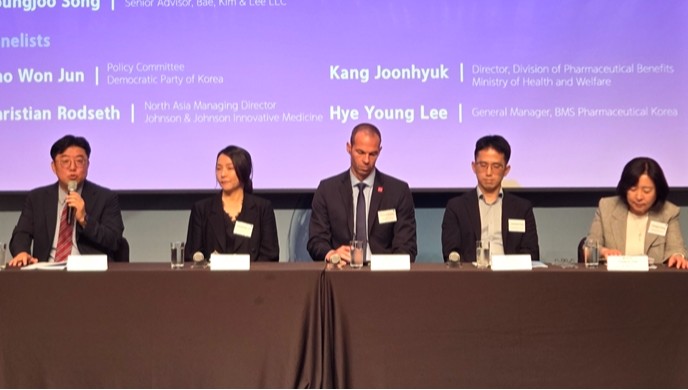
- From left, Policy Director of the Democratic Party of Korea, Hye Young Lee, Country Manager of BMS Korea, Christian Rodseth, Managing Director of Johnson & Johnson Korea, Kang Joonhyuk, Director of the Division of Pharmaceutical Benefits at the Ministry of Health and Welfare, Youngjoo Song, Senior Advisor at Bae, Kim & Lee LLC.The National Assembly and the Ministry of Health and Welfare (MOHW) evaluated that an innovation alliance between multinational and domestic pharmaceutical companies will determine the success of the drug pricing system reform.This indicates that outcomes from innovation must accumulate for the drug pricing reform, primarily pursued to restructure the domestic generic-centric pharmaceutical industry, to advance to its next phase.At the Healthcare Innovation Seminar hosted by the American Chamber of Commerce in Korea (AMCHAM) at the Shilla Hotel on the 3rd, Cho Won Jun, Policy Director of the Democratic Party of Korea, and Kang Joonhyuk, Director of the Division of Pharmaceutical Benefits at the Ministry of Health and Welfare (MOHW), emphasized the importance of fostering an innovation ecosystem.Cho stated, "From the perspective of domestic companies, because the National Health Insurance pie is fixed, there is a negative perception that expanding access to new drugs might reduce their own profits," adding, "Civil society organizations also harbor skepticism over whether profits are appropriately reinvested domestically. We can only move toward the next innovation when perceptions change in favor of shared value".Director Cho stated, "When the perception spreads that both sides are creators of shared profit through innovation and joint global expansion, the relationship inevitably becomes interdependent," and emphasized the importance of open innovation, "Trust is essential for policy shifts. We can only move forward once concerns over polarization diminish. We must forge an innovation alliance."Multinational pharmaceutical companies also agreed on the growth potential of the Korean market. However, they pointed out that the policies aimed at expanding drug access contained within the pricing reform must take firm root to create a predictable business environment.Furthermore, their position is that shared performance target metrics between the government and industry, alongside the swift expansion of drug access, are critical.Christian Rodseth, Managing Director of Johnson & Johnson Korea, positively evaluated the access expansion measures, remarking, "Initiatives such as the ICER threshold and flexible drug pricing agreements are outstanding because their purpose is to reward innovation".However, Rodseth added that the actual implementation of the institutional reform is crucial. Rodseth stated, "What matters is whether the reform plan is clear, whether it is genuinely implemented, and whether companies have experienced tangible benefits from it."Hye Young Lee, Country Manager of BMS Korea, emphasized performance measurement metrics, rapid expansion, and consistent execution through communication.Lee stated, "In the United Kingdom, a policy target was established to double expenditure on innovative new drugs from 0.3% to 0.6% of GDP. Having clear indicators enables transparent monitoring," adding, "Moreover, the fast-track listing pilot program is being implemented within a limited scope. While we agree with the necessity of a pilot project, a swift expansion is needed."Lee further stated, "If the government and industry fail to reach consensus on ambiguous areas or differing perspectives regarding policy interpretation, it could become a roadblock to execution and goal attainment," and suggested active communication.The government noted that it is deliberating on how to implement new drug access expansion measures while addressing regulatory gaps, and requested industry cooperation to ensure the completeness of the drug pricing system reform.Kang Joonhyuk, Director of the Division of Pharmaceutical Benefits at the Ministry of Health and Welfare, stated, "The system reform was conducted in a way that adjusts generics, which account for the largest share of pharmaceutical expenditures, to appropriate price levels while expanding access to innovative new drugs. We are finding a balance between appropriately rewarding the value of new drugs and maintaining the fiscal soundness of National Health Insurance".Kang continued, "There are various opinions regarding the expansion of flexible pricing agreements and institutionalizing the fast-track listing pilot program," and "We view policies concerning new drugs in the second half of the year as critically important."Lastly, Director Kang stressed industry efforts, stating, "The pharmaceutical industry is a vital partner in expanding policies with speed. Fast-track listing also requires the active participation of many companies," concluding that "Companies that have relied primarily on generics lack significant know-how in new drug development. We hope to see many collaboration models emerge with multinational pharmaceutical companies."
- Policy
- No cap set for semi-innovative pharma company designations
- by Lee, Jeong-Hwan Sep 04, 2026 08:47am
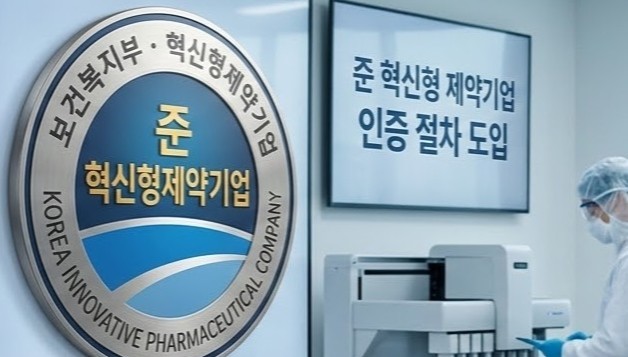
- The Ministry of Health and Welfare plans to designate an unlimited number of semi-innovative pharmaceutical companies, provided they meet the required ratio of research and development investment and are not subject to any disqualifying conditions.Like innovative pharmaceutical companies, semi-innovative companies will be designated through an absolute assessment rather than ranked against other applicants.Some pharmaceutical companies had questioned whether the ministry might impose an overall cap—such as 60 companies—on the combined number of innovative and semi-innovative pharmaceutical companies, given that 47 companies currently hold innovative pharmaceutical company certification. Such questions were resolved, as the ministry has formally confirmed that applicants will be assessed against fixed criteria with no numerical cap on designations.“A ministry official told Dailypharm by phone, ‘As with innovative pharmaceutical companies, there will be no cap on the number of semi-innovative companies certified, provided they meet the R&D investment thresholds and have no grounds for disqualification, such as illegal rebates.’”MOHW held the inaugural meeting of the Public-Private Council for Pharmaceutical Industry Innovation on the 2nd to discuss how the semi-innovative pharmaceutical company certification program will be established and operated.The ministry aims to create a growth ladder under which pharmaceutical startups can receive government support as they progress through semi-innovative and innovative status and ultimately grow into globally competitive pharmaceutical companies.It plans to establish the necessary legal basis by November and begin accepting applications for the new designation in December.To qualify as a semi-innovative pharmaceutical company, an applicant must meet the ministry’s required ratio of R&D expenditure to pharmaceutical sales.Companies with average annual sales of less than KRW 100 billion over the preceding three years must maintain an R&D-to-sales ratio of at least 7% and invest at least KRW 5 billion in R&D.The required ratio is at least 5% for companies with sales of KRW 100 billion or more and at least 3% for companies meeting cGMP or EU GMP standards.Each threshold is 2 percentage points lower than the corresponding requirement for innovative pharmaceutical company certification. To qualify for an innovative status, companies with sales below KRW 100 billion must invest at least 9% of sales and a minimum of KRW 7 billion in R&D. The required ratios are 7% for companies with sales of KRW 100 billion or more and 5% for companies meeting cGMP or EU GMP standards.In addition to meeting the R&D requirements, applicants must also be free of disqualifying conditions such as illegal pharmaceutical rebates and unethical conduct by executives or employees.A company will be disqualified over rebates if it has received two or more administrative sanctions or if the amount provided was at least KRW 5 million. However, violations that occurred more than five years before the assessment will be excluded. Also, cases in which a director or auditor receives a criminal fine or a more severe penalty for offenses such as embezzlement, breach of trust, stock price manipulation, assault, or sexual crimes will be disqualified.Like innovative pharmaceutical companies, semi-innovative companies will receive preferential pricing for both newly listed and already-listed generics. Specifically, new generics will be eligible for a price level of 50% for an initial one-year period plus an additional three years. Already-listed drugs will be allowed to retain a price level of 47% for three years when they undergo reassessment.The ministry categorizes innovative pharmaceutical companies as “leading” companies and semi-innovative pharmaceutical companies as “growth” companies. Under the detailed certification assessment, companies scoring at least 65 points, which is the minimum passing score set in the ministry’s public notice, will receive leading-company certification, while those scoring below 65 will be certified as growth companies. Because quasi-innovative companies will be assessed only on basic eligibility requirements, including their R&D investment ratio and the absence of disqualifying conditions, they will not be required to submit documentation for a separate detailed assessment.The ministry does not plan to limit the number of innovative or semi-innovative pharmaceutical companies certified, to encourage greater R&D investment across the industry. In effect, drug pricing incentives will be awarded through an absolute assessment rather than a competitive ranking.Pharmaceutical companies seeking either innovative or semi-innovative status will therefore need to prepare sufficient evidence to fully satisfy the ministry’s documentation requirements.
- Policy
- 'Tecentriq' has been added to the RSA-type refund
- by Jung, Heung-Jun Sep 03, 2026 04:49pm
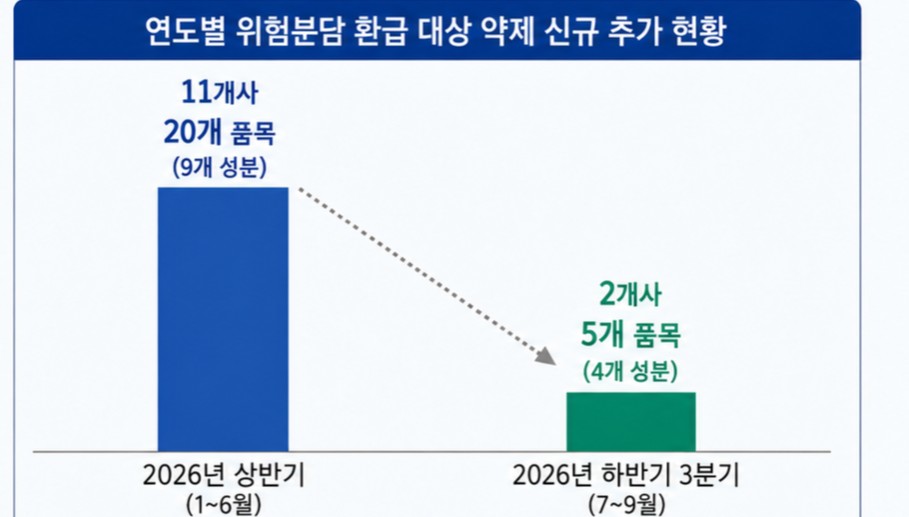
- Roche Korea's immuno-oncology agent 'Tecentriq Inj (atezolizumab)' has been added to the list of pharmaceuticals eligible for Risk-Sharing Agreement (RSA) refunds. A total of 27 products across 12 active ingredients were added as refund-eligible drugs from the first quarter to the third quarter of this year. Additions slowed in the third quarter after the flexible pricing agreement system was implemented in June.According to the list of pharmaceuticals subject to RSA refunds released by the National Health Insurance Service (NHIS) on the 1st, only Roche's Tecentriq Inj was newly added this month.While refund-eligible pharmaceuticals expanded by 20 products (9 active ingredients) across 11 pharmaceutical companies in the first half of the year, additions in the third quarter totaled 5 products (4 active ingredients) across 2 companies.Since June 2026, the implementation of the flexible pricing agreement system has shifted contract types from Risk-Sharing Agreement (RSA) refunds to flexible pricing agreements. The number of newly added RSA refund-eligible drugs decreased from 20 items for 11 companies in the first half of 2026 to 5 items from two companies in Q3 of the second half of 2026: Kadcyla Inj, Perjeta Inj, and Tecentriq Inj from Roche, as well as Boryung's Xpovio Tab.In the third quarter, products from Roche Korea accounted for the majority of new additions, including two dose strengths of Kadcyla Inj, Perjeta Inj, and Tecentriq Inj from Roche, as well as Boryung's Xpovio Tab.The slowdown in new refund-eligible drug additions in the second half, compared with the first half, is due to the flexible pricing agreement system implemented in June.In June, Astellas Pharma Korea's Xtandi Cap was removed from the refund-eligible drug list after the company transitioned the product to the flexible pricing agreement system when its RSA contract expired.Under the flexible pricing agreement system, the actual contract price is used rather than the published list price, eliminating the need for a separate refund process.While conventional refund-eligible drugs posed administrative burdens, such as processing patient co-payment refunds, the newly implemented flexible agreement system offers the distinct operational advantage of bypassing these procedures.Furthermore, because a flexible pricing agreement can only be secured after terminating an existing RSA contract, products cannot be enrolled under both mechanisms at the same time.For products newly listed this month, including Roche Korea's Polivy, UCB's Fintepla, and AstraZeneca's Breztri Aerosphere, the respective pharmaceutical companies all secured flexible pricing agreements.More pharmaceutical companies are opting for flexible pricing agreements during negotiations with the NHIS. Due to the new regulatory framework, this trend is expected to persist through the fourth quarter and beyond.
- Policy
- Korea to introduce quasi-innovative pharma certification within the year
- by Lee, Jeong-Hwan Sep 03, 2026 04:48pm
- A legal framework for a new “quasi-innovative pharmaceutical company” designation carrying preferential pricing benefits for generic drugs will be legislated this year.The government intends to create a two-tier support framework, including generic pricing incentives, by classifying existing certified innovative pharmaceutical companies as “leading” companies and those qualifying for the new quasi-innovative designation as “growth” companies.Also, a separate certification track will be introduced for foreign pharmaceutical companies, allowing them to choose between the criteria for domestic companies and those specifically designed for foreign companies.Regulatory oversight of contract sales organizations (CSOs), which provide outsourced pharmaceutical sales and promotion services, will also be tightened. The proposals emerged from discussions between the government and pharmaceutical companies on strengthening the competitiveness of Korea’s pharmaceutical industry.On the 2nd, the Ministry of Health and Welfare held the inaugural meeting of the Public-Private Council for Pharmaceutical Industry Innovation at the Koreana Hotel to begin substantive discussions on the reforms. The council is co-chaired by Second Vice Minister of Health and Welfare Hyeong-hun Lee and Korea Pharmaceutical and Bio-Pharma Manufacturers Association (KPBMA) Chairman Yeon-hong Noh.The council will meet monthly, with additional meetings as needed depending on the agenda.A comprehensive reform package will be developed by November based on the council’s discussions and submitted to the Pharmaceutical Industry Development Committee for deliberation and approval.A ladder that supports growth of startups into global companies… New certification tier for quasi-innovative companies introducedA central proposal is the introduction of the “quasi-innovative pharmaceutical company” designation (provisionally the growth-type category). The government plans to replace the existing single-tier certification system with two categories: “leading” (covering the previous innovative pharmaceutical company certification) and “growth” (covering the new semi-innovative category).The ministry aims to encourage R&D investment by promising small and medium-sized pharmaceutical companies and venture firms, establishing a pathway for startups to grow into quasi-innovative companies, then innovative companies, and ultimately grow into globally competitive pharmaceutical businesses.Under the drug pricing reform approved by the Health Insurance Policy Deliberation Committee, companies that are granted the new designation will qualify for preferential pricing levels of 50% for newly listed generics for up to four years and 47% for already listed drugs for three years.Eligibility will depend on meeting basic requirements—an R&D expenditure threshold and the absence of disqualifying grounds—without a complex qualitative assessment.Companies with average annual sales of less than KRW 100 billion over the preceding three years must have an R&D-to-sales ratio of at least 7% (R&D expenditure of at least KRW 5 billion). Those with sales of KRW 100 billion or more must meet a 5% threshold, while companies meeting cGMP or EU-GMP standards must meet a 3% threshold.The ministry plans to complete amendments to the enforcement decree and enforcement rules of the Pharmaceutical Industry Act by November and accept applications in December. Certification will be valid for 3 years.R&D thresholds raised by 2 percentage points…applications open for innovative pharma certificationThe government also detailed implementation plans for reforms to the existing innovative pharmaceutical company certification system (now categorized as “leading”), completing amendments to the relevant subordinate legislation in July.R&D-to-sales thresholds have been raised by 2 percentage points across all categories (below KRW 100 billion: 9%; of KRW 7 billion to KRW 100 billion: 7%; KRW 100 billion or more; meeting cGMP standards: 5%)A time limit has also been introduced for rebate-related disqualification. In line with the General Act on Public Administration, rebate violations will no longer constitute grounds for disqualification once 5 years have passed since the conduct ended. However, to prevent companies from running out of the 5 years during administrative litigation, a proviso allows certification to be revoked within 1 year of a final court judgment. Enforcement has also been strengthened, including immediate revocation of certification when the underlying administrative sanction is imposed.The evaluation system has been reorganized into 17 criteria on a 100-point scale. Greater emphasis has been placed on quantitative indicators, including the number of clinical trials and export volume. A new category worth 10 points recognizes contributions to supply stability, including the supply of drugs covered by the withdrawal-prevention program and national essential medicines. Separate assessment criteria will apply to foreign pharmaceutical companies.Applications for new certification in the second half of 2026 will be accepted through September 18. The Korea Health Industry Development Institute will conduct reviews from October through December, with final certification decisions to be announced in late December. The minimum passing score is 65.The separate track for foreign pharmaceutical companies includes adjusted scoring weights and revised assessment criteria. Foreign companies may choose to apply under either the domestic or foreign-company criteria.Under the foreign-company criteria, points for establishing research and manufacturing facilities in Korea have been increased from 5 to 8. Points for partnerships and collaboration, including open innovation, have risen from 8 to 14.For this, points for developing drug candidates for nonclinical and clinical testing have been reduced from 12 to 10. Those for technology transfers involving pharmaceutical patents have fallen from eight to three, while points for overseas market expansion have been reduced from 12 to 10.Council targets multi-tier CSO subcontracting and greater specialization among generic manufacturersThe 21-member council brings together representatives from the MOHW, the MFDS, KPBMA and academia, as well as executives from major pharmaceutical companies including Yuhan, Chong Kun Dang, HK inno.N, Dongkook Pharmaceutical and Dong-A ST.The council will meet monthly through November to develop proposals for submission to the Committee for Pharmaceutical Industry Development and Support, chaired by the MOHW minister, for deliberation and approval.In addition to ▲ fostering innovative and semi-innovative pharmaceutical companies, priority issues include ▲stronger CSO oversight through controls on multilayer subcontracting and greater accountability for pharmaceutical companies; ▲helping generic-focused companies achieve scale, specialize, and expand into export markets; ▲promoting the development of novel biologics, incrementally modified drugs, and natural product drugs; and ▲advancing AI-driven new drug discovery and manufacturing innovation.
- Policy
- Platform display of obesity drug prices not an advertising violation
- by Lee, Tak-Sun Sep 02, 2026 09:07am
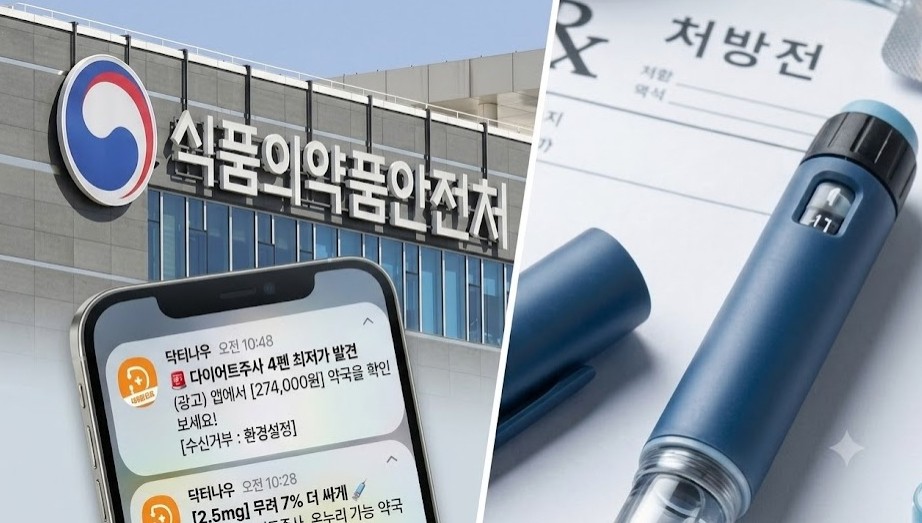
- AI-generated imageThe Ministry of Food and Drug Safety (MFDS) has concluded that displaying the names and prices of non-reimbursed prescription drugs, including obesity treatments Mounjaro and Wegovy, on telemedicine platforms is difficult to regard as illegal advertising under the Pharmaceutical Affairs Act, prompting controversy across the healthcare and pharmaceutical sectors.Amid mounting criticism that this undermines the original intent of prohibiting direct-to-consumer advertising of prescription drugs, experts analyze that the background behind the Ministry of Food and Drug Safety's decision involves a strict textual interpretation of current Pharmaceutical Affairs Act provisions and a 'regulatory gap' concerning platforms as a new type of intermediary.The first key legal basis for the MFDS interpretation is Article 68(6) of the Pharmaceutical Affairs Act (Prohibition of Exaggerated Advertisement, etc.), which "prohibits advertising prescription drugs to the general public" except in cases prescribed by Ordinance of the Prime Minister, such as vaccines for the prevention of infectious diseases and advertisements in professional pharmaceutical publications.Under Supreme Court precedent, for an act to constitute 'advertising' prohibited by the Pharmaceutical Affairs Act, there must be evidence of a clear commercial purpose and promotional conduct intended to stimulate public demand for a specific drug and promote its sale.The MFDS appears to have interpreted the mere display of a 'product or ingredient name' and an 'actual market price,' without descriptions exaggerating or highlighting a product’s therapeutic efficacy or superiority, as closer to the provision of objective information than commercial advertising intended to promote sales. In this sense, an MFDS official also reached the legal conclusion that 'a simple listing of prices without descriptions of efficacy or effects would be difficult to regard as satisfying the elements of advertising to the general public.'Limits of Article 44 of the enforcement rule…Platforms are not ‘pharmacy operators’The limits of the Pharmaceutical Affairs Act also come into play when it comes to comparisons of prices among pharmacies and practices that steer consumers toward the lowest-priced option.Article 44(1)3 of the Enforcement Rule of the Pharmaceutical Affairs Act (Distribution Business of Drugs), concerning pharmaceutical distribution management and maintenance of orderly sales practices, stipulates that “a pharmacy operator shall not make a representation or advertisement that, without identifying the subject or basis of comparison, implies that his or her pharmacy offers more favorable terms than another pharmacy, or compares the selling prices of drugs with those of another pharmacy.”The problem is that the provision expressly limits the party subject to the restriction to a 'pharmacy operator.' Telemedicine platforms such as DoctorNow are IT-based intermediaries rather than pharmacy operators. As a result, even when a platform aggregates price information from participating pharmacies and displays it in list form, the wording of the current Enforcement Rule makes it difficult to hold the platform itself liable for violating the provision.The decision is also seen as reflecting the practical challenges facing the MFDS as an enforcement authority.One issue is ambiguity over who is actually responsible for the advertising. When prices are displayed on a platform, it can be difficult to determine whether the advertiser is the pharmacy, a pharmaceutical wholesaler or the platform itself. If the MFDS were to aggressively apply Article 68 of the Pharmaceutical Affairs Act and pursue administrative sanctions or criminal complaints without clearly identifying the responsible party, it could face a substantial risk of losing subsequent administrative litigation.The division of responsibilities among government ministries also appears to have served as one factor. The MFDS is primarily responsible for drug safety and product advertising under the Pharmaceutical Affairs Act. On the other hand, disclosure of non-reimbursed prices, pharmaceutical distribution practices, patient solicitation or referral under Article 27(3) of the Medical Service Act, and compliance with platform guidelines fall more closely within the remit of the Ministry of Health and Welfare. From this perspective, regulating price displays as pharmaceutical advertising could extend beyond the scope of the laws administered by the MFDSThe dilemma between consumers’ right to know and a ‘legislative gap’Unlike advertising through mass media (TV, newspapers, outdoor advertisements, etc) which pushes information indiscriminately to the public, price searches within a platform are initiated by consumers seeking the information themselves. This leaves room to regard such searches as falling within the scope of consumers’ right to know, similar to the Health Insurance Review & Assessment Service’s disclosure of non-reimbursed medical fees.Accordingly, displaying the names and prices of prescription drugs in mass media would be more likely to constitute a violation of the Pharmaceutical Affairs Act’s ban on prescription drug advertising, as the party responsible for the advertisement would be clearly identifiable.However, the pharmaceutical sector disputes the MFDS interpretation. Industry representatives argue that the agency has overlooked the fact that telemedicine platforms go beyond merely allowing consumers to actively search for prices and send unsolicited notifications to users that encourage or stimulate demand for specific drugs.Critics also argue that the MFDS interpretation is overly narrow because simply identifying a product as a 'diet injection' or 'obesity treatment' can itself communicate its efficacy or intended effect.At the pharmacy level, pharmacies further argue that telemedicine platforms are not merely information portals but commercial environments in which consultation, prescribing and dispensing are connected in a single process. From that perspective, they contend that displaying prices has effectively become a promotional tool that can encourage inappropriate use of prescription drugs.Ultimately, the MFDS decision has been characterized as a representative example of a 'legislative gap' arising from attempts to regulate a new form of pharmaceutical distribution and intermediation through an existing legal framework.A pharmaceutical industry legal expert said, “To clearly regulate the display of drug prices by platform intermediaries going forward, legislative measures will likely be necessary beyond simply changing administrative interpretations, including expressly setting out intermediary obligations in the amended Medical Service Act and Pharmaceutical Affairs Act.
- Policy
- "IPC certification can be revoked even after pharma clears charges"
- by Lee, Jeong-Hwan Sep 02, 2026 09:07am
- The Ministry of Health and Welfare (MOHW) announced that even if a pharmaceutical company is cleared of charges in an illegal drug rebate investigation and only individual employees are found liable for violations, the company remains subject to review for the revocation of its Innovative Pharmaceutical Company certification.The MOHW states that because revoking Innovative Pharmaceutical Company certification is an administrative procedure to evaluate whether policy incentives should be maintained, independent of criminal punishment, it is not an excessive or duplicate sanction.On the 1st, the MOHW responded to written inquiries from Representative Mi-hwa Seo of the Democratic Party of Korea on the National Assembly's Health and Welfare Committee.The MOHW explained that when pharmaceutical companies are found providing illegal rebates, the ministry decides whether to revoke Innovative Pharmaceutical Company certification by comprehensively evaluating administrative sanction histories and accountability for disrupting market order, regardless of any criminal penalties imposed on the company.The rationale is that revoking Innovative Pharmaceutical Company certification due to distribution order violations, such as rebates, functions as a regulatory governance mechanism to determine whether it remains appropriate to grant and sustain qualification and preferential policy benefits, distinguishing it from criminal penalties or statutory administrative sanctions under the Pharmaceutical Affairs Act or the National Health Insurance Act.In practice, when reviewing certification revocations, the MOHW determines whether to revoke status through deliberation·resolution by the Pharmaceutical Industry Promotion and Support Committee, based on criteria such as rebate amounts (whether under KRW 5 million), violation frequency (fewer than two instances), and the violation period (excluding violations that occurred more than five years prior).The MOHW clarified that even if a company is cleared of charges due to an employee's individual fault, corporate accountability cannot be detached once fair market order has been compromised.Under the 'Special Act on the Promotion and Support of the Pharmaceutical Industry' and related regulations, receiving an "administrative sanction" under the Pharmaceutical Affairs Act or the Monopoly Regulation and Fair Trade Act renders a company subject to disqualification and revocation review.Of the four cases reviewed over the past five years involving judicial dispositions and corporate liability, it was confirmed that one company had its certification revoked and another voluntarily surrendered its certification despite operating a Compliance Program (CP) and receiving non-indictment (cleared of charges) dispositions for the corporate entity. The remaining two cases were disqualified from certification renewal due to factors such as failure to submit documentation.The MOHW also dismissed concerns that imposing certification revocation alongside existing administrative measures, such as drug price reductions and administrative fines, constitutes excessive sanctioning.The MOHW stated, "The Innovative Pharmaceutical Company framework is a system designed to give accredited benefits to companies capable of leading the industry based on ethical responsibility," adding, "Because it is a regulatory measure to assess the validity of maintaining certified status, it does not constitute duplicate or excessive sanctioning."However, the MOHW does not currently operate explicit statutory reduction provisions for proactive corporate compliance activities (operating CP or establishing ISO 37001).The MOHW stated, "During committee evaluations, members consider corporate compliance efforts and attributable liability," and explained, "The MOHW will gather feedback from experts and stakeholders on establishing detailed review criteria that reflect substantive corporate liability and preventive efforts as mitigating factors."In response to concerns that a substantive review process is necessary to examine who is responsible for and the extent of charges during revocation proceedings, the MOHW responded that "We are currently evaluating prior notices, formal hearings, and deliberations by the Pharmaceutical Industry Promotion and Support Committee, considering the motives, background, severity, and degree of intent or negligence behind the violation."The MOHW further stated, "Even if a company is cleared of charges, corporate and individual liability cannot be separated once an employee's illegal rebates disrupt fair market order," and concluded by adding, "Considering the high level of criticisims from the society associated with rebates and the necessity to actively eradicate them for the sound development of the pharmaceutical industry, it is necessary to re-evaluate whether to maintain government-accredited Innovative Pharmaceutical Company status."
- Policy
- Lixiana generics set to enter the mkt in Nov…26 companies win nods
- by Lee, Tak-Sun Sep 02, 2026 09:07am
- AI-generated imageGenerics referencing the anticoagulant 'Lixiana (edoxaban tosilate hydrate),' which surpasses KRW 120 billion in annual outpatient prescription sales, have completed final regulatory authorization and are set to enter the market this November.With Huons securing confirmation of the final patent-circumvention ruling and obtaining last-minute marketing authorization, 76 products across 26 pharmaceutical companies are set for market launch. However, as the "multi-product listing management" system is applied for the first time under the revised drug pricing policy implemented in August, pricing calculations across active ingredients and formulations have emerged as the primary market success variable.According to the pharmaceutical industry on the 31st, the Ministry of Food and Drug Safety (MFDS) completed marketing authorizations for 76 generic products containing edoxaban (excluding the original drug) as of 6 PM. Products approved by the end of this month are scheduled to be listed on the Ministry of Health and Welfare's Pharmaceutical Reimbursement List in late October and released to the market, with National Health Insurance reimbursement coverage starting November 11, the day after the original drugs' substance patent expires on November 10.Daiichi Sankyo Korea's original drug, Lixiana, is a leading product in the direct oral anticoagulant (DOAC/NOAC) market. It is indicated for ▲reducing the risk of stroke and systemic embolism in patients with non-valvular atrial fibrillation ▲the treatment of deep vein thrombosis (DVT) and pulmonary embolism (PE) ▲reducing the risk of recurrent DVT and PE.According to pharmaceutical market research firm UBIST, outpatient prescription sales reached KRW 121.8 billion in 2025, up 4% compared to the previous year, maintaining its blockbuster status and driving strong development momentum among domestic pharmaceutical companies.Follow-on developers also won patent dispute proceedings. Major pharmaceutical companies, including Samjin Pharm, Chong Kun Dang, Boryung, and Hanmi Pharm, resolved entry barriers by securing upheld claims (rulings of non-infringement) in negative scope confirmation trials against pharmaceutical composition Patent No. 1424843. In particular, Huons finalized its circumvention trial ruling and sequentially secured marketing authorization on August 31, joining the lineup for the coordinated November launch.The revised drug pricing system is the most critical turning point for the Lixiana generic market. After the revised pricing framework takes effect on August 1, edoxaban generic drugs will be the first cohort subject to the strengthened "multi-product listing management" criteria (regulating listings starting from the 14th identical formulation product).Among the 76 generic products approved to date by active ingredient, the original drug-identical 'edoxaban tosilate hydrate' is the most common, with 64 products across 22 companies. In comparison, the salt-modified formulation "edoxaban besylate hydrate" comprises 12 products across 4 companies.By dose strength across all ingredients, the total includes ▲23 products (23 companies) for 15 mg ▲26 products (26 companies) for 30 mg ▲27 products (27 companies) for 60 mg. When evaluating only identical-ingredient (tosilate hydrate) tablets subject to multi-product management, all strengths- 15 mg (19 products), 30 mg (22 products), and 60 mg (23 products)- substantially exceed the 14-product threshold, meaning multi-product management criteria will be applied across all dosages.Under the revised regulations, Innovative Pharmaceutical Companies receive a premium price floor of approximately 60% of the originator price, as before, with an additional three years granted for domestic manufacturing to maintain the premium price for up to four years. In contrast, conventional generics meeting baseline criteria—such as in-house bioequivalence testing and Drug Master File (DMF) registration—are priced at 45% upon initial listing, while generics fulfilling only one criterion are priced at 36%.When the multi-product listing management criteria per identical formulation are applied on top of this, prices will be adjusted downward after one year. Generics initially priced at 45% will drop to 38.25%, while products listed at 36% will decrease to 30.6%. Consequently, most tosilate hydrate tablets sharing the originator's active ingredient will struggle to avoid additional price-cut penalties across all dose strengths after one year.Conversely, products exempt from these regulations have gained a price-defense advantage. Salt-modified therapeutics (12 products), such as the 'edoxaban besylate hydrate’ formulations approved for Hanmi Pharm, Yuhan, Light Pharm Tech, and Genuone Sciences, along with the orally disintegrating tablet (ODT) formulation developed in-house by Dong-A ST, are excluded from the new multi-product listing management criteria.A pharmaceutical industry official projected that "Intense competition is anticipated, with 76 products entering the KRW 120 billion market simultaneously," adding, "Under the revised drug pricing policy, profitability gaps among pharmaceutical companies will widen depending on Innovative Pharmaceutical Company certification status and the possession of salt modifications or specialized dosage formulations."
- Policy
- Reassessment may be deferred for some Phase 1 products
- by Jung, Heung-Jun Sep 01, 2026 09:51am
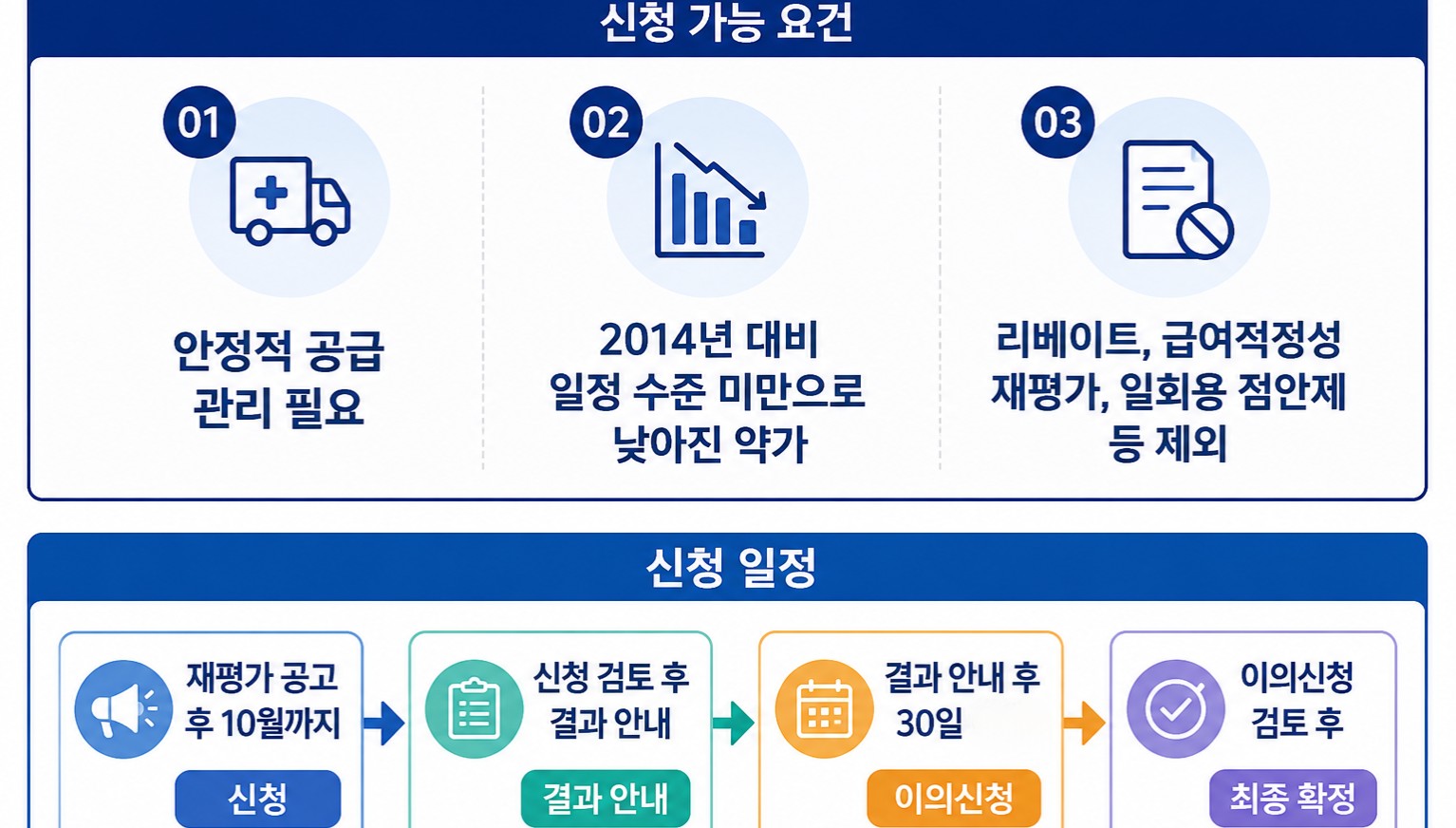
- Attention is turning to the “threshold price-cut rate” following the introduction of a new measure allowing drugs initially slated for Phase 1 of the reassessment of listed drugs to be moved to Phase 2.Price cuts for Phase 1 drugs are scheduled to begin in April next year, while those for Phase 2 drugs will start in October 2030. Drugs moved from Phase 1 to Phase 2 would therefore have their price cuts deferred by about 4 years, allowing pharmaceutical companies to protect sales during that period.According to industry sources on the 31st, drugs whose prices have fallen by at least 16% from their 2014 levels are being discussed as potential candidates for reassignment to Phase 2.Among Phase 1 drugs, those meeting the eligibility requirements will be allowed to apply separately for reassignment to Phase 2. (AI-generated image)A recent working-level consultative meeting discussed three criteria for such reassignment. Eligible drugs must ▲require stable supply management and ▲have prices that have fallen below a certain level relative to their 2014 prices. Meanwhile, ▲drugs affected by rebate-related price cuts, reimbursement appropriateness reassessments, or measures concerning single-use ophthalmic solutions will be excluded.For products meeting all 3 criteria, pharmaceutical companies will be allowed to submit separate applications through October following the reassessment notice, after which the government will decide whether to move their products to Phase 2.The key question is exactly what percentage of price reduction will qualify as having fallen “below a certain level.” Another issue is whether the threshold will be applied mechanically.The criterion currently considered most likely is whether a drug that was priced at 53.55% of the relevant benchmark in 2014 has already fallen to around 45%. If this criterion is adopted, drugs that have undergone an additional price reduction of roughly 16% over the past 12 years would meet the application requirement.Among these, drugs deemed necessary for stable supply could have their price cuts deferred by 4 years following government review and an objection process.However, the government has yet to announce a clear price-cut threshold for determining which products qualify for reassignment. It therefore remains unclear which products will ultimately benefit from the measure. The notice concerning the reassessment of listed drugs is expected to be issued today.If the government mechanically applies a fixed price-cut threshold to identify drugs whose prices have “fallen excessively,” some products are expected to narrowly miss eligibility.An industry official said, “Once a threshold is set, even a difference of less than 1 percentage point could determine whether a drug is moved to Phase 2. Detailed discussions will therefore be needed on how to determine when a drug price should be considered to have fallen substantially.”
