- LOGIN
- MemberShip
- 2026-09-02 13:00:30
- Platform display of obesity drug prices not an advertising violation
- by Lee, Tak-Sun | translator Alice Kang | 2026-09-02 09:07:35
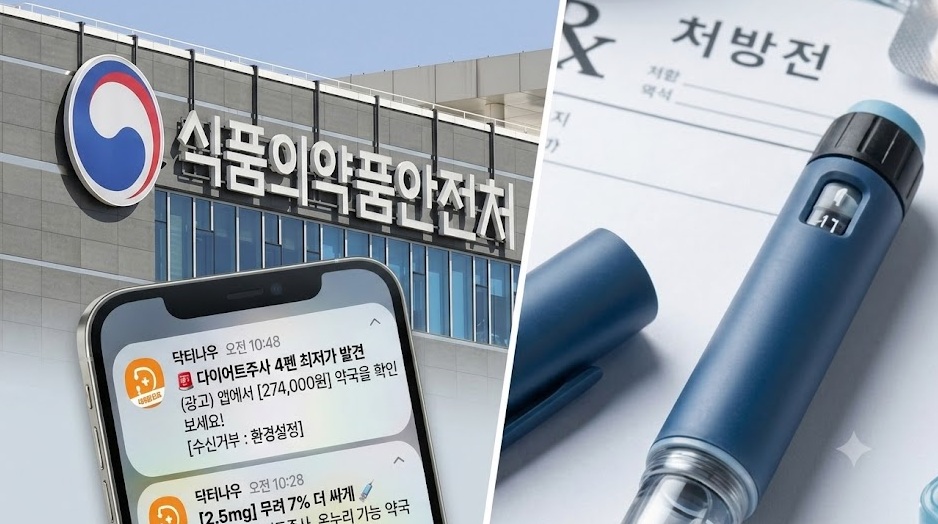
The Ministry of Food and Drug Safety (MFDS) has concluded that displaying the names and prices of non-reimbursed prescription drugs, including obesity treatments Mounjaro and Wegovy, on telemedicine platforms is difficult to regard as illegal advertising under the Pharmaceutical Affairs Act, prompting controversy across the healthcare and pharmaceutical sectors.
Amid mounting criticism that this undermines the original intent of prohibiting direct-to-consumer advertising of prescription drugs, experts analyze that the background behind the Ministry of Food and Drug Safety's decision involves a strict textual interpretation of current Pharmaceutical Affairs Act provisions and a 'regulatory gap' concerning platforms as a new type of intermediary.
The first key legal basis for the MFDS interpretation is Article 68(6) of the Pharmaceutical Affairs Act (Prohibition of Exaggerated Advertisement, etc.), which "prohibits advertising prescription drugs to the general public" except in cases prescribed by Ordinance of the Prime Minister, such as vaccines for the prevention of infectious diseases and advertisements in professional pharmaceutical publications.
Under Supreme Court precedent, for an act to constitute 'advertising' prohibited by the Pharmaceutical Affairs Act, there must be evidence of a clear commercial purpose and promotional conduct intended to stimulate public demand for a specific drug and promote its sale.
The MFDS appears to have interpreted the mere display of a 'product or ingredient name' and an 'actual market price,' without descriptions exaggerating or highlighting a product’s therapeutic efficacy or superiority, as closer to the provision of objective information than commercial advertising intended to promote sales. In this sense, an MFDS official also reached the legal conclusion that 'a simple listing of prices without descriptions of efficacy or effects would be difficult to regard as satisfying the elements of advertising to the general public.'
Limits of Article 44 of the enforcement rule…Platforms are not ‘pharmacy operators’
The limits of the Pharmaceutical Affairs Act also come into play when it comes to comparisons of prices among pharmacies and practices that steer consumers toward the lowest-priced option.
Article 44(1)3 of the Enforcement Rule of the Pharmaceutical Affairs Act (Distribution Business of Drugs), concerning pharmaceutical distribution management and maintenance of orderly sales practices, stipulates that “a pharmacy operator shall not make a representation or advertisement that, without identifying the subject or basis of comparison, implies that his or her pharmacy offers more favorable terms than another pharmacy, or compares the selling prices of drugs with those of another pharmacy.”
The problem is that the provision expressly limits the party subject to the restriction to a 'pharmacy operator.' Telemedicine platforms such as DoctorNow are IT-based intermediaries rather than pharmacy operators. As a result, even when a platform aggregates price information from participating pharmacies and displays it in list form, the wording of the current Enforcement Rule makes it difficult to hold the platform itself liable for violating the provision.
The decision is also seen as reflecting the practical challenges facing the MFDS as an enforcement authority.
One issue is ambiguity over who is actually responsible for the advertising. When prices are displayed on a platform, it can be difficult to determine whether the advertiser is the pharmacy, a pharmaceutical wholesaler or the platform itself. If the MFDS were to aggressively apply Article 68 of the Pharmaceutical Affairs Act and pursue administrative sanctions or criminal complaints without clearly identifying the responsible party, it could face a substantial risk of losing subsequent administrative litigation.
The division of responsibilities among government ministries also appears to have served as one factor. The MFDS is primarily responsible for drug safety and product advertising under the Pharmaceutical Affairs Act. On the other hand, disclosure of non-reimbursed prices, pharmaceutical distribution practices, patient solicitation or referral under Article 27(3) of the Medical Service Act, and compliance with platform guidelines fall more closely within the remit of the Ministry of Health and Welfare. From this perspective, regulating price displays as pharmaceutical advertising could extend beyond the scope of the laws administered by the MFDS
The dilemma between consumers’ right to know and a ‘legislative gap’
Unlike advertising through mass media (TV, newspapers, outdoor advertisements, etc) which pushes information indiscriminately to the public, price searches within a platform are initiated by consumers seeking the information themselves. This leaves room to regard such searches as falling within the scope of consumers’ right to know, similar to the Health Insurance Review & Assessment Service’s disclosure of non-reimbursed medical fees.
Accordingly, displaying the names and prices of prescription drugs in mass media would be more likely to constitute a violation of the Pharmaceutical Affairs Act’s ban on prescription drug advertising, as the party responsible for the advertisement would be clearly identifiable.
However, the pharmaceutical sector disputes the MFDS interpretation. Industry representatives argue that the agency has overlooked the fact that telemedicine platforms go beyond merely allowing consumers to actively search for prices and send unsolicited notifications to users that encourage or stimulate demand for specific drugs.
Critics also argue that the MFDS interpretation is overly narrow because simply identifying a product as a 'diet injection' or 'obesity treatment' can itself communicate its efficacy or intended effect.
At the pharmacy level, pharmacies further argue that telemedicine platforms are not merely information portals but commercial environments in which consultation, prescribing and dispensing are connected in a single process. From that perspective, they contend that displaying prices has effectively become a promotional tool that can encourage inappropriate use of prescription drugs.
Ultimately, the MFDS decision has been characterized as a representative example of a 'legislative gap' arising from attempts to regulate a new form of pharmaceutical distribution and intermediation through an existing legal framework.
A pharmaceutical industry legal expert said, “To clearly regulate the display of drug prices by platform intermediaries going forward, legislative measures will likely be necessary beyond simply changing administrative interpretations, including expressly setting out intermediary obligations in the amended Medical Service Act and Pharmaceutical Affairs Act.
-

- 0
댓글 운영방식은
댓글은 실명게재와 익명게재 방식이 있으며, 실명은 이름과 아이디가 노출됩니다. 익명은 필명으로 등록 가능하며, 대댓글은 익명으로 등록 가능합니다.
댓글 노출방식은
댓글 명예자문위원(팜-코니언-필기모양 아이콘)으로 위촉된 데일리팜 회원의 댓글은 ‘게시판형 보기’와 ’펼쳐보기형’ 리스트에서 항상 최상단에 노출됩니다. 새로운 댓글을 올리는 일반회원은 ‘게시판형’과 ‘펼쳐보기형’ 모두 팜코니언 회원이 쓴 댓글의 하단에 실시간 노출됩니다.
댓글의 삭제 기준은
다음의 경우 사전 통보없이 삭제하고 아이디 이용정지 또는 영구 가입제한이 될 수도 있습니다.
-
저작권·인격권 등 타인의 권리를 침해하는 경우
상용 프로그램의 등록과 게재, 배포를 안내하는 게시물
타인 또는 제3자의 저작권 및 기타 권리를 침해한 내용을 담은 게시물
-
근거 없는 비방·명예를 훼손하는 게시물
특정 이용자 및 개인에 대한 인신 공격적인 내용의 글 및 직접적인 욕설이 사용된 경우
특정 지역 및 종교간의 감정대립을 조장하는 내용
사실 확인이 안된 소문을 유포 시키는 경우
욕설과 비어, 속어를 담은 내용
정당법 및 공직선거법, 관계 법령에 저촉되는 경우(선관위 요청 시 즉시 삭제)
특정 지역이나 단체를 비하하는 경우
특정인의 명예를 훼손하여 해당인이 삭제를 요청하는 경우
특정인의 개인정보(주민등록번호, 전화, 상세주소 등)를 무단으로 게시하는 경우
타인의 ID 혹은 닉네임을 도용하는 경우
-
게시판 특성상 제한되는 내용
서비스 주제와 맞지 않는 내용의 글을 게재한 경우
동일 내용의 연속 게재 및 여러 기사에 중복 게재한 경우
부분적으로 변경하여 반복 게재하는 경우도 포함
제목과 관련 없는 내용의 게시물, 제목과 본문이 무관한 경우
돈벌기 및 직·간접 상업적 목적의 내용이 포함된 게시물
게시물 읽기 유도 등을 위해 내용과 무관한 제목을 사용한 경우
-
수사기관 등의 공식적인 요청이 있는 경우
-
기타사항
각 서비스의 필요성에 따라 미리 공지한 경우
기타 법률에 저촉되는 정보 게재를 목적으로 할 경우
기타 원만한 운영을 위해 운영자가 필요하다고 판단되는 내용
-
사실 관계 확인 후 삭제
저작권자로부터 허락받지 않은 내용을 무단 게재, 복제, 배포하는 경우
타인의 초상권을 침해하거나 개인정보를 유출하는 경우
당사에 제공한 이용자의 정보가 허위인 경우 (타인의 ID, 비밀번호 도용 등)
※이상의 내용중 일부 사항에 적용될 경우 이용약관 및 관련 법률에 의해 제재를 받으실 수도 있으며, 민·형사상 처벌을 받을 수도 있습니다.
※위에 명시되지 않은 내용이더라도 불법적인 내용으로 판단되거나 데일리팜 서비스에 바람직하지 않다고 판단되는 경우는 선 조치 이후 본 관리 기준을 수정 공시하겠습니다.
※기타 문의 사항은 데일리팜 운영자에게 연락주십시오. 메일 주소는 dailypharm@dailypharm.com입니다.