- LOGIN
- MemberShip
- 2026-07-22 19:16:22
- Global pharmas race to introduce bispecific antibodies
- by Son, Hyung Min | translator Alice Kang | 2025-06-05 06:10:42
Major global pharmaceutical companies are challenging the throne held by the immunotherapy Keytruda with their respective bispecific antibodies.
Recently, BMS signed a partnership agreement with Germany's BioNTech to develop a new bispecific antibody, while Pfizer successfully introduced a bispecific antibody from China's 3SBio last month.
MSD also secured bispecific antibodies from a Chinese pharmaceutical company in preparation for the post-Keytruda era.
According to data released by KoreaBIO on the 4th, BMS recently secured the development rights for BioNTech's bispecific antibody candidate “BNT327.” Under the agreement, BMS will pay BioNTech a contract fee of USD 1.5 billion (approximately KRW 2 trillion) and an additional USD 2 billion in unconditional milestone payments by 2028.
The total deal value, including milestones and the upfront payment, amounts to USD 11.1 billion (approximately KRW 15.3 trillion).
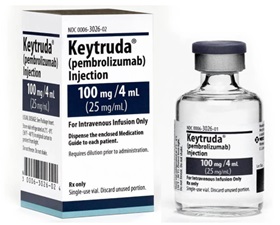
This new drug candidate targets both PD-1, the biomarker targeted by the existing Keytruda, and vascular endothelial growth factor (VEGF)-A.
By inhibiting VEGF-A, BNT327 is expected to reverse the immune-suppressive effects of tumors in the tumor microenvironment and block the supply of blood and oxygen to tumor cells, thereby preventing tumor growth and proliferation.
BNT327 is currently being developed as a first-line treatment for small cell lung cancer and non-small cell lung cancer.
According to BioNTech, more than 1,000 clinical trial patients have been treated with the drug to date.
BioNTech said in a statement, “Our major global partners are working to set new treatment standards in the anticancer drug market dominated by immunotherapies like Keytruda.” Pfizer also signed a partnership agreement with China's 3Sbio last month to secure SSGJ-707, a bispecific antibody candidate targeting PD-1 and VEGF-A.
The upfront payment is USD 1.25 billion, with the total contract value reaching USD 4.8 billion (KRW 6.6 trillion) upon achievement of key milestones.
Currently, SSGJ-707 is under clinical trials in China targeting various solid tumors, including non-small cell lung cancer, colorectal cancer, and gynecological cancers.
MSD, the developer of Keytruda, has also secured a PD-1 and VEGF-A bispecific antibody candidate.
Last November, MSD acquired the new drug candidate LM-299 from China's LaNova Medicine for up to USD 3.3 billion.
The contract price was USD 588 million.
LM-299 is currently under Phase I clinical trial in China.
Will competition intensify for the global sales lead Keytruda?
Major global pharmaceutical companies are targeting the market for Keytruda, the global No.1 top-selling drug.
Last year, Keytruda's sales reached USD 29.482 billion (approximately KRW 43 trillion), an 18% increase from 2023.
Last year, the total sales of major immunotherapy drugs amounted to USD 51.723 billion (approximately KRW 75 trillion), with Keytruda holding 57% of the market share.
Keytruda first surpassed USD 10 billion in sales in 2019 and continued to grow, reaching USD 20.937 billion in 2022, successfully breaking the USD 20 billion mark for the first time.
Immunotherapies like Keytruda target the PD-1/PD-L1 biomarker expressed in major solid tumors.
As a result, their indications are being expanded to various types of solid tumors, leading to a surge in sales.
In addition to their efficacy, immunotherapies have the advantage of having fewer side effects.
Compared to first-generation cytotoxic anticancer drugs and second-generation targeted anticancer drugs, cancer immunotherapies are known to have fewer side effects.
These drugs reinforce the body's own immune system to achieve anticancer effects, resulting in relatively mild side effects such as hair loss, nausea, vomiting, diarrhea, and bone marrow suppression.
The industry attributes the growth in Keytruda’s sales to the expansion of indications for Keytruda and its demonstrated efficacy in combination with antibody-drug conjugates (ADCs).
Recently, Keytruda has demonstrated efficacy as a combination therapy for first-line treatment of non-small cell lung cancer, leading to a steady increase in prescriptions.
Positive clinical results are also emerging for various solid tumors, including breast cancer, stomach cancer, lung cancer, and melanoma.
In the domestic market, Keytruda continues to hold the lead in overall pharmaceutical sales.
-

- 0
댓글 운영방식은
댓글은 실명게재와 익명게재 방식이 있으며, 실명은 이름과 아이디가 노출됩니다. 익명은 필명으로 등록 가능하며, 대댓글은 익명으로 등록 가능합니다.
댓글 노출방식은
댓글 명예자문위원(팜-코니언-필기모양 아이콘)으로 위촉된 데일리팜 회원의 댓글은 ‘게시판형 보기’와 ’펼쳐보기형’ 리스트에서 항상 최상단에 노출됩니다. 새로운 댓글을 올리는 일반회원은 ‘게시판형’과 ‘펼쳐보기형’ 모두 팜코니언 회원이 쓴 댓글의 하단에 실시간 노출됩니다.
댓글의 삭제 기준은
다음의 경우 사전 통보없이 삭제하고 아이디 이용정지 또는 영구 가입제한이 될 수도 있습니다.
-
저작권·인격권 등 타인의 권리를 침해하는 경우
상용 프로그램의 등록과 게재, 배포를 안내하는 게시물
타인 또는 제3자의 저작권 및 기타 권리를 침해한 내용을 담은 게시물
-
근거 없는 비방·명예를 훼손하는 게시물
특정 이용자 및 개인에 대한 인신 공격적인 내용의 글 및 직접적인 욕설이 사용된 경우
특정 지역 및 종교간의 감정대립을 조장하는 내용
사실 확인이 안된 소문을 유포 시키는 경우
욕설과 비어, 속어를 담은 내용
정당법 및 공직선거법, 관계 법령에 저촉되는 경우(선관위 요청 시 즉시 삭제)
특정 지역이나 단체를 비하하는 경우
특정인의 명예를 훼손하여 해당인이 삭제를 요청하는 경우
특정인의 개인정보(주민등록번호, 전화, 상세주소 등)를 무단으로 게시하는 경우
타인의 ID 혹은 닉네임을 도용하는 경우
-
게시판 특성상 제한되는 내용
서비스 주제와 맞지 않는 내용의 글을 게재한 경우
동일 내용의 연속 게재 및 여러 기사에 중복 게재한 경우
부분적으로 변경하여 반복 게재하는 경우도 포함
제목과 관련 없는 내용의 게시물, 제목과 본문이 무관한 경우
돈벌기 및 직·간접 상업적 목적의 내용이 포함된 게시물
게시물 읽기 유도 등을 위해 내용과 무관한 제목을 사용한 경우
-
수사기관 등의 공식적인 요청이 있는 경우
-
기타사항
각 서비스의 필요성에 따라 미리 공지한 경우
기타 법률에 저촉되는 정보 게재를 목적으로 할 경우
기타 원만한 운영을 위해 운영자가 필요하다고 판단되는 내용
-
사실 관계 확인 후 삭제
저작권자로부터 허락받지 않은 내용을 무단 게재, 복제, 배포하는 경우
타인의 초상권을 침해하거나 개인정보를 유출하는 경우
당사에 제공한 이용자의 정보가 허위인 경우 (타인의 ID, 비밀번호 도용 등)
※이상의 내용중 일부 사항에 적용될 경우 이용약관 및 관련 법률에 의해 제재를 받으실 수도 있으며, 민·형사상 처벌을 받을 수도 있습니다.
※위에 명시되지 않은 내용이더라도 불법적인 내용으로 판단되거나 데일리팜 서비스에 바람직하지 않다고 판단되는 경우는 선 조치 이후 본 관리 기준을 수정 공시하겠습니다.
※기타 문의 사항은 데일리팜 운영자에게 연락주십시오. 메일 주소는 dailypharm@dailypharm.com입니다.

- Samoh Pharm’s expansion after Voxzogo reimb…orphan drug portfolio
- Reporter's view | Hwang, byoung woo

- “7-year Lorviqua data reshape trt strategy for ALK-positive lung cancer”
- Reporter's view | Son, Hyung Min