- LOGIN
- MemberShip
- 2026-09-12 22:56:48
- Pharma companies with 'superior R&D·K-made drug ingredients
- by Lee, Jeong-Hwan | translator Kang, Shin-Kook | 2024-04-26 05:48:07
Additionally, the plan will expand the scope of the risk sharing agreement (RSA) for severe diseases.
This year’s plan includes offering preferential drug pricing for national essential medicines that use drug ingredients manufactured in South Korea.
Additionally, it includes a process for promptly increasing the price of medicine with a supply shortage.
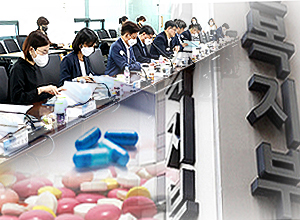
On the 25th, the Ministry of Health and Welfare (MOHW) held the 9th Health Insurance Policy Review Committee, conducted a review, and made a decision on the implementation of the 2nd comprehensive National Health Insurance Plan 2024.
This year's implementation plan for the NHI Plan consists of four major directions: ▲Ensuring essential healthcare supply and fair compensation ▲ Reducing healthcare disparities and ensuring a healthy life ▲ Improving the financial sustainability of health insurance ▲ Establishing a stable supply system and a good circulation structure.
The plan includes the 15th primary task and the 75th detailed task.
Based on stable financial management, the MHOW has announced plans to invest over KRW 1.4 trillion in essential medical areas this year to support the implementation of the four major tasks outlined in the previously announced healthcare reform measures.
Will establish a stable supply chain·good circulation structure Pharmaceutical companies are expected to focus their attention primarily on this year’s NHI Plan, particularly on innovative new drugs and supply stabilization.
The MOHW announced that it would improve the system for supporting the development of innovative medical technology that provides treatment options for diseases without treatment and also the system for addressing supply shortages.
For innovative new drugs, the MOHW will specify the criteria for innovativeness, aiming to offer a flexible scope for the consideration of economic evaluation.
The plan will provide preferential pricing for drugs developed by pharmaceutical companies with a high proportion of R&D investment.
It also includes measures to expand the scope of RSA for treatments used to treat severe diseases that irreversibly worsen the quality of life.
In terms of stabilizing supply shortages, the plan will set the basis for providing preferential drug pricing for national essential medicines that use ingredients manufactured in South Korea.
And it will also include a process for promptly increasing the prices of drugs with supply shortages.
In addition, it will establish a system for selecting and monitoring essential medical supplies facing shortages.
In terms of medical devices, the plan involves expanding the deferment criteria and period for innovative medical devices' evaluation and extending their pre-use period in medical settings.
Furthermore, it aims to expand the utilization of the National Health Insurance data for public and scientific research purposes and for self-directed health management.
It will also support international cooperation efforts.
The plan involves increasing the provision of big data to private entities, allowing the external transfer of low-risk pseudonymized information, and supporting the utilization of medical data through health information highways.
This year’s National Health Insurance fund is estimated to be KRW 2.6 trillion, currently in the black.
However, the MOHW announced plans to manage the finances efficiently, considering prolonged use of the emergency medical system, changes to medical usage, and other circumstances.
Additionally, over KRW 1.4 trillion will be invested in this year’s essential healthcare field.
The MOHW will ensure stable finance management and support the implementation of the reform package announced in February.
In Q1, over KRW 1.12 trillion will be invested to strengthen compensation in shortages such as childbirth, pediatrics, and critical emergencies.
Additionally, in Q2, more than KRW 27.6 billion will be allocated to enhance compensation in medical fields focusing on severe disease and essential healthcare.
In Q3, KRW 50 billion will be invested to compensate the field focusing on severe psychological disorders.
In Q4, over KRW 150 billion will be invested to expand the implementation of an alternative payment system to solve the regional and essential healthcare gaps.
Will provide essential healthcare·reasonable compensation Investments will be increased in pediatric surgery and treatments, as well as in closed wards within tertiary general hospitals with high workloads and resources but relatively low evaluation.
In 2023, medical institution revenue and expenses, the impact of the third phase of relative value unit revision, the expansion of panel hospitals, and cost surveys and analyses for fee adjustments will be analyzed.
The results report is scheduled to be released in the second half of this year.
A public policy cost will be introduced to maintain maternity infrastructure and to sustain personnel and facilities in the severe pediatric field.
The MOHW plans to implement six pilot businesses with an alternative payment system.
This system will offer differential compensation based on the quality of medical assessments and the achievement of treatment goals, not quantity.
In detail, the post-management compensation of the hospitals offering services of children’s public specialized medical centers will be expanded from 9 to 14 hospitals.
The first-year business will be implemented for hospitals participating in strengthening cardio-cerebrovascular disease network and a medical system for severe diseases.
The implementation of a pilot business will be reviewed following a research on establishing a model for an emergency medical center·a mother and child medical center·a regional medical program pilot business.
The MOHW also plans to establish a basis for payment system reform, including measures for innovative accounts or innovative centers and an achievement-centered review and evaluation system.
-

- 0
댓글 운영방식은
댓글은 실명게재와 익명게재 방식이 있으며, 실명은 이름과 아이디가 노출됩니다. 익명은 필명으로 등록 가능하며, 대댓글은 익명으로 등록 가능합니다.
댓글 노출방식은
댓글 명예자문위원(팜-코니언-필기모양 아이콘)으로 위촉된 데일리팜 회원의 댓글은 ‘게시판형 보기’와 ’펼쳐보기형’ 리스트에서 항상 최상단에 노출됩니다. 새로운 댓글을 올리는 일반회원은 ‘게시판형’과 ‘펼쳐보기형’ 모두 팜코니언 회원이 쓴 댓글의 하단에 실시간 노출됩니다.
댓글의 삭제 기준은
다음의 경우 사전 통보없이 삭제하고 아이디 이용정지 또는 영구 가입제한이 될 수도 있습니다.
-
저작권·인격권 등 타인의 권리를 침해하는 경우
상용 프로그램의 등록과 게재, 배포를 안내하는 게시물
타인 또는 제3자의 저작권 및 기타 권리를 침해한 내용을 담은 게시물
-
근거 없는 비방·명예를 훼손하는 게시물
특정 이용자 및 개인에 대한 인신 공격적인 내용의 글 및 직접적인 욕설이 사용된 경우
특정 지역 및 종교간의 감정대립을 조장하는 내용
사실 확인이 안된 소문을 유포 시키는 경우
욕설과 비어, 속어를 담은 내용
정당법 및 공직선거법, 관계 법령에 저촉되는 경우(선관위 요청 시 즉시 삭제)
특정 지역이나 단체를 비하하는 경우
특정인의 명예를 훼손하여 해당인이 삭제를 요청하는 경우
특정인의 개인정보(주민등록번호, 전화, 상세주소 등)를 무단으로 게시하는 경우
타인의 ID 혹은 닉네임을 도용하는 경우
-
게시판 특성상 제한되는 내용
서비스 주제와 맞지 않는 내용의 글을 게재한 경우
동일 내용의 연속 게재 및 여러 기사에 중복 게재한 경우
부분적으로 변경하여 반복 게재하는 경우도 포함
제목과 관련 없는 내용의 게시물, 제목과 본문이 무관한 경우
돈벌기 및 직·간접 상업적 목적의 내용이 포함된 게시물
게시물 읽기 유도 등을 위해 내용과 무관한 제목을 사용한 경우
-
수사기관 등의 공식적인 요청이 있는 경우
-
기타사항
각 서비스의 필요성에 따라 미리 공지한 경우
기타 법률에 저촉되는 정보 게재를 목적으로 할 경우
기타 원만한 운영을 위해 운영자가 필요하다고 판단되는 내용
-
사실 관계 확인 후 삭제
저작권자로부터 허락받지 않은 내용을 무단 게재, 복제, 배포하는 경우
타인의 초상권을 침해하거나 개인정보를 유출하는 경우
당사에 제공한 이용자의 정보가 허위인 경우 (타인의 ID, 비밀번호 도용 등)
※이상의 내용중 일부 사항에 적용될 경우 이용약관 및 관련 법률에 의해 제재를 받으실 수도 있으며, 민·형사상 처벌을 받을 수도 있습니다.
※위에 명시되지 않은 내용이더라도 불법적인 내용으로 판단되거나 데일리팜 서비스에 바람직하지 않다고 판단되는 경우는 선 조치 이후 본 관리 기준을 수정 공시하겠습니다.
※기타 문의 사항은 데일리팜 운영자에게 연락주십시오. 메일 주소는 dailypharm@dailypharm.com입니다.