
- LOGIN
- MemberShip
- 2026-05-21 06:57:43

- Policy
- Naglazyme RSA ends, 20.6% price cut from March
- by Kim, Jung-Ju Jan 22, 2020 06:27am
- Insurance prices have fallen by more than 20% since March, when Naglazyme (Galsulfaze) by Samoh Pharmaceutical has concluded a risk-sharing contract (RSA) agreement. According to pharmaceutical companies' strategies, such as price competition, there are a total of eight products that will be lowered on their own benefits next month. According to the industry on the 19th, the Ministry of Health and Welfare is pursuing ‘the revision of drug reimbursement list and the upper price limits’. The criteria for application are as follows, but the timing of application differs depending on the product. ◆Naglazyme’s RSA terminated= Samoh’s Naglazyme with the end of the RSA, is applied as regular reimbursement. The drug was not easily covered because it was expensive until now. In the past, the government increased the accessibility by registering the drug in insurance as a refund pharmacy negotiation pilot project, and introduced the RSA in Korea, and maintained the drug access on the RSA track in March 2016 after the end of the project. The RSA contract lasted for four years, and in preparation for the termination of the drug contract, the NHIS negotiated a drug price on a general track with the company. Negotiations were priced at ₩1,492,815 per 5mg/ml, 20.6% lower than RSA price. The new drug price starts in March shortly after the RSA contract expires. ◆Lowered the upper limit due to the price-volume agreement negotiation conclusion= This time, there are a total of 1 drug for which the price is lowered after negotiating with the NHIS. The government is conducting post management of drug prices through Price-Volume agreement linkage, which lowers drug prices by re-negotiating drugs with higher anticipated dosages and claims compared to those listed on drug insurance. Samoh's Vimizim is a new drug that is listed as a drug price negotiation, and the same product group charges are more than 30% higher than the expected billing amount. Price-Volume agreement system(Type Ka) has been applied. Here, the same product group means a drug having the same company name, route of administration, ingredient, and dosage form. The closing price of the negotiations was ₩995,661, 2.3% lower than the previous price. New drug price will be effective from June 1. ◆Voluntary upper limit adjustment (voluntary lowering)= A total of eight items will be lowered as the pharmaceutical company voluntarily decides to lower its insurance price. The government calculates and re-adjusts a manufacturer, a consigned manufacturer, or an importer to apply for a price cut at a price lower than the listed maximum drug price. In general, it is a measure of cuts in line with its policies following market competition. Looking at the items, Chong Kun Dang's Esoduo 40/800mg drops by 14.7% from ₩1,078 to ₩920, and Huon's Cinacal from ₩2,267 to ₩2,020 by 10.9%, respectively. Celltrion’s Truxima dropped 6.1% from ₩871,323 to ₩817,823, and Jinyang Pharmaceutical's Jinicough drops 2.9% from ₩102 to ₩99. New drug pricing will begin next month. ◆Preservation of production cost of shortage prevention drugs= A total of two drugs are designated as shortage prevention drugs or the price has been preserved. The government designates drugs that are necessary for patient care or are not profitable and that manufacturers, consigned manufacturers, or importers avoid production or import, drugs that require the preservation of production and import costs as a shortage prevention drug and preserves production costs. Myung In Pharm’s Vivaquin is the drug that raised the upper limit due to the conservation of production cost, It is up 21.2% from ₩255 to ₩309. In addition, Shin Poong’s Malafree was designated as a cost-preserving drug. The drug price is ₩309 per tablet. New drug prices will be applied from next month.
- InterView
- “Changing the public’s view on psoriasis patients”
- by An, Kyung-Jin Jan 22, 2020 06:27am
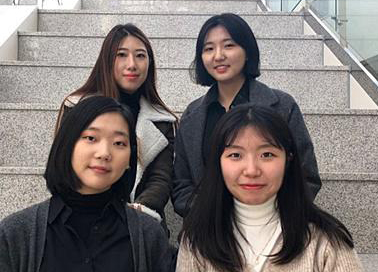
- (From upper left in clockwise) Manager Hwang Chae-rin, Reward Manager Kim Ye-ji, Public Relations Manager Jeon Se-bin, President Park Hye-won) “Too many people had no or wrong idea about psoriasis. We opened the crowd funding to raise awareness of psoriasis and to improve the public’s perception on the disease.” A university student-centered crowd funding union, ‘Wishtree’ opened a new funding project this month. The project aims to help patients with psoriasis. Although the non-infectious disease can get better with constant care, many psoriasis patients struggle with public’s inaccurate knowledge of the disease. Their small wish is for the people to see psoriasis as normally as they see atopic dermatitis. Daily Pharm interviewed Wishtree administration members—Park Hye-won (23, Sookmyung Women’s University), Kim Ye-ji (21, Sookmyung Women’s University), Jeon Se-bin (22, Dongguk University), and Hwang Chae-rin (22, Hongik University)—actively campaigning for a better social view on psoriasis. Met through crowd funding related class, the union has been operating for two years Wishtree is a university student group union formed in 2018 to create and operate crowd funding projects. Initially, the students taking crowd funding class came together to make a crowd funding project for a social cause. The first year of Wishtree funded for firefighters, patients with retinal degeneration and raising awareness of the East Sea. And the second year followed with funding for various social class including patients with complex regional pain syndrome (CRPS). The crowd funding project for psoriasis patient consists of 15 students including four administration members (President Park Hye-won, Reward Manager Kim Ye-ji, Public Relations Manager Jeon Se-bin, and Story Manager Hwang Chae-rin). The rest of the eleven members are participating under the following three teams; Reward Team in charge of selecting, making and pricing rewards; Story Team in charge of planning and setting up projects; and Public Relations Team in charge of promoting the funding project to reach the target amount. Members of Wishtree Regularly meeting every Saturday, the members learn about crowd funding in class and discuss about project topics first. And when the next topic is decided, the members specify activities in back story planning, reward selection, and PR activity planning. Further discussion flows as they each designate role in respective teams and share feedbacks on the team’s activities. Jeon Se-bin, a Public Relations Manager, explained “Wishtree’s crowd funding projects are not for profit, but for public interest and social cause. When recruiting for the group members, we value not only the students’ interest in crowd funding, but also their interest in social issues.” People misunderstanding the condition as an infectious disease, “Heart breaks as the patients feel isolated from the society " So what motivated them to select psoriasis as their funding topic out of all candidate diseases? The students answered, “Compared to other diseases we’ve talked about, psoriasis needed the most attention from the public. Even many of us did not know much about the condition, and some heard about the disease for the first time.” Psoriasis is a non-infectious chronic skin disease causing raised, red, scaly patches on skin and repeatedly worsens and recovers. With continuous care, a patient with the disease can improve the condition, but many miss their treatment timing because most of the people are clueless that it requires constant treatment. And majority of the patients are having difficulties in their social life due to people’s misunderstanding of the disease being infectious. Typically, a crowd funding project selects more popular topics to raise the funding success rate, but Wishtree saw the grave issue in the public’s inaccurate view about the disease. Apparently, the students interviewed psoriasis patients and truly felt the need to correct the common misunderstandings, when they heard a patient answering ‘We wish psoriasis would be taken as normally as atopic dermatitis.’ Manager Jeon said, “It broke our hearts when we studied about psoriasis from news articles and statistic data, and found how a lot of patients feel isolated from the society because of the people’s fear of the disease being infectious by judging if from visible condition.” She added, “We have decided to fund the patients as we discovered poor public awareness is hurting the psoriasis patients the most.” Personally designed mug as a reward for funding The crowd funding project has started calling for funders from Jan. 2 through a social venture, ‘Oh My Company.’ The funding participants would be rewarded with a personally designed mug, cup coaster, and sticker sets with hopeful messages. The fund raised via the project would be entirely donated to Korea Psoriasis Association, and used for survey research and publishing news articles through ‘Oh My Company’. President Park Hye-won of Wishtree showed her ambition for the project saying “We hope the funding raising project would help change the people’s inaccurate views about psoriasis patients,” and “in the long run, we also hope that Wishtree’s good influence would expand on in the future.”

- Company
- AstraZeneca retries expanding Tagrisso's reimbursement
- by Eo, Yun-Ho Jan 21, 2020 06:25am
- Target therapy Tagrisso is trying to resume the reimbursement review procedure for its indication as a first-line lung cancer treatment. According to pharmaceutical industry source, AstraZeneca Korea has submitted a reimbursement expansion application at the end of last year for the first-line indication of its epidermal growth factor receptor (EGFR)-tyrosine kinase inhibitor (TKI) Tagrisso (osimertinib) treating EGFR-mutated non-small cell lung cancer (NSCLC). In last October, Health Insurance Review and Assessment’s (HIRA) Cancer Disease Deliberation Committee hase ‘deferred’ the decision to list the drug for reimbursement but the company has promptly compiled supplementary materials to receive the reimbursement. The Cancer Committee deferred the decision, because “The Phase 3 FLAURA study, confirming the overall survival (OS) of patients treated with Tagrisso as a first-line treatment, did not fully disclose the collected data.” Accordingly, AstraZeneca submitted the complete data set officially published in the New England Journal of Medicine (NEJM), and is expecting the committee to resume the deliberation in February at earliest. The industry is closely watching the Korean health authority reviewing the reimbursement feasibility on the third generation EGFR TKI, Tagrisso based on the clinical efficacy. Currently, Iressa (Gefitinib), Tarceva (erlotinib), and Giotrif (afatinib) are reimbursed first-line options for NSCLC. But, Tagrisso, when listed, would be the only reimbursed EGFR TKI option to treat NSCLC with brain metastasis. Based on the confirmed progression free survival (PFS) data, Tagrisso nabbed market authorization as a first-line treatment in Korea as of December 2018, following the approval in the U.S., Europe and other regions. The Korean health authority listed the drug for reimbursement in December 2017 with risk sharing agreement (RSA). The reimbursement is limited to patients qualifying conditions like disease advancing after being treated with other EGFR TKI, feasibility of biopsy and mutated T790M.
- Policy
- Nabota, Phase III clinical trial will be conducted
- by Lee, Tak-Sun Jan 21, 2020 06:25am
- Daewoong's botulinum toxin preparation 'Nabota' is speeding up the indication of treatment as well as improving the wrinkles of the glans. Nabota, which has four indications, is in the final phase of clinical trials to prove the effectiveness of improving the square jaw. The Ministry of Food and Drug Safety approved the Phase III clinical trial plan to demonstrate the efficacy of improving Nabota's bilateral hypertrophy (square jaw). The clinical trial will be conducted at Chung-Ang University Hospital, which has undergone Phase II. When Nabota acquires the indication, there will have five effectiveness. Currently, Nabota is can be used to treat ▲a temporary improvement in moderate to severe severe glabellar wrinkles associated with corrugator muscle and/or proerus muscle activity in adults aged 20 to 65 years, ▲treatment of upper limb muscle stiffness associated with stroke in adults 18 years and older, ▲temporary improvement of moderate to severe external angular wrinkles (eye wrinkles) associated with orbicularis oculi activity in adults 18 years and over 65 years ▲ treatment of benign essential eyelid spasms in adults 18 years and older. Of these, eyelid spasm indications were obtained last June, the most recent. For 230 adults, Nabota demonstrated non-inferiority by comparison with Botox. After 4 weeks of administration, 96.15% of the Nabota group and 96.12% of the Botox group showed improvement of eyelid spasms. Daewoong expects that botulinum toxin has great potential not only in the beauty market but also in the therapeutic market, and thus, the acquisition of indications will increase competitiveness on the global stage. For reference, Botox (Allergan), which Nabota used as a reference, has eight indications. It has been recognized for its effects in various areas including strabismus and eyelid spasms, spinal malformations, treatment of cirrhosis, primary hyperatrophic hypertension, muscle stiffness, temporal improvement of worry lines, headache relief in migraines, and bladder dysfunction. Meditoxin of Medytox, which is fighting a legal battle on Daewoong about technology infringement, has five indications. Meditoxin targets domestic and international markets with the effects of benign essential eyelid spasms, treatment of acute malformations, temporal improvement of glacial wrinkles, local muscle stiffness associated with stroke, and temporary improvement of eye wrinkles. Botulinum preparations are expanding into treatment areas as well as basic wrinkle improvement. Daedal Research, a global market analyst firm, predicts that the global botulinum toxin market will reach $5.9 billion (about ₩7 trillion) in 2021, and the therapeutic market will account for about $3.2 billion (about ₩3.8 trillion). In Korea, more than 90% is used for cosmetic purposes, but in the US and overseas markets, it is known that botulinum toxin is used more for therapeutic purposes. Nabota is also investigating its potential as a treatment for male hair loss, triangular hypertrophy and tearing symptoms. Nabota was introduced to the US market last year through Evolus. Evolus reported that the first year of performance in the overseas market has raised about ₩40 billion.
- Company
- Prostate cancer: New battlefield for global companies
- by Eo, Yun-Ho Jan 21, 2020 06:24am
- Prostate cancer market is predicted to emerge as another tight battleground for multinational pharmaceutical companies. Pharmaceutical industry sources reported on Jan. 20, two new drugs are to compete head-to-head with the world’s first oral option of androgen receptor (AR) inhibitor Xtandi (enzalutamide) supplied by Astellas Pharma Korea. Apparently, both of the new drugs have submitted approval application to Korea’s Ministry of Food and Drug Safety (MFDS), and they are expecting the process to be completed within this year. Janssen’s Erleada (apalutamide) and Bayer’s Nubeqa (darolutamide) are the investigational drugs to be indicated for treating patients with non-metastatic castration-resistant prostate cancer (nmCRPC), a same indication as Xtandi’s. The medical needs for nmCRPC had not been fully met as the specific condition lacks various treatment options and has high risk of death among all prostate cancer conditions. ◆ Following the success of Zytiga, Janssen to expand prostate cancer market presence: Already supplying an androgen biosynthesis inhibitor blocking 17α-hydroxylase/C17, 20-lyase (CYP17), Zytiga (abiraterone), Janssen has been predicted to tackle a variety of prostate cancer indications, including nmCRPC, with Erleada. In last September, the U.S. health authority has approved Erleada’s indication to treat metastatic castration-sensitive prostate cancer (mCSPC). During the Phase 3 SPARTAN trial, Erleada confirmed its efficacy. The international study evaluated and compared the safety and efficacy between Erleada plus androgen deprivation therapy (ADT) combination therapy and placebo plus ADT on patients with nmCRPC, who had rapidly rising prostate-specific antigen (PSA) level despite continuous ADT. As a result, the Erleada patient group’s risk of metastasis or death was reduced by 72 percent compared to the placebo group, while the Erleada group’s median metastasis-free survival (MFS) was 40.5 months, or over two years longer than the placebo group. ◆ Bayer’s comeback after Xofigo’s staggering performance: Nubeqa has gotten a spotlight as an emerging growth engine for Bayer’s future. Bayer entered the global and Korean prostate cancer treatment market with Xofigo (radium-223 dichloride) in 2013 and 2014, respectively, but the outcome was rather disappointing. Since then the company conducted a trial to confirm Xofigo’s effect as a combination therapy, but the company has failed to turn around. As for Nubeqa, it confirmed its efficacy during the Phase 3 ARAMIS trial. Administering a combination therapy with Nubeqa and ADT, the patient group demonstrated a significant improvement in MFS, a primary efficacy endpoint of the study. The Nubeqa arm’s MFS was 40.4 months, whereas the placebo arm’s was 18.4 months. The investigational drug demonstrating low blood-brain barrier permeability than any other AR inhibitor in every clinical trial phase is its highlighted strength. This could mean patients could expect reduced adverse reaction in central nervous system. Meanwhile, none of treatment options for nmCRPC has been listed for reimbursement. In November 2014, reimbursement on Xtandi was approved with risk sharing agreement (RSA) for treating patients with mCRPC, who has been treated with docetaxel before. The drug renewed the agreement and extended listing in last February to January 2023.

- Company
- The 38th JP Morgan Healthcare Conference ended
- by Kim, Jin-Gu Jan 21, 2020 06:24am
- Se-chang Kwon, president of Hanmi Pharmaceutical, who attended the 38th JP Morgan Healthcare Conference, announces the vision of Hanmi Pharmaceutical and its 2020 R&D strategy The 38th JP Morgan Healthcare Conference ended. This year, more than 30 Korean pharmaceutical bio companies visited San Francisco, USA. Seven companies, including Samsung BioLogics, Celltrion, Hanmi Pharm, and LG Chem, made public announcements. Other pharmaceutical companies also had a competition behind the curtains There are three keywords that summarize the performance of Korean companies who attended this year's JP Morgan Healthcare Conference: ▲overseas expansion, ▲metabolic disease, and ▲global clinical launch. Samsung Biologics and Celltrion, two of the largest 'guests' of Korean companies, announced their plans to directly target overseas markets. Hanmi Pharm, LG Chem, and Daewoong Pharm introduced plans to develop metabolic diseases such as diabetes and obesity. The world's first non-alcoholic steatohepatitis (NASH) drug under development by Hanmi and Daewoong's next-generation gastroesophageal reflux disease drug have once again announced that global clinical trials are going well. SK Biopharm's Excopry and Sunosi announced their launch and full-scale sales in the US and Europe respectively. The presentations and activities of each company's JP Morgan Healthcare Conference are as follows. ◆Samsung Biologics = Samsung Biologics announced in April that it will establish a R&D Center for Biopharmaceutical Development (CDO) in San Francisco. Samsung Bio is the first US subsidiary. The strategy is to establish a forward base in the US, the largest market. First, the company aims to increase contract development orders, and eventually expand the scope to consignment production (CMO). Samsung Biologics' number of CMO items increased to 27 in 2018 and 35 in 2019. This year, the plan is to increase the number to 47. For this, it said that it is considering the construction of a fourth plant in Songdo, Incheon. At present, the 3 plants of 364,000 liters are said to be in full operation. What Samsung Biologics expects is Biogen's Alzheimer's drug. At the conference, Biogen said it is pushing for a US product license to launch the Alzheimer's drug, Aducanumab. Samsung Biologics and Biogen are deeply connected as the first and second shareholders of Samsung Bioepis. ◆Celltrion = Celltrion announced that it will launch into China after Europe and the US. Celltrion plans to enter the Chinese market by itself, not in the form of a joint venture (JV). This goal was announced directly by Chairman Jung-jin Suh. "We are working on a business agreement with the provincial government of China to build 4 plants of 120,000 liters locally, and we are going to make an agreement this month, and we will start construction in April". He also introduced plans for the development of an insulin biosimilar. Through self-development and co-development, he has succeeded in the diabetes treatment market of ₩47 trillion worldwide. Chairman Jung-jin Suh also announced the possibility of the merger of Celltrion Group. In the Q&A process, he mentioned the possibility of merging Celltrion, Celltrion Healthcare, and Celltrion Pharmaceuticals. The merger's market cap is estimated at ₩23 trillion. However, Celltrion is conducting an internal review of the merger on the premise that the share of shareholders of the company and its affiliates is high on the following day, but there are no specific details such as the method and timing of the merger. ◆Hanmi Pharm = Hanmi Pharm has focused on the introduction of NASH drugs and obesity drugs returned from Janssen. HM15211, which is being developed as a NASH treatment, said it plans to launch a global clinical phase II in the second quarter of this year. According to the phase I of clinical trials, various effects, including rapid and strong fatty liver reduction, were confirmed. Another key challenge, the HM12525A, was also introduced. Last year, Janssen returned the rights to Hanmi after completing Phase II clinical trials. Janssen has been conducting Phase II clinical trials to develop drugs that treat obesity and diabetes. Unlike Jansen, Hanmi Pharm plans to develop this drug as a dual-mechanism for obesity, which is superior to existing drugs. Hanmi Pharm explained that it is the world's first once-weekly anti-obesity drug, and demonstrated the superior weight loss effect compared to the existing daily anti-obesity drug through Global Phase II. ◆Daewoong Pharmaceutical has unveiled its global development roadmap for 'Fexuprazan', the next-generation gastroesophageal reflux disease treatment. Last year, Phase III clinical trials were completed, and a product license was applied to the MFDS. In particular, it plans to enter clinical trials in the US and China within this year. Through this, it announced that it would enter the global market worth ₩40 trillion. In addition, Daewoong introduced the positive results in Phase III clinical trials of HL036, a new dry eye treatment drug under development with Hanall Biopharma. ◆LG Chem = Ji-woong Sohn, head of the Life Sciences Division, explained the anticancer, immune, diabetes, and metabolic disease pipelines. According to LG Chem, the drug, gout treatment entered the US Phase II trial, inhibits xanthine oxidase which is a protein involved in the excessive production of uric acid. In the previous phase I, the possibility of side effects of cardiovascular disease indicated as a disadvantage of the existing uric acid inhibitors was low. ◆SK Biopharm has updated its sales plans for the new epilepsy drug, Excopry, and the sleep disorder, Sunosi. In case of Excopry, it plans to start negotiations on drug prices and full-scale marketing activities for Excopry from March after the US DEA review. Sunosi expects to be approved for a European marketing license as early as next week. Jazz Pharmaceuticals, which bought Sunosi's technology, said Sunosi's European Drug Administration's product licensing is expected next week. Through this, in June, it announced plans to launch in Germany throughout Europe. ◆Genexine = HPV vaccine GX-188E has been released. GX-188E is undergoing phase 2a clinical trial with Kitruda in patients with recurrent or metastatic cervical cancer. Genexine explained that it achieved the planned target response rate early. ◆SCM Life Sciences reportedly focused on finding clinical partners in the field of kidney cancer. The company announced last week that it has applied for a phase 2b trial with the US FDA. ◆Genome&Company = Genome & Company, a microbiome company, said it has signed a combined clinical contract with Merck and Pfizer, a global pharmaceutical company. Phase I clinical trial for the combination of Merck and Pfizer's anticancer drugs, Bavencio and Genome&Company, for GEN-001. ◆HLB said it had concurrent meetings with multinational pharmaceutical companies for licensing in and out agreements. The company said it had a meeting with a Japanese and European partner to license out Rivoceranib, which is being developed for gastric cancer treatment. However, the sales schedule for Rivoceranib scheduled for the fourth quarter was explained as "The FDA continues to discuss." ◆Eubiologics announced that it has signed a Term Sheet agreement with POP Biotech in the US to establish a joint venture. It is a combination of Eubiologics' EuIMT(immune enhancer) technology and POP Biotech's SNAP platform (antigen delivery) technology. The company announced that it reported establishment in the US within March of this year and develop vaccines against respiratory syncytial virus (RSV), shingles virus (VZV) and Alzheimer's as its primary targets.
- Policy
- Mothers joins competition to develop Orlistat tablets
- by Lee, Tak-Sun Jan 21, 2020 06:24am
- Original Product, XenicalOrlistat, generic for Xenical, a fat absorption inhibitor used in the treatment of obesity, is being actively developed to change the product from capsules to tablets. CMG & Motherspharm are accelerating product commercialization. The Ministry of Food and Drug Safety approved the Phase III trial plan of ZEROfat tablets on Motherspharm. ZEROfat tablets were developed after the development of fat absorption inhibitors, Orlistat. Motherspharm has ZEROfat capsules with the same ingredients. Currently all 24 Orlistat formulations approved in Korea are capsules. The reason Motherspharm develops a formulation change is that tablets are more convenient to store and higher medication compliance than capsules. Capsules contain gelatin, which can cause digestive problems, making patients less compliant with the medication. In addition, tablets are known to be resistant to higher temperatures and humidity than capsules, and have the advantage of being easy to store and carry. Tablets can also be divided. Orlistat is widely prescribed in the domestic obesity drug market, so if tablets with increased medication compliance are expected, the demand will be high. The domestic Orlistat market is estimated to be about ₩25 billion. Orlistat, unlike other psychotropic obesity drugs that stimulate the central nervous system and suppress appetite, inhibits the function of lipolytic enzyme lipase to reduce the body's absorption of fat. CMG Pharm is also developing Orlistat tablets. In last September, the company received a phase III trial plan for CMG Orlistat tablets 120mg and is working on commercializing products. Both CMG and Mothers are likely to have success in commercialization as they have entered phase III clinical trials with formulation changes. Of the two companies, it is noted who will receive the product license first.

- Company
- The Rx rate of Lipitor and Plavix is high
- by Chon, Seung-Hyun Jan 20, 2020 06:27am
- Last year, the strength of patent expiration drugs stood out in the top domestic outpatient drug market. Lipitor, a hyperlipidemia treatment drug, continued to rise and remained No.1 in the prescription market for two consecutive years. The antithrombotic drug Plavix has grown by about 50% in five years. 'Twynsta', 'Crestor', and 'Aricept' also increased the amount of prescriptions despite the generics. Among the products developed by domestic companies, 'Gliatamin' and 'Rosuzet' showed a remarkable progress. Last year, Lipitor took the lead in outpatient Rxs of ₩176.2 billion, according to drug research agency UBIST. It was 8.4% higher than the previous year, winning the Rx market for two consecutive years. In 2017, Gilead's hepatitis B treatment, Viread, ranked first. Outpatient Rx Performance Rank by item in 2019 (Unit: ₩100 million,%, Source: UBIST) Lipitor is clearly ranked first in the outpatient Rx market with a gap of ₩69.4 billion from the second-largest Viread. Hyperlipidemia drug Lipitor by Pfizer Lipitor, which was released in Korea in 1999, is exceptional. More than 100 generic products have entered since 2009, and insurance prices have fallen by half compared to before patent expiration. Pfizer recently received a series of large-scale clinical studies on Koreans, engaged in a variety of social contribution activities, and is said to have concentrated on Lipitor. Last year, the prescription market showed the most notable increase in patent expired drugs. .Sanofi's Plavix last year recorded prescription results of ₩88.9 billion, up 17.3% from the previous year .Rx amount of Plavix increased 28.1% in two years from ₩69.4 billion in 2017 .Prescription performance of Plavix has risen by 48.2% in five years from ₩60 billion in 2014 .The patent expired in 2007 and has entered more than 120 generics .The accompanying rise in patent expired drugs is a very unusual phenomenon .In general, the market share drops rapidly after the release of drugs such as generics or salt-changed generics .In the domestic market, the market share is increasing .Prescriptions also increased last year, compared to last year's generic competition, including Boehringer Ingelheim's Twynsta, Eisai's Aricept and Novartis' Exforge .Due to the domestic drug price system, original drugs are said to be favorable for market share expansion .In Korea, when generics are released, the drug price of original drugs drops to the previous 70% level .After one year, the price will drop to 53.55% before patent expiration .The upper limit of the generic drug can be up to 59% of the original drug before the patent expires, and after one year, the price goes down to 53.55% like the original .After the patent expiration of new drugs, drug prices were similar to those of generics, and it is analyzed that the prescription of the original drug has increased in the prescription field .It is estimated that the market defense of patent expired drugs is firmly established by strengthening sales activities of domestic pharmaceutical companies .Lipitor is sold jointly by Jeil Pharm, while Plavix and Twynsta are sold by Dong-wha and Yuhan .Domestic patented new drug products such as Crestor (Daewoong), Aricept(Chong Kun Dang), and Harnal(Boryeong) also joined the business .Viread, which ranked No .1 in prescription drugs in 2017, fell outpatient prescriptions at ₩106.4 billion last year, down 30.5% YoY .The gap with leading Lipitors widened sharply due to drug price cuts and a decline in market share .Daewoong Bio's “Gliatamin,” a brain function improving agent of “Choline Alfoscerate”, recorded the most of ₩91.6 billion of outpatient prescriptions last year .It is up 19.5% from ₩76.7 billion in 2018 .Chong Kun Dang's “CKD Gliatilin Soft Cap” of the same ingredient also posted a prescription of ₩72.3 billion, up 14.9% from the previous year .Last year, the effectiveness of choline alfoscerate was debated, but it still rose sharply .'Rosuzet', launched by Hanmi in late 2015, recorded ₩77.3 billion, up 36.4% from last year .Rosuzet is a hyperlipidemic complex consisting of Rosuvastatin and Ezetimibe .Hanmi entered the market earlier than its competitors by securing the right to use Ezetimibe from the patent holder MSD and ranks first in the same ingredient market .Hanmi's hypertension complex, Amosartan, was listed at the top of last year with a prescription of ₩74.1 billion .Amosaltan, released in 2009, is a hypertensive complex that combines calcium channel blocker (CCB) 'Amlodipine' and angiotensin II receptor blocker (ARB) 'Losartan'.
- Company
- Novartis holds the most number of drug patents in Korea
- by Kim, Jin-Gu Jan 20, 2020 06:26am
- Sources confirm a pharmaceutical company with the highest number of pharmaceutical patent in Korea is Novartis Korea. The company owns the rights of 153 patents related to total of 29 drug items. While multinational drug companies are mostly dominating the top ten list of patent holders, Hanmi Pharmaceutical with incrementally modified drug (IMD) patents is the only Korean company in the list. On Jan. 17, Daily Pharm analyzed Ministry of Food and Drug Safety’s (MFDS) statistics on patents and found there are overall 1,881 drug patents in effect as of January 2020. The patents affect 1,093 drug items. Top 30 drug patent-holding companies in Korea Currently, 116 companies own at least one or more patents. Novartis Korea own the most with 153 patents related to 79 items. The company’s major line-up consists of Galvus, Galvus Met, Tasigna, Cosentyx, Jakavi, Glivec, Entresto, Afinitor, Stalevo, Exjade, Xolair and more. And recently, patents on Galvus and Galvus Met had been challenged fiercely by Korean pharmaceutical companies. Centering Hanmi Pharmaceutical and Ahn-gook Pharmaceutical, the Norvatis’ patent has been challenged by Korean companies’ defensive confirmation trial for the scope of patent right. The industry expects to see the original’s generics launched by August 2021 at earliest. Janssen Korea takes the second place, but has a significant gap with Novartis. Janssen holds 83 patents for 47 items, including Darzalex, Stelara, Prezista and more. Hanmi Pharmaceutical follows next on the list with 66 patents registered for 43 items. Most of them are IMDs like Amodipin, Amosartan, and Hanmi Flu. The rest of the list includes MSD Korea, GSK Korea, Takeda Pharmaceuticals Korea, Pfizer Pharmaceutical Korea, Korea Boehringer Ingelheim Korea, AstraZeneca Korea, and Bayer Korea. Hanmi Pharmaceutical is the only Korean company in the top-ten list. Expanding out the list down to top 20, there are total seven Korean pharmaceutical companies. LG Chem (27 patents), Chong Kun Dang Pharmaceutical (27 patents), Dong-A ST (24 patents), JW Pharmaceutical (22 patents), Daewoong Pharmaceutical (20 patents), and SK Chemicals (19 patents) have their places in the top 20 list. Interestingly, the top sales revenue list and the top patent-holders list do not match. As of 2018, Yuhan is the top selling Korean pharmaceutical company, but the company sits on the 13th place on the top Korean patent-holding companies’ list. The second top selling company GC Pharma is on the 21st place on the patent-holder’s list. Whereas the top selling global pharmaceutical company Pfizer is actually on the sixth place on the top patent holder’s list. Janssen is within the top ten selling pharmaceutical companies’ list, but it is on the second place for the patent holder’s list. Top 20 patent-holding multinational companies 50 multinational pharmaceutical companies’ patents affect 63.6 percent of drugs in the Korean market. The global companies hold 72.8 percent of all drug patents in Korea, which means each global company owns average of 13.9 patented drugs. Among 66 Korean companies, each one holds average of six patented drugs. However, most of the Korean companies (46 companies) own less than five patented items. 21 companies have only one item patented. Patent-holding ratio of multinational and Korean pharmaceutical companies in Korea As far as patented substance goes, metformin hydrochloride had the most number of related patented drugs with 47 items. Following the list, rosuvastatin calcium (29 drugs), amlodipine besylate (25 drugs), hydrochlorothiazide (20 drugs), losartan potassium (16 drugs), telmisartan (16 drugs), amlodipine camsylate (15 drugs), and pregabalin (15 drugs) have the most number of related patented drugs. Mostly, the patented drugs treat chronic diseases like hypertension and diabetes.
- Company
- Takeda's Kynteles indicated for first-line treatment
- by Eo, Yun-Ho Jan 20, 2020 06:26am
- Kynteles would be rubbing shoulders with tumor necrosis factor-alpha (TNFα)-antagonist in treating ulcerative colitis and Crohn’s disease. Takeda Pharmaceuticals Korea (CEO Moon Hee-seok) official stated on Jan. 15, ulcerative colitis and Crohn’s disease treatment Kynteles (vedolizumab) won Korean Ministry of Food and Drug Safety’s (MFDS) approval on an indication for a first-line treatment. According to the approval, Kynteles would be available from Jan. 15 for prescription on treating patients with ulcerative colitis and Crohn’s Disease after having to fail in remission by conventional treatment (with corticosteroid or immune therapy). This means the treatment can be used, on the same treatment level as TNFα-antagonist and other biological drugs, to treat patients with inflammatory bowel diseases. The two most common forms of inflammatory bowel diseases, ulcerative colitis and Crohn’s disease, tend to relapse and remit repetitively. Studies found half of patients with inflammatory bowel diseases faced limits to their treatment so far having chronic, relapsed or worsened symptoms, damaged digestive systems and induced complications. Besides clinical remission, intestinal mucosal healing is globally emerging as a new treatment target for inflammatory bowel disease. Kynteles is a gut-selective treatment designed to specifically antagonize the α4β7 integrin, a cause of intestinal inflammation, and to inhibit the binding of α4β7 integrin. Unlike existing treatments possibly increasing risk of tuberculosis and infection, Kyntelels’ efficacy as systemic immunosuppressant has not been confirmed. According to GEMINI LTS study result, the vedolizumab drug demonstrated long-term effectiveness and safety profile in patients with ulcerative colitis and Crohn’s disease, observing clinical remission maintained up to 152 weeks. And in Phase 3b VERSIFY study testing the treatment’s efficacy in 101 patients with severe Crohn’s disease, 15 percent and 12 percent of patients treated with Kynteles showed complete mucosal healing and endoscopic remission, respectively. In a recent study, Kynteles demonstrated statistically superior clinical remission compared to conventional TNF-α antagonist. Comparing patient groups either intravenously injected with Kynteles or subcutaneously injected with Humira (adalimumab), VARSITY study found 31.3 percent of Kynteles group reached clinical remission at week 52, but only 22.5 percent of Humira group did. President of Korean Association of the Study of Intestinal Diseases (KASID), Kim Joo Sung claimed, “In Korea as of 2018, over 40,000 people were diagnosed with ulcerative colitis and 20,000 people with Crohn’s disease, and their prevalence rates have been soaring fast lately in Asian region including Korea. As the diseases require long-term treatment, alleviating symptoms are not sufficient, but rather the patients should also improve mucosal healing and treat their inflammatory bowel diseases considering safety profile of drugs.”
