
- LOGIN
- MemberShip
- 2026-05-19 13:18:05
- Company
- Family testing for rare genetic diseases are needed
- by Eo, Yun-Ho Jun 09, 2021 06:08am
- As the number of rare genetic diseases that can be managed increases, the importance of early diagnosis through family tests is emerging. According to the KDCA's "2019 Statistical Yearbook of Rare Disease Patients," the number of new rare diseases in 2019 stood at 55,499 with about one per 1,000 population. The number of patients suffering from each rare disease is rare, but the total population is indescribably large. Many neighbors around us are already living with rare diseases. However, the development of the medical and pharmaceutical industries has enabled prediction and management of certain genetic diseases. For example, Fabry disease, one of the most common resource accumulation diseases, is a genetic disease passed down from parent generation to child generation. The cause of Fabry disease is that women with genetic variation have a 50% chance of passing it on to their children regardless of gender, and men are 100% inherited from their daughters and not from their sons. Therefore, patients with Fabry disease may not be their fault, but sometimes live under the social stigma and negative perception of "genetic disease" as the patients. Genetic possibility of Fabry disease However, since Fabry disease is a treatable, it is most important to inform family members as soon as one of the family members is diagnosed and start treatment before the disease progresses to severe conditions. This can prevent worsening symptoms and irreversible organ damage, and especially the younger generation can relieve vague anxiety about childbirth by making family plans in advance. In fact, patients with Fabry disease often postpone or avoid the second-generation plan for fear that their children will inherit the disease. Fabry disease is a legally designated "preconception genetic diagnosis" that allows patients with Fabry disease to conceive a healthy fetus. Preimplantation diagnosis is a method of transplanting embryos that do not have the gene of the disease into the womb through pre-pregnancy genetic testing to help pregnant a child without genetic disease. Fabry disease patients often hesitate or give up pregnancy itself," said Kwon Young-joo, a professor of kidney medicine at Korea University Guro Hospital. Professor Kwon said, "But with institutional help, we can give birth to healthy children without worrying about heredity." If Fabry disease has been diagnosed after pregnancy, it is recommended that a newborn screening test is performed to determine whether a child is born with Fabry disease or not for proper treatment and prognosis. This is because if a child is diagnosed with Fabry disease, he or she will visit the hospital periodically as he or she grows up to monitor the progress of the disease, and if necessary, the prognosis may be good if treatment begins early in childhood. There is also an unmet demand. Genetic diagnosis before implantation is non-reimbursed, and not yet been covered by health insurance. Consequently, there may be an economic burden on the cost. "Genetic diagnosis before implantation is not covered by health insurance yet," said Professor Kwon Young-joo. Diagnosis is also recommended for the healthy life of children. "As much effort is being made by health authorities and all walks of life to overcome the low birthrate problem, consideration and review are needed in these careful areas."
- Company
- Merz’s OTC drug Pantogar released as health functional food
- by Nho, Byung Chul Jun 09, 2021 06:08am
- The hair loss OTC drug Pantoga received attention after its unexpected release as a health functional food recently, after removing some of its ingredients. Pantogar was approved by the Korean Ministry of Food and Drug Safety in 2002, and the original developer, Merz in Germany, had globally launched Pantogar in 1976. The newly launched Pantovigar Vegan has not been officially released in Korea but is being sold in pharmacies in Germany. According to industry sources, the import of Pantogar was discontinued for the reason of change in manufactories last year, and the drug currently out of stock in all online pharmaceutical shops including Onlinepharm and theSHOP. However, if the import was discontinued simply due to the change of manufactories as Merz Korea explained, the health functional food Pantovigar that was launched recently would generally be manufactured in line with the existing OTC drug Pantogar. Also, in terms of demonstrating its efficacy, it is not easily understood why the company decided to sell it as a health functional food instead of an OTC, which is better for verifying the drug’s efficacy. The OTC Pantogar is composed of L-cystine 20 mg, medicinal yeast 100 mg., Keratin 20 mg, Thiamine nitrate 60mg, Para-aminobenzoic acid 20 mg, and Calcium D-Pantothenate 60 mg, etc. On the other hand, the new Pantovigar Vegan contains cystine, Pantothenate, Thiamine Nitrate, D-Biotin, Iron, Zinc, Rice Germ Protein, Yeast power, etc. One difference to note is that the Pantovigar vegan does not contain keratin, an animal protein. Under these circumstances, Merz's German headquarters had completely split the aesthetic business and over-the-counter drug business of Merz Korea in July last year. As a result, Merz Korea’s business domain now only covers medical aesthetics products such as its botulinum toxin, Xeomin, etc. The company’s representative OTC Pantogar is now being sold and marketed by HUH Pharma, its scar treatment Contractubex by C&C Healthcare, and its API of the liver during Hepamerz by Hanwha Pharma in Korea. According to IQVIA, Pantogar sold 1.3 billion and 0.6 billion won in 2019 and 2020. Regarding Pantogar, Merz Korea said, “The pharmaceutical business unit and aesthetics business unit of Merz Korea was separated into two parts in the middle of last year. The pharmaceutical business is now controlled directly by our headquarters in Germany, so we cannot provide exact information on whether or when Pantogar will be launched in Korea.”

- Company
- MNCs bid for ‘themed’ victory with innovation and legacy
- by Eo, Yun-Ho Jun 09, 2021 06:07am
- Whichever the cause, the decision of the Big Pharmas to ‘focus on their strengths’ is more than just a pretext for reorganizing their businesses. Setting a clear ‘theme’ can have a positive effect on the image of a company. Also, dividing its business does not mean a loss of drive. However, such divisions will bring one company to lose its cash cow, and the other to lose its new product line. In this sense, the divisions will intensify companies’ competition for survival and movement to specialize their domain. ◆Reorganizing by theme for a reason=The theme of a company's pipeline leads to consistency of its message. For example, Pfizer’s Upjohn was a spin-off of its off-patent drug business, but its merger with Mylan added biosimilars, generics, and over-the-counter drugs to its pipeline. Organon, which pursues leadership in women’s health, has established its pipeline in the field of cardiovascular, urinary, respiratory, dermatology, and biosimilars. In other words, the spin-offs can let one company can purse innovation, while the other succeeds legacy brands. The brand power held by legacy product lines is also a competitive edge that cannot be ignored. In this sense, the restructuring, which enabled Pfizer and MSD to focus on developing and launching innovative new anticancer and rare disease drugs while their spinoffs - Viatris and Organon - became specialty pharmaceutical companies that focus on chronic disease or women’s health, was a convincing move from the stockholder’s viewpoint. However, there is a loophole in the reasoning of these spin-offs and sales. Ironically that Pfizer’s biosimilar, as well as MSD’s blockbuster drugs such as the diabetic drug ‘Januvia,’ Takeda’s OTC drug ‘Actinum’ remains in the original company. ◆Specificity of the Korean market= Also, the Korean subsidiaries of the multinational pharmaceutical companies may face a different situation due to the inherent characteristic of the Korean market. In Korea, original drugs tend to sell strong regardless of their patent status. This may partially be due to the generic drug pricing policies in Korea, but many Korean subsidiaries of multinational pharmaceutical companies have been enjoying strong sales even after patent expiry. In fact, Viatris Korea accounts for more than half of Pfizer Korea's sales. Just last year, Viatris's lead statin product ‘Lipitor,’ recorded 185.5 billion won in prescription sales. Also, even without the ‘Januvia’ family, Organon Korea’s originals ‘Atozet,’ ‘Cozaar,’ ‘Singular’ had in total recorded around 150 billion won’s worth in sales last year. Launching combination drugs that succeed the originality of originators is therefore a strategy that companies can choose to take in the Korean market. Viatris had recently released ‘Lipitor Plus,’ an atorvastatin and ezetimibe combination drug. Viatris aims to target the Korean market with Lipitor’s brand power and the fact that they use the original API. Under the stepped pricing system that was newly applied, Lipitor Plus’s price was set lower than Atozet. The results remain to be seen, however, Korea is an adequate market for testing new strategies based on manufacturing pharmacy such as by improving the convenience of chronic disease drugs, etc. On the other hand, the Korean subsidiaries that have let go of their cash cows may need to brace for sluggish sales growth depending on their reimbursement situation, as due to the nature of Korea’s national health insurance system, new drugs are not easily prescribed without reimbursement in Korea. Pfizer is currently working to list its ‘Vyndamax,’ and two other follow-on drugs that have been listed are facing RSA re-evaluations soon. MSD recently failed to expand its 'Keytruda' reimbursement to first-line lung cancer, which was key to expanding the scope of prescription for the drug. These are risks that cannot be ignored from the Korean subsidiary’s perspective. An official from a multinational pharmaceutical company said, “The separation of roles seems to be happening between multinational pharmaceutical companies as well. In the future, the companies will be divided into those that reduce their sales division while focusing on reimbursing high-price drugs, and those that increase collaboration with domestic companies and implement various sales strategies.”

- Company
- Patent dispute over Pelubi SR is not over
- by Kim, Jin-Gu Jun 09, 2021 06:07am
- Pelubi SRThe patent dispute of Daewon's anti-inflammatory drug Pelubi SR continues. Youngjin, Huons, and Chong Kun Dang won patent dispute of Pelubi. Among them, Youngjin has received generic for exclusivity alone. According to the pharmaceutical industry on the 7th, at least three companies are considering patent challenges for Pelubi SR: Mothers Huons, and Chong Kun Dang. Although they have not filed a formal patent judgment yet, it is known that they have started developing their own generics. The industry expects the Pelubi SR patent dispute to be fiercer than the previous case of Pelubi. This is because Pelubi SR's Rx performance is higher than that of Pelubi. According to UBIST, a pharmaceutical market research firm, Rx performance of Pelubi SR last year was ₩30.1 billion. Among them, Pelubi SR's sales account for 60-70%. Pelubi & Pelubi SR are registered with composition Patent. The patent for Pelubi SR expires in October 2033. Huons and Mothers are officially in the development of generics for Pelubi SR . Biological equivalence tests were approved in May and July last year respectively. Recently, Chong Kun-dang is said to have started developing its own generic. The pharmaceutical industry understands that these companies' patent challenge for Pelubi SR is imminent. In addition to the three companies, attention is also being paid to whether companies that have challenged existing Pelubi patents such as Youngjin will try again. If one of them files a patent trial, the remaining companies' patent challenges are expected to follow within 14 days. Pelubi and Pelubi SR are said to be difficult to develop due to the nature of the preparation. "It is expected that it will be more difficult to prove biological equivalence than to win a patent dispute," a pharmaceutical industry said. "We understand that three companies voluntarily withdrew their patents in the previous patent dispute for Pelubi because they also failed to develop generics." In the case of Pelubi, which expire in November 2028, Youngjinl, Huons, and Chong Kundang won the first trial. Mothers, Hutecs, and Nexpharm, which challenged patents with them, voluntarily withdrew their judgment on patents. The generic for exclusivity of generic for Pelubi was acquired exclusively by Youngjin. Youngjin received a license for Peluvi's generic Pelps late last month. The MFDS granted Pelps generic for exclusivity on the same day. Huons was also granted Hubirofen, generic for Pelubi on the same day, but generic for exclusivty was not given. It is said that this is because the MFDS ordered supplementation of data. It is known that Chong Kun Dang did not apply for permission for generic for Peluvi.

- Policy
- 200 million tablets of Acetaminophen are available
- by Kim, Jung-Ju Jun 09, 2021 06:07am
- The government has stressed that Acetaminophen is well stocked before more people are vaccinated. Pre-dosing before inoculation does not fit medical information and does not require purchasing only certain brands (ex:Tylenol). COVID-19 Central Disaster and Safety Counters Headquaters (CDSCHQ) told in a regular briefing this afternoon that they discussed plans to supply Acetaminophen. Son Young-rae, head of CDSCHQ's social strategy team, said, "People who recently booked a COVID-19 vaccine are looking for Acetaminophen fever painkillers." He spoke about the MFDS' current supply and demand of Acetaminophen and a smooth supply plan. "The pharmaceutical company currently has about 200 million tablets of Acetaminophen in stock. Even if 10 tablets are taken per people, 20 million people can use it, and considering 8 million people scheduled to be inoculated in June, it is enough. "In particular, there is no reason to insist on certain products because about 70 generics are currently distributed in Korea." Moon Eun-hee, head of the Drug Policy Division , also explained that the supply is sufficient even if unproduced items are excluded from the 70 licensed generics. "Of 70 Acetaminophen products approved by the MFDS, there are also products that are not produced. However, since pharmaceutical companies have about 200 million stocks so far, it is enough for those who will be inoculated in June. Moon then said, "We will consider and promote support measures with pharmaceutical companies to expand production so that more inventory can be produced in consideration of the expansion of vaccinations."
- Product
- Ask for Acetaminophen, instead of Tylenol
- by Kang, Shin-Kook Jun 08, 2021 09:12pm
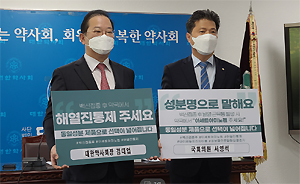
- "If fever or muscle pain occurs after vaccination, ask for Acetaminophen to the pharmacy." As the Tylenol shortage continues, the movement to change public perception begins. Rep. Seo Young-seok of the Democratic Party of Korea visited the Korean Pharmaceutical Association Hall on the morning of the 4th and announced that he would start an SNS challenge with Chairman Kim Dae-up. Chairman Kim Dae-up & Seo Young-seok, a member of the Democratic Party of Korea, who started SNS challenge Representative Seo said, "The vaccination target is 13 million by the end of this month, and the quarantine authorities' plan is to start vaccinations by July." "The demand for painkillers is expected to surge due to the expansion of vaccinations, and if the stock is low, people will have to visit many pharmacies to buy Tylenol," he said. He said, "With this phenomenon of Tylenol shortage, we need to draw the right public perception of the same active ingredient. There are about 70 generics of the same active ingredient, and I hope it will serve as an opportunity to discuss why there was a phenomenon in which only certain brands, Tylenol, were favored and solutions," he explained the background of the SNS challenge. "The domestic pharmaceutical market is very strange," said Chairman Kim Dae-up. "There are many generics that cannot even be compared to foreign countries, and there are too many items of the same active ingredient as the consignment market." Chairman Kim said, "Tylenol was sold out as the KDCA promoted to take Tylenol after vaccination." "Some pharmacies have to say that Tylenol is out of stock 100 times," he said, criticizing the health authorities' initial response. Chairman Kim said, "The KDCA should be responsible for distributing unofficial note prescriptions and asking vaccination centers to take Tylenol." "I am happy and grateful that Rep. Seo Young-seok joined the movement to change public awareness under such circumstances," he said. He then pointed to Yoon Sun-hee, chairman of the Bucheon Pharmaceutical Association, and Nam In-soon, a member of the Democratic Party of Korea, after Suh, who started the first SNS challenge. Chairman Kim named Han Dong-joo, head of the Seoul Pharmaceutical Association, and Cho Sang-il, head of the Incheon Pharmaceutical Association, as SNS challenge runners.
- Company
- Hemlibra reimbursement disapproval raises anxiety
- by Nho, Byung Chul Jun 08, 2021 06:01am
- The head-on clash between the ‘standard to first consider immune tolerance induction (ITI·antibody removal) therapies’ and the ‘due prescription rights of doctors·convenience in administration·saving NHI finances’ have received industry attention. On the 3rd, the Health Insurance Review and Assessment Service (HIRA) held a Pediatric Department Special Review Committee to review medical benefit reimbursement of Hemlibra and disapproved its reimbursement. Therefore the clash between the industry·patient groups and the authorities in normalizing its reimbursement is deemed inevitable. The reimbursement standard for Hemlibra that was implemented in February this year allows reimbursement for pediatric hemophilia patients ▲who failed ITI therapy; ▲who meet the ITI eligibility requirements but have a doctor’s note proving they cannot receive ITI therapy; and ▲whose antibodies reappeared after a successful ITI therapy. On the other hand, for hemophilia patients with antibodies, the reimbursement guidelines recommend to HCPs to first consider using ITI therapy. HIRA’s regulations prioritize the use of ITI therapy in high-antibody patients in years 1-5, patients with frequent bleeding, and patients with intracranial bleeding. The issue arose regarding the reimbursement standard ‘Those who meet the ITI eligibility requirements but have a doctor’s note proving they cannot receive ITI therapy.' The committee requested objective data proving that it was difficult to secure venous blood vessels and that it was impossible to attempt ITI therapy when administering Hemlibra. However, the medical community and patient groups protest saying that “Most patients are under 5 years of age, therefore, providing data on the state of their blood vessels following intravenous injections and objective measurement of their pain is virtually impossible. The specificity of the circumstances and environment isn't being considered.” In other words, their argument is that requesting data based on scientific grounds when there is no objective data to present is in itself nonsense. Two large hospitals, A and B Hospital in Seoul and Daegu, had administered Hemlibra to 4 hemophilia patients under the age of 12 during the last two months according to doctors’ justifiable opinion. The pharmaceutical cost of Hemlibra amounted to 30 million won per patient for the 2 months, and if the hospitals decided to exercise their right of claim rather than suffer the loss, the cost will solely be imposed on the patients. On this, an official from the Korean Society on Thrombosis and Hemostasis said, “Insisting or forcing pediatric hemophilia patients under the age of 12 to receive intravenous ITI therapy is not a desirable means of treating the disease. Also, the HIRA's disapproval of reimbursement for Hemlibra this time is inconsistent with the reimbursement standard that explicitly states that Hemlibra may be administered with a justifiable doctor’s note." Patient groups also strongly expressed their objection, pointing out that “Current standards do not require ITI therapies before existing bypassing therapies. Making the decision to administer Hemlibra does not mean that the doctors did not consider ITI therapies. The committee’s decision to restrict only Hemlibra with such a condition is unacceptable.” Meanwhile, the deliberation results of the Pediatric Department Special Review Committee will be finalized after resolution by the Central Review & Assessment Coordination Committee, and the claims for re-examination and objections to adjust drug costs may be filed within 60 days. Attention is now on whether the voices of the pediatric patients and their parents will be reflected in addition to the efforts made through Cheong Wa Dae’s public petition and Anti-Corruption and the Civil Rights Commission’s adjustment efforts.
- Policy
- PVA is a variable in the negotiation of α-GPC recovery
- by Lee, Hye-Kyung Jun 08, 2021 06:01am
- Re-negotiation on benefit recovery and PVA negotiation related to pharmaceuticals with the brain functional improvement agent "Choline alfoscerate" have emerged as variables. On the 3rd, the MOHW ordered the NHIS to conduct negotiations on 123 items of Choline alfoscerate for 40 days from June 4 to July 13. Choline alfoscerate recovery negotiations, which began on December 14 last year, have been under way four times so far, and 123 items from 58 final companies have not been agreed on. The pharmaceutical industry is questioning the effectiveness of the fourth round of negotiations that will be held again after failing to reach an agreement over the past six months. The NHIS considered the fourth round of negotiations to be the final stage, and says it will ask the MOHW to remove the benefit in the event of a final breakdown. If the NHIS' drug price management department (excluding the generic negotiation department) has been involved in the Choline alfoscerate negotiations due to lack of work and manpower, this time the drug price planning department will be in charge of negotiations. The Pharmaceutical Price System Planning Department is a department led by Lee Young-hee, who was in charge of major negotiations in the past, including high-priced anticancer drugs such as "Keytruda," "Opdivo" and "Spinraza." Based on her experience in negotiating various new drugs, She plans to conclude negotiations on the recovery of Choline alfoscerate. In particular, the inclusion of Choline alfoscerate from a large pharmaceutical company, which is suing the MOHW and the NHIS for suspension of execution, emerged as a variable in the recovery negotiations. Last year, Arlico, Hana, and Kyungbo were lowered as PVA 'Da' type (the amount of drug claims in 2019 increased by more than 60% or increased by more than 10% from 2018 and increased by 5 billion won). The pharmaceutical companies agreed on a contract clause that states that "if permission is revoked as a result of revaluation, the pharmaceutical company must return the full amount of the claim from the date of the MFDS' clinical trial to the NHIS." In the case of PVA negotiations, it is necessary to sign an agreement to return the full amount of the NHIS claim if there are problems with safety and validity such as clinical revaluation as well as drug price reduction. Attention is focusing on what choice pharmaceutical companies with PVA negotiated items will make at a time when the NHIS lowered the recovery rate by up to 50% of health insurance claims in the last third round of negotiations.

- Company
- Pros and cons of the spin-offs and sales of Big Pharmas
- by Eo, Yun-Ho Jun 08, 2021 06:01am
- Mergers, spin-offs, buying, selling... news shows that global Big Pharmas have been busy constantly changing their shape. In particular, the issue that gained the most attention for the past few years was the companies' spin-offs and sales. Although the companies' made the decision under the premise of ‘focusing on one’s strengths,’ such divisions and sales have brought out both positive and negative views. One thing to note is that these changes have been occurring 'serially' among global pharmaceutical companies. ◆Change in the development trend and surging investment cost = Although it is difficult to pinpoint the root cause of the constant change, a trend is evident. Development of new drugs is difficult, even without specifying the 1 in 10,000 probability of success. Also, successful development does not directly translate to actual sales. And this problem continues to intensify. Hidden within the shadow of the often-discussed ‘open innovation' n the global market. exists the rampant new drug famine. Discovering new substances is difficult and the risk keeps increasing, so ‘sharing’ the burden became the solution. With the field of chronic disease ruled out as ‘drugs in need have already been released,’ the industry's focus is now on anticancer drugs and rare diseases. Also, with the increase of cutting-edge new drugs that have dozens of indications for a single substance, Big Pharmas are now faced with a situation where they would need to spend astronomical amounts just on the Phase III trial of its new drugs. As the direct discovery of candidate substances has become increasingly difficult and buying promising new substances (candidate substances) or venture businesses that own such substances, the companies' investment spending has skyrocketed as well. From the Big pharma’s perspective, this means that their already-high proportion of investments have doubled. Not only Takeda, Pfizer, and MSD, which carried out spin-offs and sales of its business units, but companies that prided in their R&D such as Novartis, Sanofi, and Bayer have announced at least 3-5 acquisitions of drug substances or companies every year. The size of mergers and acquisitions by global companies had already exceeded 400 trillion won in 2019. The advent of the 'age of high-priced drugs’ that is emerging as a social issue is not unrelated to this large amount of investments. A Business Development personnel who returned to the Korean subsidiary after working at its global headquarters said, “Big Pharmas are reducing directly conducted projects that start from substance discovery. The companies have turned their direction to buying promising substances to reduce the investment risk. However, the problem that companies face is that the price of venture businesses that own such substances have also been rising rapidly.” ◆Stock price and stockholders… the BU system and spin-offs = The rise in investment cost and corporate spin-offs may seem unrelated at a glance, but this is also not the case. A company's stock price and its stockholders are currently exerting wider influence on the decision-making process of the Big Pharmas than in the past. For example, when a company maintains its size and only increases investment, investors worry that the stock price will fall due to decreased cash flow. The corporate spin-off is one option that such companies could select in these cases. No matter how promising a new drug may be, investment in its substance eventually affects the financial solvency of the company. Spin-offs allow the company to divide its size and profit structure. In other words, the company can subdivide its business by concept to an investment-focused part and a legacy part – and recreate the company. Equity spin-offs do not burden the company as there is no exercise of appraisal rights. Since the company becomes a legally independent company after the spin-off, the spin-off may go public immediately afterward. Prior to such spin-offs, most multinational pharmaceutical companies first proceed with restructurings that have a split-off tendency that may serve as a foothold for improving the financial solvency of the company or for the sale of its businesses. For example, before Pfizer completed its spin-off of Viatris, it had established a 3-Business Unit system and separated its legacy brand ‘Upjohn,’ then spun-off Upjohn and combined it with Mylan N.V. to form Viatris. The recent MSD’s spin-off of Organon and Takeda’s sale of its diabetes and OTC business, Novartis’ decision to independently operate its pharmaceuticals and oncology division, and Abbott’s separation of ts biopharmaceutical division as Abbvie were all made in the same context. An official from one multinational pharmaceutical company said, “The criticism that the pharmaceutical companies are now acting on behalf of its shareholders rather than their patients also stem from this phenomenon. However, with the proportion of venture capital (VC) investors (financial investors) increasing, the companies do not have many options to choose from with regards to their operations."
- Policy
- Pipeltro/Delstrigo will be reimbursed if the amount offered
- by Lee, Hye-Kyung Jun 08, 2021 06:00am
- Pipeltro (Doravirine) and Delstrigo (Doravirine, Lamivudine, Tenofovir), the HIV treatment by MSD, are the two major human immunodeficiency virus. And, were declared "Conditional Coverage" at the first step of the reimbursement if it was accepted below the appraised amount. On the 3rd, the HIRA held the 5th Pharmaceutical Benefits Advisory Committee in 2021, and conducted a review of benefit adequacy for new drugs related to HIV and asthma. Pipeltro, a combination of other anti-retroviral drugs for HIV-1 treatment, and Delstrigo for adult patients were proposed, but MSD's submission to the HIRA was higher than that of the Pharmaceutical Benefits Advisory Committee. Both Pipeltro and Delstrigo have received indications for HIV-1 treatment in adult patients who have no previous experience in antiretroviral treatment. Gilead, GSK, MSD, Janssen, AbbVie, and BMS are competing in the HIV sector in the domestic market, with Gilead and GSK accounting for about 90% of the market. Novartis Korea'sAttectura Inhalation Cap. (150/80μg, 150/160μg, 150/320μg) and Enerzair Breezhaler (150/50/80μg,150/50/160μg) will also be accepted below the evaluation amount. The Board of Review and Assessment assesses the appropriateness of drugs after deliberation by the Pharmaceutical Benefits Advisory Committee in accordance with Article 11-2 of the National Health Insurance Care Benefit Standards. The results of the Pharmaceutical Benefits Advisory Committee assessment are subject to changes in the scope of the drug's detailed benefit and other criteria items, changes in the authorization of the item applied for and revocation of the permit.
