
- LOGIN
- MemberShip
- 2026-05-18 11:04:06
- Company
- Pfizer applies for reimbursement of 3rd-gen ALKi Lorviqua
- by Eo, Yun-Ho Oct 20, 2021 05:56am
- Pfizer is aiming to introduce a second ALK inhibitor after ‘Xalkori’ into Korea’s prescription market. According to industry sources, Pfizer Korea has recently submitted a reimbursement listing application for its anaplastic lymphoma kinase (ALK) tyrosine kinase inhibitor (TKI), ‘Lorviqua (lorlatinib),’ which is in progress. Pfizer received the orphan drug designation for Lorviqua last March, then in July, the drug was approved as monotherapy to treat adult patients with ALK-positive advanced non-small-cell lung cancer (NSCLC) whose disease has progressed after - Alecensa (alectinib) or Zykadia (ceritinib) as the first ALK tyrosine kinase inhibitor (TKI) therapy; or Xalkori (crizotinib) and at least one other ALK TKI. Lorviqua is a third-generation drug that arose as an alternative option in patients who developed resistance to the first-generation drug Xalkori and the second-generation drugs Zykadia, Alecensa, or Alunbrig. In other words, patients who used Xalkori first-line may use second-generation drugs as second-line, then use Lorviqua; patients who used second-generation drugs as first-line may use Lorviqua as second-line treatment. Until now, patients who developed resistance to the drugs in the second-line had no available targeted therapies and therefore had to opt for chemotherapy in later-line treatments. ALK G1202R solvent front mutation is the most common ALK resistance mutation after being treated with second-generation drugs, and other ALK mutations also occur by drug, such as F1174L(Zykadia), I1171T/N/S(Alecensa), E1210K(Alunbrig), etc. Lorviqua (lorlatinib) has shown to be effective against all known resistance mutations. With such strengths to resistance, Lorviqua is expected to quickly attract prescriptions if listed for reimbursement. Whether Pfizer, the pioneer of ALK targeted anticancer therapy, will be able to increase its share in the market remains to be seen. Meanwhile, the approval of Lorviqua was based on an open-label, single-arm, multinational, multicenter Phase II study that was conducted on various 275 NSCLC patients with ALK-positive and ROS1-positive advanced NSCLC, from treatment-naïve patients to those who had been treated with up to three ALK inhibitors. In the study, the ORR (Objective response rate) - the primary endpoint - of patients who have been previously treated with 1 or more ALK inhibitors including second-generation ALK inhibitors was 47%, and the patients’ intracranial objective response rate (IC-ORR) was 63%. The median duration of response was yet to be reached at the time of analysis, as 63 out of 93 patients with a confirmed response at the time of analysis showed a continued response. The lower bound of the 95% confidence interval for the response period was 11.1 months.
- Policy
- The gov. begins research on preferential tx
- by Lee, Jeong-Hwan Oct 20, 2021 05:56am
- The MOHW has launched a research service to prepare preferential measures for new drugs developed by innovative pharmaceutical companies in Korea. The policy is to innovate pharmaceutical companies and achieve health insurance fiscal consistency, such as giving incentives when adjusting drug prices and supporting drug prices linked to R&D investment scale. On the 19th, the MOHW completed an order to Korea Online EProcurement System for "Research on Pharmaceutical Price Support Policy of Innovative Pharmaceutical Companies in Conformity with International Trade Order" through the KHIDI. Regarding the background of research on drug preferential treatment for innovative pharmaceutical companies, the KHIDI predicted that the global pharmaceutical market will grow 4.7% annually over the past five years, recording about $1.3 trillion in 2019, and expand up to $1.4 trillion by 2026. As the pharmaceutical and bio markets are expected to be new growth engines in Korea in the future, it is necessary to actively promote support measures. The KHIDI said that although the revision of the Pharmaceutical Industry Promotion and Special Act in December 2018 provided a basis for preferential treatment for innovative pharmaceutical companies, there are no subordinate laws due to trade problems. In fact, Article 17-2 of the Pharmaceutical Industry Promotion Act stipulates that the Minister of Health and Welfare sets drugs manufactured by innovative pharmaceutical companies by Presidential Decree, including the addition of the upper limit on medical care benefits under the National Health Insurance Act. The problem is that the Presidential Decree and enforcement regulations, which are subordinate statutes of the provision, have not been created, making it ineffective. When domestic pharmaceutical companies and the National Assembly's Health and Welfare Committee said they needed improvement in this year's parliamentary audit, the MOHW said it would launch research through the KHIDI to find ways to preferential drug prices for innovative pharmaceutical companies. The KHIDI took follow-up measures through practical research orders. It seeks a policy to support new drug prices for innovative pharmaceutical companies without harming the international trade order, with a research period of six months from the date of the contract and a budget of 50 million won. After the research order in October, the agency plans to select successful candidates for the research in early November and receive a final result report in March next year after an interim report in January next year. The key point of the study is to investigate the current status of drug price policies in the domestic and foreign pharmaceutical industries and to collect opinions on drug support from innovative pharmaceutical companies. It reviews the need to support innovative pharmaceutical companies and prepares practical drug preferential policy measures that meet the international trade order. It will also investigate drug price support policies of major overseas pharmaceutical advanced countries for innovative new drugs, biovectors, IMDs, biosimilars, and generics. After COVID-19, major pharmaceutical industry support policies in major foreign countries in the vaccine and bio sectors will be studied with weight on drug price support policies. It will also investigate international trade disputes and settlement cases related to drug price support policies to prepare for international friction. Innovative pharmaceutical companies will prepare opinions from related organizations such as the HIRA and the Health Insurance Corporation and drug support measures based on the demand survey for drug support. It is also accompanied by external opinions such as academic experts and civic groups. It plans to form an advisory committee to collect related opinions and investigate opinions from various fields related to drug support through surveys and interviews. There is also a procedure to analyze the history or effectiveness of support policies for innovative pharmaceutical companies, and the limitations of the current support policy. In order to favor innovative new drugs that do not harm the international trade order, it will induce innovation of pharmaceutical companies, such as drug price support measures, incentives for drug price follow-up adjustment, and drug price support linked to R&D investment. Above all, research will also be conducted to identify in advance the factors that can actually be raised and resolve solutions to ordinary issues related to policy measures for supporting innovative pharmaceutical companies. It plans to provide international trade advice through trade experts such as academic experts and lawyers. The KHIDI said, "The research goal is to present risk factors and solutions when promoting drug support for innovative pharmaceutical companies." The KHIDI said, "We will also analyze data requested by the organizer related to policies to support innovative pharmaceutical companies." It added, "We will select a research institute in December, sign a contract, and receive a report on the results in March after an interim report next year." The MOHW and the KHIDI are currently certifying 45 innovative pharmaceutical companies to intensively foster the pharmaceutical and bio industries as national growth engines.

- Company
- Moderna Korea speeds up group organization
- by Oct 20, 2021 05:56am
- Moderna Korea, which had shown little activity for almost 6 months after establishing its Korean subsidiary, is busy recruiting members in secrecy. With the active hiring and imminent production of Moderna vaccines, officials predict that the company will be starting its official activity soon. According to industry sources on the 19th, Moderna Korea has completed hiring executives for some of its departments including those for Medical, Pharmacovigilance, and Regulatory Affairs. For the PV Head, an official with global CRO experience has moved to Moderna Korea in July, and a former BMS official has been serving as the Quality Head since last August. The company has been speeding up its organizational process, recruiting executives and employees for various departments including the Supply Chain, Customer Services and Logistics, and Commercial Legal. The General Manager (GM) for the Korean subsidiary has also been appointed, however, who the GM is remains unknown. Only rumors that the GM is a vaccine expert from a specific multinational pharmaceutical company are abound. A representative of a multinational pharmaceutical company who wished to remain anonymous said, “Under the premise that the GM was already hired, it is possible that the new head may have been recruited from a different country since so little is still known.” Over 60 candidates had applied for the position, and although most were residing in Korea some have applied from other regions such as Hong Kong, etc. Looking at Moderna Korea’s organization chart, the Korean subsidiary’s role is expected to be concentrated around the supply and quality control of its products. An industry official said, “Looking at the areas in hiring, I believe the company’s work will focus on drug-related tasks such as the side effects of its vaccines rather than drug development. However, as Moderna is one of the few companies that can implement mRNA products as a platform, what role the branch will play remains to be seen.” This adds strength to expectations that Moderna Korea will start its official activities in line with Samsung Biologics' consignment production of the Moderna vaccines. According to the remarks made by the Minister of Food and Drug Safety Gang-lip Kim at the NA’s Health and Welfare Committee audit, Samsung Biologics is expected to receive GMP certification within this month. Samsung Biologics has begun production of the Moderna COVID-19 vaccine in line with this. After Moderna Korea finishes organizing its group, the company is expected to be in charge of the regulatory procedures necessary to supply the Moderna products produced by Samsung Biologics to Korea and the Asia Pacifica region.
- Policy
- It will improve side effects caused by non-face-to-face tx
- by Lee, Jeong-Hwan Oct 20, 2021 05:56am
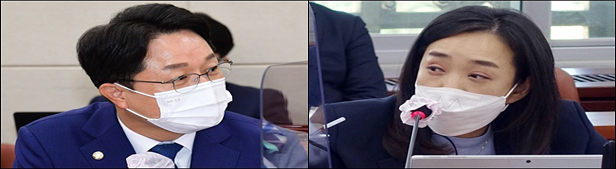
- Rep. Kang Byeongwon of the Democratic Party (left) and Rep. Choi Hye-young proposed amendments to the medical law, which officially introduces temporary non-face-to-face tx, respectively The National Assembly is trying to solve problems arising from the implementation of non-face-to-face treatment temporarily allowed due to COVID-19 for more than a year and reduce social concerns. Instead of allowing non-face-to-face treatment temporarily and extensively, the ruling party-centered National Assembly officially introduces it as a supplement to face-to-face treatment to eliminate side effects. On the 18th, the Democratic Party of Korea previously proposed a revision to the medical law, which focuses on legislation of non-face-to-face treatment, following Rep. Kang. Kang's proposal, which was proposed first, is to officially institutionalize "remote monitoring," which is part of non-face-to-face treatment between doctors and patients. Choi Hye-young's proposal is expected to have a significant impact on the medical community in that it specifies the concept of non-face-to-face treatment itself and clearly specifies the allowable patient group and disease group. For now, both bills limited non-face-to-face medical institutions to primary medical institutions at the clinic level, not at the hospital level. It also aims to comply with the principle of face-to-face treatment and prevent unnecessary diseases from allowing non-face-to-face treatment by allowing non-face-to-face treatment, focusing on patients suffering from chronic diseases such as high blood pressure and diabetes. In a detailed sense, Kang focused on the legislation of non-face-to-face treatment for chronically ill patients and remote monitoring of ECGs for hikers, which partially proved their effectiveness in the Gangwon Digital Healthcare Special Zone. Rep. Choi focused on enabling non-face-to-face treatment only for chronic diseases if access to medical institutions such as islands, mountains, remote areas, or military units is significantly low, or if movement is greatly inconvenient, such as disabled or patients after surgery. Given that the scope of non-face-to-face treatment is specified and the concept is clarified, the two lawmakers' views are that if the two bills are promoted, the side effects of non-face-to-face treatment pointed out so far will be greatly improved. The number of cases of unnecessarily over-prescribing hormone drugs such as psychotropic drugs, erectile dysfunction treatments, hair loss drugs, and acne through non-face-to-face treatment is also expected to decrease significantly if the bill is promoted. In particular, Choi's proposal was designed to address concerns related to non-face-to-face treatment, which the front-line medical community, led by the Korean Medical Association, strongly opposes. An official from Choi Hye-young's office said, "As non-face-to-face treatment is temporarily allowed only in the crisis of infectious diseases such as COVID-19, the need for non-face-to-face treatment in areas or patient groups with low medical access has been confirmed."
- Policy
- One-shot treatment Kymriah passed the cancer committee
- by Lee, Hye-Kyung Oct 20, 2021 05:55am
- Kymriah (Tisagenlecleucel) of Novartis Korea, a "one-shot treatment" with an ultra-high cost of 500 million won per dose, passed the Cancer Drugs Benefit Appraisal Committee. At the Cancer Drugs Benefit Appraisal Committee held last month, the gap between health authorities and pharmaceutical companies was barely narrowed at the second Cancer Drugs Benefit Appraisal Committee. The HIRA released the "7th Cancer Drugs Benefit Appraisal Committee Deliberation Results in 2021" on the afternoon of the 13th. The HIRA, like the Cancer Drugs Benefit Appraisal Committee and the Cancer Drugs Benefit Appraisal Committee this month, decided to disclose the results of the deliberation to the media after the meeting. According to the results of today's meeting, Kymriah's benefit criteria were set for both indications: adult diffuse giant B-cell lymphoma and B-cell acute lymphocytic leukemia (ALL) in children and young adults. After 60 days of drug price negotiations with the NHIS after being recognized by the Drug Reimbursement Evaluation Committee, it must pass the Health Insurance Policy Committee to be listed on the list in earnest. Kymriah used Drug Approval-Linkage Systems in March to register benefits with approval from the MFDS. At the Cancer Drugs Benefit Appraisal Committee with Kymriah, there was a discussion on the expansion of benefit standards, but all of them failed to pass the Cancer Drugs Benefit Appraisal Committee except for the Benetoclax combination therapy of AbbVie Korea. Drugs that have not been set based include FOLFOX (Folinic acid, Fluorouracil, and Oxaliplatin), chronic lymphocytic leukemia treatment Imbruvica(Ibrutinib) by Janssen Korea, and B-cell acute lymphocyte leukemia treatment Blincyto (Blinatumomab).
- Policy
- What's Kymriah's procedure after passing the Committee?
- by Lee, Hye-Kyung Oct 19, 2021 08:54pm
- It seems that it will take time for the ultra-high-priced one-shot treatment Kymriah (Tisagencleucel) to be registered. In particular, it is because the setting of additional financial sharing conditions for pharmaceutical companies, which was not easy in the Cancer Drugs Benefit Appraisal Committee, may pass the Drug Reimbursement Evaluation Committee evaluation. The HIRA (Director Kim Sun-min) conducted the second Kymriah's standard review at the 7th The Cancer Drugs Benefit Appraisal Committee held on the 13th. Kymriah's standard, which were not set at the 6th Cancer Drugs Benefit Appraisal Committee held on September 1, were set at the 7th Cancer Drugs Benefit Appraisal Committee. Kymriah, which entered Korea in March using Drug Approval-Linkage Systems, is a one-shot treatment, but it took about seven months to set the standard as an ultra-high-priced new drug with a single dose cost of 500 million won. Even so, it was said that the period was shortened even a little due to the influence of one-man protests and national petitions as well as the parliamentary audit of the National Assembly's Health and Welfare Committee on the 15th, urging patients to pay Kymriah. The standard set after about seven months of meeting requires additional financial sharing by Novartis Korea. Novartis applied for benefits for both indications, including "adult diffuse giant B-cell lymphoma" and "B-cell acute lymphocytic leukemia in children and young adults," approved by the MFDS. The Cancer Drugs Benefit Appraisal Committee was concerned with indications for adult diffuse giant B-cell lymphoma. This is why the setting of salary standards was put on hold at the 6th Cancer Drugs Benefit Appraisal Committee. Finally, the Cancer Drugs Benefit Appraisal Committee established standards under these provisions like ▲ higher level of risk-sharing by pharmaceutical companies considering overseas drug prices ▲ in the case of diffuse giant B-cell lymphoma with insufficient clinical performance compared to acute lymphocytic leukemia, addition of risk-sharing system according to treatment performance at a patient level ▲ benefit can be applied. After reviewing the risk-sharing plan for cancer screening in detail, making a final draft, putting the agenda on the committee for review and resolution, and then negotiating drug prices with the NHIS. It has also been conducting drug price negotiations with the MOHW and the HIRA for 60 days, and will come up with a plan to share finances between the government and pharmaceutical companies. Therefore, since it is applied after deliberation and notification by the Risk Sharing Subcommittee, the Drug Reimbursement Evaluation Committee, the NHIS negotiations, and the Health Insurance Policy Review Committee of the MOHW, it must be at least next year for actual patients to receive Kymriah benefits.
- Policy
- The benefit of 7 α-GPC products will be suspended
- by Lee, Hye-Kyung Oct 19, 2021 08:53pm
- Benefits for seven items that have been canceled for not participating in the clinical re-evaluation of the brain function improvement drug Choline alfoscerate will be suspended from the 21st. The MOHW announced on the 18th that it has decided to suspend health insurance benefits for drugs that have been canceled for product licenses due to confirmation of violations of the Pharmaceutical Affairs Act. The seven items violating the Pharmaceutical Affairs Act were canceled following the first two-month suspension of sales and the second six-month suspension of sales without complying with Article 33 (Regulations on the Reevaluation of Drugs) under the Choline alfoscerate formulation. The head of the MFDS may reevaluate drugs that need to be reviewed for safety and effectiveness, or that need to prove drug equivalence among drugs that have been approved or reported. In June of last year, the MFDS announced in June last year that it would conduct a clinical re-evaluation of three indications like ▲ secondary symptoms and denaturation or degenerative cerebral matrix mental syndrome caused by cerebrovascular defects, ▲ changes in emotions and behaviors, including ▲ senile pseudophobia. The MFDS ordered 255 items from 134 companies to submit clinical trial plans by December 23 of that year. More than 60 pharmaceutical companies participated in the clinical re-evaluation of Choline alfoscerate, divided into Daewoong Bio-Chong Kun Dang Group and United Group, while the rest of the pharmaceutical companies are receiving administrative measures such as suspension of work and cancellation of item without submitting clinical plans. Samik's Memoode, KMS Pharm's Alfotne Soft Cap, Austin Pharm's 'Newcholine Soft Cap', Intropharm's I-Choline, Saehanpharm's Glatone, and Mirae Pharm's Gliarin will be suspended. Medical institutions such as hospitals, clinics, and pharmacies should note that they cannot prescribe and prepare benefits from the 21st as seven items will be removed from the list due to the cancellation of item licenses.
- Company
- Hugel’s Geodu BTX plant completes EMA inspection
- by Lee, Seok-Jun Oct 19, 2021 06:00am
- [Hugel announced that the European Medicines Agency completed the on-site inspection of its ‘Geodu plant’ in Chuncheon on the 18th. The Geodu plant has a fully automated state-of-the-art system that can manufacture over five million botulinum toxin vials a year. EMA conducted an on-site inspection on the Geodu plant’s manufacturing facilities and quality control system for 3 days, from the 12th to the 14th, to verify whether the facility complies with the EU-GMP standards. With the on-site inspection complete, the company expects to acquire the EU GMP certification soon. The company had previously completed FDA’s on-site inspection for cGMP in August. A Hugel official said, “ With the recent inspection of EMA’s Geodu plant complete, the company expects to be able to soon emerge into the European market in addition to its entry into the Chinese market last year. By entering the European market this year, and the US market next year, we aim to continue our endeavors to become a global company that covers 95% of the world’s botulinum toxin market. The European market, combined with the US market accounts for 70% of the world’s botulinum toxin market. With the aim to emerge into the European market, Hugel completed its Phase III clinical trials(Bless 1 and Bless 2) in Poland and Germany with an Austrian medical aesthetics pharma company ‘Croma,’ and submitted an application for marketing authorization in June 2020.

- Policy
- Korea United Pharm's Galvusmet generic is the first approved
- by Lee, Tak-Sun Oct 19, 2021 06:00am
- Korea United Pharm received approval for the first generic of Novartis’s DPP-4 inhibitor, ‘Galvusmet (vildagliptin/metformin hydrochloride),’ an antidiabetic treatment. With the approval, the company will likely be competing with Hanmi Pharmaceutical next year, which marked the start of Galvusmet latecomers with a salt-modified drug in July. The Ministry of Food and Drug Safety approved Korea United Pharm’s Galvusmet generic on the 18th. The product is a fixed-dose combination of vildagliptin and metformin hydrochloride and is a generic drug that contains the same ingredient as Novartis’s Galvusmet that was approved in 2008. The drug was approved as an adjunct to diet and exercise to improve glycaemic control in type 2 diabetes patients that are eligible to take the vildagliptin+metformin combination. With the substance patent for the single-agent drug Galvus and combo Galvusmet to expire on March 4th of next year, companies of latecomer drugs are accelerating development to preoccupy the patent-expired market. Twelve companies including Ahn-Gook Pharmaceutical, Ahngook New Pharm, Hanmi Pharmaceutical, Genuone Sciences, LitePharmTech, White Life Science, PharmGen Science, Mother’s Pharmaceutical, Daewoong Bio, Dongkoo Bio&Pharma, KyungBo Pharm, GL Pharma have already received approval for latecomer single-agent vildagliptin products. Among the companies, Ahn-Gook Pharmaceutical and Ahngook New Pharm succeeded in avoiding the original's patent by challenging part of the term extended for the substance patent of Galvus and achieved generic exclusivity from January 9th to May 29th. Therefore, other drugs with the same vildagliptin ingredient as those approved by Ahn-Gook Pharmaceutical and Ahngook New Pharm cannot be sold during the term. However, drugs with a different salt ingredient are not considered identical and are not subject to sales restrictions. Also, the vildagliptin/metformin combination agents are also not subject to sales restrictions under Ahn-Gook’s generic exclusivity. Until now, only Hanmi Pharmaceuticals and Korea United Pharm received approval for a latecomer combination drug. However, Hanmi Pharmaceuticals’ product is a salt-modified drug and not a generic of the same ingredient. Hanmi and United succeeded in avoiding the composition patent of Galvusmet through a passive trial to confirm the scope of rights and may start the sale of their products after the original’s product patent expires. In other words, the companies may sell their products without any issue from March 4th. In addition, if the companies receive a ruling confirming the ruling made by the Patent Court of Korea in the trial to invalidate the extended period of substance patent that is pending in the Supreme Court, the companies may be able to sell their drugs from January of the next year. The trial is currently ongoing between Novartis, the patent holder, and the latecomer companies, Ahn-Gook Pharmaceutical and Hanmi Pharmaceutical. As Hanmi and United had received approvals of their respective drugs before October, they may even be able to release their products with insurance benefit in January. Therefore, the two companies are expected to compete fiercely to preoccupy the market. By market size, the Galvusmet has a much larger market than the single-agent Galvus. According to UBIST, outpatient prescription sales of the drugs last year was ₩8.1. billion for Galvus and four times higher - ₩36.4 billion - for Galvusmet. With rapid commercialization being the key to preoccupying this immense Galvusmet latecomer market, Hanmi and Korea United Pharm seem to have taken a lead.
- Company
- Hugel's Letybo benefits from FDA delay of Revance's DAXI
- by Nho, Byung Chul Oct 18, 2021 05:54am
- The U.S. Food and Drug Administration’s disclosure of the official document outlining concerns in the DAXI manufacturing plant of the botulinum toxin company, Revance Therapeutics (hereinafter ‘Revance’), raised industry concerns about the uncertainty of the company’s approval. Revance is a new medical aesthetics company that sells botulinum toxin and HA filler products. The company had submitted a Biologic License Application to the FDA for its botulinum toxin product DAXI in 2020 and expected to receive marketing authorization by 2021. The FDA conducted an on-site inspection of the company's manufacturing plant from late June to early July. The document that was disclosed this time had pointed to 4 issues of concern, which includes the issues that the actual manufacturing process is not the same as in the application for the marketing authorization, and the verification of the Working Cell Bank is inadequate. Upon disclosure of such concerns, Revance announced that it still expects to receive approval within the year. However, the industry expects that it would take considerable time before the company can make up for the serious issues discussed by the FDA. Currently, Allergan’s Botox accounts for 75% of the 2 trillion dollar botulinum toxin market, virtually dominating the market. The US market, therefore, has a high need for a new company that has a premium botulinum toxin product with a reasonable price. Companies that have recently submitted a marketing approval to the FDA for their botulinum toxin and underwent review include the US company Revance and Korean company Hugel. An industry official said, “Expectations for Hugel’s entry in the US market is increasing as the competition between the new companies, Revance and Hugel, has fallen apart with the FDA’s document that rendered the date of Revance’s marketing approval uncertain. Hugel has smoothly completed its on-site inspection and mid-cycle meeting. The official added, “Hugel completed submission of the supplementary material requested by the FDA after its inspection and is expected to pass review without issue." The FDA had conducted a cGMP inspection for nine days from August 12-20 to verify the manufacturing facilities and the quality management system of Hugel’s second plant that is in charge of the production of Letybo.
