
- LOGIN
- MemberShip
- 2026-05-17 06:39:27
- Company
- Sales of Statin/Ezetimibe have surpassed ₩600 billion
- by Chon, Seung-Hyun Feb 03, 2022 05:57am
- In the dyslipidemia treatment market, a combination of Statin + Ezetimibe is gaining explosive popularity. The annual prescription market has more than quadrupled over the past five years, exceeding 600 billion won. Rosuvastatin +Ezetimibe is leading the market growth. According to UBIST, a pharmaceutical research institute, the amount of outpatient prescriptions for Statin +Ezetimibe was 609.9 billion won, up 23.1% from the previous year. It increased 52.3% in two years from 40.4 billion won in 2019. It showed rapid growth every year from 136.9 billion won in 2016 to 345.4% in five years. Sales of Rosuvastatin and Ezetimibe are forming the largest market. Last year, the prescription amount of Rosuvastatin and Ezetimibe was 436.3 billion won, up 18.8% from the previous year. The market size has more than tripled in five years from 56 billion won in 2016. Rosuvastatin and Ezetimibe account for 71.5% of Statin and Ezetimibe market. The market for Rosuvastatin and Ezetimibe began in 2015 when Hanmi Pharmaceutical launched Rosuzet. Rosuzet recorded a prescription performance of 123.2 billion won last year, up 17.4% from the previous year, contributing the most to the expansion of Statin and Ezetimibe markets. Hanmi Pharmaceutical has secured the right to use Ezetimibe from MSD and has recorded high growth rates since entering the market before its competitors, ranking first in the same ingredient market. Rosuzet ranked second among all medicines. For the first time in 2020, it exceeded 100 billion won in prescriptions and was named the "100 billion won club" for the second consecutive year. Last year, it ranked second in prescription amount after Lipitor among all medicines. A total of 10 companies recorded more than 10 billion won in prescriptions last year, playing a role as a cash cow. Yuhan Corporation's Rosuvamibe rose 7.8% from the previous year to 62 billion won in prescriptions last year. HK inno.N, GC Pharma, Daewoong, Huons, Jeil, Kyung Dong, Hutechs, and Myungmoon recorded more than 10 billion won in prescription amount in the Rosuvastatin and Ezetimibe market last year. Last year, Atorvastatin-Ezetimibe market showed great growth. The prescription amount of Atorvastatin-Ezetimibe was 128.8 billion won, up 55.6% in a year from 82.8 billion won in 2020. With the release of a huge number of Atozet's generics, the market size expanded in a short period of time. MSD's Atozet was the only one generic until 2020. Since last year, the size of the market has risen significantly as more than 100 domestic companies have joined at the same time. In October 2020, Chong Kun Dang's Lipilouzet went through a clinical trial in October last year and was approved. At this time, 22 companies' generics for Lipilouzet were approved and were listed from April last year. Since February last year, 88 additional pharmaceutical companies' generic for Atozet have started to be approved. Since January 22, when Atozet's review period expired, it has been approved for sale simultaneously since applying for permission and registered in May, a month later than generic for Lipilouzet. As Korus Pharm and Mirae Pharm were approved for generics for Atozet in June last year, the number of domestic companies that have entered the Atozet market over the past year has increased to 113. Sales of Simvastatin+Ezetimibe slowed down. Last year, the prescription amount of the Simvastatin+Ezetimibe was 43 billion won, down 5.3% from the previous year. It is down 23.6% from five years ago. Simvastatin+Ezetimibe, the original product of MSD's Vytorin, was first released in Statin-Etimibe market, but its growth is stagnant. Amount of outpatient prescriptions for Statin + Ezetimibe by year (unit: 100 million won, data: UBIST)

- InterView
- Era of ₩30 bil novel homegrown drug Suganon begins now
- by Feb 03, 2022 05:57am
- Annual sales of the 26th homegrown new drug ‘Suganon (evogliptin)’ family that was developed by Dong-A ST has reached ₩30 billion 5 years into its release. During an interview with Dailypharm, Sung-Woo Lee, the GPM who oversees the marketing of Suganon, said, “Market share of Suganon has been steadily increasing due to its superior efficacy data, such as its strong effect in lowering blood sugar levels and its stable maintenance of glycemic variability, as well as efforts to improve convenience in intake. With our product line-up, expanded indication, and active efforts to expand to the overseas market, we will continue to grow our homegrown new drug.” ◆Last latecomer Suganon makes a winning bid with ‘evidence’ Sungwoo Lee, Suganon GPM at Dong-A ST The DPP-4 inhibitor Suganon had not always been such a success. When the drug was released in March 2016, the DPP-4 inhibitor market was full of fierce competition with products from both multinational and domestic companies. MSD’s Januvia had been raising ₩140 billion in outpatient prescriptions in collaboration with Chong Kun Dang. Trajenta, which has been copromoted by Boehringer Ingelheim and Yuhan Corp had also raised ₩100 billion, and LG Chem’s individually developed Zemiglo raised ₩50 billion. In other words, it was already a difficult environment for a latecomer drug like Suganon to penetrate. After GPM Lee took charge of marketing Suganon in 2019, he had earnestly sought measures to differentiate the product from the other products. As a result, Suganon’s stronger blood sugar level lowering effect among DPP-4 inhibitors was emphasized and reaffirmed through the EVERGREEN clinical trial. Lee said, “Suganon’s sales increased after the drug’s differentiated effect was published in the SCI paper ‘DOM,’ in which the drug demonstrated a strong blood sugar level lowering effect and evidence with a new index, glycemic variability. Last year, the combination drug ‘Sugamet’ that contains both Suganon and metformin drove Suganon’s sales growth. Dong-A ST used metformin to reduce the tablet size of Sugamet twice. Last year, Sugamet recorded the highest growth among the 21 DPP-4 inhibitor products, with a 39.7% growth in sales. Lee said, “Suganon’s market share, which was the lowest among 9 DPP-4 inhibitors by 2018, rose to exceed 5% for the first time last year due to accumulated clinical data and its improved convenience in administration. ◆Suagnon increases domestic market share and heads out globally However, the company is not stopping there and is aiming higher. First of all, the company is expanding the Suganon lineup in line with the current trend in diabetes treatment. The new combination Dong-A ST had been working on since 3 years ago is a combination of Suganon and an SGLT-2 inhibitor ‘dapagliflozin (product name: Forxiga).’ With the need to introduce a new combination drug, the company had started clinical trials in full scale. Among DPP-4+SGLT-2 combination drugs, Boehringer Ingelheim’s ‘Esglito,’ MSD’s ‘Stegluzan,’ AstraZeneca’s ‘Qtern’ were approved, but none are being prescribed in earnest yet due to reimbursement issues. However, as the insurance authorities are discussing accepting the ‘class effect’ of SGLT-2 inhibitor combinations, the industry is looking forward to future changes in the environment. Dong-A ST is also in the midst of clinical for its DPP-4+SGLT-2 combination with the goal of launching the drug in the second half of next year. Dong-A ST has also started a global clinical trial for the calcific aortic valve disease indication. Dong-A ST will be conducting a Phase II/III trial led by Rednvia, which was jointly established by Dong-A ST and Bionvia. Lee explained, “We had confirmed Suganon’s strong effect in calcific aortic valve disease in animal models in the Phase II trial, and started Phase II/III clinical trials at various medical institutions including the Mayo clinic that will be completed by 2025. As 3% to 25% of patients over 65 are estimated to have the condition in North America, we believed it has high marketability for the indication there.” The Suganon family is recording active sales overseas as well. Starting in Indica in 2019, Suganon was also released in Russia, Brazil, and Argentina. The company is preparing to release Suganon in many other Latin American countries this year.
- Policy
- 45 generics of Dapagliflozin+Sitagliptin were approved
- by Lee, Tak-Sun Feb 03, 2022 05:57am
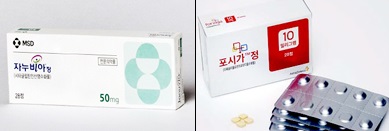
- MSD Dapagliflozin+Sitaglipin from 45 companies, which can only be sold in September next year, has been approved. Analysts say that the number of licensed companies is increasing as Dongkoo and Daewon, which succeeded in developing products, start supplying generics. On the 28th, the MFDS approved 13 additional items of Dapagliflozin+Sitagliptin. As a result, the number of Dapagliflozin+Sitaglipin increased to 45. Forxiga is an SGLT-2 inhibitory diabetes treatment and has recently grown rapidly in the diabetes treatment market. Forxiga, the original drug, recorded 42.6 billion won in outpatient prescriptions (based on UBIST) last year. Januvia has long been leading the market with DPP-4 inhibitory drugs. MSD's Januvia recorded an outpatient prescription of 459 won last year. Two single drugs are widely used as diabetes treatments, and they are often used in combination. Therefore, it is analyzed that when a combination of the two ingredients is released, the convenience of taking them will increase, and the prescription performance will increase. Due to this expectation, it is interpreted that there were many requests for the production of consigned items from Daewon and Dongkoo. So far, a total of 15 items have been approved by Daewon, including the company, and a total of 30 items have been approved by Dongkoo. Daewon's Dapacombi 10/100mg and Dongkoo's Sitaflozin 10/100mg were approved, respectively, in December last year. Both drugs are the first combinations to contain Dapagliflozin 10mg and Sitagliptin 100mg. These drugs are believed to have signed contracts and applied for permission before July last year when the consignment BA restriction system was implemented. However, these products are not immediately available for sale. Both ingredients cannot be sold to the market before September 2023 because the material patents have not expired. At the same time, there is no standard for insurance benefits for the SGLT-2+DPP-4 complex. However, insurance benefits applied by the existing licensed complex systems are expected to be completed soon, so it is expected that insurance benefits will be easily obtained before the launch in September 2023.

- Company
- Hepatitis C market in decline due to superior treatment
- by Ji Yong Jun Feb 03, 2022 05:56am
- The hepatitis C treatment market had contracted for two consecutive years since 2020. The annual decline in the number of hepatitis C patients and the introduction of effective drugs is analyzed to have caused the contraction. According to the market research institution UBIST on the 29th, outpatient prescription of hepatitis C treatments recorded ₩35.1 billion last year, which was a 26.1% decline from the previous year. This is one-fourth the ₩135.2 billion that was made in outpatient prescriptions in 2017. The market had been declining for the past 4 years, reducing 45.5% to ₩73.7 billion in 2018, then to ₩65 billion in 2019, and to ₩47.4 billion in 2020. (DATA=UBIST)The overall market contraction was due to the reduced prescription of the market’s lead product, Abbvie’s ‘Mavyret.’ Mavyret sold ₩26.3 billion last year, a 26.4% reduction from the 26.3 billion in the previous year. Mavyret is a direct-acting antiviral (DAA) that was introduced in the market in the fourth quarter of 2018 that may be prescribed to all hepatitis C genotypes and has a cure rate of 99%. The drug can be taken once daily in 3 tablets with food, and its administration period is 8 weeks, 4 weeks shorter than other treatments. Mavyret had stood out in the market due to this differentiated effect at the time of its release, and sold ₩7.5 billion in prescriptions in only three months after its release. In 2019, prescriptions soared to ₩44.5 billion, transforming the market. However, since 2020, its prescription amount recorded ₩35.7 billion and fell 21.8% from the previous year. This is due to the characteristic of hepatitis C treatments. Hepatitis C is transmitted through exposure to an infected person’s blood. Many are asymptomatic and patients find out their condition after disease progression, 80% of which develops chronic hepatitis C, and 20% to cirrhosis of the liver or liver cancer. Also, the number of Hepatitis C patients has been decreasing every year. According to the National Health Insurance Services, 8.647 new patients have been diagnosed with hepatitis C in 2020. This is an 11.5% annual decrease in average from the 14,087 diagnosed in 2016. With the number of patients reducing every year as such, the industry interprets that the market had to contract due to the introduction of a novel new drug that can fully cure the condition. Also, other drugs have seen a decline in sales or withdrew from the market due to the introduction of Mavyret. Gilead Science’s ‘Sovaldi’ sold 77% less than the previous year to record ₩210 million last year. Sovaldi had been the lead product in the hepatitis C treatment market before the introduction of Mavyret. Just in 2017, outpatient prescription of Sovaldi recorded ₩84.3 billion. For example, sales of Abbvie's ‘Viekreia’ and ‘Exviera’ dropped sharply to reach an uncountable amount from 2020. However, outpatient prescriptions of Sovaldi fell over half to ₩37.7 billion the next year. In 2019, it once again dropped 89.7% from the previous year to record ₩3.9 billion. Prescription of Gilead’s other hepatitis C treatment ‘Harvoni’ decreased 14.7% from the previous year to ₩8.1 billion. This is over a half reduction from the ₩17.6 billion in 2017. Another hepatitis C treatment, MSD’s ‘Zepatier’ was released in the second quarter of 2017, and recorded ₩30 billion in outpatient sales by 2018. However, its demand fell sharply from the following year, losing the competition to Mavyret and Sovladi. Last year, outpatient prescriptions for Zepatier recorded ₩430 million, a 61% drop the previous year. BMS’s ‘Daklinza’ and ‘Sunvepra’ withdrew from the Korean market. The two products had recorded a 15% share in the Hepatitis C treatment market in 2017, then continued to lose their share to Mavyret and Sovladi. The products were discontinued supply in 2020, and BMS voluntarily withdrew the marketing authorization of the two products in March last year.
- Company
- Competition in the narcolepsy tx market is expected
- by Eo, Yun-Ho Feb 03, 2022 05:56am
- Competition for prescription of drugs that prevent sleepiness and manage so-called narcolepsy has begun. According to related industries, competition with Teva Handok's Nuvigil (Armodafinil) is expected as Wakix (Pitolisant) of Mitsubishi Tanabe Pharma will be applied from next month (February). Wakix is a counteractive and antagonist that selectively binds to histamine H3 receptors and is a new mechanism for increasing histamine concentration in the brain. Nuvigil, an active isomer of the sleep attack treatment Provigil, is a drug that promotes awakening by activating dopamine in the brain and improves the duration of existing drugs. Mitsubishi Tanabe Pharma is currently undergoing prescription procedures at major medical institutions nationwide, including the Big 5 hospitals, ahead of the launch of the benefit. Nuvigil, listed in September 2018, can be prescribed at medical institutions nationwide, including Seoul National University Hospital, Sinchon Severance Hospital, and Samsung Medical Center. Narcolepsy is currently included in a rare and intractable disease, and 10% of patients' coverage is applied. Meanwhile, narcolepsy is a sleep disorder disease characterized by abnormal expression of sleep-wake cycle confusion and rapid eye movement (REM) sleep due to the loss of neurons that produce a neurotransmitter called Hypocretin in the brain. Representative symptoms include Excessive Daytime Sleepiness (EDS) and cataplexy, in which REM sleep is expressed in an awakening state.
- Company
- An unexpected story by Organon and Viatris
- by Jan 28, 2022 05:58am
- Organon and Viatris' patent expired drugs remain powerful. Although questions have been raised about the growth engines of the two independent corporations after receiving "old drugs" from MSD and Pfizer, it is evaluated that it is as good as in Korea. ◆Organon's Atozet and Cozaar's outpatient prescription is 250 billion won According to UBIST, a drug research institute, on the 28th, Organon, which was launched in June last year, exerted the power of patent-expired drugs. Last year, Organon's outpatient prescription estimate was 252.4 billion won. This is the sum of the outpatient prescriptions for items transferred to Organon among MSD products. It accounts for 58% of the 437.5 billion won prescription for MSD. The amount of outpatient prescriptions for Organon products grew 5.4% compared to 239.4 billion won in 2016. Organon is a company spun off from MSD. It took over Atozet, Cozaar, Singulair, and Nasonex, which are "Old Drugs." Most of Organon's products showed growth even though they were patented expired drugs that compete with generic products. Atozet is a large item that recorded 86.8 billion won in outpatient prescriptions last year. The number of prescriptions more than tripled over the past six years from 24.7 billion won in 2016. Due to the expiration of patents in January last year, the release of more than 100 generics also rose 4.9% from the previous year. Cozaar is an old drug that has been 25 years since its launch, and when generic was released in 2008, sales of 70 billion won collapsed. However, sales of prescriptions have been on the rise again recently. It increased 15.8% from 25.7 billion won in 2016 to 29.7 billion won last year. In particular, Cozaar is one of the products that did not exceed the standard value during the Losartan impurity crisis last year. The amount of prescriptions surged in December last year as demand flocked to the original due to concerns over impurities.Organone also has Propesia, a hair loss treatment. It is widely used not only for prostate hypertrophy treatment but also for hair loss treatment as a non- reimbursed drug. It is estimated that it generates more than 40 billion won in sales in Korea. ◆Lipitor, 22 years since its launch, 200 billion won in sales Founded in November 2020, Viatris posted the largest number of outpatient prescriptions among multinational pharmaceutical companies last year. Viartris' outpatient prescription amount last year was 463.9 billion won, up 15.8% from 40.5 billion won in 2016. Although it decreased 0.3% from the previous year, it is good compared to the 2 to 7% drop in prescriptions by many multinational pharmaceutical companies amid prolonged Corona. Viatris is a company merged with Pfizer Upjohn and Mylan, a Pfizer patent expiration business. Lipitor, Novasc, Lyrica, Cerebrex, and Viagra have been transferred to Viartris. Lipitor has been 22 years since its launch, but it has been recorded as the most prescribed drug for the fourth consecutive year. Lipitor recorded 205.2 billion won, an increase of 0.7% last year, after surpassing 200 billion won in outpatient prescriptions in 2020. The scale has increased 23.4% from 2016. Celebrex, a COX-2 inhibitor, also recorded 46.3 billion won in outpatient prescriptions, up 3.6% from the previous year. At one time, the prescription amount fell to 36.5 billion won due to the launch of generic and the subsequent drop in drug prices, but has recovered to around 40 billion won since 2018. Lyrica and Norvasc, which were released in 2006 and 1991, are still paying nearly 70 billion won in outpatient prescriptions. The two products, worth 60.1 billion won and 62.6 billion won in 2016, respectively, grew 16.3% and 10.3% over six years. ◆ Price competitiveness and domestic business network When generics such as salt change items are released, the market share of original drugs drops rapidly. However, in the domestic market, despite the intensive check of generics, original drugs that expire patents are showing off their robustness. Due to the nature of the drug price system in Korea, generic's price competitiveness is low, so the original is advantageous for expanding its market share. Market sales of patent-expired drugs have been established more firmly due to the sales price of domestic pharmaceutical companies. Viatris' Lipitor, Lyrica, and Celebrex are jointly sold by Jeil. Organon's Atozet is co-sold by Chong Kun Dang.
- Opinion
- [Reporter’s View] Ahead Kymriah’s NHIS negotiations
- by Eo, Yun-Ho Jan 28, 2022 05:57am
- Only the National Health Insurance Service left to go, the ultra-high-priced novel CAR-T therapy ‘Kymriah (tisagenlecleucel)’ passed all the steps necessary for insurance benefit. In other words, the fate of Kymriah’s reimbursement now lies The fate of Kymriah’s reimbursement, a drug that costs around ₩500 million for a single shot, now lay at the hand of the NHIS negotiations. However, the prevailing view is that the road to reimbursement would not run so smoothly. The drug is indicated for: ▲ adult patients with relapsed or refractory diffuse large B cell lymphoma (DLBCL) after two or more lines of systemic therapy, and ▲ patients up to 25 years of age with B-cell precursor acute lymphoblastic leukemia (B-ALL) that is refractory or in second or later relapse The reimbursement standards set for Kymriah that is taking the PE exemption pathway differ by indication. Only the expenditure cap was applied to the B-ALL indication, but for DLBLC, the performance-based type of restriction was added to the expenditure cap. This means that the company would have to share a certain proportion of the cost used by DLBLC patients according to treatment performance. The problem is that unlike the mass-produced general drugs, a single batch of Kymriah is produced with the cells extracted for each patient, which brings the manufacturing cost to be astronomically high. In such cases, when the number of patients exceeds the expenditure cap set by the government, the exceeding cost directly becomes the burden for the company. Of course, Novartis Korea’s ‘efforts’ are essential to bring the ‘drug pricing negotiations’ through and reach an agreement, whether the efforts will definitively bring positive results remains unknown. Other drugs that are mass-produced and generally have a low manufacturing cost are not greatly affected in their profit structure when exceeding the expenditure cap set for the drugs. However, as Kymriah has a high manufacturing cost, just a few patients exceeding the expenditure cap can bring a significant burden. Also, reimbursement in the DLBLC indication has the added limitation of being performance-based. From the NHIS’s perspective, the authorities will be determined to protect the sustainability of its NHI finances by setting the right first step with Kymriah in preparation of the high-priced cell and gene therapies that are expected to pour in in the near future. With negotiations soon to engage, the wish is that those sitting at the negotiation table overcome the compulsion of deriving a certain result and consider the specificity of the manufacturing process as well as the limited number of patients subject to its care, and that the pharmaceutical company’s sincere ‘patient-focused’ mind shine through.
- Policy
- Publicized discussion on PAH reimbursement bears fruit
- by Choi-sun Jan 28, 2022 05:57am
- The issue regarding reimbursement standards set for pulmonary arterial hypertension drugs finally bore fruit three years after experts in Korea including the Korean Society of Cardiology, Korean Pulmonary Hypertension Society, The Korean Society of Hypertension, and The Korean Academy of Tuberculosis and Respiratory Diseases publicized the issue. The accumulated academic evidence presented by the academic societies on how the active use of combination therapy in the early stages directly translates to improved prognosis has shifted the government to actively embrace the data. According to societies including KSC on the 21st, the Ministry of Health and Welfare will be amending the standards for reimbursement of pulmonary arterial hypertension drugs and apply the changes from February. The average 3-year survival rate of patients with pulmonary arterial hypertension in Korea is 54.3%, ranking the lowest among OECD countries. One of the main reasons attributable to this is considered to be the fact that combined use of drugs is only allowed for reimbursement in high-risk patients in Korea, unlike global clinical practice guidelines that recommend combination therapy from the early stages of treatment. The relevant academic societies’ efforts since 2019, such as holding NA debates, releasing a Korean clinical treatment guideline, proposing improvements to relevant institutions worked as momentum and recently brought rapid change in the reimbursement guidelines. In the amendment announced by the MOHW, the phrase “Use of two-drug combinations are recognized for patients who have used monotherapy for over 3 months and saw an inadequate clinical response, who may use combination therapy by adding one more drug with a different mechanism of action” remains the same. However, the criteria used to judge clinical response were eased greatly compared to before, with reference to the guidelines overseas. The standard of the 6-minute walking distance that was set at ‘less than 300 meters’ was amended to ‘less than 440 meters,’ and the standard that patients should belong to ‘Class IV pulmonary hypertension’ under the WHO Functional Classification was eased to ‘Class III or higher.’ Also, the Peak O2 consumption level was set to ‘below 15mL/min/kg, alleviated from ‘below 12mL/min/kg’; the diagnostic index for acute respiratory distress or heart failure BNP/NT-proBNP set to ‘50/300 or higher’ from the ‘300/1800 or higher’; Hemodynamics index to ‘RAP 8mmHg or higher or below CI 2.5L/min/㎡’ from the ‘RAP over 15mmHg or CI 2.0L/min/㎡or less.’ This corresponds to the intermediate-risk group under the 3-stage evaluation criteria that classify patients as low/intermediate/high-risk groups that was proposed by the Special Committee for the Establishment of Practice Guideline for Pulmonary Hypertension in 2020. In the past, only high-risk group patients were allowed to benefit from using the combination therapy, but the improved standards now allow moderate-risk patients to use combination therapy for their conditions as well. Patients who also satisfy at least one of the following criteria - ▲clinical evidence of right ventricular failure ▲speed of symptom progression ▲syncope ▲WHO Functional Classification – as well as at least one of the following criteria - ▲BNP/NT-proBNP ▲echocardiography findings ▲Hemodynamics index – at the same time may add one more type of drug with a different mechanism of action that was not used in the two-drug combination therapy. In the past, only selexipag oral tablets were recognized for reimbursement, but the scope was extended to drugs with other mechanisms of action. Regarding such change, the academic society’s response is that ‘the most urgent issue has now been addressed’ Jae-Hyeong Park, Professor of Cardiology at Chungnam National University Hospital, said, “the standards set to judge the clinical response in patients have been greatly alleviated. This closely corresponds to the amendment proposed by the society, so I believe many inconveniences in practice will be resolved.” Park added, “I would like to express gratitude to the health authorities for accepting most of the content in the latest guidelines of overseas academic societies," adding, It would have been better if the use of three-drug combinations were also allowed for initial patients whose condition worsens greatly, but still, this is a big change.”
- Policy
- Generics for Galvus will be listed next month
- by Kim, Jung-Ju Jan 28, 2022 05:57am
- Generics, which had patent disputes with Galvus, a DPP-4 inhibitor-based diabetes treatment, will be listed in earnest next month. This is because companies applied for a change in permit conditions and the MFDS approved it, making it possible to sell it immediately. According to the industry, the MOHW is pushing for a revision (proposal) of the drug benefit list on February 1. There are a total of five items available for registration next month, including Ahngook's Avusmet 50/500mg, Ahngook newpharm's Vildamet 50/500mg, Kyongbo's Vilda 50mg, Korea United Pharm's Healusmet, and Samjin's Vilguard M 50/500mg. Earlier, these items completed the item approval process last year, but their registration was suspended. This is because it could not be sold before March 4, the expiration date of Galvus' patent duration, due to the conditions of permission. The original Galvus has been filing a patent lawsuit for the release of these generics. After the Supreme Court's appeal was rejected on October 28 last year, the expiration date of the patent was confirmed to be March 4 this year, and generic companies also submitted a "patent-related confirmation" to the MFDS. Therefore, generic companies applied for permission to change to the MFDS between December 20 and 22 last year, and the MFDS completed approval between the 14th and 17th. The change is "the case where it is determined that it does not infringe on patent rights" in the existing "sale after the expiration of the patent duration." As a result, companies will be able to sell patents immediately under the condition that they do not infringe on them, and the MOHW will include five items that were suspended after deliberation as of the 1st of next month. Meanwhile, Price of Tamiflu Capsule 75mg will be adjusted 2.6% next month to reflect the results of the pharmacy's actual transaction price survey. The government implemented a large-scale reduction in drug prices of 3,829 items as of the 1st of this month after the actual transaction price survey, of which some data were found to be missing, reflecting the drugstore's claim price for Tamiflu 75mg Capsule.
- Company
- The NOAC market with ₩230 billion is fluctuating
- by Kim, Jin-Gu Jan 27, 2022 05:44am
- Lixiana, Pradaxa, Xarelto, Eliquis (clockwise from the top left)The NOAC market, which has grown to 230 billion won, has fluctuated due to generic drugs. After the Supreme Court ruling, Eliquis enjoyed reflective benefits as generics were withdrawn altogether. On the other hand, in the case of Xarelto, as generic products were released one after another due to the expiration of material patents, it seems to have slowed down somewhat. Lixiana maintained its No. 1 position in the market last year by repeating rapid growth. It was found that prescription performance decreased for the fourth consecutive year due to the prolonged slump in Pradaxa. ◆ Lixiana's annual prescription amount of increased by 16% year-on-year According to UBIST, the size of NOAC's external prescription market last year is estimated at 231.9 billion won. It increased by 10% from 211.1 billion won in 2020. NOAC is attracting attention as a drug with a lower risk of bleeding side effects and a greater thrombus prevention effect than Warfarin, a conventional anticoagulant. Sales have been rising since the early 2010s, replacing Warfarin. Market growth was led by Daiichi Sankyo's Lixiana and BMS' Elliquis. Sales of Lixiana recorded 84.8 billion won last year. It increased 16% from 72.9 billion won in 2020. Lixiana was the last NOAC to enter the market. While other NOACs were licensed in Korea from 2009 to 2011, Lixiana was licensed in 2015. It was then released in January 2016. Although it is generics, synergy with domestic partners is one of the reasons why it was able to quickly settle down as the No. 1 market. Daiichi Sankyo has joined with Daewoong Pharmaceutical since the launch of Lixiana. Lixiana quickly settled in the NOAC market due to the joint sales strategy of the two companies, and has topped the market since 2019, three years after its launch. Lixiana's annual prescriptions amounted to 4.8 billion won in 2016, 20.9 billion won in 2017, 39.5 billion won in 2018, 61.9 billion won in 2019, 72.9 billion won in 2020, and 84.8 billion won in 2021. Considering the current upward trend, it may exceed 100 billion won at the end of this year. ◆This is due to a 19% increase in the prescription amount of Eliquis, and generic withdrawal after the Supreme Court ruling Eliquis then ranked second in the NOAC market. Eliquis' prescription amount last year was 65.2 billion won, up 19% from 55 billion won in 2020. It is analyzed that the withdrawal of generic had a significant impact on the nearly 20% increase in Eliquis' prescription performance. In April last year, the Supreme Court overturned the previous first and second trials in a patent lawsuit surrounding Eliquis and sided with BMS, the original company. Shortly after the ruling, generics withdrew from the market. This is because BMS announced a claim for damages due to patent infringement. Generic companies won Eliquis' material patent trial in February 2018. It also won the second trial in March of the following year. Based on this ruling, Chong Kun Dang and Yuhan Corporation have launched a series of generics since June 2019. Generics posted a prescription of 1.2 billion won in 2019. In 2020, generic prescriptions increased to 9.4 billion won. However, due to last year's Supreme Court ruling, the prescription amount shrank to 5.4 billion won. Inventory supplied to retailers and others is also believed to have been completely exhausted. ◆Generic for Xarelto was released due to the expiration of the patent Last year, Xarelto's prescription amounted to 59.6 billion won. It increased by 4% from 57.3 billion won in 2020. Although it has increased slightly. In the case of Xarelto, it recorded an average annual growth rate of 14% for four years from 2016 to 2020. One of the reasons why Xarelto's prescription performance has slowed down is the launch of the generic. Many generics have been released around the expiration of Xarelto material patents (October 2020). Since then, a total of 1.6 billion won has been paid by the end of last year. Chong Kun Dang's strategy to preoccupy the market is drawing attention. Chong Kun Dang launched the generic in May 2020, before the Xarelto material license expired. Prior to this, Xarelto's material patent was requested for a passive trial to confirm the scope of rights. It launched the generic on the premise of winning Xarelto's material patent trial. Analysts say Chong Kun Dang has made a winning move to preoccupy the market. It is analyzed that Chong Kun Dang's winning strategy worked to some extent. Last year, the prescription amount of Chong Kun Dang's Riroxia was 1.2 billion won. Considering that the total amount of generic prescriptions from the remaining 16 companies was only 400 million won, the strategy of launching generic about five months earlier than other companies won. There is a possibility of losing the patent lawsuit. If Chong Kun Dang finally loses the patent suit against Bayer, patent infringement is recognized. At this time, large-scale compensation for damages is inevitable. Currently, Chong Kun Dang is waiting for the second trial ruling after losing the first trial. ◆Pradaxa prescription sales declined for the fourth consecutive year, and copromotion with Boryung ended Another NOAC, Pradaxa, is prolonged sluggishness. Pradaxa's prescription amount last year was 15.2 billion won, down 8% from 2020. If the scope is expanded, it has been steadily decreasing since 2017. It includes KRW 21.6 billion in 2017 to KRW 19.6 billion in 2018, KRW 18.7 billion in 2019, and KRW 16.5 billion in 2020. Beringer Ingelheim selected Boryung Pharmaceutical as a partner to make up for the slump. The two companies launched a joint sale of Pradaxa in 2018. However, Pradaxa's performance did not rise despite the addition of Boryung Pharmaceutical. Eventually, at the end of last year, Beringer Ingelheim and Boryung Pharmaceutical terminated the co-promotion contract under mutual agreement.
