
- LOGIN
- MemberShip
- 2026-05-17 00:53:12
- Policy
- Securing Paxlovid's inventory for 120,000 people
- by Lee, Jeong-Hwan Mar 14, 2022 05:50am
- Paxlovid's inventory in Korea is about 120,000 people, it said on the 11th. The response is to the point that there is no shortage of prescriptions for confirmed patients, which has been on the rise recently, and that there is no inventory of Paxlovid at front-line pharmacies or medical sites. More and more patients want Paxlovid due to the explosion of COVID-19 confirmed patients. Contrary to the quarantine authorities' explanation that the stock of treatments is sufficient, complaints are growing that local pharmacies and other sites do not have them in stock. First controller Lee Ki-il (CDSCHQ) of Central Disaster and Safety Counters (CDSCHQ), disclosed the inventory and introduction status of Paxlovid in response to this point. He said on the 8th that an additional 45,000 people of Paxlovid were introduced and a total of 163,000 people have been introduced so far. He explains that the amount of Paxlovid prescribed so far is about 40,000 people, and the domestic inventory is about 120,000 people. Regarding the shortage of treatments at the site, the quarantine authorities explained that they recently expanded prescription medical institutions to actively utilize oral drugs. As of the 8th, it is interpreted that oral prescriptions may increase to upper general hospitals, general hospitals, and mental hospitals, which may temporarily lead to a shortage of supplies. The quarantine authorities said they would try to provide sufficient supply of additional Paxlovid inventory in the future. When looking at the introduction and usage, about inventory for 120,000 people was prescribed on the 9th, and for 4,472 people were prescribed on the 10th. Paxlovid have been expanded to actively utilize treatments. If the introduction of additional supplies is confirmed, it will be released later, he said.
- Policy
- Yoon Seok Yeol's generation
- by Lee, Jeong-Hwan Mar 13, 2022 08:03pm
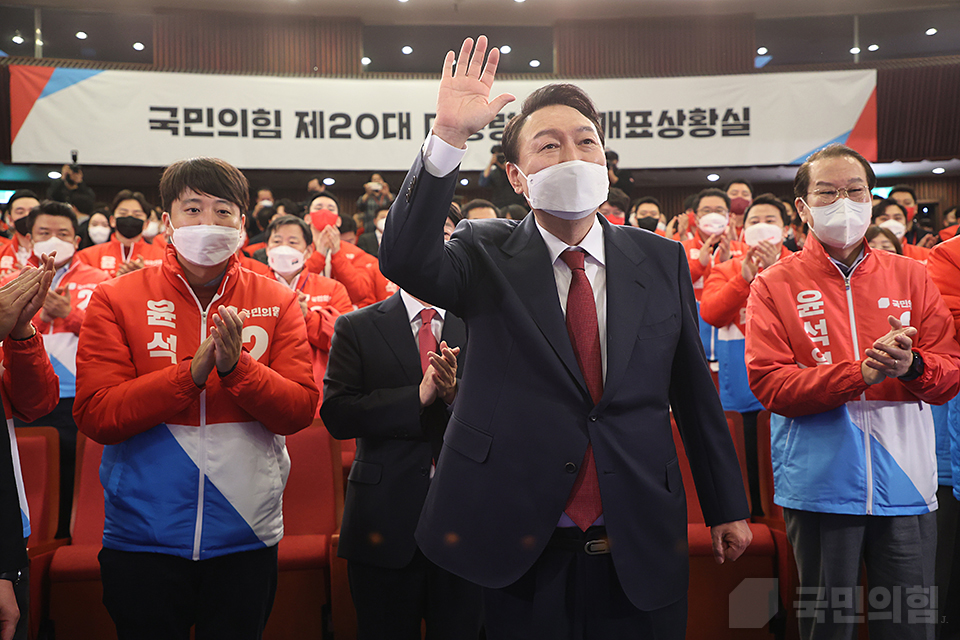
- Yoon Seok-yeol, the power of the people, was elected in the 20th presidential election, signaling significant changes in the health care and pharmaceutical bio industries as a whole. Some keywords that are drawing attention right now are "promoting remote non-face-to-face treatment" and "the establishment of a pharmaceutical bio-control tower." Yoon Seok-yeol, elected candidate, previously announced the advancement of the industry by promising to start telemedicine in earnest and establish a pharmaceutical bio-innovation committee directly under the Prime Minister during the election process. Yoon, who confirmed his election on the 10th, predicted health care and pharmaceutical bio policies to be implemented as president over the next five years. Yoon has pledged several health care policies differentiated from the Moon Jae In government. Yoon said he would improve and upgrade temporary telemedicine to the "realization of non-face-to-face treatment" stage through regulatory reform, and resolve the health insurance bomb problem through Moon Jae In Care reform. The pharmaceutical bio industry also declared securing super-gap technology. This is why attention is drawn to specific movements surrounding the pharmaceutical bio-innovation committee directly under the Prime Minister. Pledges related to pharmacist and pharmacy management were relatively dim, but just before the presidential election, the Korean Pharmaceutical Association and the people's power subrogation signed a policy agreement to form a consensus on the long-cherished desire of pharmacist society. ◆ Telemedicine in earnest= Yoon plans to expand digital healthcare through service innovation and introduction and support of a private business revitalization system. In particular, it announced the expansion of non-face-to-face treatment pilot projects for islands, mountainous areas, and the underprivileged. Yoon narrowed down telemedicine to "a reality that we should accept." The vision is to implement policies that do not conflict interests between the medical community and non-face-to-face care providers seeking new innovations so that everyone can enjoy innovative systems and high-tech benefits in the field of non-face-to-face care. Non-face-to-face treatment, which was temporarily allowed due to the prolonged COVID-19 Pandemic, had a significant impact on the pharmacy industry as well as front-line hospitals and clinics. After non-face-to-face treatment, a platform dedicated to non-face-to-face preparation and drug delivery has been industrialized, and drug delivery applications have been activated. If elected Yoon begins non-face-to-face treatment in the future, the drug delivery platform is also expected to continue to grow. In the process, attention is expected to be paid to whether elected Yoon will be able to establish and promote a reasonable non-face-to-face treatment policy to minimize conflicts with the medical community and the pharmaceutical society. ◆The establishment of the Pharmaceutical Bio Innovation Committee Yoon also issued a blueprint to create new native blockbuster drugs and build a global vaccine hub by establishing a pharmaceutical bio-innovation committee directly under the Prime Minister. It plans to significantly strengthen national R&D support so that it can protect the lives and health of the people by establishing sovereignty over pharmaceutical bio. In addition, Yoon promised to create an ecosystem that can cultivate key talents in the pharmaceutical bio industry and create jobs to grow the national economy and realize a pharmaceutical bio powerhouse. Accordingly, the pharmaceutical bio industry seems to expect a lot of administrative and financial support from elected Yoon. The KPBMA has been urging the pharmaceutical industry to strongly support the pharmaceutical industry by establishing a direct presidential organization to establish sovereignty over vaccines and drugs since 2017. Shortly after candidate Yoon was elected, the KPBMA demanded again to specify the establishment of an organization directly under the Prime Minister. The association believes that the way to establish health security and find a way to create new national wealth is to foster the pharmaceutical bio industry. Yoon also expressed sympathy for the pharmaceutical industry's opinion. Depending on when and how the Pharmaceutical Bio Innovation Committee will start its activities, national policy directions such as pharmaceutical bio R&D, policy financing, tax support, regulatory reform, and manpower training are expected to materialize.
- Company
- Roche,set to establish a Korean precision medical ecosystem
- by jung, sae-im Mar 13, 2022 08:01pm
- Roche Korea announced on the 7th that it has signed term sheet with the KSMO to form a partnership with four organizations, including the KCSG, NCC, and the KHIDI, to establish a Korean precision medical ecosystem. Turnsheet is the process of specifying and agreeing on major contract conditions such as goals, scope of cooperation, roles and responsibilities by institution prior to partnership contracts. It is an extension of the Memorandum of Understanding (MOU) signed by these institutions and companies earlier. With the signing of termsheet, they plan to conduct KOSMOS II, an expanded study of the KOSMOS Study on genomic mutation-based customized drug therapy for patients with advanced solid cancer, which began in 2020. KOSMOS II is a study for the development of personalized cancer treatment, and aims to evaluate the effectiveness and stability of drugs and create a treatment platform tailored to genetic mutations by collecting NGS-based genetic test results and real world data for mid- to long-term clinical studies. Through this study, the government plans to improve patient access to genome-based customized treatment, collect and integrate genetic data and clinical data of 1,000 cancer patients to establish a national "public clinical genome database" that can be used for new drug development. The KSMO and the KCSG design KOSMOS II studies, provide customized treatment according to the results of the "Molecular Oncology Board (MTB)" and establish an actual clinical genome database. MTB is a multidisciplinary expert consultative body that recommends optimal customized treatment policies for patients by interpreting genetic test results. Society and research associations have already issued MTB treatment recommendations in December and provided customized treatment to about 100 patients in accordance with the guidelines. As a national cancer data center designated by the MOHW, the NCC provides the technology and infrastructure necessary for the development of the first clinical genome database. The KHIDI promotes cooperation with the MOHW and supports the recruitment of domestic and foreign pharmaceutical companies to participate in clinical research partnerships. Multinational pharmaceutical companies, including Roche Korea, provide research medicines and other services for patients registered in the KOSMOS II study. Meanwhile, the KSMO, the KCSG and Roche Korea signed an MOU to establish a Korean precision medical ecosystem in November 2019, strengthening the experience and expertise of domestic medical staff based on ▲ comprehensive genetic profiling and genetic tumor boards, ▲ deriving a plan to provide customized treatment for cancer patients who no longer have standard treatment options, ▲ establishment of a database within the scope of related laws and regulations in Korea, ▲ the government, academia, and pharmaceutical companies have cooperated to expand partnerships to establish a precision medical ecosystem.

- Company
- Dong-A ST submitted an appeal against patent dispute
- by Kim, Jin-Gu Mar 13, 2022 07:59pm
- AstraZeneca SGLT-2 inhibitor-based diabetes treatment ForxigaThe battle over material patent of Forxiga (Dapagliflozin Propanediol Hydrate), an SGLT-2 inhibitor-based diabetes treatment, will head to the third round. The opportunity for Dong-A ST's generic for Forxiga to release is also expected to vary depending on when and how the Supreme Court decides. ◆ Dong-A ST, a letter of appeal was submitted According to the pharmaceutical industry on the 7th, Dong-A ST objected to the patent court's ruling on material patent of Forxiga and filed an appeal on the 4th. Battle over the patent is now finalized by the Supreme Court. The key is whether the Supreme Court ruling will be made before April next year, the expiration date of this material patent. From Dong-A ST's point of view, the generic for Forxiga can only be released a day earlier than other generic companies only if it is ruled in favor of the Supreme Court before April next year. If the Supreme Court loses or a ruling is made after April next year, the opportunity for Dong-A ST's exclusive early launch of the generic product will disappear. At this time, the remaining 14 companies that succeeded in overcoming another material patent and received general for excellence will have an opportunity to release the generic early. ◆ According to the Supreme Court's ruling, 14 generic companies may dominate the market The reason why the number of cases is so complicated is that AstraZeneca has double-registered Forxiga material patents. AstraZeneca has registered two material patents: "C-aryl glucoside SGLT2 inhibitor (expired on April 7, 2023)" and "C-aryl glucoside SGLT2 inhibitor and inhibition method (expired on January 8, 2024). Generics first challenged patents that expire in January 2024, which are relatively easy to overcome. 14 companies, including Kyungdong Pharmaceutical, Kukje Pharmaceutical, Daewon Pharmaceutical, Donghwa Pharmaceutical, Boryung Pharmaceutical, Samjin Pharmaceutical, Shinil Pharmaceutical, Alvogen Korea, Youngjin Pharmaceutical, Ildong, Jeil, Jong Kun Dang, and Hanwha Pharmaceutical, won all the first and won the generic for exclusivity. This patent awaits the Supreme Court ruling with AstraZeneca's appeal. Unless a reversal ruling is made by the Supreme Court, they can sell generic products when their first substance patent expires in April 2023. ◆ Dong-A ST which brought up the prodrug strategy, mixed judgment in the first and second trials In April 2018, Dong-A ST filed a passive trial against AstraZeneca to confirm the scope of rights in Forxiga's first material patent. Dong-A ST is the first in Korea to try to overcome Forxiga's material patent using the "Prodrug" strategy. Prodrug is evaluated as a different drug, such as an original drug. The original drug and chemical structure differ in some parts of the substituent until immediately before taking it after the drug is produced. However, when a patient enters the body after taking it, it has the same effect as the original drug. The salt can be converted into a simple ionic bond. The chemical structure of the substance itself does not change. Prodrug has to change the substituent in a more demanding way called covalent bonds. The chemical structure is different from the original drug. There were mixed judgments in the first and second trials on whether prodrucg could be viewed as a completely new substance. Dong-A ST won the first trial and AstraZeneca won the second trial, respectively.
- Company
- Sales of oral contraceptives rebound…4th gen Yaz sales up 2
- by Ji Yong Jun Mar 11, 2022 06:04am
- The oral contraceptive market grew greatly last year. Sales of the fourth-generation contraceptive Bayer Korea’s Yaz increased greatly, and the return of the third-generation Dong-A Pharmaceutical’s Mybora and the release of GC Pharm’s Dearmesoon had also contributed to market expansion. According to the market research institution IQVIA on the 8th, the oral contraceptive market size increased 19.6% YoY to record ₩38.4 billion last year. The oral contraceptive market grew from ₩32.8 billion in 2017 to ₩34.9 billion in 2019. In 2020, the market size reduced slightly to ₩32.1 billion but then made a rebound last year. The oral contraceptive market, which consists of hormone therapies that contain estrogen and progesterone can be categorized into 4 generations. The first-generation drugs have withdrawn from the market due to their side effects. The second-generation and third-generation drugs are being distributed at pharmacies as general drugs. In particular, third-generation drugs have minimized the side effects of second-generation drugs such as acne, body hair growth, and weight gain. Fourth-generation drugs are also effective in reducing acne but are specialty drugs that require doctors’ prescriptions as it contains drospirenone, which could cause thrombosis. The significant increase in sales of Yaz, the leading product in the oral contraceptive market, also increased the size of the overall market. Yaz’s sales rose 24.5% from the previous year to record ₩19.8 billion last year. Despite being a specialty drug, Yaz has been growing its influence in the market with its advantages in weight control and acne improvement. Also, the release of new third-generation oral contraceptives and the return of some products contributed to the market expansion. Mybora, returned to the market after a one-year gap recorded ₩1.5 billion last year. Mybora discontinued its supply in the market due to difficulty in procuring raw materials due to COVID-19 and a change in its manufacturing facility in Q4 2019. Due to this, Mybora virtually did not generate any significant sales in 2020. The company was only able to resolve the raw material issue in its local plant last year and start to generate sales in May. Dearmesoon, which was released in Q2 last year, recorded ₩0.5 billion last year. Its score was not bad for the first year in the oral contraceptive market. Clockwise from the left Mybora, Dearmesoon, Senseday, Senslibe, Mercilon, Alesse Sales of Mercilon, the lead product in the market decreased 9.5% from the previous year to record ₩7 billion last year. The return of its competitor Mybora and the release of Dearmesoon is interpreted to have led to decreased sales. Mercilon had boasted annual sales of ₩10 billion a year, but its influence had shrunk in the recent two years. In 2019, Mercilon sold ₩9.1 billion, an 8.1% reduction from the previous year, and then again dropped 15.4% in 2020 to record ₩7.7 billion. Sales of Dong-A Pharmaceutical’s Melian increased 6.1% YoY to record ₩1.9 billion last year. Sales of Pfizer’s Alesse were maintained at a similar level to the previous year at ₩1.8 billion.
- Company
- Global lead Humira’s sales drop... biosimilars occupy 16%
- by Chon, Seung-Hyun Mar 11, 2022 06:04am
- The ₩200 billion autoimmune disease market has finally revealed its form in Korea. The growth of the global leading product ‘Humira’ had fallen somewhat due to the introduction of its biosimilars. The 5 biosimilars by domestic companies Celltrion, Samsung Bioepis, LG Chem, etc. are also increasing their influence in the market, but their total market share remains in the 10% range. ◆ TNF-α inhibitor market shrinks for the first time… aftermath of Humira’s drug price cut According to the market research institution IQVIA on the 9th, sales in the domestic TNF-α inhibitor market was ₩233 billion, a 0.4% decrease from the previous year. TNF-α inhibitors are antibody drugs that suppress the expression of tumor necrosis factor TNF alpha in the body and are prescribed for autoimmune diseases such as rheumatoid arthritis, Crohn's disease, and ulcerative colitis. Products from multinational pharmaceutical companies such as Humira, Remicade, Simponi, Enbrel, and Enbrel Myclic are leading the market, and biosimilars from domestic companies such as Celltrion, Samsung Bioepis, and LG Chem have also thrown their hats into the market. This is the first year the domestic TNF-α inhibitor market’s size had shrunk. The market had continued to show high growth every year since making a twofold growth in 6 years from ₩120.2 billion in 2014 to ₩233.9 billion in 2020. However, the market showed sluggish growth after 2018, when it recorded a 23.2% YoY growth, then grew 11.2% and 4.5% respectively in 2019 and 2020. The market turned downwards for the first time last year. The recent sluggish market growth of the TNF-α inhibitor market is due to the sluggish sales of the lead product in the market - Humira. Humira sold ₩91.2 billion last year, a 12.3% decrease from the previous year. This is the first time Humira’s sales fell compared to the previous year. Since its release in 2006, its sales rose every year to exceed ₩100 billion for the first time in 2020 but then fell to a record ₩90 billion the next year. The sales decline is due to the introduction of biosimilars. Samsung Bioepis had registered its Humira biosimilar ‘Adaloche’ in May last year and released it in the domestic market. In principle, the insurance price cap of original drugs falls 30% with the introduction of biosimilars under the Korean drug pricing system. Humira’s price had been reduced by 30% from June 7th last year. With the price cut, prices of three drugs - Humira Pen inj. 40mg/0.4mL, Humira Prefilled syringe inj. 40mg/0.4mL, Humira inj. 40mg vial fell 30% from ₩411,558 to become ₩288,091, and Humira Prefilled syringe inj. 20mg/0.2mL fell from ₩224,002 to ₩156,801. Humira recorded ₩27.5 billion in sales in Q1 last year but dropped 24.9% to record ₩20.7 billion in just the one quarter since. Humira then made some recovery to ₩21.1 billion and ₩21.9 billion in Q3 and Q4 but wasn’t able to recover from the impact of their price cuts. Sales of other TNF-α inhibitor products of multinational pharmaceutical companies such as Janssen’s Remicade and Simponi, Pfizer’s Enbrel, and Enbrel Myclic have shown a continuous increase. ◆ Domestically developed similars make ₩36.8 billion... twofold increase in 4 years but occupy only around 10% of the market Although domestic biosimilar products are gradually expanding their market share in the TNF-α inhibitor market, their market influence is still not large. Starting with Celltrion’s Remisa, domestic products such as Samsung Bioepis’s Etoloce, Remaloce, Adaloche, and LG Chem’s Eucept have currently entered the TNF-α inhibitor market. Remsima and Remaloce are Remicade biosimilars. Originals of Adaloche and Eucept are Enbrel. Adaloche is Humira’s biosimilar. Last year, sales of the 5 TNF-α inhibitor biosimilars increased 13.9% from the previous year to record ₩36.8 billion. This is over a twofold increase in 4 years from the ₩18.2 billion in 2017. Remsima, which first appeared in 2013, is leading the growth of biosimilars. Remsima's sales last year were ₩24.4 billion, up 9.8% from the previous year. Remsima’s sales decreased 12.0% from ₩25.3 billion in 2019 to ₩22.2 billion the following year, then made a rebound last year. Biosimilars of Samsung Bioepis and LG Chem barely make less than ₩50 billion in annual sales. Samsung Bioepis’ Etoloce recorded ₩3.9 billion in sales last year, down 0.8% from the previous year. It recorded a high growth rate from the ₩700 million in 2017 to ₩2 billion in 2018, then to ₩4 billion in 2020, but then sales stalled the last year. Remaloce’s sales increased 10.1% from the previous year to record ₩3.6 billion but did not significantly influence the total market. LG Chem’s Eucept had also shown 30.7% growth in the market recording ₩3.6 billion in sales but did not exert much influence in the market. The 5 domestically developed biosimilars in the TNF-α inhibitor market only was able to occupy 15.8% last year. In 2020, its sales grew 13.8%, a slight increase, which is in stark contrast to its big success made in Europe and the US. In Korea, the difference in the insured drug prices between original drugs and biosimilars is not large, therefore the latecomers cannot penetrate the market as quick as in Europe or the United States. Some analysts say that it is not easy overcome the trust in original drugs with biosimilars that have been established for a long time as the drugs are used in critically ill patients.
- Company
- MSD’s 15-valent vaccine ‘Vaxneuvance’ comes to Korea
- by Eo, Yun-Ho Mar 10, 2022 05:54am
- MSD aims to challenge the dominance of ‘Prevenar 13’ in the domestic pneumococcal vaccine market. According to industry sources, MSD Korea has submitted an application and is being reviewed for the marketing authorization of its 15-valent pneumococcal vaccine ‘Vaxneuvance,' and may be approved within the year. If released, Vaxneuvance will compete with Pfizer Korea’s 13-valent pneumococcal vaccine Prevenar 13, the leading product in the field that has an overwhelming share of the market. Vaxneuvance, which is a 15-valent pneumococcal conjugate vaccine, induces active immunization for the prevention of invasive pneumococcal disease caused by streptococcus pneumoniae serotypes 1, 3, 4, 5, 6A, 6B, 7F, 9V, 14, 18C, 19A, 19F, 22F, 23F and 33F. The vaccine can be used in adults 18 years of age. MSD is also undergoing clinical trials on pediatric patients. In the clinical trial, Vaxneuvance was non-inferior to Prevenar 13 (PCV13) for the 13 shared serotypes as assessed by opsonophagocytic activity (OPA) Geometric Mean Titers (GMTs). Also, its immune responses were superior to Prevenar 13 shared serotype 3 and for the two serotypes unique to Vaxneuvance, 22F and 33F. Ratio 1.62 (95% CI 1.40, 1.87)]. In particular, in the Phase III PNEU-AGE (V114-019) trial, Vaxneuvance demonstrated greater OPA GMT ratios for serotypes 22F and 33F. However, randomized controlled trials assessing the clinical efficacy of Vaxneuvance compared to Prevenar 13 have not been conducted. Vaxneuvance holds significance in demonstrating its effect in preventing serotypes 22F and 33F, the common serotypes that cause invasive pneumococcal disease (IPD) in adults. Serotypes 22F and 33F are not contained in Prevenar 13. Meanwhile, Pfizer had also developed a follow-up product for its Prevenar13. Last year, the US FDA approved Pfizer’s marketing authorization for its 20-valent pneumococcal conjugate vaccine, ‘Prevnar 20.’
- Company
- The sales of Prolia & Evenity exceed ₩100 billion
- by Mar 10, 2022 05:53am
- From the left, Amgen Prolia and EvenityAmgen has opened an era of 100 billion won in the osteoporosis treatment market. Sales of the two products are increasing rapidly as sequential treatments leading to Evenity-Prolia are being put forward. According to IQVIA, a pharmaceutical research institute, sales of Amgen's osteoporosis treatment, Denosumab, stood at 92.1 billion won last year, up 22.7% from 75.1 billion won a year earlier. Sales of another treatment, Evenity, increased 220.3% from 3.8 billion won in 2020 to 12.3 billion won last year. The total sales of the two products amounted to 104.4 billion won. Amgen introduced Prolia in Korea through GSK in 2014 and has been devoted to the osteoporosis treatment market by recovering its copyright in 2016. By actively selling Prolia in partnership with Chong Kun Dang, sales surged from 3.7 billion won in 2017 to 14.3 billion won in 2018 and 47.3 billion won in 2019. Prolia, which entered the 70 billion won range in 2020, reached 92.1 billion won last year, approaching the entry of 100 billion won blockbuster drugs. Prolia, a bone absorption inhibitor, has become the first standard treatment therapy for osteoporosis with superior effect and convenience of administration than the previously widely used bisphosphonate (BP). Bisphosphonate formulations are tricky, such as taking sufficient amounts of water and not lying down for at least 30 minutes after taking them on an empty stomach 1-2 hours before meals. In addition, it was difficult for patients to continuously take medicine because side effects such as gastrointestinal disorders could occur when used for a long time. Prolia only needs to be administered once every six months. Even after 10 years of long-term treatment, the effect of continuous bone density improvement and consistent safety profile were confirmed. As Prolia has become a standard treatment, all BP drugs are on the decline. Lilly's Forsteo, once called the strongest in the market, saw its sales fall 24.8% from 17.1 billion won in 2020 to 12.9 billion won last year. During the same period, Daewoong Pharmaceutical's Dowong Zoledronic Acid Inj also fell 12.9% from 11.2 billion won to 9.8 billion won. MSD's Fosamax products maintained sales from 12.2 billion won to 12.1 billion won. Amgen's new osteoporosis treatment Evenity approved in June 2019 is also cruising. Evenity, which raised 3.8 billion won in 2020, has been listed since last year and surpassed 10 billion won at once. Evenity is the first osteoporosis treatment that has both the effect of "promoting bone formation" and "suppressing bone absorption." It is a mechanism that stimulates mature osteoblasts and promotes bone formation by activating tissue osteoblasts, while also acts as a regulator of osteoblasts to suppress bone absorption. AACE/ACE recommend using Evenity from the initial treatment of ultra-high risk groups with a high risk of fracture. Amgen is proposing a "sequential treatment" strategy that treats patients with high risk of fracture with Prolia after one year of treatment with Evenity. By emphasizing the importance of continuous treatment of osteoporosis, it is intended to establish an environment in which patients can be treated with Prolia for a long time. Domestic societies such as the KSBMR are also carrying out various activities such as policy symposiums and revision of medical guidelines to improve awareness of osteoporosis. It is also worth noting whether Prolia and Evenity will expand their benefit range. Currently, the administration period of osteoporosis drugs is based on the bone density level of T-Score. Benefits are recognized only for patients with T-Score -2.5 or less. If the level is higher than -2.5 in follow-up observation one year after administration of the treatment, the salary is no longer recognized. Evenity can also be reimbursed when bisphosphonate is used first and then used as a secondary drug, especially T-Score -2.5 or less and two or more osteoporosis fractures must be met. In response, it is pointed out that Evenity should be used as the primary drug and improved so that it can be used even if a fracture occurs once. If the standards of Prolia and Evenity are expanded in the future, the two products are expected to face another turning point in sales.

- Company
- Why the Patent Court rejected the ‘prodrug strategy’
- by Kim, Jin-Gu Mar 10, 2022 05:53am
- Dong-A ST is challenging the substance patent of AstraZeneca’s SGLT-2 inhibitor antidiabetic treatment ‘Forxiga (dapagliflozin).’ The industry’s eyes are focused on Dong-A ST’s challenge, with the expectation that Dong-A ST’s success would bring a new strategy that can overcome the substance patent of originals. However, Dong-A ST’s attempt has been put to a stop by the Patent Court of Korea. The final decision will be made by the Supreme Court, but attention is focused on why the Patent Court of Korea overturned the first instance court's ruling and ruled in favor of AstraZeneca in its appeal against Dong-A ST. ◆ "Clear difference between the original drug and prodrug” judged in both the first and second trials According to the ruling on the 28th, the Patent Court of Korea ruled in favor of AstraZeneca on the grounds that the principle of action between the original substance of Forxiga and Dong-A ST's prodrug was the same. Pro-drug is a ‘pro’ drug that is considered a similar but different drug from the original drug. Its chemical structure is partially different in the substituents with the original drug from its manufacture to immediately before administration. However, once administered, the drug shows the same effect as the original By principle, it sounds similar to salt-modified drugs, but the difference Is clear. The salt can be changed through simple ion bonding. Its chemical structure itself does not change. However, prodrugs change the substituents through a more difficult covalent binding method. It has a different chemical structure to the original drug. The first and the second court both made the same judgment on whether the prodrug could be considered a completely new substance. Both the Intellectual Property Trial and Appeal Board (IPTAB) and the Patent Court of Korea interpreted Dong-A ST’s prodrug as a completely different substance to the original substance. The IPTAB judged that the “difference in chemical structure is clear, therefore, Dong-A ST’s prodrug is outside the scope of rights held by Forxiga’s patented invention.” ◆ Patent Court of Korea “a skill that can be easily conceived by an ordinary skilled person" However, the two courts' rulings differed in the ‘ease of substitution issue.’ The courts made different judgments on whether an ordinary skilled person in the industry may easily produce Dong-A ST’s prodrug. While the first court judged that developing the prodrug was not easy, the second instance court judged that it "was a substance anyone with ordinary skills in the industry could produce.” The evidence AstraZeneca submitted for the appeal played an important role in the ruling. The Patent Court of Korea explained, “the specific form of ‘formate ester’ that Dong-A ST used to develop its Forxiga prodrug has been found in various literature.” ◆Deleted ‘produg’ in the patent registration process …Court decides it was “common practice" at the time Dong-A ST appealed using the fact that the term ‘prodrug’ was deleted in the process of AstraZeneca’s patent registration. In fact, when AstraZeneca first filed the substance patent for Forxiga in 2006, it listed its scope as “compounds with chemical structural formula I, or other pharmaceutically acceptable salt or stereoisomer, or prodrug ester thereof.” However, the prodrug part was deleted after the first patent claim was rejected by the Korean Intellectual Property Office. The final patent registered specifies the scope as “compounds with chemical structural formula I, or other pharmaceutically acceptable salt or stereoisomer,” without the prodrug part. Dong-A ST claimed that the deletion of "prodrug esters" from the claim indicates the waiver of those rights on the company’s part. However, the Patent Court of Korea turned down the claim. The court judged “AstraZeneca did not consciously delete the part, and “it was KIPO's practice at the relevant time not to allow the term "prodrug" in patent claims for formal reasons.” ◆Up to the supreme court…’ strategy to overcome substance patents of original drugs’ at a crossroad Dong-A ST expressed dissent at the Court’s decision and filed an appeal. The case will therefore be judged by the Supreme Court. If the Supreme Court determines that there is a problem with the second trial ruling, the patent strategy of the entire domestic pharmaceutical industry may be revised. Like Dong-A ST, other companies will opt to challenge the substance patent of original drugs using the prodrug strategy. On the other hand, if the Supreme Court confirms the judgment of the second instance court, the substance patent of original drugs may continue to remain impenetrable.
- Policy
- Omicron's fatality rate is at the level of flu
- by Lee, Jeong-Hwan Mar 10, 2022 05:53am
- The quarantine authorities analyzed that if the COVID-19 vaccine is completed up to the third round, the fatality rate of Omicron mutation will be 0.07%, which is similar to that of the seasonal flu fatality rate (0.05 to 0.1%). In particular, the fatality rate for those under the age of 60 who completed the third vaccination was 0%, while the fatality rate for those who were not vaccinated was 0.6%, more than six times that of the seasonal flu. The quarantine authorities explained that they are considering a medical site proposal for recognizing rapid antigen testing as the final confirmation, and that the KDCA will make a separate announcement once it is concluded. Central Disaster and Safety Counters Headquaters made this announcement at a regular briefing on the 8th. The quarantine authorities analyzed and announced the fatality rate and vaccination effect of Omicron. According to an analysis of 135,000 people who completed mutation analysis from April last year to February this year, the fatality rate of Omicron among those who completed the third inoculation was 0.07%. This means that the tertiary vaccination lowers the Omicron fatality rate to a level similar to the seasonal flu fatality rate of 0.05 to 0.1%. Those under the age of 60 who completed the third vaccination had a fatality rate of 0%. However, the fatality rate for non-vaccination was analyzed to be 0.6%, and if not vaccinated, the fatality rate of Omicron was more than six times that of the seasonal flu. The explanation is that the difference in accuracy is not significant as the kit's own inspection ability is measured based on the standardized method of sampling in the approval process of the Ministry of Food and Drug Safety. The quarantine authorities added that in reality, the expert's sample collection method is more accurate than the general public, so it is reflected to some extent in the final accuracy and it is difficult to produce statistics on how significantly the accuracy of experts' sample collection increases the accuracy of rapid antigen testing. Son Young-rae, head of the social politics team, said, "The accuracy of the expert rapid antigen test and personal diagnostic kit is almost the same," adding, "However, in the actual field, the expert's collection method is more accurate than that of individual citizens, so the accuracy increases." It's hard to infer how much more statistically accurate it is," he said. The KCDA is currently reviewing the plan to recognize rapid antigen testing as a final confirmation, Son said. "We are considering all measures considering the accuracy and prevalence of the test."
