
- LOGIN
- MemberShip
- 2026-05-16 15:57:02
- Company
- Largest shareholder of Medipost changed to a private equity
- by Chon, Seung-Hyun Mar 18, 2022 05:55am
- View of Medipost HQ The largest shareholder of the bio venture company Medipost will be changed from the founder and CEO Yoon-sun Yang to a private equity consortium. Medipost plans to receive an investment of approximately ₩140 billion from a private equity fund to invest in its cell and gene therapy business. On the 17th, Medipost announced that it had signed an investment agreement worth ₩140 billion with Skylake Equity Partners and Crescendo Equity Partners. Under the agreement, Medipost will issue a paid-in capital increase through a third-party allotment worth ₩70 billion to Skylake and Crescendo. A total of 374,314 shares will be newly issued. Medipost will issue registered non-guaranteed private Equity Convertible corporate bonds worth ₩35 billion each to Skylake and Crescendo. Skylake and Crescendo etc. will be investing ₩140 billion just in paid-in capital increase and convertible bonds alone. Medipost’s largest shareholder had been CEO Yoon-sun Yang, who had owned 1,001,002 shares (6.16%). However, with the capital increase alone, the number of shares owned by Skylake and Crescendo exceed the number owned by CEO Yang, thereby changing the largest shareholder of the company. In addition, Yang had transferred 400,000 shares to Skylake, etc. at ₩90 billion. When the conversion of convertible bonds to common stocks is complete in addition to the paid-in capital increase the shares bought, Skylake, etc. will own 32.7% of Medipost’s shares. In total, Skylake, etc. is investing ₩230 billion for the acquisition of Medipost shares. Medipost plans to invest ₩85 billion of the secured funds in gene cell therapy CDMO company based in the North American region. Currently, Medipost is in exclusive negotiations with a CDMO company to sign an investment agreement within May this year. The company plans to invest 55 billion won in clinical trials conducted for the osteoarthritis treatment Cartistem and SMUP-IA-01 in the US to accelerate its entry into the US osteoarthritis treatment market. Medipost has pointed to the CDMO business for gene cell therapy as the optimal new The company expects that the business will serve as a production base that can produce and supply clinical regents for Cartistem and SMUP-IA-01 in the US, as well as efficiently manage the manufacture and supply of the company’s products after marketing approval. A Medipost official said, “This funding is significant in that we were able to secure a shareholder who can actively support overseas businesses, based on which we could aggressively promote businesses overseas and maximize corporate value.” An official from Skylake said, “We evaluated Medipost's global potential for global expansion highly as the company owns world-class stem cell screening and culture technology and promising stem cell therapies such as Cartistem, and decided to invest in the company in consideration potential and synergy that will be made with the global cell gene therapy CDMO business and growth." An official from Crescendo said, “We decided to invest in Medipost because we were confident that Medipost could grow into a global champion with Crescendo's overseas business experience and global network, including our ties in the US.” Skylake and Crescendo’s investment will be safeguarded in a depository for one year.
- Company
- Multinational pharmaceutical companies are changing logos
- by Mar 18, 2022 05:55am
- Organon Korea returns after 13 years of absence with a new logo, "Women's Health" starts anew. Multinational pharmaceutical companies are trying to transform their image with new logos. Pfizer entered the unexplored area of mRNA and changed its logo in about 70 years. Sanofi also emphasized "one Sanofi" as an integrated brand logo. Analysts say that multinational pharmaceutical companies are expressing the spirit of science and innovation with new logos as they jump into areas where it is difficult to develop treatments. Sanofi-Aventis Korea announced on the 15th that it will remove the separate brands attached to each division and merge them into a single brand. Until now, the vaccine division has been called Sanofi Pasteur and the specialty care division has been called Sanofi Genzyme. In the future, Pasteur and Genzyme will be excluded and all will be integrated into "Sanofi." However, the existing corporations divided into Sanofi-Pasture and Sanofi-Aventis are not integrated. Old Sanofi logo (left) and New logo (right) The intention is to unite distributed brands and present common goals and identities. Founded in 1973, Sanofi has included companies it has acquired, including Sanofi-Synthelabo, Aventis, and Genzyme, in its business team brand names. Then, in 2019, it announced the improvement of the constitution of the new drug pipeline and began to change. It will boldly give up pipelines with poor growth engines such as chronic diseases and invest heavily in new growth fields such as immunity, rare diseases, and nervous system diseases. In other words, Sanofi's four business units ▲ Sanofi Pasteur (vaccine) ▲ Sanofi Genzyme (specialty care) ▲ General Medicine ▲ Consumer Healthcare is a plan to integrate and expand Pasteur and Genzyme. The logo has also been transformed as part of the first brand integration in Sanofi's history. The new shape, which means innovation, adaptation, and growth, has changed the existing logo, which used to form a circle, to a lowercase logo with two purple dots at the beginning and end of the name. The new logo is inspired by the simple yet dynamic nature of the tech industry. The purple dot on S means the starting point for asking the question What if? The purple dot of i is the end point that results in the discovery of innovative solutions. The new logo represents Sanofi's scientific journey from the starting point to the ending point. Sanofi said, "In the future, we will think and move as a company under a new and common purpose and identity," adding, " we hope the new integrated brand unveiled this time will serve as an opportunity to inform employees, partners, medical experts and patients of Sanofi's identity and orientation." The old Pfizer logo (left) and the new logo (right) Pfizer, which is improving its constitution to develop innovative new drugs, also introduced a new logo for the first time in 70 years. The pill-shaped oval background, which has been representative of Pfizer, has been boldly discarded. The new logo represents a double helix with two tones of blue bands symbolizing Pfizer. This means that the substance of double helix is revealed by unlocking the original pill form. The logo extending upward conveys an upward movement, and the rotating form means "reversing the old reality for innovation." Pfizer, which planned to spin off its patent expiration division and change its logo, finally selected a design produced by Brooklyn Studio Team in the U.S. Just in time, Pfizer succeeded in transforming its image by introducing the COVID-19 vaccine. Pfizer, which commercialized the mRNA-based vaccine for the first time, has also drastically trimmed its pipeline to suit the new logo. It has begun to develop mRNA-based drugs in earnest. mRNA-based drugs are a new mechanism that has just begun commercialization, and there are still many unexplored areas. Old organon logo (left) and new logo (right) Organon, which was spun off from MSD, has started to break away from its past image with a new logo. Founded in the Netherlands in 1923, Organon is the place where the early substance of the immuno-cancer drug Keytruda was developed. It has a history of being absorbed into MSD through a merger with Schering-Plough. About 10 years later, it was separated from MSD again and reborn as an independent corporation. Organon, which focused on women's health in the past, focused on three areas: women's health after independence, chronic diseases, and biosimilars. The name Organon Korea is the same, but it changed the logo in the sense of starting anew. Unlike the old logo, which was a turquoise oval band, the new logo has a circular point in green, blue, and sky blue and a scarlet dash pattern forming a geometric pattern. The central dot means women's health, and the surrounding dots indicate that the company is paying attention to various environments that affect women's health. The dash pattern contains a commitment to improving human life, a vision for a healthier life for all women, and a mission to supply meaningful medicines. The geometric pattern created by gathering dots and dashes means that the company's appearance today and its vision for tomorrow communicate and integrate with each other. Organon Korea said, "In the past, Organon Korea has also made a lot of innovations in women's health," adding, "The new Organon Korea will provide new solutions for women's health, which was relatively unmet."
- Company
- Same ‘one-shot’ but different? Zolgensma reimb slow
- by Eo, Yun-Ho Mar 17, 2022 05:59am
- Although both drugs are from the same pharmaceutical company and are both one-shot, high-priced drugs, the two drugs are showing a stark difference in their results. Discussions on the reimbursement listing for Novartis Korea’s Zolgensma (onasemnogene abeparvovec) is not progressing so smoothly. The company had applied for the reimbursement listing of its Spinal Muscular Atrophy (SMA) treatment Zolgensma in May last year through the approval-benefit appraisal linkage system, but the agenda has not been deliberated by the National Health Insurance Service DREC until now. As it is a rare disease drug, the Drug Reimbursement Standard Subcommittee must set reimbursement standards, and the drug pass DREC deliberations to receive reimbursement. According to industry sources, the government had numerously requested data supplementation to the company, upon which the company repeatedly submitted additional data. Originally, drugs should receive DREC deliberations within 150 days of submitting an application under the National Health Insurance Act, but this period has long been exceeded. This is different from the results made for the company’s new CAR-T therapy ‘Kymriah (tisagenlecleucel).’ Kymriah has passed DREC deliberations last January. Last month, Yong-Myung Jang, HIRA’s Director of Development at the Health Insurance Review and Assessment Service (HIRA) mentioned Zolgensma at a press meeting with the Special Press Corp last month, raising hopes on the progress to be made for Zolgensma. Director Jang said, “We have collected opinions from the society, experts, and held an expert advisory meeting to discuss its clinical use. DREC deliberations are in the way for the drug.” However, Zolgensma was not on the list for deliberations in February. Meanwhile, Zolgensma is a gene therapy that contains a genetic material that functionally substitutes defective genes. The Ministry of Food and Drug Safety approved Zolgensma as the second advanced biologic product after Kymriah. Advanced biopharmaceuticals are cell therapies or gene therapies that use live cells, tissues, or genetic material as ingredients. Under the ‘Safety and Support Act for Advanced Regenerative Medicine and Advanced Biopharmaceuticals,’ advanced biopharmaceuticals can receive differentiated safety management including long-term follow-up studies and support for R&D and product commercialization. Despite being a one-shot treatment, the price of the single shot costs 2.5 billion won in the U.S. and 1.89 billion won in Japan. Due to the high price, the listing process for Zolgensma in Korea is also expected to walk a rocky road However, expectations for its efficacy are very high. The Phase III SPR1NT and STR1VE-EU results for Zolgensma that was presented recently gained much attention. In the SPR1NT study, all pediatric SMA patients with two SMN Type 2 gene copies (Cohort 1) that were treated presymptomatically survived without requiring ventilatory or nutritional assistance and achieved sitting independently for 30 seconds or more. Most (11/14) patients achieved age-appropriate motor milestones within the World Health Organization (WHO) window of normal development. In the STR1VE-EU study, most pediatric patients (82%) that were treated with Zolgensma, including those with severe SMA, achieved motor milestones unseen in the natural history of SMA Type 1. An official from the company said, “Patients and their families are longing for the prompt reimbursement of Zolgensma. We are working closely with relevant ministries so that we can receive reimbursement as soon as possible and not deprive the opportunity for patients desperately waiting to be treated with Zolgensma.”
- Company
- Molnupiravir can be supplied on the day of approval
- by Mar 17, 2022 05:58am
- MSD is trying to contribute a lot to overcoming the COVID-19 pandemic. Molnupiravir is fully prepared to be supplied on the same day as soon as it is approved. Kevin Peters, CEO of MSD Korea, made the remarks at a press conference held on the 16th. MSD developed the COVID-19 treatment Molnupiravir last year and received the U.S. Food and Drug Administration (FDA) EUA in December of that year. This is the second COVID-19 treatment after Pfizer's Paxlovid. 13 countries, including the UK, Japan, Australia and Taiwan, approved the use of Molnupiravir. The WHO has included Molnupiravir as a treatment option in the revised COVID-19 treatment guidelines. In November last year, MSD also applied for EUA of Molnupiravir to the MFDS. However, it has not been approved even after about three months. This is in contrast to the approval of Paxlovid, which filed an application at the same time, in about a month. Some point out that Molnupiravir's effectiveness fell short of expectations as a result of clinical trials. In phase 2/3 conducted by MSD, Molnupiravir reduced hospitalization and death risk by about 30%. Paxlovid had up to 89% effect in its own clinical practice. For this reason, the FDA advisory committee also considered whether to approve Molnupiravir. Although they managed to recommend approval, 10 people, or 40%, opposed it. Regarding the progress of approval of Molnupiravir, CEO Peters said, "I think both vaccines and treatments should provide as many options as possible to effectively overcome the pandemic." Molnupiravir is used in many countries around the world, contributing a lot to treatment, he said. He then said, "MSD is cooperating as much as possible so that Molnupiravir can be used quickly," adding, "What I can promise is that it can be supplied immediately as soon as approval is given. We are fully prepared to supply it from the day of approval."
- Company
- Verzenio makes "bid with verified data” against Ibrance
- by Mar 17, 2022 05:58am
- The breast cancer treatment ‘Verzenio’ is working hard to expand its market. Although it is a latecomer in the CDK 4/6 inhibitor market, Lilly is showing confidence that it can bring different results from other previous treatments. In fact, Verzenio is pioneering the base of use of CDK4/6 inhibitors from metastatic breast cancer to early breast cancer based on its powerful data. The cyclin-dependent kinases (CDK) 4/6 inhibitors that control cell division and growth selectively inhibit the proliferation of cancer cells. The drugs target human epidermal growth factor receptor 2 (HER2)-negative advanced or metastatic breast cancer, which accounts for 60% of all breast cancers. The drug that had opened the door to the CDK 4/6 inhibitor market was ‘Ibrance (Palbociclib).’ After it was introduced in August 2016, the drug became namely ‘the' breast cancer treatment. In this sense, the market was formidable for the latecomer Verzenio (abemaciclib), which was approved in May 2019, because of the solid position established by Ibrance during the past three years. Also, the misconception that “all CDK4/6 inhibitors are same” and the introduction of the third CDK4/6 inhibitor,‘ Kisqali (ribociclib),' had intensified competition in the market. However, Lilly is showing extreme confidence in Verzenio. In an interview with Dailypharm, Jihee Kim, a Sr. Brand Manager for Verzenio at Lilly Korea, said, “Verzenio has shown consistent effect regardless of the patient's menopausal status, and extended overall survival (OS) in patients who were known to have a relatively poor prognosis. Its molecular structure is slightly different from the other two drugs, which makes differences in efficacy, side effects, and administration period. This is why Verzenio is preferred in treating patients with poor prognosis." Results of the MONARCH-2 trial that allowed for the approval of Verzenio showed that the use of the Verzenio+fulvestrant combination demonstrated a significantly longer median overall survival (OS) of 46.7 months compared to the median OS of 37.3 months with fulvestrant monotherapy. The primary endpoint, median progression-free survival (PFS) was 16.4 months vs 9.3 months. Significant results were also obtained from its sub-analysis. Verzenio had shown consistent prolongation effects in breast cancer patients with poor prognosis such as those with liver metastasis or high-grade tumors, progesterone receptor-negative patients, and those with metastasis in other areas than the bone. These study data were also positively received by the clinical field and are making an impact. Sales of Verzenio had surged after its reimbursement listing in June 2020 (based on IQVIA), raising ₩11.2 billion last year. This is a 136% rise YoY. Its sales are still far below Iblance’s sales of ₩65.6 billion, but is considered to be a smooth start. Also, the hidden efforts of the marketing team had shone through. Sr. Manager Kim said, “Not many doctors were aware of the latecomer Verzenio at the time, and it was difficult to change the prescription pattern of the doctors as the doctors regarded all CDK4/6 inhibitors the same. To overcome this, we have actively conducted symposiums and product briefings. Among the healthcare professionals who attended our briefings, some hed given feedback that they would consider prescribing our drug to eligible patients and prescribed them. I felt proud that we were able to deliver the value of Verzenio all the way to the patient." Also, another characteristic of Verzenio is that it is the only CDK 4/6 inhibitor that does not require a "treatment holiday." CDK 4/6 inhibitors are taken for 2 years at the longest, and therefore the management of its side effects in the early stages is very important. Also, regular toxicity monitoring is essential in the early stages of administration is also essential. Other drugs have a 1-week break period after 3 weeks of administration, therefore when these drugs are discontinued due to side effects, this period is extended, causing difficulties in toxicity management. On the other hand, management of the daily-taken Verzenio is much simpler. If a side effect arises, the patient may temporarily discontinue taking the drug and restart use after dose adjustments or the same dose as needed. Verzenio can also expand the field covered by CDK4/6 inhibitors, as it has acquired positive data in early breast cancer. Verzenio achieved its primary endpoint in an average follow-up period of 15.5 months as adjuvant therapy in patients with early HR+/HER2- breast cancer. Although its indication has not been extended to breast cancer in Korea yet, expectations are high among HCPs in the field on the use of CDK4/6 inhibitor in early breast cancer. Until then, it is most important for HCPs to use Verzenio in metastatic breast cancer and learn for themselves the characteristics of the drug and establish trust in the drug.
- Policy
- EUA approval of Actemra for severe COVID-19 over 2 yrs
- by Lee, Hye-Kyung Mar 17, 2022 05:58am
- Actemra can be used in severe COVID-19 patients over the age of 2. The MFDS (Director Kim Kang-rip) announced on the 15th that it approved EUA of Actemra imported by JW Pharmaceutical for severe COVID-19 patients aged two or older to prevent a shortage of treatments in advance. The seriousness referred to herein refers to hospitalized patients who are receiving systemic corticosteroid and need oxygen therapy. The MFDS comprehensively reviewed related data and results of consultation with infectious medicine specialists, and decided EUA after deliberation by the Public Health Crisis Response Medical Product Safety Management and Supply Committee. Actemra is effective in treating severe COVID-19 patients and is used with EUA (USA) or permission (Europe, Japan). Actemra is an antibody drug (more than 60 minutes of intravenous administration) that has already been licensed and used as a treatment for rheumatoid arthritis in Korea. The MFDS said, "We will continue to do our best to quickly supply safe and effective products to overcome COVID-19 and restore the people's daily lives."
- Policy
- Kymriah's price negotiation has rarely been concluded
- by Lee, Jeong-Hwan Mar 17, 2022 05:58am
- Two months after passing the Drug Benefit Evaluation Committee, negotiations on drug prices for acute lymphocytic leukemia and lymphoma CAR-T treatments have rarely been concluded. Leukemia patients are urging the NHIS and Novartis Korea to strengthen Kymriah's access to patients with rapid drug price negotiations. On the 15th, Korea Leukemia Patients Organization pointed out, "Kymriah, which received marketing approval from the MFDS, passed the committee on January 13, but patients are suffering because drug price negotiations have not been concluded." Kymriah's price negotiations will begin on January 27 this year, with the deadline of March 28, considering the 60 days of negotiations. The problem is that even if negotiations have been completed so far, it is difficult to propose the Health Insurance Policy Deliberation Committee in March, and health insurance treatment of Kymriah is only possible in May when it is proposed in April. Patients who need Kymriah treatment are patients with recurrent or refractory acute lymphocytic leukemia and lymphoma without treatment, and the life expectancy is less than six months. With one treatment, Kymriah demonstrated long-term survival in 8 out of 10 patients with acute lymphocytic leukemia and 4 out of 10 patients with lymphoma. Kymriah's one-time non-reimbursed costs about 460 million won, with health insurance authorities and Novartis unable to reach a deal. After passing the Cancer Disease Review Committee and the Pharmacist Evaluation Committee, patients are appealing for a negotiation through mutual efforts between the NHIS and pharmaceutical companies. Patients suffered a lot of chemotherapy and hematopoietic stem cell transplants due to recurrence several times, the association said. "The reason why they are waiting for the one-shot treatment Kymriah is that they can no longer handle the pain." The association said, Kymriah has been registered for registration for one year, he said. "If the registration is delayed because the drug price is expensive and the number of patients is small, it is the same as denying the existence of health insurance." He then said, "We should not restrict access to Kymriah, which is much more effective than existing treatments, because it is an advanced bio-new drug." "Over the past year, about 200 leukemia and lymphoma patients have given up on Kymriah treatment and most have died. If health insurance is not applied from April after concluding drug price negotiations, a free system should be implemented."
- Company
- Drug-resistant TB drug Dovprela applies for reimbursement
- by Eo, Yun-Ho Mar 16, 2022 05:57am
- ‘Dovprela,’ the first new drug introduced in the field of tuberculosis in 50 years, is attempting reimbursement listing in Korea. According to industry sources, Viatris Korea has submitted an application for the reimbursement listing of its multi-drug resistant tuberculosis treatment, Dovprela (pretomanid). Dovprela, which was first approved in September in the US and in October in Korea, is indicated in combination with bedaquiline and linezolid to treat adult patients with extensively drug-resistant (XDR), or treatment-intolerant or nonresponsive multidrug-resistant (MDR) pulmonary tuberculosis (TB). Pretomanid is the first new drug introduced in the field in 50 years. The field of TB has been neglected by front-line pharmaceutical companies due to its lack of economic feasibility. Pretomanid was also developed by a non-profit organization, ‘TB Alliance,’ rather than by general pharmaceutical companies. The drug demonstrated its efficacy in the Phase III Nix-TB trial. Dovprela in combination with bedaquiline and linezolid (BPaL) demonstrated 92% effect in patients with treatment-intolerant or nonresponsive multidrug-resistant TB and an 89% effect in patients with extensively drug-resistant TB within 6 months and identified its potential as a new short-term combination therapy in the field. Also, it reduced the treatment period from 18-24 months to 6 months, and almost all patients with treatment-intolerant or nonresponsive multidrug-resistant TB and extensively drug-resistant TB were found to be sputum culture-negative within 16 weeks. As the first ready-to-use combination that consists solely of oral treatments, the BPaL regimen reported a 90% cure rate in patients with extensively drug-resistant tuberculosis when used for 6 months compared to the standard treatment that recommends the use of at least 4 drugs in the initial intensive phase. Meanwhile, multi-drug resistant tuberculosis is a type of tuberculosis that cannot be treated with two or more TB treatments including isoniazid and rifampicin, the two most effective anti-TB treatments due to intolerance. Its cause can be divided into primary resistance and acquired resistance. Primary resistance develops when a patient is infected with drug-resistant MTB or during the course of treatment due to arbitrary discontinuation of treatment or irregular administration, etc. The treatment success rate of multi-drug resistant tuberculosis is around 50%. In addition to this low treatment efficiency, more side effects arise with the use of second-line drugs than first-line drugs. Moreover, due to its longer treatment period of 18 to 24 months, the cost burden is high, and may even require surgical operations.
- Policy
- Expectations on Yoon Seok Yeol's government
- by Lee, Jeong-Hwan Mar 16, 2022 05:57am
- Expectations are growing for the Yoon Seok-yeol administration's policy to quickly register and expand benefits for ultra-high-priced medicines such as anticancer drugs and rare incurable disease drugs. This is the effect of Yoon Seok-yeol, the elected president of the People's Power, making a pledge to quickly register severe diseases and rare cancers and expand health insurance to reduce the burden on patients and insurers. On the 15th, pharmaceutical companies and patient groups are paying attention to the trend of changes in health insurance policies for rare and intractable diseases that have obtained domestic marketing permits. Attention is focusing on whether cases in which health insurance registration and drug price negotiations have been relatively delayed within the Moon Jae In government period can be resolved with the inauguration of the new government. Yoon has put the rapid registration of rare and intractable disease drugs and the expansion of health insurance at the forefront of the campaign. Specifically, Yoon criticized the current government for being too slow to register new drugs for cancer and rare incurable diseases. It was pointed out that the Health Insurance Review and Assessment Service should register health insurance within 180 days, with 120 days for drug adequacy evaluation and 60 days for the National Health Insurance Service. It also said that although the RSA was introduced in December 2013, it was applied only to 41 drugs, and 32 were focused on cancer diseases as anticancer drugs. At the same time, Yoon announced that he would shorten the health insurance registration process for anticancer drugs and severe disease treatments without alternative drugs. It said it will significantly reduce the number of days listed by allowing post-evaluation and drug price negotiations to be conducted at the same time when conditions are met after pre-evaluation by the Korea Appraisal Board, and increase the drug price negotiation rate by using RSA of rapid registration. Pharmaceutical companies and patient groups are predicting a paradigm shift in the new government's policy to register new drug health insurance. The KRPIA, which met with party leader Lee Joon-seok just before the presidential election, also urged the establishment of a new health insurance and drug price system that can revitalize the use of innovative new drugs that are effective but expensive. The KRPIA criticized the narrow coverage of the current RSA and demanded that RSA be applied to drugs that are recognized for insurance fiscal neutrality and therapeutic needs, as well as drugs other than anticancer drugs and rare diseases. The patient group also delivered the "introduction of a rapid registration system for new drug health insurance directly related to life" as the top policy proposal in the four patient policies desired for the presidential candidate for the new year. Attention is focusing on how much the Yoon Seok-yeol administration can realize such demands for improvement in health insurance policies by the pharmaceutical industry and patients. An official in charge of drug prices belonging to a global pharmaceutical company said, "It is natural to expect the introduction or conversion of a new new drug health registration policy because the regime has been replaced. We hope that a different track from the current government or a more flexible health insurance and drug price system will be introduced. We need to actively come up with new tools to evaluate the value at a time when ultra-high-priced new drugs are pouring out."
- Policy
- Price of desvenlafaxine IMDs to be discounted up to 10%
- by Lee, Tak-Sun Mar 16, 2022 05:57am
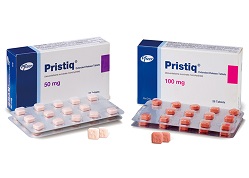
- Pic of the anti-depressant ‘desvenlafaxine’ The price of the follow-on drugs of the anti-depressant ‘desvenlafaxine’ that had been listed at 90% of the price of its original by avoiding the original’s patent through salt alterations have fallen greatly after a year and a half due to the adjustment of the price cap that was conducted following an investigation into their actual transaction price. In other words, the companies’ efforts to develop formulations to receive a higher drug price were all in vain. Four companies including Hanlim Pharm, Myung-In Pharm, Nexpharm, and Whan In Pharm had first received approvals for their incrementally modified desvenlafaxine drugs on April 7th, 2020. The four drugs were all listed for reimbursement on June 1st, 2020. The original desvenlafaxine product is Pfizer Korea’s ‘Pristiq ER (desvenlafaxine succinate monohydrate).’ The patent for Pristiq ER will expire on October 7th this year, but the 4 companies had developed a salt-modified version that differs from the original and succeeded in avoiding the original’s patent. This allowed the companies to release their products before the patient's expiry term. In addition, the companies received a price that was set at 90% of the original based on the formula for calculating the drug price of a salt-modified drug before the expiration of the original’s patent. Based on June 1st, 2020, Pfizer’s Pristiq ER 100mg was priced at ₩1,257, while other salt-modified products were set at ₩1,129. The price difference between the two is only ₩128. However, due to the aftermath of the investigation into the drugs’ actual transaction price and the price cap adjustments that followed, the price gap had increased by 10% to 20% at the most. Myung-In’s Esven SR that was priced at ₩1,129 per 100mg fell to ₩1,016, Hanlim’s Prinexor ER to ₩1,050, and Whan In’s Defaxine SR to ₩1,016. Nexpharm Korea’s Desvela was the only drug that was able to maintain its original price of ₩1,129. Myung-In, Hanlim, and Whan In’s drug prices fell 7.0%, 10.0%, 10.0% respectively after the price cap adjustments that were applied following an investigation into their actual transaction price. The actual transaction price of Pfizer Korea’s Pristiq ER 100mg had also been adjusted following investigations, but its price drop was a mere 0.3% and was set ₩4 lower at ₩1,250. In other words, the price of salt-modified drugs has fallen 7-10% in just a year and a half. As their higher drug price was set as compensation for developing ingredients that can avoid the original's patent, the disappointment on the companies’ part is expected to be large. On the other hand, the question of why the drug prices were set at a higher level than the actual transaction price in the first place may also arise.
