
- LOGIN
- MemberShip
- 2026-05-16 01:14:01
- Policy
- Phase III for development of Alecensa & Keytruda
- by Lee, Hye-Kyung Apr 26, 2022 06:11am
- Roche Korea and MSD Korea are accelerating clinical trials to develop combination therapy for non-small cell lung cancer treatments. On the 22nd, the MFDS approved phase 3 clinical trials of MSD's Keytruda and Keytruda SC and Roche's Alecensa. All of these pharmaceutical companies begin clinical trials to confirm the safety and effectiveness of combination therapy using two or more drugs together. Alecensa received domestic permission for the treatment of patients with ALK-positive local progressive or metastatic non-small cell lung cancer. Phase 3 clinical trials will be conducted at Seoul National University Bundang Hospital, Asan Medical Center, and Seoul National University Hospital to evaluate the efficacy and safety of various treatments in the cohort of patients with stage 3 non-small cell lung cancer. Clinical trials are conducted to utilize multi-drug therapy along with comparative studies of Keytruda SC and Keytruda IV. In March, it was decided to expand insurance benefits as the primary treatment for non-small cell lung cancer in Korea and apply Keytruda's insurance benefits to recurrent or refractory typical Hodgkin lymphoma. This phase 3 clinical trial will be conducted at Korea University Guro Hospital, Chungnam National University Hospital, and Hwasun Chonnam National University Hospital to compare pharmacokinetics and safety of Keytruda SC administered with platinum-based two-drug chemotherapy in the primary treatment of metastatic squamous or non-squamous cell lung cancer patients. With the recent increase in targeted anticancer drugs that can be used to treat non-small cell lung cancer, the development of combination therapy using more than one drug is in full swing.

- Policy
- Exclude drugs that have increased due to COVID-19 from PVA
- by Lee, Tak-Sun Apr 25, 2022 06:08am
- It is reported that the pharmaceutical industry plans to officially propose to the government to exclude respiratory treatments that have increased their use due to the increase in COVID-19 patients from PVA. It is asked to reflect that the explosive increase in the use of the drug is inevitable due to the increase in the number of patients with infectious diseases, and that it has tried to meet the supply according to the government's policy. According to the industry on the 24th, the KPBMA will listen to the opinions of its members and suggest that respiratory treatments, which have increased in use due to the treatment of COVID-19 patients, should be excluded from PVA. An association official said, "As the number of home-based patients increased in the aftermath of Omicron, demand for respiratory treatments increased significantly, and in response to the government's request, we operated the factory two to three times more than usual to produce drugs. We plan to request that the public-private consultative body, which will be held at the end of this month, be excluded from the PVA" The NHIS revised in December 2020 to correct the use of drugs that have been confirmed to be used to treat infectious diseases when negotiating PVA. Correction was possible only when a temporary increase in use was confirmed among drugs designated by the head of the KDCA that stable securing and supply were needed to prevent and treat infectious diseases. The pharmaceutical industry is asking for the revised guidelines to be greatly expanded and reflected in this respiratory treatment. An official from the pharmaceutical industry stressed, "It is unreasonable and unfair to cut the drug price by targeting PVA for drugs that have exploded in use for a short period of time in the aftermath of Omicron." PVA is a system that adjusts drug prices as usage increases after drugs are listed to manage financial uncertainty, and if they exceed a certain level of expected claims agreed with the NHIS or a certain level of claims in the previous year, drug prices will be reduced by up to 10%.
- Company
- JAKi options added to Dupixent for atopic dermatitis
- by Eo, Yun-Ho Apr 25, 2022 06:07am
- Two new treatment options were added to the field of atopic dermatitis that had only Dupixent as an option. The new options are both JAK inhibitors. The Ministry of Health and Welfare had issued a pre-administrative notice on the ‘Details on the standard and methods for applying long-term care benefits (pharmaceuticals)’ and announced it will expand the scope of reimbursement for two types of JAK inhibitors – Lilly Korea’s ‘Olumiant (baricitinib),’ and Abbvie Korea’s ‘Rinvoq (upadacitinib)’ – in atopic dermatitis. With the approval, JAK inhibitors have entered the field of atopic dermatitis in just one year since applying for reimbursement (for Olumiant). By reimbursement standards, the drugs may be used for the treatment of patients with severe chronic atopic dermatitis whose condition has lasted for over 3 years and whose symptom is not adequately controlled despite the use of topical treatment (corticosteroids and/or calcineurin inhibitors) and does not respond to over 3 months of systemic immunosuppressants (cyclosporine or methotrexate) (which is measured by a 50% or more reduction of EASI) or is not eligible for their use due to side effects, and whose EASI score is 23 or higher before starting treatment. As both drugs are relatively cheaper than Dupixent, the drugs are expected to become major options in the field of atopic dermatitis in the future. Dupixent selectively inhibits IL-4, and IL-13, which are known as key cytokines that cause atopic dermatitis. The drug is highly effective as it targets specific cytokines, but may not be as effective in some patients. On the other hand, JAK inhibitors including Rinvoq are involved in a relatively broader set of cytokines. The cytokines deliver signals through various pathways including the JAK-STAT pathway by binding to their receptors on the cell surface, and JAK inhibitors target the JAK enzyme that orders proteins that play a key role in Immune-inflammation regulation. The differences in MOA also bring other differences. The biologic agent Dupixent is an injection type of drug whereas JAK inhibitors are small-molecule drugs that can be taken orally. Oral drugs like Rinvoq can be a good alternative that can increase convenience for patients who have trouble receiving regular injections in clinics. Meanwhile, the insurance authorities are discussing extending reimbursement of Dupixent to pediatric and adolescent patients with atopic dermatitis.
- Policy
- Boryung’s Gemzar switches to domestic production
- by Lee, Hye-Kyung Apr 25, 2022 06:07am
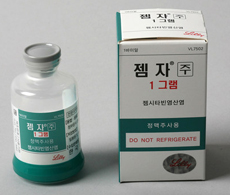
- In 2 years since Boryung Pharmaceutical acquired the domestic rights for Lilly’s anticancer treatment ‘Gemzar (gemcitabine HCl)’ in Korea, the company switched all its items to domestic productions. According to the Ministry of Food and Drug Safety, Boryung Pharmaceutical withdrew its import license for ‘Gemzar’ on the 21st, and switched the name of its domestic generic ‘Boryung Gemcitabine HCl Injection’ to the original name, ‘Gemzar,’ The company had co-promoted Lilly Korea’s Gemzar since 2014 and signed an agreement to transfer and acquire the rights of Gemzar, an anticancer treatment, in the local market with Eli Lilly in May 2020. Under the agreement, Boryung Pharmaceutical acquired the total rights of Gemzar in Korea including its sales and marketing authorization rights from the US company. Boryung and Lilly had been co-promoting Gemzar in Korea since 2015 Gemzar is indicated as a mono- or combination therapy in the first- and second-line treatment for pancreatic cancer, non-small cell lung cancer, bladder cancer, breast cancer, ovarian cancer, and biliary tract cancer. According to the market research firm IQIVA, Gemzar had sold ₩9.5 billion in 2016, which increased by around ₩3 billion in 5 years to record ₩12.44 billion in 2020. Gemzar’s sales account for 2-3% of Boryung’s total pharmaceutical sales every year, and sales are expected to increase due to cost reduction with the company converting all its imported products to domestic productions. Since 2019, Boryung had started driving the anticancer drug business and tripled its existing anticancer drug production facilities with the completion of its Yesan plant. Boryung plans to accelerate its anticancer drug business by introducing new products and expanding co-promotion products. Last year, the company had signed another contract to acquire and transfer assets for the schizophrenia treatment Zyprexa (olanzapine) with Lilly. Zyprexa had raised ₩14 billion in the domestic olanzapine market last year and is the No.1 prescribed product that holds a 50% share of the market. The agreement was made as part of Boryung’s LBA strategy it announced while conducting a capital increase of ₩98.5 billion in July last year. In addition to Gemzar and Zyprexa, Boryung plans to expand its portfolio by acquiring the domestic marketing approval of off-patent anticancer drugs that raise around ₩15 billion every year. Currently, the company is selecting candidates for digestive cancer, women's cancer, blood cancer, and lung cancer, and will also work to individual develop new anticancer drugs in the long term to strengthen its anticancer drug lineup.
- Policy
- Chong Kun Dang salt modified Entresto will be released soon
- by Lee, Hye-Kyung Apr 25, 2022 06:07am
- The market launch of Sacubitril/Valsartan Calcium, developed by Chong Kun Dang is imminent. According to the pharmaceutical industry on the 21st, Chong Kun Dang filed an application with the MFDS for permission for the drug developed by changing Valsartan Sodium, the main ingredient of Novartis' chronic heart failure treatment Entresto. This drug is likely to be a candidate substance called CKD-349, which was completed in June and October last year by conducting phase 1 clinical trials at Chungnam National University Hospital and H Plus Yangji Hospital, respectively. CKD-349 was tested with Entresto as a control drug. Entresto is the first double-inhibitor ARNI-based treatment that combines ARBI Valsartan and Sacubitril that inhibits Neprilsysin, and is currently recommended as a standard treatment in domestic and foreign heart failure treatment guidelines. As Entresto, which was approved for items in April 2016, was officially released in October 2017 after being listed, 13 domestic companies, including Hanmi Pharmaceutical and Chong Kun Dang, filed for patent judgment last year. On December 23, 2020, the Korean Intellectual Property Tribunal sided with generic companies by making a judgment on the establishment of the claim in a passive confirmation of the scope of rights of Entresto's crystalline patents filed against Novartis by 13 companies, including Hanmi Pharmaceutical and Chong Kun Dang. Entresto is protected by a total of five patents, including salt patents expiring in November 2026, use patent expiring in July 2027, crystalline patent expiring in September 2027, composition patent expiring in November 2028, and composition patents expiring in January 2029. If domestic companies succeed in targeting patents for use, they will be able to launch generics for Entresto early, which will end PMS on April 13. Entresto's outpatient prescription amounted to 32.3 billion won last year, up 37.3% from 23.5 billion won last year. This is the first achievement in four years since its release in October 2017.
- Company
- COVID-19 Tx Lagevrio lands in tertiary hospitals in Korea
- by Eo, Yun-Ho Apr 25, 2022 06:07am
- The oral COVID-19 treatment ‘Lagevrio’ has officially landed for prescriptions at general hospitals in Korea. According to industry sources, MSD Korea’s Lagevrio (molnupiravir) has passed the drug committees of tertiary hospitals including the Seoul National University Hospital in Korea. With the approval, the drug may be prescribed for in-hospital dispensing at tertiary hospitals and for in-hospital and out-hospital dispensing at general hospitals. Lagevrio, which is directly supplied by the Korea Disease Control and Prevention Agency through direct contracts, has been prescribed at dispensed at frontline convalescent hospitals, medical institutions, and designated pharmacies until now. The World Health Organization had issued conditional recommendations for the use of Lagevrio for patients at very high risk of hospitalization such as ▲those who haven’t received vaccinations for COVID-19, ▲those severely immunocompromised due to immunotherapy, etc., and ▲those with chronic diseases such as diabetes and published this revised COVID-19 treatment guideline in the British Medical Journal in March. Lagevrio is a ribonucleoside analog that is inserted in the place of the normal RNA needed in the viral replication process to induce lethal mutagenesis. As the first oral antiviral to be included in the WHO’s COVID-19 treatment guideline, the metanalysis of 6 clinical trials on Lagevrio in 4,827 patients showed that the drug reduced the rate of hospitalization by 36% compared to its comparator and showed a 3.4 day faster symptom improvement. Also, an interim and full analysis of a Phase III trial on Lagevrio showed that the drug demonstrated a reduction in the risk of hospitalization and death in outpatients with mild-to-moderate COVID-19 who were at risk of progressing to severe disease. In the planned interim analysis at 29 days after treatment, 14.1% (53/377) of the randomized patients had been hospitalized or died (8 cases) in the placebo group, whereas 7.3% (28/385) of the randomized patients were hospitalized with no deaths recorded in the Lagevrio group. The absolute risk reduction between the Lagevrio and placebo group was 6.8%, in which Lagevrio reduced the risk of hospitalization or death by around 50% by Day 29. Meanwhile, Lagevrio was approved for use in the UK as the first oral antiviral treatment for COVID-19 in November last year and then received emergency use authorization from the US Food and Drug Administration in December of the same year. MSD has signed supply agreements for the drug in 30 countries including Korea, the US, the UK, Germany, Australia, and Japan, and has been supplying Lagevrio to the countries.

- Company
- Sales of Expectants & antibiotic have increased
- by Chon, Seung-Hyun Apr 25, 2022 06:07am
- Sales in the outpatient prescription market have been rising sharply this year. Sales in the prescription market have been rising as the number of COVID-19 confirmed cases has soared since late last year. The Expectant and antibiotic prescription market, which is used for colds and infectious disease diseases, recovered to the level before the outbreak of COVID-19 as it emerged from the sluggishness of the past two years. According to UBIST, a pharmaceutical research institute, on the 20th, the amount of outpatient prescriptions for medicines in the first quarter was 4.1248 trillion won, up 6.5% from the same period last year. This is the second time after 4.22 trillion won in the fourth quarter of last year. The outpatient prescription market showed a pattern of slowing growth after the spread of COVID-19. The prescription amount in 2019 was 15.2318 trillion won, up 8.2% from the previous year, but the growth rate in 2020 and last year was only 2.7% and 3.0%, respectively. In the first quarter of last year, the prescription amount increased 2.0% from the previous year to 3.8746 trillion won, but this year is the first time since the third quarter of 2019 that the quarterly prescription growth rate exceeded 6% compared to the same period last year. In more than two years, the growth before the outbreak of COVID-19 has recovered. The slowdown in the prescription market growth over the past two years is pointed out as the direct cause of COVID-19. After the spread of COVID-19, the market for related treatments also shrank significantly as the number of patients with infectious diseases such as flu and colds plunged due to strengthening personal hygiene management such as washing hands and wearing masks. This year, if there are many COVID-19 confirmed cases, hundreds of thousands of people poured out a day, and the demand for COVID-19 symptom-relieving treatments such as cold medicine surged. The government also encouraged pharmaceutical companies to increase production as the supply of cold medicines and anti-inflammatory analgesics failed to keep up with demand. In the first quarter, the amount of outpatient prescriptions for expectorants was 53.3 billion won, up 116.6% from 24.6 billion won during the same period last year. It is the first time in more than two years that the quarterly prescription performance of expectorants has exceeded 50 billion won since the fourth quarter of 2019 Prescription market of expectorants has been on the decline since recording KRW 54.5 billion in the fourth quarter of 2019. In the second quarter of 2020, the amount of prescription for expectorants was 26.5 billion won, down 43.8% from the previous year, and remained at 20 billion won for six consecutive quarters until the third quarter of last year. After the spread of COVID-19, the prescription market was directly hit by a sharp drop in cold patients. However, in the fourth quarter of last year, the prescription amount of expectorants began to rebound to 33.8 billion won, and this year, the market size recovered to the level before the spread of COVID-19. The amount of prescriptions for expectants in the first quarter was 33.2 billion won, up 164.4% from a year-on- Expectants decreased from 37.1 billion won in prescriptions in the fourth quarter of 2019 to 14.3 billion won in the second quarter of 2020, when COVID-19 began to spread in earnest. The amount of outpatient prescriptions for oral cephalosporin drugs in the first quarter was 65.1 billion won, up 49.6% from the previous year. Cephalosporin drugs, also called "Cepha antibiotics," are antibiotics widely used for pneumonia, sore throat, tonsillitis, and bronchitis. The amount of oral cephalosporin prescription in the first quarter is the largest since it recorded 75.6 billion won in the fourth quarter of 2019. Sales of Cephalosporin drugs have also shrunk significantly over the past two years due to a sharp drop in flu or cold patients due to the prolonged COVID-19. In recent years, it has recovered to the level of previous years due to a surge in the number of COVID-19 confirmed patients. In the case of oral PCN preparations, it recorded 52.7 billion won in the fourth quarter of 2019, but it was reduced by more than half to 20 billion won from the second quarter of 2020 to the third quarter of last year. It recorded 34.3 billion won in the fourth quarter of last year and showed a higher increase in recent years.
- Company
- LDL-C target for cardiovascular dz will be lowered in Korea
- by Apr 25, 2022 06:07am
- The LDL-C target figure for South Korea's ultra-high-risk group for cardiovascular diseases is expected to be lowered to a similar level to global guidelines. The Korean Society of Lipid and Atherosclerosis held the Spring Cardiovascular Integration Academic Conference online and offline at the HICO on the 15th and 16th and unveiled some of the latest revised versions of the Dyslipidemia Treatment Guidelines. This amendment (the 5th edition) is the first revision of the guidelines for treating dyslipidemia in 4 years since 2018. In the meantime, in the United States and Europe, LDL-C targets for ultra-high-risk groups for cardiovascular diseases were lowered simultaneously. The ESC recommended lowering the target LDL-C level of the ultra-high-risk group for cardiovascular disease to 55 mg/dL, and considering less than 40 for extreme risk groups, such as patients who have experienced a second cardiovascular event. The AACE also recommends the LDL-C target value of the extreme risk group for cardiovascular disease at 55. This is because the premise that "the lower the LDL-C level, the higher the cardiovascular disease-related benefits" is accepted internationally. Korea, which remained in the 2018 guidelines, still sets the LDL-C target value for the ultra-high-risk group below 70. As the revision was made for the first time in four years, Korea also included changes in global guidelines in the new revision. The main focus of the amendment is a stronger LDL-C treatment strategy than before. Kim Sang-hyun, a professor of circulatory internal medicine at Seoul National University Hospital, introduced the framework and direction of the revision being prepared this year under the theme of "the goal of LDL-C treatment for ultra-high-risk/high-risk groups for cardiovascular diseases." According to the revised bill released by Professor Kim, the society classified the clinical situation into five according to the patient's risk level by judging the presence or absence of cardiovascular risk factors, and recommended lowering the LDL-C target overall by risk group. If the existing guidelines consisted of four groups: ultra-high-risk, high-risk, medium-risk, and low-risk, the revision is characterized by more detailed groups. Among the five groups according to the clinical situation, the highest risk group is coronary artery disease and diabetes (with targeted organ damage or three or more major cardiovascular disease risk factors). The amendment presented the group with the lowest LDL-C target of less than 55. The second group is a case of atherosclerosis ischemic stroke/daily cerebral ischemic stroke, carotid artery disease, peripheral artery disease, abdominal aneurysm, diabetes (with risk factors for cardiovascular disease over 10 years of illness or one or two). It was recommended that the group be targeted below LDL-C 70. The third group is a group of patients with less than 10 years of diabetes and no major risk factors for cardiovascular disease, with a target figure of less than 100. The other two groups were moderate risk groups (more than two major risk factors) and low risk groups (less than one major risk factor), respectively, with LDL-C targets of less than 130 and 160. It is noteworthy that LDL-C target values of coronary artery disease patients who have experienced myocardial infarction and angina were adjusted to be less than 55 and at least 50% lower than the baseline (Recommended grade 1, Evidence level A). Existing medical guidelines recommended reducing the LDL-C target for these patients by less than 70 or 50% or more. The association plans to unveil the final revision within the first half of this year. It is because it is still judged that expert discussion is necessary. In the case of diabetic patients, it was agreed that more discussion is needed on what to do with the LDL-C target value depending on the risk. A domestic data base to be used in determining patient risk should also be established.
- Policy
- Expansion of benefit standards such as Tenofovir/Baricitinib
- by Kim, Jung-Ju Apr 24, 2022 06:33pm
- As the scope of benefit of registered drugs such as chronic hepatitis B oral drug Vemlidy expands, the benefit standards for these drugs will also be expanded and changed. In addition, the standards for Baricitinib PO such as oluminant 2mg will be expanded to patients with chronic severe atopic dermatitis. The MOHW unveiled the "revised notification of details on the standards and methods of applying medical care benefits" and began to inquire about opinions until the 27th. ◆As the permission of the MFDS for= Tenofovir, an oral chronic hepatitis B treatment such as Vemlidy, is changed, the insurance benefit standards will also be expanded. Insurance authorities will expand and apply standards to non-target liver cirrhosis and liver cancer in consideration of excluding country permits, textbooks, clinical treatment guidelines, clinical research documents, and related academic opinions (expert opinions). In detail, the standard of "Besifovir and Tenofovir do not recognize non-subjective cirrhosis and liver cancer" among the benefit clues is changed to the phrase "Besifovir does not recognize non-subjective cirrhosis," and Tenofovir recognizes medical care benefits in patients with non-subjective cirrhosis. ◆ Antibiotics, PPI PO, Bismuth PO, Clarithromycin PO, Levofloxacin PO= Antibiotics, as well as Bismuth PO such as PPI PO and Denol, Clarithromycin PO, and Levofexin PO will be expanded. Insurance authorities were required to apply benefits to "after endoscopic resection of gastric adenoma" by referring to domestic and foreign permits, related literature, and academic opinions. ◆The benefits of Baricitinib PO will also be expanded to patients with Upadacitinib PO= chronic severe atopic dermatitis such as Olumiant 2mg and Rinvoq SR. However, the authorities may change the standards depending on the results of the MFDS review related to the safety of JAK I. In addition, due to insufficient grounds for replacement administration, it was decided not to admit replacement administration between Dupilumab and JAKI and replacement administration between JAK I. ◆ Everolimus PO such as Certican and Sirolimus PO= will also be applied to kidney transplant patients in the future. In addition, benefits are recognized for combination therapy with Tacrolimus for renal transplant patients beyond the scope of the MFDS' permission. ◆Guselkumab injections such as Tremfya Prefilled Syringe, etc.,= will be added to the MFDS' permission, and related standards will be expanded accordingly. In March last year, the drug added indications of "psoriatic arthritis." As a result, standards are also extended. Specifically, it is active and progressive healthy arthritis. A combination of newly listed items will be added to the benefit standard of the oral system for high blood pressure and hyperlipidemia. Starting next month, five Atorvastatin compound PO products such as Amlodipine, Candesartan, and Cantabell, and Telmisartan, Rosuvastatin and eight items of Ezetimbe PO complex such as Duowell Plus are scheduled to be listed, the combination of the drug ingredients will be added. ◆Tenofovir oral drugs such as K-Cab and K-CAB ODT 50mg will be newly registered next month, and this drug will also be added to the relevant benefit standards. The MOHW plans to implement the revision of the notice from May 1st if there is nothing unusual.
- Company
- Samsung BioLogics acquired all of its shares in Epis
- by Chon, Seung-Hyun Apr 24, 2022 06:33pm
- View of Samsung Bioepis buildingSamsung BioLogics will incorporate Samsung Bioepis as a 100% subsidiary and operate a separate management system. Samsung BioLogics announced on the 20th that it has completed the first payment of $1 billion in the acquisition of Epis shares to Biogen. From the day the first payment was completed under the contract between the two companies, Epis was officially converted into a 100% subsidiary of Samsung BioLogics. Earlier in January, Samsung BioLogics signed a contract with Biogen to acquire 10,341,852 shares of Epis (50%-1 share) for 2.7655 trillion won. Of the total amount, $50 million is equivalent to an additional "Earn-out" cost if certain conditions are met, and the remaining $2.25 billion will be paid in installments over the next two years. Samsung BioLogics raised a total of 3.2008 trillion won through a paid-in capital increase in shareholders' allocation to raise the cost of acquiring Epis shares. It achieved a high subscription rate of more than 100% in the paid-in capital increase public subscription for shareholders. The public offering of 400 billion won worth of shares for executives and employees recorded a subscription rate of nearly 100%, while existing shareholders such as Samsung C&T and Samsung Electronics made 100% subscriptions. As a result, Samsung BioLogics ended its partnership with Biogen for the first time in 10 years. Samsung BioLogics established Epis in 2012 in the form of a joint venture with Biogen. Epis was launched in February 2012 with a capital of 164.7 billion won. At this time, Biogen invested 24.7 billion won, or 15% of its capital. In 2018, Biogen raised its stake to 50% when it exercised its call option for Samsung Epis. Initially, Biogen established Samsung Biologics and signed a call option contract to transfer shares of Samsung Bioepis up to 50% - 1 share by June 29, 2018. Biogen decided to acquire shares when the call option contract expired. In June 2018, Samsung BioLogics took over 9,226,068 shares of Epis 19,567,921 shares for $700 million (748.6 billion won). Samsung BioLogics said, "As the joint management system with Biogen is transformed into Samsung BioLogics' sole management system, independent and rapid decision-making on Epis is expected to be possible. Through this, we believe that we will be able to push for mid- to long-term growth strategies such as the development of new pipelines, open innovation, and new drugs more quickly and flexibly." Starting with the acquisition of Epis, Samsung BioLogics plans to take a leap forward toward global bio companies. It is expected to internalize Epis' R&D capabilities in biopharmaceutical and expand its business portfolio to the development of new drugs in the long run. Samsung BioLogics plans to continue its bold and preemptive investment to secure future growth engines by using the investment funds secured by the paid-in capital increase to build its fourth plant and purchase additional sites. John Lim, president of Samsung Biologics, said, "Epis' capabilities and know-how will as an opportunity to making Samsung's bio business a global top tier."
