
- LOGIN
- MemberShip
- 2026-07-23 05:46:00
- Policy
- Pfizer’s Cibinqo to undergo NHIS negotiations for reimb
- by Lee, Tak-Sun Mar 13, 2023 05:53am
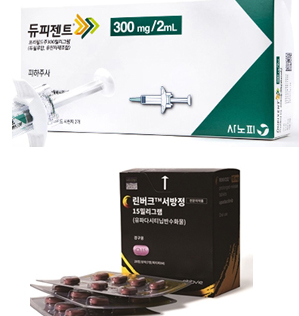
- (From top to bottom) Dupixent Prefilled Inj., Rinvoq ER Tab., and Cibinqo Tab attempts reimb to treat pediatric and adolescent AD Pfizer has accepted the conditions set by the Health Insurance Review and Assessment Service’s Drug Reimbursement Evaluation Committee for the reimbursement of its Cibinqo Tab (abrocitinib) in Korea. The drug received conditional approval at the DREC meeting that was held on March 2. The committee deemed Cibinqo’s reimbursement will be adequate if the company accepts a price less than the assessed amount. According to industry sources on the 12th, Pfizer accepted DREC’s conditions and is moving on to the pricing negotiation stage with HIRA. DREC’s proposed assessment price is expected to be set at the same level or below the weighted average price of its alternatives. Other JAK inhibitors that are currently available in the market include Olumiant Tab (baricitinib, Lilly) and Rinvoq ER (upadacitinib, Abbvie), therefore, Cibinqo’s price is expected to be set below the weighted average price of these drugs. After the Ministry of Health and Welfare orders pricing negotiations, Pfizer will be conducting negotiations with the NHIS for Cibinqo’s reimbursement. Although the statutory period set for NHIS negotiations is 60 days, if Pfizer accepts a price less than the upper limit set and receives negotiation exclusions, the company can further reduce the NHIS negotiation period to 30 days. If negotiations are completed in a short period of time, the industry expects Cibinqo may be listed for reimbursement in May at the earliest. Currently, Dupixent (dupilumab, Sanofi), Cibinqo, and Rinvoq are undergoing the reimbursement listing process as a treatment for pediatric·adolescent patients with atopic dermatitis. Among the three drugs, Dupixent has been making the most rapid progress. The drug entered negotiations last month and is expected to be listed for reimbursement next month at the earliest. Rinvoq ER, which is already listed as a treatment for atopic dermatitis in adult patients, is also attempting to extend its reimbursement as a treatment for adolescent patients aged 12 years or older with moderate-to-severe atopic dermatitis. Rinvoq ER’s reimbursement to the indication has passed HIRA review by applying the scope of use expansion formula and is set to receive NHIS negotiations soon. As Rinvoq and Cibinqo are both oral JAK inhibitors aiming to receive reimbursement as a pediatric atopic dermatitis treatment, their pricing negotiations will likely be conducted at the same time and be listed at a similar period.
- Policy
- Industry unsatisfied with the proposed PVA improvements
- by Lee, Tak-Sun Mar 10, 2023 05:50am
- Companies that have released new drugs in Korea have expressed discontent over the measures to improve the price-volume agreement (PVA) system that had been recently disclosed by the National Health Insurance Service. The new measure will put drugs that undergo PVA Type A negotiations at a relative disadvantage. According to the measures for the improvement of the PVA system that were disclosed at a roundtable meeting with the press corp, the improvement contained measures to change the ‘drugs whose claims have increased by 30% or more’ condition for PVA Type A negotiations to ‘drugs whose claims have increased by 10% or more or have claims amount that exceeds KRW 5 billion.’ PVA Type A had currently only been applied to drugs whose annual claims amount increased by 30% or more from the expected claims amount during the 3 years after reimbursement listing. Each company agrees to a certain amount during negotiations with the NHIS. However, if the NHIS applies the additional measures to the system, even drugs whose claims amount had increased by only 10% will be subject to PVA if the total amount exceeds KRW 5 billion. Regarding the measure, an industry official said, “If the KRW5 billion and 10% increase condition is added to PVA Type A, this will come as a burden to companies that develop new drugs in Korea. Adding more price discount mechanisms to homegrown new drugs may discourage the local pharmaceutical companies from developing new drugs.” The official added, “The measure to vary the drug price discount rate according to the claims amount is nothing new as this was previously announced by the NHIS, but the conditions that are being added to PVA Type A require some thought. The NHIS’s improvement plan contains measures to differentiate the price cut rate into three categories according to the magnitude of the claims amount and proposes calculating the maximum discount rate based on a reference formula. In other words, the NHIS plans to differentiate the discount rate according to the claim size. On the other hand, small and mid-sized pharmaceutical companies seem to be looking forward to NHIS’s additional measures. This is because the plan offers measures that raise the annual claims amount of drugs subject to PVA negotiations from KRW 2 billion to KRW 3-5 billion. If this exclusion criteria is applied to products with an annual claims amount of KRW 5 billion as well, most products by small and mid-sized pharmaceutical companies will be excluded from receiving price discounts. Another industry official said, “The research service results that contain HIRA’s proposals have not been disclosed yet, and a working group to promote the system is scheduled to commence in May, so we are not at the stage to guess how the final plan will come about. We will have to internally discuss and weigh the advantages and disadvantages of the proposed measures.”
- Policy
- Dupixent, Cibinqo, Rinvoq to be reimb for pediatric AD in 1H
- by Lee, Tak-Sun Mar 10, 2023 05:49am
- The three drugs that are attempting to receive reimbursement as a treatment for pediatric·adolescent patients with atopic dermatitis - Dupixent (dupilumab), Cibinqo (abrocitinib), and Rinvoq (upadacitinib) – are expected to be approved for reimbursement within the first half of the year. With all 3 drugs passing the Health Insurance Review and Assessment Service’s deliberations, only the pricing negotiation process with NHIS remains for the three drugs. This is why analysts believe the drugs will be listed for reimbursement within June this year. In the case of Sanofi’s Dupxient Prefilled Inj (200·300mg), the drug’s reimbursement adequacy was accepted by HIRA’s Drug Reimbursement Evaluation Committee on January 12 and has been going through the drug price negotiation process with the NHIS from February. As Dupxient will be reimbursed through the risk-sharing agreement (RSA) system, there is a high possibility that negotiations with the NHIS will focus on the required financial expenditures and the pharmaceutical company’s contribution amount If the negotiations end this month, reimbursement may be applied as early as April and May. Pfizer’s Cibinqo (50·100·200mg) received conditional approval from DREC on March 2. The drug’s reimbursement was deemed adequate when the company accepts a price less than the assessment amount, and the industry expects that it is highly likely that Pfizer will accept the said conditions. This is because another JAK inhibitor and competitor, Abbvie’s Rinvoq ER, is also speeding up its reimbursement process. The company is attempting to expand Rinvoq ER’s reimbursement to its pediatric and adolescent indication and will be carrying out negotiations with the NHIS through the drug price discount formula that is used with the scope of use expansions. Rinvoq ER tab is listed at KRW 21,085 per tablet, and when applied the scope expansion formula, its price may be reduced by up to 5%. Industry analysis is that Cibinqo will likely be listed for reimbursement at Rinvoq’s price as well. The two drugs are both attempting to receive reimbursement as a treatment for patients aged 12 years or older with moderate-to-severe atopic dermatitis. The industry expects that all three drugs may likely be reimbursed within the first half of the year. An industry official said, “In the case of Dupixent, pricing negotiations will be made within the scope of its RSA contract, and pricing negotiations for Cinvinqo and Rinvoq will be conducted together and be applied the same reimbursement standards.”
- Policy
- Multiple myeloma CAR-T therapeutic agent CARVYKTI, imminent
- by Lee, Hye-Kyung Mar 09, 2023 06:00am
- CARVYKTI compares self -hematopoietic stem cell transplantation (ASCT) after administration of Daratumumab, Bortezomib, Lenalidomide, and DVRD in December last year. The clinical trial was conducted. According to the industry on the 8th, the Ministry of Food and Drug Safety recently completed the safety and validation of Carvykti. If the Efficacy & Safety screening is completed without any problems, product permission will be made soon. CARVYKTI is a T -cell immunotherapy that is derived from BCMA targeted genetic variant. The US FDA has previously been allowed to treat reissue or rebel-resistant multiple myeloma adult patients with four or more treatments, including proteasome inhibitors, immunomodulators, and CD38 monoclonal antibodies. The European Executive Committee (EMA) has granted CARVYKTI a conditional sale of at least three treatments, including immunomodulators, protease inhibitors, and CD38 monoclonal antibodies. Japan has no experience in receiving BCMA target CAR positive T cell injection treatment and has approved Carvykti as a treatment for recurrent or rebellious adult patients with three or more treatments. Korea is also likely to be permitted as a patient treatment that has performed ASCT after the administration of DARATUMUMAB, BORTEZOMIB, Lenalidomide, and DVRD. CAR-T therapeutic drugs that challenge hematopoietic stem cell transplantation include BMS's Breyanzi and Gilead's YESCARTA.
- Policy
- Gov expands SGLT-2 diabetes drug combi benefit from April
- by Lee, Jeong-Hwan Mar 08, 2023 05:53am
- The Ministry of Health and Welfare will be the first to recognize the 3-drug combination benefit for diabetes treatment with SGLT-2 inhibition mechanism from April and expand the scope of the 2-drug combination benefit compared to the previous one. Specifically, 'Metformin + SGLT-2 inhibitor + DPP-4 inhibitor' and 'Metformin + SGLT-2 inhibitor + TZD-type drugs' are covered by health insurance benefits when 3 drugs are prescribed together, and sulfonylurea (SU)-type drugs and When using SGLT-2 inhibitors together, the number of covered drugs will be increased from the current one to four. In the case of insulin injection and SGLT-2 inhibitor combination therapy, the number of covered drugs will be expanded from the current two to four. On the 5th, Director Oh Chang-hyeon of the Insurance Pharmaceutical Division of the Ministry of Health and Welfare met with the Ministry of Health and Welfare Professional Correspondents Association and announced the plan to expand the SGLT-2 inhibitor combination benefit. If the health insurance benefit is revised as announced by the Ministry of Health and Welfare, all three-drug and second-drug combination benefits for all SGLT-2 inhibitory diabetes drugs currently approved for marketing in Korea will be recognized. AstraZeneca Forxiga, Boehringer Ingelheim Jardiance, Astellas Suglat, and MSD Steglatro Korea are a total of four SGLT-2 single-drug original diabetes drugs prescribed under domestic approval. There are a total of seven therapies for which the Ministry of Health and Welfare announced the expansion of SGLT-2 combination benefits, including generics that are identical to the original ingredients, from next month. There are 2 oral 3-drug therapies, 3 oral 2-drug therapies, and 2 insulin-oral combination therapies. First of all, the health insurance benefits for the oral triple therapy are 'metformin + SGLT-2 inhibitor + DPP-4 inhibitor' and 'metformin + SGLT-2 inhibitor + TZD-type drugs'. Oral double-drug therapy is a combination of a SU-type drug and an SGLT-2 inhibitor. Currently, dapagliflozin is the only SGLT-2 diabetes drug that is approved for concurrent benefit with SU. Ministry of Health and Welfare from next month following Dapagliflozin, Empagliflozin, Ertugliflozin, and Ipragliflozin will be approved for SU concomitant benefit. The combination therapy of insulin and oral medication will be expanded compared to the current one. Currently, two drugs, Dapagliflozin and Empagliflozin, are approved for reimbursement when insulin and SGLT-2 diabetes drugs are prescribed together. The Ministry of Health and Welfare will expand insulin combination benefits to Ertugliflozin and Ipragliflozin starting next month. Oh Chang-hyun said, "We plan to implement 7 therapies in April that will expand the 3-drug and 2-drug combination benefits for diabetes drugs with SGLT-2 inhibitory mechanisms." explained.
- Policy
- PVA, the higher the bill, the greater the discount rate
- by Lee, Tak-Sun Mar 08, 2023 05:52am
- Lee Sang-il, executive director of NHIS, held a meeting with the Korea Special Press Association on the 7thThe NHIS plans to increase the reduction rate of the upper limit for drugs with high claims in the PVA, and lower the reduction rate or exclude drugs with low claims. This is based on research conducted last year. The results of the research service (performance evaluation and improvement plan of PVA (researcher: Bae Seung-jin, Ewha Womans University)) has not yet been disclosed, but will be disclosed at the end of this month and discussed at the Workie Group, which will be held from May. At the Korea Special Press Association meeting held on the 7th with Lee Sang-il, executive director of the NHIS, this PVA improvement plan was revealed for the first time. Director Lee said, "In order to improve the effectiveness of drug cost management, we conducted a research service last year to evaluate the performance of the PVA system and improve it." As a way to improve the system, we suggested selective management of drugs with high fiscal impact and efficient system operation.” Accordingly, a plan was devised to expand the selection criteria for usage type 'Ka' by adding 5 billion won and 10% increase conditions from the existing 30% increase condition for the selective management of drugs with high financial impact. The reference formula is differentiated by dividing it into three sections according to the size of the bill, and a plan to increase the maximum reduction rate in consideration of the coefficient of the reference formula was proposed. As a result, the plan is to increase financial efficiency by increasing the reduction rate for drugs with high claims. Currently, the maximum reduction rate is limited to 10%, but the maximum reduction rate is expected to exceed 10% for drugs with high claims through improvement measures. Conversely, a plan was proposed to further include drugs with low claims, which have a small reduction rate and are excluded from negotiations. For efficient operation of the system, the exclusion criteria will be raised from 2 billion to 3 to 5 billion, and a temporary refund system will be introduced. In addition, a plan to lower the maximum reduction rate for small-amount drugs was also proposed. The temporary refund system refers to a one-time refund to the NHIS by a pharmaceutical company for a price cut instead of a price cut for a drug whose usage has temporarily increased due to a pandemic or other reasons. The target and materialization plan will be discussed in the working group to be held in May, but this plan is not expected to be promoted immediately as a mid-term task. Jeong Hae-min, head of the NHIS Pharmaceutical Management Office, said, “The rest of the parts except for the temporary refund system are short-term tasks, and we plan to promote system improvement through a working group that will be held from May.” We plan to operate according to the schedule of, and based on the matters discussed through this, we will come up with an improvement plan, revise the relevant regulations in the second half of the year, and implement them from next year.” A plan to correct the number of drugs related to COVID-19 has also been outlined to some extent. The target drugs are cold medicines and antibiotics that are encouraged to be produced by the Ministry of Food and Drug Safety, and it is explained that they correspond to about 2,600 items based on the 2022 benefit list. As for the correction method, a method of correcting the usage amount was proposed, excluding the period (month) when usage increased sharply during the pandemic, and the director Lee explained that they are currently in final coordination with the pharmaceutical industry. The NHIS plans to finalize the correction plan this month when discussions with the pharmaceutical industry are completed and to apply to monitor for negotiations in April.
- Policy
- Free vaccination of Rotarix·RotaTeq is available
- by Lee, Jeong-Hwan Mar 07, 2023 05:39am
- The Korea Centers for Disease Control and Prevention (KCDC) will start a national vaccination project for Rotavirus vaccines Rotarix and RotaTeq, which are distributed in Korea, from the 6th. From this day, infants aged 2 to 6 months who are subject to vaccination will be able to receive one of the two vaccines free of charge at nationally consigned medical institutions or public health centers. Rotavirus is easily spread through the hands and mouths of infants from contaminants in diapers or toys. Infection can cause vomiting, high fever, and severe diarrhea, leading to dehydration and requiring hospitalization. Even if the 1st rotavirus vaccine was charged for 6 days before the implementation date of the national vaccination program, free vaccination is possible from the remaining 2nd or 3rd vaccination for complete vaccination. Rota vaccination requires 2 or 3 doses depending on the type of vaccine used to obtain the sufficient preventive effect. Rotarix requires a total of 2 doses and RotaTeq requires a total of 3 doses. The current status of the nearest vaccination institution can be checked on the vaccination helper website. Rotarix and RotaTeq are classified into monovalent and pentavalent depending on the number of serotypes included in the vaccine, but both vaccines showed similar efficacy and safety in terms of preventing rotavirus infection and severe disease in Korea. Since cross-inoculation is not allowed, it should be noted that after the first vaccination, all rounds must be completed only with the same manufacturer's vaccine. Director Ji Young-mi of the Agency for Disease Control and Prevention said, “The introduction of this national rotavirus vaccination will lower the cost burden for parents who needed about 200,000 to 300,000 won for vaccination,” and “the incidence of rotavirus infection, which causes acute diarrhea and high fever in infants, will also decrease. I expect that," he said.
- Policy
- ‘Improve rare disease designations standards for equity'
- by Lee, Jeong-Hwan Mar 07, 2023 05:38am
- The claim that Korea’s rare disease designation standards should be improved and expanded to ease the disease burden borne by patients from drug costs, etc. The request arose with the rising need to address the irrationalities in the current rare disease designation system, such as those from the unclear diagnostic criteria set due to the extremely small number of patients or irrational standards set for acquired (secondary) rather than congenital diseases. On the 6th, Professor Hyun-Young Kim of Pediatric Surgery at Seoul National University Hospital claimed so during her presentation at the ‘Discussions for a national measure to manage life-threatening rare diseases’ that was held at the Members' Office Building of the National Assembly. The meeting was hosted by Rep. Sun-Woo Kang of the Democratic Party of Korea. Professor Kim's presentation was about ‘Limitations in the designation of rare diseases and application of special calculations.’ The Rare Disease Management Act defines a rare disease as a ‘disease that affects fewer than 20,000 people, or whose number of carriers is unknown because diagnosis of the disease is difficult, which is determined according to the procedures and standards prescribed by Ordinance of the Ministry of Health and Welfare.’ Most treatments for diseases that are designated as rare diseases can be applied the special calculation system, which allows the patient’s coinsurance rate to be reduced to 10% of all medical expenses. Due to this, the burden of treatment and drug expense among rare disease patients whose condition has not been designated as a rare disease increases significantly and is excluded from legal support Regarding the limitations in rare disease designations, Kim pointed out that there is a gap between the definition and designation of a rare disease, and the problem of equity in designation and non-designation exists even in the same disease depending on whether the condition is congenital or acquired. Also, she raised the issue of how patients with secondary conditions that suffer the same symptoms, disease burden, and pain as the congenital condition are not allowed designation as a rare disease. Professor Kim said, “It is necessary to designate rare diseases after comprehensive consideration of the characteristic of the disease, the pain suffered by the patients, and its effect on the quality of life. The authorities should provide ample opportunity for relevant academic societies and patient groups to submit opinions and actively review the designations.” As an example, Professor Kim pointed to short bowel syndrome to point out the issues that exist in Korea’s rare disease designation system. Short bowel syndrome is not designated as a rare disease as it affects over 20,000 patients and is an infectious and transient condition with a low socioeconomic cost. Also, the fact that it is a secondary disease and has unclear diagnostic criteria and diagnosis was also a reason for its non-designation as a rare disease. In other words, patients with congenital short bowel syndrome can receive special calculation benefits for their treatment expense with a rare disease designation, but patients with acquired short bowel syndrome are deprived of the same benefit. This non-designation of rare diseases has led to the non-application of reimbursement for a short bowel syndrome treatment. In Korea, teduglutide was approved to treat short bowel syndrome in 2018. However, the drug is unavailable for use due to its non-reimbursement. Without reimbursement, the drug costs KRW 50 million with 3-6 month administration, and KRW 100 million with 1-year administration. Professor Kim stressed, “In Korea, if the doctors work hard and save the patients, the patients cannot receive the benefit as they exceed the rare diseases designations standards. The standards need to be improved to provide benefit to these rare disease patients who are left unattended in the blind spot."
- Policy
- ‘RSA may be applied to non-rare innovative new drugs'
- by Lee, Jeong-Hwan Mar 07, 2023 05:38am
- Chang-Hyun Oh, Director of Pharmaceutical Benefits at the Ministry of Health and Welfare The Ministry of Health and Welfare announced it will improve its policy to allow innovative new drugs to be listed for reimbursement through the risk-sharing assessment (RSA) track even if they are not anticancer or rare disease treatments if they demonstrate a clinical effect. If allowed, it is expected that the scope of drugs that are applied RSA will increase, and more drugs that are not designated as rare disease may be promptly listed for reimbursement as long as they have a good effect. Chang-Hyun Oh, Director of Pharmaceutical Benefits at the Ministry of Health and Welfare, said so at the ‘Discussions for the national measure to manage life-threatening rare diseases’ that was held at the National Assembly on the 6th. Director Oh said, “Only anticancer drugs and rare disease drugs are currently applied RSA, however, we plan to pave the way to take the innovativeness of drugs into account and apply RSA to those drugs. We are discussing how to apply RSA to drugs that clinically demonstrate an improvement in quality of life by determining the scope of recognizing innovation for drugs.” Director Oh reiterated the need to set an appropriate drug price compensation policy for innovative new drugs that the ministry had announced as an improvement task this year. Although the ministry had been flexible in applying the reimbursement listing system to life-threatening diseases until now, Director Oh said that the ministry will introduce a system that can improve patient access to drugs that were not designated as rare disease drugs in the future. Director Oh said, “We will discuss measures to allow the application of RSA to treatments that are not designated as rare diseases to allow compensation of their appropriate drug price as long as the treatments have verified their efficacy. For example, diseases such as generalized pustular psoriasis and short bowel syndrome have not been designated as rare diseases, but we will set a standard that can recognize the innovativeness of these treatments as well.” He added, “Although pharmaceutical companies would need to share a part of the burden, we will contemplate ways to open up opportunities for new reimbursement listings this year. We haven’t decided on to what extent we will be recognizing the innovativeness, but will make more efforts under the policy goal of expanding access to new drugs.”
- Policy
- Tecentriq fails urothelial carcinoma trial but beneficial
- by Lee, Hye-Kyung Mar 06, 2023 05:56am
- Although the conditional clinical trial failed for Roche’s cancer immunotherapy ‘Tecentriq,’ experts in Korea decided to recognize Tecentriq’s benefit for ‘patients with locally advanced or metastatic urothelial carcinoma who are not eligible for platinum-based chemotherapy’ and maintain the indication as it is unethical to reorder clinical trials when these patients have no other alternatives. According to the minutes of the Central Pharmaceutical Affairs Council meeting that was held on November 28th last year which was recently disclosed by the Ministry of Food and Drug Safety, the CPAC members decided to recognize the benefit of the therapeutic confirmatory clinical trial results on Tecentriq. At the time, Roche’s subsidiary Genentech had voluntarily withdrawn Tecentriq’s indication in the US for the treatment of adults with locally advanced or metastatic urothelial carcinoma who are not eligible for cisplatin-containing chemotherapy. In the US, Roche had first acquired Tecentriq’s bladder cancer indication through the Accelerated Approval Program under the condition of conducting a confirmatory trial, then conducted a Phase III IMvigor130 trial to evaluate Tecentriq plus platinum-based chemotherapy for the first-line treatment of people with previously untreated advanced bladder cancer. However, as the designated postmarketing requirement (PMR) did not meet the primary endpoint of overall survival (OS) for Tecentriq plus chemotherapy compared with chemotherapy alone, the company had withdrawn the indication. In 2017, Tecentriq was conditionally approved for the ‘treatment of patients with locally advanced or metastatic urothelial carcinoma who are not eligible for cisplatin-containing chemotherapy and whose tumors express PD-L1 tumor proportion score of at least 5%,’ under the condition that it conducts a therapeutic confirmatory trial to demonstrate superiority over chemotherapy in urothelial carcinoma. The MFDS asked the CPAC to “determine whether the indication should be maintained despite the recent results in the current situation where treatment options have not changed much for urothelial carcinoma since 2017.” To the request, one CPAC member said, “Tecentiq showed an improvement over chemotherapy in some of the efficacy endpoints such as DOR in ITT or PD-L1 positive patients. Therefore, we need to maintain the approval status to offer options to such patients.” The member's opinion was that not many options exist for patients who cannot use platinum-based chemotherapy and that it is better to maintain approval, even if it is a conditional one if the results show a similar level of effect to chemotherapy. Another member said, “Based on the trial, Tecentriq’s combined use with chemotherapy should be excluded, and the indication for patients who are not eligible for platinum-based chemotherapy should be maintained as they have no other options. Therefore, what we need to decide is whether to maintain the indication for patients that can use carboplatin.” The committee chair added the opinion that the company should reconduct the clinical trial in principle. The CPAC chair said, “In principle, the company should conduct the trial again. What matters most is the therapeutic efficacy, so we need to decide whether it is appropriate to allow Tecentriq’s use in all situations and options.” Also, an opinion that it would be better to maintain the indication for patients without options was raised, pointing to how it would not be appropriate to create a situation where the committee's conclusion deprives patients of the only option they may have. The chair concluded, “Although Tecentriq failed the confirmatory trial in urothelial carcinoma, we conclude that we acknowledge the benefits of the drug as it is unethical to order the company to reconduct a clinical trial when patients with locally advanced or metastatic urothelial carcinoma who are not eligible for platinum-based chemotherapy have no other alternatives.” Meanwhile, Roche Korea is known to be discussing whether to maintain Tecentriq’s urothelial carcinoma indication in Korea, with regards to the voluntary withdrawal of the urothelial carcinoma indication in the US.
