- LOGIN
- MemberShip
- 2026-09-15 07:22:44
- First round of listed-drug reassessment results open for NOV preview
- by Jung, Heung-Jun | translator Alice Kang | 2026-09-14 15:58:44
Pharmaceutical companies will be able to review the products subject to the first phase of reassessment of previously listed drugs and their actual adjusted prices in November.
The government plans to provide companies with a preliminary review of the reassessment results in November before submitting them to the Drug Reimbursment Evaluation Committee in December.
The Ministry of Health and Welfare (MOHW) and the Health Insurance Review & Assessment Service (HIRA) held a briefing on the reassessment of ceiling prices for previously listed drugs for pharmaceutical companies at the Korea Pharmaceutical and Bio-Pharma Manufacturers Association on the 11th.
At the briefing, Lee Jong-hwan, head of HIRA’s Pharmaceutical Evaluation Department, provided an overview of the reassessment, followed by questions from industry representatives.
More exclusions expected, including sole-listed and previously price-increased products
When the initial first-round reassessment list was recently released, sole-listed products, products that had previously received price increases, and national essential medicines with three or fewer companies supplying the same product were not excluded from the reassessment. The government said excluding them in advance could create confusion because changes in applicable conditions could change whether or not they ultimately qualify for exclusion.
As a result, the number of products excluded from the finalized first-round reassessment list is expected to increase. An updated list reflecting additional exclusions is scheduled to be released before the Chuseok holiday.
What qualifies as a ‘substantial price cut’ allowing a shift from Phase 1 to Phase 2?
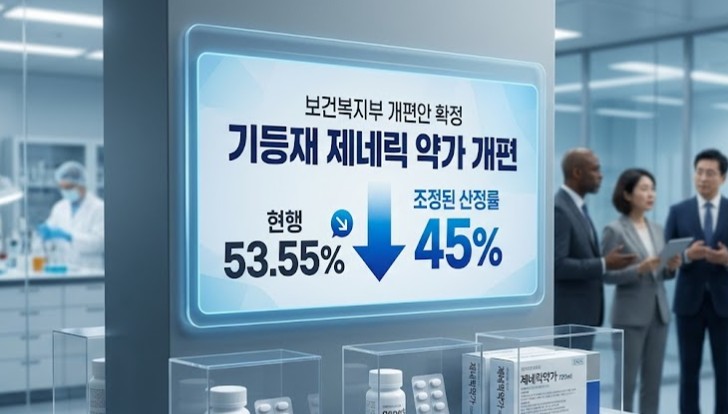
Using the drug price level of 53.55% applied in 2014 as the benchmark, products whose current ceiling prices have already fallen to around 45% are being considered for adjustment to a later reassessment phase.
This corresponds to a roughly 16% price reduction. However, reductions resulting from reassessments of single-use eye drops, reimbursement appropriateness reassessments or rebate-related price cuts will not be counted.
Lee said, “Because reductions are calculated based on the highest price among products with the same formulation, companies can apply for an adjustment if that highest price has already been reduced substantially, and we will evaluate the request. As reduction rates may differ by dosage strength and result in different reassessment phases, each application will need to be reviewed individually.
Individual reviews are also expected when companies apply for adjustments involving Phase 1 drugs that require stable supply.
Separate benchmark to apply to products under tiered pricing system
For products already subject to the tiered pricing system, a benchmark price will be established regardless of whether they meet the standard requirements, and products already priced below that level will not face additional reductions.The benchmark will be set at 85% of the lower of the price for products that do not meet the standard requirements and the lowest price among products with the same formulation. Only products priced above the benchmark will be reduced to that level.
Prices above the benchmark will not be cut all at once. Lee said, “The reductions will be phased in over 4 years (for general pharmaceutical companies).”
Price cuts to stop if drug gains essential or orphan status during reassessment
Changes in a product’s status during the reassessment that make it eligible for exclusion will also be reflected. If a drug is newly designated as a drug requiring protection from market withdrawal before implementation in April 2027, it will ultimately be excluded even if it was originally subject to reassessment.
The same applies to orphan drug designations. However, even if phased reductions are halted, ceiling prices already reduced will not be restored to their previous levels. In other words, special designation will stop future reductions but will not retroactively reverse those already implemented.
Upgrade from semi-innovative to innovative status may raise price during reassessment
Changes in a company’s status during the reassessment may also affect the applicable drug price. For example, if a quasi-innovative company subject to a 47% rate in 2029 subsequently receives innovative pharmaceutical company certification, the 49% preferential rate would apply, potentially raising the ceiling price from the 47% level to 49%. Conversely, if a company loses preferential status as an innovative or semi-innovative pharmaceutical company, its drug price will immediately be adjusted to the 45/53.55% level.
No conditional compliance with standard requirements…exemptions must be documented
For standard requirements such as bioequivalence testing, only products that actually meet the requirements at the time of evaluation will be recognized as compliant. Conditional compliance will not be granted merely because testing or regulatory changes are still underway.
Products previously determined to meet the requirements in an earlier reassessment do not need to resubmit documentation. Products previously found noncompliant may also be recognized as exempt if changes to Ministry of Food and Drug Safety regulations now exempt them from bioequivalence testing or Drug Master File (DMF) requirements, provided that supporting documentation is submitted.
PVA and other post-listing price cuts still apply after the 45% level is reached
Even if the reassessment lowers a drug’s ceiling price to the 45% level, this does not mean it will be exempt from all future price reductions. While the 45% floor applies to adjustments based on actual transaction prices, other post-listing price management mechanisms, including price-volume agreements (PVA), will continue to apply.
The reassessment’s ultimate target of 45% therefore does not constitute an absolute floor for all subsequent drug price adjustments.
Preferential treatment unlikely for companies leading stable drug supply
Asked whether companies designated as leaders in ensuring stable drug supply could receive preferential treatment similar to innovative and semi-innovative pharmaceutical companies, HIRA expressed reservations. Unlike innovative and semi-innovative companies, the list of companies recognized for stable supply can change each year, making it difficult to apply preferential treatment to price reductions implemented over several years.
Lee said, “There were suggestions to that effect, but we concluded that it would be difficult to reflect preferential treatment in a multi-year price reduction process because the companies designated as stable-supply leaders change every year,” Lee said.
-

- 0
댓글 운영방식은
댓글은 실명게재와 익명게재 방식이 있으며, 실명은 이름과 아이디가 노출됩니다. 익명은 필명으로 등록 가능하며, 대댓글은 익명으로 등록 가능합니다.
댓글 노출방식은
댓글 명예자문위원(팜-코니언-필기모양 아이콘)으로 위촉된 데일리팜 회원의 댓글은 ‘게시판형 보기’와 ’펼쳐보기형’ 리스트에서 항상 최상단에 노출됩니다. 새로운 댓글을 올리는 일반회원은 ‘게시판형’과 ‘펼쳐보기형’ 모두 팜코니언 회원이 쓴 댓글의 하단에 실시간 노출됩니다.
댓글의 삭제 기준은
다음의 경우 사전 통보없이 삭제하고 아이디 이용정지 또는 영구 가입제한이 될 수도 있습니다.
-
저작권·인격권 등 타인의 권리를 침해하는 경우
상용 프로그램의 등록과 게재, 배포를 안내하는 게시물
타인 또는 제3자의 저작권 및 기타 권리를 침해한 내용을 담은 게시물
-
근거 없는 비방·명예를 훼손하는 게시물
특정 이용자 및 개인에 대한 인신 공격적인 내용의 글 및 직접적인 욕설이 사용된 경우
특정 지역 및 종교간의 감정대립을 조장하는 내용
사실 확인이 안된 소문을 유포 시키는 경우
욕설과 비어, 속어를 담은 내용
정당법 및 공직선거법, 관계 법령에 저촉되는 경우(선관위 요청 시 즉시 삭제)
특정 지역이나 단체를 비하하는 경우
특정인의 명예를 훼손하여 해당인이 삭제를 요청하는 경우
특정인의 개인정보(주민등록번호, 전화, 상세주소 등)를 무단으로 게시하는 경우
타인의 ID 혹은 닉네임을 도용하는 경우
-
게시판 특성상 제한되는 내용
서비스 주제와 맞지 않는 내용의 글을 게재한 경우
동일 내용의 연속 게재 및 여러 기사에 중복 게재한 경우
부분적으로 변경하여 반복 게재하는 경우도 포함
제목과 관련 없는 내용의 게시물, 제목과 본문이 무관한 경우
돈벌기 및 직·간접 상업적 목적의 내용이 포함된 게시물
게시물 읽기 유도 등을 위해 내용과 무관한 제목을 사용한 경우
-
수사기관 등의 공식적인 요청이 있는 경우
-
기타사항
각 서비스의 필요성에 따라 미리 공지한 경우
기타 법률에 저촉되는 정보 게재를 목적으로 할 경우
기타 원만한 운영을 위해 운영자가 필요하다고 판단되는 내용
-
사실 관계 확인 후 삭제
저작권자로부터 허락받지 않은 내용을 무단 게재, 복제, 배포하는 경우
타인의 초상권을 침해하거나 개인정보를 유출하는 경우
당사에 제공한 이용자의 정보가 허위인 경우 (타인의 ID, 비밀번호 도용 등)
※이상의 내용중 일부 사항에 적용될 경우 이용약관 및 관련 법률에 의해 제재를 받으실 수도 있으며, 민·형사상 처벌을 받을 수도 있습니다.
※위에 명시되지 않은 내용이더라도 불법적인 내용으로 판단되거나 데일리팜 서비스에 바람직하지 않다고 판단되는 경우는 선 조치 이후 본 관리 기준을 수정 공시하겠습니다.
※기타 문의 사항은 데일리팜 운영자에게 연락주십시오. 메일 주소는 dailypharm@dailypharm.com입니다.