- LOGIN
- MemberShip
- 2026-08-11 19:32:24
- Maternal immunity can help protect early-stage infants
- by Son, Hyung Min | translator Hong, Ji Yeon | 2026-08-11 15:16:37
Attention is drawn to maternal immunization as a strategy that extends beyond preventing maternal infections to complement the immune gap in infants immediately after birth.
Leading experts believe that transferring maternal antibodies generated during pregnancy to the fetus via the placenta can help protect early-stage infants, whose immune systems are not yet fully mature, from infectious diseases.
On the 10th, Pfizer Korea hosted the '2026 Pfizer Press University' under the theme "Current State and Importance of Maternal Immunization: Understanding Maternal Immunity and Antenatal Protection."
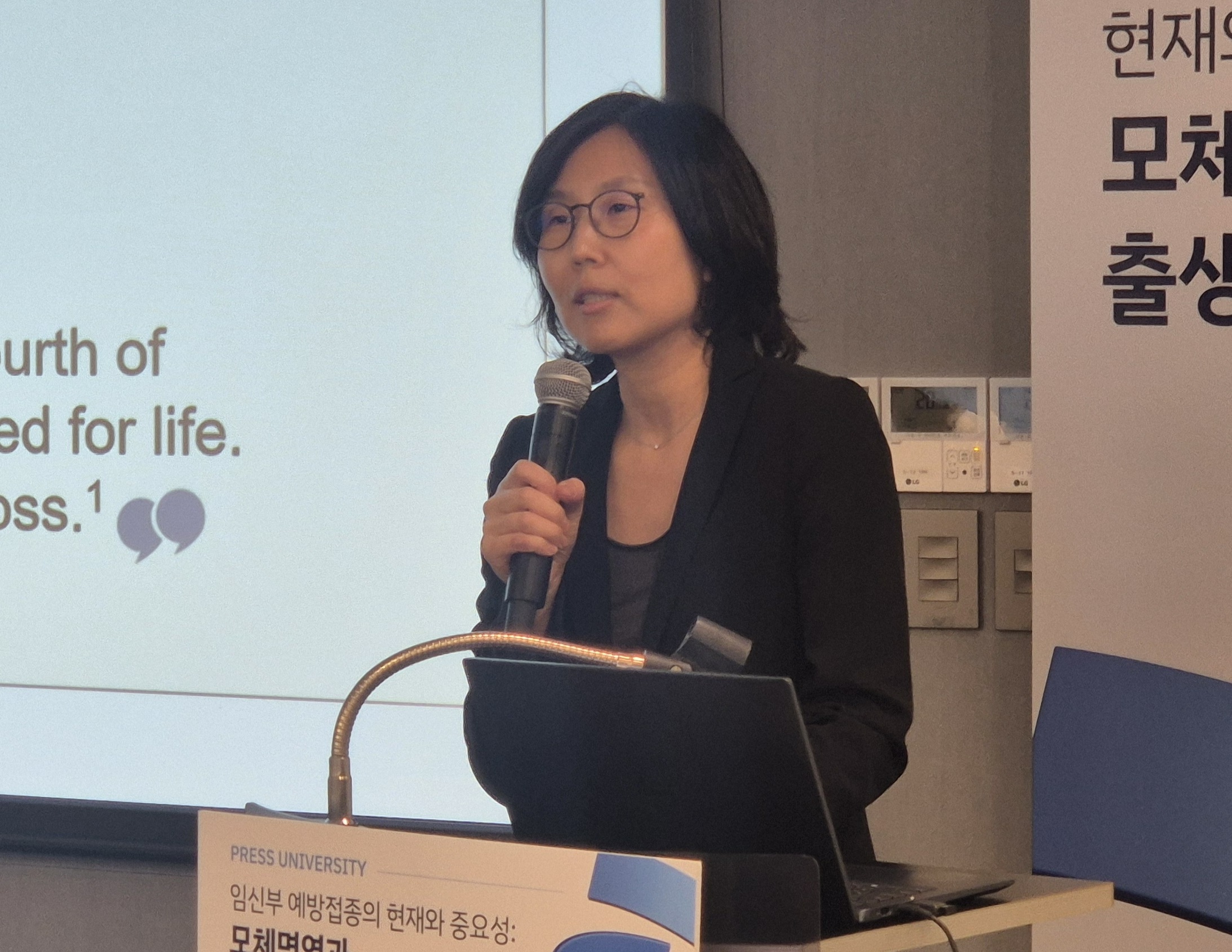
At the event, Professor Ja Young Kwon of the Department of Obstetrics and Gynecology at Severance Hospital and Professor Hyun-Joo Seol of the Department of Obstetrics and Gynecology at Korea University Guro Hospital presented the principles of vaccination during pregnancy, real-world clinical application, and the medical significance of infant protection through maternal immunity.
During pregnancy, various physiological changes occur across the immune, respiratory, and cardiovascular systems. Consequently, when infections occur, the risk of disease severity, hospitalization, or severe complications can increase. Furthermore, inflammatory responses driven by severe infections can adversely affect pregnancy outcomes, such as preterm birth or stillbirth.
Professor Kwon stated, "Maternal immunization not only protects the mother herself, but also holds vital significance in protecting the fetus and the newborn after birth."
Although newborns are exposed to various pathogens immediately after birth, their immune systems remain insufficiently mature. Even following vaccination, establishing adequate immunological memory requires repeated doses and time.
According to Professor Kwon, newborns have a high proportion of naive immune cells that have not encountered antigens at birth, and their capacity to rapidly differentiate into memory B cells, which govern long-term immunity following antigen exposure, is limited compared to adults. Consequently, a vulnerable 'immune gap' susceptible to infection can occur during early infancy.
Utilizing maternal antibodies to bridge the postbirth vulnerability window
Maternal immunity serves as a key strategy to bridge this immune gap in early life.
Because it takes time for infants to develop sufficient immunity, a vulnerable window for infection inevitably arises in early life. Experts explain that elevating maternal antibody levels through vaccination during pregnancy directly increases the volume of antibodies transferred to the fetus.
When a pregnant woman generates antibodies via vaccination, immunoglobulin G (IgG) antibodies cross the placenta to the fetus. The infant can then utilize these maternally derived antibodies after birth to respond to infection.
Gestational timing also impacts antibody transfer. The expression of Fc receptors responsible for IgG transport across the placenta increases progressively toward late pregnancy.
Professor Kwon noted that transplacental transfer of maternal IgG becomes highly active starting around 28 to 32 weeks of gestation, with fetal antibody concentrations rising toward late pregnancy. Accordingly, administration is timed during late pregnancy based on specific vaccine characteristics to align peak maternal antibody response with optimal transplacental transfer windows.
Professor Kwon explained, "If we elevate maternal antibody levels through vaccination before transfer, the infant can start life with high antibody titers from the moment of birth," and added, "Even as antibody levels gradually wane later on, the baby can remain protected over a longer duration."
She added, "Maternal immunization delivers a triple benefit: protecting the mother, protecting the fetus, and ultimately protecting the newborn."
Accumulating clinical evidence for maternal vaccines… Global expansion of target populations
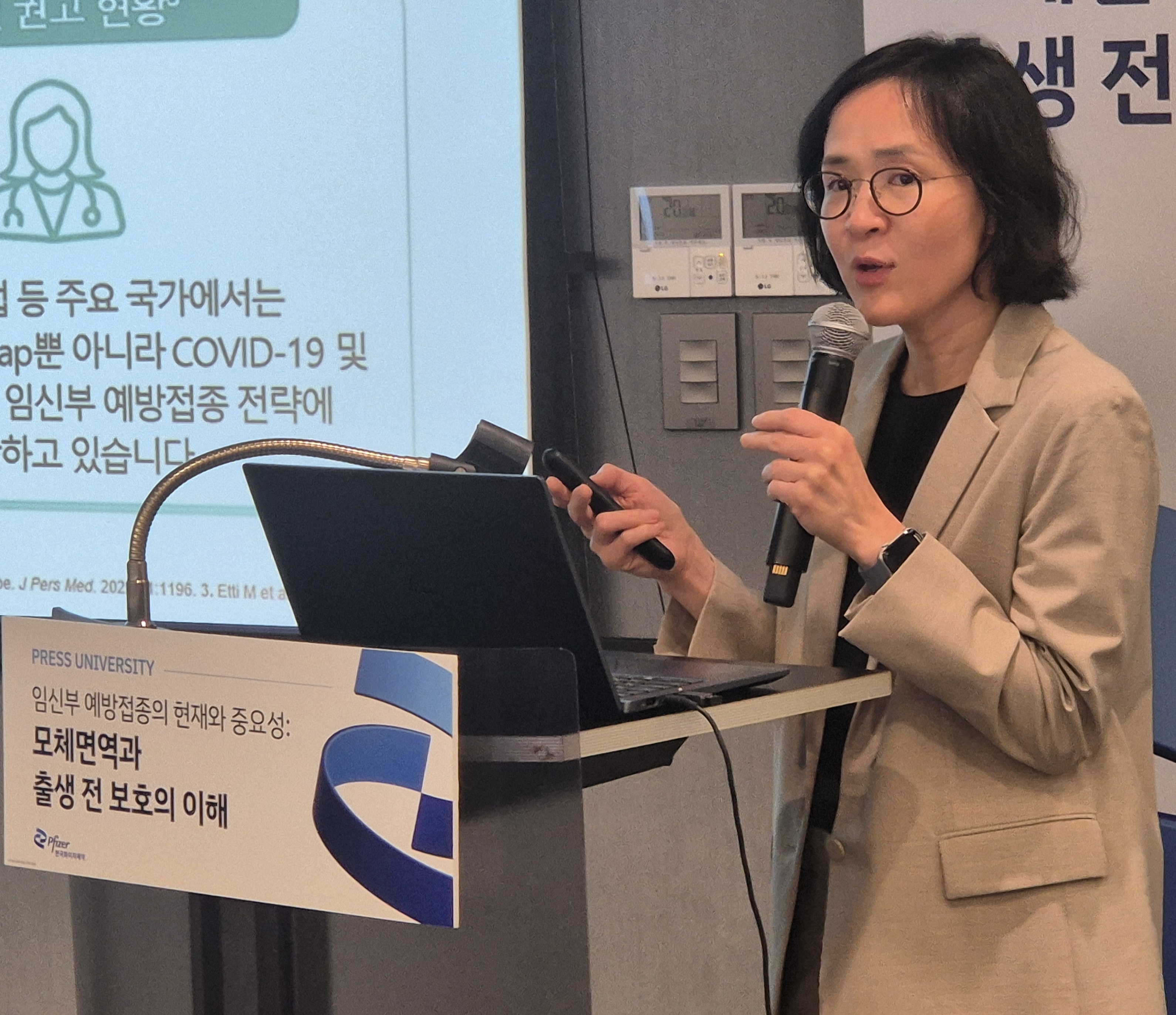
Maternal immunization is already widely utilized in real-world clinical practice, primarily centered on influenza and pertussis.
Professor Hyun-Joo Seol emphasized that influenza vaccination reduces infection risks and disease severity in mothers while concurrently helping prevent infections in infants during early life.
In particular, influenza vaccination holds significant medical value in bridging the immune gap before 6 months of age, when infants are not yet eligible for direct vaccination. Citing domestic and international real-world data, Professor Seol added that maternal vaccination reduced maternal influenza infection and hospitalization risks, while protective efficacy against infection was also confirmed in infants.
Pertussis vaccination carries a distinct objective of infant protection. While pertussis often presents with mild severity in adults, it can cause severe complications such as apnea or lead to mortality in infants under 1 year of age, particularly those under 2 months.
Consequently, administering the Tdap vaccine during pregnancy to transfer maternal antibodies to the fetus serves as an established strategy to protect infants until they receive their primary pediatric immunization.
Recently, the application of maternal immunity has expanded to include respiratory syncytial virus (RSV).
While RSV infection often manifests as a mild cold in adults, it can precipitate severe lower respiratory tract infections, such as bronchiolitis and pneumonia, in infants and young children. It is regarded as a critical target for prophylaxis due to the heavy clinical burden of hospitalizations and ICU admissions in infants under 1 year old.
Professor Seol highlighted that unlike conventional maternal vaccines, the RSV vaccine was designed from its initial clinical development stage with the primary objective of protecting infants via maternal passive immunity.
Professor Seol noted, "While influenza and COVID-19 vaccines were originally developed for the general population and subsequently accumulated clinical data in pregnant women, the maternal RSV vaccine differs in that it was specifically engineered from inception to protect infants through maternal passive immunity."
Globally, more countries are integrating maternal RSV immunization into public health policy.
According to Professor Seol, several countries have incorporated maternal RSV vaccines into their National Immunization Programs (NIPs). At the same time, guidance in the United States recommends late-pregnancy vaccination to prevent RSV-associated lower respiratory tract disease in infants after birth.
Professor Seol stated, "Maternal vaccination represents a critical passive immunization strategy that protects the mother while bridging the immune gap in infants immediately after birth," and concluded, "From now on, when applying novel vaccines to pregnant women, providing robust evidence and accurate communication regarding gestational safety alongside clinical efficacy will be crucial."
-

- 0
댓글 운영방식은
댓글은 실명게재와 익명게재 방식이 있으며, 실명은 이름과 아이디가 노출됩니다. 익명은 필명으로 등록 가능하며, 대댓글은 익명으로 등록 가능합니다.
댓글 노출방식은
댓글 명예자문위원(팜-코니언-필기모양 아이콘)으로 위촉된 데일리팜 회원의 댓글은 ‘게시판형 보기’와 ’펼쳐보기형’ 리스트에서 항상 최상단에 노출됩니다. 새로운 댓글을 올리는 일반회원은 ‘게시판형’과 ‘펼쳐보기형’ 모두 팜코니언 회원이 쓴 댓글의 하단에 실시간 노출됩니다.
댓글의 삭제 기준은
다음의 경우 사전 통보없이 삭제하고 아이디 이용정지 또는 영구 가입제한이 될 수도 있습니다.
-
저작권·인격권 등 타인의 권리를 침해하는 경우
상용 프로그램의 등록과 게재, 배포를 안내하는 게시물
타인 또는 제3자의 저작권 및 기타 권리를 침해한 내용을 담은 게시물
-
근거 없는 비방·명예를 훼손하는 게시물
특정 이용자 및 개인에 대한 인신 공격적인 내용의 글 및 직접적인 욕설이 사용된 경우
특정 지역 및 종교간의 감정대립을 조장하는 내용
사실 확인이 안된 소문을 유포 시키는 경우
욕설과 비어, 속어를 담은 내용
정당법 및 공직선거법, 관계 법령에 저촉되는 경우(선관위 요청 시 즉시 삭제)
특정 지역이나 단체를 비하하는 경우
특정인의 명예를 훼손하여 해당인이 삭제를 요청하는 경우
특정인의 개인정보(주민등록번호, 전화, 상세주소 등)를 무단으로 게시하는 경우
타인의 ID 혹은 닉네임을 도용하는 경우
-
게시판 특성상 제한되는 내용
서비스 주제와 맞지 않는 내용의 글을 게재한 경우
동일 내용의 연속 게재 및 여러 기사에 중복 게재한 경우
부분적으로 변경하여 반복 게재하는 경우도 포함
제목과 관련 없는 내용의 게시물, 제목과 본문이 무관한 경우
돈벌기 및 직·간접 상업적 목적의 내용이 포함된 게시물
게시물 읽기 유도 등을 위해 내용과 무관한 제목을 사용한 경우
-
수사기관 등의 공식적인 요청이 있는 경우
-
기타사항
각 서비스의 필요성에 따라 미리 공지한 경우
기타 법률에 저촉되는 정보 게재를 목적으로 할 경우
기타 원만한 운영을 위해 운영자가 필요하다고 판단되는 내용
-
사실 관계 확인 후 삭제
저작권자로부터 허락받지 않은 내용을 무단 게재, 복제, 배포하는 경우
타인의 초상권을 침해하거나 개인정보를 유출하는 경우
당사에 제공한 이용자의 정보가 허위인 경우 (타인의 ID, 비밀번호 도용 등)
※이상의 내용중 일부 사항에 적용될 경우 이용약관 및 관련 법률에 의해 제재를 받으실 수도 있으며, 민·형사상 처벌을 받을 수도 있습니다.
※위에 명시되지 않은 내용이더라도 불법적인 내용으로 판단되거나 데일리팜 서비스에 바람직하지 않다고 판단되는 경우는 선 조치 이후 본 관리 기준을 수정 공시하겠습니다.
※기타 문의 사항은 데일리팜 운영자에게 연락주십시오. 메일 주소는 dailypharm@dailypharm.com입니다.

- [Reporter's View] Surgical robotics, What is needed to export domestic tech?
- Reporter's view | Hwang, byoung woo