
- LOGIN
- MemberShip
- 2026-07-22 06:47:10
- InterView
- I know CRA grievances better than anyone else
- by Lee, Tak-Sun Nov 14, 2019 09:59am
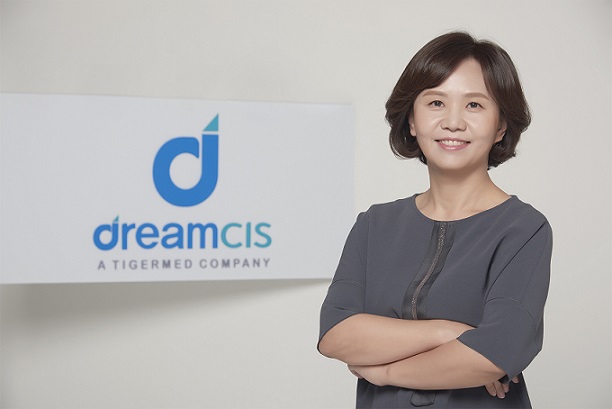
- For CRA(Clinical Research Associate), it is very hard to communicate with many professional people. It's even harder if you don't have expertise. I wish my juniors would work with proud. I would like to have the pride of being an expert that communicates effectively with clinical expertise, monitors clinical practice, and leads clinical practice overall. Kyungsun Kong(52 years old), CEO of dreamCIS knows CRA grievances better than anyone else. The core of the CRO(Clinical Research Organization) is often called CRA. However, CRAs have a lot of work and are irregular, so they often move over. when working as a clinical monitoring agent, you may get hurt by professional experts, such as doctors and nurses. However, the power of the CRA may gaurantee clinical trial quality. It's no wonder that pharmaceutical companies are rushing to many CROs with competent CRAs. CEO Kong was also one of the most competent CRAs. In 1995, she began to work clinical trials as a clinical nurse (CRC) at SMC. The CRC is responsible for coordinating communication between subjects and researchers. In 2003, she conducted clinical trials for 25 years, including Wyeth, Parexel and YUHAN. She worked as a PM managing CRA at Parexel, and she took care of the clinical trial of Lasertinib, a lung cancer drug as a clinical development team leader at Yuhan. CEO Kong is probably the only one who started as a CRC and experienced various duties in the clinical field and became the head of the domestic CRO. This is because most domestic CROs maintain owner representative system. About the reason why she joined dreamCIS last April,“I wanted to try new experience and challenge, CEO Gong said. dreamCIS is an important global CRO since it was acquired by Tigermed in China in 2015. It was the first domestic CRO to undergo preliminary screening. By the end of this month, it will be decided. CEO Gong said, "The goal is to stably grow dreamCIS as a global CRO and It is very symbolic to have listed stocks as a leading company in the industry. It is expected in many ways.“ In recent years, dreamCIS has been gradually increasing global challenges in cooperation with Tigermed. 20-25% of current projects are global. Most of them carry out clinical tasks in China and Korea. CEO Gong said, “Chinese pharmaceutical companies are also growing so much that there is an increasing demand to conduct simultaneously clinical trials in Korea and Japan because the data is mutual recognition.” She said, "Since the merger of Taigermed, the progress of global tasks has been increasing considerably, and there are many opportunities for domestic companies to enter China." I want to contribute to the successful entry of Korean companies to China. ” CEO Gong plans to carry out his management philosophy with a focus on improving clinical quality. She said, “The important thing is clinical quality and I pay much attention to education and talent Recruitment.” Speaking as CRO, It is the key to have good talented CRA. Especially good CRAs control clinical quality. More than 50% of the 200 employees are CRAs in the company, and 80% of them are women. CEO Gong plans to devote herself to building a good company for women to work.“There are many benefits according to the number of women, and many of our employees are working from home and flexible, and I will continue to encourage them.” "I have experienced various companies as a female representative and also as a working mom, but I think that the diverse and flexible culture and system of dreamCIS provide more opportunities for competent working moms and young women focusing on their work creatively", she added. While working as a CRA, she had a lot of hard work, but much experience brought her here with pride. She advised, "To work with professionals such as nurses, pharmacists, doctors or nurses, you need expertise in the clinical field you are in charge of, and you need to communicate based on that knowledge. I wish our staff, as well as juniors working in the clinical industry, would be proud to work with them. ” “Global CROs are starting from the CRA and going up to the country head as they build up their careers, and I also have come to this position as I build up my career from the CRAs." I think it will be a good model for new emloyees and juniors to work” she said. CEO Gong concluded that she is planning a multi-faceted business after the IPO and plans to focus on a business based on the CRO.
- InterView
- 50-year-old Pfizer Korea “For both patients and innovation"
- by Eo, Yun-Ho Nov 06, 2019 08:59am
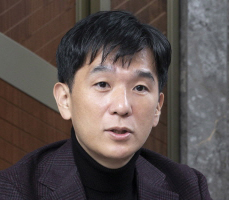
- CEO Oh Dong-wook Half a century in Korean pharmaceutical industry, Pfizer Korea seems to have mastered ‘how to win’ in the Korean market. Pfizer took its first step into the Korean market as a joint corporation with Joongang Pharmaceutical in 1962 and founded Pfizer Korea in 1969. Except for a couple of times, Pfizer Korea’s sales have been the top among global pharmaceutical companies in Korea. Last year, the company had the highest sales so far of 734.4 billion won, a level no global company has ever reached. The key to its driving force is in ‘evolution’. The company has sought after ‘cash cow drugs’ by acquiring numerous companies like Warner-Lambert Company, Wyeth, Pharmacia, and Hospira, and also undergone various organizational reform like the recent split-up with Upjohn. Through series of changes, Pfizer and Pfizer Korea have achieved successful ‘survival’ and ‘development’ every single time. But, not all good drugs can make a success. If it were not for Pfizer’s solid foundation, its profitable drugs would not have made it. Celebrating the 50th anniversary of Pfizer Korea, CEO Oh Dong-wook (50) of Pfizer Korea spoke of the company’s history and the future. - Half a century in Korea, what have been the most important milestones for Pfizer Korea? I can say about three major achievements to note. First, Pfizer contribution on making patients live happier lives by providing outstanding new drugs. Second, Pfizer’s continuous effort to become a responsible corporate citizen of the community and to conduct long-running corporate social responsibility (CSR) activities. Many of CSR activities Pfizer Korea provide are over a decade old. Last but not least, the fact that Pfizer Korea has consistently contributed in creating a healthy pharmaceutical and bio environment along with various stakeholders to advance new drug development, health and society in Korea. Numerous clinical trials have been conducted in Korea so far, which we expect the gained experience and tips on developing innovative new drug with global company would come through eventually and immensely contribute to the future of new drug in Korea. -‘Drug’ has a unique quality as a commodity, which is why the sense of ethics is always under the limelight. But as a business, profit would have to be the main objective. What is Pfizer doing to balance out two polarizing values? Pfizer seeks for an ‘innovation that changes patient’s quality of life’. Not only Pfizer, but many of pharmaceutical companies used to maximize profit centering customer (healthcare provider) in the past. However, this day and age requires immensely high level and standard of ethics. And it makes a sense for stakeholders to have higher level of expectation on the industry than any other industry. In such strict environment, Pfizer would never seize to make every decision prioritizing and centering patients. -Reflecting patients’ voice is not that easy. A pharmaceutical company directly engaging with patients has its limitation, and a lot of times patients cannot have their way regardless. Despite availability of a great new drug, limited access (health insurance coverage) puts a gap between patient and the treatment. That is why patient advocacy groups usually voice out on drug approval review and National Health Insurance (NHI) listing policy-making processes. Medical industry has a quite unusual ecosystem, where a patient is an ultimate consumer, but an experienced and knowledgeable healthcare provider is making decisions on prescription. While a company supplies drug, consumer and National Health Insurance Service (NHIS) are paying for the drug. Even the ultimate consumer raises an issue, changes can only be made when experts’ judgment and reasonable decision making coincide. The decision making process has improved significantly compared to the past, but it still has a room to grow. As a leading company in pharmaceutical and bio sector, Pfizer plans to engage in various activities with various stakeholders in community, such as industry organization, healthcare providers’ group and patient advocacy group, to reflect patients’ voices on government policies. -As you mentioned, patients’ voices in Korean society is skewed on ‘NHI reimbursement’ and now their interest is growing on drug pricing for the same reason. The administration plans to reduce their expense on drug with expired patent and reuse the saved finance on introducing new drug to Korean market. After separating the organization into two and ‘Pfizer Upjohn’ solely dealing with expired patent, the said government’s plan could be a bad news. As a whole company, what do you think of the direction government policy is taking? Pfizer Korea has a say in making the best choice for patients, regarding what Pfizer Upjohn Korea and Pfizer Biopharmaceuticals Korea do in respective treatment sectors. My role is to represent general operation of the company when discussing with government body and other stakeholders, and respective branches are to make a reasonable decision for their own businesses. -Going back to Pfizer’s principle of ‘centering patient’, would it be safe to say Pfizer Upjohn would not oppose against Korean government when it reduces pricing of drug with expired patent? That is correct. As I said before, Pfizer’s aim is to supply as many new drugs as possible to patients and to bring changes to their lives. Regardless of patent expiration, we believe changing the lives of patients has enough meaningful merit. -But as the age of high-cost drug approaches, the gap between the government and pharmaceutical industry’s views on drug pricing is getting wider. I assume Pfizer Korea would experience discrepancies when negotiating with Korean government and persuading the headquarter office. Some are concerned about global pharmaceutical companies giving up on Korean market as more countries are referencing drug prices in Korea. Many have contributed for patients to benefit from Pfizer’s innovative new drug, but our companies’ staffs had poured in vast amount of work into it as well. We do our best to promptly introduce new drug to Korean market. And in the process, the company tries to find the middle ground between negotiating with Korean government and convincing headquarter as soon as feasible. One could simply think, lowering drug price would be the answer for putting patients first. Or in an extreme sense, providing drugs for free would be the answer if we were to truly think of patients. But, in the end, we are a company, and a company has to be sustainable. We are always faced with discrepancy between insured drug pricing and headquarter-approved drug pricing. Obviously, we are working hard to make Korean patients to receive benefit as soon as possible, and that is that is the direction we taking. While Chinese market is growing rapidly, many markets around the globe, including Taiwan, Thailand, Saudi Arabia and China have started to reference drug price in Korea. The U.S. also announced it would reference price in Korea as well. As for the headquarter office, making deficit after investing astronomical amount in R&D for new drug and receiving inadequately low pricing would be a devastating result. It would ultimately hinder any company from investing in future pipeline. This is why we need an appropriate pricing. -Let us now focus more on Pfizer. Upjohn was split from the recent reorganization. What is it like to manage the company in the new state? To enhance efficiency of Global Pfizer’s organizational structure, Pfizer Korea separated itself into two; Pfizer Biopharmaceuticals Korea focusing on new drug development and innovative drug, and Pfizer Upjohn Korea providing drug with expired patent and generic. We expect the two corporate bodies to mutually strengthen potential growth in respective fields. Based on a variety of drug pipelines and treatments each business sector owns, Pfizer aims to improve patient’s quality of life by providing treatment timely to many more patients. The approaches we would take are still in talks, but staffs’ role and responsibilities would be unchanged. -When a drug owned by Pfizer Biopharmaceuticals has its patent expired, then is it transferred to Pfizer Upjohn? No, it wouldn’t be. Drugs are categorized by disease group. -It feels like in the future, Pfizer Biopharmaceuticals and Pfizer Upjohn would be completely split up and would become completely different two entities. For now, management direction or timing has not been specifically discussed, yet. Until everything is set, both bodies would be managed under the name of Pfizer Korea. -How is the current status of the consumer healthcare (OTC) sector joint venture with GSK? As far as Global Pfizer goes, it officially announced closing of joint venture with GSK, as of Aug. 1. And accordingly, Pfizer’s consumer health sector was transferred to the new joint venture. However, each region would have different timing as to when the joint venture would take over the management. In case of Korea, the closing is delayed as the company has to complete the necessary approval process and end some ongoing operations. When the deal is finally closed, Pfizer’s staffs would undergo some organizational changes and those would be notified after everything is set in stone. -How would you define the last 50 years and the next 50 years of Pfizer Korea? Looking back at past 50 years, the company went through absence of well-established healthcare and corporate environment when it was first founded in 1969. Back then, Separation of Prescription and Dispensing (SPD), or proper medical and pharmaceutical regulations were not stipulated. But now, we feel quite proud of how Pfizer Korea contributed in building the current healthcare environment alongside many stakeholders by placing a brick at a time. In the end, we think Pfizer contributed in bringing meaningful changes to local communities and patients suffering from disease. But it also means Pfizer Korea still has a long way to go, although it made proud achievements under the corporate objective and goal. As a responsible corporate citizen and leading pharmaceutical company, Pfizer Korea would continue to keep its leadership among patients and in local community.

- InterView
- [Reporter’s View] When intent doesn’t meet reality
- by Hwang, byoung woo
- While covering the issue of disinfectants used at pharmaceutical plants, the first thing that came to mind was the distance between regulatory necessity and real-world application.In the wake of South Korea’s deadly humidifier disinfectant scandal, few would dispute the need for tighter controls on chemicals and biocidal products. The intent of the system, which is to manage potentially hazardous substances in advance and establish clear standards for their use, is necessary.However, just because a system is designed with the right intentions does not mean it translates seamlessly into the field. Particularly in spaces like pharmaceutical manufacturing, where rigorous quality control systems are already in place, even minor changes in standards can lead to compounding procedural and validation burdens.On the surface, the issue appears straightforward. A biocidal product management system has been introduced, and pharmaceutical plants simply need to use disinfectants and sterilizing agents that meet the applicable standards. Yet, at pharmaceutical manufacturing sites, switching even a single disinfectant goes far beyond a simple change in procurement.This issue is unrelated to the ingredients or safety of the manufactured vaccines themselves, as the biocidal substances are not entering the vaccine drug substance or being mixed into finished products. The issue involves products used to disinfect manufacturing environments, including work areas, cleanrooms, and controlled areas at pharmaceutical plants.At pharmaceutical plants, disinfectants used to maintain aseptic conditions in work areas and cleanrooms are managed under Good Manufacturing Practice (GMP) standards. In the case of products such as vaccines and injectables, where aseptic control is particularly important, the manufacturing environment itself forms part of quality control.Therefore, every single disinfectant is managed according to the area and method of use, the amount applied, the replacement cycle, and relevant quality documentation. Before switching to a new product, manufacturers must verify that it provides the same disinfecting efficacy as the existing one and assess whether it may cause corrosion or reactivity issues with equipment or materials. Where necessary, cleaning and disinfection procedures, environmental monitoring standards, and standard operating procedures may also need to be revised.Nor can a product be used immediately at a GMP manufacturing site simply because it has received regulatory approval. A product that meets environmental safety standards is not necessarily the same as one suitable for maintaining an aseptic environment at a pharmaceutical plant.This is where gaps between the regulatory systems of different ministries become apparent. Products applied directly to the human body are regulated by the Ministry of Food and Drug Safety, while disinfectants used in manufacturing environments fall under the Ministry of Climate, Energy and Environment regulations. While the division of roles seems reasonable, the two domains do not neatly divide within the space of a pharmaceutical manufacturing site.From the Ministry of Climate, Energy and Environment’s perspective, such a product would be a biocidal product used at a workplace. From the Ministry of Food and Drug Safety’s perspective, however, it is a GMP-controlled element used to maintain the pharmaceutical manufacturing environment. The same product is viewed through two conflicting regulatory frameworks.This does not mean that safety regulations should be eased in any way, as the lessons of the humidifier disinfectant tragedy are clear. Rather, the application of safety regulations must be refined so that they do not give rise to new supply risks.For products such as influenza vaccines, which must be supplied during a specific period, even a minor change can become a burden. Replacing and validating a disinfectant takes time, and this may also create risks for production and release schedules.What is needed now is not a dispute over responsibility. The government should preserve the purpose of the regulations while establishing implementation standards that reflect the unique GMP requirements of pharmaceutical manufacturing sites. The industry, for its part, should not merely ask for grace periods, but should review the products in use and put systems in place to respond to the regulations.Regulations are becoming more stringent, yet sites that fall across ministerial boundaries are often left in regulatory blind spots. The issue of disinfectants used at pharmaceutical plants is one such example.It is time for the system to acknowledge the realities of the field and why changing a single disinfectant requires months of validation and paperwork.
