
- LOGIN
- MemberShip
- 2026-07-22 03:12:18
- Product
- MFDS' statement of consent to Rx of the active ingredients
- by Kang, Shin-Kook Dec 07, 2022 05:55am
- While Oh Yoo-kyung, the head of the Ministry of Food and Drug Safety, said, "I agree" with the prescription of the ingredient name, he took a step back, saying in an official letter sent by the Ministry of Food and Drug Safety to the doctors' organization. According to an official letter sent by the Ministry of Food and Drug Safety to the Korean Medical Association on the 5th, "As the current form of the division of medicine is agreed upon through consultation, the prescription of ingredient names and product names is considered to be a matter of social consensus such as medicine led by the competent ministry." The Ministry of Food and Drug Safety's official letter is a reply to a protest sent by the Medical Association to the Ministry of Food and Drug Safety. In an official letter to the Ministry of Food and Drug Safety in October, the Medical Association criticized, "Prescription of active ingredients is a serious matter that damages the doctor's right to prescribe and patients' right to care and health." Director Oh briefly responded to Seo Young-seok's claim to introduce a prescription for ingredient names during a parliamentary audit on October 20, saying, "I actively agree." Oh's remarks eventually drew opposition from the medical community. Led by the Pediatric and Adolescents Association, the Internal Medicine Association also criticized Oh's remarks, claiming "selective division of labor." Pharmacist groups also issued a series of counter statements, saying, "It is the professional selfishness of doctors to stick to the prescription of the product." In the end, the controversy over the prescription of the ingredient name turned into a lawsuit between the Pediatrics Association and the Seoul Pharmaceutical Association. Why were doctors so opposed to the remarks of the head of the Ministry of Food and Drug Safety, who was not in charge of prescribing active ingredient names? The analysis that the biggest reason is a special situation called the Corona pandemic is gaining traction.
- Product
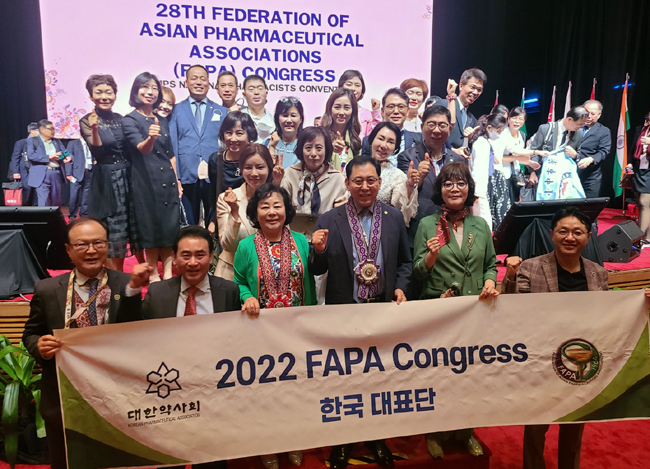
- Opening of FAPA (The Federation of Asian Pharmaceutical Asso
- by Kim JiEun Nov 11, 2022 05:52am
- KoreaAn academic festival of Asian Pharmacists was held in Kuala Lumpur, Malaysia. The interest of the Asian pharmacist community was also by far the digital great transformation of infectious diseases caused by COVID-19. On the 10th FAPA ( Asia Pharmaceutical Federation) and the academic competition center were opened at the Cala Convention Center. Due to the spread of the COVID-19 event, the event will be held for four years since the event of COVID-19 event. Under the theme of Pharmacists building better healthcare systems, Korea, Malaysia, and Taiwan participated in the event. In Korea, about 70 pharmacists and pharmacists participated. Chairman FAPA Yolanda R. Robert L At the opening ceremony, the FAPA jack Shen Lim, said, "The event will be held in Hong Kong and Sri Lanka," said, "The event will be held online in four years." At the opening ceremony, Jack Shen Lim, chairman of the organizing committee, said, "The event scheduled to be held in Hong Kong and Sri Lanka in 2020 has been postponed due to Corona," adding, "This year is an important turning point for FAPA to hold the first online and offline combination event." Malaysia, which hosted the event, said it had an opportunity to expand the role of pharmacists as pharmacists participated in vaccinations due to the spread of COVID-19. Malaysia's Amrahi Buang said, "In Malaysia, vaccination was given as a new pharmacist role, and we had an opportunity to expand the role of pharmacists and expand our functions." He said, "In addition, as pharmacists participated in preventing Nicotine addiction, it was an opportunity for pharmacists to increase their role in medicine." Pharmacists are playing an important role in primary medical care, he explained. Asian countries also suffered from a shortage of medicines due to COVID-19, and some said that the role of pharmacists has once again been proven in the process. FAPA Honorary Chairman Nam Soo-ja won the Achievement Award The 28th FAPA General Assembly and Academic Conference opened in Kuala Lumpur, Malaysia FAPA Yolanda R. Robels, chairman of FAPA, said, "We are suffering from a shortage of medicines amid a global disaster in COVID-19," adding, "Pharmacists are involved in the entire process of producing and distributing medicines in addition to local pharmacies." In the midst of the drug shortage, pharmacists actively responded and played a significant role in the disaster recovery, he said. The conference will feature three Plenary sessions and four symposiums. Ian Bates, a professor at the University College London School of Medicine in the UK, will give a keynote lecture on "Development of a Better Health System through Development of Better Human Resources." Malaysia's Jack Shen Lim, who chaired the event's organizing committee as the new chairman of the FAPA, was elected at the event, while Nam Soo-ja, honorary chairman of the FAPA, won the Achievement Award. The FAPA, which was founded in 1964, is currently participated by 24 member countries, including Malaysia, Korea, Japan, and Taiwan, and holds general meetings and academic conferences every two years.
- Product
- KMA proposes preconditions for non-face-to-face treatment
- by Kang, Shin-Kook Nov 11, 2022 05:52am
- Regarding the bill that allows non-face-to-face treatment that was recently submitted by the ruling party, the medical community asked the government to actively engage in communication with interested parties in the legislation process, as the systemic side effects should be addressed first. On the 10th, the Korean Medical Association (Chairman: Pil-Soo Lee) disclosed its opinion regarding the amendment to the Medical Service Act that was submitted by Rep. Jong-Sung Lee of the People Power Party. KMA said, “Considering the large number of side effects that have risen from the temporary implementation of the non-face-to-face treatment system that had been allowed due to COVID-19, the system itself should be first thoroughly evaluated and verified.” It added, "As it is clear that the side effects, such as the risk of misdiagnosis due to unproven safety and effectiveness, unclear legal responsibility for the results of treatment, and the collapse of the medical delivery system, will cause serious harm to public health, we must first prepare measures to address these issues.” “For non-face-to-face treatment to be carried out properly, the doctors that carry out the treatment should be able to safely and effectively apply it in practice. Mutual understanding and efforts should first be made on both parts to resolve the various concerns that have been arising around the implementation of the system.” “If the proposed bill is legislated in the current state without undergoing such processes, facilitating smooth cooperation across the medical community for the development of the system will inevitably become more difficult, and ultimately cause great confusion. Therefore, we ask the government to actively communicate with the medical community in advance and examine the specific issues that remain in the system.” Lastly, KMA added, ”We have consistently held the position that the general principle of face-to-face treatment shouldn't be undermined under the pretense of convenience to use non-face-to-face treatment, remote monitoring using wearable devices, patients’ transmission of self-information, and over-the-phone prescriptions. In order to preserve the original value of healthcare in protecting the people's lives and right to health, non-face-to-face treatment can never replace face-to-face treatment, and should only be used as a means of assistance.” Meanwhile, the bill proposed by Rep. Jong-Sung Lee contains measures that allow for non-face-to-face treatment to supplement face-to-face treatment, as well as authorize medical institutions at the clinic level to provide non-face-to-face treatment to a limited number of patients who have limited access to healthcare such as those in island/remote areas, infectious disease patients, overseas residents or the disabled, correctional facility patients, and chronically ill patients. With similar bills already been submitted to the National Assembly, it is expected that they will be collectively reviewed by the Health and Welfare Committee in the future.

- Product
- Imported Tylenol is sold at half the domestic price
- by Kim JiEun Nov 03, 2022 05:54am
- Tylenol is being sold on Online and SNS, has given up selling it because they could not get it at pharmacies. It is sold illegally through overseas direct purchases and parallel imports, and there is a need for the government to strengthen its crackdown. On the 1st, an informant informed Dailypharm that drugs such as Australian Tylenol are being sold in the form of joint purchases on certain SNS accounts and online sites. "OTC such as Tylenol is sold on SNS and online, and it is questionable whether it has been officially approved for import and sale." "If online sales of imported drugs in this way are subject to reporting, measures will be needed to prevent reckless overseas purchase agencies or parallel imports," he said. The SNS account, which was informed by the informant, was selling 100 tablets of Australian Tylenol 500mg through a joint purchase method, and it was purchased by going to the site listed on the SNS account. 100 tablets of Australian Tylenol 500mg were sold for 18,900 won on the site linked to SNS. The existing price is 35,000 won, but it also states that it will be sold at a 46% discount by applying a time sale. The seller said, "I tried to buy Tylenol at the pharmacy, but it was difficult to get it because it was all sold out, and they gave me other products of a similar line," adding, "The pharmacy and convenience store couldn't get it because Tylenol was sold out, and the price was up to 3,500 won." "The pharmacy is based on 10 tablets of Tylenol and the convenience store is based on 8 tablets, and 100 tablets are from 27,000 won to 35,000 won," he added. "As it is about half the price, buy it quickly." In addition to Australian Tylenol, it has been confirmed that a number of illegal overseas direct purchase products are being sold in Korea, including OTCs such as Bepanhen and Fabron Gold A. It is strictly illegal to sell drugs online, including overseas direct purchases and parallel imports. The Ministry of Food and Drug Safety is also conducting self-monitoring on overseas direct purchases and online sales of drugs, but it continues to point out that it is insufficient. Pharmacists said the government needs to tighten crackdowns and sanctions as illegal distribution and online sales of drugs that are feared to be misused and abused continue due to the increase in overseas direct purchases. An official from the Pharmaceutical Association explained, "As overseas direct purchases are related to the Ministry of Food and Drug Safety and the Korea Customs Service, there seems to be no strong crackdown and sanctions." He stressed, "Even if individuals are allowed to purchase and take overseas drugs within a certain limit, clear sanctions are needed for the behavior of purchasing in large quantities and selling them through SNS or online through joint purchases."

- Product
- A fierce battle between MDs & RPhs on Rx of ingredient names
- by Kang, Shin-Kook Nov 02, 2022 05:36am
- A fight between pharmaceutical organizations has begun over the prescription of ingredient names. Oh Yoo-kyung, head of the Ministry of Food and Drug Safety, made an excuse to actively agree to the prescription of the ingredient name, and complaints that have accumulated have been erupting. First, doctors are insisting that patients choose in-house and outpatient preparations. It is also a new opinion of doctors to use a dispensing vending machine. Some suggested that if a vending machine is introduced, doctors will guide the medication directly without receiving medication. In addition, when prescribed with the ingredient name, pharmacists choose the medicine, and the drug equivalence for the generic selected by pharmacists is a major argument against the ingredient name prescription. However, pharmacists say that it is difficult to understand why doctors are prescribing generic drugs, saying that equivalence is a problem. In the end, generic selection may be made by rebates. Pharmacists believe that the recent issue of stock-saving is largely due to the prescription of brand names, not ingredient names and that if cold medicines were prescribed under ingredient names, the inconvenience of patients who could not get drugs would have been reduced. Prescribing ingredient names should be led by the Ministry of Health and Welfare. The Ministry of Food and Drug Safety is not a competent ministry. Nevertheless, why are doctors strongly opposed to the KFDA's statement that they "agree actively" rather than pushing for it? The background of the remarks made by the head of the Ministry of Food and Drug Safety was the inquiry of Seo Young-seok (Democratic Party of Korea), a pharmacist. In the end, doctors seem to have some kind of agreement between a pharmacist-turned-lawmaker and the head of the MFDS and have started to issue prescriptions for ingredient names. However, from the perspective of the pharmaceutical society, prescribing ingredient names is a long-term task, not an urgent task. The agenda only includes activating generic dispensing and the principle of using the international general name (INN) of the patent expiration drug product name. The pharmaceutical society cannot easily talk about prescribing ingredient names. The Pharmaceutical Association said, "One factory is producing the same product under dozens of product names and distributing it on the market." The association said, "Because the situation is like this, prescribing ingredient names and activating generic dispensing are essential policies." The Pharmaceutical Affairs Association said, "Just because there is no ingredient name prescription in the policy proposal, it does not mean that we have given up on promoting the policy. It means prioritizing policies that can be done immediately, such as simplifying post-notification of generic dispensing and introducing INN, he said. What is the situation with the Medical Association? Apart from statements from the Pediatric and Adolescent Association, the Seoul Metropolitan Council, the doctors union, and the opening association, the Medical Association has already sent an official letter of protest to the Ministry of Food and Drug Safety. The Medical Association criticized, "Prescription of ingredient names is a serious matter that undermines prescription rights, patient's right to care and health," adding, "The statement of agreeing to the ingredient name is a serious statement that encourages confusion in the national medical system beyond personal opinion." The Medical Association said, "The prescription of ingredients should be decided only by considering national health as a top priority," adding, "If the government sees this only from an economic perspective in terms of reducing the burden of national drug costs and health insurance drug costs, it is best to abolish the division of medicine and select division of labor." The response to the prescription of the ingredient name of the Medical Association was only a selective division of labor.
- Product
- Benefit standards are the key to the migraine market
- by Whang, byung-woo Sep 16, 2022 05:52am
- Treatment options are also changing at clinical sites as CGRP (calcitonin gene-related peptide)-based migraine treatments are entering or about to enter the benefit range. However, given that the standard is high, it is expected that patients who receive actual benefits will be limited, so it is evaluated that the task to expand accessibility remains. CGRP-based drugs are attracting attention in migraine treatment because they target CGRP pain-causing substances in the migraine market, which has not had a suitable treatment. This is why existing drugs are relatively free from side effects in that they have a mechanism to target only CGRP if they generally suppress pain-causing substances. This is already being paid attention not only abroad but also in Korea. The Korean Headache Society also recommended the use of CGRP treatment as a preventive drug for adult chronic migraine patients in the revised medical guidelines. (Criteria level: I, Recommended level: Strong for). Currently, CGRP target antibody treatments in Korea have entered the market with Lilly's Emgality first, and Handok Teva released Ajovy last year. With high prices still acting as a hurdle, the number of prescription options has also increased as Emgality entered the benefit range on the 1st. In addition, Ajovy, a competitive drug, is also expected to enter the benefit range soon as it is set to negotiate drug prices after passing the 9th Drug Benefit Evaluation Committee review. Experts are also paying attention to the reduction in drug prices due to the entry of benefits. According to the announcement by the Ministry of Health and Welfare, the burden of patient costs has been reduced from about 3.8 million won to 1.15 million won due to the application of Emgality's benefit. Cho Soo-jin, chairman of The Korean Headach Society, said, "The migraine itself has been used at a cost burden in that it hinders the quality of life and reduces work efficiency," adding, "The fact that migraine treatment has been paid is important in that it is the beginning to expand into areas where migraine is recognized as essential." It is good news that many patients hesitated to receive treatment due to high costs. Lee Won-gu, a professor of neurology at Kosin University Hospital, said, "It has been difficult for medical staff to recommend treatment to patients due to price barriers." He said, "As we have entered the salary, accessibility will improve from the perspective of medical staff and patients." However, some say that there may be fewer patients than expected as Emgality's benefit standards are difficult. According to the Ministry of Health and Welfare, Emgality's detailed criteria for health insurance benefits are preventive measures for chronic migraine patients aged 18 or older that meet the International Headache Classification (ICHD-3) diagnostic criteria. A response evaluation (headache period, MIDAS, etc.) should be conducted every three months before administration begins (within the last month) and after administration, and the administration period is applied for up to 12 months, patients who have a history of migraine for at least one year, have a monthly headache for at least six months before administration for at least 15 days, and have migraine headaches for at least eight days a month, and patients who have failed to treat three or more types of migraine prevention drugs within the last year (with the maximum dose of each drug, the number of migraine days per month does not decrease by 50% or cannot be used as side effects or taboos even after at least 8 weeks), if looking at the details. Professor Lee said, "There was a discussion among experts that there was a risk of cutting if the standards were not used well for patients who needed to be used," and explained, "As we need to prove the records, history of treatment, and headache period, we think the prescription may be limited at primary clinics or general hospitals." If the use of the treatment is recognized for up to one year or if the treatment effect is not proven every three months, the elimination is also expected to be a task in the future. Cho said, "If CGRP-based treatments are recognized as a single drug, they are recognized for up to one year, but in some cases, 18 months or more may help patients." He said, "Even if Ajovy enters the benefit, it is currently stipulated that the drug cannot be changed, so it remains to be seen how to evaluate this part in the future."
- Product
- Change of insurance code for Tylenol ER 650mg
- by Kim JiEun Aug 31, 2022 05:40am
- Pharmacists say, "There's no inventory, but there's no point changing the billing code."Should we just fill up the existing medicine?" While the billing code for Tylenol ER, which ran out of stock at pharmacies, has changed, the company's notice itself has become meaningless at pharmacies. According to Johnson & Johnson and the pharmacy in Korea on the 29th, the prescription code for the existing Tylenol ER 650mg will be deleted as of September 1. The move comes after Tylenol's manufacturer was changed from Janssen Korea to Johnson & Johnson Korea, and the company announced the details to retailers and pharmacies in July. In the announcement, Johnson & Johnson Korea said, "After the change of the billing code, the new product was newly announced on June 23, 2022, and the existing product before the change is recognized as a target of medical care benefits by August 31." The billing code will be changed from 646900690 to 646902600. The company also announced that new products will be shipped sequentially from mid-July. In the pharmacy, various opinions were made ahead of the change in Tylenol ER 650mg claim code. Originally, inventory before the change of the claim code can be prepared and claimed by August 31 according to the notice of the Ministry of Health and Welfare, and after that, it is not possible to claim. Existing inventory must be returned to pharmaceutical companies through purchased wholesalers. All products of Acetaminophen are in severe shortage, and in particular, Tylenol ER 650mg has not been in stock at pharmacies for months. Due to this situation, some pharmacies that have existing inventory are known to have set up a policy to prepare existing billing code products by entering them into new codes. A local pharmacist said, "In fact, it is the same drug, but the billing code has been changed, so we cannot use it, and we have to discard the medicine that we cannot get because there is no one." And he said, "Some pharmacists say that they input and use existing code products in new code, but this is not what they should do originally." Pharmacist Lee said, "We can't get the medicine, but we have to ignore the regulations and just prepare it," adding, "More ridiculous, neither the Ministry of Health and Welfare, the Ministry of Food and Drug Safety, nor the Pharmaceutical Association have taken any action during the grace period from July to August." Some say that the change in the billing code is meaningless at a time when Tylenol cannot even be seen at pharmacies. The company said it would ship new products with changed billing codes after July, but in fact, related products are not properly stocked in pharmacies. A pharmacist in Seoul said, "If the code changes, a new product must be released, but there is no news," adding, "In fact, the pharmacy has given up Tylenol for several months."
- Product
- There are about 2,300 pharmacies dedicated to COVID-19
- by Jung, Heung-Jun Aug 24, 2022 05:55am
- Increase in active prescription recommendations of the Korea Medical Association, and short expiration date also affects prescription volume. The number of pharmacies in charge of COVID-19 treatments has more than doubled in a month. The number of pharmacies in charge increased from 996 on the 11th of last month to 2,314 on the 19th of this month. The number of participating pharmacies has increased, but the number of treatment preparations per pharmacy has not decreased. This is because the number of confirmed patients has increased and the number of prescription lawmakers has increased. The number of prescription preparations is expected to increase further in the future as the Korea Medical Association actively recommended prescriptions last week. Pharmacy A in Seoul said, "On average, there are 30 prescriptions a day, and when there are a lot, there are up to 50 prescriptions. It is mainly focused on Paxlovid, and Lagevrio is also on the rise in prescriptions. "We have room for government inventory, so we are properly secured when we are aware of it and when it is insufficient," the pharmacist said. Pharmacy A said, "As the number of clinics to prescribe treatments increased, nearby pharmacies applied for participation and the number of base pharmacies increased. It will be distributed to new pharmacies, but the increase in the number of prescriptions shows that the total number of prescriptions has increased." Until now, the amount of prescriptions for treatments has varied by region, but recently, the number of treatments has also been increasing in areas where demand for treatments has been low. Pharmacy B in Seoul said, "In our region, there were few prescriptions. It was about one to two cases a day, but recently it has increased to five to six cases, he said. "We are prescribing at a clinic located in apartment complex , and patients are visiting and receiving prescriptions." In our region, pharmacies have been designated more than twice, and the number of prescriptions is increasing as lawmakers actively prescribe them," he said. Pharmacists analyzed not only the severe prevention of COVID-19 confirmed patients, but also the short expiration date of the treatment as a reason for encouraging prescription. It is explained that the number of patients is increasing after the Korea Medical Association's recommendation for prescription. "The number of newly designated pharmacies in our district has increased as much as existing pharmacies," said the pharmacy in charge of C in Seoul. However, the number of preparations has increased a lot, and about 15 to 20 cases are received per day. The large number of elderly patients in the region is also the reason for the large number of prescriptions. Pharmacy C said, "The Korea Medical Association encourages prescriptions and feels the increase. The expiration date of the treatment is short, but it seems that there is an intention to prescribe it to patients who need it within the deadline, the pharmacist said.

- Product
- Settlement of Xarelto price difference
- by Jung, Heung-Jun Aug 18, 2022 05:47am
- Some wholesalers are complaining at pharmacies as they demand that Xarelto, which will be lowered in drug prices, be returned by this week. This is because if the physical return is closed a week ago, there is no inventory to be prepared next week. In the case of Xarelto, wholesale companies seem to avoid returning on paper because the drug price reduction is large and the frequency is also an item. A pharmacist in Gyeongsangbuk-do said, "Large-sized products are intended to receive physical returns. "In fact, they don't believe in drugstore inventories, if so, I think we should provide the deadline for actual return as much as possible until just before the drug price cut." In online malls exclusively for pharmacies, many wholesalers have designated the deadline for actual returns until this week and are announcing it. Some pharmacies have already returned all the goods in accordance with the deadline guided by the wholesale company's manager. If a prescription comes next week, it will guide the patient to revisit. Pharmacist B in Seoul said, "I was told to return the actual product by this week, so I sent it all. "Only the full package is possible, and we proceeded according to the demand that all the divided cases should be filled," he said. " I think we should guide patients to revisit." Still, I can't help feeling anxious," he said. The situation was the same at a pharmacy in front of a general hospital with high frequency of prescriptions. Pharmacists have also contacted pharmaceutical companies to protest, but it is pointed out that the return problem has not been resolved. Pharmacy C, located in front of the general hospital, said, "We were informed that we could not request a physical return until this week and receive compensation for the individual pills. Next week, he also called the pharmaceutical company to protest because it was impossible to manufacture. We haven't received a response yet. Bayer said it was preparing to receive compensation for the drug price, but explained that it had never set a return deadline until this week and informed wholesaler by this week. Bayer said, "We are preparing to compensate for drug prices. Individual compensation is also possible. We did not inform wholesalers of the return deadline until this week.
- Product
- H. pylori with 50% prevalence requires active examination/tx
- by jung, sae-im Aug 07, 2022 11:29pm
- Helicobacter pylori is a bacteria that causes digestive diseases such as acute gastritis, chronic gastritis, gastric ulcer, duodenal ulcer, gastric lymphoma, and gastric cancer, and is defined by the World Health Organization as a first-class carcinogen. As half of the nation's population is evaluated as Helicobacter infections, the importance of eradication treatment is increasing in recent clinical sites. On the 5th, Park Sun-jae, director of the Myongji Hospital in Busan, stressed the need for treatment, saying that the prevalence in Korea has decreased to around 50% due to the introduction of Helicobacter eradication treatment, but still maintains a high prevalence. Helicobacter pylori is a spiral bacterium that can be activated even in the stomach, which is a strong acid environment. It is known to induce chronic gastritis and intestinal epithelium, increasing the risk of gastric cancer by about 10 times. Park Sun-jae, director of Myongji Hospital in Busan In Korea, as benefits for all Helicobacter pylori treatments have been recognized since 2018, eradication treatments have also continued to expand their influence. Specifically, health insurance benefits are applied to MALT lymphoma, peptic ulcers, early gastric cancer surgery (endoscopic resection), and idiopathic thrombocytopenia. Iron deficiency anemia, functional dyspepsia, atrophic gastritis, intestinal metaplasia, gastric cancer family history, and other cases where eradication is evaluated as necessary due to medical judgment are being used in clinical sites as non-reimbursement. Director Park said, "The criteria for primary treatment therapy have been expanded to the 2020 guidelines of the Society," adding, "However, patients who can be strongly recommended will be divided depending on whether they are diseases that meet the health insurance benefit standards." "If intestinal metaplasia or atrophic gastritis is clearly confirmed through endoscopy or if there is a family history of gastric cancer, it is recommended to patients regardless of whether health insurance benefits are applied or not." Currently, primary therapy is classified into four types according to the recommendation criteria of the 2020 Korean Upper Gastrointestinal and Helicobacter Society. Conventional triple therapy (Amoxicillin + Clathromycin + PPI), quadruple therapy without Bismuth (Amoxicillin + Clathromycin + PPI + Metronidazole), triple therapy selection after Clathromycin resistance testing, and etc. are recommended in some patients. Director Park said, "As a first-line treatment, conventional triple therapy has changed OTC period from 7 days to 14 days. In the case of the 7th, the success rate of treatment may decrease, he said. "In fact, there are cases where 14 days fail due to the high resistance rate in Korea such as Clarithromycin." This varies depending on the region or the age group that uses a lot of antibiotics, she said. She said, "Quadruple therapy is an additional Metronidazole-based drug, but depending on the patient, it is not a drug that the patient suffers when prescribed compared to the three-drug therapy on the 14th." She evaluated, "As a secondary treatment, it is not burdensome to feel in actual clinical trials rather than quadruple-drug therapy including Bismuth." Recently, P-CAB along with PPI has become possible for eradication treatment, but in terms of safety, existing treatments with accumulated clinical data are preferred, she explained. Director Park said, "It varies from doctor to doctor. If a specific item has a poor eradication rate, we do not change the treatment." Regarding PPI and P-CAB prescriptions, there is also a problem with drug prices, she said. "As the number of prescriptions on the 14th increases as the primary treatment therapy, the difference in drug prices is greater." Although antibiotics are similar, the difference in drug prices of these ingredients can be a burden on patients.
