
- LOGIN
- MemberShip
- 2026-09-08 04:26:44

- Product
- Regulatory sandbox for OTC drug vending machines revisited
- by Kim JiEun May 18, 2026 09:11am
- Discussions surrounding a regulatory sandbox pilot exemption for “smart vending machines for over-the-counter essential medicines,” which has remained unresolved for years, have recently resumed. With the expert committee under the Ministry of Trade, Industry and Energy’s Regulatory Exemption Deliberation Committee convening again after about 2-3 years, debate over permitting unmanned sales of OTC essential medicines appears to be reigniting.In particular, it is reported that a heated debate ensued during this meeting, with the industry strongly advocating for the pilot exemption by emphasizing the need for installation in medically underserved areas and technological advancements, while the Korean Pharmaceutical Association and the Ministry of Health and Welfare clearly stated their opposition, as they have in the past.According to multiple sources on the 15th, the Ministry of Trade, Industry, and Energy held the “5th Expert Committee Meeting of the Regulatory Rationalization Committee” at the end of last month to discuss a proposal for a pilot exemption regarding smart vending machines for over-the-counter medicines.This marked the first reopening of discussions on the issue in approximately two to three years after deliberations had effectively been suspended. It was reported that attendees included representatives from the Korean Pharmaceutical Association, the Ministry of Health and Welfare, the Ministry of Trade, Industry and Energy, the applicant company Urban Sharing Economy, as well as legal and academic experts.The core of this proposal is to allow the sale of over-the-counter medicines through unmanned smart vending machines. Previously, the company had applied for a regulatory sandbox, proposing a smart vending machine model that integrates biometric authentication and remote control systems based on 13 over-the-counter medication items currently sold at convenience stores.At the time, the Korean Pharmaceutical Association strongly opposed the proposal, expressing concern that the unmanned sale of medications could expand gradually following the approval of video-based dispensing machines. As discussions failed to reach a conclusion for an extended period, the matter remained effectively on hold.However, during this latest meeting, the Ministry of Trade, Industry, and Energy reportedly emphasized that “a conclusion needs to be reached on the issue that remained unresolved for 5 years,” strongly advocating for the necessity of a pilot exemption.It is reported that the company presented an additional plan to focus installations on medically underserved areas, such as remote islands and mountainous regions, where access to pharmacies and convenience stores is limited, in addition to its existing proposal.It is also reported that they emphasized the stability of the technology, noting that biometric authentication and control systems had been further refined during the period when discussions were suspended.On the other hand, the Korean Pharmaceutical Association and the Ministry of Health and Welfare reaffirmed their opposition. They reiterated the existing logic that pharmaceutical sales should be premised on face-to-face medication guidance and safety management systems, and that expanded unmanned sales could lead to misuse and safety concerns.During the meeting, a heated debate reportedly continued over whether to proceed with the pilot exemption.An official who attended the meeting stated, “Toward the end of the meeting, the atmosphere even reached the point where we were about to decide on proceeding with the exemption via a show of hands, but the debate between supporters and opponents continued for a long time. Ultimately, the Ministry of Trade, Industry and Energy decided to refer the matter to the next expert committee.”At the meeting, ministry officials reportedly stated that a sixth expert committee meeting would be convened within 1-3 months to make a final decision on whether to proceed with the pilot exemption.Within and outside the industry, some observers believe a partially positive sentiment toward the project is forming inside the Ministry of Trade, Industry, and Energy. In fact, several participants at the meeting reportedly expressed opinions sympathetic to the need for pursuing the pilot project.However, given the continued strong opposition from the Ministry of Health and Welfare and pharmacy organizations, as well as the possibility that allowing unmanned pharmaceutical sales could expand into a broader social controversy, significant conflict is expected before a final conclusion is reached.

- Product
- Obesity drugs 'all-season market'…preference for high dose
- by Kim JiEun Apr 07, 2026 07:22am
- Injectable obesity treatments such as Wegovy and Mounjaro are shifting the market landscape. Moving away from the previous pattern in which demand spiked during specific seasons, a stable year-round demand is emerging, while short-term supply instability is emerging, particularly for high-dose products.According to local pharmacies and the wholesale industry, the obesity treatment market previously was defined as a 'seasonal market,' with prescriptions concentrated during the New Year for weight-loss resolutions or in the period leading up to summer. However, since the launch of Wegovy and Mounjaro, this pattern has been changing rapidly.An official from the wholesale industry explained, "In the past, demand was concentrated in specific seasons, but recently, a steady sales trend has continued regardless of the season," and that "A key characteristic of these items is that sales volatility has not been significant since their launch."Increasing demand for high-dose products is being observed even on pharmacy-exclusive online malls. Preference for the 5mg dose of Mounjaro and the 2.4mg dose of Wegovy is prominent, and at times, supply instability, such as temporary stockouts, has occurred.An official from a pharmacy-exclusive online mall stated, "While the overall sales trend for Wegovy remains stable, demand for high-dose products is particularly high," adding, "There have been instances where temporary supply-demand imbalances appeared."However, critics point out that the distribution structure remains heavily skewed toward hospitals and clinics. Aside from some large-scale pharmacies, many neighborhood pharmacies are giving up on carrying the products altogether.Furthermore, analysis suggests that the trend of patients flocking to clinics is intensifying as rumors regarding 'reimbursement status' for Mounjaro have recently spread.According to industry sources, these rumors appear to have originated from Mounjaro's diabetes indication obtaining 'reimbursement adequacy'. As news spread that it passed the initial hurdle for listing on the reimbursement schedule by passing the Pharmaceutical Reimbursement Evaluation Committee, cases of people misinterpreting this as actual reimbursement have increased.However, the drug is currently at a stage where follow-up procedures, such as price negotiations and deliberations by the Health Insurance Policy Deliberation Committee, remain. Thus, it has not been reimbursed.A pharmacist in Gangnam, Seoul, said, "For pharmacies that haven't previously carried the drug, securing the product itself is not easy," and that "Since nearby clinics are actively prescribing and selling, there isn't much incentive for pharmacies to handle it."The pharmacist added, "As rumors of Mounjaro's reimbursement circulate, demand for direct purchase at hospitals seems to have increased," and that "This trend is concentrating patients at clinics."
- Product
- Wegopro, Mounjung? Warning over supplements resembling medicines
- by Kim JiEun Mar 03, 2026 09:21am
- The Korean Pharmaceutical Association (President Young-hee Kwon) has urged consumers to exercise caution regarding health functional foods and general food products that may be confused with prescription medicines.The KPA emphasized, “As the distribution of general foods that are classified as other processed goods with names and appearances similar to pharmaceuticals increases in the market, there is a growing risk of treatment delays, misuse, and other health harms. This is not merely a matter of product choice but an issue directly linked to public health and safety, requiring special caution.”The association noted that cases have recently been identified in which health functional foods and general foods are being sold with names and appearances similar to prescription drugs.In particular, products using names reminiscent of diabetes or obesity treatments are being distributed, raising concerns that consumers may mistake them for medicines.Some products reportedly mimic pharmaceutical packaging colors and design layouts, further increasing the risk of confusion.The KPA mentioned that it had previously raised the issue during a National Assembly Health and Welfare Committee audit last year.Rep. Bo-yoon Choi pointed out that distinctions among pharmaceuticals, quasi-drugs, and health functional foods are not clearly conveyed to consumers. She cited examples such as Ursa–Ursaji, Jeil Cool Pap–Jeil Pap Cool, and Madecassol–Madecassol Care, where similar names and packaging may blur distinctions.At the time, Rep. Choi stated, “Even if the legal distinction is clear, if identical display and similar packaging persist, consumers inevitably perceive them as the same drug,” pointing out the resulting risks of delayed treatment and side effects.Eun-gyo Kim, Director of Health Functional Foods at the Korean Pharmaceutical Association, said, “Pharmaceuticals are therapeutic products whose safety and efficacy are verified through clinical trials and regulatory approval by the Ministry of Food and Drug Safety, whereas health functional foods and general foods are supplementary products that cannot replace medicines. Selling products with similar names or that exploit the recognition and social interest in treatments for specific diseases poses a high risk of misleading consumers.Meanwhile, the KPA urged consumers to always verify the distinction between pharmaceuticals, health functional foods, and general foods, along with their labeling information, when purchasing products. It also stated that it will continue monitoring similar cases and actively pursue policy improvements to protect public health.Furthermore, it stressed the need for: ▲ Establishing prior review and restriction criteria for products using names closely resembling medicines ▲ Creating new regulatory standards for packaging and designs that evoke pharmaceuticals ▲ Strengthening mandatory distinction labels and warning statements to prevent confusion ▲ Enhancing inspection and management of advertising and online promotional practices that imply disease treatment effects.
- Product
- Pharmacies express discontent over Xigduo distribution
- by Kang, Hye-Kyung Feb 05, 2026 07:48am
- ChatGPT-generated image.As the distribution of a widely prescribed pharmaceutical product has shifted from a manufacturer-led model to a wholesaler-led model, supply blind spots have emerged, leaving pharmacies that do not have a direct contract with the wholesaler unable to secure the drug.Pharmacies claim they are effectively forced to enter direct trading agreements with the specific distributors to receive products, facing unprecedented inconvenience.The product in question is AstraZeneca's diabetes drug, Xigduo XR (metformin hydrochloride, dapagliflozin propanediol monohydrate).Until last year, HK Inno.N was in charge of its sales and supply. However, as of January 1 this year, sales and supply were transferred to AstraZeneca Korea. In the process, a large domestic wholesaler (Wholesaler A) secured exclusive pharmacy distribution rights for the product.The problem is that since Company A secured the pharmacy distribution rights, supply to other wholesalers became impossible. In other words, pharmacies can only receive the drug if they have a direct trading relationship with Wholesaler A.One pharmacist said, “None of our four primary wholesalers can source the product from Wholesaler A, and it shows as out of stock across online wholesale platforms. For pharmacies like ours that do not have a direct trading relationship with Wholesaler A, securing inventory is impossible. It is unfair for a single wholesaler to effectively monopolize the sale and supply of a prescription drug.The pharmacist added that the product should at least be made available to other wholesalers through secondary wholesale channels.Another pharmacist noted, “When we checked why Xigduo XR was unavailable, we found that it could only be purchased through Wholesaler A. According to the sales representative, distribution to other wholesalers will only take place after distribution rights and inventory are fully reorganized.”In response, Wholesaler A stated that the policy is unavoidable given current supply conditions, citing limited inventory as a key constraint.A representative from Company A stated, “Due to limited market inventory, we are prioritizing supply to our contracted pharmacies. Secondary wholesale distribution is physically not feasible at this time.”The official added, “We currently have trading relationships with approximately 80% of pharmacies nationwide. Pharmacies with direct trade agreements can secure inventory as long as they meet the minimum order requirement.”However, this leaves around 20% of pharmacies facing significant hurdles, as initiating a new trading relationship requires meeting an initial minimum order threshold.Critics point out that pharmacies with low order volumes or long-standing relationships with other primary wholesalers are unlikely to open a new account solely to secure Xigduo XR—particularly when doing so may require purchasing several million wons worth of products upfront to meet initial order requirements.

- Product
- MOHW to unveil list of 4K items subject to price cuts in JAN
- by Kim JiEun Dec 19, 2025 09:09am
- The South Korean government plans to pre-release a list of approximately 4,000 pharmaceutical products subject to price reductions effective January 1, 2026. The price reduction is due to the adjustment of the ceiling price of the actual transaction price.On December 17, an official from the Ministry of Health and Welfare (MOHW) confirmed to DailyPharm that the list of related items and their respective reduction rates will be provided to relevant associations within this week.Earlier this month, the MOHW issued an official notice, announcing 'a temporary allowance for paperwork-only returns when reporting of supply records following the price cuts', to the Korea Pharmaceutical and Bio-Pharma Manufacturers Association (KBPMA), the Korea Pharmaceutical Distribution Association, and the Korean Pharmaceutical Association.The notice also informed that the ceiling prices of insurance price tags of approximately 4,000 pharmaceutical products are subject to price reductions effective January 1, 2026.However, concerns have been raised across the industry after the announcement. With less than 15 days remaining until the massive price cut of 4,000 pharmaceutical products takes effect, pharmacies and distributors lacked the specific data, such as exact items, quantities, and reduction percentages, needed to prepare.In response, the MOHW decided to provide the pre-list, including items subject to price cuts due to the actual transaction price ceiling price increase and the reduction rate, to minimize field confusion. Although the price reduction is scheduled to be officially announced on December 24, the MOHW plans to provide the list five days ahead, on December 20.An MOHW official said, "We are aware of the related issue in the distribution industry and pharmacies," and added, "For actual transaction price reduction, the MOHW plans to take administrative response in a way that minimize the field confusion."The official further added, "The affected documents are according to the official notice, but the MOHW will pre-lease the list of affected products to institutions," and added, "It will be announced by this Friday."In 2023, when over 7,600 items were subject to price reductions, the MOHW similarly pre-released the list after the field confusion.At that time, affected organizations, including the Korea KBPMA, the Korea Pharmaceutical Distribution Association, the Korean Pharmaceutical Association, and HIRA, received the pre-lease list files. Pharmacies could verify affected stocks through billing software integration and prepare for the financial impact well in advance.Meanwhile, affected organizations have argued that this pre-release of data to affected parties should be formalized, given the recurring large-scale price reductions.Regarding this issue, the MOHW announced that it is preparing to reform the current actual transaction price-based price reduction system. The ministry acknowledged that the current system imposes an excessive administrative burden on the field relative to its actual impact on health insurance financial savings, primarily because of the vast number of affected items.An MOHW official explained, "In the case of an actual transaction price survey, the number of products subject to investigation is immense, yet the predictability regarding which specific drugs will actually face a price cut is low, which appears to be confusing the field," and added, "For the actual transaction price investigation, we are looking to redesign the entire system of drug pricing and post-management instead of the current method of simple price reductions. We expect this will enhance predictability for the field."
- Product
- Resolving patient data transparency
- by Jung, Heung-Jun Dec 03, 2025 08:42am
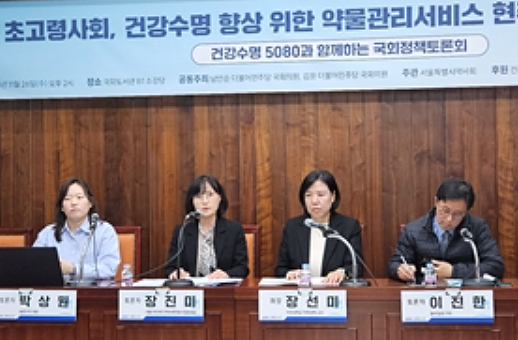
- Starting March next year, when the Integrated Care Support Act comes into effect, pharmacists participating in the polypharmacy management program will be able to access real-time medication histories for eligible patients.This addresses a previously noted limitation by enabling access to real-time patient information. Until now, information has been based on claims data, resulting in a time lag compared to actual prescription and dispensing information.Access to DUR-based real-time data is expected to mark a major turning point for multidisciplinary team-based care involving pharmacists.On the 26th, the Seoul Pharmaceutical Association co-hosted a National Assembly policy discussion forum with the offices of Democratic Party lawmakers Yoon Kim and In-soon Nam, focusing on medication management services in a super-aged society.During the general discussion session, the need to expand access to real-time patient information and increase pharmacist participation in multidisciplinary teams was raised to strengthen pharmacists’ medication management services.Jin-mi Jang, Director of the Seoul Pharmaceutical Association, said, “A government-led public data-based medication management system needs to be established. The issue can be resolved by enabling easy access to the excellent data held by the National Health Insurance Service and the Health Insurance Review and Assessment Service. Patient information must be viewable before visits.”Jang added, ” Sharing medication counseling results with medical institutions is also crucial. In the community-based model, prescription intervention through communication with medical institutions is impossible. System improvements are clearly needed."Jang also suggested expanding eligibility to basic livelihood security recipients and high-risk patients who receive prescriptions from multiple hospitals.Park Sang-won, CEO of Neulpum Value, who participated in Gwanak-gu’s integrated care pilot project, highlighted the need for robust data integration and the pharmacist’s role within multidisciplinary teams. Park said, “The patient's medication list is not being brought to the integrated support meetings. This makes it difficult for pharmacists to play their role within the meetings. Medication management must be part of the case review from the beginning.”Park also noted that integrated care frequently involves socially vulnerable individuals who are severely immobile or have limited health literacy, meaning pharmacists must be thoroughly prepared.Park added, “Data often differs from reality. Therefore, pharmacists' roles are essential on-site. Furthermore, managing performance indicators will be crucial starting next year, so we must determine how to demonstrate that pharmacist counseling contributed to patient health outcomes.”The National Health Insurance Service (NHIS), the operational agency for the polypharmacy management program, also recognized the need for patient information verification.Hyang-jung Park, Director of Health Support Programs at NHIS, stated, “We will link DUR-based medication history data to public MyData, enabling consulting pharmacists to access real-time information starting in March next year.”Park emphasized, "We need many pharmacists with advanced expertise. There is a specialized pharmacist for integrated medication management (in the national specialist pharmacist subjects). If it becomes reimbursable, qualifications may be required for fee-for-service pricing. We will communicate with relevant departments at the Ministry of Health and Welfare and strive to make the polypharmacy management project a pilot reimbursement program,“ and asked for pharmacists’ active participation.Hyun-jin Kang, Deputy Director at the Ministry of Health and Welfare’s Pharmaceutical Policy Division, commented: “We agree on the importance of comprehensive medication management. However, we must continue discussing how to standardize and institutionalize it,” adding that the ministry will review the forum’s proposals with relevant departments.
- Product
- Discussions on expanding emergency OTC drugs gain momentum
- by Kang, Hye-Kyung Nov 19, 2025 06:08am
- As civic groups continue to demand the expansion of emergency OTC medicines available in convenience stores, the National Assembly will hold a policy forum on the issue on the 28th. According to industry sources on the 18th, Rep. Ji-a Han of the People Power Party, a member of the National Assembly's Health and Welfare Committee, will host a ‘Policy Discussion on Convenience Store Over-the-Counter Medicines to Promote Public Health’ on the 28th. Participants will include Soon-hyuk Kang, Director of the Division of Pharmaceutical Policy at the Ministry of Health and Welfare; Hye-ri Ahn, Secretary-General of the Consumer Network for Public Interest; and Chun-bae Park, Vice President of the Korean Pharmaceutical Association, who will represent the positions of their respective groups – the government, consumer groups, and the pharmacy community. Civil society groups advocating for expanding the list of over-the-counter emergency medicines and the convenience store industry are also showing great interest in the upcoming forum. Under a relevant system introduced in November 2012, up to 20 types of emergency OTC medicines may be designated for sale at convenience stores. However, civil society groups and the industry claim that only 13 items are actually designated as OTC medicines, and even among those, 2 items are currently suspended from sale. Although the system was initially designed to re-evaluate the designated items every 3 years, the Emergency OTC Medicines Review Committee has not convened since 2018, reportedly due to opposition from the Korean Pharmaceutical Association. At this year’s National Assembly audit, Rep. Han already highlighted both the need to expand the list and the prolonged delay in convening the review committee. Han argued that the system should be improved by easing the requirement for 24-hour year-round sales, removing the cap of 20 designated items, and establishing a solid legal basis for committee operations to prevent conflict between professional groups. In response, Minister of Health and Welfare Eun-kyeong Jeong stated, “The emergency OTC medicine system has been in place for over 10 years and must be updated to reflect current circumstances. We should first adjust the list of items or discontinue products that are no longer sold. Also, since there are no 24-hour convenience stores in areas without pharmacies, the 24-hour operation restrictions should be relaxed. We are preparing a comprehensive plan and are also consulting with organizations like the Korean Pharmaceutical Association.” The KPA maintains that issues in pharmacy-desert regions can be resolved through the “Special Locations for Pharmaceutical Handling” notice. This policy allows designated individuals to dispense or provide medications in locations with limited access to pharmacies—such as ships, aircraft, remote islands, or military bases.
- Product
- KMA protests in front of the NA opposing INN prescribing
- by Kang, Shin-Kook Nov 17, 2025 06:10am
- Representatives of doctors nationwide gathered in front of the National Assembly on the 16th to protest the government’s push to mandate international nonproprietary name (INN) prescriptions and allow Korean medicine practitioners’ use of X-ray devices. The Korean Medical Association (KMA, President Taek-woo Kim) held a ‘National Doctors’ Assembly to Protect Public Health and Oppose Anti-Medical Laws’ in front of the National Assembly in Yeouido, starting at 2 PM on the 16th. Following the rally, participants marched to the Democratic Party headquarters, voicing strong opposition to harmful medical legislation. Doctors KMA President Taek-woo Kim stated, “The issue of unstable drug supply is something the government must take responsibility for. Yet, instead of addressing that problem, the government is trying to use it as an excuse to enforce INN prescribing. The proposed bill even includes provisions for criminal punishment for physicians who do not comply — a completely unreasonable and excessive piece of legislation.” Kim added, “This is a clear anti-medical law that shatters trust between doctors and patients, threatens patient safety, and collapses the accountability structure. If drugs are substituted without a doctor's judgment simply because they contain the same ingredients, who will be responsible for the resulting erosion of doctors' prescribing authority and patient safety?” “Since the separation of medical and pharmaceutical services in 2000, we have steadfastly maintained the boundary between prescription and dispensing. However, the INN prescribing now being forced through by the National Assembly and the government is an act that clearly undermines the principle of separation of medical and pharmaceutical services upheld for over 20 years. Forcing ingredient-name prescriptions is tantamount to declaring the abolition of the separation of medical and pharmaceutical services.” He further pointed out, “The National Assembly is now pushing an absurd bill to include Korean medicine practitioners as responsible persons for the safety management of radiation-emitting devices. The idea of entrusting Korean medicine practitioners with the safety management responsibility for X-rays is a clear encroachment on the academic domain of medicine and erases the boundaries between professional licenses.” Kim declared, "The three major anti-medical initiatives — the revision of laboratory test regulations, the enforcement of generic prescriptions, and the allowance of X-ray use by Korean medicine practitioners — are not separate issues.. They represent the reckless policy rush of the National Assembly and government, which disregards public health and safety and brutally tramples on expert voices. We, as representatives of doctors nationwide, have gathered here to unite the anger and resolve of all 140,000 physician members and launch a comprehensive, powerful, all-out struggle to save healthcare in the Republic of Korea." Doctors Kyo-yoong Kim, Chair of the KMA Council of Delegates, also appealed, “The forced implementation of INN prescriptions is a harmful law that threatens patient safety and seriously infringes on doctors' prescribing rights. It must be immediately and permanently abolished.. Stop this irresponsible experiment right now, which could cause medication errors by using patient safety as collateral.” “If lawmakers insist on pushing through such an unjust bill, those who proposed and support it should be the first to apply it to themselves. If the true aim is public benefit and cost reduction, patients should be allowed to choose freely, and the healthcare system should transition to a one-stop in-hospital dispensing system rather than going through pharmacies.” Doctors The KMA adopted a resolution pledging to wage an all-out fight should the government and parliament proceed with enforcing INN prescribing or X-ray use by Korean medicine practitioners.
- Product
- KMA forms special committee to block INN prescribing
- by Kang, Shin-Kook Oct 14, 2025 06:41am
- KMA President Taek-woo Kim The Korean Medical Association (KMA) has formed a special countermeasure committee to block the institutionalization of international non-proprietary name (INN) prescribing. This is seen as a response to demands by some delegates for an extraordinary general meeting. KMA (President Taek-woo Kim) said on the 13th, “Policies such as INN prescribing and changes to laboratory test consignment rules are being unilaterally promoted despite threatening patient safety.” He announced plans to launch a Pan-Medical Countermeasure Committee for National Health Protection (tentative name, “Countermeasure Committee” and to hold a nationwide delegates meeting at 5 p.m. on the 25th in the KMA hall’s main auditorium to unite the opinion of medical organizations. KMA argued, “INN prescribing is a system where only the generic name of the drug is written instead of the brand name prescribed by the physician, allowing pharmacists to arbitrarily substitute and dispense medications. This infringes upon the physician's medical judgment, which is the core of personalized prescriptions issued for patient treatment, and poses serious systemic risks threatening public health by causing drug side effects and treatment confusion.” It further contended, “The primary causes of the instability in drug supply mentioned in the proposed bill lie in various structural problems, such as the government's unilateral drug pricing structure, insufficient production lines at pharmaceutical companies, and shortages in raw material supply. This refers not just to the unstable supply of a single specific brand-name drug, but to the scenario where the supply of all drugs with the same ingredient (due to raw material shortages, etc.) is interrupted. Addressing this with INN prescribing is a completely illogical idea.” The KMA emphasized, “Choosing the dangerous and misguided method of INN prescribing while ignoring the fundamental problems causing drug supply instability is a declaration of abandoning public safety and lives.” Furthermore, the KMA strongly opposed the proposed changes to unilateral revision of laboratory-testing consignment rules, calling it an attempt to eliminate essential and primary medical care. The KMA stated, “The specimen testing outsourcing system being unilaterally pushed by the government is a one-sided measure that ignores the realities of the medical field. It is a detrimental change that effectively paralyzes the diagnostic testing functions of medical institutions, safeguarding essential and primary care. In July 2023, the Ministry of Health and Welfare responded that it planned to consult sufficiently with the medical community regarding issues such as the lack of distinction between fees for outsourcing and consignment institutions when setting fees related to the notice on standards for laboratory-testing consignment rules. Yet, breaking this promise is pushing the policy forward unilaterally.” The KMA emphasized that it will gather the entire medical community's resolve through the formation of the committee and hold a national meeting of physician representatives, vowing never to back down and fight to the end.

- Product
- DP·gov't "INN prescriptions for supply shortage drugs"
- by Kim JiEun Oct 02, 2025 06:11am
- A public forum was held in the National Assembly to discuss the International Nonproprietary Name (INN) prescriptions. Civic groups, pharmacists, and healthcare experts have unanimously agreed that the government should consider implementing the system if it enhances patient choice and reduces national spending. The policy debate, titled 'Introduction of a Korean Model of International Nonproprietary Name (INN) prescriptions to Expand the Public's Choice of Dispensed Medicines,' took place at the National Assembly on September 30. The event was hosted by Democratic Party of Korea Representatives In-soon Nam, Young-seok Seo, Yoon Kim, and Jong-tae Jang, as well as Cho Kuk Innovation Party Representative Sun-min Kim. The Korean Pharmaceutical Association and the Research Institute for Pharmaceutical Policy also hosted it. The panelists agreed that the INN prescriptions should not be viewed merely as a dispute over vested interests between doctors and pharmacists. The priority, they stressed, should be identifying the system that best benefits patients, who are insurance subscribers, by increasing their right to choose medication, and the government should design the system accordingly. The governing parties and the government, who are the proponents of the system's introduction, stated that they agree on the necessity of the system for drugs with unstable supply and are currently pursuing it. However, they presented the prerequisite that public consensus on the need for the system must be formed first. Taek-woo Kim, President of the Korean Medical Association, conducted a solo demonstration directly outside the National Assembly gate to protest the introduction of INN prescriptions At the same time, the debate was being held inside the National Assembly, Taek-woo Kim, President of the Korean Medical Association, conducted a solo demonstration directly outside the National Assembly gate to protest the introduction of INN prescriptions, drawing attention. "Will Enhance Patient Choice and Fiscal Savings…The Best System Helps Patients" Sung-min Park, an associate professor at Seoul National UniversityIt was emphasized at the forum that the need to discuss INN prescriptions from the perspective of patient safety and the expansion of patient choice. Sung-min Park, an associate professor at Seoul National University's Graduate School of Public Health, said, "Brand-based drug labeling increases the risk of confusion and errors during prescribing, dispensing, and administration." He added, "There is a risk of prescribing and dispensing mistakes due to confusion with similar names. Patients also face a higher risk of mistakenly taking the wrong drug." Professor Park said, "When patients with multiple illnesses receive prescriptions from various medical institutions, there is a high possibility of being prescribed the same drug ingredient redundantly," and added, "If patients are unaware of the ingredients, they are more likely to overdose, and discarded unused drugs lead to unnecessary expenditure of National Health Insurance funds." Sun-Young Oh, Director of Policy at the Korean Health and Medical WorkersSun-Young Oh, Director of Policy at the Korean Health and Medical Workers' Union, emphasized, "The expected effect of introducing INN prescriptions is granting patients, as subscribers to the National Health Insurance, the right to choose their medication." She asserted, "Patients lack specialized knowledge about medicine compared to doctors and pharmacists. Creating an environment where patients can make choices must be prioritized. Furthermore, the system must be premised on the therapeutic equivalence of generics so that patients are not anxious about their choices." Oh also said, "Encouraging patient participation in and choice over the medication they take is the desirable direction for this system," adding, "It also has the advantage of reducing dependence on brand names, which is currently very high." "Not a dispute over interests between doctors and pharmacists… Key to Completing Separation of Prescribing and Dispensing" Kwang-min Lee, Vice President of the Korean Pharmaceutical Association, argued that the current brand-name prescribing practice prevents the fundamental intent of the Separation of Prescribing and Dispensing System from being realized. Kwang-min Lee, Vice President of the Korean Pharmaceutical AssociationLee stated that despite the government implementing policies such as deleting the prescription fee item from doctors' service fees and using a market-based actual transaction price reimbursement system for reimbursable drugs, these policies are rendered ineffective by brand-name prescribing. Furthermore, Lee also pointed out that brand-name prescribing directly influences prescribing behavior and healthcare utilization, citing the tendency for self-injectable drugs, such as obesity injections, to be dispensed directly by hospitals. Lee directly criticized the link between brand-name prescribing and illegal business practices by pharmaceutical companies, wholesalers, and CSOs, arguing that it leads to the misuse and abuse of medications. Lee said, "If INN prescriptions become implemented, patients will be able to conveniently receive dispensing services at pharmacies near their homes or workplaces, not just those near medical institutions." He added, "Even patients using multiple institutions for multiple illnesses can receive unified dispensing and medication guidance services from their regular pharmacy, rather than relying on pharmacies near each institution. This will also have the effect of reducing unnecessary drug use." Nam Eun-kyung Lee added, "In Korea, where alarms are sounding over the worsening financial health of the National Health Insurance, a system is needed to promote the use of cost-effective medicines during the prescribing and dispensing stages," and emphasized, "Generic prescribing should not be dismissed as merely a dispute over pharmacists' and doctors' interests; it must be designed with the public at the center to ensure the stability and sustainability of the domestic public health finances." A criticism was also raised that the government needs to take a clear stance on the doctors' argument against INN prescriptions that "even drugs with the same ingredients may differ in efficacy depending on the formulation (release mechanism, dosage form, excipients, etc.)." Nam Eun-kyung pointed out, "The government must clearly draw the line on the controversy over whether generics are different drugs or identical ones. By not formalizing its position, the government is causing unnecessary social conflict." Nam added, "Provided that safety and efficacy are not compromised, the public will agree to a policy that can save NHI funds. I understand that both the Democratic Party and the government are willing to put INN prescriptions on the public agenda. I hope a forum for public discussion involving doctors, pharmacists, and the public can be arranged." "INN prescriptions limited to supply shortage drugs still under discussion"…what do the governing party and government plan? What are the opinions of the National Assembly and the government regarding the highly debated INN prescriptions? Rep. Won-joon Cho, Senior Expert Member for Health and Welfare at the Democratic Party of KoreaThe ruling Democratic Party of Korea and the administrative ministry, the Ministry of Health and Welfare, both agreed on the necessity of introducing the system limited to supply shortage drugs. However, they drew a clear line, stating that widespread adoption of the system would require prior public consensus. Rep. Won-joon Cho, Senior Expert Member for Health and Welfare at the Democratic Party of Korea, explained, "The Tylenol shortage was one of the three major crises after COVID-19. Even in the National Assembly, there was an internal discussion about the need for INN prescriptions for a certain period, given the special circumstances of the pandemic, but it was not pursued," and added, "At that time, the burden of opposition from the medical community could not be overcome. It is from this perspective that a limited INN prescriptions was included in the Democratic Party's last presidential election pledge." Rep. Cho said, "Bills related to INN prescriptions are being introduced, and the National Assembly has plans to discuss institutional improvements and legal amendments." He added, "Various policy measures are being proposed to resolve drug supply instability in addition to the limited introduction of INN prescriptions. All these policy measures must be mobilized to resolve the recurring problem of drug supply instability as much as possible." Jun-hyuk Kang, Director of the Pharmaceutical Policy Division at the Ministry of Health and WelfareFurthermore, Cho added, "However, for the system to be introduced, it must be clearly explained how it will help the public." He concluded, "I believe the system's introduction can gain momentum when public consensus on its rationality and sustainability is formed." Jun-hyuk Kang, Director of the Pharmaceutical Policy Division at the Ministry of Health and Welfare, said, "The government is viewing INN prescriptions from the perspective of the public's drug accessibility." He added, "While Korea has many pharmacies per capita, some administrative districts lack pharmacies, and the issue of drug accessibility has been raised due to unstable drug supply. INN prescriptions is one of the alternatives being discussed to resolve this." Kang said, "It is undesirable that this issue is being highlighted as a conflict between doctors and pharmacists," and added, "Doctors, pharmacists, and the public must discuss this to find a common ground." He concluded, "The government is preparing measures to simplify alternative dispensing and introduce INN prescriptions limited to supply shortage drugs. It seems necessary to conduct specific research on how to introduce INN prescriptions for supply shortage drugs. We understand that foreign countries encourage this through various methods, not necessarily mandating it. We also intend to review these aspects.
