
- LOGIN
- MemberShip
- 2026-07-22 06:54:21
- Product
- Eventually, Fulcare’s YouTube Ad is deleted
- by Jung, Heung-Jun Jul 20, 2020 06:18am
- Deleted video capture When Mennarini Korea's athlete's foot drug Fulcare’s YouTube advertisement raised a problem saying that Ads excluded pharmacist skills, the pharmaceutical company deleted the video and began to rectify it. The content of the controversial advertisement is a scene where Another patient who was waiting for a patient who visited the pharmacy for athlete's foot symptom recommends Fulcare. Pharmacists protested that it was “an advertisement that ignored pharmacies and pharmacists,” and on the morning of the 15th, some local pharmacist societies called for an immediate cessation of advertising. When the controversy broke out, Menarini Korea apologized to the pharmacists for the inappropriate image, and immediately switched the controversial video to private. An official from Menarini Korea said, "The video in question was immediately removed. It will not be used in the future. This video has hurt the pharmacists who have worked hard and dedication in the front line of the public health." "We take the matter seriously and prepare a plan to prevent recurrence," he said. This is an explanation that the consultation and product recommendation were intended to be included in the video. However, it may be illegal for the pharmaceutical affairs law to be referred to as 'expert recommendation'. Also, it was intended to highlight the fact that it is OTC drug and can only be purchased at a pharmacy. Considering that it is an online video for consumers, he also conveyed the intention of making such as the point that the patient tried to express the part explaining his or her disease. The official said, "It is entirely wrong to fail to reflect carefully, and we are sincerely sorry for the confusion and inconvenience caused by this." also he added, "we will do our best to actively reflect the opinions of pharmacists in all future marketing activities and avoid recurrence." Then, the reason why this advertisement was controversial can be found by looking at the ‘Guidelines for Provision of Information on Drug Ads and Rx drugs’ by the MFDS. In the guidelines, doctors, dentists, and pharmacists are not allowed to recommend and guarantee medicines in advertisements. This is because, according to the guidelines, the characteristics of the social perception of the healthcare practitioner have a large impact on consumers perception of the medicine. In addition, it is judged that it is against the regulations for entertainer and the public to wear gowns to make them look like pharmaceutical experts. Accordingly, pharmaceutical companies produce advertisements in a manner recommended by the general public. "pharmacist should not recommend it. It can be seen as a violation for entertainer to wear a pharmacist's gown. Therefore, in the pharmaceutical industry, advertisements are presented in a way that the general public explains or recommends." he said. This Fulcare’s YouTube ad was shot especially in the pharmacy, so the pharmacists were against it. The official said, "There weren't many commercials in the background of the pharmacy. If this was done outside the pharmacy, the situation may have been different."
- Product
- Will electronic masks by LG be commercialized?
- by Kang, Shin-Kook Jul 15, 2020 06:33am
- Electronic masks made by famous domestic home appliance companies are attracting attention. LG Electronics announced on the 12th that it has donated 2000 electronic masks made of electronics and IT technology to Severance Hospital to express appreciation and support to medical staff who need to work while wearing masks to overcome COVID-19. The electronic mask contains the patented technology and know-how of LG Electronics' puricare air purifier. Two replaceable HEPA filters (grade H13) are attached to the front of the mask, and the user inhales the air that has passed through the HEPA filters. Electronic mask developed by LG Electronics The amount of air entering the mask is controlled by an ultra-small fan mounted under each HEPA filter. The mask applies a sensor that detects the pressure generated during breathing and a breath recognition algorithm to increase the fan speed when the user inhales, increasing the amount of air entering the mask and reducing the speed when exhaling. In order to design a mask that fits well with the shape of the face, LG Electronics analyzed the face type in collaboration with the Ergonomics Design Laboratory of the Department of Industrial Management Engineering, Korea University. The product also received certification mark for EMF, which certifies that electromagnetic waves generated from electrical products are released below a certain level from the KTC. However, the timing, method, and price of selling to the public have not yet been determined. LG Electronics is also considering donating electronic masks for workers in public institutions who need to always wear masks due to frequent contact with people following medical staff. Therefore, outpatient pharmacies predicted that if there is little maintenance cost and the product price is reasonable, there is a possibility that it will work in the market. "COVID-19 outbreak may be an opportunity for a company. It should be seen in product size, price, and convenience, but it is likely to be used in places where there is a high likelihood of exposure to COVID-19, such as pharmacies and medical institutions," said Pharmacist K, in gangnam, Seoul.
- Product
- Why Tylenol short in pharmacy, but still plenty in GS25?
- by Jung, Heung-Jun Jun 18, 2020 06:27am
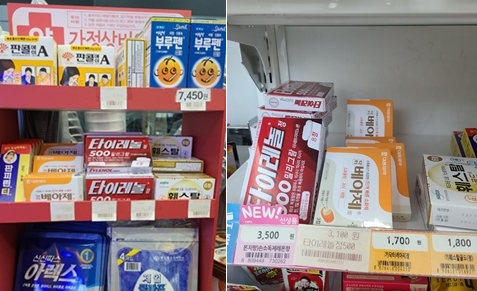
- As of June 15, Tylenol is sold out in online pharmacy Pharmacies in Korea are experiencing a long-term shortage of Tylenol 500 mg and Tylenol ER 600 mg, but apparently convenient stores have no issue stocking up Tylenol 500 mg. As of June 15, Tylenol in 500 mg and ER 650 mg tablets were indicated to be sold out on an online pharmaceutical wholesale website used by pharmacists. Since the incident of the World Health Organization (WHO) initially recommending the use of acetaminophen in suspicious symptoms of the novel coronavirus in last March, pharmacies in Korea have been struggling to get their hands on Tylenols. However, major convenient store brands like GS25, Emart24 and CU had no problem with Tylenol 500 mg stock. Seeing the contrasting situations, pharmacists have started wondering if the pharmaceutical company is differentiating the stock control in convenient stores and pharmacies. Tylenol still sold at convenient stores like CU and GS25 A pharmacist from Gangwon who requested to be anonymous commented, “Following the 500 mg dose, our pharmacy is short on the ER 650 mg dose as well. The wholesale distributors also seem to be short on the stock according to their online websites,” and “Even if the bulk package in bottle for prescription dispensing is available, OTC stocks are sold out. Three regular vendors and an online shop are all having the same issue.” The pharmacist also noted, “Currently, the drug is strangely not available in pharmacy, but accessible in convenient store. Although pharmacists have requested the OTC first-aid kits to be sold in pharmacists as well, the request was rejected.” “The shortage should be resolved as soon as possible as many of customers specifically ask for Tylenol and they tend to be faithful to the brand,” added the pharmacist. Regarding the issue, Johnson & Johnson Korea stated the company is doing the best to streamline the supply to meet the rapidly changing demand, and the supplies to both pharmacies and convenient stores are delivered normally at the moment. And the company noted the supply amounts to both outlets are not differentiated. Johnson & Johnson official said, “The company has been normally supplying stocks of Tylenol to pharmacies and convenient stores. As Tylenol has been mentioned more usual and consumer demand has surged amid COVID-19, the company is committed to supply stocks smoothly.” On the shortage apparent in online shopping sites, the official explained, “When supplied to the distributor, some [of wholesale distributors] seem to be pacing the stock release.” Regardless, the distributors claim they are not the one controlling the supply, but actually they do not get access to the stock. A distributor insider said, “The drug stock has not been supplied to our company. Including Tylenol, some of items are having similar issues and we suspect it is the active pharmaceutical ingredient supply issue.” According to Daily Pharm’s analysis on top 100 drugs sold in 300 pharmacies around Korea with POS machine installed, Tylenol was highly demanded as it was on top third, fifth and ninth place in March, April and May, respectively.

- Product
- Metformin's alternative medicine sold out in an hour
- by Kim JiEun May 29, 2020 06:16am
- As the discontinuation of sales of 31 items of Metformin used as a treatment for type II diabetes patients is decided, the shortage of alternative products is intensifying. The MFDS announced that it will temporarily manufacture, sell, and discontinue prescriptions for 31 items containing Metformin, which are used as a primary treatment for type II diabetes patients today (26). Along with the announcement of the MFDS, a notice was sent to the pharmacists of Korean Pharmaceutical Association, and pharmacists had a busy time checking the related items and organizing their inventory immediately after work. Pharmacists need to order replacement items immediately if the product they normally prepare is included among the 31 items that have been supended from today. In fact, as of 9:00 am today, Metformin alternative medicines have been rapidly sold out at major drug online malls. One of the alternatives to the metformin formulation that has been discontinued this time In the case of Glucodown OR 750mg, which were relatively prescribed in hospitals and clinics, among the discontinued items, was replaced by a pharmacy actually Yuhan’s Metformin XR 750mg, and the product was found to be sold out at major online malls less than 10 am. In addition, Yuhan’s Metformin XR 500mg 300T & 30T are currently out of stock in some pharmaceutical online malls. Pharmacists say that Daewoong’s Diabex XR is not easy to secure inventory as orders are concentrated in the morning as well as in major online retailers. A pharmacist in Seoul said, “I immediately ordered Yuhan’s Metformin as soon as I came to work today.” “Yuhan’s Metformin XR 750mg doesn't have any alternatives, so I think it will be more ordered. I know that the product is currently out of stock." Some pharmacies contacted a nearby internal medicine clinic this morning to discuss discontinued Metformin and to discuss alternative prescription products. A pharmacist in Seoul said, “I thought that Yuhan’s Metformin XR 750mg is the only substitute in a nearby hospital, but I know it is currently out of stock.” "Instead, there was a question about how to prescribe." Another pharmacist said, “It seems that pharmacists ordered quickly from online malls, etc., as information related to them was announced last night. "There seems to be some hoarding.”

- Product
- KDA “Agree with government action on metformin with NDMA”
- by An, Kyung-Jin May 28, 2020 10:07am
- Medical academic societies expressed their support for the Korean government’s decision to suspend manufacturing and sales of metformin with excessive level of impurity found. However, the scholars noted diabetic patients should not stop taking metformin without consulting their doctors. On May 26, Korean Diabetes Association (KDA) and Korean Endocrine Society (KES) issued a joint statement on the government suspension on manufacturing and sales of metformin upon discovery of N-Nitrosodimethylamine (NDMA) exceeding an acceptable level. The statement first expressed gratitude for the Ministry of Food and Drug Safety’s (MFDS) prompt but proactive action on the metformin products and their safety issue, and also showed support for the government’s decision. The two academic societies urged, “For similar cases in the future, the government should continue to directly conduct investigation, disclose the result transparently and provide solution for the people and healthcare providers to feel free of concerns.” Prior to the statement, MFDS has disclosed 31 out of 288 metformin products available in the Korean market were discovered with NDMA exceeding the acceptable daily intake limit (96 nanograms), and halted manufacturing and sales of those 31 products. Metformin is the most widely used first-line treatment for type 2 diabetes with outstanding effect of lowering blood sugar level and many other advantages. But when Singapore’s Health Sciences Authority (HSA) announced last December that three out of 46 metformin products were found with NDMA surpassing the acceptable level, KDA has officially requested the Korean government to run a full investigation on the contamination of NDMA in metformin ingredients and finished products used in Korea. However, the medical experts stressed the government’s action should not cause a confusion for the diabetic patients using metformin. The statement advised, “31 products exceeding the acceptable limit of NDMA should not be prescribed anymore, but as MFDS has elaborated, the risk of developing cancer only from taking those products is extremely low,” and “it is not advisable for diabetic patients to stop consuming those metformin drugs without consulting their doctors, but they should rather seek for new prescription for other metformin product with safe level of NDMA.” According to the human body impact assessment by MFDS, 0.21 out of 10,000 patients, who have been taking the maximum dose of metformin product with unacceptable level of NDMA since the point of approval to the end of this year, would be risked to develop cancer. The International Council for Harmonisation of Technical Requirements for Pharmaceuticals for Human Use (ICH) guideline (ICH M7: Assessment and control of DNA reactive (mutagenic) impurities in pharmaceuticals to limit potential carcinogenic risk) mentions the risk of developing cancer could be dismissed, if it is lower than 1 out of 10,000 people. The academic societies highlighted, “Metformin is an important drug recommended by international practice guidelines as a first-line medicine to treat patients with type 2 diabetes. And as there are nine different classes of diabetic treatments available, the government should amend the healthcare reimbursement standard to disperse concentrated use of one specific pharmaceutical substance and give various options for first-line drug based on patients’ condition.” They also added, “KDA and KES would closely cooperate with the government for enhance the health and the rights of diabetic patients, and actively participate in improving the medical system.”
- Product
- Hospitals ready to prescribe another CDK inhibitor Kisqali
- by Eo, Yun-Ho May 21, 2020 06:01am
- Following after Ibrance and Verzenio, a third cyclin-dependent kinase 4 and 6 (CDK 4/6) inhibitor is landing its prescription code in Korean general hospitals. Pharmaceutical industry sources reported drug committees at eight major general hospitals like Seoul National University Hospital, Seoul Asan Medical Center, National Cancer Center, Korea University Anam Hospital and Konkuk University Hospital have recently cleared Novartis’ Kisqali (ribociclib). While awaiting Drug Reimbursement Evaluation Committee’s (DREC) nod after passing Health Insurance Review and Assessment Service (HIRA) Cancer Deliberation Committee in last January, Kisqali is preparing for prescription code-in process at major hospitals. Unlike Ibrance (palbociclib) and Verzenio (abemaciclib), Kisqali can be prescribed to premenopausal and postmenopausal patients who have not had an oophorectomy. Phase III MONALEESA-7 study evaluated Kisqali plus endocrine therapy (either an aromatase inhibitor or ovarian function suppression) against existing endocrine single therapy as first-line treatment for pre and perimenopausal women with HR+/HER2- advanced or metastatic breast cancer. The result found that the combination therapy significantly extended patient’s overall survival (OS). Specifically, the study confirmed the patient group receiving Kisqali combination therapy had median progression free survival (mPFS) of 23.8 months, whereas the group receiving endocrine therapy alone had mPFS of 13 months. In an Asian subgroup analysis, Kisqali combination therapy group reached mPFS of 24.7 months, about 14 months longer than endocrine therapy only group. Moreover, MONALEESA-3 study confirmed Kisqali extending the OS of pre and postmenopausal women. At 42 months, estimated rates of survival were 58 percent for Kisqali combination therapy group and 46 percent for fulvestrant alone. Professor Im Seock-ah of Hemato-oncology Department at Seoul National University Hospital elaborated, “MONALEESA-7 was actively proposed and led by Asian researchers. The fact that 30 percent of patients registered for the clinical study were Asians reflects the demand for new breast cancer treatment option for premenopausal patients is high in the Asian region.”
- Product
- Fexuprazan taking over K-CAB market? Study unveiled
- by choi, sun May 11, 2020 06:15am
- As Daewoong Pharmaceutical unveiled Phase III clinical data of its next-generation gastroesophageal reflux disease agent in development, fexuprazan, the Korean pharmaceutical industry is keeping a close eye on the prospective competition between the existing proton pump inhibitors (PPI) tegoprazan (Brand name: K-CAB) and the novel agent. Reversibly blocking the proton pump, a potassium-competitive acid blocker’s (P-CAB) efficacy compared to PPI has been confirmed through the clinical trial conducted in Korea, but the market competition would heavily rely on pricing, indication and improved efficacy. ▲Improved efficacy against PPI esomeprazole confirmed On May 2, the Korean pharmaceutical company presented the Phase III clinical data of fexuprazan at Digestive Disease Week (DDW) 2020 as an e-Poster. Daewoong Pharmaceutical’s novel agent treating gastroesophageal reflux disease (GERD), fexuprazan is a P-CAB that reversibly blocks the proton pump secreting gastric acid from the stomach walls. Clinical trial result on heartburn relief Frequently, a PPI is prescribed to treat patients with GERD, but its limitations like slow acting time, varying effects depending on prior food intake and individual CYP2C19 genotype, and drug-drug interaction have been reported. Whereas P-CAB agent is considered a new generation of medicine that covers most of the limitations PPI faces. The Phase III clinical trial was conducted in patients with erosive esophagitis at 25 hospitals in Korea, and it compared efficacy in 40 mg of PPI esomeprazole (n=111) and 40 mg of P-CAB fexuprazan (n=107). Until week 4, fexuprazan and esomeprazole respectively demonstrated endoscopic mucosal healing rate at 90.3 percent and 88.5 percent, but they reached 99.1 percent at week 8. Specifically, P-CAB showed comparatively faster and better heartburn relief. 30.8 percent of fexuprazan group and 23.4 percent of esomeprazole group had their day and nighttime symptoms relieved at day 3. Comparing only patients with moderate to severe symptoms, 22.4 percent of fexuprazan group experienced symptom relief, whereas only 7.9 percent of esomeprazole group did. At day 7, the heartburn symptom relief rates were recorded at 26.2 percent and 21.6 percent in fexuprazan and esomeprazole users, respectively. Comparing again the patients with moderate to severe symptoms, fexuprazan demonstrated better rate at 13.8 percent against 7.9 percent. The results were similar when comparing symptom relief during nighttime. Reportedly, PPI was unable to maintain the effect during nighttime. The nighttime heartburn relief rate of fexuprazan and esomeprazole at day 3 each marked 41.1 percent and 35.1 percent, but in patients with moderate to severe symptoms, the rate was at 34.5 percent and 17.5 percent, respectively. The atypical symptom relief rates in patients with GERD were at 81.2 percent and 68.6 percent in fexuprazan and esomeprazole users, respectively, at Day 3. And the rate remained around the same at week 8 at 80.6 percent and 69.3 percent, respectively. Adverse reactions reported from both groups were about the same. In the future, the novel agent would be inevitably compared to the ‘Old Drug,’ esomeprazole. ▲Competitive against the market-dominating tegoprazan? In 2018, CJ Healthcare has received the government’s approval on the 30th Korean-made novel P-CAB agent ‘K-CAB (tegoprazan).’ In Japan, vonoprazan is released in the market, but K-CAB is the only P-CAB available in the Korean market. As a follow-on drug, fexuprazan would attempt to take over the market from tegoprazan, unavoidably. In last March, tegoprazan has been indicated to treat helicobacter pylori infection and also it has ongoing clinical trials regarding maintenance therapy after treating GERD and preventive therapy against nonsteroidal anti-inflammatory drug-induced duodenal ulcer to expand indications. Fexuprazan would have to face tegoprazan, currently dominating the market not only with its effect, but as a first-in-class and its variety of indications. Then, how about the differences in their efficacy? In March last year, a SCI-level medical journal Alimentary Pharmacology & Therapeutics (AP&T) published Phase III clinical data of tegoprazan. Same with fexuprazan, the study compared tegoprazan’s efficacy and safety in patients with erosive esophagitis against esomeprazole’s. The eight-week multicenter Phase III trial on tegoprazan conducted in Korea tested 302 patients with erosive esophagitis by administering 50 mg (n=100) and 100 mg (n=102) of tegoprazan and 40 mg (n=100) of esomeprazole. At week 8, the mucosal healing rate of three patient groups all reached 98.9 percent. As for fexuprazane, the rate was at 99.1 percent. The heartburn rate in tegoprazan 50 mg group started from 1.76 and was increased to 0.53 and 0.56 at week 4 and week 8, and in 100 mg group the rate fell from 1.86 to 0.62 and 0.62 at the same period. The rate in esomeprazole group was dropped from 1.84 to 0.48 and 0.47 at week 4 and week 8. The prevalence of adverse reaction in 50 mg and 100 mg of tegoprazan users reached 28.3 percent and 23.5 percent, respectively. The rate was similar in 40 mg of esomeprazole users with 30.3 percent. Professor Kim Gwang Ha of Pusan National University Department of Internal Medicine, who participated in both tegoprazan and fexuprazan studies, explained “The clinical trial on fexuprazan confirmed significantly improved efficacy in the novel agent against esomeprazole with patients having moderate to severe symptoms,” and “when it gets released in the market, it could be more expensive than PPIs but the benefit could outweigh the high pricing.” He added, “Based on the acting time and effect of inhibiting proton pump faster and better than PPI demonstrated in the clinical trial, the novel agent would fulfill the medical unmet needs the existing PPIs lacked,” and “patients who failed to relieve the symptoms with PPI would benefit from P-CAB.” “However, the healthcare providers should be aware that not all P-CABs have same effect and safety profile,” so “their marketability and competitiveness should be more accurately assessed with further head-to-head studies between different P-CABs,” the professor noted.
- Product
- The KPA, criticized the MFDS/the Regulatory Reform Committee
- by Kang, Shin-Kook May 06, 2020 06:32am
- The Korean Pharmaceutical Association (KPA) strongly objected to the withdrawal of step-by-step abolition policy for generic co-biological equivalence testing. On the 28th, the Korean Pharmaceutical Association (Chairman Dae-up Kim) announced that the Regulatory Reform Committee recommended the withdrawal of the amendment to the 'Regulation for Pharmaceutical Approvals, Notifications and Reviews', which contains the phased abolition of the generic bioequivalence test, and the MFDS, which accepted this without policy alternatives, is pursuing lush policy. The KPA said, "Even if there are three or four alternative generics available in the pharmacy, the patients will have to experience the inconvenience of searching for drugs, and the cost of illegal rebate due to excessive competition is being passed on to the public." In addition, there is a high social cost for the retrieval of excess medicines and the retrieval of hazardous drugs, and the proportion of pharmaceutical expenses in health insurance finances is increasing day by day. In the current situation, due to the drug price system that guarantees the high price for most of the licensed drugs, there is no limit to the extent to which the number of generic items will increase. The MFDS and the Regulatory Reform Committee are playing into each other's hands. The KPA asked that the Regulatory Reform Committee should play a role in recognizing the problems more seriously and painfully in the pharmaceutical industry as well as in the fields, and it should play a role of deliberating and coordinating policies in the direction of restoring to the pharmaceutical industry and health care in addition to reviewing regulations. The necessity of improving drug management efficiency by improving the difficulty of generic drugs due to the NDMA impurities has been strongly raised, but the situation is further exacerbated by governments that have to implement policies that must prevent the indiscriminate approval of generic drugs. This is due to the MFDS' irresponsible policy promotion and recommendation by the Regulatory Reform Committee. The KPA said that it should reorganize the abnormal generic license system, which can even drop generic drugs that are in good quality and safety management at a low price. The KPA aurged the immediate enforcement of a policy that prohibits the use of different brand names of generic drugs and only permits the same ingredient names (generic names).
- Product
- Imported drugs are out of stock due to COVID-19 crisis
- by Kim, Min-Gun Apr 09, 2020 06:27am
- Difficulties in supplying medical products are also continuing in the aftermath of COVID-19, which hit Europe. According to the distribution industry on the 7th, domestic and foreign pharmaceutical companies, such as Kuhnil Pharmaceutical, Daewoong Pharmaceutical, JW Pharmaceutical, and Pfizer Korea, stopped supply due to delays in the production of some specialized pharmaceutical products. Recently, Amilo (100T/1000T), a diuretic sold by Kuhnil, was temporarily out of stock. This is because the factory in China, the main raw material for the production of Amiloride, was caught in the aftermath of COVID-19. Kuhnil announced that it will stop operating the plant by May 8th at distributors. Because of this, it will be temporarily out of stock for a month. Resupply is expected on May 11th. Fosrenol 500mg (45T), which JW Pharmaceutical has imported from the UK in the form of finished products, have been suspended from March. Fosrenol is used to treat hyperphosphatemia in patients with chronic renal failure who undergo hemodialysis or peritoneal dialysis. It seems that the spread of COVID-19 in the UK is seriously affecting domestic supply. In mid-March, when JW pharmaceutical announced that the supply would be temporarily suspended due to the manufacturer's circumstances, the British government banned and closed the business of public gathering places such as cafes, pubs and restaurants, except essential facilities such as pharmacies and supermarkets. As of today (7th), the total number of COVID-19 confirmed patients in the UK exceeded 50,000 people and 5373 patients died. British Prime Minister Boris Johnson infected with COVID-19, is undergoing a strong social distance campaign while receiving intensive treatment due to worsening symptoms. JW pharmaceutical announced that it can be replaced with Fosrenol powder 1g packets instead of Fosrenol tablets. COVID-19 is also causing problems in exporting medical products in Germany. Supply of Instanyl nasal spray 100mcg/1.8 mL, imported from Takeda, Germany by Daewoong Pharmaceutical was cut off. Due to the spread of COVID-19 in Europe, Daewoong said that the German government's export permission department in February was delayed for two months, causing a disruption in domestic supply. This month, Pfizer Korea Pharmaceutical's Solu-Medrol 125mg, produced in Belgium, a neighboring country of Germany, was also sold out for a long time. Pfizer Korea expects that normal supply will be possible by November. Pfizer Korea does not give details of the reasons for the out of stock, but the company only explained that it was a delay in the production schedule of Solu-Medrol. Currently, there are 20,000 COVID-19 confirmed patients in Belgium and 1632 deaths. The Belgian government has also been taking steps to close companies temporarily and measures to restrict national movement since mid-March. Meanwhile, Nitropress by Pfizer Korea, which is indicated for the immediate reduction of blood pressure of adult and pediatric patients in hypertensive crises, is also out of stock until May.
- Product
- Disaster subsidies must be paid to all citizens
- by Jung, Heung-Jun Apr 09, 2020 06:26am
- 9 out of 10 Dailypharm readers expressed their opinion that the government's emergency disaster aid under COVID-19 should be paid to the entire population, not just the bottom 70% of income. Dailypharm conducted an opinion poll on how to pay for emergency disaster aid through the online survey of Issue & Poll from the 1st to the 7th. Of the 262 Daily Farm readers working in the health and medical industry, 87.8% (230 people) said that all citizens should receive disaster relief funds. Only 12.2% (32 people) voted in favor of the government method of paying the bottom 70%. The readers in favor of the payment of the whole nation thought that it would be reasonable to give it to the whole nation even if the amount was lowered a little. On the other hand, those who favored the selective payment method for the lower 70% insisted that it would be better to pay only the lower 30% or even a little more to the lower income class.
