
- LOGIN
- MemberShip
- 2026-07-22 06:53:38
- Product
- The amount of prescriptions for NSAIDS is increasing rapidly
- by Lee, in-bok Nov 27, 2020 06:29am
- The number of prescriptions for non-steroidal anti-inflammatory drugs (NSAIDS), which are contraindicated for hypertension, asthma patients, and pregnant women, was continuously increasing. Celecoxib took up the most prescription ingredients, and Celebrex recorded the most prescriptions. In particular, Daewon's Pelubi drew attention as it was making significant progress by expanding its indications. NSAIDS prescription volume is increasing every year, increasing the proportion of Celecoxib As a result of the Medical Times' investigation of the NSAIDS prescription status through IQVIA, a drug market research organization, it was analyzed that the amount of prescriptions and sales have been steadily increasing in recent years. Actually, the sales of NSAIDS in Korea exceeded ₩500 billion in 2017, and since then, it has recorded a double-digit increase every year to ₩545 billion in 2018 and ₩560 billion in 2019. As sales from the first half of this year (January to June) have already exceeded ₩265 billion, the sales amount of NSAIDS is expected to exceed ₩500 billion this year. Despite the prolonged COVID-19 pandemic, most drug prescriptions and sales have plummeted to less than 30%, but sales of NSAIDS are significant. As the indications are increased through safety, the prescription of Celecoxib, which is a mechanism of selective cox 2 inhibition, is increasing significantly. Since it recorded ₩59.2 billion in sales in 2017, it has been dominating the market by significantly increasing to ₩68.3 billion in 2018 and ₩75.1 billion in 2019. Although Loxoprofen recorded a sales amount similar to that of Celecoxib at ₩52.1 billionin 2017, it is a significant step forward compared to slowing growth to ₩56.5 billion in 2018 and ₩59.1 billion in 2019. Aceclofenac sold ₩51.3 billion last year, ranking in third place, and Aspirin (ACETYLSALICYLIC ACID sold ₩43.8 billion. Celebrex sales are large and Pelubi's growth is outstanding By product, Celebrex, which is also highly trusted for its safety, was still dominating the market. Since #Celebrex recorded sales of ₩32.6 billion in 2017, it has increased to ₩36.4 billion in 2018 and surpassed ₩40 billion in 2019. Since it has already sold ₩19 billion in the first half of this year alone, and it will exceed ₩40 billion this year. Daewon's Pelubi, followed closely by Celebrex, showed a terrifying growth recently. Pelubi's sales in 2017 were only ₩11 billion, but it nearly doubled to ₩20.8 billion in 2018, a year later, and sold ₩22 billion in 2019, finally overtaking aspirin, which was the undisputed second place. This year, pain after trauma was added as an indication, and Aspirin was ranked at the top. Since Aspirin’s sales surpassed ₩20 billion won in 2017, sales increased to ₩22.2 billion in 2018, but declined to ₩19.1 billion in 2019, giving Pelubi the undisputed second place. In addition, the growth system of domestic drugs was outstanding. Boryung Biopharma's Astrix ranked fourth with ₩14.6 billion in 2019, followed by Hanmi's Naxozol with ₩10.9 billion in the same year. By pharmaceutical company, sales of companies with representative items also stood out. Pfizer Korea, which has Celebrex, is also the highest with sales of ₩40 billion in 2019. Following this, Hanmi recorded ₩28.2 billion in the same year with increased sales of Naxozol and other NSAIDS such as Maxibupen, followed by Daewon with Pelubi at ₩26 billion. Bayer Korea sold ₩20.4 billion to Aspirin, followed by Sinsin at ₩16.4 billion, Huons at ₩15.2 billion, and Boryung Biopharma at ₩14.9 billion.
- Product
- Struggling with dementia drug, Aβ-targeting drug unapproved
- by won-jong-hyuk Nov 26, 2020 06:03am
- Although many of Alzheimer's disease-targeting novel drugs are in development, the market is struggling to receive the health authority approval with troubles found during efficacy validation To this date, multinational pharmaceutical companies have initiated investigation on antibody agents targeting a number of therapeutic targets, such as amyloid-β (Aβ), Tau protein and ApoE4. But they all halted their clinical trials with the same reason. And academic scholars are also skeptical that such antibody drugs for a single target mechanism would result in significant benefit in treating Alzheimer's disease, which has complicated pathophysiology. # The U.S. Food and Drug Administration (FDA) Advisory Committee (AdCom) has reportedly disapproved Biogen and Eisai Pharmaceuticals’ investigational antibody targeting amyloid aducanumab in preparation for a New Drug Application (NDA). "Two cases of submitted clinical data insufficient to prove treatment efficacy" Biogen’s analysis on two Phase III studies—EMERGE and ENGAGE—were the controversial evidences assessed during the clinical evaluation. After comparing EMERGE and ENGAGE data, the AdCom voted eight-to-one against on aducanumab, claiming they could not confirm concrete enough clinical evidence to validate the efficacy. Biogen has actually halted both EMERGE and ENGAGE studies in March last year based on the outcomes of a futility analysis. But the brake on the NDA was listed after the company gave a presentation at a major academic conference and announced its plan to submit Biologics License Application (BLA) to FDA in late last year as they acquired more analytical data after they decided to halt the studies in March. When Eisai in partnership with Biogen unveiled a new set of analysis arguing a high dose of aducanumab demonstrates significant slowing of decline in cognition and in the EMERGE study, FDA announced it would resume reviewing the marketing approval. After collecting a large-scale data on 2,066 out of 3,285 patients, who continued the treatment for 18 months after participating in the original trial, aducanumab resulted in statistically meaningful decrease in clinical progression of Alzheimer's disease. The retrospective analysis on EMERGE study found aducanumab met its primary endpoint, where the patients treated with high dose aducanumab showed a statistically significant reduction of clinical decline from baseline in Clinical Dementia Rating-Sum of Boxes (CDR-SB) scores at 78 weeks. Compared to the placebo group, the investigational drug group was improved by approximately 23 percent. The study’s secondary endpoints were also met as the clinical decline continued to lessen. The aducanumab group, in comparison to the placebo group, improved the Mini-Mental State Examination (MMSE) and Alzheimer’s Disease Assessment Scale scores by 15 percent and 27 percent, respectively. Also the scores on Alzheimer’s Disease Assessment Scale-Cognitive Subscale 13 Items (ADAS-Cog 13) and Alzheimer’s Disease Cooperative Study-Activities of Daily Living Inventory Mild Cognitive Impairment Version (ADCS-ADL-MCI) marked 27 percent and 40 percent higher than the placebo group, respectively. However, AdCom official stated, “It is still difficult to confirm the treatment’s benefit with the company raising the dose of the investigational drug higher than what is mentioned in the initial clinical protocol.” Competition heightens among Alzheimer’s disease targeting drugs, experts reserve judgment on single target mechanism # In the current Alzheimer's disease treatment pipeline market, a wide array of antibody agents targeting Aβ, Tau protein and ApoE4 are in development to treat patients with Alzheimer's disease. Regardless, most of these drugs are not targeting the patients with Alzheimer's disease, but focusing on customizing the treatment to patients with a specific mutation. An academic society reported clinical trials are now actively investigating novel drugs targeting Aβ and Tau protein for Alzheimer’s disease treatment. However, Aβ-targeting drugs only brought disappointment to many of multinational companies, although it was considered the most potent candidate. Roche failed to meet the endpoints in late phase clinical trial on crenezumab targeting Aβ in last February and March, and Biogen and Eisai also had to quit the last Phase III trial on aducanumab. The Aβ-targeting drug development seems to have slowed down noticeably at the moment, while Eli Lilly and MSD have also announced stopping the investigation on beta amyloid cleaving enzyme (BACE) inhibitors. And AstraZeneca, Jansen, MSD and Roche are on a same boat as they all announced they have closed their clinical trials on the drug due to reports of adverse reaction and issues with efficacy in late-phase studies. Reviewing all the news, the academic scholars are more reserved on their opinions on developing Alzheimer's disease targeting treatments. Suk Seung-han, a professor of neurology at Wonkwang University Sanbon Hospital, noted, “The academic scene agrees that accumulated Aβ and Tau protein expressing toxicity effect in nerve cells cause functional problems like killing of nerve cell and deteriorating cognitive function. But the problem is that some patients, according to their medical records so far, abnormally show deteriorating cognitive function regardless of the low level of accumulated Aβ and Tau protein.” The professor added, “Now the academia is saying there is a high possibility of other risk factors like cerebrovascular lesion and other complications that could develop into dementia in patients, besides Aβ and Tau protein. We are still not convinced that dementia or decline in cognitive function can be prevented by simply hindering the mechanism of a specific factor.”
- Product
- A professor reserves thoughts on “90% effective vaccine"
- by Kim, Min-Gun Nov 16, 2020 06:02am
- Professor Seol Dai Wu at Chung-Ang University A U.S. pharmaceutical company Pfizer has attracted a global attention as it announced a COVID-19 vaccine in development has demonstrated an efficacy rate above 90 percent in early results from a Phase 3 trial. One of vaccine experts in South Korea, Professor Seol Dai Wu at Chung-Ang University College of Pharmacy spoke on Nov. 11 at an interview by YTN and said, “Although I look forward to the positive results, experts would need to see more transparent information to properly assess the vaccine.” Professor Seol carefully commented, “The final result of the Phase 3 study on Pfizer vaccine is expected to be out on Dec. 11, 2022. The announcement was based on 94 early test participants. The company is running the Phase 3 study with 50,000 participants, and it is almost impossible to fathom the final result from an early analysis on 94 people out of 44,000 people, who have been administered with the vaccine. Also the claim of ’90-percent effective’ could be controversial, so we need wait to see further results.” “The early test result is from a comparison between the vaccine-administered group and placebo-administered group, where most of the COVID-19 positive cases were found from the placebo group. And the number of infected cases among the vaccine group was so low that the early result was claimed to have shown efficacy of 90 percent,” the professor added. Professor Seol does not see high possibility of adverse reaction breaking out from the Pfizer vaccine, but the vaccine’s level of efficacy is still unknown. He said, “Based on the vaccine’s technology, the adverse reaction is less likely to be observed, but a basic efficacy is extremely crucial for a vaccine. An outstanding vaccine has an effect of immediately killing off virus that infiltrated a body to completely block the proliferation, but underperforming vaccine could actually let the virus to spread inside the human body. We have all our attention fixed on Pfizer’s vaccine to evaluate how effective the vaccine really is.” If the result of the vaccine’s Phase 3 clinical trial is good, Pfizer would apply for the U.S. Food and Drug Administration’s (FDA) emergency approval to provide the vaccine to the mass. However, the professor stated he would reserve his opinion on using the vaccine for now, regardless of the efficacy, it would be challenging to distribute it via cold chain in South Korea. Professor Seol elaborated, “Pfizer’s vaccine is instructed to be delivered and stored at a temperature under negative 70 degrees Celsius and to be used within five hours from the point of production. The mRNA used in the vaccine is exceptionally insecure, which can falter the vaccine to lose the effect if it is not properly kept in cold chain.” “Although South Korea has good cold chain facilities that maintain the temperature at negative 2 to 8 degrees Celsius, a cold chain system for negative 70 degrees is not prepared. If South Korea were to use Pfizer’s vaccine, a significant amount of investments should be made as well,” he noted.

- Product
- Pfizer’s all the items expected to be out of stock?
- by Jung, Heung-Jun Nov 11, 2020 06:08am
- Text messages received by pharmacists from wholesalersWhen some local wholesalers sent a text message to the pharmacy saying that all Pfizer items from Pfizer Korea are expected to be sold out, pharmacists are placing large orders to secure stock. The text message the pharmacy received from a wholesaler said that Pfizer stopped placing orders after sales of Pfizer this year, and accordingly, it is expected to sell out after the current inventory runs out. The pharmacists were reluctantly increasing the amount of orders, fearing the possibility of being sold out. However, Pfizer Korea announced that orders for sales will not be stopped this year. According to local pharmacies on the 8th, some received information about all Pfizer products, and others received information about some of the products scheduled to be sold out. The places that received the information on all products ordered a unit of ₩10 million and prepared for it in advance. Contrary to expectations, there are items that are not sold out, but they have to secure inventory to be used this year for fear of a possible out of stock. Drugs ordered to secure inventory after receiving a text message for all items sold out Pharmacist A in Gyeonggi-do said, "Last year, there was no notice that all items were expected to be sold out, and I received a text message saying that some products will be sold out." “This time I ordered about ₩14 million. This is the minimum quantity and ordered. I don’t care about other product, but Xanax is already out of stock.” Pharmacist A said, "In addition to these, there are products that are out of stock, and among them there are products that are almost out of stock." In addition, the pharmacist explained the situation in which he had no choice but to secure supplies in case of sold out. Some pharmacists were notified that only certain products of the company were sold out. Some products are scheduled to be sold out by December and others are scheduled to be sold out. As a result, some pharmacists were concerned about whether they were trying to sell all the remaining stock. Pharmacist B in Gyeonggi-do, said, "There are pharmacies that have received two items, not all items. They are talking about whether they are too explicit in inventory. Pfizer replied that the contents of this text message were not guided at all. An official from Pfizer explained, "The company has never provided guidance to wholesalers (such as text content), and does not take measures to stop placing orders just because sales are over." On the other hand, there was an opinion that if a wholesaler guided these texts, pharmacists would have no choice but to purchase in large quantities, and that fundamental supply and demand instability problems need to be resolved. Pharmacist C in Seoul, said, "It's not just about a specific company. There are dozens of out-of-stock drugs that pharmacies are having trouble with, and it's like a threat." He emphasized, "It is a recurring problem, so it is necessary to prevent prescriptions for sold-out drugs or to come up with a fundamental solution."
- Product
- Comedian Kim Chulmin, doesn’t recommend taking Fenbendazole
- by Kim, Min-Gun Sep 24, 2020 06:20am
- Comedian Kim Chulmin, who aroused hope by taking animal repellent 'Fenbendazole' for anticancer purposes, said, "I will never go back because my condition has deteriorated. I don't want to recommend it to my family." He said that it was over. In an interview with CBS' Kim Hyun-jung's NEWS SHOW on the morning of the 22nd, Kim, who is struggling with cancer, revealed that he does not take animal repellents anymore because his LFT level has increased and tumor spread to his throat. On this day, Mr. Kim said, "Recently, the cancer has spread to the neck (cervical spine No. 5), so I received radiation treatment, and the bone was removed and an artificial bone was inserted into the neck to protect the neck." Kim, who was diagnosed with lung cancer in August last year, became an issue by publicly revealing the challenge of taking Fenbendazole. He recently stopped taking both Fenbendazole for animal and human Albendazole for human. He revealed his condition in the interview that day for the purpose of hope that it will help other patients. He said, "At the beginning, the pain seemed to go away a little. The LFT level came out to normal, and it improved after two months," he said. When his appetite and voice returned and he had hope, he started posting experiences on social media. However, Mr. Kim said, "Because of my greed, I took Albendazole in the morning and Fenbendazole in the afternoon, and increased the dose. After about 5 months, the LFT level gradually increased and the cancer metastasis part appeared little by little. It got better and worse, but there were (tumor) spread in 3 places in the liver." Mr. Kim said, "They were a burden to the liver. Joe Tppens (a person who claimed a cure after taking anthelmintic repellent in the US) ate for 3 months and healed it, but I couldn't kill the cancer even though there was a temporary improvement." After months, the cervical spine cancer became larger and metastasized, and the liver level rose. The cancer tumor level peaked at 570-580, but I was scared to get to 1,650, so I thought this was not.” Mr. Kim said, “They hope since patients with stage 4 feels like holding something. I also did, and if Joe Tppens hadn't participated in the development of a new drug, I would have felt more trusting and effective repellents.” Mr. Kim, who is currently receiving only chemotherapy, said, "There are 1.6 million cancer patients. Many people look at me with interest and some will take it, so I said at the beginning, I will tell them clearly it gets better if it gets better and or it doesn’t get better if it doesn't." Mr. Kim said, "I have definitely failed and I do not want to recommend it because it has worsened. If I go back to that position, I will not do it. If my family has such a thing, I will object to not taking." Lastly, Mr. Kim said, "I think every time of the day is a gift. It is true that a small prayer gathering will be of great help." Meanwhile, Kim revealed that he had been taking Fenbendazole, an veterinary repellent, after being diagnosed with lung cancer in August last year, according to the claim that the cancer was treated with dog repellent in the United States. As a result, the issue of anti-cancer drug repellents has increased, as Fenbendazole sold out at pharmacies. When it became a social problem, the KMA and the KPA urged that there is no evidence for the efficacy and safety of animal repellents." The Ministry of Agriculture and Forestry also asked pharmacies to confirm its use when selling Fenbendazole.
- Product
- Pharmacies rage on non-refundable price-reduced drug
- by Jung, Heung-Jun Sep 23, 2020 06:21am
- The pricings of four doses of Novartis’ immunosuppressant Certican have been brought down by 30 percent as of Sept. 20, and pharmacies are outraged with the pharmaceutical company refusing to refund the single tablets. Pharmacists are questioning the company’s refund policy as it would solely burden the pharmacies with the differences made due to pricing reduction. A pharmacist at a pharmacy near by a general hospital in Seoul noted, “Certican is an expensive immunosuppressant. Even though the price was lowered as of Sept. 20, the distributors are rejecting pharmacy’s request to refund the single tablets as Novartis would not accept them,” and “regarding the issue, pharmacists near the tertiary hospitals were in an uproar. If the story is true, many would think the pharmaceutical company is not in the right mind.” The cost of a single pharmacy has to handle would not be detrimental, but the sum of the cost all affected pharmacies to pay would be significant. Another pharmacist at a different pharmacy complained, “Calculating the price difference of Certican, our pharmacy would lose about 100,000 won. The cost of one pharmacy may not be so excessive, but think of how much pharmacies around the country would have to lose out on.” The pharmacist raged, “The distributor claims the company headquarter would not take the drugs back. They say they would ask the company again, but we have not heard anything from them, yet. If both of them argue they are not responsible, ultimately the pharmacies would have to pay the cost. Even the government is being blatantly blind about the problem.” The pharmacist urged the pharmacies should not pay the cost of pricing reduction, only because they have prepared drugs a requested by the nearby hospitals. The same pharmacist argued, “How can pharmacies stock up expensive drugs from now on if this happens regularly? The pharmacists should unite and boycott against the company.” “Apparently, the loss from pharmacies with enough deals is covered by the distributor employee’s pocket. But that is not even an official refund policy by the distributor, so it cannot be a fundamental solution to the problem,” the pharmacist added. Regarding the issue, Novartis official stated “Due to the headquarters’ refund policy, single tablets are not refundable regardless of the pricing reduction.”
- Product
- “MA and marketer need experience, analytic mind, acumen”
- by Kim, Min-Gun Sep 18, 2020 06:29am
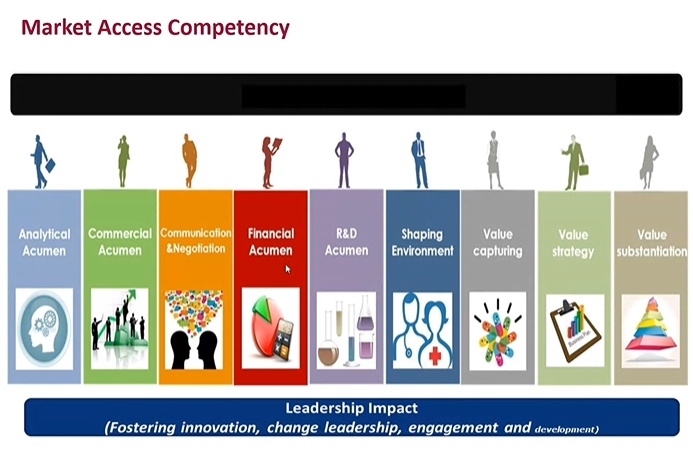
- “For a Market Access (MA) specialist, the most important skill set is to analyze the clinical trial data and to recreate them as a valuable message. They need to find any missing data required for pharmaceutical reimbursement review, and prepare the evidences prior to the review, if need be. If you are a pharmacy school student and want to become a MA specialist, you need to acquire rich experience and knowledge.” That was an advice from MA Director Lim Kyungwha at Jansen Korea to the students in college of pharmacy, who are looking into getting a job in the MA sector. The Pharmaceutical Marketing Professional Leaders (PPL) convened a sixth pharmaceutical industry seminar on Sept. 5 with the theme of ‘the Wave of Pharmaceuticals.’ At the seminar, Director Lim gave a lecture on the current industry status, and the importance of MA specialists. MA Director Lim Kyungwha at Jansen Korea Until few years back, MA specialists played a role of applying for reimbursement listing after a new drug approval. But things have changed—now the MA specialists participate from the clinical designing stage. In the initial clinical stage, new drug development and market access departments come together and talk about strategy as an ‘integrated MA’ to ponder on what the government would stress on when listing for reimbursement, areas to better reflect new drug’s value than other global alternative options, and which clinical outcomes would win the healthcare reimbursement. Director Lim said, “Nowadays, pharmaceutical companies do not consider MA as a single department, but rather treats it like a strategy. It’s because MA can intervene from the initial clinical stage to accelerate the reimbursement listing procedure and affect the entire drug approval and market access strategy.” In other words, MA is a key player in building a strategy for a new drug seeking for a proper acknowledgement of its value and to enter the market fast. Specialized and diversified MA specialist also has to serve two roles of communicating and negotiating with the government. So what kind of skill sets should a MA specialist have? Director Lim said, “MA specialist has to understand clinical data and capture the value in them. The reason why most of the companies hire master’s degree or doctorate degree graduates majoring in public health or social pharmacy is because we need people, who have wide experience and knowledge, skill to analyze finance and market, and understanding of R&D.” “Understanding the general pharmaceutical industry is crucial, as necessary strategy can be designed by understanding of the business. I also finished my MBA, but I went back to school to study social pharmacy,“ Director Lim added. Market access competency She encouraged the students and said, “Students who want to become a MA specialist need to acquire abundant knowledge, experience and strategic mind. As the industry is short of well-experienced MA specialists, the companies time to time hire entry level applicants, fresh out of university or graduate school, with potential seen during an interview.” She also reiterated, “Only because you choose your career path once, does not mean you would stay on it forever. Having richer experience is more important as all companies prefer people with more experience.” ’Acumen’ is critical asset for a marketer, while knowledge in pharmacology and toxicity is essential Executive Director Park Kwang-kyu at Gilead Science Liver Disease Business Department, emphasized ‘acumen’ is the most important factor in a student who dreams of being a marketer, who has to communicate with consumers in the sales department. They have to be highly empathetic to grasp when to be soft or firm during a conversation. Executive Director Park Kwang-kyu at Gilead Science Executive Director Park also mentioned insight, communication and leadership are important as well. He pointed out, “Even the marketers on the job struggle to distinguish ‘insight’ and ‘summary.’ Often the marketers have to deal with big data. And they need to digest the vast amount of data into a concise message,” so “they should be able to say easily in a single sentence to describe ‘what the company should do’ based on those data.” “We need people who are not afraid of challenges with confidence to work well in a multinational company. When it comes down to marketing, your own skill is more valuable than your degree,” he noted. However, Executive Director Park said the number of marketing jobs in multinational companies is declining. He said, “Two decades ago, a pharmacist-turned-marketer was treated as a specialist with expert knowledge. But now we have marketers from liberal arts, biology, pharmacy and nursing background, while [work] has gotten diversified and enhanced. But the company still thinks highly of pharmacy school graduates, so it would be worth it to knock on their doors.” Senior Director Kang Byung-chul at COSMAX BIO Senior Director Kang Byung-chul at COSMAX BIO leading both marketing and R&D departments recommended the participating students to make sure they study about pharmacology test and toxicity test before graduating to apply for a job in a pharmaceutical company. Senior Director Kang highlighted, “In any department, pharmacology and toxicity are the basics. And we all assume a pharmacy school graduates have full understanding of those.” The senior director did not recommend applying for the Business Development (BD) department for an entry level applicant. He said, “Only after working over a decade in R&D or marketing department, you can become a fully functioning member of the BD department. I would recommend transferring to BD department, after becoming a specialist in respective area for 10 years.”
- Product
- 10,000 pros & cons for generic substitution
- by Kim, Min-Gun Sep 10, 2020 06:23am
- There are a lot of unusual comments in the National Assembly legislation, where not even a single comment is usually posted. These are the 'Simplification Act for Generic Substitution Post Notification' and 'The Act on Restriction of 1+3 Joint Biological Equivalence'. All of them are laws related to the issue of generc prescription. Among the 304 bills posted on the National Assembly Legislative Advancement System on the 9th, a total of 13,000 comments were posted on two partial amendments to the Pharmaceutical Affairs Act, initiated by Seo Young-seok (Bucheon), Rep. of Democratic Party of Korea. List of legislative notices posted on the National Assembly Legislative Notice System on the 8th By around 11:30 a.m. on that day, 7681 comments were posted on the legislative notice of the Simplification Act for Generic Substitution Post Notification bill, and the number of views exceeded 69,934. Likewise, 5857 comments were posted on the legislative proposal for the The Act on Restriction of 1+3 Joint Biological Equivalence proposed by Seo, and the number of views was 48,395. This is three to four times more than the Wildlife Protection Act (2,454 comments) with the most opinions among the comments posted on 302 other legislative proposals. In particular, except for the top five legislative notices, most bills do not have less than 100 comments. There are only hundreds of views. As the two bills passing generic prescription spread to confrontation between doctors and pharmacists, it can be assumed that a systematic commenting campaign is underway. Lee * Eun, who appears to be a doctor, objected to the bill when he claimed that "even if the ingredient is the same and passed the bioequivalence test, the effects and side effects of the drug are not the same." Hwang * Deok also pointed out, "It is not the same drug because the ingredients are the same. The drugs used for each patient are different, which is contrary to the current trend of advocating precision medicine." However, Chansung, who appears to be a pharmacist, also confronted this. Kim *Ah argued, "We need to change the perception of the same ingredient preparation. Even now, it is awkward to say that doctors who prescribe the same drug to another drug company every few months to designate a company according to the patient." Mr. Kim *Han also said, "I agree with the legislation that changes the name of the generic substitution with the same ingredient name to reduce public confusion. It is very ridiculous for doctors to prescribe a company's medicine that is not clear to the manufacturer and rather changing it to an original. In many cases, not a single comment is posted on the legislative proposal of the National Assembly Legislative System The same comment was also occupied by the MFDS’ proposed The Act on Restriction of 1+3 Joint Biological Equivalence, which were unsuccessful contrary to the Regulatory Reform Committee. The main idea of this bill is to limit the number of generics per original drug to three. Rep. Seo cited the reason, "The outbreak of consignment generics due to unlimited sharing of biometric data weakens illegal distribution such as rebates and R&D of pharmaceutical companies." There is a reason for the pros and cons of the legislation to limit the number of generics produced by bioequivalence testing. This is because it also contains the content that 'because the type, content, and route of administration of the active ingredients are the same as for new drugs, bioequivalence test data must be submitted for drugs that are requested based on safety and efficacy data such as new drugs.' Oh *-hyun, who argued against this, commented, "It is said that it is the same, but if you take medicine, will you take the original, or will you take flour medicine from a third-rated pharmaceutical company that you have never heard of?" Regardless of the bill, Kim *young wrote, "If the pharmacy changes to a different drug with the same ingredient, patients can not take the medicine which doctor prescribe under specific manufacturer" He wrote a comment on a similar bill that would run on the bill. Mr. Kwon *-jin, who agreed to the bill, refuted, "People who disagree haven't read the text properly. The prescription for the brand name in force now leads to rebates between doctors and pharmaceutical companies, causing reckless competition for generic drugs." Kwon said, "The prescription of ingredient names will limit the number of generics. The case of using expensive original drugs without taking into account the patient's economic situation through rebates will disappear." He argued, "It can prevent the reckless competition for mass production of generics by pharmaceutical companies."
- Product
- Halted fight between government vs. doctors damages both
- by Kang, Shin-Kook Sep 09, 2020 05:46am
- The Korean Medical Association (KMA) has decided to temporarily halt but revisit their discussion with the government and the ruling party on increasing the quota for medical school and establishing public medical school, until COVID-19 is contained. The junior doctors are most likely to return for their duty after the last discussion on Sept. 7. Instead of revoking the policy, the government made up a pretext for re-discussing the medical reform policy, whereas the medical community paved their way to intervene in the future medical policy making process. With COVID-19 spreading relentlessly, the talks on medical reform plan saw no clear winner or loser. Ultimately the medical community also had to settle on a middle ground as they were to face the angry public, if the strike continued. ◆So did the ruling party ‘lose’ the battle?: Even within the ruling party, criticisms were made on the result of the ruling party and medical organization agreement. Democratic Party Lawmaker Representative Lee Su-jin posted a comment on her social media on Sept. 4, "We are now supposed to re-discuss expanding the medical school quota and establishing public medical school from square one, and obviously we are putting a pin on introducing the regional doctor system, indefinitely.” Lee continued and evaluated, “The doctors used medical strike to maneuver their say in the medical reform policies the public is highly interested in.” Lawmaker Yun Kun-young firmly defended the ruling party’s decision and responded to the criticism on the agreement between the ruling party and the Korean Medical Association (KMA), saying, "Even if the government couldn’t save its face, and the ruling party feels humiliated, there is nothing we can do,” because “saving the people’s lives come first amid COVID-19.“ Democratic Party Policy Committee Chair Han Jeongae, who led the mediation between the government and the medical community, also refuted the criticisms that the government and the ruling party had surrendered to the medical community. Lawmaker Han said, "The policy will be revisited again through persistent communication and discussion to resolve the unfair distribution of medical service in different regions, strengthen essential medical care and reform medical care system for the public. Also the ruling party would endeavor to deliver the agreement signed between KMA and the Democratic Party.” The medical community is also still torn from the result. KMA President Choi Dae-zip’s executives clashed with the interns and residents, who are already calling for President Choi’s impeachment. Resisting against the agreement, the medical interns, residents and fellows demanded the strike to continue, but they declared the strike would be over without a justification to continue as KMA signed the agreement. ◆Private clinic and hospitals were calmer, but junior doctors arose: The most unique part of the medical strike was medical interns, residents, fellows and students taking the action together. KMA President Choi Dae-zip signed an agreement with the ruling party and the government. The medical reform plan to increase the medical school quota and opening public medical seemed to have stirred the young doctors more than private hospital doctors. During the nationwide strike from Aug. 28 to 29, only about 6 percent of private hospitals and clinics went on a strike, but up to 84 percent of the medical interns and residents participated. The private hospital strike participation rate went down over time, but the junior doctors’ participation rate continued to rise. The medical community and the National Assembly analyze reaching the agreement would have been impossible without the participation and solidarity the young doctors showed. The government also took Korean Intern Resident Association (KIRA), instead of KMA, as a negotiation counter partner. This is the reason the ruling party agreement added a clause stating ‘fostering and supporting essential medical care, and practically improving medical interns and residents’ training environment.’ A National Assembly official commented, "It is true that the medical interns, residents and fellows play a significant role in the medical field," and “their absence in response against the pandemic would have pressured the government tremendously.” What the government feared the most was the actions taken by professors, interns and residents at tertiary hospitals. Amid the epidemic, dysfunctional tertiary hospitals would be detrimental. Specifically, the government was concerned with the inconvenience the patients requiring urgent care or fighting against severe diseases would experience. This proved the role of private hospitals and clinics is weaker than that of tertiary hospitals amid COVID-19. During the junior doctors’ fight against the government policy plan, KMA secured their seat in re-discussing the key agendas, such as the Health Insurance Policy Deliberation Committee structure, medical care delivery system reform, pilot program for Korean herbal medicine coverage, and non-contact medical service. The government and the ruling party would have realized by now that fighting with doctors is never easy. And the doctors now have the ‘strike’ as their open option whenever an unfavorable policy is on the table.
- Product
- Successful August KMA strike all depends on participation
- by Kang, Shin-Kook Aug 03, 2020 11:05am
- The doctors’ organization objecting against the South Korean government intending to expand medical school admission and provide coverage on Korean herbal medicine are drawing up a plan to call a private clinic doctors’ strike. The strike is most likely to be on Aug. 14. According to Korean Medical Association (KMA) on July 29, the issue of calling an organized strike on Aug. 14 would be addressed at the general assembly on July 31 and the organization would publicly announce the result on Aug. 1. A press conference convened in front of the NA Hall on July 23 to reprimand medical school admission expansion. President Choi Dae-zip declared the organization would plan an all-out single-day strike on either Aug. 14 or 18. The board members from 16 cities and provinces across the country gathered for an emergency meeting and shared their opinions on the strike date. Apparently, the meeting convened in Osong city on July 25 had the majority of the opinions leaning towards Aug. 14. But the administration of the organization is concerned of worsening the public opinion with the general strike amid COVID-19. Besides, the regional doctors’ communities are questioning how to convince private clinic doctors when the expected outcome of the strike is unclear, regardless of their justifiable objection against the government policy. However, the KMA administration claims its recent survey on the organization members found that the organization has enough willpower to fight against the government action. Over 95 percent of the doctor members answered they are opposing against the government policy, and over 85 percent said they are willing to participate in a fight against the government policy like an all-out strike to correct the wrongful policy. Moreover, the specialists’ all-out strike to be conducted on Aug. 7 could catalyze the private clinic doctors’ strike. On July 23, the ruling party and the government have decided to gradually expand the medical school admission size from 400 students to 4,000 students through ten years time. Leverage by the super ruling party’s power, the Ministry of Health and Welfare (MOHW) held a meeting with the Health Insurance Policy Deliberation Committee (HIPDC) to swiftly push the plan of conducting a pilot program of granting coverage on Korean herbal medicine that requires budget of 50 billion won. For now, the only option KMA has to reprimand and stop the so-called ‘Four Unjust Policies’ including stipulation of remote medicine, medical school admission expansion, coverage on Korean herbal medicine and establishment of public medical school is an all-out strike. In a letter sent out to specialist doctors on July 29, President Choi Dae-zip stated “The true role of the KMA president is not to hide behind the organization but to lead the fight against wrongful government action in the frontline,” and “I ensure I will serve the role. So please, join the fight against the unjust law. Come together, as we must seize the madness of the government and ruling party constantly pouring out bad healthcare policies.”
