
- LOGIN
- MemberShip
- 2026-07-22 07:43:56
- Product
- Ask for Acetaminophen, instead of Tylenol
- by Kang, Shin-Kook Jun 08, 2021 09:12pm
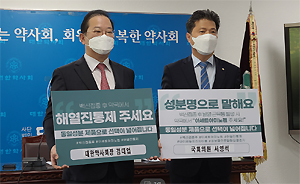
- "If fever or muscle pain occurs after vaccination, ask for Acetaminophen to the pharmacy." As the Tylenol shortage continues, the movement to change public perception begins. Rep. Seo Young-seok of the Democratic Party of Korea visited the Korean Pharmaceutical Association Hall on the morning of the 4th and announced that he would start an SNS challenge with Chairman Kim Dae-up. Chairman Kim Dae-up & Seo Young-seok, a member of the Democratic Party of Korea, who started SNS challenge Representative Seo said, "The vaccination target is 13 million by the end of this month, and the quarantine authorities' plan is to start vaccinations by July." "The demand for painkillers is expected to surge due to the expansion of vaccinations, and if the stock is low, people will have to visit many pharmacies to buy Tylenol," he said. He said, "With this phenomenon of Tylenol shortage, we need to draw the right public perception of the same active ingredient. There are about 70 generics of the same active ingredient, and I hope it will serve as an opportunity to discuss why there was a phenomenon in which only certain brands, Tylenol, were favored and solutions," he explained the background of the SNS challenge. "The domestic pharmaceutical market is very strange," said Chairman Kim Dae-up. "There are many generics that cannot even be compared to foreign countries, and there are too many items of the same active ingredient as the consignment market." Chairman Kim said, "Tylenol was sold out as the KDCA promoted to take Tylenol after vaccination." "Some pharmacies have to say that Tylenol is out of stock 100 times," he said, criticizing the health authorities' initial response. Chairman Kim said, "The KDCA should be responsible for distributing unofficial note prescriptions and asking vaccination centers to take Tylenol." "I am happy and grateful that Rep. Seo Young-seok joined the movement to change public awareness under such circumstances," he said. He then pointed to Yoon Sun-hee, chairman of the Bucheon Pharmaceutical Association, and Nam In-soon, a member of the Democratic Party of Korea, after Suh, who started the first SNS challenge. Chairman Kim named Han Dong-joo, head of the Seoul Pharmaceutical Association, and Cho Sang-il, head of the Incheon Pharmaceutical Association, as SNS challenge runners.
- Product
- Tylenol's sales at convenience stores rose 125% year-on-year
- by Jun 04, 2021 06:06am
- Convenience stores are also benefiting from the shortage of outpatient pharmacies' Tylenol as vaccination begins in earnest.Tylenol sales at convenience stores designated as household medicine rose. Household medicine sold at convenience stores First of all, CU's Tylenol sales increased 125.5% year-on-year. According to sales from May 27 to May 31, when vaccinations for people aged 65 or older began in earnest, it increased 89.9% compared to the previous month (April 26 to 30), and it also increased 68.1% compared to the previous week (May 20 to 24). In the case of Seven-Eleven convenience stores, sales of Tylenol increased 23.3% compared to the previous month, especially sales from the 27th to 30th increased 99.6% from the same period last month. In the case of GS25 convenience stores, Tylenol sales rose 41.9% last month from a year ago and 38.8% compared to the previous month, the survey showed. In some convenience stores, Tylenol is in short supply like pharmacies. "The number of consumers visiting Tylenol has increased recently," said CU convenience store owner in Seoul. Both Tylenol 500mg and Tylenol160 mg are out of stock, he said. "We only have children's syrup in stock at the moment." Meanwhile, the Gyeonggi Pharmaceutical Association criticized the government and the vaccination center's inexperienced administration for causing Tylenol shortage on the 1st and insisted that Tylenol should not be sold at convenience stores for a while as it is time to manage side effects.
- Product
- Korean Tylenol is in stock
- by Jun 04, 2021 06:05am
- "It doesn't have to be original Tylenol." Pharmacists have launched a counterattack in connection with the Tylenol shortage. As Tylenol has been out of stock for months to respond to consumers due to recommendations from vaccination centers and health centers, pharmacists are trying to immediately inform them of fever and painkillers. They started to improve consumer awareness by spreading the message that It doesn't have to be original Tylenol through pharmacies and SNS. First of all, pharmacist Lee Jung-chul, the author of "Alssulshinyak" told by dispensing brothers, recently posted a message on blogs and YouTube saying, "You don't have to stick to Tylenol after the vaccine against COVID-19." The pharmacist recognizes that "the painkillers available after COVID-19 vaccine are Tylenol unconditionally, but there is no need to insist on Tylenol." Tylenol is just one of many drugs made of Acetaminophen, and said, "There are many drugs made of the same Acetaminophen even if they are not Tylenol." Since Tylenol has become an issue due to its high recognition of many drugs with Acetaminophen, there is no problem in taking Acetaminophen, the same active ingredient as Tylenol, in situations where Tylenol is not easy to obtain. "About 10 to 20 consumers a day visit and ask for Tylenol," said pharmacist Lee Jung-chul. "It doesn't matter if it's Acetaminophen, but if patients don't understand or if the media or hospitals nominate Tylenol, they often think they can't do other drugs," he said. "I'm filming a video out of frustration, and I hope the message will be shared widely." The pharmacist explained, "In fact, the number of cases where people accept and buy other products is increasing if they use the 'Ask a Pharmacist' card news produced by the Korean Pharmaceutical Association." Tylenol-related notice attached to the entrance of a pharmacy in Incheon A pharmacist in Incheon recently attached a sign that Tylenol is out of stock and there's a stock of same active ingredient to the entrance of a pharmacy and a consultation desk. Tylenol is Acetaminophen formulations made by Janssen, a foreign company, under the notice, "If you take fever and painkillers after the COVD-19 vaccine, take Acetaminophen-based medicine." There are 80 items such as Suspen, Tramol, Tacenol, Nasphen, and Setopen," a notice said. The pharmacist said, "When asked repeatedly by consumers if they had Tylenol in stock all day, the voices of working pharmacists were hoarse. "It was like the public mask crisis in the past," he said. "We changed our sales strategy because of the release of good domestic drugs." In addition, pharmacists who run SNS channels such as blogs, Instagram, and YouTube are also participating in "Knowing About Acetaminophen Right away," explaining the types of Acetaminophen, how to take it, and alternatives. The Korean Pharmaceutical Association and the MFDS urgently produced posters and distributed them to pharmacies about the ridiculous situation of trying to buy only Tylenol at pharmacies despite the presence of a number of Acetaminophenes. Posters distributed by the Korean Pharmaceutical Association & the MFDS The Korean Pharmaceutical Association and the MFDS posted a poster saying, 'Relax if some items are out of stock. There are about 70 Acetaminophen formulations approved by the MFDS. Talk to a pharmacist' in the message.
- Product
- Zuellig Pharma ends distribution at the end of this month
- by May 24, 2021 05:51am
- Zuellig Pharma Korea, a global drug distribution company, announced its order and return procedures to prevent confusion as of this month. According to pharmacies on the 24th, Zuellig Pharma Korea recently announced a re-announcement of the termination of the pharmacy distribution business to pharmacies and others. Although it has already provided guidance to pharmacies and others since early last month, it has been announced again about a week before the end. Zuellig Pharma Korea faced limited financial soundness due to worsening profits, and finally ended up abolishing its pharmacy retail division and conducting large-scale restructuring. About 80% of employees in the business department were reduced, leaving only a small number of employees. Announcement of Zuellig Pharma Korea Zuellig Pharma Korea said, "We decided to end our business of distributing medicines directly to pharmacies on May 31 and distribute them only through wholesale partners. We will service the distribution of Rx drugs directly through Kyungdongsa." The explanation is that drugs supplied through Zuellig Pharma Korea can be returned in accordance with normal procedures even after the business is closed. Pharmacies are confused. This is because pharmacies with relatively large transactions seem to continue through wholesale, but pharmacies with relatively small transactions may have returned them sequentially. "I've heard from the person in charge since April about the end of distribution due to accumulated deficits," a pharmacist at Pharmacy A said. "There was an advantage of direct transactions, but I don't know what will happen in the future." "It is expected that there will be no significant impact on continuous transactions, but I understand that some pharmacies with small transactions have already started organizing items," he said. Zuellig Pharma Korea plans to offer promotions for OTC through its affiliate ZP Therapeutics and its medical merchandiser. Sales of Zuellig Pharma Korea rose every year, but its operating loss in 2017 was ₩2.6 billion, in 2018 was ₩8.4 billion, and in 2019 was ₩6.8 billion. The debt ratio in 2016 exceeded the 200% level, which is a risk level of 1,720%, and it recorded 30,000% in 2019
- Product
- Will Kypris become dominant in multiple myeloma markets?
- by Whang, byung-woo May 10, 2021 05:56am
- "New treatments will also emerge in the treatment of myeloma. However, its importance is still expected to continue when Kypris compares combined therapy features with a single formulation and other formulations." As multiple myeloma is difficult to completely heal and many recurrences occur, recurrence and non-responsive polymyeloma is considered the key to treatment. In the domestic treatment situation, Kyprolis-focused KRd therapy (Carfilzomib, Lenalidomide, and Dexamethasone) became the main treatment strategy, as third-generation proteasome inhibitors (PI drugs) became the standard of treatment. However, since March, IRd therapy (Ixazomib+Lenalidomide+Dexamethasone), which is centered on the oral PI drug Ninlaro, has become convenient, and the market for prescribing recurrent and non-responsive multiple myeloma has begun to become active. Accordingly, let's listen to the strategies and perspectives of treating multiple myeloma through Joseph Mikhael, a professor of applied genomics at the Korean Society of Hematology International Conference. First of all, what he emphasized in his presentation at the Korean Society of Hematology conference is the importance of early treatment strategies for patients with recurrent and unresponsive multiple myeloma. As recurrence and non-responsive multiple myeloma have various options not only in the U.S. but also in Korea, optimal measures that take into account the characteristics of patients should be considered first. Professor Joseph Mikhael said, "It is very encouraging that there are more treatment options to choose from now on compared to the past. We expect more options for treating recurrent and unresponsive multiple myeloma in the future." Professor Joseph Mikhael pays attention to the fact that Kyprolis has achieved a 12-month extension of the PFS (Present Progressive Survival Period) compared to conventional treatments in treatment of recurrent and non-responsive multiple myeloma. "The improvements in the duration of the existing treatment are significant, compared to four to six months and eight months at the most," he said. "It's a great achievement in that about six months is a common improvement in other treatments." Professor Mikhael emphasized that Kypris clearly has an advantage in terms of efficacy compared to other PI agents, Velcade (Bortezomib) and Ninlaro (Ixazomib). "Kyprolis still has the greatest effectiveness of PI drugs used to treat multiple myeloma," he said. "A study directly compared to Velcade concluded that Kyprolis is the most effective treatment needed by medical staff and patients." Treatment options for increased myeloma. What's the situation in the U.S.? In Korea, as IRd therapy has recently been reimbursed, options for clinical doctors have also increased. In the United States, where both KRd and IRd therapy were available, how would the choice of prescription between the two treatments appear? Professor Mikhael said that KRd therapy is preferred, assuming that there are many options. "If a patient has an autologous hematopoietic stem cell transplant, there is a maintenance therapy based on Levlimide, and Kyprolis and Ninlaro are available options," He said. "KRd therapy is mainly chosen because Kyprolis is more effective." IRd therapy can be selected if patients want to avoid Kyprolis because they are concerned about abnormal reactions related to the heart, but IRd therapy is less used in the United States than KRd therapy. However, as Professor Mikhael mentioned earlier, Kyprolis' biggest concern is that patients with heart-related comorbidities require attention. Considering that multiple myeloma comes from older people aged 65 or older, concerns about heart failure and hypertension abnormalities of Kyprolis cannot be ruled out. Professor Mikhael acknowledged the abnormal response that could appear as Kypris, but evaluated it as manageable. "After more than 10 years of use of Kyprolis, experience in abnormal reactions can be accumulated and reduced to 2%," he said. "2% of patients should stop taking medication, but this situation is very small in the actual field."
- Product
- Pharmacists & employees in their 20s receive Pfizer vaccine
- by May 07, 2021 06:01am
- Pharmacists and employees under the age of 30 who were excluded from the AZ vaccination are expected to receive the Pfizer vaccine next month. The KCDA announced on the 4th that the Pfizer vaccine for social essential personnel and military soldiers under the age of 30 who have been suspended from vaccinating AZ vaccine due to "thrombotic side effects" will begin in June. According to statistics of the Korea Institute for Pharmaceutical Policy affairs, 1,784 pharmacists under the age of 30 have completed their personal reports to The Korean Pharmaceutical Association, and 2,000 including pharmacists who have not reported. "Pharmacists are also among the essential social workers," a pharmacist said. "We have not yet been informed of specific vaccination personnel by the KCDA, but pharmacists and employees under the age of 30 who were excluded from the vaccination will be vaccinated this time." According to COVID-19 vaccination status released byCOVID-19 vaccination task force, 197,092 out of 335,017 people who were vaccinated as of midnight on the 2nd completed the vaccination rate, recording 58.8%. If this includes personnel who will receive the Pfizer vaccine, the inoculation rate is expected to increase slightly.
- Product
- The price of Rotarix has also increased
- by Moon, sung-ho Apr 30, 2021 06:09am
- As prices have increased for cervical cancer vaccines and rotavirus vaccines that prevent neonatal enteritis, the burden on hospitals and clinics is increasing. Some medical organizations are raising the issue of unilateral price hikes for global pharmaceutical companies, but there is currently no clear solution. The medical staff who have to deal with the complaints of the patients are worried a lot. According to the pharmaceutical industry on the 15th, from this month, MSD Korea increased its supply price by 15% for the cervical cancer prevention vaccine Gardasil 9 and 17% for the rotavirus vaccine Rotarix. The information has been guided to hospitals and clinics by HK inno.N, which is in charge of MSD sales since the beginning of this year. Rotarix produced by GSK is also expected to increase by 12% from May. Kwang Dong, which is in charge of Rotarix, recently guided this to hospitals and clinics. According to the HIRA, the currently nonreimbursement price of Gardasil 9 for hospitals and clinics is distributed between ₩107,928 and ₩202,524. Gardasil 9 is a vaccine that requires a total of 3 doses to complete the vaccination, so it costs up to ₩600,000. In the case of RotaTeq, the nonreimubursement price ranges from ₩48,100 to ₩130,000, which averages ₩92,473. Rotarix produced by GSK is distributed at ₩63,600 to ₩150,000, which is slightly more expensive than MSD's RotaTeq. The average price is ₩125,751. Gardasil 9 is up 15%, RotaTeq is up 17%, and Rotarix is up 12%. MSD's opposition to the Gardasil 9's impression eventually came to a medical organization to seek understanding, but it is an opinion that it is difficult for medical organizations to understand pharmaceutical companies. "We had a time to share the contents of the vaccine supply price increase with MSD," said Lee Ki-cheol, vice president of the Korean Association of Obstericians & Gynecologists. "There are many aspects that are difficult to understand from the standpoint of the medical community.” "The supply price is quite high, with a 15% increase. This is unusual and very burdensome. We are going to send a letter to protest against it," he emphasized. "Pharmaceutical companies say that the domestic supply price is not higher than the foreign supply price," said Ma Sang-hyuk, vice-chairman of The Korean Vaccine Society (Daegu Fatima Hospital, Pediatrics and Youth Division). He said, "It is difficult to adjust the price because even if the supply price of vaccines is raised, It depends on the pharmaceutical company in the case of non-reimbursement items. It is difficult to get involved legally, so it is only the doctor's role to get patient complaints." "This is because the related market operates exclusively," said Lee Ki-cheol, vice president of insurance at the KAOG. "As the related supply system has been improved, policy improvements are needed to prevent this from happening again," he argued. MSD believes that a price increase is inevitable because the price hikes of major non-reimbursement vaccines, including Gardasil 9, require production-specific complexity, long production periods, and quality control processes. In addition, MDS explained that it is working to reduce discomfort to medical staff and patients.
- Product
- Why are pharmacists in the AZ vaccination relay?
- by Apr 22, 2021 05:53am
- On social media, pharmacists' vaccination application reservation verification shots appeared in a row. "I made an appointment for vaccination", "I applied for it too" Since yesterday (19th), a vaccine application for pharmacies through the KCDA website has been in progress, and pharmacists who have completed reservations are sharing information related to the vaccine as well as photos notifying the completion of authentication on SNS. SNS를 통해 약사들이 백신 예약 신청 릴레이 인증을 하고 있다. Pharmacist Kim Soo-gil was the first to start the relay. On the 19th, pharmacist Kim, who is in charge of Hubase Affiliate & CSR, proposed a relay to Hubase member pharmacies. Pharmacist Kim Soo-gil posted on Instagram with hashtags such as'Hubase','Pharmacist's Social Responsibility','Vaccines', and'Corona 19 Go Back' as an expert. The way to take off the mask as soon as possible is to reach mass immunity, and vaccines are the answer.' He left a message saying,'As a pharmacist, I applied with a sense of responsibility as a health care professional.' Other Hubase-affiliated pharmacists also said,'The vaccine is inoculated after determining the optimal dose through clinical trials. Depending on the person, the immune response may be different and there may be discomfort, but this immune response was posted with an article titled'controlled immune response' and a notice on adverse reactions provided by the KCDA. Another pharmacist said,'It's scary that we all get coronavirus, and I hope the corona ends soon. However, I am also worried that the side effects of the vaccine will occur to me as well.” “Wouldn't the corona disappear if all the vaccines except me were taken? I'll get another company vaccine later. Seeing that others are right, you should be right. It is the same that I avoid it with this mind and I also like that,” he said. “Even so, I meet most sick and fever patients in our neighborhood. Most of the people I meet have weak immunity and are the most likely to meet other corona confirmed patients or contacts, so I am afraid, but I applied for vaccination. Other pharmacists also uploaded their reservation details as verification shots. After vaccination, they guided them to apply cold compresses with a clean dry towel in case of swelling or pain at the vaccination site, drink plenty of fluids and take a rest if they have a mild fever, and take antipyretic analgesics if they are uncomfortable with fever or muscle pain. Pharmacist Kim Soo-gil said, "There are many parts that many people misunderstand about vaccination, but it would be good if pharmacists who are experts came out to guide and deliver a message to meet together, so we started relaying." He said, "I want people to know that the vaccine is the right part by adjusting the dose, and although it may be uncomfortable, it is a natural immune response." He explained, "With the desire to return to a world without masks as soon as the whole people get a vaccine this year, collective immunity is formed, and pharmacists are joining the vaccination together."
- Product
- Korean bio-pharma companies attract attention at AACR 2021
- by Whang, byung-woo Apr 21, 2021 05:49am
- The AACR 2021 Annual Meeting, the largest meeting on cancer research in the world, took place from April 10th to April 15th. At the meeting, new combination therapies were introduced, raising expectations for the use of new mechanisms of action in the field of cancer treatment. Through a presentation of data on the use of nivolumab (Opdivo) in early-stage non-small cell lung cancer (NSCLC), Bristol Myers Squibb (BMS) presented its next target area for its PD-1/L1 inhibitor. Bayer appealed the efficacy of its PI3K inhibitor copanlisib (Aliqopa) in combination with rituximab. Results of Combination therapy studies show potential to expand treatment scope The presentation that first drew attention was the latest clinical data on Opdivo, which was one of the first PD-1 inhibitors approved in the field of immuno-oncology. Patients with early-stage NSCLC who received the Opdivo-chemotherapy combination before surgery were nearly 14 times more likely to show no signs of cancer cells in their resected tissue than those who received only chemotherapy. The findings came from the Phase III CheckMate-816 trial, which enrolled patients with stage IB to IIIA NSCLC. BMS explained that this was the first time for a presurgery use of the Opdivo-chemotherapy combination to show a significant improvement in the complete pathological response in patients with earlier stage NSCLC More specifically, 24% of patients receiving the Opdivo-chemotherapy combination had a pathological complete response (pCR) which was defined as no residual viable tumors in their resected tissues and lymph nodes, compared with 2.2% in the chemotherapy alone arm, Also, pathological response in patients in the Opdivo combination group was 36.9%, significantly higher than the 8.9% in the chemotherapy alone group. Patrick Forde, professor at Johns Hopkins University said, “For the first time in a phase III trial, we see the potential for an anti-PD-1 immunotherapy to improve outcomes in earlier-stage NSCLC. We are highly encouraged by the marked improvement in pCR, the overall good tolerability, and the absence of impact on surgery feasibility when nivolumab is added to neoadjuvant chemotherapy,” Bayer had presented the role of PI3K inhibitors in treating patients with indolent non-Hodgkin’s lymphoma (iNHL) who relapsed after at least one prior therapy with the combination of its copanlisib (Aliqopa) and rituximab (Rituxan). The data was from the Phase III Chronos-3 trial, in which patients were randomly assigned to copanlisib-rituximab combination (307 patients) or placebo-rituximab combination (151 patients) After a median follow-up of 19.2 months, the study met its primary endpoint of progression-free survival (PFS), showing a 48% reduction in the risk of lymphoma progression or death in the copanlisib-rituximab arm. The overall response rate (ORR) was 80% in the copanlisib-rituximab arm and 47.7% in the placebo-rituximab arm. The complete response rate (CRR) was 33.9% in the copanlisib-rituximab arm, compared to the 14.6% in the placebo-rituximab arm. Regarding the results, Bayer stated that Aliqopa was the first PI3K inhibitor to demonstrate superior efficacy in combination with Rituxan with a manageable safety profile in patients with relapsed iNHL. Also, Lilly presented the potential of its Retevmo to be approved for indications other than those reived for lung cancer and thyroid cancer with RET abnormalities. At the annual meeting, Lilly announced that Retevmo shrunk tumors in 47% of patients with RET fusion-positive cancers originating from different sites in the body other than the lung and the thyroid in a Phase 1/2 study. In particular, Lilly emphasized that more than half of the patients still showed benefits after a median follow-up of 13 months. The 47% tumor response rate presented at the 2021 AACR was generated from 32 patients that had 12 unique cancer types with RET fusion. Over 60% of patients had treatment-resistant gastrointestinal cancers that typically do not respond well to targeted therapy. Based on such data, the company said it plans to take the ‘tumor agnostic' approach with Retevmo. Increasing the response rate with combination therapies…compatibility between candidate substances? Clinical research by domestic biopharmaceutical companies presented at AACR mostly ended at preclinical trial outcomes or examining the potential of combination therapies. However, some showed promise by drawing a response rate from patients that did not respond to existing drugs. At the poster session held on the 12th, PharmAbcine presented the nonclinical data of its immune-oncology drug candidate PMC-309. PMC-309 is showing promise as an immunotherapeutic strategy to be used alone or in combination for patients who showed no response to existing immune-oncology drugs by inhibiting a new immune checkpoint. PMC-309 is a monoclonal IgG (Immunoglobulin G) that targets human VISTA (V-domain Ig Suppressor of T cell Activation), an immune checkpoint regulator. The nonclinical study results show that PMC-309 increased T cell activities in in-vitro settings with its anti-VISTA effect. In in vivo studies using a human VISTA Knock-In mouse model, the tumor growth inhibition was significantly higher for the PMC-309 group compared to the control group. The tumor growth inhibition rate was comparable to the PD-1 administered group and showed a possible synergistic effect when used in combination with existing immunotherapy. The company plans to evaluate the potential toxicity risk of PMC-309 this year to submit for the IND (Investigational New Drug)-enabling studies, and expects to enter the clinical stage next year. ABL Bio presented the preclinical trial results of its bispecific antibody dual immune checkpoint blockade that includes the target LAG-3, an emerging next-generation immuno-oncology drug. ABL501 is a bispecific antibody that simultaneously targets both PD-L1 and LAG-3. Recently, BMS announced successful results of a Phase II/III trial using its anti-LAG-3 antibody(elatlimab) in combination with its PD-1 inhibitor (nivolumab) in patients with melanoma, bringing the candidate substance one step closer to commercialization. In-vitro and in-vivo assessments of the drug demonstrated that ABL501 showed better anti-tumor effect than the PD-L1and LAG-3 combination therapy. With such positive results, the drug was evaluated to have potential as a new alternative to patients who did not see an effect with existing PD-1 or PD-L1-based therapies. ABL Bio plans to submit a Phase 1 Investigational New Drug Application (IND) based on the data. MedPacto presented the potential to use its immune-oncology drug Vactosertib as a combination therapy. The combination of Vactosertib and Onivyde was found to significantly reduce metastasis of cancer cells and greatly improved survival rates compared to Onivyde alone. In the 50-day study of the combination using animal models, the survival rate of the group that was not administered Vactosertib and the group that used the current established treatment was 23% and 53% respectively. However, the Vactosertib combination group’s survival rate improved to reach 84%. This suggests the potential of the combination as a new treatment option. Also, Qurient announced the results for its CDK-7 inhibitor ‘Q901’ and received attention for its potential as an alternative for patients developing resistance. Although the study is yet in its in-vivo stages, Q901 showed tumor growth inhibition effect in mice that developed resistance to the CDK4·6 inhibitor (Ibrance), suggesting its potential in patients who developed resistance to existing breast cancer treatments that may found in clinical studies in the future.
- Product
- Korean-made new drug Rolontis readies for FN drug market
- by Moon, sung-ho Mar 24, 2021 05:45am
- Hanmi Pharmaceutical is readying for the febrile neutropenia (FN) treatment market for its first bio new drug Rolontis (eflapegrastim), as it finally received the South Korean health authority’s market authorization. This could be an opportunity for the South Korean company to take over the domestic drug market, currently led by global pharmaceutical companies. # On Mar. 18, South Korea’s Ministry of Food and Drug Safety (MFDS) approved the marketing of Hanmi Pharmaceutical's 'Rolontis' as the 33rd new drug developed in the country. At the same time, Hanmi Pharm entered the countdown of Rolontis' entry into the U.S. market. The U.S. Food and Drug Administration’s (FDA) `pre-approval inspection (PAI),’ previously delayed due to COVID-19 pandemic, has been scheduled in May. A ‘long-term use' new drug, is it a blockbuster drug material? FN refers to an abnormal decrease in neutrophils, which must occupy 50 percent to 70 percent of white blood cells. There are many factors that cause FN, but it is typical that most cancer patients develop FN due to several anticancer treatments. For this reason, treatments are mostly prescribed for the prevention or treatment of FN caused by anticancer treatment. It has been prescribed for all carcinomas in recent years, including leukemia and breast cancer. Professor Park Inkeun of Oncology Department at Gachon University explained, “Neutrophils are a type of white blood cell and, in simple terms, are responsible for defending against bacterial infection. When chemotherapy is performed, the number of neutrophils decreases, but it recovers over time. However, a treatment is prescribed because there is a risk of infection occurring at the stage of decreasing neutrophils.” The professor added, “Just as people drink differently, the amount of neutrophil reduction is different for each patient. In particular, it could be fatal for elderly patients. For this reason, FN treatments are also administered for prevention purposes every chemotherapy cycle. It's not a one-off shot.” Then, how about the competitiveness of Rolontis in the market? #The FN treatment market in the past used to be dominated by granulocyte colony-stimulating factor (G-CSF) drugs, but recently next generation G-CSF drugs for preventive purpose are expanding in the market. At the moment, the market is dominated by Amgen’s Neulasta (pegfilgrastim), which Kyowa Kirin Korea is supplying to the South Korean market. Meanwhile, Hanmi Pharmaceutical disclosed the data collected from two global Phase II trials (ADVANCE and RECOVER) facilitated by the company’s partner Spectrum Pharmaceuticals. The two trials conducted on 643 early-stage breast cancer patients with FN caused by anticancer treatment confirmed the safety and efficacy of Rolontis. Within total four treatment cycles, Rolontis, compared against its competitor Neulasta, demonstrated non-inferior duration of severe neutropenia (DSN) and superior reduction of risk. Healthcare providers reserve opinion on Rolontis dominating the market Hanmi Pharmaceutical is planning to go through an official domestic market release process as it obtains the world's first approval for Rolontis in South Korea, regardless of the approval by the U.S. FDA. The size of the domestic market for FN drug is estimated at 80 billion won. The figure is the sum of the annual sales of the first and second generation G-CSF drugs, but Rolontis would compete directly against the second generation G-CSF drugs. The top-selling drugs are Neulasta (Kyowa Kirin Korea), Neulapeg (GC Pharma), Lonquex (Teva Handok) and Dulastin (Dong-A ST). A pharmaceutical market research firm IQVIA reported, the sales of these four second-generation G-CSF drugs have been steadily increasing since 2017, reaching about 46 billion won last year. Meanwhile, in the healthcare providers mostly predict, even if Rolontis is released in South Korea, highly unlikely the drug would dominate the market easily. The market size is relatively small, while already-commercialized products have stable presence in the medical field. Ultimately, the company would have to target the overseas market. Currently, the global market is estimated at 3 trillion won.
